Automotive intelligence, low-altitude economy, and embodied intelligence have emerged as the "three new pillars" in China's global expansion.
The currently screening Teochew dialect film "Love Letter to Grandma" recreates the folk memory of the Teochew people's "going to Nanyang" from the 1940s to the 1970s, depicting the most simple collective image of globalization in modern China. At that time, the predecessors who ventured to Nanyang had no systematic business strategies, no professional market research, no mature cross - border payment system, and no large - scale ocean shipping logistics. What supported them to cross mountains and seas was the livelihood they found in the dialects of foreign lands and the "overseas remittance letters" that traveled across the ocean, only reporting safety and not mentioning hardships.
In 2026, the stories of Chinese people and Chinese enterprises going global are still being written.
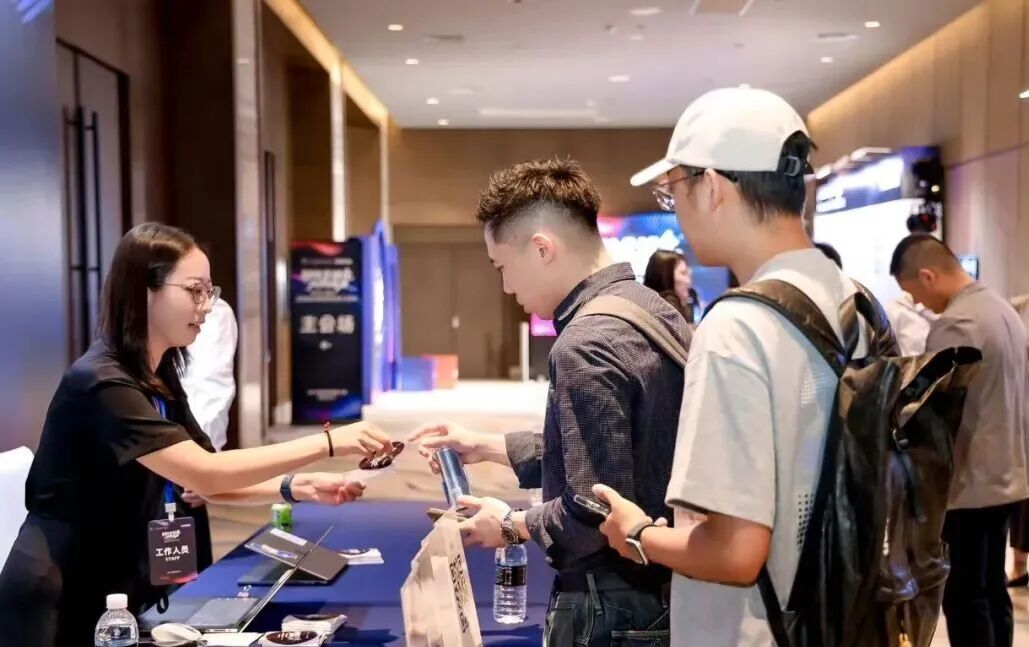
When talking about globalization again, the scenario has completely changed. We no longer sail out to sea on sailboats, but connect the world with new energy, cloud computing, supply chains, and AI." At the recently held "2026 Globalization Forum for a Hundred People in Going Global" hosted by EqualOcean, a new - type think - tank for going global, many industry insiders sighed.
From home appliances and furniture to cross - border e - commerce, to the "new three items in energy" represented by new energy vehicles, lithium - ion batteries, and photovoltaics, and then to the "new three items in intelligence" represented by automotive intelligence, low - altitude economy, and embodied intelligence. Chinese enterprises' going global has gone through different periods, and there are clear generational differences in the core product categories at each stage.
A reporter from "IT Times" has long been concerned about enterprises going global. An obvious change felt this year is that AI has become a key word that the entire industry cannot avoid. Under the competitive pressure of the "involution", enterprises are using the power of AI to break through the difficulties of going global and find new growth curves.
Change: The "New Three Items" Are Here
More and more Chinese enterprises are actively "going out" to explore the market. Take a set of data released in the "Statistical Bulletin of China's Outward Direct Investment in 2024" as an example. By the end of 2024, Chinese domestic investors had established 52,000 overseas enterprises in 190 countries and regions around the world, among which 19,000 were established in countries participating in the Belt and Road Initiative.
"In the past, when we talked about going global, we mainly talked about following the trend, about how to use the advantages of low - cost manufacturing and the demographic dividend to explore incremental markets. At that time, globalization was linear and smooth." Many practitioners on - site reached a consensus that in the early days, going global was the overflow of the production capacity of "Made in China", and the overseas market could be opened by relying on cost advantages. However, the current going global has fully entered a new stage of reshaping the core value chain. Enterprises going global are no longer limited to the traditional model of "producing in China and selling globally", but can allocate resources globally.
Wang Bin, the chairman of EqualOcean, shared a case. A practitioner from the real - estate technology industry used self - developed AI tools to cooperate with local programmers in Indonesia to provide promotional video production services for the North American real - estate brokerage market, reducing the cost of a local video from $300 to less than 100 RMB. In his view, this is the new form of going global in the AI era, integrating global resources by relying on the efficiency advantages of technology.
Shanghai Yinjia Electronic Technology Co., Ltd. (hereinafter referred to as "Yinjia Technology") is an enterprise engaged in the research and development of intelligent driving technology. "The underlying technologies of the three major tracks of intelligent vehicles, low - altitude economy, and embodied intelligence are interlinked, and the industrial logic is highly consistent. They are the core directions for Chinese AI technology enterprises to break through the bottleneck of local growth." Bao Pengzhi, the person in charge of the intelligent cockpit solution of Yinjia Technology, put forward the view of "technology reuse".
Regarding the pain points commonly existing in the single - track going global of domestic technology enterprises, such as "fighting alone", high R & D costs, and long implementation cycles, Bao Pengzhi further explained that intelligent vehicles, low - altitude aircraft, and humanoid robots are essentially intelligent mobile bodies, and the technologies in the fields of environmental perception, precise positioning, and motion control are highly interlinked, and technologies and data can be reused.
For example, Yinjia Technology has vehicle operation data covering all - weather, all - scene, and all - time periods, including complex climate scenarios such as high temperature, severe cold, heavy rain, and sandstorms, as well as diverse terrains such as cities, mountains, highways, and rural areas, and all - day working conditions. These real - world data are of reference value for the embodied intelligence and low - altitude economy tracks, which can improve the environmental adaptation ability of outdoor robots and, to a certain extent, reduce the cost of adapting to overseas scenarios.
"There are many opportunities in industries such as Chinese robots, drones, and AI glasses. The most successful ones are those that do a good job in localization during the process of going global, establish companies locally, and respect local consumers." Yereth Jansen, a brand going - global and international communication expert based in Shanghai, said.
Current Situation: The Going Global of the Automobile Industry Chain Is Constrained
More and more Chinese automobile enterprises are "going out".
In 2001, Chery Automobile started its journey of going global. A set of public data in April this year showed that Chery Automobile's total sales volume in that month was 251,400 vehicles, and the export volume was 177,600 vehicles, accounting for as high as 70.6%. That is to say, for every 10 vehicles sold, more than 7 were sold overseas. Another example is BYD, whose overseas sales volume reached 134,500 vehicles in April, and Geely Automobile, whose export volume in April was 83,200 vehicles, a year - on - year surge of 245%...

Source: Chery Automobile
Of course, just going global is far from enough. Chinese automobile enterprises and technology solutions need to "go deeper", but it is not easy.
"The overseas markets are obviously differentiated. Although the US market is large, Chinese brands basically have no chance to enter. In the European market, the overall market share of Chinese automobile enterprises was about 6% in 2025, and it is expected to double and exceed 12% in 2026. Brands such as BYD and Chery are the main growth drivers." Shao Xin, the person in charge of forward - looking technology at Renault China, shared an industry phenomenon. As of the first round of going global in 2026, the main players were hardware suppliers such as battery and electronic control suppliers. According to the industrial law, the next stage should be the concentrated going global of software suppliers, but the progress is not smooth at present, mainly hindered by three constraints.
On the one hand, there are differences in user cognition. Chinese consumers have experienced multiple rounds of industrial iterations from the PC, Internet, mobile Internet to the AI era, with a high acceptance of new things and a large market fault - tolerance space. The European market is significantly regionally differentiated. The acceptance of electrification in Northern Europe exceeds 90%, the penetration rate in core countries such as the UK, France, and Germany is about 40%, and Southern European users still regard cars as pure means of transportation, with low demand for intelligent functions. On the other hand, there are differences in laws and regulations. China's regulatory approach generally follows the idea of "develop first, then regulate", while Europe follows the approach of "establish rules first, then develop". Data compliance, user privacy protection, and data entry and exit management are all hard thresholds for Chinese software and intelligent enterprises to enter the European market.
Then there is the local ecological barrier. The in - car and digital service ecosystem in Europe is dominated by Apple and Google. The intelligent ecosystems created by Chinese automobile enterprises, such as local life services and social linkage, are difficult to connect with the local ecological interface.
Shao Xin was glad to see that European automobile enterprises have started horizontal cooperation. For example, Renault has started cooperation with Geely and other automobile enterprises in the whole - vehicle field. Recently, some media reported that Renault Geely Brazil, a joint - venture enterprise between Renault and Geely, is producing the Geely EX2 at the Ayrton Senna Complex in the state of Paraná. This is the first pure - electric Geely model produced at this factory.
In the technological upgrade from SDV (Software - Defined Vehicle) to AIDV (AI - Defined Vehicle), there are also two major changes in the industrial structure: one is the addition of new links such as the model layer and the Agent layer, and the other is the reconstruction of underlying links such as chips. Shao Xin believes that the newly added model and Agent - related tracks are incremental opportunities with a higher input - output ratio.
Investment: Pay Attention to AI + Intelligent Hardware
Liu Fangwei is a partner of Fosun RZ Capital and a global partner of Fosun. She has been deeply involved in the fields of cross - border e - commerce, digital economy, and green materials for more than a decade and has led investment projects such as Dianping and BY - Health. She values the real localization ability, global organizational ability, long - term brand thinking, and compliance and risk - resistance resilience of enterprises.

When talking about the overseas adaptability of business models, Liu Fangwei said bluntly that the experience of mature markets cannot be directly copied. "Every time we analyze a company or a business model in different countries and regions, if we only analyze from the perspective of developed and developing countries, this dimension may be too limited." She said, the core judgment criterion is the level of industrialization, urbanization, and informatization in the target market. We need to look at the construction of these 'three modernizations' and then see if our model is suitable for implementation.
Shao Xin shared the change in Renault's investment thinking in China. In 2025, the investment logic revolved around the three pillars of "energy, intelligence, and ontology". For example, the intelligent sector covered technologies related to data, models, and the "big and small brains" inside and outside the vehicle, and the ontology sector focused on automobile hardware.
In 2026, the investment direction has further shifted to underlying technologies. "Is there an opportunity for AI chips? Should we focus on chips with in - memory computing?" In Shao Xin's view, the investment opportunities in China's domestic automobile industry have gradually slowed down, and it is difficult to find exponential growth opportunities, while the certainty of the going - global track is relatively higher. Although the humanoid robot track is extremely popular, there is a bubble in its valuation. Therefore, in the future, Renault's investment in China will balance two directions. On the one hand, it will track the technological nodes and outbreak trends of the embodied intelligence track, and on the other hand, it will use the certainty of the going - global track as a hedge, focusing on the AI + intelligent hardware track.
This article is from the WeChat official account "IT Times" (ID: vittimes). Author: Sun Yonghui. Republished by 36Kr with permission.