AI implementation in the manufacturing sector: Haier Smart Home takes the lead in launching an enterprise Agent OS
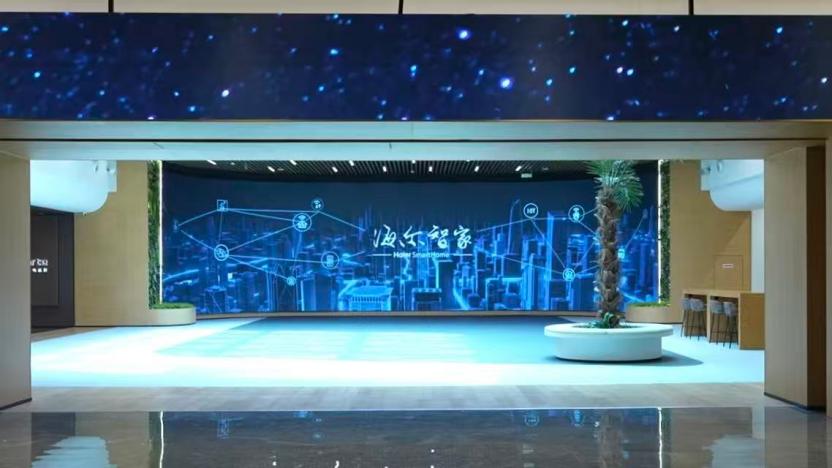
For the manufacturing industry, the most terrifying thing is not the inability to produce, but the situation where products are made but fail to meet the real needs of users.
Today, when users buy household appliances, they no longer only focus on capacity, energy efficiency, and price. Families with infants and young children care about how to store baby food and breast milk in the refrigerator. Pet - owning families are concerned about how the washing machine handles hair and odors. The elderly pay more attention to the temperature and air - feeling of the air conditioner. These subtle changes in daily life, when reflected within manufacturing enterprises, directly affect how products are defined, how materials are stocked, how production lines are arranged, and how inventory is managed. Any miscalculation in any link may result in a waste of real money.
Cui Xiuyuan, the CTO of Haier Smart Home, put it more straightforwardly: "If we stock up in advance and produce products that consumers don't need, it may lead to stagnant inventory, and raw materials will be overstocked."

Cui Xiuyuan, CTO of Haier Smart Home
This kind of judgment deviation is not because enterprises don't have data. Orders, inventory, drawings, after - sales records, and user feedback have already been imported into the system. However, just because the data is recorded doesn't mean the enterprise understands the needs; and just because a problem is discovered doesn't mean that R & D, procurement, production, and service can be adjusted immediately.
After AI enters the manufacturing industry, it must answer this question: How can it be truly integrated into the business process? As Xu Xiaomin, the general manager of Tencent Cloud in North China, said, "If you want to use AI to improve quality and efficiency, you must have a deep understanding of the business and integrate it into the process."

Make AI the "Operating System" of the Enterprise
Inside Haier Smart Home, the unified entrance for employees to access AI is the intelligent agent platform, Zhixiaoneng. Cui Xiuyuan defines it as the enterprise Agent OS in the AI era. Through this single entrance, employees can check orders, view inventory, subscribe to business reports, and also call intelligent agents in different scenarios such as R & D, procurement, marketing, and customer service.
Cui Xiuyuan gave an example. When an employee says, "Help me check an order," the system not only finds the order but also continues to determine whether the order is overdue and whether it needs to be expedited. If the employee then asks about the raw material inventory, the system can compare the inventory situation and remind whether the raw materials are in short supply and whether replenishment is needed.
Currently, AI is used in 9 major business areas, 5 major platforms, and more than 70 business scenarios of Haier Smart Home, covering R & D, production, supply, sales, and service.
The first area to be changed is the R & D end. Haier Smart Home has been making products for many years and has left a large number of historical drawings. Cui Xiuyuan mentioned, "But how can you identify them? How many BOM components are there? How many BOMs are designed in the drawings? What are the sizes? It's very difficult for humans to do this."
After AI comes in, the drawing - recognition intelligent agent first reads out this content and then passes it to the digital system. The old drawings that used to be buried in the archives start to become reusable data assets again.
Business analysis is no longer just "pushing data." In the past, Haier Smart Home could push business data to management every day, but why the changes? Where are the problems? It still had to rely on human analysis. Now, the daily morning business report for the boss is automatically pushed by Zhixiaoneng. Cui Xiuyuan said, "The model can dig deep into the data layer by layer. It can clearly identify where the problem lies and what the core issue is."
Procurement is directly related to costs. Xu Xiaomin mentioned, "In the past, large - scale procurement often relied on human experience. After AI comes in, this experience can be quantified. Combining historical market conditions, pricing, and market changes, it can help procurement make more rational judgments."
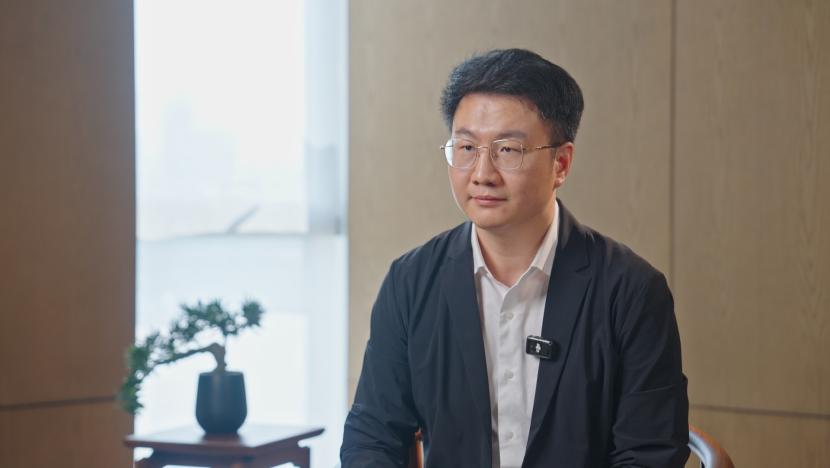
Xu Xiaomin, General Manager of Tencent Cloud in North China
The service end is more easily perceived by users. When users call the customer service, AI can first determine what might be wrong with the household appliance. After the service personnel arrive at the scene, they can also use AI to determine the cause of the fault step by step. These scenarios may seem scattered, but they all point to a common change: AI starts to take over the work that used to rely on humans to search, check, track, and make judgments based on experience. Of course, as Xu Xiaomin said, to determine whether an enterprise has truly used AI, we still need to see whether it can help the enterprise reduce costs and increase efficiency in financial indicators and whether it can help the enterprise shorten the time in certain processes.
Haier Smart Home has given its answer: The efficiency of R & D models has increased by 20.7%, procurement costs have been reduced by 10%, and the problem - solving rate of 30,000 terminal personnel has reached 99.5%.

From Waiting for IT Scheduling to All - Staff Developers
What excites Cui Xiuyuan more than just getting a few scenarios to work is the emergence of a new way of working inside Haier Smart Home.
In the past, when employees had ideas, they usually had to first submit requirements to the IT team. After the requirements were submitted, there would be arguments, scheduling, and priority comparisons. In the end, what was often compared was not which requirement was more important, but which one was more urgent. This is almost an old problem in the digital transformation of all large enterprises: Business personnel understand the on - site situation best but don't know how to develop; the IT team can build systems, but there are always endless requirements to be scheduled.
Now, Haier Smart Home has launched the "All - Staff Developers" initiative. Employees don't need to learn how to write code first. As long as they clearly state their ideas, the Zhixiaoneng platform can generate applications. After employees verify and confirm that there are no problems, they can be released. To further lower the threshold, Haier Smart Home has even developed a "skill for writing skills." Many employees' first reaction is a sigh of relief, saying, "Finally, I don't have to wait for R & D to schedule my tasks."
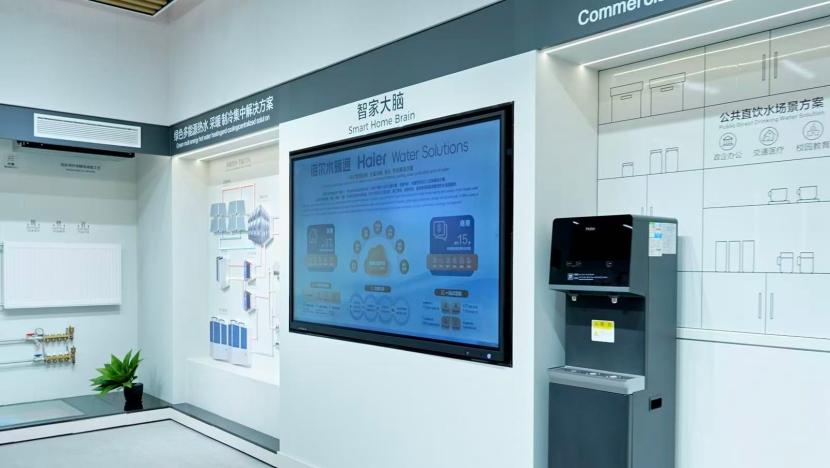
A greater change has occurred within the organization. In Cui Xiuyuan's words, "The AI awareness of all employees has been raised." Currently, employees of Haier Smart Home have self - built 262 intelligent agents through Zhixiaoneng, and the number of created lightweight applications has reached more than 5,100.
The prerequisite for Haier Smart Home to open up to all employees is that the digital foundation has been laid. Digitalization is the foundation, data is the nourishment, and AI is the amplifier. Since 2022, Haier Smart Home has built the H - work platform, which integrates the business capabilities, permissions, and APIs in R & D, production, supply, sales, and service onto a unified platform. In the Agent stage, the underlying business APIs are further semantized so that the large - scale model knows which interface to call and what it can do.
For the same phrase "Check an order," it doesn't just randomly search for data. Instead, it finds the corresponding interface within the employee's permission scope. The API scope seen by marketing personnel and procurement personnel is different, and what the Agent can do is also different.

Let the Agent Work Safely in the Enterprise
When these Agents really enter the business process, another more realistic problem arises: Can they run safely, stably, and on a large scale?
"When an individual user uses AI to write a document, the worst result is just a poor - quality document. However, if an enterprise - level Agent executes tasks related to procurement, processes, and finance, it may cause disastrous consequences." Xu Xiaomin, who has served government and enterprise customers for many years, knows well that security has always been the top priority for enterprises.
This is also the area that Haier Smart Home and Tencent Cloud have repeatedly polished during their co - creation. Haier Smart Home is responsible for clearly defining the scenarios, data, permissions, and business entrances. Tencent Cloud, based on ClawPro and full - stack AI capabilities, provides security sandboxes, models, computing power, and intelligent agent engineering capabilities to enable these Agents to operate controllably in the real - world business environment. For this reason, the Tencent Cloud team once stationed at the Haier Smart Home campus and worked with the Haier Smart Home team to polish issues such as security isolation, VPC, and sandbox authentication before going live. More than 30 people spent more than 20 days to complete the capability adaptation.
In addition, it is necessary to define the execution boundaries: which things can be automatically done by the Agent and which must be confirmed by humans. "For some key instructions and the execution and confirmation of key tasks, there must ultimately be human supervision." This also returns to Xu Xiaomin's judgment: "The implementation of AI cannot be generally discussed as a tool. It must be applied to specific scenarios."
Now, Haier Smart Home is opening up this set of AI capabilities to upstream and downstream enterprises and co - creating with more ecological partners. Many small and medium - sized enterprises want to use AI but don't know where to start. Haier Smart Home hopes to refine its own experience, which may help more enterprises avoid detours.
When AI is truly integrated into the manufacturing industry, what changes is not only efficiency but also the way enterprises respond to needs, organize production, and operate in a coordinated manner. For the manufacturing industry, the impact of this change is far greater than what we can see at present.