When AI Starts Assisting Educators: 15 EdTech Companies Worth Noticing
If there is a technology that can save teachers 10 hours of administrative work time per week; if there is a platform that can help schools identify students' mental health risks in advance; if there is a tool that can enable colleges and universities to see the relationship between courses and the job market more clearly - most educators would not reject such products.
The problem is that behind these products stands the most controversial technology in the past few years - artificial intelligence.
While the outside world is still discussing whether AI will change education, some education technology companies have already started using it to solve more specific problems. Recently, Fast Company announced the list of the most innovative education technology companies in 2026. The 15 selected companies cover multiple fields such as teacher workload reduction, mental health, academic research, college applications, and vocational training. From their explorations, we can also see which education scenarios AI is being implemented in first and what new directions the education technology industry is focusing on.
Merit America: Aiming at "AI-Resistant" Vocational Training
Since 2018, Merit America has been helping low-wage workers improve their skills and find new career opportunities. It has served nearly 20,000 people in total and achieved a salary increase of $1.4 billion. Data shows that the average salary of the participants in the program has increased from $27,800 to $48,500. As generative AI changes the labor market, the institution added new vocational directions in 2025, such as human resources, semiconductors and advanced manufacturing, and supply chain planning, hoping to help learners enter industries that are less vulnerable to the impact of AI. At the same time, Merit America is building an online college for working adults to explore a new path connecting higher education and vocational training.
Liner: Making AI Search an Academic Research Tool
Liner, headquartered in South Korea, is an AI search tool for researchers, college teachers, and students. According to the relevant accuracy benchmark test of OpenAI, Liner is considered one of the most accurate AI search engines in the world. Currently, the platform has more than 12 million active users, including those from universities such as Harvard University and the Massachusetts Institute of Technology. Last year, the company launched an AI agent tool that can scan more than 200 million sources, provide researchers with summaries, citations, and peer-review information, and completed a $26 million financing round.
Ellucian: Connecting College Courses to the Job Market
Ellucian, which serves about 3,000 colleges and universities and 20 million students globally, has long provided solutions for registration management, degree planning, and student services. In recent years, the company launched an AI platform called Ellucian Journey, which matches the skills students learn with career paths and labor shortages, helping students understand the relationship between course selection and future employment. At the same time, the platform also supports colleges and universities in designing retraining programs, vocational certification courses, and non-degree learning programs to respond to the ever-changing talent needs.
Kaplan: Bringing AI Advisors to College Applications
The college application process is complex and highly competitive. Kaplan hopes to use AI to lower the threshold of this process. Its AI admissions advisor, KapAdvisor, has helped more than 80,000 students complete their applications and can provide feedback on application essays and personal statements. Last year, the company also launched KapAdvisor Premium for Parents, targeting parents, in the hope of helping them participate in the application process without excessive intervention. So far, nearly 3,000 families have registered to use this service.
Patient Ready: Training Future Doctors with Virtual Patients
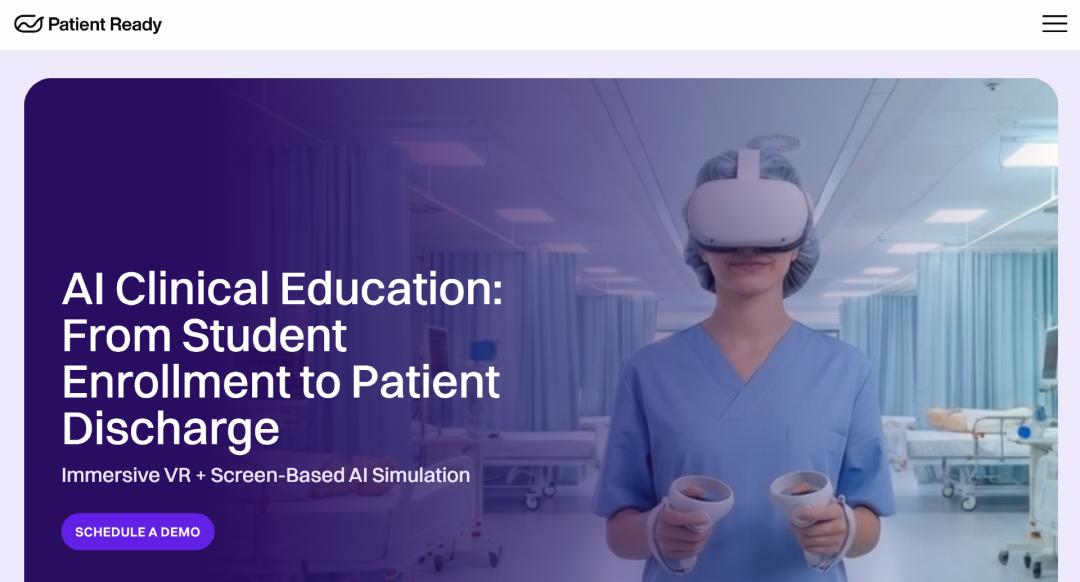
Patient Ready applies AI to medical education and builds virtual patients capable of real-time interaction through an immersive simulation system. The characters in the platform can react according to language, tone, and body language, helping medical students practice in an environment close to real scenarios. In 2025, the company further launched a neurodiverse AI patient project, covering scenarios such as autism, attention deficit hyperactivity disorder, and post-traumatic stress disorder, and cooperated with academic institutions to study the impact of AI simulation on the cultivation of clinical skills.
Pangram: Trying to Solve the Problem of False Positives in AI Detection
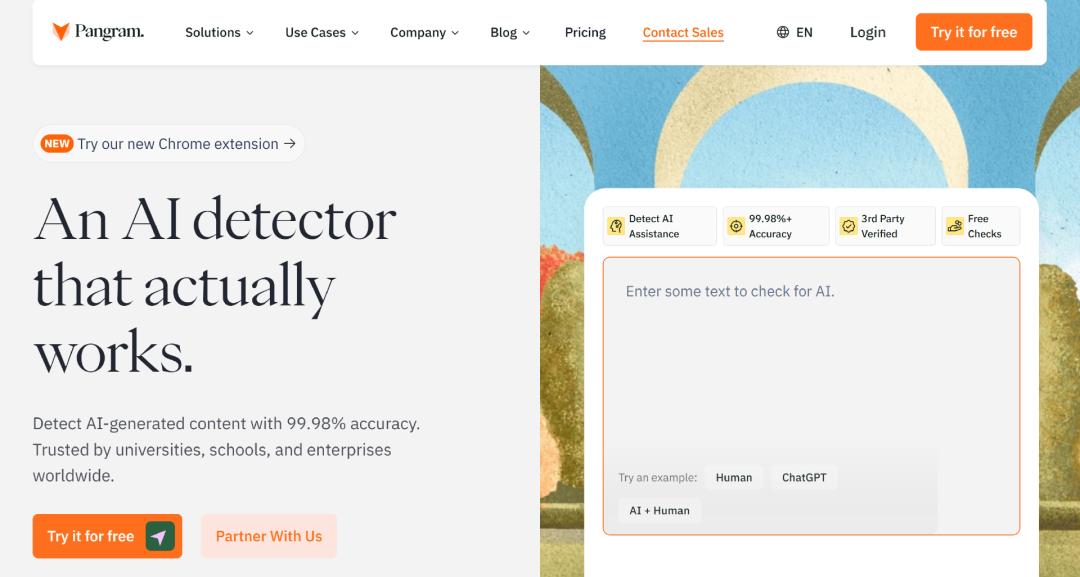
As AI detection tools enter the classroom, the problem of false positives has attracted more and more attention. Pangram, founded by former Google and Tesla engineers, hopes to solve this problem. The company claims that the false positive rate of its system is only one in ten thousand, and it can identify AI-generated content sentence by sentence. According to the results of four independent academic studies, Pangram shows high accuracy among multiple AI detection tools. In the past year, the number of its college and classroom customers has increased by 300%, and it completed a $4 million Series A financing round.
Lingokids: Bringing Children's Education Content to Planes
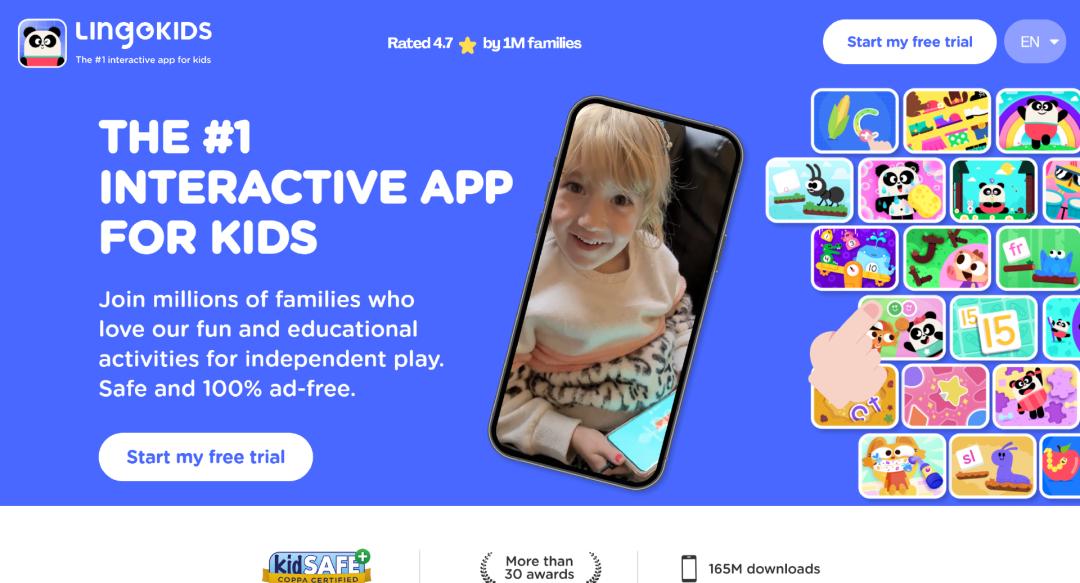
Lingokids, with more than 20 million monthly active users and covering 185 million families, is expanding new learning scenarios. Through cooperation with American Airlines, the company has introduced educational content into the in-flight entertainment system, providing more than 10 hours of learning content for children under 8 years old. At the same time, Lingokids also cooperated with NASA to launch astronaut-themed courses, developed dinosaur interactive courses with BBC Earth, and became an approved homeschooling resource provider in 15 states in the United States.
TrustCircle: Bringing Mental Health Support to the Classroom
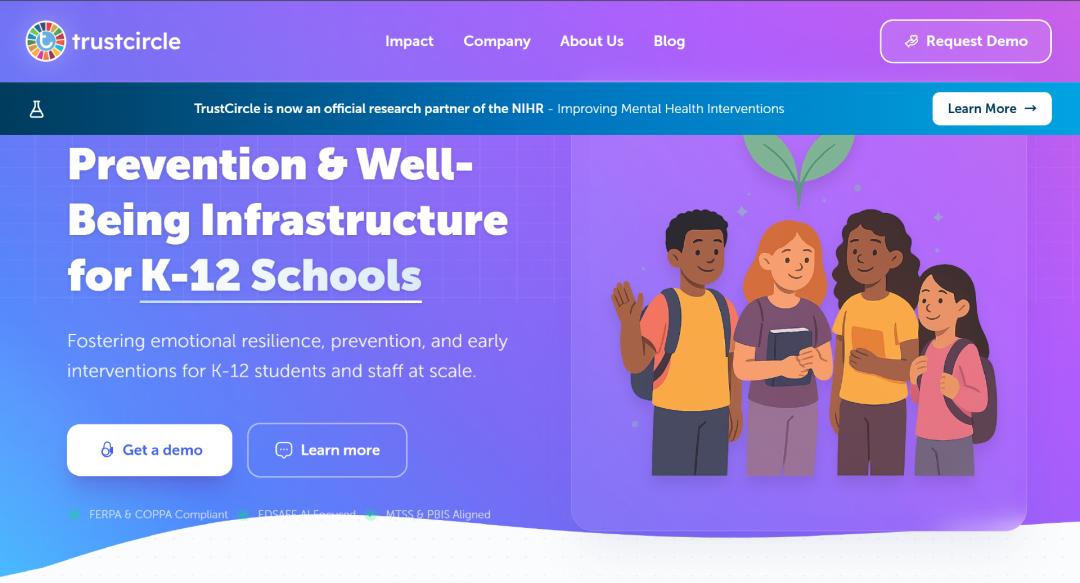
Students' mental health is becoming a topic of increasing concern for more and more schools. TrustCircle integrates short self-reflection activities into the classroom through AI analysis and prediction models, helping schools identify students with potential risks and observe overall trends. Currently, the platform covers more than 200,000 students and faculty in Hawaii public schools and has promoted relevant bills to include mental health practices in the education agenda. In addition, TrustCircle also provides services in areas with limited network conditions, covering more than 21,000 Native American students.
MagicSchool AI: Helping Teachers Get Back the Time Occupied by Administrative Affairs
Among many educational AI products, MagicSchool AI directly targets the problem of reducing teachers' workload. Currently, the platform has entered more than 13,000 schools and school districts in the United States and is used by more than 6 million educators in 160 countries. The platform provides functions such as content review, safety management, and risk early warning, and at the same time helps teachers with lesson preparation, communication, and administrative affairs. The company claims that its product can help teachers save up to 10 hours of work time per week. Last year, MagicSchool AI completed a $45 million Series B financing round.
Coursera: Accelerating Global AI Skills Training
Coursera, with nearly 200 million learners, has become an important platform for enterprises to conduct AI training. As of mid-2025, the cumulative number of registrations for its more than 1,000 generative AI courses has exceeded 10 million. Many enterprises, including Moderna, use Coursera to conduct AI training for their employees. Among them, Moderna provides relevant learning programs for 5,600 employees. It is reported that the overall AI knowledge level of employees has increased by about 30%. Currently, Coursera serves more than 6,500 enterprise customers and expands its courses to 26 languages through AI dubbing technology.
Arist: Popularizing AI Knowledge via Text Messages
Compared with traditional online learning platforms, Arist has chosen a more lightweight path. The platform pushes short course content to users via text messages and Slack and currently serves nearly 4 million learners. Its customers include Google, HP, ExxonMobil, and many pharmaceutical companies. In 2025, Arist became a technology partner of the U.S. Department of Labor's AI education project and plans to provide 25 million basic AI courses to the public through text message channels.
Duolingo: Making AI a Language Learning Partner
As one of the most well-known language learning platforms in the world, Duolingo currently has more than 50 million daily active users and 10 million paid subscribers. In the past year, the company added nearly 150 language courses, all of which were developed with the help of AI. At the same time, Duolingo launched an AI character named Lily, which helps users practice oral expression through real-time video conversations. In addition, the company also launched a chess course and used AI to generate code to build the course system.
Cengage: Teaching Students to Use AI Responsibly
Facing the increasingly frequent use of AI tools by students, Cengage hopes to guide them to use the technology reasonably. The student assistant launched by the company emphasizes the cultivation of critical thinking rather than directly providing answers. Data shows that the time students spend on this platform is four to five times that on general chatbots. Since its official launch at the end of 2024, this product has served more than 1 million students. At the same time, Cengage is also developing an AI assistant and a skills assessment platform for enterprise training.
Loog: Creating a Hardware and Content Ecosystem for Music Enlightenment
Loog focuses on children's music education and builds a learning ecosystem through guitar and piano products suitable for children. At the end of 2024, the company cooperated with Duolingo to launch a piano product and linked it with Duolingo's music courses. At the same time, Loog also launched a children's program called Loog Guitar Show and a subscription platform called Backstage Pass with more than 200 licensed songs. Data shows that the company's revenue increased from $80,000 in 2022 to $760,000 in 2024, and it sold about 100,000 musical instruments in 2025.
