Is it a replica of 'Enron', is Muddy Waters just seeking attention, or is SoFi truly in a disastrous state?
In the previous article, by sorting out SoFi's basic business, we learned that currently, the company's performance is mainly driven by the expansion of the Loan Platform Business (LPB), with a small part coming from the further recovery of student loans.
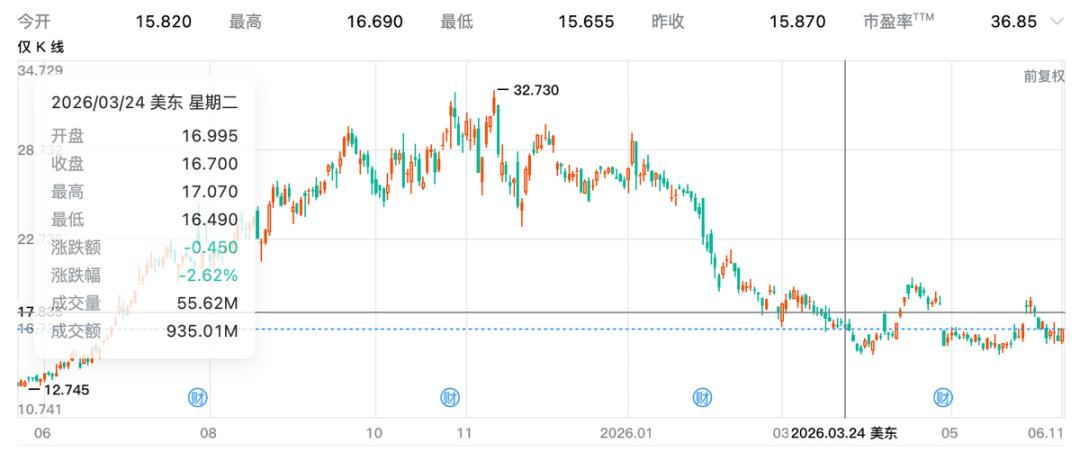
On March 23, Muddy Waters' short - selling report precisely targeted the key business. In Muddy Waters' view, SoFi's behavior is as bad as that of GE and Enron back then. However, the market reaction seemed to be mild. Especially after the CEO quickly stepped in to increase his holdings in support, the stock price only dropped by 2.6% the next day. Even compared with the short - selling report, the fluctuations in the cryptocurrency market have a greater impact on SoFi's stock price.
For a company with a valuation premium, identifying potential risks is more important than calculating its growth prospects. Therefore, before making a value judgment, Dolphin Researcher delved into Muddy Waters' short - selling report. Objectively speaking, the problems pointed out by Muddy Waters are basically supported by solid evidence, and we also believe that SoFi has some logical flaws.
However, from the perspective of the expected difference, Dolphin Researcher believes that there is not much incremental information. SoFi's accounting recognition method has been publicly disclosed from the beginning, and the rights and obligations relationship with customers are also regularly disclosed in previous annual reports. Therefore, at least for mature institutional funds, being a bull on SoFi means accepting its shortcomings.
But it may affect some non - professional investors with a considerable amount of funds. Muddy Waters' report allows them to intuitively feel SoFi's problems, thus weakening their bullish sentiment.
So, why does SoFi still have a valuation premium compared to its peers? Dolphin Researcher believes that bullish funds are buying SoFi's ecosystem of 14 million users and the possibility of SoFi's success in transforming from a single credit institution into an integrated financial platform - SoFi is currently in a stage where the framework of a one - stop financial platform has been established, but user penetration is not deep and monetization is shallow. Conversely, this is also the point where SoFi's story may be attractive to some funds.
Put simply, high growth can solve all problems. The management's bright guidance of a 30% CAGR in revenue and a 40% CAGR in EPS for SoFi in the next three years is the underlying belief for bulls to remain optimistic. This is probably also the reason why Muddy Waters is bearish but not shorting - after releasing the short - selling report, Muddy Waters disclosed that it would close its short position in SoFi.
As long as SoFi's user base continues to expand rapidly, and if the absolute value of revenue is not comparable horizontally, at least the growth rate is considerable from its own vertical comparison, and the target TAM is large enough, it can cover some loopholes in performance, such as the problem of inflated profits. At the same time, in terms of price judgment, bulls with a high - risk appetite are willing to give a PEG valuation that matches the growth rate, or more optimistically, directly anchor the value based on the market value of peer companies after assuming SoFi's success.
This article will focus on the analysis of Muddy Waters' short - selling report and visualize SoFi's defects. The next article will make value judgments on SoFi under different expectations based on the market TAM and competition.
The following is a detailed analysis
1. Problem 1: Beautifying the bad debt ratio and inflating profits?
Considering loan resales, SoFi's default rate does not have an industry advantage, but Muddy Waters still targeted the problem of "inflated bad debt ratio" of SoFi.
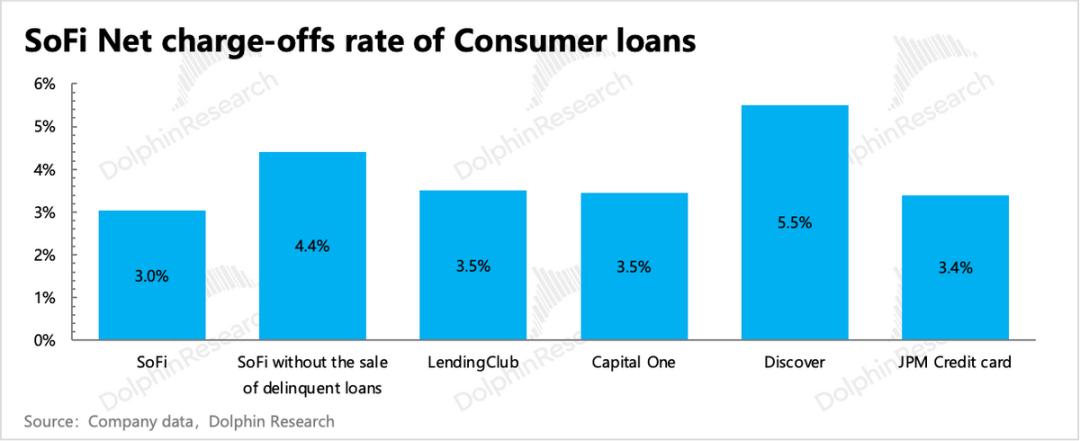
This is the most direct and, in our opinion, the most powerful point in Muddy Waters' short - selling report. Muddy Waters believes that the bad debt ratio of loans disclosed by SoFi is much lower than the real bad debt ratio. The continuously declining bad debt ratio of loans since 2024 is due to a plan called "optimizing asset value", which is actually a "non - performing asset disposal" plan: before the loan matures, this part of non - performing assets is disposed of at a discount.
One of the most obvious asset disposal operations mentioned by Muddy Waters: SoFi sold defaulted loans with a fair - value - recognized amount of $62.5 million to an entity called Eltura Ventures for only $5 million (SoFi did not officially disclose the selling price).
In addition to the early disposal of loans approaching the overdue limit to improve the bad debt ratio (according to FFIEC regulatory requirements, personal loans overdue for more than 120 days are recognized as bad debts), Muddy Waters also mentioned that SoFi may irregularly transfer personal loans to trusts/VIEs (essentially transferring on - balance - sheet assets through asset securitization), that is, moving from on - balance - sheet to off - balance - sheet. Because in SoFi's personal loans, the "current bad debt write - off scale" is greater than the "scale of overdue loans over 30 days disclosed in the previous quarter", which is unreasonable.
Such operations not only affect the value of loan assets recognized based on fair value but also are likely to affect SoFi's current profits.
First, the conclusion: Dolphin Researcher believes that SoFi is not involved in data falsification or concealment (the calculation factors mentioned by Muddy Waters are all publicly available in the financial statements, but investors need to calculate them themselves), but the bad debt ratio directly disclosed by SoFi does have the problem of inflation.
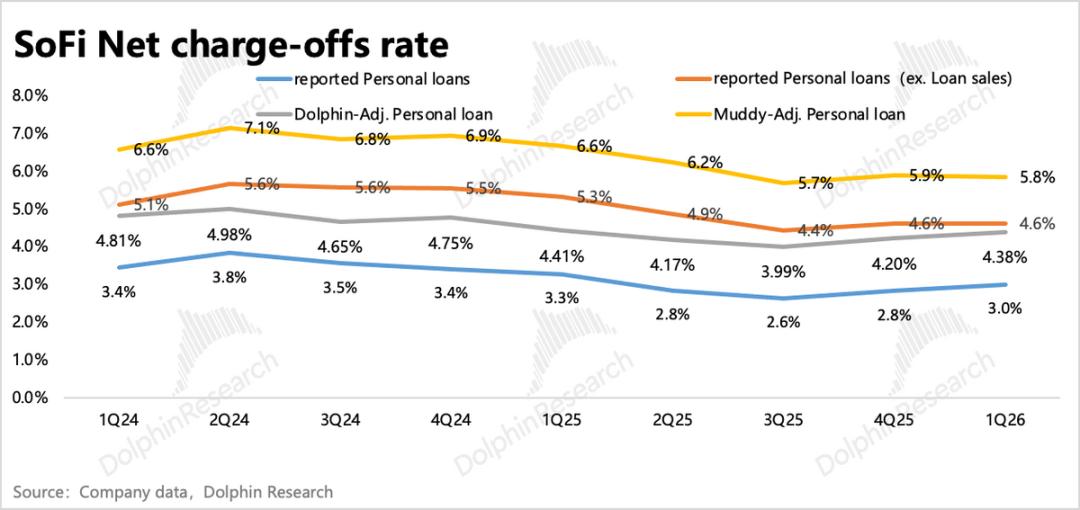
However, if we refer to the bad debt ratio after excluding the impact of overdue loan sales "additionally disclosed" by the company, the deviation of the actual bad debt ratio is not as large as expected (4.4% vs 4.6%, see the specific calculation process below for details). And if we only look at SoFi alone, a nearly 10% loan interest rate can bear a bad debt ratio of just over 4%.
But we must admit that what Muddy Waters said is not completely unfounded. We believe that what needs to be vigilant about is that SoFi may transfer the losses of 1P loans off - balance - sheet, which will directly affect the recognition of current real profits:
Taking the last two quarters as an example, it accounts for about 20% of the current EBITDA, and the situation was more serious from 2023 - 2024. Coupled with the impact on fair - value pricing, this is also the core reason why Muddy Waters claims that SoFi has overstated its profits by up to 90% in history.
Next, Dolphin Researcher will conduct a specific calculation and breakdown:
In the previous article, we said that SoFi's credit business is mainly divided into two categories: self - lending and third - party lending. Third - party platform lending mainly earns referral fees, and the business model is relatively simple. The self - lending part is divided into loans that remain in the company during the term to collect interest and loans transferred off - balance - sheet (Transferred loans) through ABS, etc.

But off - balance - sheet loans are divided into two categories according to actual operations:
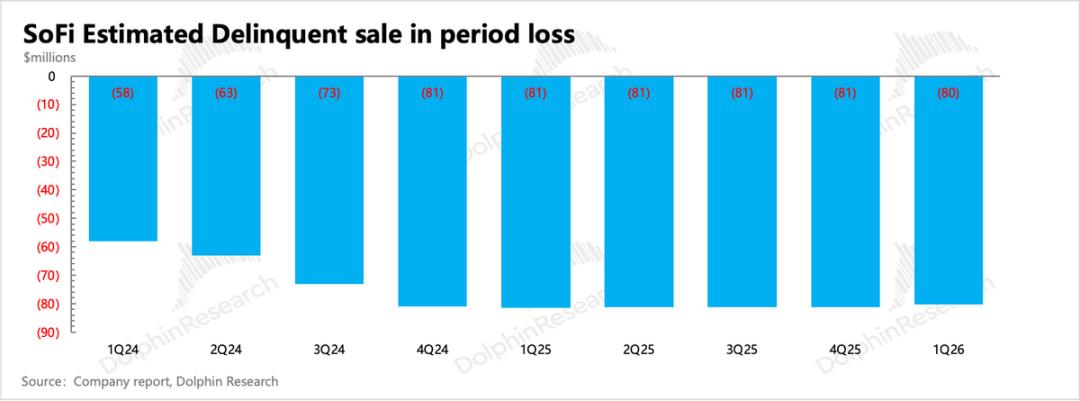
a. One is to transfer loans off - balance - sheet when they are approaching maturity (overdue for nearly 120 days and about to be written off). This requires selling at a discount, and the money lost from the sale is a subtraction item in many non - interest incomes. Note that Muddy Waters believes that the losses from this part of the discounted sales should be included in the calculation of the on - balance - sheet bad debt ratio as written - off bad debts.
b. Transfer on - balance - sheet loans off - balance - sheet through the normal ABS method to recover funds and expand the business; SoFi still provides most of the post - loan services for this type of assets and will charge a loan management service fee.
For this part of off - balance - sheet assets, SoFi is actually transparent - it discloses the specific asset balance, write - off amount (loans overdue for more than 120 days need to be written off), and the default amount of loans overdue for more than 30 days every quarter.
Muddy Waters' core question also lies here: In theory, the amount of bad debts that are overdue for 120 days and must be written off in the current quarter basically all come from loans overdue for more than 30 days at the end of the previous quarter. However, the amount of bad debts written off for loans overdue for more than 120 days reported by the company is generally higher than the amount of bad debts overdue for more than 30 days at the end of the previous quarter (see the figure below). This problem was very serious in 2023 and 2024, and it was only in the most recent quarter that the situation really reversed.
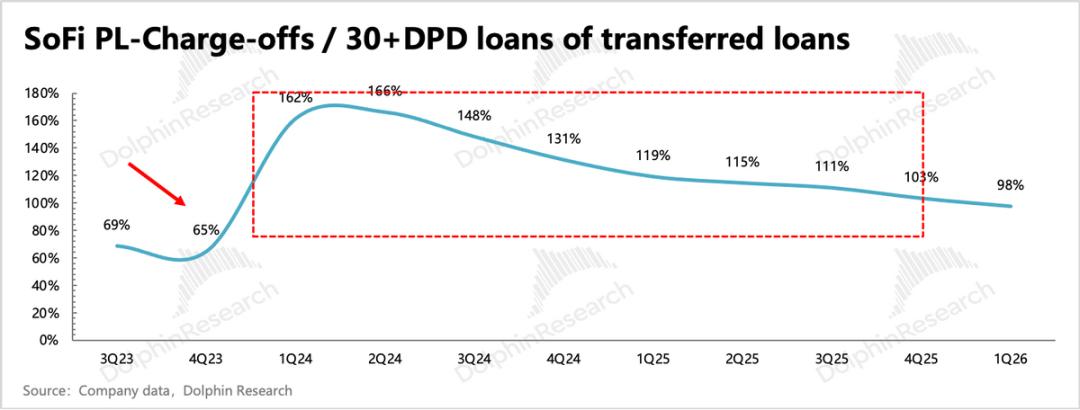
Therefore, Muddy Waters believes that there must be some bad debts that were originally on - balance - sheet loans, but in order to make the data look better, these bad debts were transferred to off - balance - sheet ABS - receiving and bridge companies.
Here, Muddy Waters made an assumption: Reasonably estimate that 70% of the loans overdue for more than 30 days at the end of the previous quarter will enter the amount of bad debts that need to be recognized as overdue for 120 days at the end of the current quarter. The excess part is the bad debts of on - balance - sheet assets that were secretly transferred to off - balance - sheet companies, thus reducing the bad debt ratio of on - balance - sheet assets and making it look good on the surface.
Taking the largest personal loans as an example, there are two types of loan balances: One is on - balance - sheet 1P loans, and the other is 1P loans transferred off - balance - sheet. There are three types of bad debt amounts: One is the bad debts reported by the on - balance - sheet company, one is the discount loss from the temporary off - balance - sheet of bad debts; and the last one is the off - balance - sheet bad debt amount (the company discloses it quarterly, but it does not enter the company's IS statement).
When Muddy Waters recalculated the bad debt ratio, it added all three types of bad debts together as the numerator (plus a fair - value adjustment item estimated by itself). The denominator remained the balance of the company's on - balance - sheet 1P loans, and the bad debt ratio was directly raised by one percentage point compared with the conservative calculation disclosed by SoFi.
However, Dolphin Researcher believes that when it is essentially unclear how to allocate the 1P bad debts and 3P bad debt amounts, there is no need to overly worry about the respective bad debts of the on - balance - sheet 1P part and the off - balance - sheet part to study the company's risk - control ability. Because in essence, these two asset pools are assets under the same risk - control logic of SoFi. Calculating the bad debt ratio by adding these assets together reflects SoFi's overall loan risk - control ability.
Dolphin Researcher restored a relatively fair calculation method:
First, for the denominator: Add the on - balance - sheet loan pool and the off - balance - sheet loan pool together to overall track the lending quality;
Second, for the numerator: Since the discount loss from the temporary off - balance - sheet of bad debts is essentially a process loss in the off - balance - sheet process, the real bad debt loss is the bad debt amount of the entire off - balance - sheet asset pool. The so - called discount loss from the off - balance - sheet of loans approaching maturity is also part of the overall off - balance - sheet bad debt loss. Therefore, the discount loss from the off - balance - sheet process is excluded from the numerator.
After such processing, the bad debt ratio of the combined on - balance - sheet and off - balance - sheet asset pool adjusted by Dolphin Researcher is actually 4.4%, which is lower than the 4.6% bad debt ratio of the on - balance - sheet loan assets after SoFi restores the operation of off - balance - sheet bad debts approaching maturity.
So, SoFi's risk - control ability and asset quality in lending are not bad.
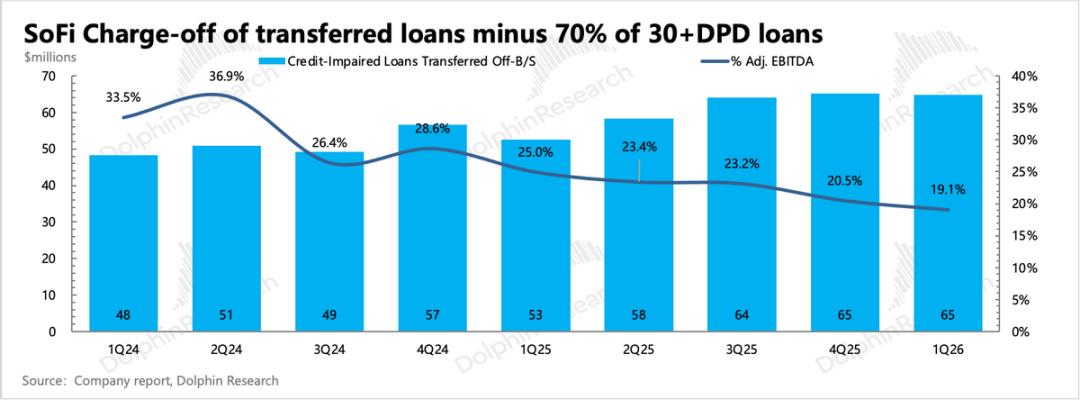
Muddy Waters' second core accusation is profit inflation, which is essentially two sides of the same coin: Muddy Waters calculates the part of the off - balance - sheet loan bad debts that is more than 70% of the loans overdue for more than 30 days at the end of the previous quarter (assuming that 70% of the bad debts of loans overdue for more than 30 days at the end of the previous quarter will be converted into bad debts that need to be written off for loans overdue for more than 120 days) as the on - balance - sheet loan bad debts hidden off - balance - sheet.
Therefore, this part of the bad debt loss needs to be brought back on - balance - sheet. According to Q1 2026, this "hidden" bad debt amount is about $65 million, accounting for 20% of the current profit (EBITDA), which means that the profit is inflated by 20%.
Based on this, it is believed that the management is engaged in financial statement window - dressing and is fraudulent and untrustworthy. Regarding this, Dolphin Researcher believes:
a. Is the profit inflated by 90%? There is a serious suspicion of using a gimmick to attract attention. The core of this assertion is actually the use of a 70% ratio and the selection of the quarterly data from the beginning of 2024 when the problem was the most serious. As restored by Dolphin Researcher before, even if calculated according to the 70% ratio