Zeng Yuqun of CATL poured cold water on solid-state batteries, stating that large-scale commercialization by 2030 is highly unlikely.
Amid the solid-state battery boom, CATL has offered a relatively calm judgment.
According to CheDongXi on June 16th, recently, Zeng Yuqun, the founder, chairman, and general manager of CATL, shared his predictions about the future development of solid-state batteries in an interview with Caijing.
Zeng Yuqun stated that if reaching a scale of one million vehicles equipped with solid-state batteries is considered the standard for large-scale commercialization, it is highly unlikely to achieve this goal before 2030.
Meanwhile, he emphasized that the development of solid-state batteries should be "event-driven" rather than simply "time-driven."
This statement quickly caught the industry's attention.
In the past two years, when solid-state batteries will be mass-produced and installed in vehicles has become one of the hottest topics in the new energy vehicle industry. Automobile manufacturers, battery companies, and industry chain suppliers have all announced timetables, with "mass production in 2027" and "popularization in 2030" becoming high-frequency terms in the industry.
However, Zeng Yuqun did not provide a clear mass production schedule this time. Instead, he redirected the focus to practical issues such as technological maturity, manufacturing capabilities, and cost control.
01. It's Difficult to Reach a Scale of One Million Vehicles Before 2030, "Event-Driven" Replaces "Time-Driven"
From his public statements, Zeng Yuqun does not hold a negative view of the development prospects of solid-state batteries.
During the interview, when asked whether solid-state batteries could achieve large-scale commercialization before 2030, Zeng Yuqun first asked, "How is large-scale commercialization defined?" After the interviewer set the standard as reaching a scale of one million vehicles equipped, his answer was, "It's highly unlikely."
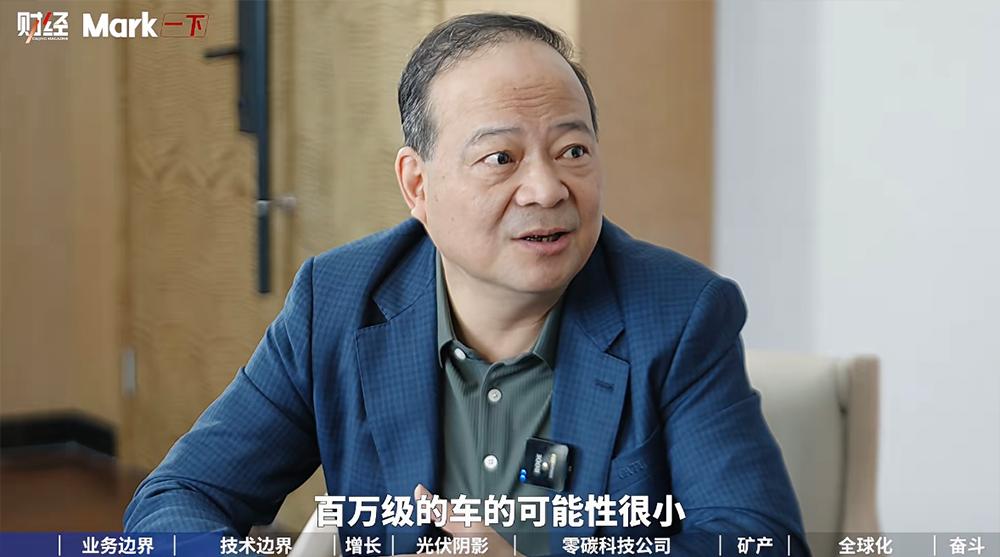
Zeng Yuqun mentioned in the interview that it's difficult for the scale of solid-state batteries installed in vehicles to reach one million before 2030.
The fact that a technology can work in the laboratory does not mean it can be mass-produced. Even if it can be mass-produced, it doesn't mean consumers can afford it.
For the automotive industry, reaching a scale of one million vehicles equipped means that technology, manufacturing, the supply chain, and cost have all reached a mature state. If any link fails, it's difficult to achieve real large-scale commercialization.
Zeng Yuqun specifically mentioned that the prerequisite for reaching a scale of one million vehicles equipped is that the vehicles are cheap enough, and solid-state batteries still face challenges in terms of performance and cost.
In other words, from laboratory samples to demonstration vehicle installations and then to large-scale commercialization, solid-state batteries still have many key issues to solve.
Therefore, Zeng Yuqun put forward a view: the development of solid-state batteries should be "event-driven" rather than "time-driven."
Simply put, what determines the commercialization process of solid-state batteries is when the key technological issues are solved.
02. Solid-State Battery Technology is at Level 4, and Large-Scale Commercialization is a Long Way to Go
As one of the world's largest power battery companies, CATL has been deploying in the field of solid-state batteries.
Zeng Yuqun mentioned in the interview that CATL internally uses the TRL (Technology Readiness Level) system to evaluate the development process of solid-state batteries, with levels ranging from 1 to 9. Among them, 1 represents the concept exploration stage, and 9 represents the ability to achieve mature mass production.
He believes that currently, solid-state battery technology is approximately at level 4.
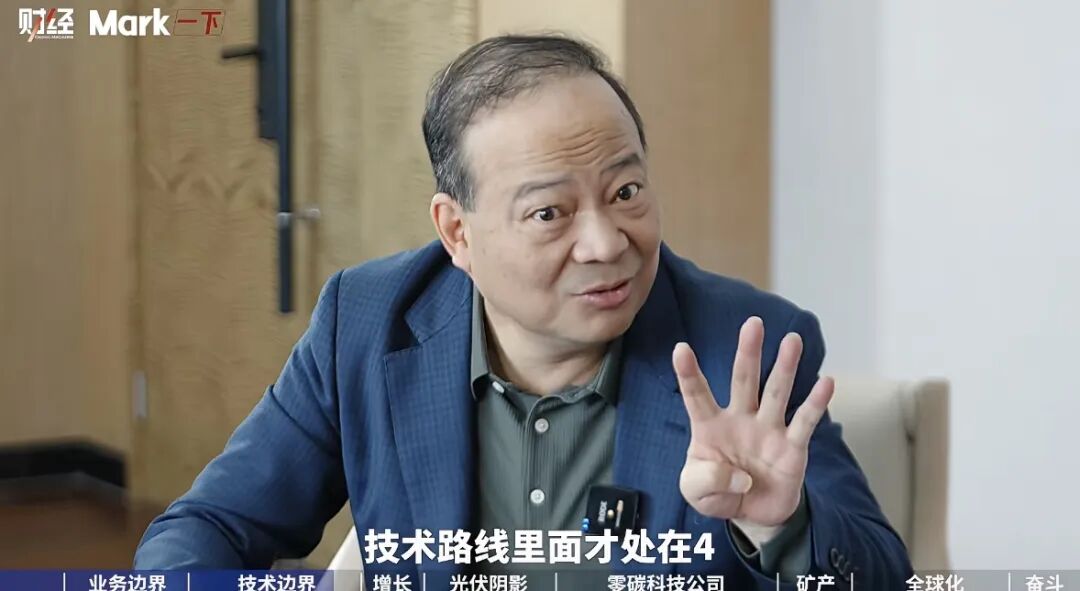
Zeng Yuqun said in the interview that currently, solid-state battery technology is at level 4.
Zeng Yuqun further explained that there are three routes for the commercialization of anything.
The first is the technical route, which mainly focuses on whether there are any technical obstacles. The second is the product route, which means it can be mass-produced and the supply can be guaranteed. The third is the commodity route, which means it has a high cost-performance ratio, is cheap enough, and can be accepted by users.
And level 4 means that the technology has completed the initial verification, but there is still a certain distance from the product route and the commodity route.
In other words, the feasibility of solid-state battery technology does not mean it can be manufactured on a large scale, let alone that it has sufficient competitiveness.
Meanwhile, Zeng Yuqun also further defined the concept of "solid-state batteries" in the current industry.
He particularly emphasized that a real solid-state battery is a battery that uses a fully solid electrolyte system under normal temperature and pressure conditions. It cannot be simply classified as a solid-state battery after partially replacing the liquid electrolyte.
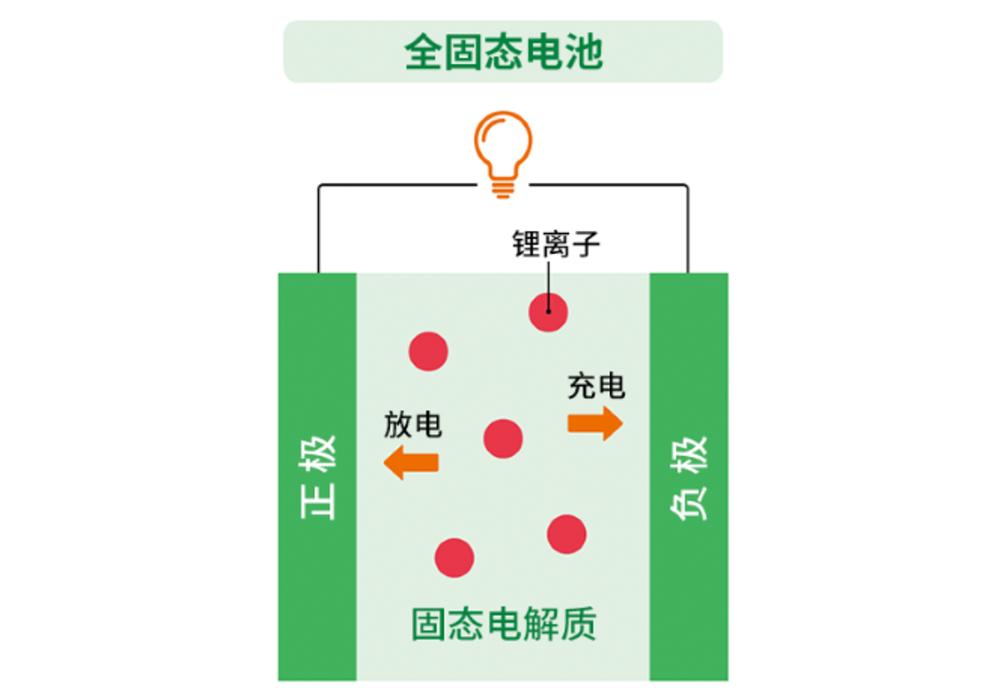
The working principle of a fully solid-state battery
In recent years, a large number of "semi-solid" and "quasi-solid" products have emerged in the market, and many vehicle models have started to be equipped with relevant batteries.
However, strictly speaking, solid-state batteries are still in the R & D and verification stage, and key problems such as solid electrolyte materials, solid-solid interface contact, cycle life, and manufacturing processes still need continuous research and development.
For battery companies, making a sample in the laboratory is just the first step. The real difficulty lies in turning the sample into a product and then turning the product into a large-scale commodity.
That's why Zeng Yuqun is cautious about the large-scale commercialization time of solid-state batteries.
When asked, "Beyond solid-state batteries, can you see a farther boundary for batteries?" Zeng Yuqun said that there is still a lot of R & D potential in areas such as battery cathode materials and high-voltage systems.
03. Conclusion: Industry Expectations Need to Return to Reality
In recent years, international automobile manufacturers such as Toyota, Nissan, Honda, Hyundai, and Volkswagen Group have successively announced their solid-state battery plans. In China, automobile manufacturers such as BYD, FAW Hongqi, GAC, and Geely have been continuously promoting relevant deployments. Meanwhile, a large number of supply chain companies in the upstream and downstream of the industry chain are also continuously increasing their R & D investment in solid-state batteries.
However, there are still many key technologies to be solved before solid-state batteries can be widely popularized on a large scale. The industry needs to re-examine practical issues such as the time and cost required to achieve this goal.
When the focus of industry discussions shifts from "in which year will it be mass-produced" to "when will the scale of vehicles equipped reach one million," the competition in the solid-state battery field is no longer just about the speed of technological breakthroughs but also about the ability to achieve industrialization.
This article is from the WeChat official account "CheDongXi." Author: Zhao Jingchu, Editor: Guo Zhihao. Republished by 36Kr with permission.