Signs of stabilization in the industry are becoming increasingly clear.
On the morning of June 16th, the National Bureau of Statistics released the macroeconomic and real estate data for May 2026.
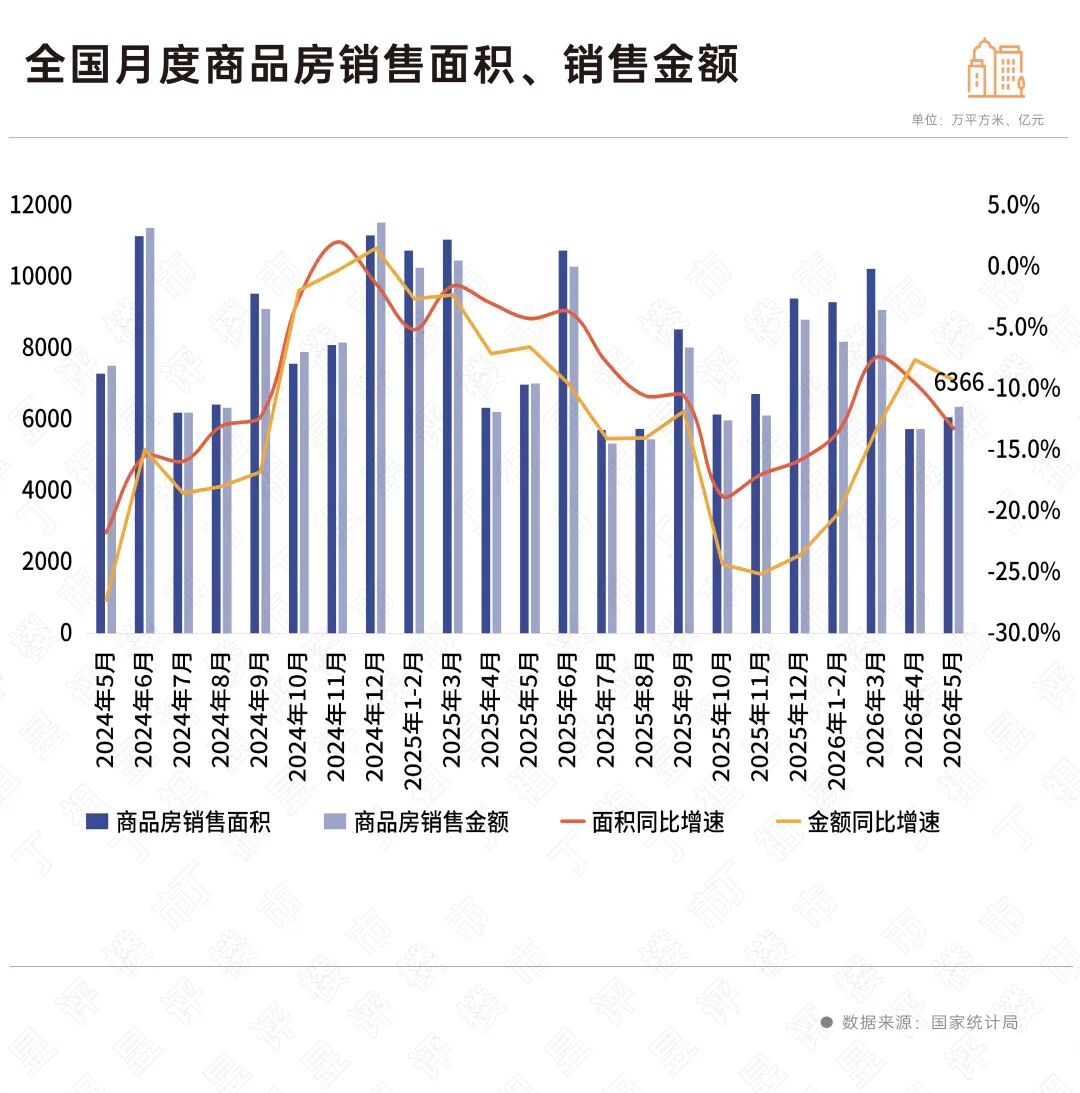
Looking at the core data: The cumulative year-on-year decline in the transaction amount of new homes in the first five months narrowed by 1.1 percentage points, and the transaction amount in a single month increased by 11% month-on-month. The unsold area decreased by 0.4% year-on-year. Among them, the area unsold for less than three years decreased by 2.8%, and the decline rate widened by 0.2 percentage points compared with the previous month. The prices of new homes in first-tier cities rose month-on-month for four consecutive months; the prices of homes in 16 cities rose month-on-month, reaching a new high in nearly a year. The newly started floor area of buildings decreased by 22.6% year-on-year, and the ratio of newly started area to sales volume was 57%, remaining at a historical low.
Local governments have introduced new policies to stabilize the market according to local conditions, bringing more definite expectations for the development of the industry. The pace of market recovery in the second half of the year will be further accelerated.
01
In May 2026, the performance of new home transactions continued to stabilize, and the bottom support of the market continued to strengthen.
Calculated based on the data disclosed by the National Bureau of Statistics, the sales amount of newly built commercial housing in May was 636.6 billion yuan, a month-on-month increase of 11%. In terms of cumulative sales, the year-on-year decline in the sales amount of new homes within the year continued to narrow. The year-on-year decline in the first five months continued to narrow by 1.1 percentage points. The sales amount was 2.94 trillion yuan, and the corresponding sales area of commercial housing was 313 million square meters.
The inventory indicators continued to improve. At the end of May, the unsold area of commercial housing decreased by 0.4% year-on-year to 770 million square meters. This was the third consecutive month of year-on-year decline. Among them, the area unsold for less than three years was 570 million square meters, a decrease of 2.8%, and the decline rate widened by 0.2 percentage points compared with the end of April.
In terms of the funds in place for real estate enterprises, the personal mortgage loans in the first five months were 406.6 billion yuan, a year-on-year decrease of 28%, and the decline rate narrowed by 3.7 percentage points compared with the first four months.
Behind the gradual stabilization of the market, the central government's top-level urban renewal plan and the local governments' 120 measures to stabilize the real estate market since May have formed a closed-loop policy linkage. Cities with population inflows not only enjoy the long-term development dividends of land, finance, and public service resource allocation, but also rely on the loose policies on the demand side to quickly activate the local housing market transactions. The demand for relevant industrial chains such as urban renewal, housing security, and residential development has expanded in multiple directions. The certainty of the industry's medium- and long-term growth has been further consolidated.
02
In May, the housing prices continued to send signals of stabilization.
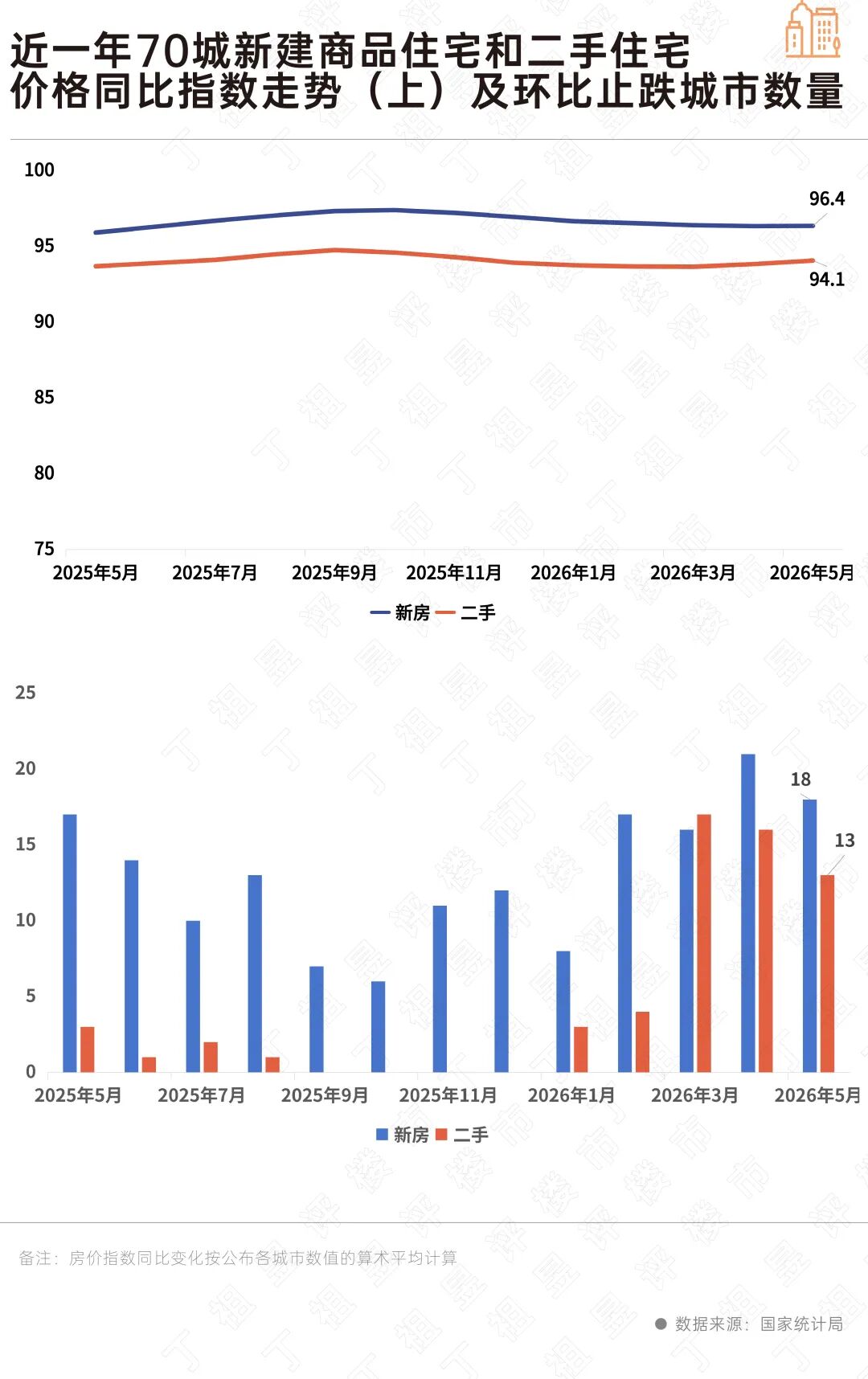
The sales prices of newly built commercial residential buildings in first-tier cities rose month-on-month for four consecutive months. In May, they rose by another 0.2% month-on-month, and the growth rate widened by 0.1 percentage point. Shanghai, Guangzhou, and Shenzhen rose by 0.2%, 0.2%, and 0.4% respectively, while Beijing decreased by 0.2%.
There were 16 cities where the prices of new homes rose month-on-month, reaching a new high in nearly a year. Hangzhou led the country with a month-on-month increase of 0.5%. The sales prices of second-hand residential buildings in first-tier cities rose by 0.4% month-on-month, and all four first-tier cities saw price increases. There were 10 cities where the sales prices of second-hand residential buildings rose month-on-month. For the first time since the second half of 2023, the number of cities with month-on-month price increases in second-hand housing has been no less than 10 for three consecutive months.
In May, the central bank clearly stated in its monetary policy implementation report that it will further improve the interest rate regulation framework, strengthen the guiding role of the central bank's policy interest rate, and improve the market-based interest rate formation and transmission mechanism.
Benefiting from the support of the monetary policy implementation and the further improvement of industry regulations, the demand side of the industry is expected to receive more tangible policy support, which will continuously boost the confidence of homebuyers and promote the further stabilization of the prices of first-hand and second-hand homes.
03
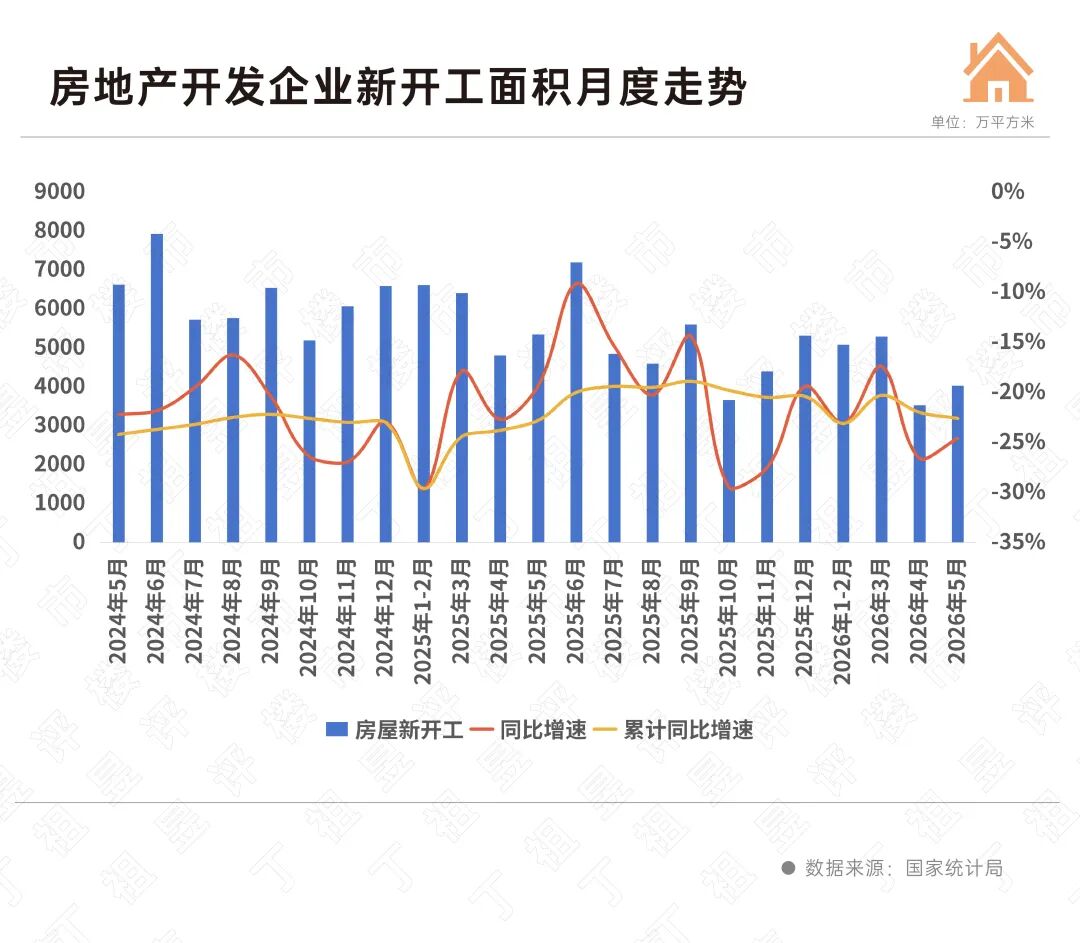
From January to May, the newly started floor area of buildings was 180 million square meters, a decrease of 22.6%. Among them, the newly started floor area of residential buildings was 130 million square meters, a decrease of 23.4%.
In the first five months of 2026, the newly started scale of buildings was 57% of the sales scale of new homes, an increase of 2 percentage points compared with the first four months, and it still remained at a historical low. The main reason is that local governments have stepped up efforts to promote urban renewal, bringing more housing security and high-quality residential projects.
At the end of May, the State Council officially issued the "15th Five-Year Plan for Urban Renewal", clarifying the development goals of urban renewal in 2030 and 2035 and deploying nine key tasks. This plan injects great certainty into the real estate industry. The structural expansion of the renovation scale, the doubling of the renovation of dilapidated houses, old blocks, and factory areas have released a large amount of stock renewal space, opening up new growth tracks for real estate enterprises.
With the start of construction of a large number of high-quality urban projects, it is expected that the newly started scale will optimize the structure at a reasonable low level, the proportion of projects with strong certainty will further increase, and the investment side of the industry is expected to accelerate into a moderate recovery stage.
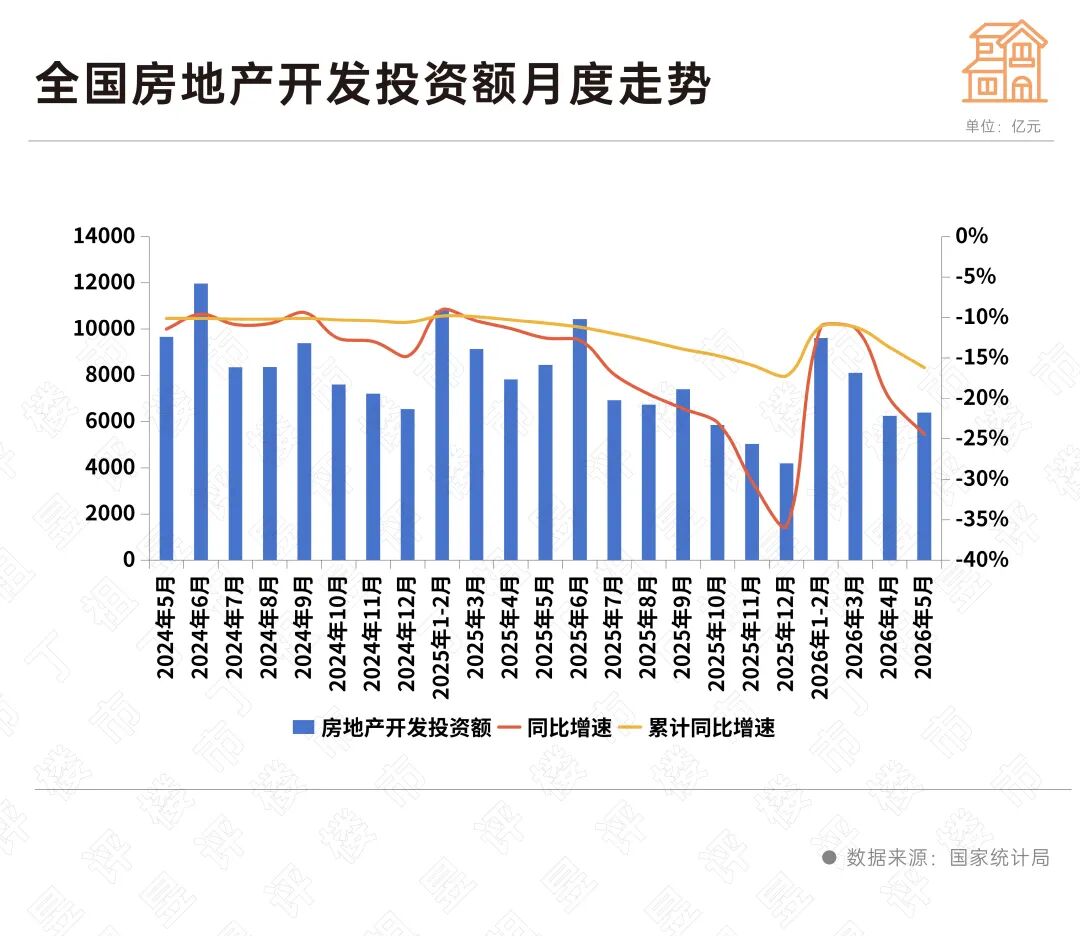
The national real estate development investment continued to decline. The development investment in the first five months was 3 trillion yuan, a year-on-year decrease of 16.2%, and the decline rate widened by 2.5 percentage points compared with the first four months. Among them, the residential investment was 2.3 trillion yuan, a decrease of 15.6%. It is worth noting that the single-month development investment in May was 638.7 billion yuan, a month-on-month increase of 2.2%.
Mainly because since May, local governments have offered a large number of key urban renewal and high-quality real estate development projects. The single-month development investment in May was 100.3% of the sales of new homes, slightly exceeding the sales scale of new homes.
Combined with the performance of the land market, the scarcity value of high-quality residential land has been continuously demonstrated. In May, a total of 21 residential land parcels were sold at a base price of more than 1 billion yuan, of which 14 were sold at a premium. The "double high and double competition" phenomenon reappeared in the land parcels in Pujiang Town and Nanmatou in Shanghai, with a premium rate of more than 40%. The land parcel in Jinji Lake in Suzhou refreshed the record of the floor price in the province. In the residential land auctions in June, there were even residential land parcels with a premium rate of more than 100% in Shenzhen for two consecutive weeks.
Overall, the industry data in May sent a positive signal: the elements of demand-side stabilization continued to accumulate, and the foundation for the industry's recovery continued to be consolidated.
It is expected that in the second half of 2026, the supply-demand relationship in the real estate market will be further improved.
The policy orientation in the future is clear. "High-quality urban development" remains the core keyword, and the policy support system will be further strengthened and improved. The coordinated efforts of urban renewal quality improvement and equalization of public services policies provide stronger certainty for the release of demand and investment expansion in the real estate industry.
Local policies will focus on optimizing provident funds, providing housing purchase subsidies, and offering tax and interest rate discounts to reduce the housing purchase costs of residents and boost their willingness to buy. The sales of new homes in core cities such as Guangzhou, Shenzhen, and Shanghai all increased month-on-month in May, the market activity significantly increased, and the market expectations continued to strengthen.
As the implementation effects of various central and local policies continue to be released, it is expected that the first-hand and second-hand housing markets in core cities will accelerate their stabilization.
This article is from the WeChat official account "Ding Zuyu's Commentary on the Real Estate Market". Author: Puri Research and the editorial department. Republished by 36Kr with permission.