Young People Flocking to Fabs: On the Assembly Line, Chasing the Hype
One employee received an eight - month bonus at once, and had double pay for several consecutive months. There were continuous supplies of drinks, meal allowances, and high - temperature subsidies... After chatting with the on - site workers for less than 10 minutes, Li Fei was "extremely envious" of the large amount of information.
He didn't think the workers were "boasting". After all, on the first day he was sent to the site as an engineer from the equipment factory, he was shocked by this Fab factory: At 5 a.m., the entire factory area was brightly lit, and the number of trucks coming in and out was so large that the factory entrance was as busy as a main road during rush hour.
When he inquired, he was even more shocked by its "money - making speed": It earns 400 million yuan a day, faster than a money - printing machine; the order volume is also simply overwhelming, directly scheduled until next year.
It's quite reasonable that as the company's wallet keeps swelling, the employees' wealth also rises. Moreover, this kind of "lavish spending after getting rich" is not an isolated case, but has swept across the entire semiconductor industry.
Take the "dream company" SK Hynix in South Korea for example. At the beginning of the year, it took out 21.2 billion yuan to distribute year - end bonuses, with an average of 640,000 yuan (136 million won) per person. Overnight, SK Hynix employees became the envy of everyone. Even the security guards at the gate made many South Korean college students envious; the Hynix work uniforms also became the "best dating outfit" in the blind - date market.
And this might just be the beginning. It can be seen that the AI wave is pushing the global semiconductor industry into a new round of large - scale expansion at an unprecedented speed.
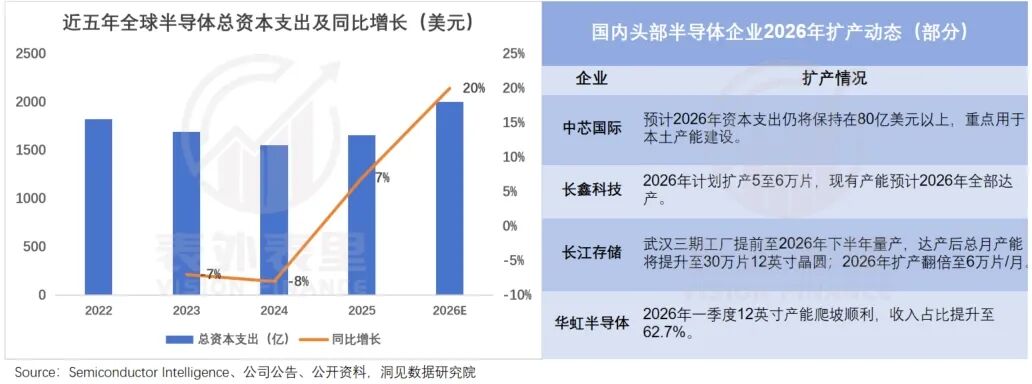
This growing and roaring wave is like a glowing treasure chest in a game. While illuminating the "financial future" of semiconductor businesses, it makes countless young people "compete to bow down".
Exceptional treatment, young people are scrambling to "enter the Fab"
"Line up, don't push. Everyone who comes today will definitely be hired. It doesn't matter if the QC (quality control) positions are full, general workers are also fine." Zhang Yu, with sweat on his forehead, stood in front of the line, maintaining order and shouting hoarsely.
This is already Zhang Yu, a semiconductor recruitment agent, not knowing how many times he has "lost his voice". Since last year, he has felt that his job has been going like a charm, "painful but happy".
As long as it's a semiconductor factory recruitment, he can easily attract hundreds of young people in a day. When the demand is high, there can even be four or five hundred people standing at the factory entrance. For large - scale semiconductor factories, there are often thousands of people queuing up during the peak period after the Spring Festival.
For each successfully placed worker, the recruitment agency Zhang Yu works for can get about 1,500 yuan. They successfully sent nearly a thousand workers to a large factory producing optical modules in one quarter. "I've never had such a prosperous business," Zhang Yu recalled.
However, he also emphasized that "this has little to do with the recruitment agency itself. It's purely because the industry situation is so good." After all, high labor demand and high pay have become the norm in the semiconductor industry, making it extremely attractive.
Wanzi, who jumped from a traditional factory to a semiconductor factory, has the deepest experience of this.
As a liberal arts graduate from a so - called "hopeless major" who "was unemployed as soon as he graduated", he entered a cosmetics factory with a bachelor's degree, originally thinking he could have free accommodation and meals and save some money. But in the end, he only got a few hundred yuan in meal allowances per month, which couldn't even last half a month; although the accommodation was free, he had to pay for water and electricity himself, and the cost was several times higher than outside... After all the deductions, he was almost living paycheck to paycheck.
"There's no future in terms of money, and the work is also exhausting," Wanzi complained. His daily work was to stand by the assembly line, manually screwing the caps on creams and lotions for several consecutive hours. After working for a short time, he suffered from hand cramps and tendonitis.
After entering the assembly line of the semiconductor factory, everything has improved significantly: He can get a salary of six or seven thousand yuan, much higher than that in traditional factories; general workers also have a complete set of five social insurances and one housing fund; and they can get a promotion and a salary increase after working for half a year.
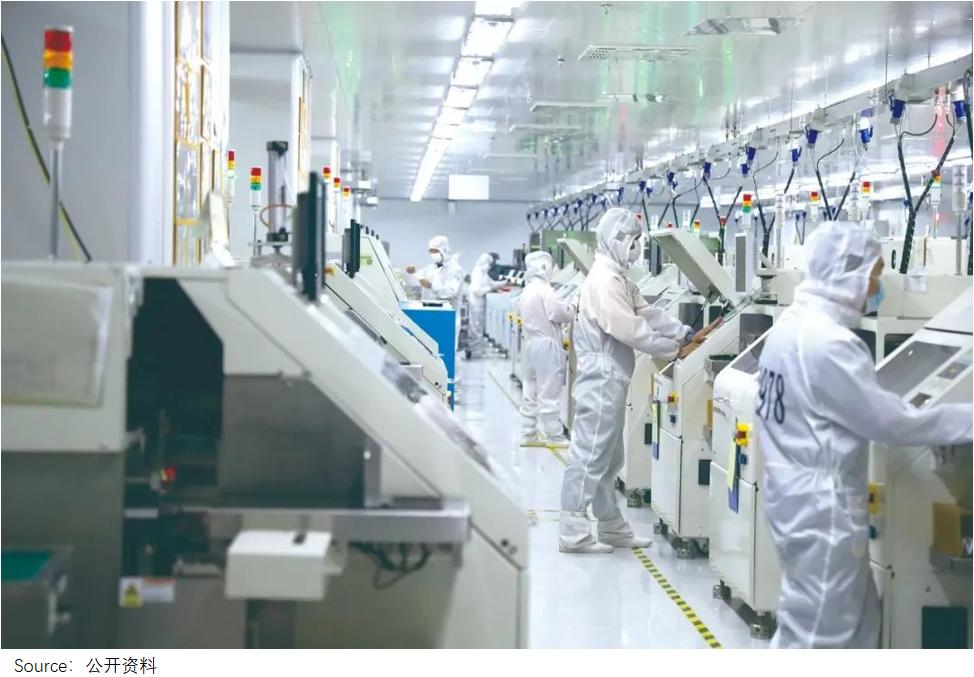
"I used to be just doing hard labor, but now I'm really making money," Wanzi sighed.
It's not just general workers. The production line engineers in Fab factories are also at the center of the dividend. Data shows that in the spring recruitment in 2026, the recruitment demand for semiconductor equipment and process positions increased by more than 35% year - on - year. The starting salary for fresh master's graduates is 13K - 20K, with a year - on - year increase of 23.5%, far exceeding the average salary growth rate of 15.2% for master's graduates in the whole industry.
As a result, the semiconductor industry has become a "hot commodity" in the eyes of this generation of young people. Ye Hui, who is a technician in a packaging and testing factory as his main job and a semiconductor industry blogger as his side job, has directly felt the heat.
"I'm not in the right major. How can I enter the factory?"
"Blogger, can you help me with an internal referral?"
...
Since he started posting a series of content about "working in a semiconductor factory", his private messages have never stopped. Some people are tentatively inquiring about the entry path; others are directly asking for shortcuts to enter the industry.
Benefiting from this "fever", not only has his self - media side job taken off, but he has also recommended many talents to his company - 4 people have successfully joined as technicians, and 2 as special engineers.
This "economic upswing" scene also makes Yami, who switched from the media industry to a semiconductor HR, feel like she's back in the heyday of the Internet. "There are unlimited supplies of Ferrero, blueberries, and various imported snacks in the tea room, meeting the standards of big companies; people are flying around both at home and abroad to negotiate business, and customers are coming in an endless stream."
Facing such prosperity, Yami is happy, but she also remains vigilant, because she knows well that prosperity and hidden worries often go hand in hand.
The seemingly generous gifts are already priced
Out of the corner of his eye, Ye Hui saw the supervisor coming towards him in a hurry. He rolled his eyes in his mind, but his body instinctively sat up straight, and his hands unconsciously moved faster.
When he learned in March that the factory's orders had increased significantly, Ye Hui was extremely excited. In his imagination, as the company's performance soared, the employees' salaries and benefits would also skyrocket, just like the huge year - end bonuses of Hynix and other companies.
But in reality, before the improvement in treatment, the workload increased first - the number of patch - mounting tasks per month increased from 100 to 300 - 400, several times the previous amount. Not to mention slacking off like before, his hands were shaking after a day's work.
Moreover, this kind of work intensity is even more difficult during the night shift. Every time he finishes a 12 - hour night shift and walks out of the factory area with a tired body, the faint light in the sky no longer represents the hope of a new day for him, but a signal that he can finally lie down and rest.
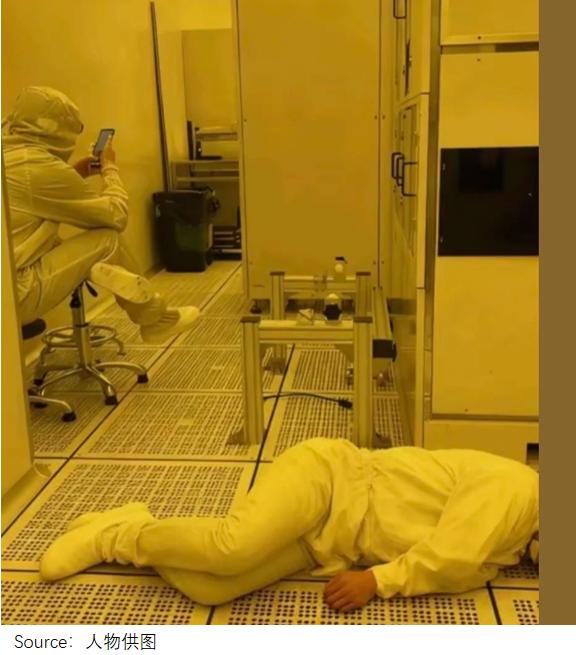
After finally getting used to the "full - load" state, he still has to endure the increasingly intense anxiety atmosphere. Ye Hui feels like he's being "monitored". "As long as he pauses for more than two minutes, the supervisor will suddenly appear and urge him to keep working. Even if he works non - stop, he will be urged four or five times a day, making people feel nervous."
Under the continuous impact on his body and mind, his focus has shifted from "making a name for himself in the Fab factory" to "how young people can prevent sudden death".
However, this job, which is no longer as economically rewarding in the eyes of the novice Ye Hui, is not easy to get into now.
"Three new people came to the next group this year. One is a master's graduate from a first - tier university, and the other two are undergraduates from double - first - class universities. The leader personally mentors them." Hearing his colleague's gossip in the canteen, Liu felt a sense of urgency. The rising industry threshold seems to be coming faster than he expected.
"Five years ago when I first joined the company, even junior college graduates could enter the equipment engineer position. I myself am just an ordinary undergraduate," Liu said. After all, this position mainly involves equipment maintenance and repair. As long as you have a theoretical foundation, it's easy to get the hang of it after getting familiar with the work.
In the view of Bai Xiaoba, who works in a 12 - inch wafer factory at the top of the Fab pyramid, this change is still relatively mild.
For top - tier Fabless (fabless semiconductor company) design positions and engineer positions in 12 - inch wafer factories that are not close to the production line, "a master's degree is the minimum requirement", and the first - degree is often required to be from a prestigious 211 or 985 university.
He also understands this. China is lagging behind in the field of memory chips. In core R & D positions such as design, algorithm, architecture, and high - end simulation, the technical barriers are too high and the knowledge system is too complex. Naturally, enterprises are more willing to choose talents who have completed more systematic scientific research training to speed up the progress.
However, the sudden increase in the threshold will inevitably lead to some "sacrifices". As Bai Xiaoba knows, undergraduates entering the semiconductor industry may stay at the level of "operating machines, recording parameters, and handling simple faults" for a long time. "In the long run, their technical scope will become narrower and narrower. When they want to change positions or seek higher development, they will find that they have to start from scratch."
A Qian, who has had a similar experience, has the most say. He found that the salary in his process position is more than 50% lower than that of FPGA engineers (chip logic design, development, etc.), and the salary increase is slow. So he angrily chose to change jobs and positions.
However, after looking around, he was stuck in the interview process due to professional issues. Finally, he signed up for an expensive training course and studied for more than four months; he also spent money to have a senior person polish his resume before successfully landing a job as an FPGA engineer, with his monthly salary increasing from 6,500 yuan to 18K.
But he also said bluntly that not everyone can afford such a high cost of career transformation. Moreover, there isn't much time left for everyone in this track.
Trees won't grow forever, but new trees will always sprout
"The semiconductor industry is taking off. You're going to be rich. Don't forget me if you get rich!"
Facing his friend's enthusiastic greeting, Liu, who felt "unworthy", typed and deleted several times, and finally gave up explaining.
"The current boom is only limited to the memory and AI computing power chip sectors. Our consumer electronics chips can only get a small share." Liu said helplessly. In terms of sales volume, AI chip manufacturers often have "orders scheduled until 2028", while our factory's orders only increased by about 10% this year; the same goes for salaries. Others' salaries increase by 30% - 50% in a year, while mine only increased by 10% in two years.
To put it simply, although they are all in the chip industry, people's joys and sorrows are not the same. The annual reports of listed companies also confirm this: According to statistics, among 115 semiconductor listed companies in the A - share market in 2025, 70 achieved profits, and 45 suffered losses.
This structural prosperity is actually determined by the cyclical nature of the semiconductor industry. According to Bai Xiaoba's observation, the semiconductor industry goes through a cycle of "from frenzy to winter" about every 4 - 5 years, and different stimulating factors lead to different dividend points.
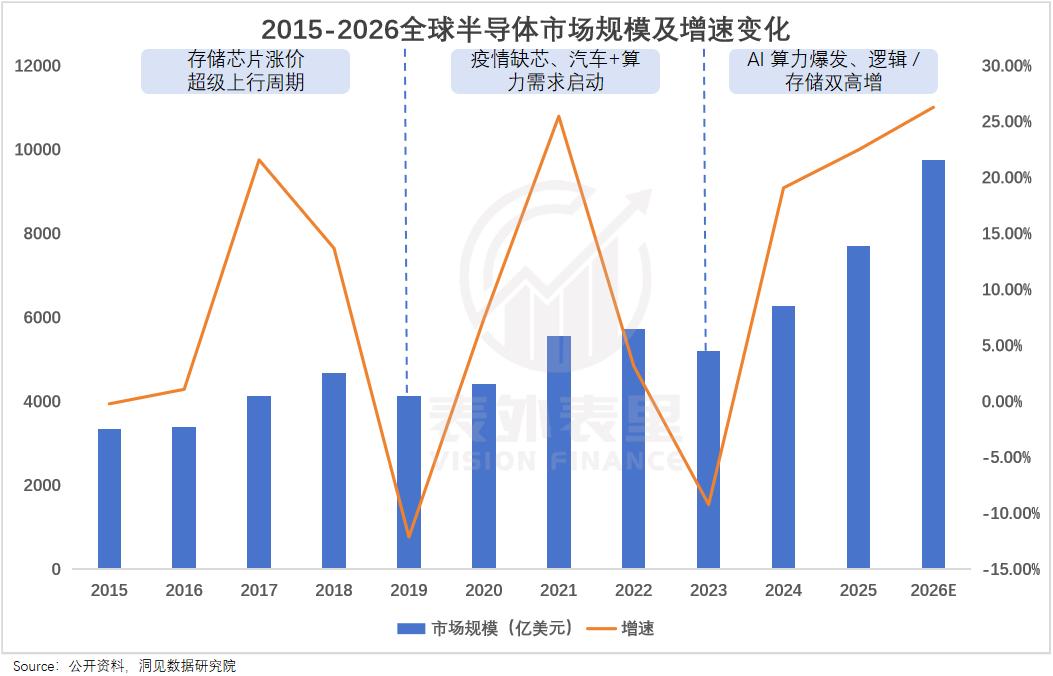
In the 9 years since he entered the industry, he has experienced a complete cycle - at that time, the shortage of chips during the pandemic and the rise of the new energy vehicle industry drove the demand for automotive - related chips to reach a peak in 2021. Then, with the expansion of production capacity, inventory began to pile up, and the market growth rate continued to decline.
This wave of memory chip boom driven by AI will probably follow a similar trajectory. "In the manufacturing industry, as long as the production materials are not restricted, the situation of supply shortage cannot last forever," Bai Xiaoba said. Judging from the current production capacity expansion in the memory chip field, the growth may start to slow down next year.
Now, whenever he meets someone on social platforms who is struggling between "continuing to pursue a doctorate or entering the industry first" in private messages or the comment section, he will advise them to enter the industry as soon as possible. "When the industry enters a downward period, it often means a contraction in recruitment. You'll be in high demand if you enter now, but you may not be able to get in after finishing your doctorate."
However, Bai Xiaoba doesn't think people need to be anxious. "If the east doesn't shine, it may mean the west is about to shine." In this industry, only those who can endure loneliness can be friends with time.
It's not just Bai Xiaoba who has this kind of thought. Every young person who walks out of the Fab factory gate in the early morning is proving it with their actions.
Pipi and her roommates were full of ambition when they first studied microelectronics, thinking they would be dealing with top - level fields and big companies such as "chip design", "HiSilicon", and "TSMC" in the future. But after graduation, none of them became "layout designers".
But realistically, none of them left the semiconductor industry. Some of them are adjusting the photolithography process in a silicon carbide wafer factory, some are monitoring the yield rate in a packaging and testing factory, some are writing semiconductor patents in the office, and some are developing application solutions in a power device company.
"Many of us in our class applied for this major because of the 'chip localization' and the'semiconductor boom'," Pipi said. But after experiencing the workplace, everyone has realized that the semiconductor industry values stability when the wind slows down, rather than just the boom.
The long industrial chain, complex upstream and downstream structure, and wide geographical radiation make the semiconductor