Why are people more likely to make "bad deals" when they have less money? The harsh truth behind a game
The Game of Human Nature
You've probably seen this show.
There are 26 boxes, each containing one of 26 sums of money, ranging from $0.01 to $1 million. The contestant chooses one box for themselves, but has no idea how much money is inside.

Then, the host opens the remaining 25 boxes one by one. Each time a box is opened, it means that amount of money is not in your box, and it is removed from the big screen. Naturally, participants all hope to open small - value boxes.
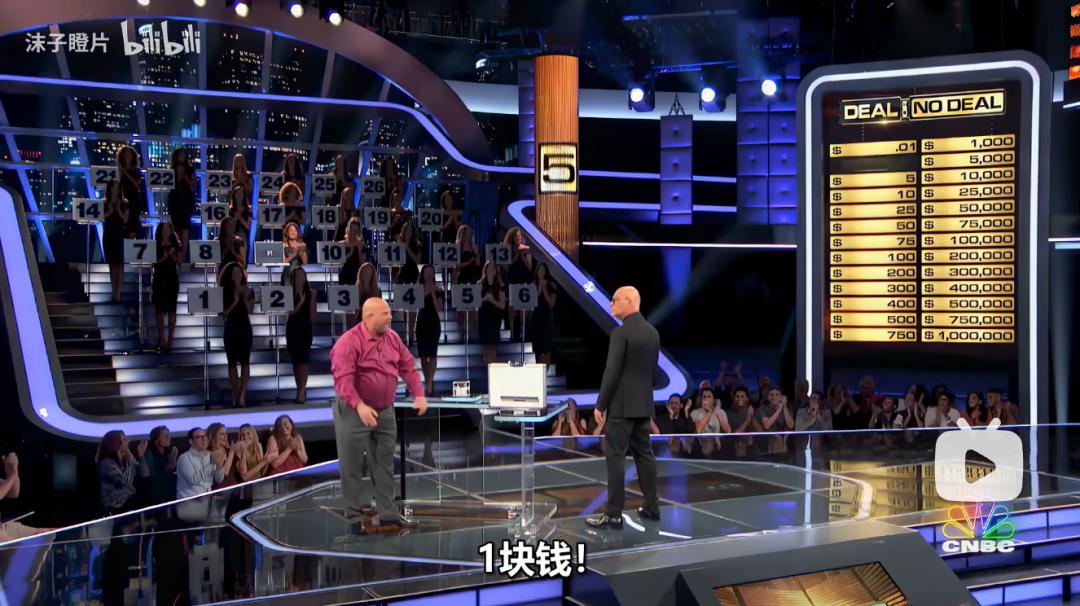
The most ingenious design of the game comes after several boxes have been opened. The capitalist will offer a price based on the distribution of the remaining boxes' values to buy out the box the contestant has chosen.
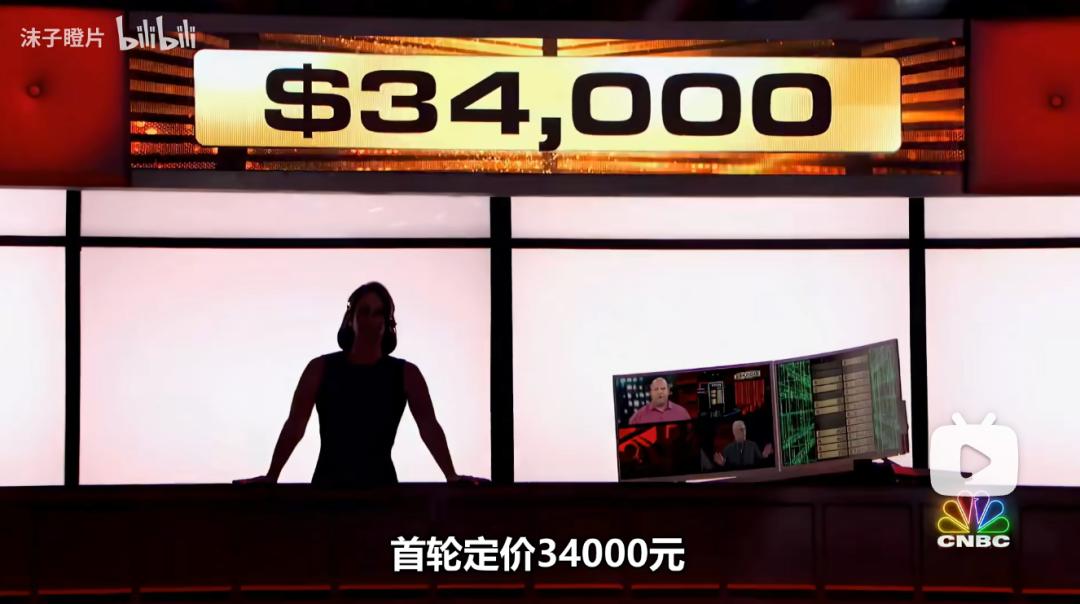
If you say "Deal", you take the money and the game ends. If you say "No Deal", you continue to open boxes. You can go all the way to the end and open your own box to find either $0.01 or $1 million inside.
This game is called "Deal or No Deal" in the United States and "A Fortune at Stake" in China. Many people just watch it for entertainment, but after watching one episode, I found it to be a perfect sandbox for investment decision - making.
The core decision the participants face is very clear: Should you "accept the offer" to lock in a certain gain, or "reject the offer" and continue the uncertain adventure?
Their choices may be driven by greed, kidnapped by the psychology of "maybe the next box will contain the grand prize", distorted by fear, or influenced by opening a box with a large amount of money just now.
And these are exactly the psychological states of ordinary people when making decisions.
This article will use the actual record of this game to analyze a decision - making topic: Facing the high uncertainty of "one thought in heaven, one thought in hell", how should we make reasonable decisions?
We'll continue to talk about the recent market in the live - stream every Wednesday noon. Welcome to make an appointment.
Why Accept a "Losing" Price?
Although the participants don't know the amount of money in the box they've chosen, the mathematical expectation can be calculated. Each of the remaining boxes on the field has the same probability of being the one with the money, so the expected value of the boxes is the average of the amounts in all the remaining boxes.
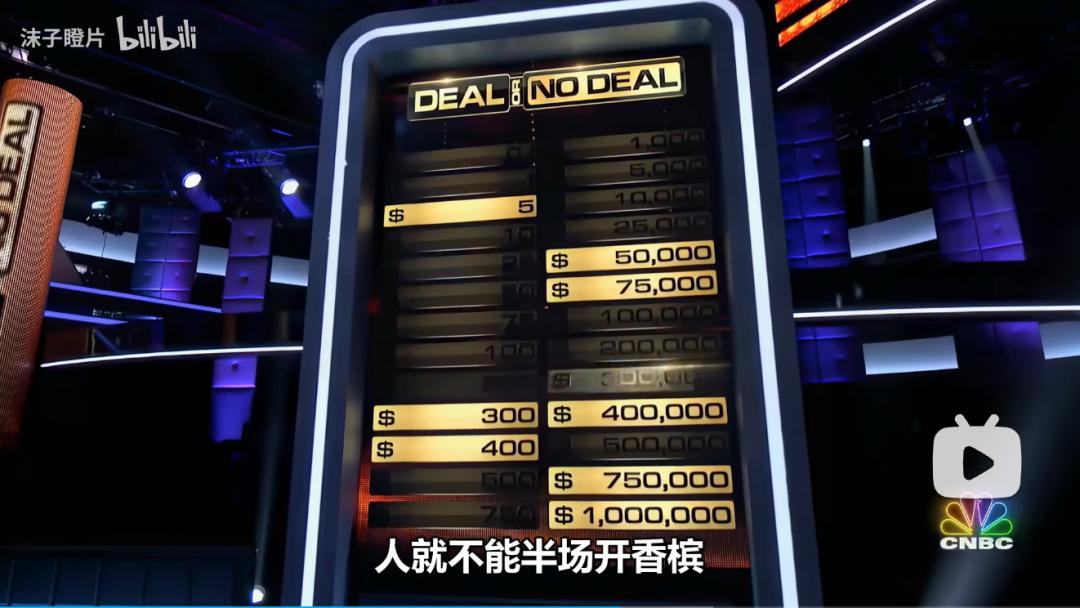
For example, the mathematical expectation of the remaining 8 boxes above is ($5 + $300+ $400 + $50,000 + $75,000 + $400,000 + $750,000 + $1,000,000) / 8 = $284,400.
Theoretically, this problem is relatively simple. As long as the capitalist's offer is lower than the mathematical expectation, it should not be accepted.
In fact, in most cases, the capitalist's offer is far lower than the mathematical expectation of the remaining prize money, especially in the first few offers, which are even less than 30%. So, most participants reject the offers.
However, towards the end of the game, as the capitalist's offer gradually approaches the mathematical expectation, players will eventually accept a price lower than the expectation.
Why do participants accept a "losing" price?
The mathematical expectation does not equal the value of the money to you. Economics uses another term - utility. In real - world decision - making, people usually apply the principle of "diminishing marginal utility":
For example, although $1 million is 100 times $10,000 in mathematics, for most people, the happiness brought by getting $1 million is not 100 times the happiness of getting $10,000.
Another characteristic of utility is loss aversion. Viewers who often watch this show will find that in the later rounds, as long as one of the three largest boxes ($500,000, $750,000, and $1 million) is still there, even if the current offer is significantly lower than the expectation, participants are more likely to accept the offer because it eliminates the risk of a sharp decline in assets if the grand - prize box is opened in the next round.
Actually, this is the "uncertainty discount" in investment.
The reason why the capitalist's offer is lower than the expectation but is always accepted in the end is that he provides "100% liquidity conversion", which is called "liquidity premium" in investment theory.
The part of the offer that is lower than the mathematical expectation is equivalent to the "insurance premium" for hedging risks. As long as your financial situation cannot bear the result of large - scale asset fluctuations, accepting the offer, even if it is lower than the expectation, is an "optimal financial allocation".
Although the discount is inevitable, there is still room for negotiation on the specific discount rate. This is also an opportunity for participants. However, in the actions of most participants, the randomness and various behavioral biases of ordinary people's decision - making are reflected.
The Recency Effect
The banker's offer is usually not random. He deliberately induces participants to struggle between "an attractive certain gain" and "a potential higher gain", and induces you to make irrational decisions through offers with large fluctuations.

First, the offer ratio. In the early stage of the game, the banker's offer usually accounts for only a small proportion of the remaining expected value. This is mainly to prolong the show time and increase the ratings. The low offer also serves as a "psychological anchor". As the number of remaining boxes decreases later, the offer ratio will gradually increase, making it more likely to satisfy the participants.
The most vulnerable point for most participants is that they don't calculate the mathematical expectation and are easily influenced by the "recency effect".
The so - called "recency effect": if in the first few rounds, the participant is "lucky" and opens many low - value boxes, they will think they are lucky and blindly persevere. At this time, the capitalist will not raise the offer too much.


Once the participant rejects the offer and then opens a high - value box, they will feel very regretful. At this time, even if the capitalist significantly reduces the offer, far lower than the expected value, the participant may accept it under the influence of the regret emotion.
The "capitalist" in the game is like the "market". It is always more patient than you and has more capital advantages to wait for your mental breakdown.
Taking this game as an example, how should ordinary people make decisions?
Use "Counter - Intuition" to Counter "Irrationality"
This kind of decision - making research is not simply about "maximizing benefits", but finding a balance between the theoretical expected value and the actual individual risk - bearing capacity.
After watching the show, I summarized the following optimal strategies, many of which are counter - intuitive and go against human nature:
First, the psychological goal: The total mathematical expectation of the 26 boxes is more than $131,000. So this is the value of the box you choose. You can set a psychological goal of $130,000 at the beginning. As long as the final amount is higher than this number, it is the "reward" for your decision, so as to prevent your decision from being affected by some extreme processes.
Second, dynamic price comparison: Every time a box is opened, the expected value of the box you choose will change. Your decision is to compare the discount between the capitalist's offer and the expected value each time and accept a relatively high discount.
Third, counter the illusion of luck: At the beginning, there are 6 boxes with values higher than $131,000 and 20 boxes with values lower than this price, which means the probability of drawing a low - value box is higher each time. Each time a high - value box is drawn, it has a greater impact on the expected value. So the trend of the expected value in the game is "it will probably rise slowly and rarely drop rapidly" (similar to a slow - bull and fast - bear market). You must understand this characteristic. After opening several low - value boxes in a row, it is easy to have the illusion of good luck. In fact, you should feel dangerous because the probability of opening a high - value box later is increasing, and the probability of a significant drop in the mathematical expectation is also increasing. The capitalist also likes to increase the discount rate when your risk preference is high. If the offer is reasonable, it is often a good opportunity to exit.
Fourth, counter loss aversion: Similarly, after most people open a high - value box, their risk preference will decrease because they regret not accepting the previous offer and then tend to accept a lower discount. But in fact, it should be the opposite. Every time a high - value box is opened, the probability of opening another high - value box later decreases, and you should raise the discount standard.
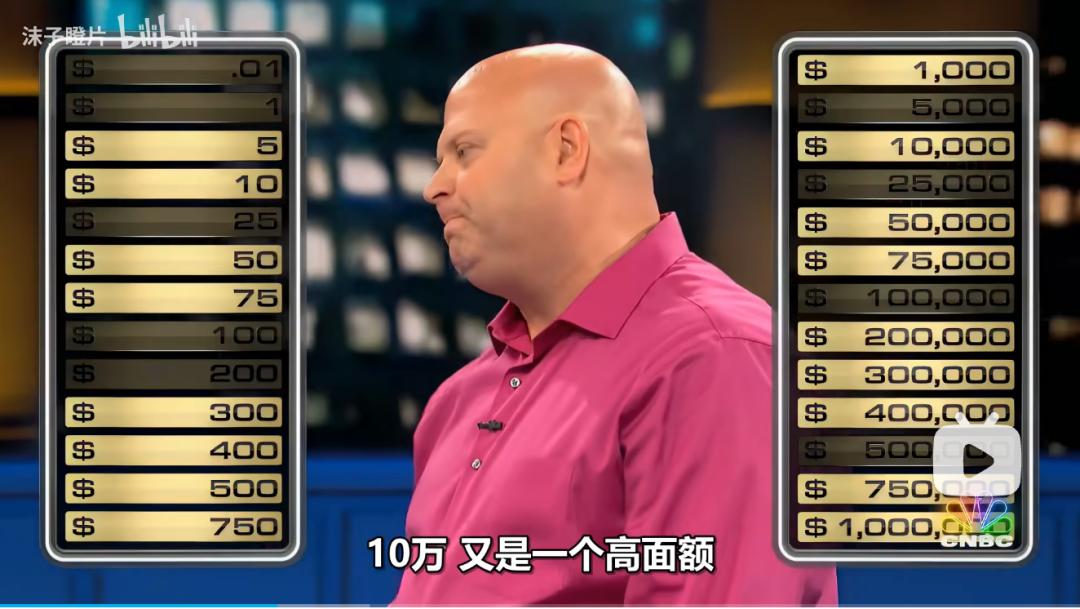
Fifth, counter the distortion of the expected value: The mathematical expectation and your risk preference are easily severely distorted by the "extreme values" of the $750,000 and $1 million boxes, especially when there are not many boxes left. At this time, your decision should be more conservative and more focused on the safety margin, and you should accept a lower discount. This is also a counter - intuitive point.
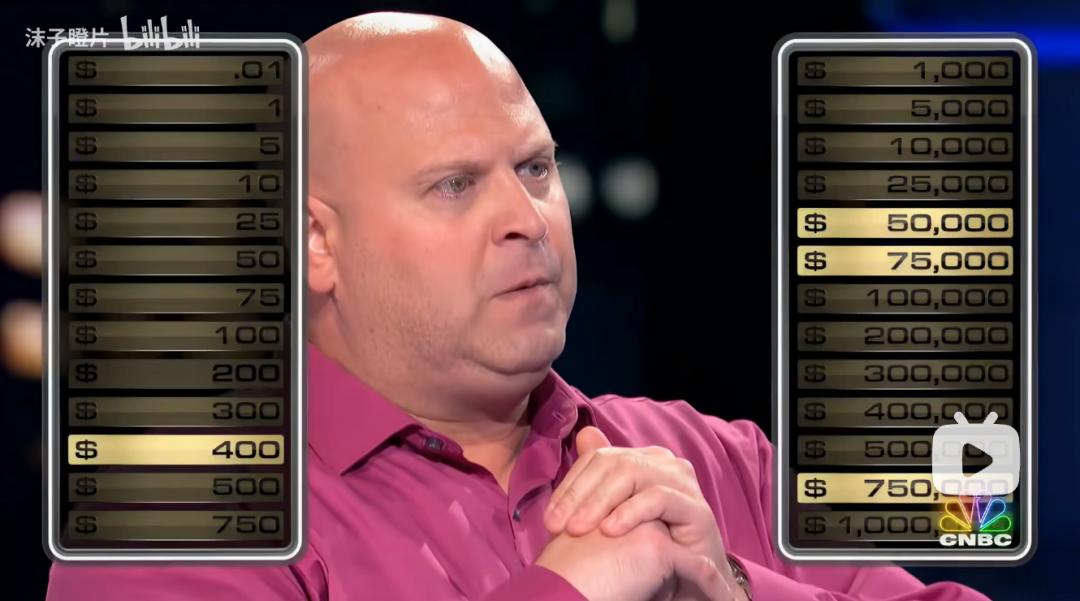
Many people may say after reading this, "I don't want such a complicated strategy. I just want the amount represented by the mathematical expectation. What will happen?"
What's the Impact of Poverty on Investment?
For example, in this game, there were three boxes left at the end, with values of $50,000, $75,000, and $750,000. The mathematical expectation was $291,700. The capitalist offered $285,000, still lower than the expectation, but the participant immediately agreed.
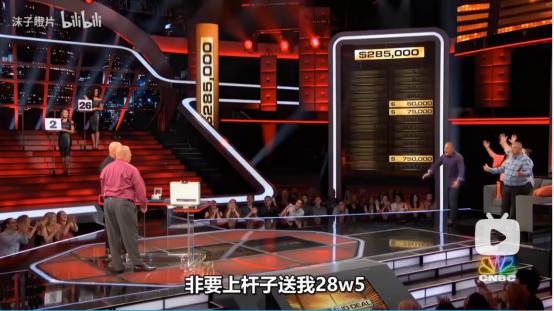
The reason is simple. Two of the boxes have values lower than $285,000, and the winning probability is only one - third. And an offer with a discount of a few thousand dollars is already quite high.
From an investor's perspective, insisting on "opening the box" is a high - odds but low - probability opportunity. Most people tend to choose the probability that they can see at a glance rather than the odds that need to be calculated.
But we should be clear that the mathematical expectation of the boxes is not just a theoretical value. If you participate in this show several times and always insist on opening your own box at the end, the average amount you get over several times will basically be close to the mathematical expectation of $131,000.
The mathematical expectation really exists, and the participants are really "losing out".
Throughout this article, I've been emphasizing the rationality and necessity for ordinary people to accept an offer lower than the expectation. But it's really unfair, and the problem lies in the term "ordinary people".
Most of the people on this show are ordinary people, each of them in financial trouble and hoping to get a sum of money to solve their problems - in short, they "can't afford to lose".
