44 brands and 15,000 stores: How long will the dividend window for Chinese tea brands going global last?
When 478,000 tea - beverage shops in China were once engaged in such fierce competition that they offered "a cup of tea for 7 yuan with additional discounts", Mixue Bingcheng was selling its products in Vietnam at the equivalent of 15 yuan in RMB.
It's not that the brand suddenly wants to raise prices. There is simply no psychological anchor of "a cup of milk tea only worth 7 yuan" overseas.
This is not a joke but a real - world business logic that is unfolding.
In 2026, the new tea - beverage industry in China is experiencing an unprecedented "migration to overseas markets". Mixue Bingcheng, Heytea, Nayuki, and CHAGEE have all expanded overseas. For the same brand and the same cup of tea, while it is struggling in the price war in the domestic market, it can command a doubling premium overseas, with a much higher profit margin than in the domestic market.
What exactly lies behind this huge contrast?
Domestic Tea: Fierce Competition and Disappointment
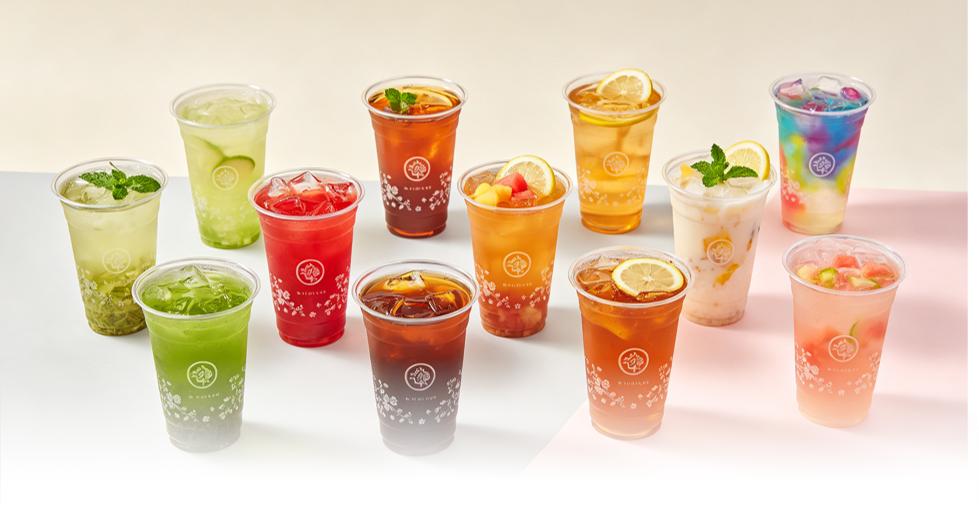
Let's first look at a set of suffocating data.
By the end of 2025, the number of milk - tea shops nationwide reached 478,000, three times that of the United States. To put it in perspective, there is one milk - tea shop for every less than 3,000 people in the country. This is not prosperity but overcrowding.
The price war is the most obvious manifestation. Heytea announced at the beginning of 2025 that it would stop accepting new franchise applications. It's not that they don't want to expand, but the more stores they open, the more they lose. The price of drinks in some stores has dropped below 7 yuan, and the dine - in prices are almost back to the level of 2015. Mixue Bingcheng's domestic gross profit margin has slipped from 32.5% to 31.1%, and the gross profit margin of its core business has dropped below 30%. In the "ultra - cost - effective" market niche, with a glass of lemonade costing only 4 yuan, any minor change in the cost side will be magnified infinitely.
CHAGEE's figures are even more eye - catching: its net profit in Q3 dropped to 400 million yuan, and the net profit margin plummeted from 18% in the same period last year to 12%. Only more than 200 new stores were opened in Q3, with a year - on - year growth rate of - 64%. While the brand is growing and the number of stores is increasing, the profit is declining. This is an industry - wide signal.
A 7 - yuan milk tea is not about "benefiting consumers"; it's about "holding on despite the pressure". When there are five tea - beverage shops on a single street, the traffic for each brand is being diluted. This is not an operational problem but a cost problem.
The domestic tea - beverage market has transformed from an incremental battlefield into a zero - sum game meat grinder.
Overseas Tea: Scarce Supply and Brand Premium
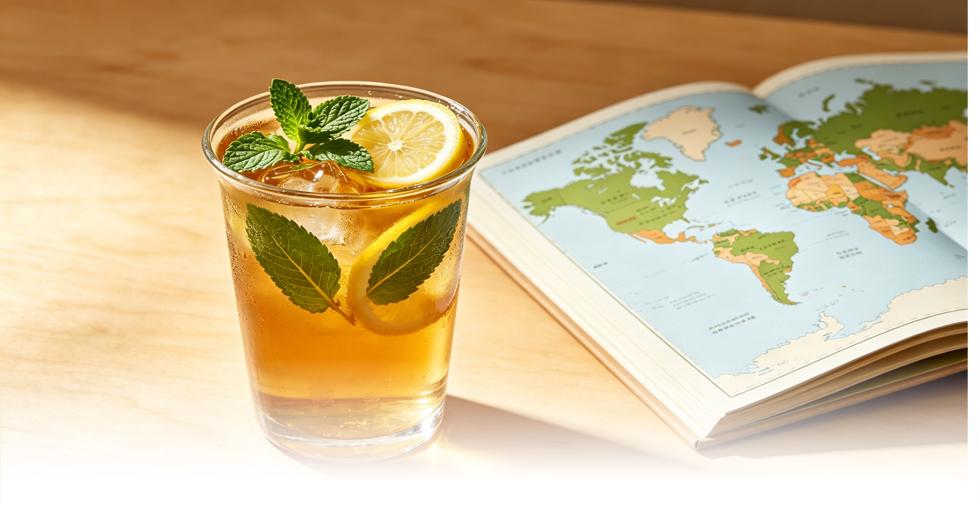
In sharp contrast to the fierce competition in the domestic market is the "scarcity dividend" in the overseas market.
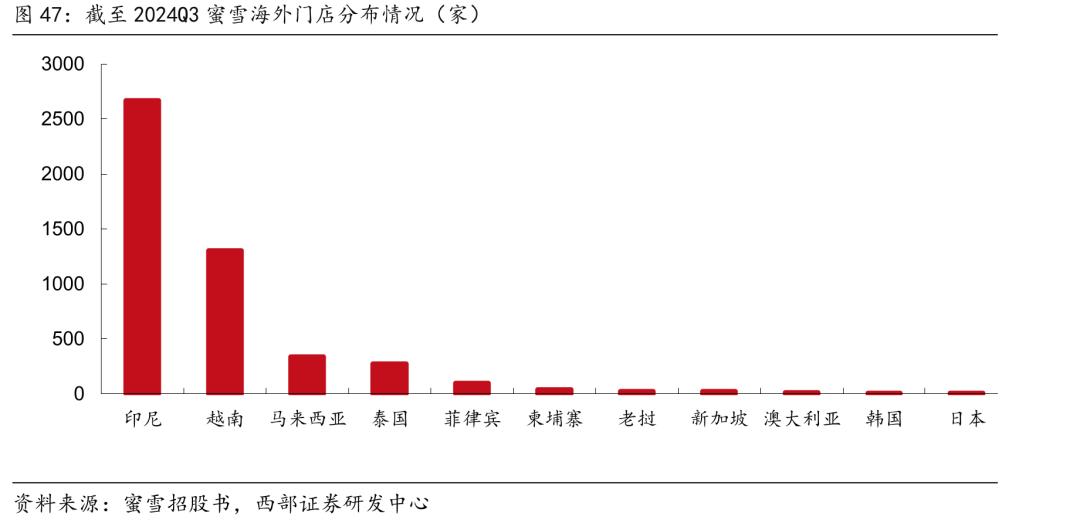
Mixue Bingcheng is the Chinese tea - beverage brand with the largest overseas expansion. By the end of 2025, it had 4,467 overseas stores, covering 13 countries. As of the end of the third quarter of 2024, it had 2,667 stores in Indonesia and 1,304 stores in Vietnam, which helped it top the local beverage sales list. In Southeast Asia, Mixue Bingcheng's prices are between 1/2 and 2/3 of those of local similar brands. Moreover, the local rent and labor costs are much lower than those in first - tier cities in China, while the prices of competing products are higher, resulting in a significantly better profit margin than in the domestic market. In the United States, a $1.19 ice cream and a $1.99 lemonade are equivalent to 3 - 4 times their domestic prices in RMB.
The overseas premium of high - end brands is even more astonishing. Heytea opened a LAB store in New York's Times Square, and its signature drink "Coconut and Mango" sold over one million cups nationwide in the United States. When Nayuki's first store in Flushing, New York opened in October 2025, Yao Jie, the deputy general manager of the overseas business department, said bluntly: "The profit margin here is definitely higher than in the domestic market." CHAGEE's overseas GMV has increased by more than 75% year - on - year for three consecutive quarters, reaching 370 million yuan in Q4. With only 345 overseas stores, its growth rate far outpaces that in the domestic market.
A cup of tea that costs 7 yuan and barely breaks even in the domestic market can attract long queues at 30 yuan overseas. Behind this absurd contrast lies only one core logic: pricing power based on scarcity. The penetration rate of Chinese tea - beverage brands overseas is extremely low, and consumers have few alternative options. Without the "floor price" anchor of 7 - yuan milk tea, brands can set reasonable prices. Chinese tea beverages are still in the "novelty - seeking period" overseas, and consumers are willing to pay a premium for this "new species". With these three dividends combined, the overseas market has become a "profit haven" for tea - beverage brands.
But is this haven really safe?
Going Overseas is Not a Sure Win: There are Cost Considerations Behind the Premium
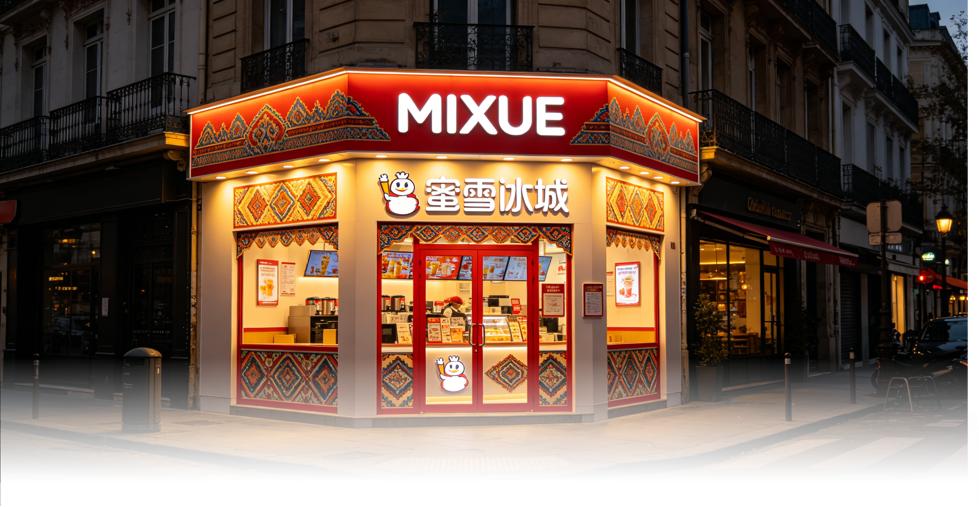
Going overseas is by no means a smooth journey. Mixue Bingcheng's experience in 2025 is a wake - up call.
A total of 428 overseas stores were closed net throughout the year. This is the first time in seven years of overseas expansion that Mixue Bingcheng has experienced an annual contraction in the number of overseas stores. The contraction was mainly concentrated in the two core markets of Indonesia and Vietnam, not because "the business couldn't continue", but because of the problems caused by the rapid early expansion: the high density of stores led to overlapping store locations, the management radius of the franchise system was too long, and the quality control of some franchisees did not meet the standards. The negative review rate of early stores once exceeded 30%.
The cost in the U.S. market is even harder to calculate. The annual rent of a store in Manhattan, New York, exceeds $340,000, more than 20 times that of first - tier cities in China. The hourly wage of employees is $15 - 20, and labor costs account for 35% of the revenue. To meet FDA standards, core raw materials need to be purchased separately, and logistics costs have soared by 30% (according to industry estimates). Mixue Bingcheng needs to sell 800 cups of drinks per day on average to break even in the United States, while the break - even point in the domestic market is much lower. A $1.19 ice cream and a $1.99 lemonade, which seem several times more expensive than in the domestic market, actually have a thinner profit margin.
What's more troublesome is the conflict between culture and policy. Many places in the United States impose a "sugary beverage tax", and Mixue Bingcheng's star products are in direct conflict with the local healthy - eating trend. The brand offers a 200% sugar - level option, but American consumers complain that it "tastes as light as water". The flavor of sucrose is completely different from the concentrated syrup that Americans are used to.
The dividends of going overseas are real, but the costs are also real. Brands earn a premium overseas but also pay a premium in terms of rent, labor, compliance, and logistics. After all these premiums are stacked up, the statement that "the overseas profit margin is higher" is far from as rosy as it seems.
The Core of Going Overseas: Supply Chain is the Real "Ticket"

The closure of 428 Mixue Bingcheng stores is not a retreat but a shift from "driven by the number of stores" to "driven by supply - chain capabilities".
Let's look at a set of data to understand the strength of Mixue Bingcheng's supply chain: it has 5 major domestic production bases covering 790,000 square meters, with an annual production capacity of 1.65 million tons, and the self - production rate of core raw materials exceeds 70%. Its global procurement network covers 38 countries, and the centralized procurement cost is 10% - 20% lower than the industry average.
Overseas, this capability is being replicated. In Vietnam, it is building a localized supply - chain system to promote the local production of raw materials. In Indonesia, it has invested 1.5 billion yuan to build a cold - chain logistics system, reducing the delivery time from 72 hours to 24 hours. In Thailand, it has cooperated with an agricultural cooperative to develop a coconut - milk supply chain, reducing logistics costs by 42%. In Brazil, it has signed a cooperation memorandum to invest and purchase no less than 4 billion yuan worth of agricultural products in the next 3 - 5 years and will build a supply - chain factory simultaneously.
The results of the adjustment are immediate: the turnover of newly opened stores after the adjustment has reached 1.7 times that of old stores, the negative review rate has dropped significantly from over 30% to single digits, and the revenue of old stores has increased by 17.6% year - on - year. Store closures are not a defeat but time for the supply chain to be rejuvenated.
CHAGEE has taken a different approach. It has spent six years building an overseas supply - chain system instead of rushing to open stores. It uses a direct - operation model in the United States, and its founder, Zhang Junjie, calls it "a difficult but correct path". In 2026, CHAGEE has defined the overseas market as a "resting and consolidating year". It does not pursue the number of stores but focuses on "running and consolidating the profit model in each country it has entered".
The contrast between the two routes is obvious. Mixue Bingcheng's approach is "supply - chain output + franchise replication", prioritizing scale and then refinement. CHAGEE's approach is "direct - operation foundation + cultural output", prioritizing consolidating the model and then expanding. Both paths lead to the same destination - ultimately, it's a competition of supply - chain depth and localization capabilities.
Going overseas without a supply chain is like going naked in the overseas market with only the brand's reputation at stake. Stores can be opened overnight, but the supply chain cannot.
The Endgame of Going Overseas: "Chinese Tea" Becomes "The World's Tea"
In 2026, at least 44 Chinese tea - beverage brands have opened nearly 15,000 stores overseas. Going overseas has changed from an "optional choice" to a "must - do".
But in the second half, the competition is no longer about who can open stores quickly but who can survive in the long run.
Judging from the expansion plans of various brands, the momentum is still strong. Mixue Bingcheng plans to open 1,100 new overseas stores in 2026, with a three - year goal of having over 10,000 overseas stores. CHAGEE plans to add about 200 new overseas stores in 2026 and enter the markets of South Korea, Chiang Mai, and Bali. Nayuki is also accelerating its overseas layout. Although the numbers are growing, only three capabilities truly determine the outcome: the global replication ability of the supply chain, the local adaptation ability of products, and the cultural penetration ability of the brand.
Mixue Bingcheng launched "Coconut - flavored Pandan Snow - topped" in Indonesia and "Condensed - milk Pearl Milk Tea" (with 20% higher sweetness than in the domestic market) in Vietnam, resulting in a significant drop in the negative review rate. This is a victory of local adaptation. CHAGEE held a tea - culture exhibition "Tea Garden Dream" in cooperation with the Singapore Tourism Board and collaborated with Hello Kitty in five Southeast Asian countries. This is an attempt at cultural penetration. Nayuki focuses on healthy tea beverages such as the "Little Green Bottle" in New York. This is a signal of the transformation from "selling milk tea" to "selling a lifestyle".
The endgame of Chinese tea - beverage brands going overseas should not be a simple output of the business model but a re - definition of the global image of "Chinese brands" with a cup of tea. The 7 - yuan milk tea in the domestic market represents a cruel existing - market competition, while the high premium overseas is an incremental dividend brought by scarcity. However, scarcity will not last forever. When the density of overseas stores approaches that in the domestic market, today's price war will be repeated overseas.
The window period is narrowing. Only those brands that can complete the transformation from "selling products" to "outputting a lifestyle" during this window period can truly turn "Chinese tea" into "the world's tea". As for those brands that