A graduate from Harbin Institute of Technology started his business with only 6,000 yuan and built it into the "Foxconn" of the industrial drone industry.
After finding it difficult to make breakthroughs in the consumer drone market, he switched tracks and created the "Foxconn" in the industrial drone industry.
01 Capital Rushing In
"Previously, Plum Ventures also looked at some consumer drone projects. But when I visited Cubot Aviation, I found that the market for industrial drones was much larger."
In 2017, Wu Shichun, the founding partner of Plum Ventures, after visiting Cubot Company, sent someone to handle the investment contract the next day and quickly completed the payment process.
In Wu Shichun's view, this was a great project that couldn't be missed. The consumer drone market had become a red ocean, but the industrial drone market was still a blue ocean for entrepreneurship, and Cubot was the leader in this blue - ocean market.
It wasn't just Plum Ventures that was optimistic. Since emerging in 2015, Cubot has successfully attracted well - known institutions such as Tongchuang Weiye and Guoxin Securities, and has completed a total of 9 rounds of financing, with a total financing amount of over 1 billion RMB.
In the view of Ding Baoyu, the managing partner of Tongchuang Weiye, the value of Cubot is "at least tens of billions, or even hundreds of billions."
Because the industrial drone market is a trillion - level market, and Cubot is the only enterprise in this field that has run through the closed - loop of the value chain.

▲ Image source: Cubot
Through mergers and acquisitions and integration, Cubot has achieved self - research and self - production of 95% of its core components, and has mastered both core technologies and production processes. Its solutions cover fields such as power, fire protection, public security, smart cities, and energy inspection, with over 100 application scenarios, and its customers include the State Grid, China Southern Power Grid, and PetroChina.
It is leading not only in China but also overseas.
Currently, its business covers more than 80 countries. It has established 28 joint - venture and wholly - owned factories globally, has more than 1,000 partner enterprises, and has led or participated in the formulation of more than 10 international standards. It is known as the "Foxconn" in the industrial drone industry.
Quite remarkably, Lu Zhihui, the founder of Cubot, graduated from Harbin Institute of Technology and was an early employee of DJI. He can be regarded as one of the first batch of drone technology experts in China.
02 Switching Tracks
At the end of 2008, Lu Zhihui transformed into a professional manager and helped two enterprises, Aite Aviation and Yidian Technology, build drone R & D teams from scratch within a year.
At that time, the industry was mainly focused on consumer drones. However, Lu Zhihui noticed that industrial drones also had huge potential and could be applied in fields such as power inspection, agricultural plant protection, security monitoring, and emergency rescue, solving pain points that traditional manual operations couldn't.
Seeing the opportunity, Lu Zhihui resolutely resigned and started his own business. At the end of 2009, Lu Zhihui founded Cubot with 6,000 RMB in startup capital in a rental house of less than 20 square meters in a Shenzhen urban village. Its main business was to customize industrial drones for customers.
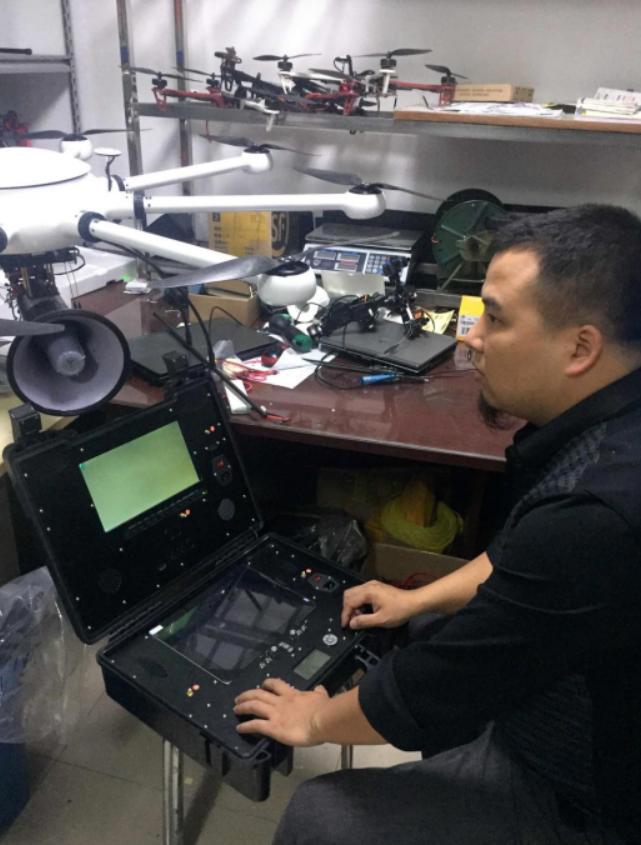
▲ Cubot's less - than - 20 - square - meter startup base. Image source: Harbin Institute of Technology
Initially, Cubot targeted the vertical application scenario of power line laying. From 2012 to 2014, it developed the first dedicated series of drones for power line erection.
Laying one kilometer of cable using traditional methods would cost about 30,000 RMB and take two people a week to complete. During this period, they would also face obstacles such as weather, rivers, forests, and valleys, as well as potential safety accidents.
However, after using drones for the same workload, the cost dropped to a few hundred RMB, and the time was shortened to just a few minutes.
This efficiency revolution enabled Cubot to successfully win orders from the State Grid and quickly gain fame, winning orders from more than 30 countries and regions.
Unfortunately, this customized project had high costs, long cycles, and slow payment collection, making it difficult to achieve large - scale development. So Lu Zhihui shifted the business focus to providing design solutions for other enterprises.
At that time, many enterprises entered the drone market or purchased drones but didn't understand the technical principles at all. Relying on its years of accumulated technical advantages, Cubot provided a full - set of solutions from concept design to prototype development and quickly became the leader in this field.
This transformation of the business model allowed Cubot to reuse its technical capabilities and solved the operation problems to some extent. However, after becoming the leader, Lu Zhihui faced the old problem again: the space for large - scale development was still limited, and it was still difficult to expand the business.
After all, the drone industry at that time was still very small.
By 2015, Cubot only had 7 employees, and its annual revenue was only a few million.
03 Dual - Wheel Drive
The turning point came soon.
When DJI transformed from a flight control system provider to a whole - machine product manufacturer and launched the epoch - making DJI Phantom, a new era of drones emerged.
The originally niche drone market became a hot and lucrative area, and capital from all sides flocked in. Cubot, which was well - known in the industry, was also pushed to the forefront.
At the beginning of 2015, a listed company extended an olive branch, wanting to acquire Cubot for 100 million RMB.
Lu Zhihui was very tempted. But thinking that the industrial drone market had just started and it was a good opportunity for development and growth, he decided to continue on his own. If Cubot was acquired, it would definitely be restricted and might even become just a department.
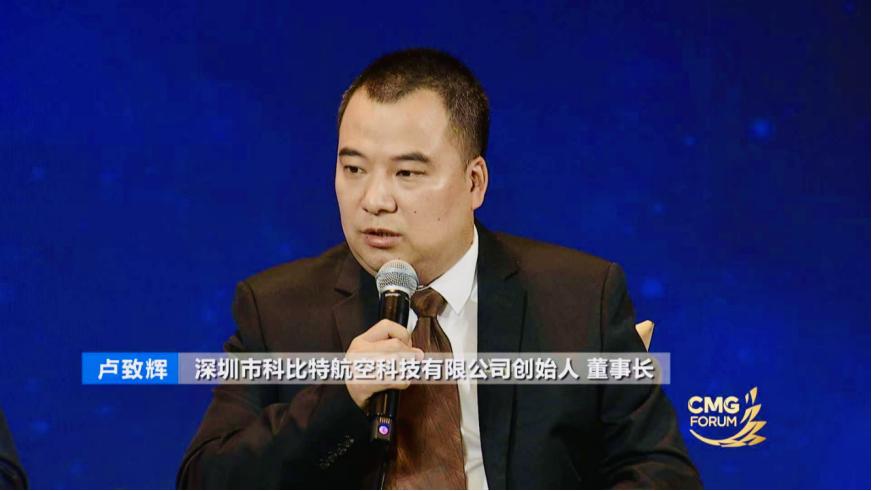
▲ Image source: CCTV's "Dialogue"
Meanwhile, he also began to deeply think about why DJI, the industry leader, was successful and noticed two previously overlooked facts.
In terms of the company's concept and vision, Wang Tao introduced external resources from the very beginning. For example, Wang Tao's tutor, Li Zexiang, not only recommended students to join DJI but also invested in it himself. In contrast, Cubot had long lacked external support and had been struggling alone.
In terms of business, although Cubot had become the largest solution provider in the industrial drone field, it didn't vertically integrate to build core capabilities and barriers like DJI. All parts manufacturing was outsourced to external suppliers, resulting in slow product development, untimely market response, and high costs.
After figuring these two points out, Lu Zhihui began to embrace capital and integrate the supply chain.
After rejecting the 100 - million - RMB acquisition offer, Cubot accepted a 30 - million - RMB investment from Guoxin Securities and Han's Laser, and then invested the money in the upstream supply chain. After that, it continued to raise funds and invest.
This process lasted until 2017. During this period, Cubot acquired a total of 13 drone parts enterprises and factories, covering the entire chain including carbon fiber airframes, power systems, data transmission systems, and software systems.
Through nearly three years of integration, Cubot achieved a "perfect leap" and became the first domestic industrial drone enterprise to integrate the entire industrial chain: it could independently research and produce 95% of its core components and mastered all key links.
Since then, with its strong manufacturing capabilities and cost advantages, Cubot has risen rapidly and swept the global market. So far, it has provided OEM services for more than 1,000 enterprises in more than 80 countries and has become the "Foxconn" in the industrial drone industry.
To better serve overseas customers, Cubot has also established 28 joint - venture and wholly - owned factories globally, covering regions such as the Middle East, Central Asia, Southeast Asia, Africa, and South America, helping dozens of countries fill the gap in drone manufacturing.
"A hard - tech company can't rely on a single trick. It must constantly adapt to the market." Lu Zhihui said. After Cubot became the king of hardware manufacturing in the industry, he had a new perspective on the industry.
He keenly observed that in some application scenarios, what customers needed was not just drones but a complete set of unmanned flight services to solve practical problems, such as using drones to patrol waterways, using drones to replace the police in traffic law enforcement, or even using drones in rescue operations.
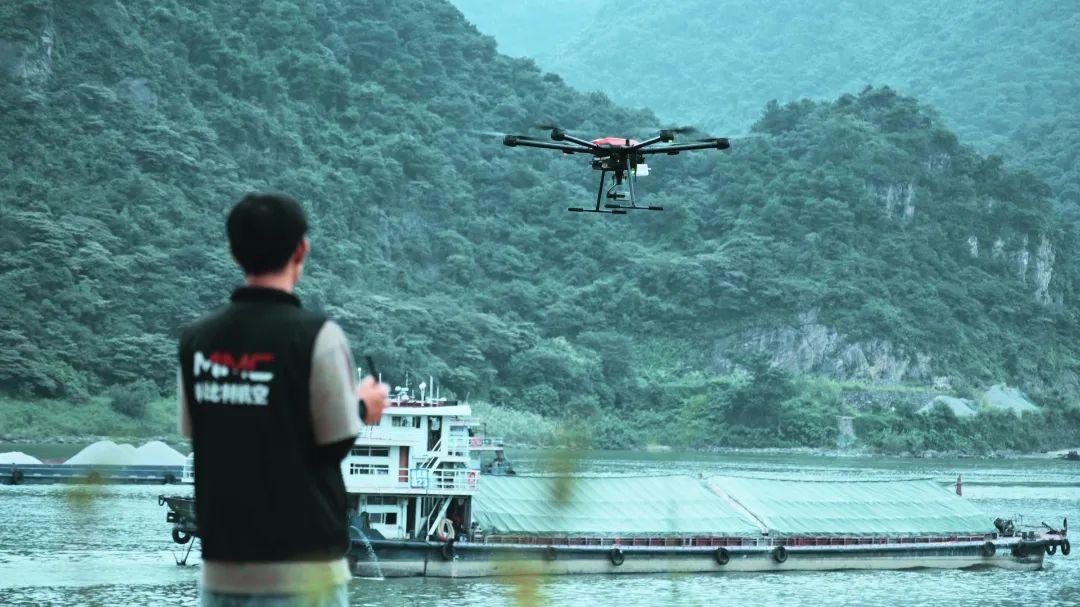
▲ Image source: Cubot
In 2018, based on this insight, Cubot started another upgrade: in addition to being a hardware manufacturer, it became a service provider.
They delved into the application scenarios of various industries and combined technologies such as cloud services, real - scene 3D, artificial intelligence, and big - data analysis to create drone operation services.
Its services not only include remote control of drones but also distributed deployment, planning of operation routes, and scheduled automatic operations. It has even gradually evolved into a complete drone - based smart city management system.
Compared with traditional smart city solutions that use cameras and sensors to collect data, drones have a "bird's - eye view" and have more advantages in data collection and emergency services.
For example, in 2019, when a serious mountain fire broke out in Foshan, Guangdong Province, 10 Cubot drones assisted the ground rescue team in reconnaissance and estimating the fire situation. Eventually, the mountain fire was extinguished without any casualties, and Cubot was commended by departments such as the Guangdong Provincial Emergency Management Department.
"In the past, we often heard news in forest fire reports that firefighters died due to the change of wind direction. Now, with the advanced means of drones, the occurrence of such tragedies can be greatly reduced."
Driven by the "hardware + service" dual - wheel model, Cubot has greatly expanded its business scope. Its customers cover 10 industries and government departments, and it has become an important supplier to the Ministry of Emergency Management, the Ministry of Public Security, the State Grid, China Guodian, the General Administration of Customs, and PetroChina in China.
In 2021, Cubot's service revenue exceeded its hardware sales revenue, accounting for about 60% of the total revenue.
04 Expanding the Low - Altitude Market
The upgrade continues!
Lu Zhihui's ambition is not just to equip Cubot with "dual wheels." His greater goal is to ride on the wave of the low - altitude economy and build Cubot into a leading global low - altitude economy operation platform.
According to his estimate: "Currently, drones are only used in 2 - 3% of the low - altitude economy application fields. There is huge development space from scenarios to application depth. The current scale of the domestic drone market is only in the tens of billions. I think it can at least develop to over a trillion."
To meet the diverse needs of customers in different industries, Cubot continues to innovate in products and has successively launched hardware products such as the Little Whirlwind, the Cloud - Soarer, and the Winged Tiger.
These drones have different focuses on battery life, payload, and flexibility and can almost meet the needs of any industry, such as power, transportation, urban management, security, and agriculture.
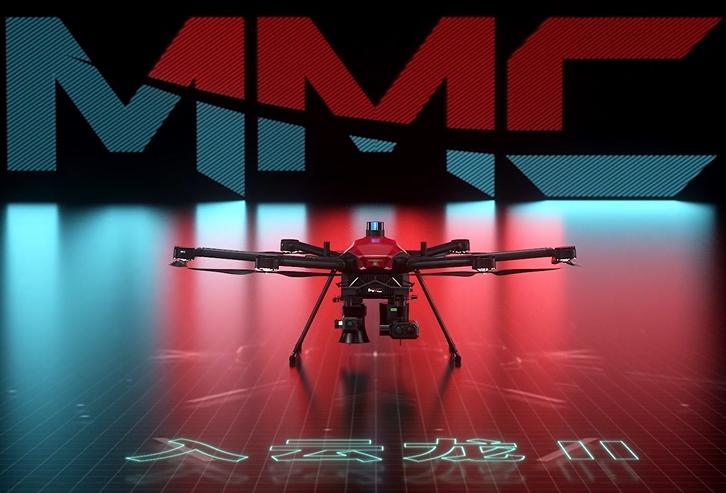
▲ Image source: Cubot
For example, the "Cloud - Soarer II" has a battery life of up to 80 minutes, a wind resistance of up to 12 m/s, a maximum payload of up to 10 kg, and a video transmission distance of up to 20 km. It can adapt to various complex industrial application scenarios.
It can carry fire - extinguishing bombs to put out fires, be equipped with high - definition equipment to check disasters, shuttle between poles to detect power hidden dangers, and complete plant protection operations on farms.
While creating benchmark hardware products and expanding service fields, Cubot is also building its own ecosystem.
Currently, Cubot's ecosystem, composed of four core components, "Wisdom Star," "Heavenly Eye General," "Divine Calculator," and "Cloud - Sharing Flight," corresponds to the four levels of hardware, software, algorithms, and services respectively.
It transforms the technical, product, and service experience accumulated over the past decade into a basic platform that can be used by the entire industry. By opening it to the market for free, it aims to jointly expand the "cake" of the low - altitude economy.
Currently, the Cubot platform has attracted thousands of ecological enterprises. The two sides are firmly bound together for mutual benefit and win - win results. Cubot has also upgraded again and become an "ecological operator" - the underlying "operating system" of the low - altitude economy.
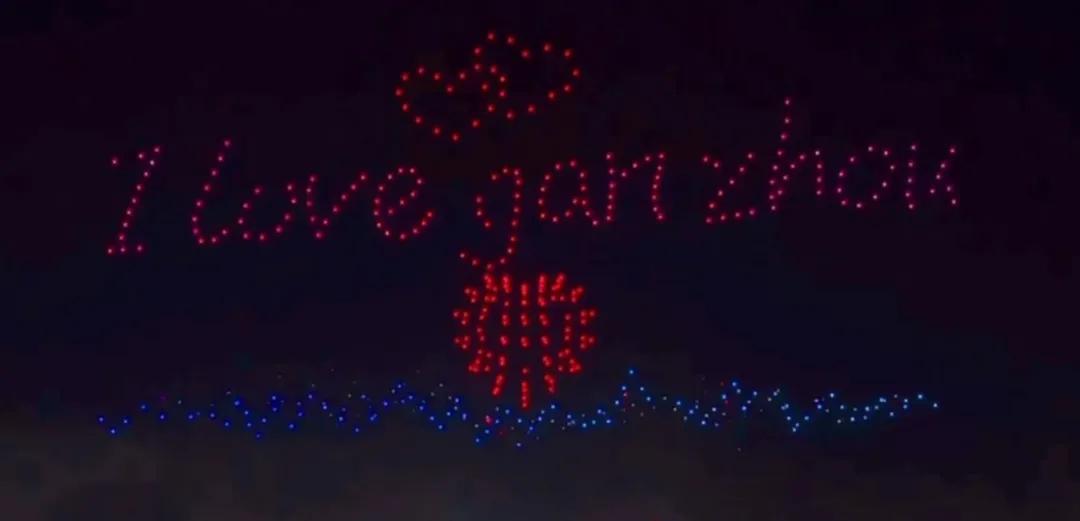
▲ Cubot drone light show. Image source: Cubot
Recalling his journey from working alone to open cooperation, Lu Zhihui has a deeper understanding of the importance of an enterprise leader to a company.
"The biggest enemy of an enterprise's development is not the competitors or the general environment, but the founder himself. The founder is an important factor affecting the success or failure of an enterprise, which also prompts me to constantly reflect on myself and prevent the company from having too short a shortcoming."
The competition in the drone industry is extremely fierce. Lu Zhihui has successfully grown in the cracks and become the king in the niche field with his never - say - die spirit