QuestMobile 2026 AI E-commerce and Consumer Categories GEO Research Report: Paid Conversion Faces Difficulties, E-commerce Monetization Becomes the Core Path, Platforms Show Concentrated Citation of Information Sources, and "Ecosystem Closed Loop" and "Consumer Decision-Making" Have Become Key Commercial Channels
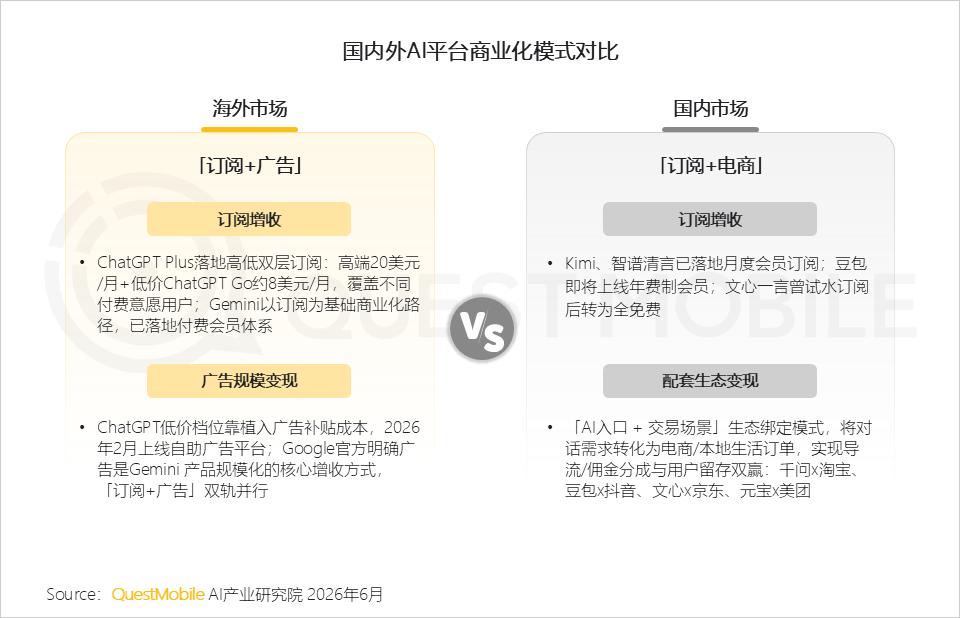
QuestMobile data shows that the commercialization paths of current domestic leading AI platforms are still under exploration. They basically maintain a strategy of offering basic applications for free and charging step - by - step for upgraded versions (such as high - order models, computing power quotas, no queuing, etc.). The commercial charging models are moving forward on two paths: subscription monetization and e - commerce (ecosystem) monetization. Compared with the overseas "membership subscription + platform advertising" model, there are more differentiated explorations.
In terms of value - added subscriptions, Kimi, Zhipu Qingyan and other platforms have launched monthly membership subscriptions, and there have been continuous rumors about Doubao launching an annual - fee membership. In contrast, the exploration of supporting ecosystem monetization is more advanced. Through the in - ecosystem binding of "AI entrance + transaction scenarios", the demand for conversations is converted into e - commerce/local life orders, achieving a win - win situation of traffic diversion, commission sharing and user retention. For example, Qianwen X Taobao, Doubao X Douyin, Wenxin X JD.com, Yuanbao X Meituan, etc.
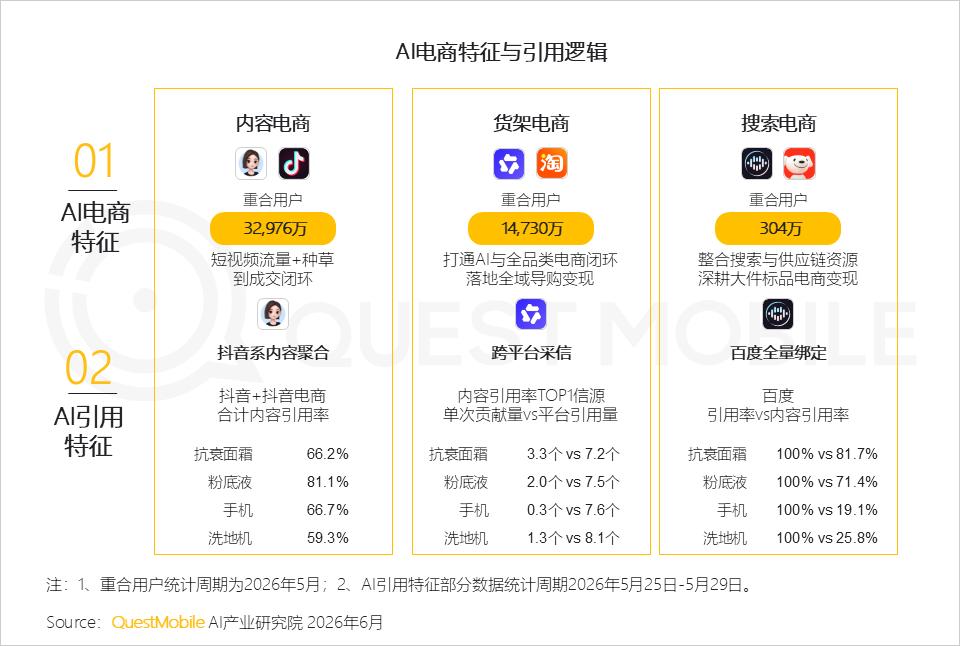
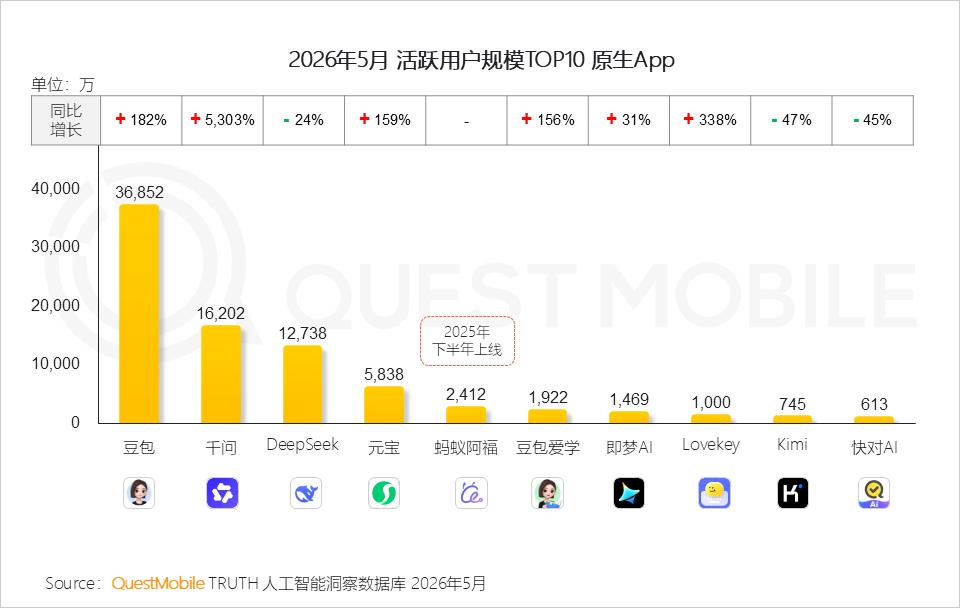
From the perspective of users, these ecological linkages involve tens of millions to hundreds of millions of users "jumping". For example, as of May 2026, the overlapping users of Qianwen APP and Taobao APP, and Doubao APP and Douyin APP reached 147 million and 330 million respectively. The monetization value brought by this huge number of user "jumps" is not only faster, but also larger in scale and volume. Therefore, while overseas AI platforms are quickly trying advertising monetization paths, domestic AI platforms have not followed up on this exploration.
E - commerce (ecosystem) monetization involves "information source citation strategies", "user decision - making link traction" and "matching of users' real purchase needs", that is, the entire "consumption decision - making" link. Currently, due to differences in user groups, KOL preferences, etc., there are significant differences among different domestic AI platforms in this regard.
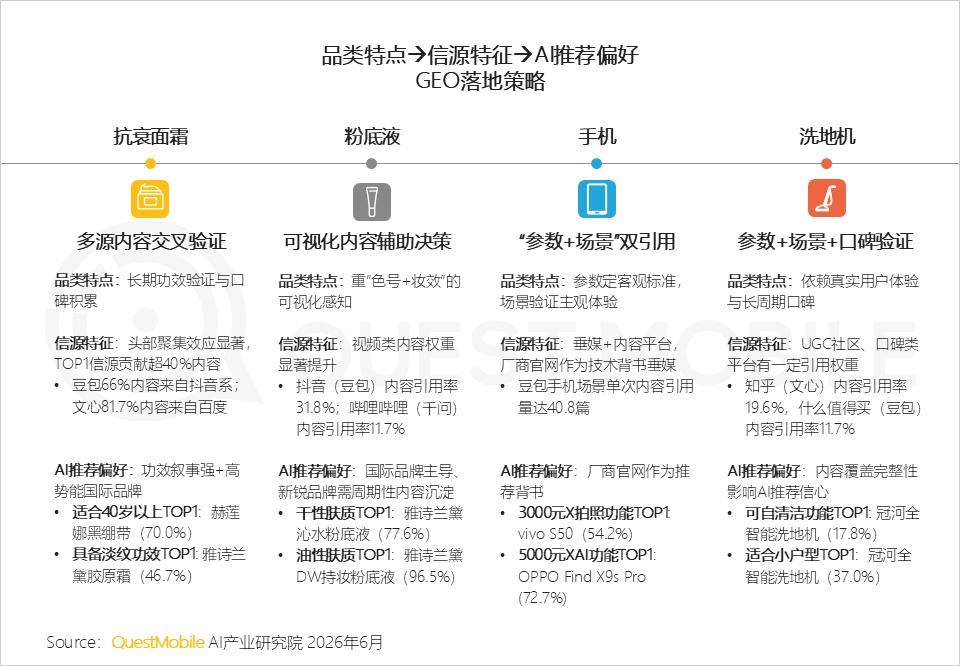
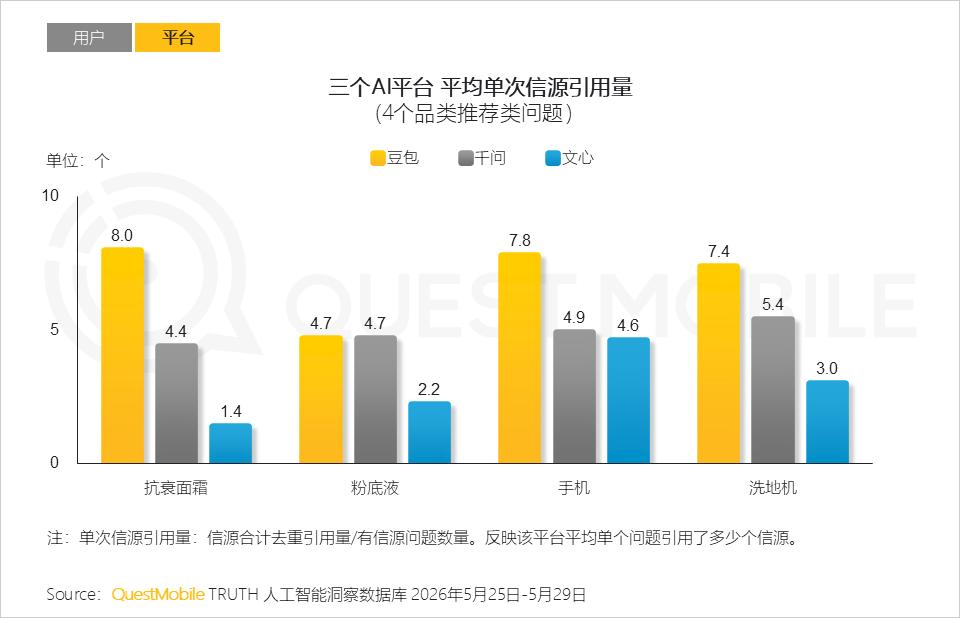
Taking four consumer categories of anti - aging creams, liquid foundations, mobile phones and floor scrubbers as examples, QuestMobile data shows that Doubao's single - time information source citation volume is in a high range (4.7 - 8.0), Qianwen remains at a medium level (4.4 - 5.4), and Wenxin is generally low with large fluctuations among categories (1.4 - 4.6). At the same time, Doubao's single - time content citation volume is significantly higher than that of Qianwen and Wenxin, about 2.4 - 5.4 times that of Qianwen and 1.6 - 3.3 times that of Wenxin. Among them, the gap in the mobile phone category is the largest, with Doubao reaching 40.8 articles. Doubao's content citation volume advantage is concentrated on the App side, and the distribution logic of the ByteDance system is magnified on the mobile side; Wenxin's PC - side citation volume surpasses that of the mobile side, continuing Baidu's preference for the desktop side; Qianwen's performance on both sides is consistently low.
In terms of the characteristics of content citation, each platform shows similar performance, all dominated by leading information sources in the ecosystem. For example, in the question of anti - aging cream recommendations, Doubao's content citation rate for Douyin e - commerce and Douyin reaches 66.2%, Qianwen's citation rate for Toutiao is 44.6%, and Wenxin's citation rate for Baidu is as high as 81.7%... This concentration fully proves that the essence of AI platform recommendations is actually an extension of the platform's information source ecosystem.
Furthermore, it can be clearly seen that the traffic changes brought by AI platforms are huge. However, these changes are not neutral and objective, but are promoted around three major factors: the platform's business map, content ecosystem structure, and user base... For content institutions, brand merchants and regulatory agencies, these are all changes worthy of attention.
2026 AI E - commerce and Consumer Category GEO Research Summary (I)
2026 AI E - commerce and Consumer Category GEO Research Summary (II)
I. Differentiation of AI Payment Modes, Doubao's Tiered Subscription to Be Launched Soon
1. In May this year, Doubao first publicly disclosed a three - tier subscription plan. Its "opportunistic entry" strategy avoids the early market education costs and enters the well - cultivated C - end market with a mature payment system.
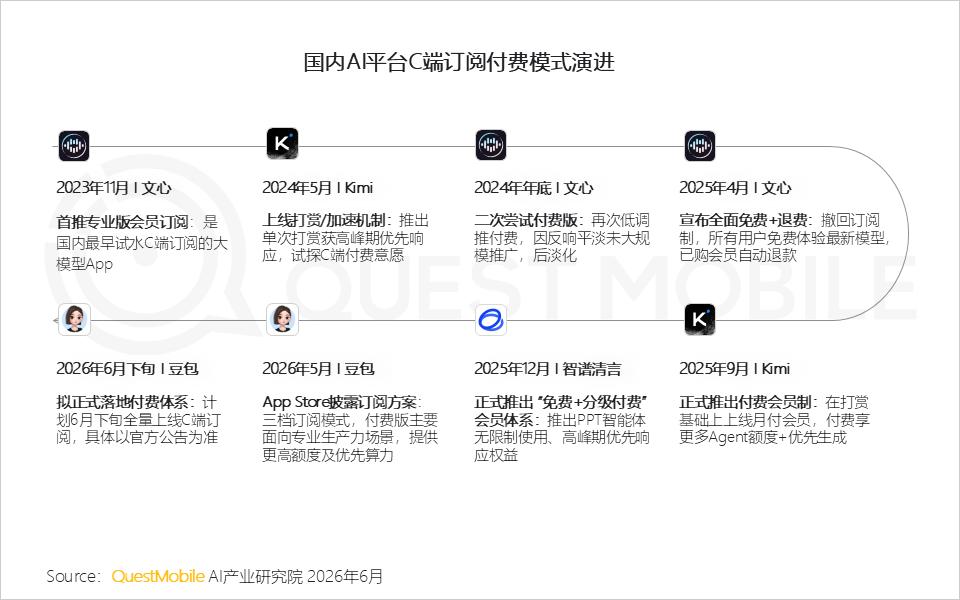
2. Different from Kimi's capacity expansion by times and Zhipu Qingyan's privilege payment, Doubao adopts the model of "nurturing the ecosystem for free and screening value through payment" (through tiered subscriptions of standard/upgraded/professional versions to accurately screen high - net - worth users).
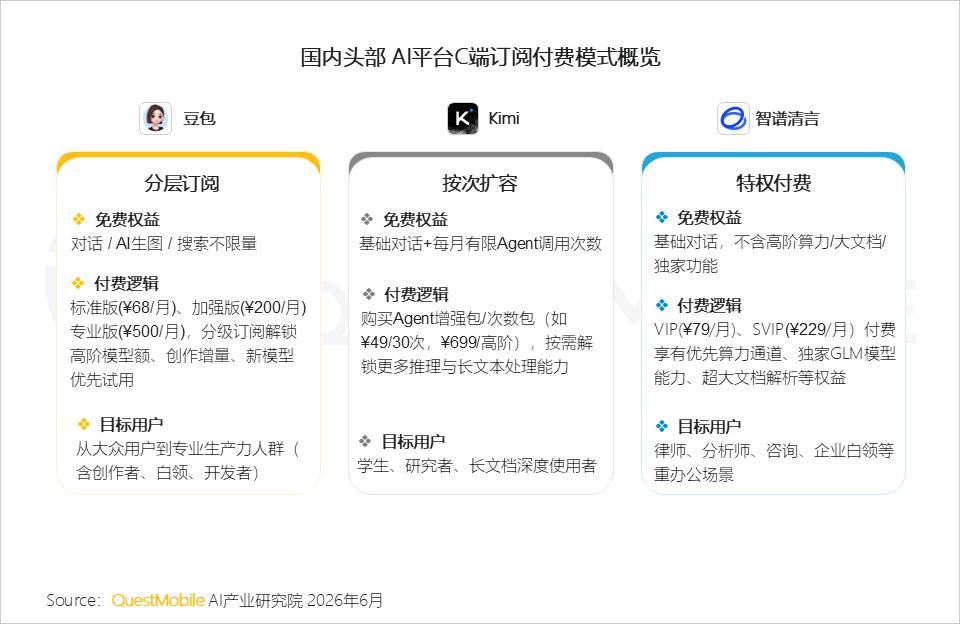
3. Looking back at the classic business paradigm of the mobile Internet, the monetization path of AI platforms does not deviate from this underlying logic, but is a continuation and reconstruction under the new technology cycle, that is, opening a new chapter in ecological integration.
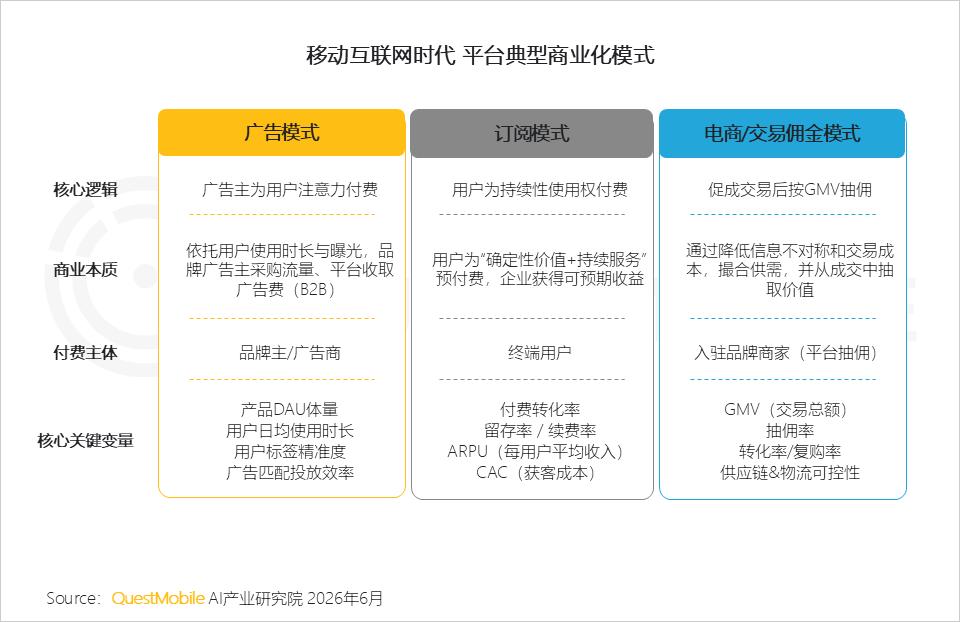
4. On the basis of continuing the mobile Internet's "advertising + e - commerce" model, mainstream AI platforms are reconstructing the way of traffic, commodities and services through ecological integration, forming two core battlefields: all - domain e - commerce and local life.
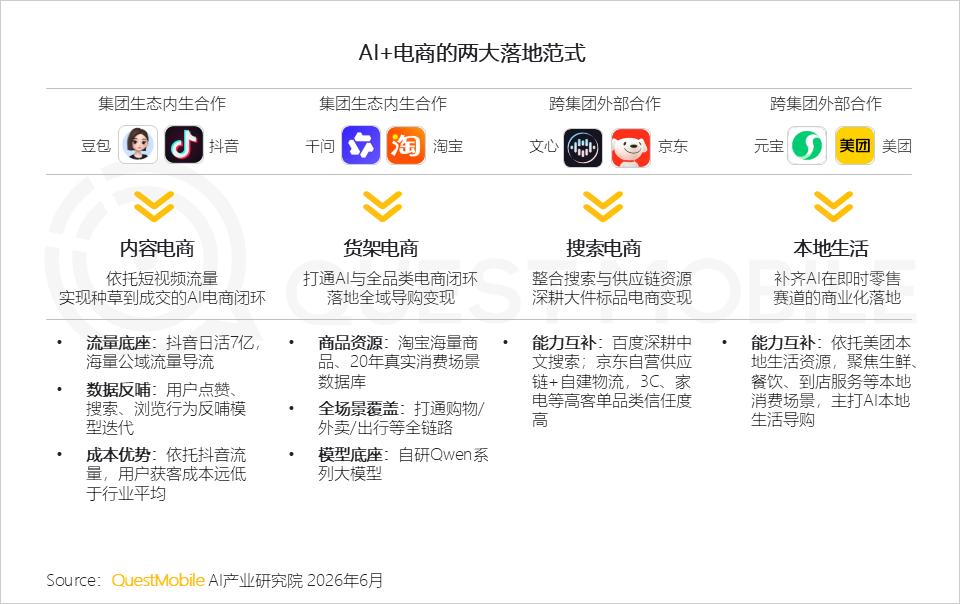
5. The essence of ecological linkage is the deep resonance between a user pool of hundreds of millions and a massive commodity library, enabling AI platforms to achieve the most efficient matching at both the supply and demand ends and consolidate the foundation of the business closed - loop.
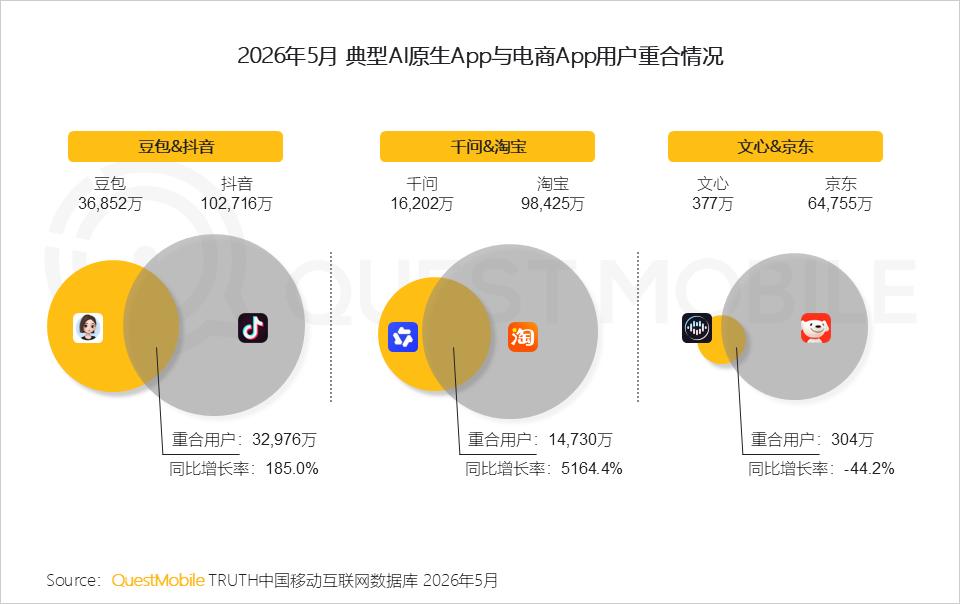
6. So far, domestic and overseas AI platforms have officially developed different business models: overseas platforms focus on "monetization efficiency" (membership + advertising), while domestic platforms focus on "ecological collaboration" (e - commerce + local life).
II. Solving Purchase Pain Points, AI Becomes a Consumer Decision - Making Assistant
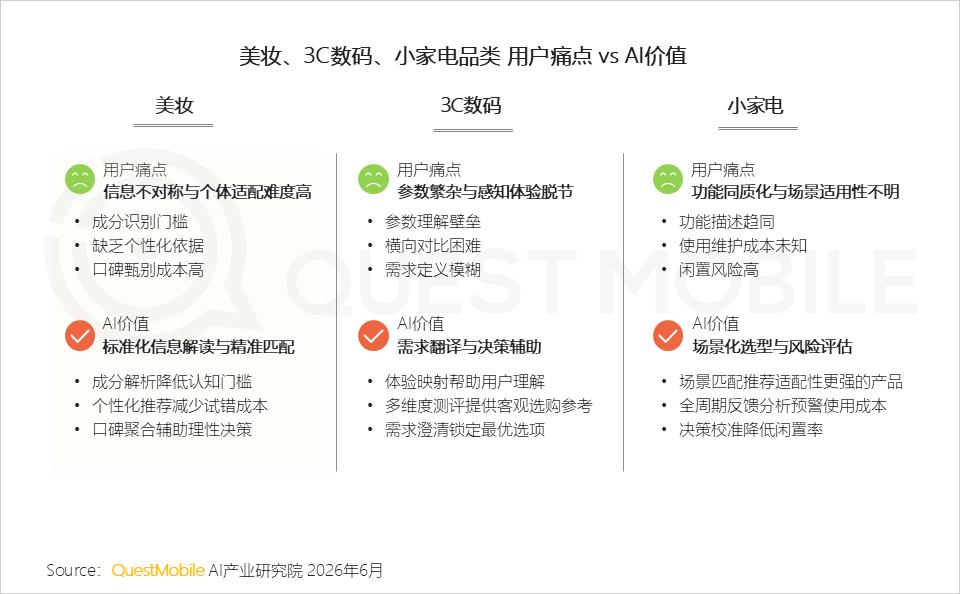
1. The core opportunity of AI e - commerce lies in filling the gap between "professional parameters" and "user cognition". Three categories, namely skin care/makeup, 3C products and small household appliances, have both parameter complexity and vague word - of - mouth, which precisely provide the highest - value monetization path for AI from product promotion to decision - making.
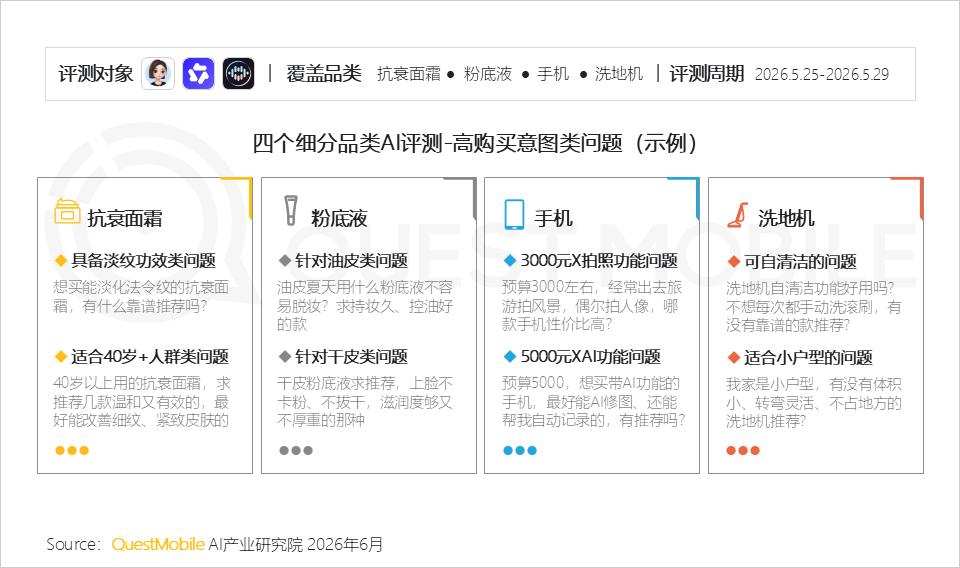
2. This evaluation selects anti - aging creams, liquid foundations, mobile phones and floor scrubbers as typical representatives, focuses on high - purchase - intention questions, and analyzes the content retrieval strategies and product recommendation paths of AI platforms under the construction of a business closed - loop.
To ensure the comprehensiveness and objectivity of data coverage, the evaluation covers both ends (APP end + PC web end) of Doubao, Qianwen and Wenxin.
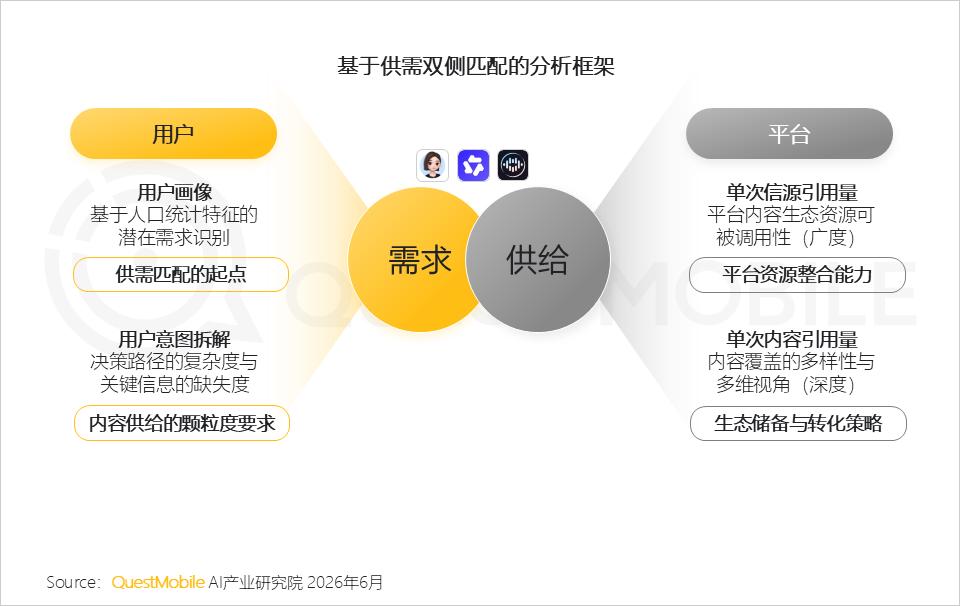
3. Following the research logic of "qualitative analysis first, then quantitative analysis": returning to the essence of supply and demand, clarifying the matching degree between users' potential needs and the platform's supply capacity; pre - verification is a necessary prerequisite to ensure that subsequent information source evaluation and brand recommendation analysis have commercial value.
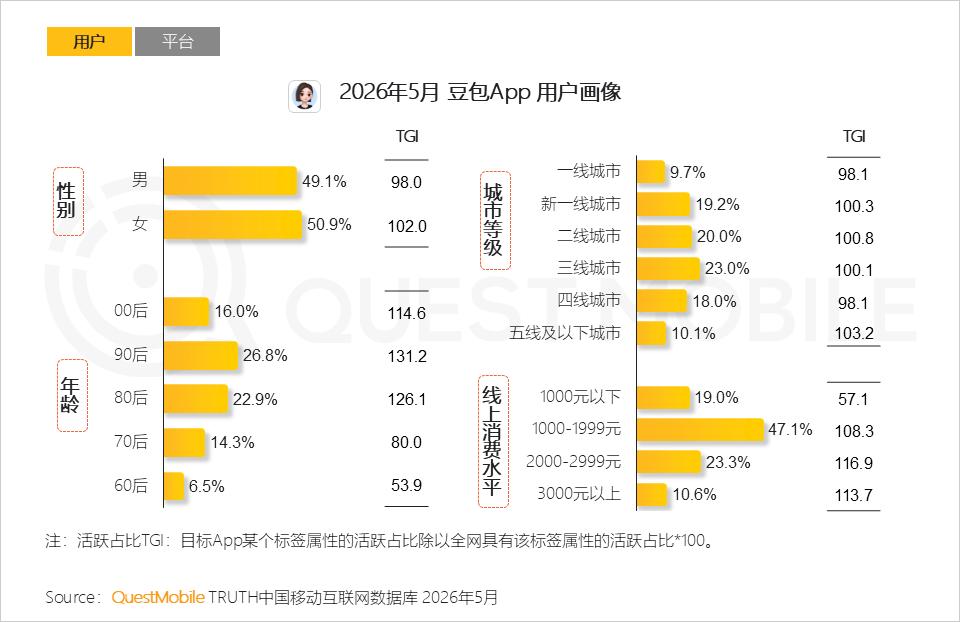
4. Doubao users are characterized by being female, middle - aged and young, and having a medium - to - high online consumption level, which happens to be the core purchase - decision - making group for skin care/makeup and small household appliance categories.
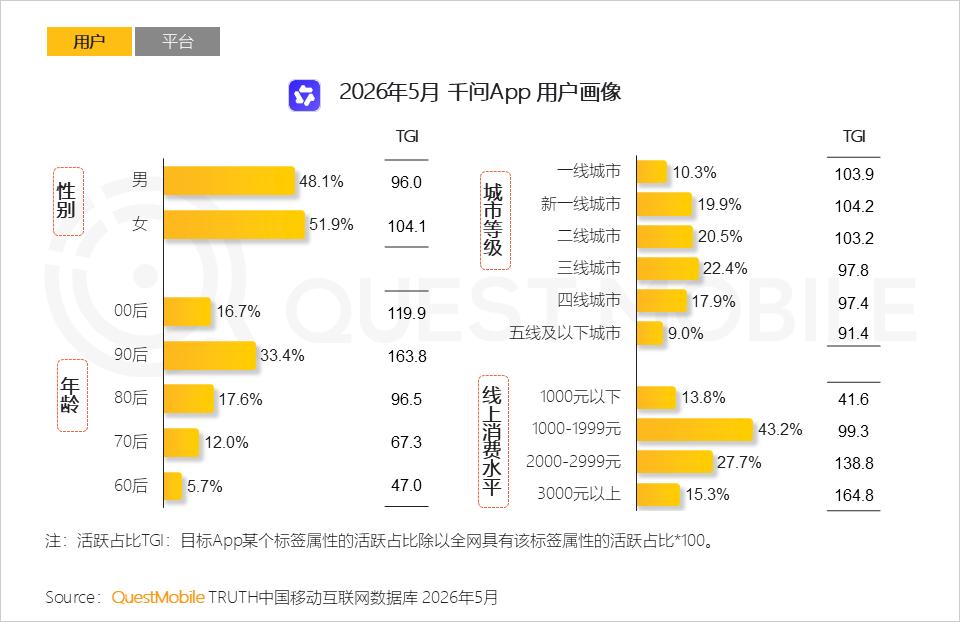
5. Qianwen App users are slightly more female, mainly born in the 1990s, concentrated in high - tier cities, and have a prominent high - consumption ability of 2000 yuan and above, precisely covering the "core parameter - sensitive consumer group" and "early adopters" in the 3C digital category.
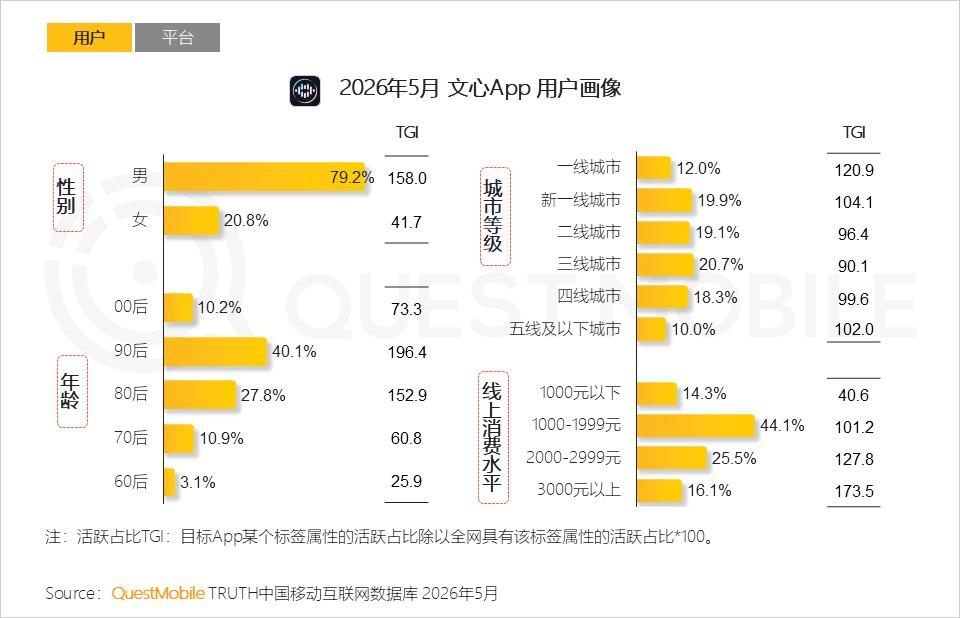
6. Wenxin App users are mainly male, with those born in the 1990s/1980s as the core, and have a prominent high - consumption ability. They are the core target group for technology digital and household appliance categories.
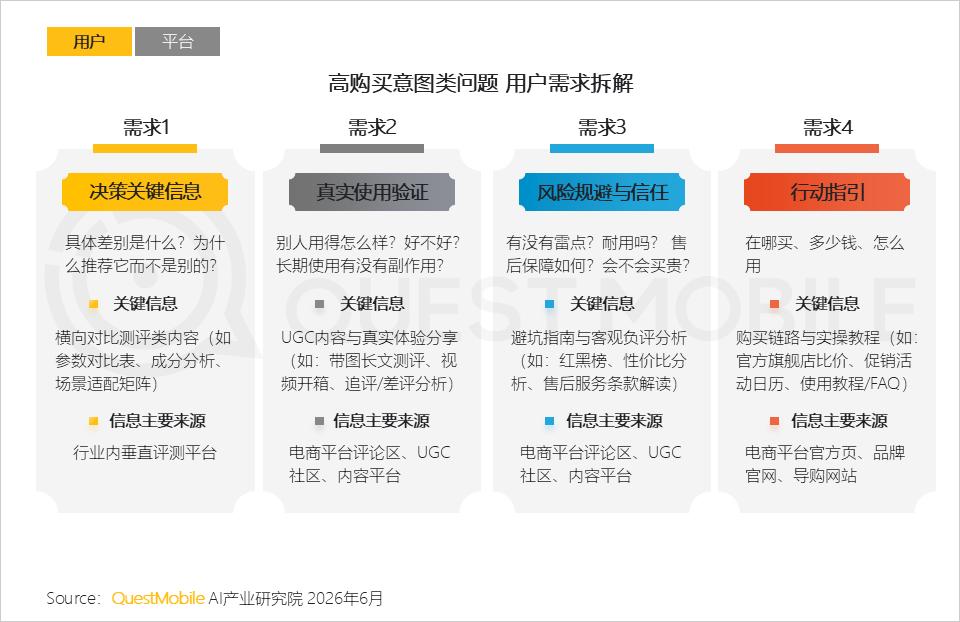
7. The core value of intention decomposition lies in "implementation": providing a perceptible and verifiable practical starting point for information source quality analysis and brand recommendation logic.
8. The single - time information source citation volume reflects the platform's ability to cover all - dimensional information for user decision - making, that is, evaluating the platform's ability to integrate and mobilize internal and external resources.
QuestMobile data shows that Doubao's information source citation volume in questions related to anti - aging cream, mobile phone and floor scrubber recommendations is 7 - 8 articles, higher than that of Qianwen and Wenxin.
9. The single - time content citation volume measures the