Cheap electric vehicles are actually not selling well.
For a long time, many people have had a "misunderstanding" about the Chinese auto market - they believe that in the Chinese market, as long as the price is low enough, there's no need to worry about not selling cars.
This kind of thinking is actually not hard to understand. Previously, the Chinese auto market had a period when low - end SUVs grew rampantly, and many automakers made a fortune by producing SUVs. However, time has changed, and the car - selling logic of that era has gone with that period.
Now, in the new energy era, especially in 2026 when the auto market has entered the final stage, there has been a phenomenon that cheap electric cars are actually hard to sell.
Data doesn't lie. From January to April 2026, the sales volume of new energy vehicles under 80,000 yuan in China dropped by nearly 50%, and the retail sales of pure - electric micro - cars plummeted by nearly 70% year - on - year. Even Hongguang MINIEV, which used to be the sales champion of micro - electric cars, is a bit struggling. The monthly sales of models like Chery QQ Ice Cream have dropped to the level of 500 units. Compared with the monthly sales of tens of thousands of units last year, the downward trend is obvious.
While these low - priced electric cars, which account for a large proportion of sales, are facing a cold market, the domestic auto market has declined. From January to April 2026, the cumulative retail sales of new energy passenger cars in China were 2.758 million units, a double - digit decline year - on - year.
The industry often says that the auto market is cooling down. But after constantly visiting front - line terminals, the author found that it's not that no one is buying new energy vehicles. Instead, those low - priced commuter electric cars that used to rely on policy dividends to survive and have no core product strength are losing out in the market.
The purchase bill for low - priced electric cars has changed
From a macro perspective, the core trigger for the decline of low - priced electric cars is the implementation of the new purchase tax policy on January 1, 2026.
Previously, the purchase tax for new energy vehicles was fully exempted. After the implementation of the new policy, it was adjusted to a 50% reduction, and the upper limit of the purchase tax exemption was compressed from 30,000 yuan to 15,000 yuan. At the same time, with the reconstruction of the annual national subsidy rules, the vehicle scrapping subsidy and replacement subsidy have been comprehensively reduced. The subsidy for new energy vehicles under 166,700 yuan has decreased by 3,000 yuan to 10,000 yuan compared with 2025, directly increasing the user cost.
After such an adjustment, for terminal users buying micro - electric cars at the 50,000 - yuan level, the new tax cost is over 2,000 yuan; for 100,000 - yuan - level household new energy models, the new tax is over 4,000 yuan; for 200,000 - yuan mainstream household new energy models, the tax increases by nearly 10,000 yuan.
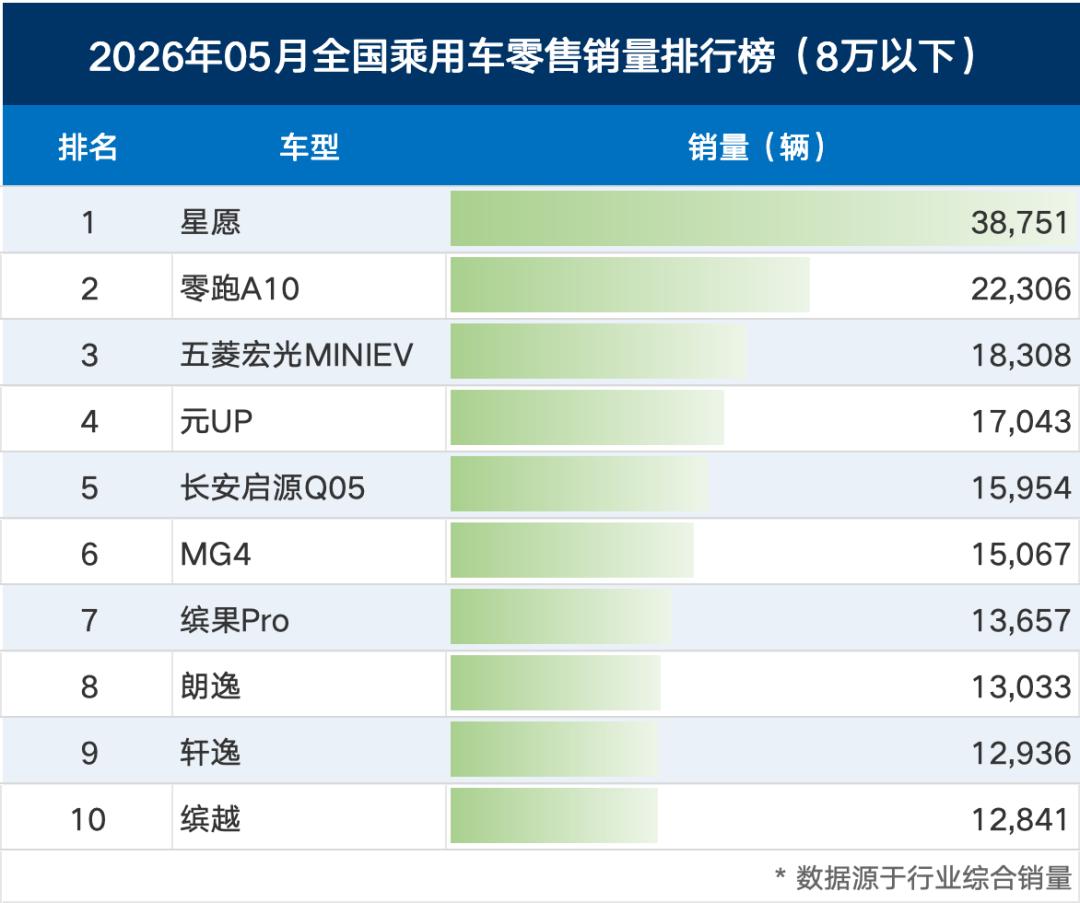
Of course, for the mid - to - high - end car - buying group, a few thousand yuan of tax fluctuation hardly changes their car - buying decision. However, users with a rigid demand for commuting under 80,000 yuan are very sensitive to the car - buying cost. The latter are mostly users with rigid demand in the sinking market. They have strong control over their car - buying budget. After all, most of the car - buying funds are fixed household expenses, with little room for flexible premium.
As the bill gets longer, it undoubtedly affects their final decision on whether to buy a car. After visiting car dealers in some third - and fourth - tier cities such as Shandong and Henan, the author learned that many potential users gave up buying a car due to the additional 2,000 - yuan tax.
In other words, the past sales volume of low - priced electric cars has never been due to the product strength impressing users. Instead, it was the dual dividends of purchase tax and national subsidy that lowered the landing price and achieved passive sales volume. When the policy dividends were withdrawn, the price advantage disappeared instantly, and the decline in sales volume became inevitable.
Of course, the single policy regression is not enough to cause a halved sales decline. The overdraft of year - end demand and the price war have become another major reason for crushing low - priced new energy vehicles.
At the end of 2025, the auto industry hyped up the last - train effect of the subsidy regression. Users with rigid demand in counties and townships concentrated on buying cars in advance, overdrawing the demand for commuter cars in the first quarter of 2026. Many car salespeople reported to the author that the micro - electric car stores were full of customers at the end of last year, and the order schedule was more than two weeks. At the beginning of this year, the natural in - store customer flow decreased sharply, and the market directly fell into a situation of demand interruption.
Meanwhile, fuel - powered car manufacturers cleared their inventories, invisibly sniping at the low - priced territory of new energy vehicles. Some media reported that the naked - car transaction price of a certain Japanese A - class family sedan even dropped below 52,000 yuan, and the mainstream B - class fuel - powered cars such as Magotan and Accord had comprehensive discounts of 30,000 - 50,000 yuan. The entry threshold for traditional household fuel - powered cars has dropped significantly.
As a result, with the same budget, users can buy an entry - level fuel - powered sedan, avoiding the short - comings of charging and range, and can also get more mature vehicle quality control and a longer vehicle - using life cycle. Many consumers' car - buying scales quickly tilted towards fuel - powered cars.
The pain of price difference divides the auto market
As mentioned above, users of micro - electric cars under 80,000 yuan are a group very sensitive to price. Their final car - buying decision only depends on indicators such as the landing price and car - buying subsidy. Instead, they don't care about the body structure, battery stability, chassis tuning, and intelligent configuration.
In the past, automakers relied on low - cost small - capacity lithium - iron - phosphate batteries, simplified body processes, and reduced after - sales support to compress the car - manufacturing cost. They cooperated with policy subsidies to create a price advantage and achieved large - scale sales volume.
However, when the policy cost increased, automakers were in a dilemma - if they raised the price following the tax increase, they would directly lose customers; if they sold at the original price, they would really be selling cars at a loss. And the net profit per micro - electric car is less than 1,000 yuan, leaving little room for price concessions. Under this vicious cycle, model production suspension, store reduction, and channel contraction have occurred one after another.
In contrast, the consumption logic of the mid - to - high - end new energy car - buying group of 150,000 yuan and above is completely different. They will give priority to core product strengths such as the vehicle's range, intelligent driving experience, vehicle quality, brand service, and second - hand car depreciation rate. In comparison, the tax fluctuation of a few thousand yuan is a secondary or even non - influencing factor in the decision - making process.
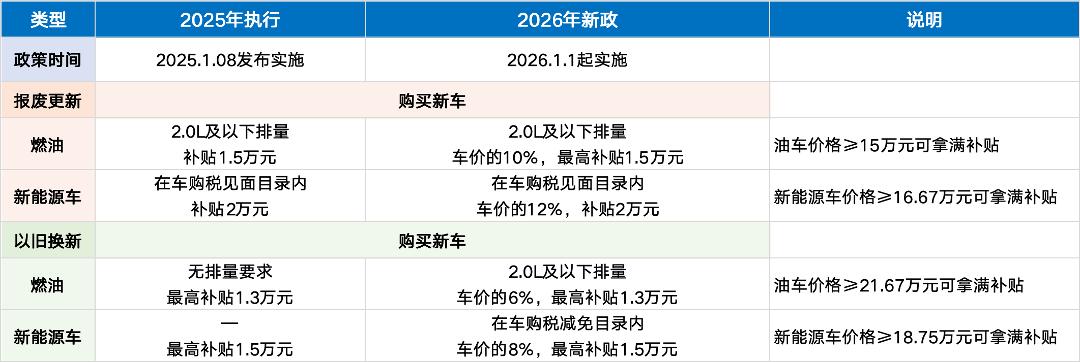
Let's do some calculations. After the purchase tax for new energy vehicles in 2026 changed from "fully exempted" to "half - exempted", the maximum tax reduction is no more than 15,000 yuan. Take a 300,000 - yuan model as an example. Originally, the tax exemption could save about 26,500 yuan, but now it only saves 15,000 yuan, with a difference of about 11,500 yuan. Even compared with fuel - powered cars (also with a maximum saving of 15,000 yuan), the advantage is not significant.
For people with such high purchasing power, for models above 250,000 yuan, the tax subsidy accounts for a small proportion of the car price and is difficult to be a core decision - making factor. Research data shows that only 10% of new energy car - buying users above 250,000 yuan will pay attention to the car - buying tax subsidy.
This also explains the current market pattern of "from cold to hot": the sales volume of the low - price market under 80,000 yuan has nearly halved; the mid - range models of 150,000 - 200,000 yuan have a slight decline; the high - end models above 250,000 yuan are growing against the trend, getting out of the price involution and building a moat with technology and brand.
Behind this phenomenon is that in the context of the industry elimination competition, the business model of low - price dividends is coming to an end.
For a long time, the industry has defined micro - electric cars led by Hongguang MINIEV as the god cars for the rigid demand in the sinking market, but has ignored that this type of models is to some extent a phased product promoted by policies.
Automakers rely on subsidy dividends to scale up, boost sales volume, and earn new energy credits. They give up core product points such as chassis R & D, intelligent cockpit upgrades, and battery safety optimization, and use low prices to seize the market. This volume - driven business model failed in 2026. In the future, the era of low - price involution in the new energy track will come to an end, and the competition era where strength is king will officially begin.
This article is from the WeChat official account "Automobile Commune" (ID: iAUTO2010), author: Li Sijia, published by 36Kr with authorization.