Pocket 4P dual-camera is here: Beyond smartphone imaging, DJI is reinventing a "pocket cinema camera"
In today's era where the imaging capabilities of mobile phones are constantly approaching those of professional devices, a question has become increasingly pressing: Is there still a need for independent imaging devices?
On June 15th, DJI officially launched the Osmo Pocket 4P, pushing this pocket gimbal camera into more professional creative scenarios. As the new flagship product of the Pocket series, the Pocket 4P is positioned as a "cinema camera that fits in your pocket." It is equipped with a dual - camera system, a 17 - stop dynamic range, and the D - Log 2 professional color curve, aiming to further incorporate professional imaging capabilities into a pocket - sized device.
The Pocket 4P is priced starting at 3,799 yuan, and the pre - order volume on multiple platforms continues to rise.
For a category that was originally regarded as a "supplement to mobile phone imaging," this level of popularity itself poses a new question: When mobile phones are already powerful enough, why do more and more people still want to pay for an independent imaging device?
In the past few years, almost every update of flagship mobile phones has encroached on the territory of traditional cameras. From multi - camera systems, telephoto lenses, and computational photography to Log video, AI photo editing, and one - click photo generation, mobile phones have become the most convenient imaging tools for the vast majority of ordinary users.
On the other hand, a seemingly counter - intuitive category has been experiencing explosive growth.
At the shooting site on the Yulong Snow Mountain in Lijiang, users holding DJI Pocket cameras are no longer just digital enthusiasts. Travel bloggers, parent - child users, food review creators, variety show crews, and even many people trying video creation for the first time are all using this small device to express themselves in daily life.
"DJI pioneered the product form of the Pocket, and it has indeed been recognized by the market and a large number of users," said the product manager of the Pocket series at the media preview event of the Pocket 4P during DJI's "Boundless Vision" imaging exploration tour in Lijiang.
According to him, after the release of the Pocket 3, the entire product line experienced explosive growth, almost doubling every year. By this year, the domestic market size of the Pocket 3 has exceeded that of mirrorless cameras. This means that for a large number of ordinary users, when traveling, recording daily life, or shooting short videos, gimbal cameras are becoming a more natural choice than traditional cameras.
What really deserves discussion behind this is not just the additional parameters of the product, but a broader question: When mobile phones are getting stronger, why does DJI still make the Pocket? Why can the continuously iterated Pocket still achieve continuous and explosive growth?
The answer may lie in the evolution of this product line over the past eight years.
The eight - year journey of the Pocket is not a process of simply piling up parameters on a device, but a process for a company to continuously re - understand "what kind of imaging tools ordinary people really need."
The Pocket wasn't initially designed for Vlogs
When people mention the Pocket today, many naturally think of Vlogs, selfies, travel records, and lightweight creation. However, at the beginning, DJI didn't define it this way.
In 2015, DJI first took the gimbal camera "small head" from the Inspire drone and applied it to a handheld device, launching the Osmo series. This is the origin of the handheld gimbal camera form.
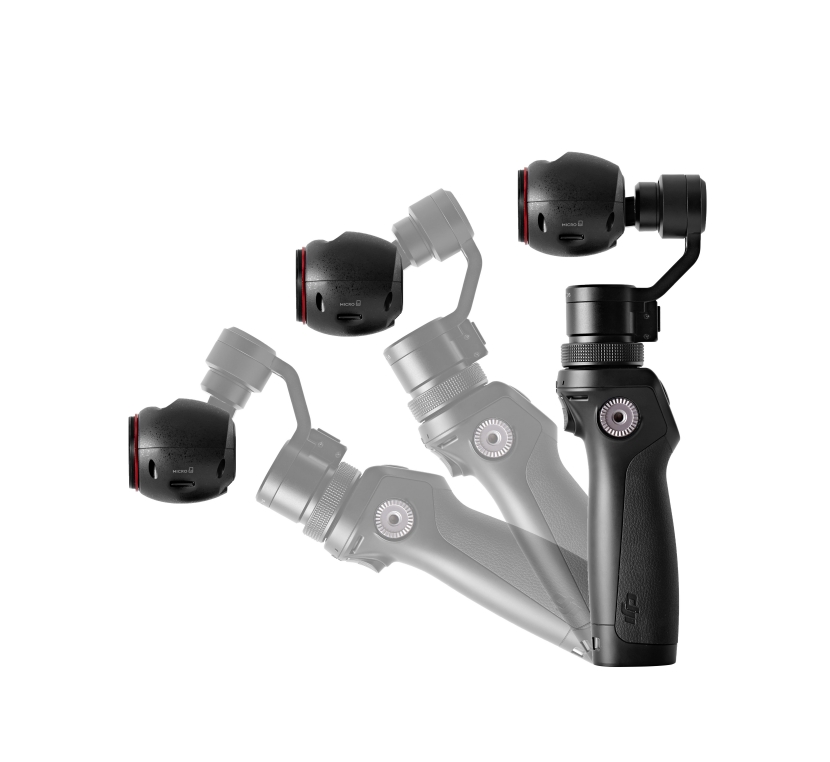
At that time, DJI was more thinking from the perspective of professional imaging: more stable footage, larger sensors, and greater post - production potential. Later, DJI successively launched the Osmo+, Osmo Pro, and Osmo RAW, and even joined the M4/3 lens mount alliance, allowing the device to change lenses and record lossless RAW, leaving more room for professional creation.
However, these products also had obvious problems: they were too professional, too heavy, and had a high threshold. "We were thinking at that time, is it possible to further shrink it so that everyone can enjoy the shooting experience of a gimbal camera?" recalled the product manager.
So, in 2018, the Osmo Pocket was released. It was extremely compact and could easily fit into a pocket, and was then called the "lipstick camera."
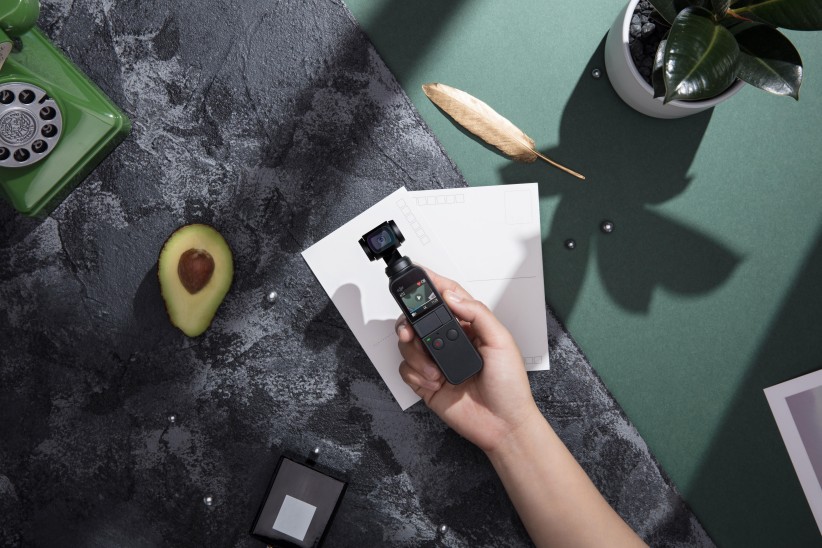
However, an easily overlooked fact is that the first - generation Pocket was not a real Vlog camera.
The product manager said that the focal length of the Pocket 1 was about 26mm, which was not comfortable for selfies. "When it was first released, we didn't even promote the concept of Vlogs." On the one hand, the Vlog culture hadn't really taken shape in China at that time; on the other hand, the product itself was not fully adapted to selfie expression.
The real change happened later. After the Pocket 1 was equipped with an extension pole, users began to use it for selfies, talking, and recording daily life. Only then did DJI gradually realize that what users needed was not a "small stable camera," but a lighter and lower - threshold way of expression.
To some extent, the product definition of the Pocket was not designed from the start, but was continuously refreshed through users' usage. So, with the Pocket 2, DJI really started to focus on Vlogs.
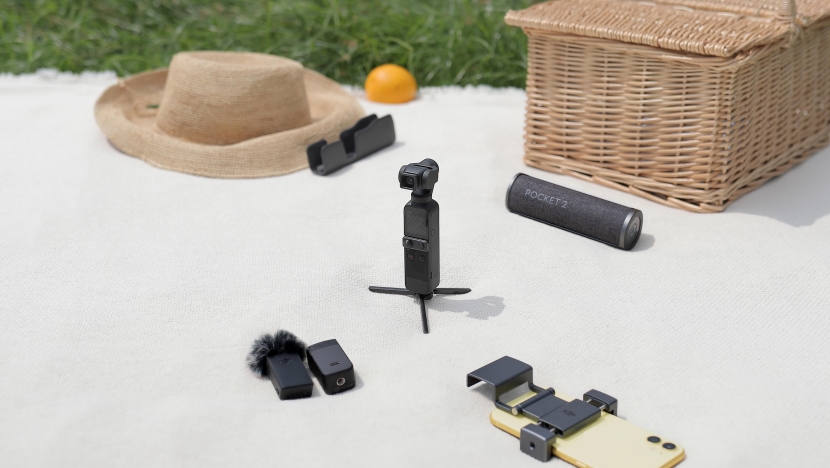
The most crucial change in this generation was adjusting the focal length to 20mm, making it more selfie - friendly. At the same time, the Pocket 2 also tried the wireless microphone ecosystem for the first time. Although the wireless microphone at that time could only be connected to the Pocket 2, later the DJI Mic independently developed into multiple series and could be directly connected to cameras, mobile phones, and Osmo series devices.
From the Pocket 1 to the Pocket 2, it was essentially a change in product positioning: from a "image - quality tool with stabilization" to a "Vlog camera in your pocket." But this was not the real explosion moment of the Pocket.
After the release of the Pocket 2, DJI found another problem: when users compared it with traditional compact cameras like those from Sony and Canon, the Pocket's advantages were its compactness, stability, and convenience, but it was not outstanding enough in "taking good pictures of people." For Vlogs, this is precisely one of the most important capabilities.
So, the focus of the Pocket 3 was no longer just "whether it can shoot," but "how good the pictures look." The one - inch CMOS, two - inch rotating screen, and color styles began to jointly push this product line into a new stage.
The product manager mentioned that after the Pocket 3, there even appeared filters in apps like Meitu and Jianying in the style of the Pocket 3. That is to say, the Pocket began to have a color style and imaging aesthetic recognized by the public. This is actually a very important turning point.
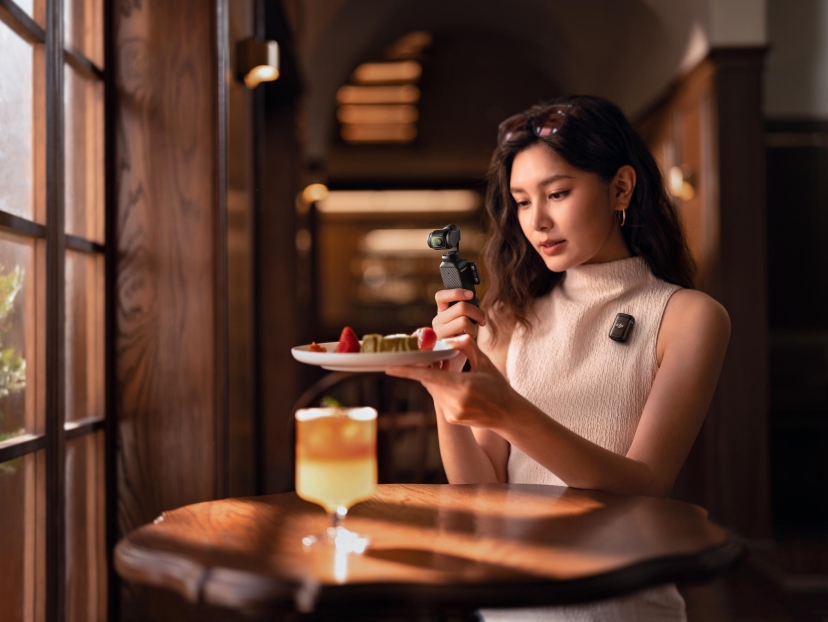
From the Pocket 1 to the Pocket 4, this product line has experienced several cognitive leaps: the Pocket 1 solved the problem of "stability + image quality"; the Pocket 2 solved the problem of "feasible Vlog selfies"; the Pocket 3 solved the problem of "taking good pictures of people"; and the Pocket 4 tries to solve the problem of "creative expression in more scenarios."
It is no longer just a selfie device, but is evolving into a "pocket - sized imaging system."
Why did the Pocket 3 really take off?
Judging from the results, the Pocket series really entered the public eye starting from the Pocket 3. But this doesn't mean that the first two generations were failures. On the contrary, in DJI's view, both the Pocket 1 and the Pocket 2 had achieved good results in product performance, but their influence was mainly in the tech circle.
The product manager explained to 36Kr that for a product to truly reach the general public, it needs to meet two things at the same time: first, the product strength must be strong; second, it needs to break through the circle. The explosion of the Pocket 3 was the result of these two things happening simultaneously.
In terms of product strength, the Pocket 3 has reached the first echelon of similar devices. The dynamic range, bit - depth, and image quality performance brought by the one - inch sensor make it no longer just a "convenient small device," but start to have the ability to let users create seriously. However, product strength alone is not enough to bring about a large - scale explosion.
What's really important is that it was seen by more circles. Reality shows, variety shows, and content production teams were important promoters for the Pocket 3 to break through the circle. Many directors found that this small device could replace some traditional shooting equipment and enter scenarios closer to the characters. Artists could hold it themselves to shoot, and the footage would be more natural and closer to the audience.
When the public continuously saw this device in variety shows, TV dramas, and short videos, and also saw its reviews from digital bloggers, combined with the spontaneous use by celebrities, the public's awareness of the Pocket 3 began to accumulate.
It is no longer just a new device in the digital circle, but has become a creative tool that the public can understand, imitate, and buy. This is also the biggest difference between the Pocket 3 and the first two generations. The first two generations proved that the product was viable, and the third generation proved that it could enter a larger social scenario.
In this process, DJI also continuously maintained the level of discussion through function updates. For example, functions like video - to - live, color filters, and direct - output effects may not be the most hardcore parameter upgrades, but they all actually address the specific pain points of users: whether the footage can look better, whether it can be more conveniently posted after shooting, and whether the content can be more easily shared. For the general public, these are often more important than abstract parameter improvements and are more likely to be converted into actual purchases and spontaneous dissemination.
This corresponds to a common rule in consumer electronics: a product won't automatically explode just because it is "stronger." What really brings growth is often that it happens to be upgraded to meet the needs that users care most about. When the functions are useful enough, users will vote with their purchases and sharing, and the product will have the opportunity to truly break through the circle.
The success of the Pocket 3 is essentially not just a simple hardware upgrade, but the result of a precise alignment between product upgrade and user needs. That's why it was able to accumulate word - of - mouth, expand scenarios, and achieve mass communication at the same time within the same time frame, and finally achieve a real explosion.
With the arrival of the Pocket 4, the challenges DJI faces have changed. Since the Pocket has proven that it is not just a niche digital product, the next question is: Can it grow from a "blockbuster single product" into a more complete imaging system?
This is also the reason why the Pocket 4 and the Pocket 4P are both put forward. This time, DJI didn't just launch one model, but differentiated between the Pocket 4 and the Pocket 4P. According to the product manager, the Pocket 4 is more suitable for ordinary users to record their daily lives in Vlogs, while the Pocket 4P is for creators with higher imaging pursuits, especially those with higher requirements for portraits, mid - range focal lengths, color grading, and cinematic effects.
This means that the Pocket category is entering a more segmented stage. Just like traditional cameras are divided into entry - level, intermediate, and professional models, when a category reaches a large enough scale, it can't always rely on just one device to cover all users.
The Pocket 4 is the mass - market basic model, and the Pocket 4P is the version for advanced creators. DJI chose to officially announce the 4P in advance to give users more options when making a purchase. This is a typical strategy for a mature category. It shows that the Pocket is no longer just a product that is "released one generation at a time," but has started to have a clear product hierarchy and user segmentation.
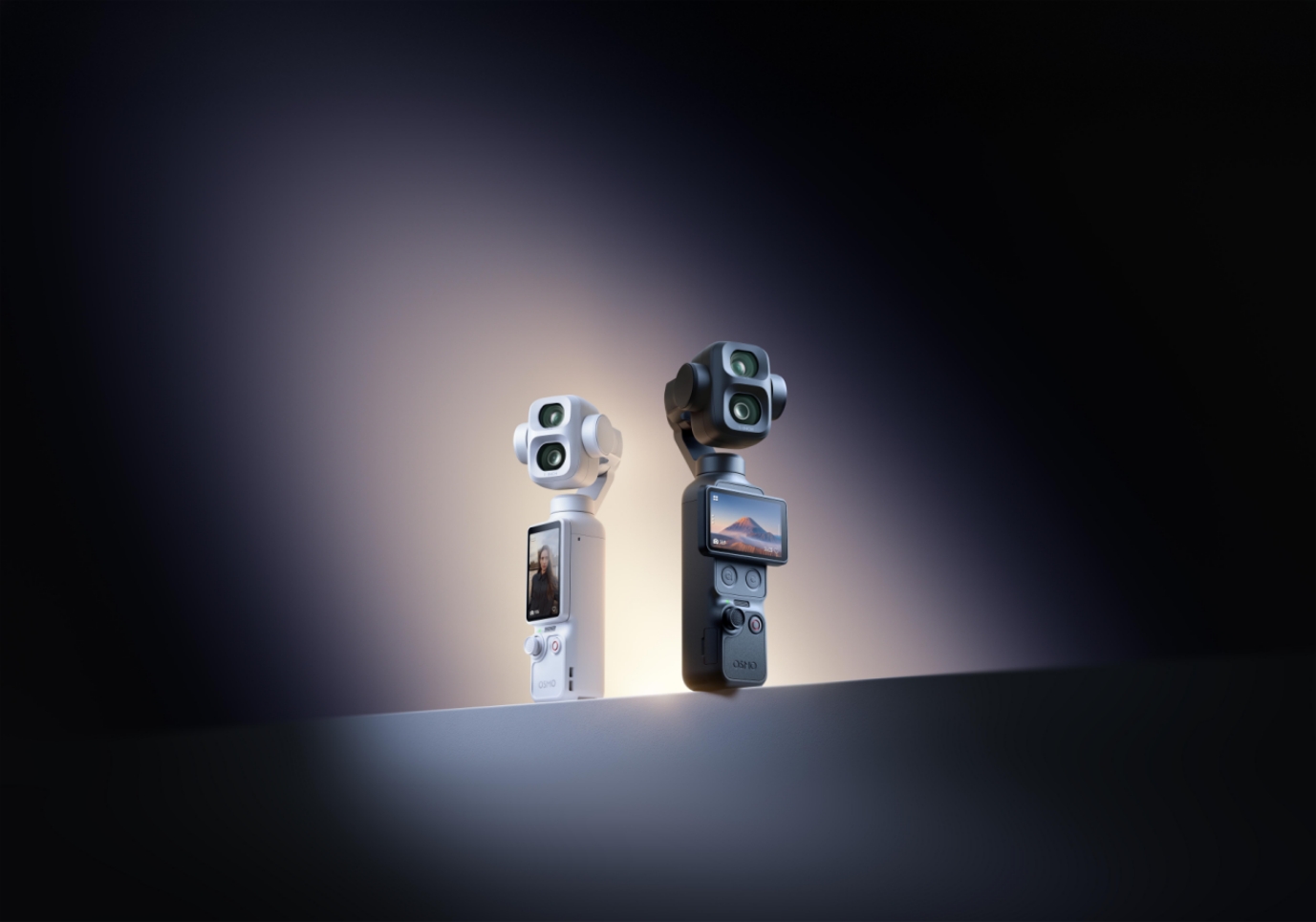
The Pocket 4P: How to Fit a Cinema Camera in Your Pocket
From the preview event, the most noticeable thing about the Pocket 4P is a series of imaging parameters.
For example, it is equipped with a new CMOS, supporting a 17 - stop ultra - high dynamic range; it introduces the D - Log2 color curve, which can better connect with the cinema camera workflow; it adds a 3x mid - range focal length lens, covering a wider range of focal lengths; it supports 4K high - frame - rate video; and it also complements ecological accessories such as fill lights, viewfinders, and battery grips.
Beyond the parameters, the real change in the Pocket 4 is that it starts to directly answer a question: In an era when mobile phone imaging is already strong enough, what can an independent imaging device rely on to exist?
If the answer given by the DJI Pocket 4 is "more versatile than mobile phones," then the Pocket 4P provides more certain imaging capabilities in specific scenarios and presents footage performance close to that of a DSLR or even a "mini - cinema camera / pocket cinema camera" in key creative scenarios.
Specifically, first of all, it is more stable. The gimbal is one of DJI's long - term deeply - accumulated technological capabilities. The product manager mentioned in an interview that gimbal technology is not simply a hardware stack but relies on a large amount of algorithm experience, real - world usage data, and continuous iteration of multiple generations of products. The feed - forward control and motion compensation logic behind it are very complex and require long - term accumulation to achieve smooth, reliable, and natural footage performance. This is also one of the key reasons why even if mobile phone manufacturers enter the gimbal camera market, it is difficult to replicate the same experience in a short time.
Second, it is more like a creative tool. The advantage of mobile phones is that they are readily available, but they are also highly integrated devices. They need to balance countless tasks such as communication, socializing, entertainment, computing, taking photos, and shooting videos. The Pocket 4 is more focused, and its grip, screen, gimbal, focal length, and accessories are all centered around shooting.
For example, the 3x mid - range focal length of the Pocket 4P is not just for simply zooming in on the picture, but for creating better spatial compression, bokeh, and portrait atmosphere. The product manager explained that they once considered a dual one - inch sensor solution, but if two one - inch sensors were used, the aperture of the upper lens would have to be reduced, ultimately resulting in a loss of bokeh and texture. Finally, DJI chose a one - inch main sensor plus a 1/1.3 - inch mid - range lens and tried to make the aperture as large as possible. Behind this is an important trade - off: in a small - sized device, a large sensor is not necessarily the best option, but the final footage should be the priority.