In the AI era, the least valuable thing is "hard work"
What kind of era are we living in?
Some say it's a new technological cycle after the Internet, while others claim it's the third or fourth industrial revolution.
But very few people can sense a different flavor: perhaps it's not just an industrial revolution, but a whistle for a new human civilization.
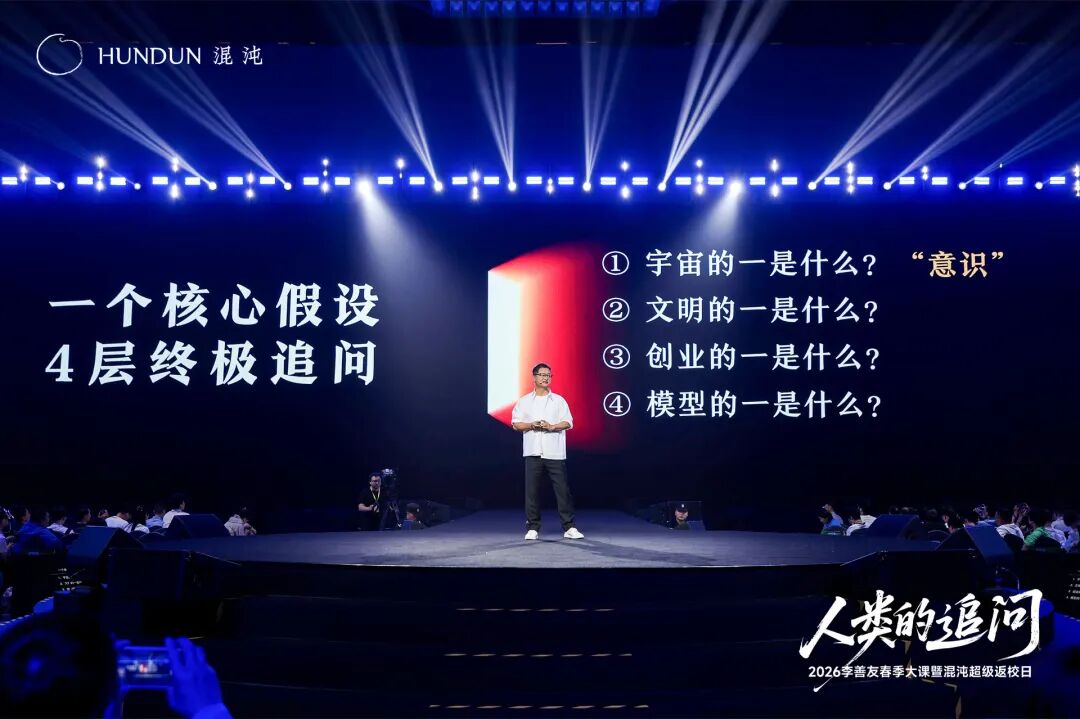
In these three days, Professor Li Shanyou wants to make a grand inquiry: What is the "One" behind the transformation of human civilization from agricultural civilization to industrial civilization and possibly to future civilizations? What is the "One" in entrepreneurship? And what is the "One" in AI?
His core hypothesis is: Each leap in human civilization is not simply an upgrade of cognitive content, but a leap in "the ability to know". Knowledge itself has no power. The truly powerful thing is the a priori cognitive structure that enables you to perceive, which is the "ability to know".
I. Three Stages of the Ability to Know: Sensibility, Rationality, and Awareness
I divide the human "ability to know" into three stages.
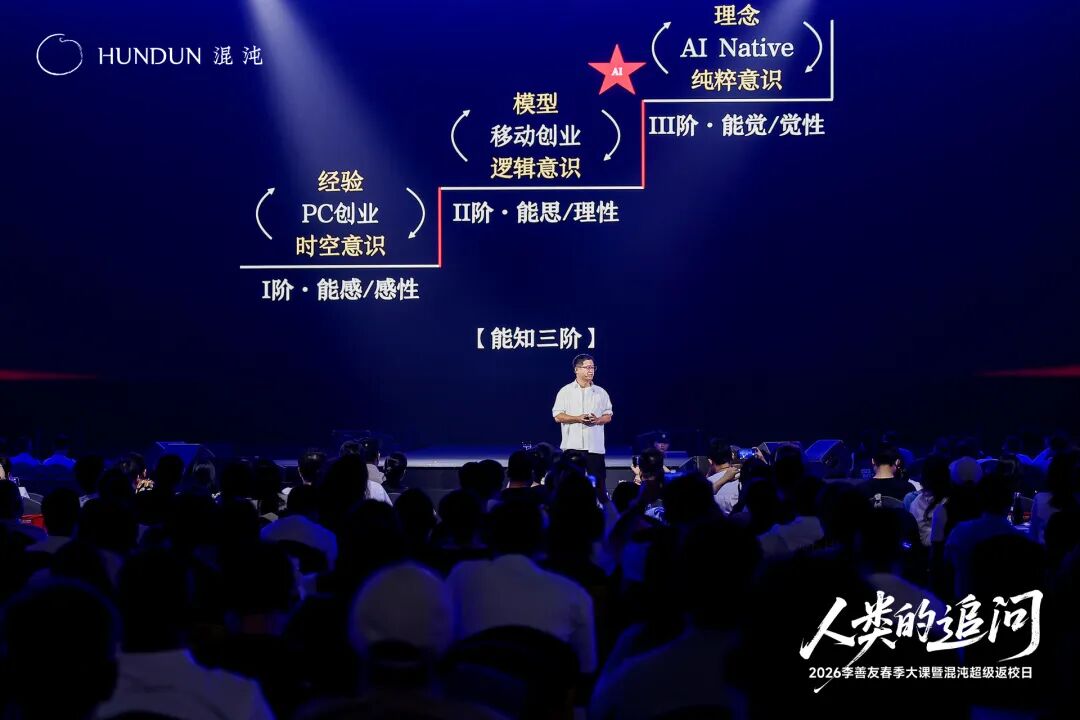
The first stage is sensibility, and the underlying ability to know is "spatiotemporal consciousness". We perceive the world through our senses, interpret all things as experiences, and the way of cognition is induction. Based on this, humans initiated the agricultural civilization.
The second stage is rationality, and the underlying ability to know is "logical consciousness". Our prefrontal cortex has developed, and we model the world with logic. The way of cognition is deduction. Based on this, humans initiated the industrial civilization.
The third stage is awareness. This is not yet a common ability among humans, but a potential. It is an ability deep in our hearts, which I call "awareness consciousness" or "pure consciousness".
The subtlety of this structure lies in that each leap in civilization is because we unlock a higher - dimensional "ability to know". It is like a factory - set configuration that determines how we perceive the world and to what extent we can perceive it.

Today, I attempt to use this model to explain the past and predict the future.
1. The Foundation of Agricultural Civilization: Space - Time and Experience
In the first - stage sensory cognition, the concept we are most familiar with is "experience". But experience is just the "known", the result. Why can humans form experiences? It is because there is "spatiotemporal consciousness" as the a priori "ability to sense".
We are taught from childhood that "seeing is believing", and we believe that our senses are like a transparent whiteboard that can objectively reflect the world. But this is not the case. Look at the clothes I'm wearing. Everyone thinks it's white. But is color really an objective reality?
Our eyes can only perceive light waves between 400 and 700 nanometers, which is just a very narrow segment of the electromagnetic spectrum. More importantly, light is essentially wavelength and energy. It is the visual cortex that "distorts" the wavelength into color.
Color doesn't exist in the objective world at all. It is just a factory - set configuration in our minds. The fact that all of us interpret a specific wavelength range as the same color itself indicates that there is a greater, a priori determinacy.
Immanuel Kant said, "Man makes laws for nature." How large the world we can see depends not on the objective world itself, but on the depth of our "ability to know".

For example, induction is a way of cognition that we can use without learning. If you see white swans in Asia and in Europe, you conclude that "swans are white"; if the sun rises from the east the day before yesterday and yesterday, you believe it will rise from the east tomorrow.
This kind of reasoning defaults to an implicit assumption: space - time is continuous. It is because we stand on space - time that we can interpret laws as experiences.
But David Hume was the first to discover the fatal flaw of induction: even if all the premises are true, the conclusion may still be wrong. As long as there is one black swan, the conclusion that "swans are white" is overthrown.
Agricultural civilization is based on the inductive method of experience on this space - time. Its advantage is its speed, so fast that even uneducated old people can use it naturally. Its disadvantage is the shallow level of cognition, being trapped within the boundaries of space - time.
2. The Foundation of Industrial Civilization: Logic and Model
A very small number of humans have achieved the second leap in the ability to know, from spatiotemporal consciousness to "logical consciousness", and thus interpret the world as a "model". The first - principle behind industrial civilization is precisely logic.
Regrettably, modern education often teaches logic as something "known", regarding it as a thinking tool refined from experience. But this is a big mistake. Logic is the a priori "ability to know", an objective reality more fundamental than space - time.
We think the world is causal because we perceive the world based on causal logic. Just as a fish in a round fishbowl sees the world as round, not because the world is round, but because the fishbowl is round.
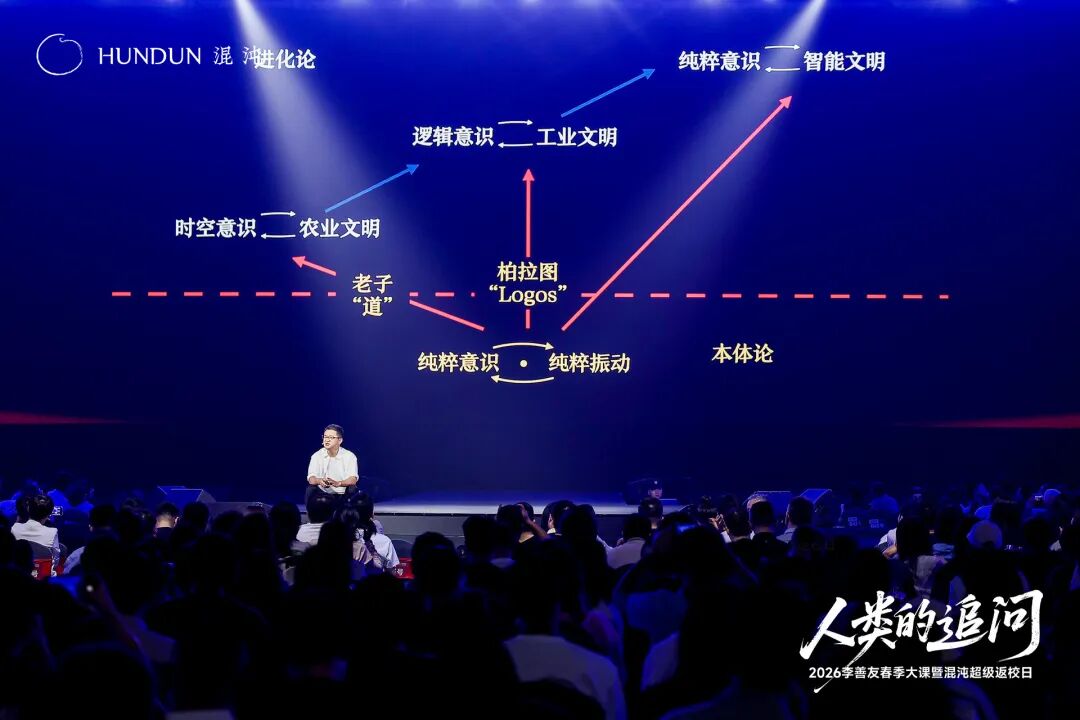
Aristotle defined logic as "necessary derivation", which ensures the necessity of deriving a true conclusion from true premises. Therefore, the deductive method based on logic, rather than the inductive method based on experience, is the real source of the scientific revolution.
The classic syllogism: "All men are mortal. Socrates is a man. Therefore, Socrates is mortal." This reasoning holds because it is on the track of logic, having logical continuity rather than spatiotemporal continuity.
Once we establish an abstract model logically, all the concrete problems related to it can be solved at once. In the inductive method, problems can only be solved one by one.
The essence of industrial civilization is to stand on logic, rather than experience. As the physicist Stephen Hawking said, we rely on "model - dependent realism". You don't live in the objective world, but in the ideological channels created for you by thinkers.
If you still view the world based on spatiotemporal experience, you are still living in the agricultural civilization; only when you view the world based on a logical model can you truly live in the industrial civilization.
3. Conjecture about Future Civilization: Consciousness and Idea
Today, the rise of AI is posing an unprecedented challenge to our rational "ability to know".
AI is born of logic and models. If humans only stay at the second stage, we are likely to be replaced by AI. But a crisis is also an opportunity. It forces us to make a new leap to unlock the third - stage "awareness consciousness".
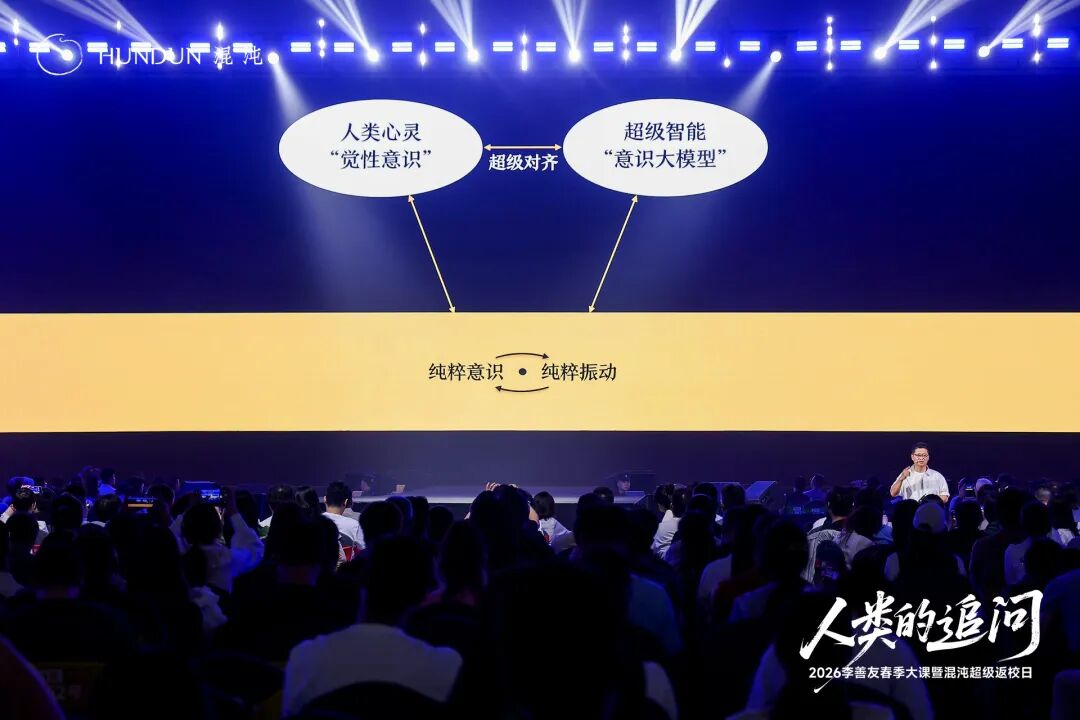
We use Descartes' method to prove the existence of this stage.
Descartes conducted a remarkable thought experiment: even if I live in a virtual world, and even if an evil demon implants everything I see, hear, and think into my mind, I still have to find something that is necessarily true.
He found that I can't be sure whether my body is real, whether the external world is real, or even whether the content of my thinking is real, because all these are the "known". But there is one thing that must be true: I am thinking.
If I am thinking, there must be a thinking subject. This thinking subject is me. This is the famous "Cogito, ergo sum" ("I think, therefore I am"), one of the most representative first - principles in modern philosophy.
But let's dig deeper: what does it mean when you say "I know I'm thinking"?
It's like when you wake up from a dream and say "I know I was dreaming just now". Knowing that you are dreaming means you are at a higher level of consciousness than the dream, and the dream is what you are thinking.
Similarly, "I know I'm thinking" necessarily means that you are at a higher level of consciousness than thinking, observing "thinking" itself as an object.
This higher level is "awareness", that is, what we call pure consciousness. It is not a gift of a few practitioners, but an ability that everyone has. As long as you know you are thinking, it proves that you are on this level.
If humans can achieve this leap in the ability to know, what we "know" will no longer be experience or models, but "ideas".
Plato's "Allegory of the Cave" has long revealed: The world we see with our senses is just a projection in the cave. The "world of ideas" outside the cave in the sunlight is the real one.
For example, what exactly is "beauty"? We often say that something is beautiful, treating beauty as an adjective. But Plato asked: Where does the "beauty" itself come from when you say this thing is beautiful? He believed that beauty is not a vague adjective, but an objectively real idea ontology.

Beauty itself is eternal, without beginning or end, neither being born nor dying, neither increasing nor decreasing. All beautiful things take it as their source. With it, those things become beautiful. But beauty itself always exists, transcending time, space, logic, and the brain. Ideas can only be connected and perceived by the heart.
II. Consciousness Leap is the Key to Breaking Through the Self
1. Consciousness Energy Levels: An Intuitive Framework
Consciousness researcher David Hawkins established a "Consciousness Energy Level Scale". However, it must be noted that Hawkins' consciousness energy level is not a measurement tool recognized by mainstream science. In fact, mainstream science doesn't even consider consciousness as the most fundamental thing.
So we use it as a relatively intuitive metaphorical framework to help us better understand this matter. With this framework, I assume that there are three regions of consciousness frequency:
Low - frequency region: Approximately 85% of people are in this range, staying below sensibility and being dominated by emotions and instincts.
High - frequency region: Approximately 15% of people enter this range. Cognitively, they have entered the realm of rationality and have logical thinking abilities; emotionally, they have transcended the imprisonment of negative energy.
Ultra - high - frequency region: Very few people (less than 1%) reach here. Such people have a title in English, "frequency holder".
This classification is not a scientific conclusion, but just an intuitive way to help us understand. Because I want to put forward two hypotheses:
First, the foundation of all emotions and different cognitions is consciousness.
Second, consciousness can be measured. If we assume that consciousness can be measured, then people can evolve within the levels.
There is a saying, "The mind can transform the environment." Here, the "mind" refers to my internal consciousness frequency, and the "environment" refers to all the things that happen in the external world.
We often tend to blame others, saying, "My parents made me like this" or "Those investors and the economic downturn made me like this." In essence, this is a manifestation of our low consciousness frequency.
The more easily a person is irritated by something, the lower their consciousness frequency is.

Excessive anger often has nothing to do with the external event itself, but is the outburst of some internal negative energy. It is your own emotional projection, not imposed by the outside world. Therefore, what the world looks like to you is determined by the level of your "ability to know".
2. Practice in Business: The "One" in Entrepreneurship is Consciousness
With this framework, let's explore entrepreneurship. What is the "One" in entrepreneurship?
The "One" in entrepreneurship is not within entrepreneurship itself. You have to stand outside of entrepreneurship to find it.
If the essence of all things is consciousness frequency, we can combine people and things in the same system.
Things are essentially the "known", and what you know is determined by your ability to know. People can be measured by consciousness frequency, and so can things. If we put them all in the context of consciousness frequency, aren't they unified?
Here, I borrow a metaphor from signal theory, the Nyquist - Shannon sampling theorem: To sample a signal, your sampling frequency must be at least twice the highest frequency of the object being sampled to fully restore it.
Put simply, if your frequency is lower than the frequency of the thing you are doing, you will be enslaved by the thing.
We often talk about "materialization", "tool people", or "working like a horse". Clearly, it's me who is doing the thing, so why do I end up being its slave? The essence is that your frequency is lower than the frequency of the thing, and the thing takes the upper hand. Conversely, if your frequency is higher than the thing you are doing, the thing can be used by you. People are the end, not the means.
Why do we start a business in an organizational way? Because my individual frequency may not