With ticket prices peaking and costs soaring, will the international artist tour business still be viable in 2026?
“It feels like all promoters are becoming more and more cautious, and their calculations are getting more and more conservative,” said Ke Yi, the director of the overseas division of Modern Sky, in an interview.
This statement might be the most apt summary of the Chinese tour market for international artists in the first half of 2026.
Even so, many international tour projects were successfully launched in the first half of this year, and many mid - sized artists still achieved good box - office results. Take the “KILOGLOW TASTE Series” created by Flash Thousand Hands as an example. Out of the 18 shows in total, 10 were sold out, attracting 17,000 audiences. This number is equivalent to that of a single - day large - scale outdoor music festival.
Modern Sky, which is really involved in large - scale outdoor music festivals, also stood out during this year's May Day Strawberry Music Festival. They invited two heavyweight international artists, Johnny Marr and PIXIES, which attracted many music fans to come specifically.
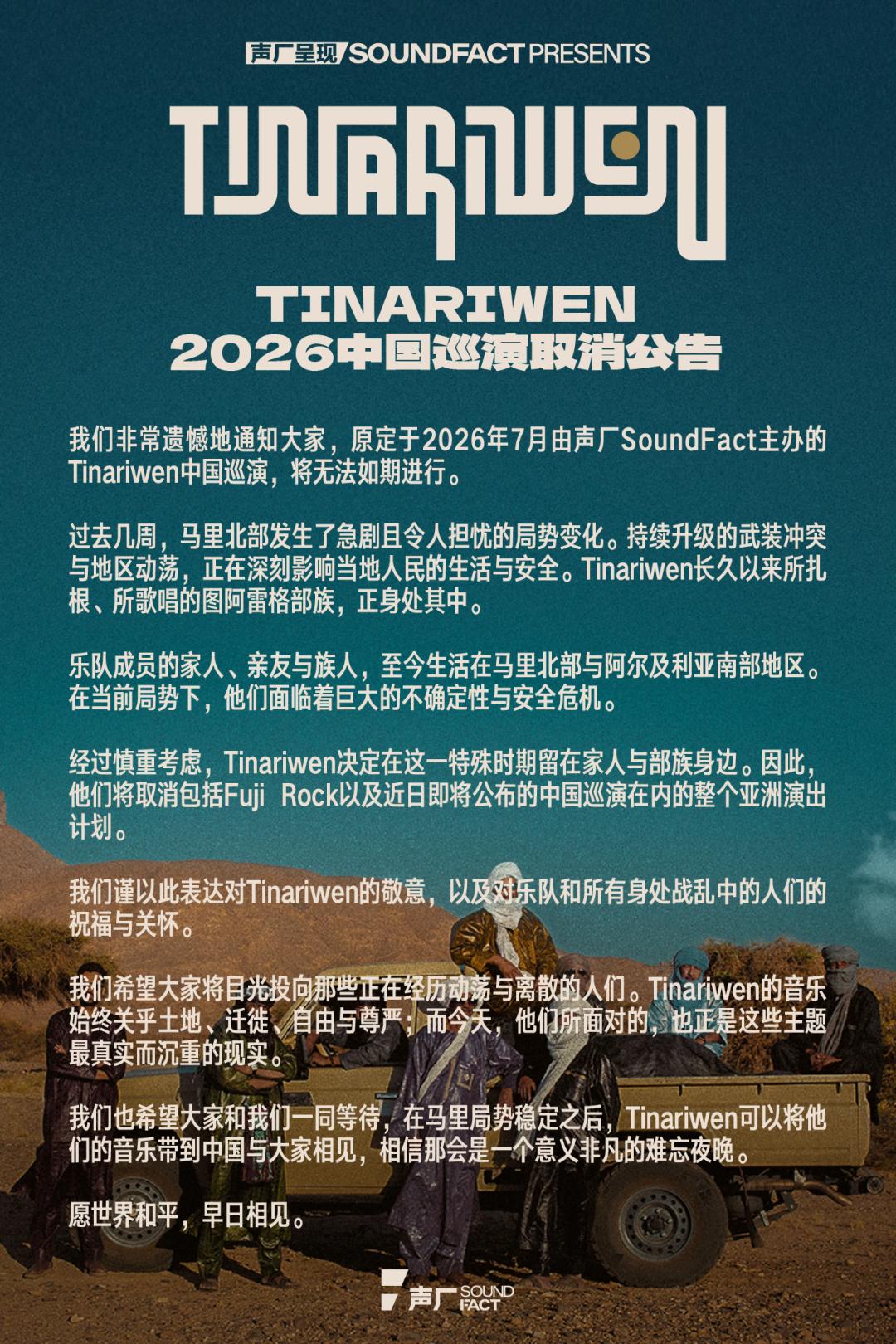
However, the uncertainties brought by the tense international situation are also increasing. Take Tinariwen as an example. The band's Chinese tour was cancelled before it could be officially announced, and even large - scale music festivals like Fuji Rock were cancelled. Such unexpected situations are becoming risks that event organizers have to face.
So, how is the international tour business this year? Music Business (ID: musicbusiness) recently interviewed three front - line practitioners who have been active in the international performance market for a long time: Ke Yi, the director of the overseas division of Modern Sky; Zhang Ran, the founder of Flash Thousand Hands; and Wang Wenxin (Regi), the co - founder and project manager of Sound Factory.
Through their observations, a more real picture of the market for international artists' tours to China in 2026 is emerging.
Mid - sized tours cannot be judged solely by data
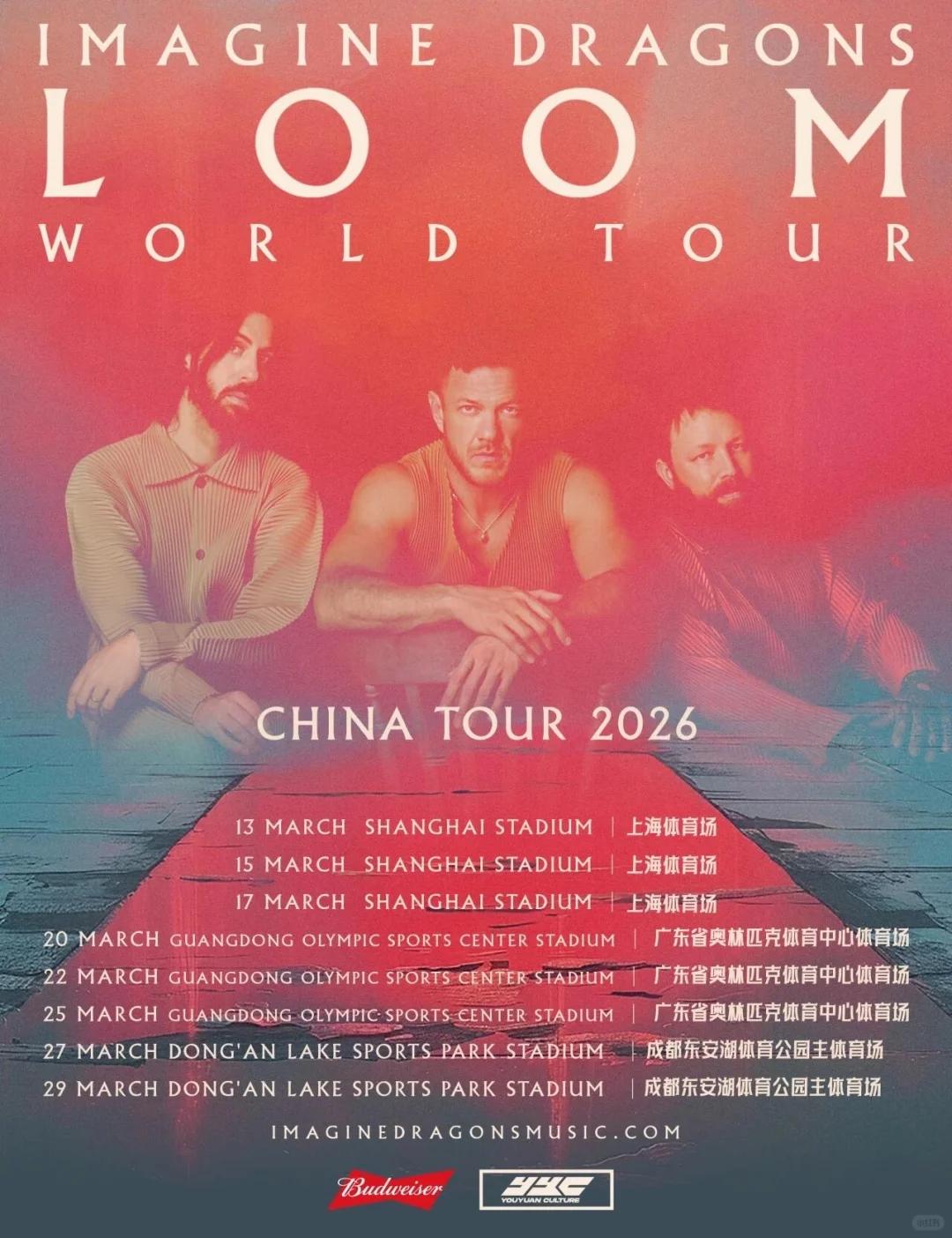
When it comes to international tours, people's attention always seems to be on top - tier artists. For example, Imagine Dragons has successfully held 8 stadium - level shows in China this year, with quite impressive box - office and popularity. However, what really cannot be ignored and can be regarded as the foundation of China's international performance market are those “mid - sized” musicians with a stable fan base and their rounds of tours in livehouses.
Selecting the right artists poses high requirements for event organizers. If an artist is too niche, there will be no popularity and it is destined to result in losses. For those artists who have become popular on overseas platforms, the high performance fees make many organizers back off. As Zhang Ran said, “The venues we choose in our offers are relatively conservative, so our performance fees are always relatively low compared to all the offers the artists receive.”
During the interviews by the editorial department, it was found that all three interviewees are vigilant against 'judging solely by data' and are trying to break away from the logic of simply relying on streaming data.
Ke Yi believes that if the fan base is vertical and solid enough, “the numbers on streaming platforms and social media will become secondary.” Zhang Ran also expressed a similar view: “Recently, we are looking more at whether the musical feeling and performance style can be promoted in China, rather than simply looking at the number of fans and the number of comments on songs.”
Regi's criteria are more inclined towards aesthetic value and long - term connection. She values whether the artistic expression is “unique enough,” whether it conforms to Sound Factory's own aesthetic judgment, and “whether it can establish a long - term connection with Chinese audiences.”

Caption: All shows of GoGo Penguin's first Chinese tour in 2024 were sold out.
Take GoGo Penguin as an example. All shows of this new jazz band's Chinese tour in 2024 were sold out, and the live performance was evaluated as “recommended to be included in the aesthetic education curriculum of primary and secondary schools across the country.” In Regi's view, this “soul - cleansing energy” is far more important than short - term data.
However, there are still many points of disagreement when negotiating with international artist agencies or record labels. Zhang Ran summarized three of the most difficult points of disagreement from actual combat.
The first is the difference in perception between popularity and performance fees. China uses different social media and music - playing software. It is difficult for overseas artists and their agencies to judge how popular they are in China. Overseas artists do not have menu - style pricing; instead, it is the organizers who make offers. Agencies always compare the current offer with some unsuccessful but high - paying performance invitations from Chinese organizers.
For example, an organizer may think that an artist can only perform in a venue for a thousand people in Beijing and Shanghai. However, someone once offered an invitation for a five - city tour in a 3,000 - person venue. Although the deal didn't go through, the agency generally won't accept an offer lower than that.
The second is the disagreement about force majeure. Zhang Ran said, “Generally speaking, artists will neither refund the money nor postpone the performance in case of any force majeure.” In many overseas music festivals, there is insurance, and a third - party institution will issue a certificate to prove whether the stage cannot be used due to strong winds, heavy rain, or other reasons. The organizer will receive insurance compensation and will not refund the tickets to the fans. However, the insurance and approval environment in China is different, and this difference in perception often leads to a tug - of - war over contract terms.
The third is the experience threshold. Zhang Ran mentioned that sometimes they help some music festivals make offers, and those festivals will name the biggest international artists. However, the bigger the artist, the more they care about the organizer's history. If a music festival or performance organizer has no experience in hosting overseas artists, the other party will keep asking for offers during the negotiation but won't accept the performance. And the offers made by these organizers are often used as bargaining chips in negotiations with other organizers.

Caption: MOTORAMA; Photo by Mikhail Parshin
“For example, the MOTORAMA band we represent holds a special tour every two years, and each time they visit more cities, and the box - office is always good. But once an artist signs with a mainstream agency, they will enter a frequent price - comparison mode. That is to say, you may be able to organize this band's tour this time, but not necessarily next time.”
Recently, MOTORAMA will come to China again to participate in the River Music Festival and hold a special performance in Beijing. While organizing international artists' tours to China, Flash Thousand Hands also helps domestic music festivals book international artists, which can generate more income when inviting artists to China. For example, Flash Thousand Hands has provided assistance to this year's Bubble Island Music Festival, Nandan Music Festival, and Zhang Guan Li Dai Music Festival.
However, another reality is that many domestic music festivals no longer arrange international artist line - ups. The ability of international artists to boost ticket sales in the domestic music festival market is not as strong as expected. Ke Yi shared, “In the past, many overseas artists used domestic music festivals as anchor points and would hold several livehouse tours by the way. But now, fewer and fewer music festivals are willing to book overseas artists, so the opportunities for overseas artists are naturally decreasing.”
Regi believes that the most common point of disagreement is not the price but the market expectation. International artist teams sometimes refer to the situations in the European, American, or other Asian markets, but the Chinese market has its own characteristics. Local organizers need to help them understand the local audience's habits, ticket - price structure, venue ecosystem, and long - term development path.
The international tour business, on the surface, is a connection between music and the market, but at the bottom, it is a game of information asymmetry. Overseas agencies do not understand the uniqueness of the Chinese market, and domestic organizers are often led by unrealistic quotes and previous unfulfilled offers. Coupled with the difference in perception of force majeure, the lack of experience threshold, and the cooling - off of the music festival market's enthusiasm for international artists, organizers are in a passive position during negotiations. To break this deadlock, what is needed is not a higher quote but a more transparent discourse system and more mature industry cooperation.
The rising production cost has become a common issue for organizers
For international tours, the rising production cost has become a real problem.
The costs of every aspect, from international air tickets, hotel accommodation to equipment transportation and technical production, are continuously increasing. Especially for mid - and small - sized tour projects, the growth rate of production costs even exceeds the growth rate of box - office revenue. In some projects, the hotel and transportation expenses alone are enough to consume the revenue from hundreds of tickets. The final situation is that the costs of artists, production, and operation are all higher, but the room for ticket - price increase that audiences can accept is becoming more and more limited. This makes the international tour industry a high - risk one. A slight deviation may turn a profit into a loss.
Moreover, it is very difficult for organizers to control this over - expenditure. Zhang Ran said, “Because many things are not fully determined during the negotiation, such as production and equipment. In terms of accommodation, the prices in China also change according to the tightness of the room supply in different cities.” Take Flash Thousand Hands' recent shows as an example. Beijing and Shanghai both had different exhibitions, and the room prices in these two cities at least doubled. The hotel expenses for the band's two shows were equivalent to the revenue from more than 400 tickets, and the instrument and production costs for each show were equivalent to more than 200 tickets.
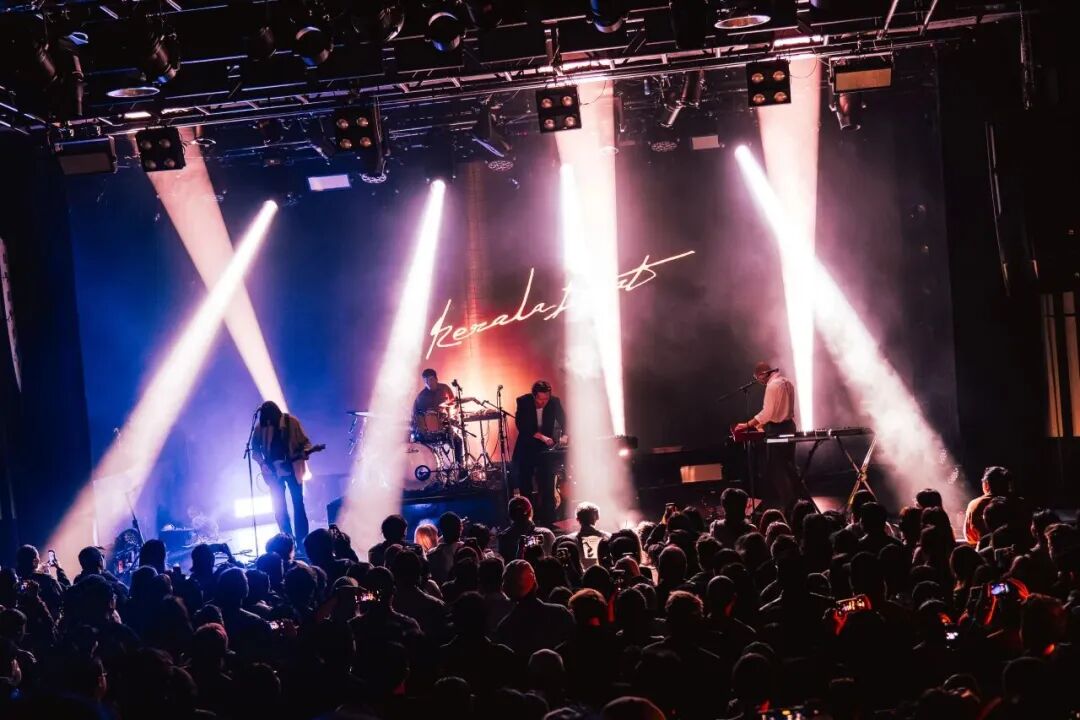
Caption: Kerala Dust; Photo by Jerry Hu
For example, the venue for the Kerala Dust band's shows is small, but the production cost for each show is twice the venue rental. And these costs can only be estimated through online videos before negotiating the performance. Zhang Ran added, “Among all the aspects, such as artists, venues, production, and equipment, they generally won't suffer losses. The only risk lies with the organizer, and any small mistake may lead to a total loss.”
Ke Yi said bluntly, “The ticket - price setting has actually reached the ceiling.” Even for very rare artists, if an unreasonably high price is set, even if the audience buys the tickets reluctantly, it will be very unfavorable to the organizer in terms of public opinion. In his view, there is no problem of actively limiting the price; just respect the market rules.
“Audiences are not simply opposed to high ticket prices. Instead, they are paying more and more attention to whether the value matches,” Regi gave her judgment from another perspective. Sound Factory has always adhered to the principle of setting ticket prices as much as possible based on the balance between the real cost of the project and the market's acceptance. In the long run, a healthy market is more important than short - term high box - office revenue.
Zhang Ran calculated a more specific account. The costs of artists, production, and hotels are all increasing, and the current ticket prices are often the lowest in these artists' Asian tours. Currently, the common practice of organizers is to multiply the ticket price acceptable to fans by the venue capacity, then subtract the venue rental, travel expenses, production costs, etc., leaving a profit of 5% to 10% on the premise that all tickets are sold out, and then negotiate with the artists. However, the reality is that very few shows can actually achieve full - house sales.
Ke Yi believes that refined operation and communicating everything with the artists in advance are the most crucial links. The costs of visas, accommodation, and transportation for international artist teams after they come to China usually account for about 25% of the total budget. If these details are not handled well, it is easy to further compress the already meager profit.
Behind the pressure of ticket prices and costs, the audience structure is also quietly changing.
Regi observed that young audiences are becoming more active. They obtain music information through more global channels and are more willing to pay for the content they really like. However, at the same time, their attention is more scattered than ever. For organizers, one of the most important tasks in the future is not only to bring artists to China but also to continuously help excellent artists find new audiences and let the music that originally belonged to a niche circle be seen and heard by more people.
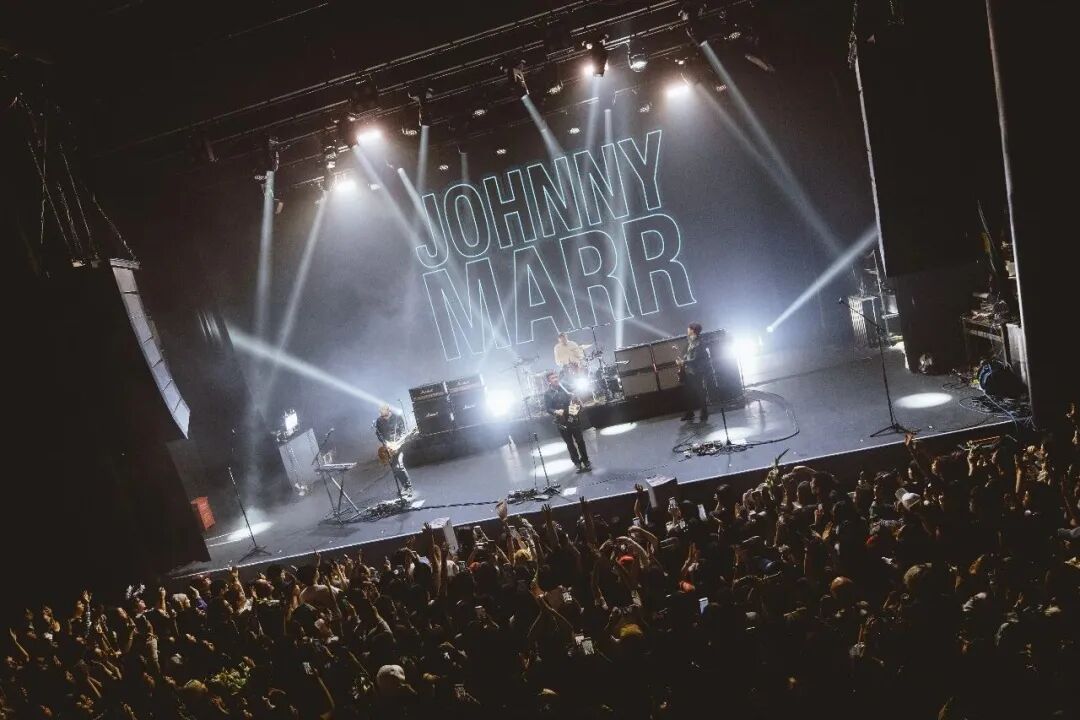
Caption: Johnny Marr
Regarding the change in the audience structure, Ke Yi believes that there is no obvious fluctuation in the main age group. However, the classic artists Johnny Marr and PIXIES who came to China for tours recently brought some surprises. The organizer originally thought that the audiences would be mostly older fans, but unexpectedly, there were also many young audiences at the shows.
Take PIXIES as an example. This pioneer band of alternative rock is celebrating its 40th anniversary and is on a tour. They not only participated in the Beijing Strawberry and Dongguan Strawberry Music Festivals but also added Shanghai as a tour city. It is worth mentioning that The Pale White, the regular guest of their European tour in 2025, also came along and served as the performance guest for two consecutive nights. These two shows were positioned as the Shanghai - exclusive part of their 2026 Asian tour, only two shows in total. Many audiences who attended the shows said that it was a pilgrimage - like live experience.
In terms of the ticket - sales strategy, Ke Yi observed that the consumption behavior of audiences is becoming more and more rational. He said, “Previously, people liked to build up anticipation before the ticket sales started and sell most of the tickets on the day of the ticket release. But now, it seems that the audience's consumption has become more rational, and the entire sales process shows a V - shape. Of course, popular shows will still be sold out instantly.”
From the sharing of the three practitioners, a consensus can be observed: The international tour business is not a highly profitable one. Now, the competition is no longer about who can grab popular artists but about who can calculate the accounts clearly and do things meticulously within the limited profit space. Cost control, audience operation, and long - term trust are replacing the simple competition for artists and becoming the new focus