Why has the rumor of "Zhou Jingren's departure" spread around Alibaba?
The news that Zhou Jingren had submitted his resignation spread like wildfire online for a day before being quashed by Alibaba.
On June 14th, in response to the widely circulated claim that "Zhou Jingren, the Chief Scientist of Alibaba, has submitted his resignation," Alibaba's official response was swift and firm: it's purely a rumor.
Interestingly, in their statement, they specifically mentioned the four - character phrase "organizational spread" and also urged everyone not to spread false information.
Those in the know can immediately tell that this is not just about refuting the rumor; it seems more like a signal being sent to the outside world.
Personnel upheavals in large companies are never as simple as "whether someone leaves or not." They are often the aftershocks of internal power struggles in the public opinion field.
Actually, what the outside world is more concerned about is not the truth of the resignation but the structural issues reflected behind this rumor: As the absolute technical mastermind who built the Qwen large - model series, Zhou Jingren only joined the Alibaba Partnership at the end of 2025. Why was he transferred three times within just half a year?
Perhaps Zhou Jingren's situation, along with the recent departures of a series of AI technical backbones, is neither a personal emotional issue nor a simple communication problem. Instead, it is an inevitable power restructuring and organizational pain during Alibaba's shift from "frontier technology - driven" to "Token commercialization - driven" in the era of AI exploration.
Under the pressure of profitability and the cold scrutiny of the capital market, the old - fashioned technological beliefs are giving way to the cold and concrete business KPIs.
This storm is not limited to Alibaba alone. It is a microcosm of the general anxiety of large companies in China and even around the world in the AGI era.
Upgraded Downgrade: Alibaba's Unique "Executive Shock Therapy"
Looking at Zhou Jingren's career trajectory in the past half - year, it is almost a standard "promotion in name but demotion in reality" career path.
In March, Lin Junyang, the core figure of Qianwen, left, and Zhou Jingren temporarily took over the Qwen team. At that time, the outside world generally interpreted it as: his position in the base model became more stable. However, the plot soon took a sharp turn.
On April 8th, Alibaba issued an internal letter announcing the establishment of the Group Technology Committee, and Zhou Jingren was appointed as the Chief AI Architect and the head of the Tongyi Large - Model Division. On the surface, it seemed like a sign of trust, but the cost was that he had to hand over the position of CTO of Alibaba Cloud, which held a large amount of engineering resources and actual scheduling power, to Li Feifei.
On June 8th, there was another major structural change: the Tongyi Large - Model Division and the Future Life Laboratory were merged to form the TokenFoundry Division, led by Wu Yongming, the Group CEO. Zhou Jingren was appointed as the Chief Scientist of Alibaba and was tasked with leading the establishment of the AI Future Research Institute.
The three transfers follow a very clear path: the titles are getting more and more prestigious, from the division head, to the group architect, and then to the chief scientist of the entire group. The academic halo has been maximized, seemingly prosperous and glorious.
However, in reality, he is getting further and further away from the real business battlefield and core resource allocation.
After Wu Yongming took direct control of TokenFoundry, Zhou Jingren's daily control over the core model team, budget allocation power, and so - called "military power" were emptied.
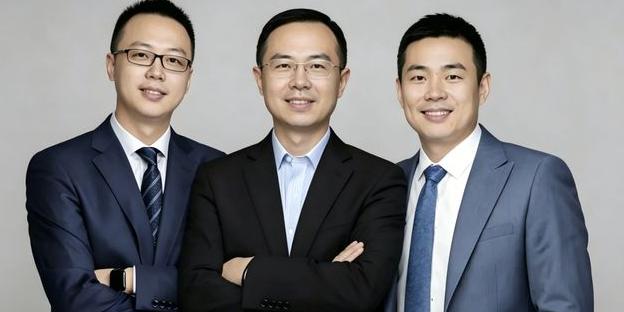
The title of "Chief Scientist," which originally meant being able to command a large army and decide the direction of resources, has now become a sideline role for researching frontier technologies within the company.
This is the shock therapy commonly used by large companies when dealing with meritorious technical veterans: using absolute honor to deprive them of corresponding real power.
The direct consequence of such frequent high - level reshuffles is internal hesitation.
With the leadership changing three times in half a year, the employees at the executive level and even middle - level management will inevitably feel lost about the overall organizational and strategic adjustment directions.
This kind of emotion within the organization is much more difficult to fix than bugs in the code. It may take repeated successes and victories to eliminate this mindset.
The Inevitable Transition from "Technical Fiefdoms" to "Centralized Power"
If we only focus on the personnel changes themselves, it's easy to underestimate the problem. What really deserves to be explored is the organizational logic behind Alibaba.
Today's AI is no longer a laboratory project like a few years ago, where one could burn money behind closed doors and just publish a few top - level papers to meet the requirements. In the era of large models, AI is the underlying infrastructure that all core businesses rely on, and every inference costs real money.
Given the high cost of computing power and the urgent need for monetization, the "vertical small kingdom" model, where technical experts have their own fiefdoms and take care of everything from the underlying computing power to the top - level applications, must give way to the more efficient and horizontally - divided "assembly - line" model.
The three structural adjustments led by Wu Yongming, including the establishment of the Alibaba Token Hub business group in March, the setting up of the Group Technology Committee and his personal leadership in April, and the direct control of TokenFoundry in June, form a well - planned trilogy of power centralization. The core logic is extremely cold - blooded but also very in line with modern corporate governance, which can be summarized in six words: centralize models, centralize talents, and centralize products.
Zhou Jingren's marginalization is essentially a structural inevitability as Alibaba's AI strategy shifts from decentralized autonomy to a highly centralized system. In a system where the CEO directly controls all core commercial monetization, the decision - making chain is extremely compressed.
If a scientist with a pure technical background cannot or is unwilling to directly align with extremely strict short - term financial goals, he is destined to leave the main stage.
A recent research report from Huayuan Securities also confirms Alibaba's urgent need for transformation: The company expects that in FY27Q1, the annual recurring revenue (ARR) of AI models and application services, including the Bailian MaaS platform, will exceed 10 billion yuan, and it has set an ambitious goal of exceeding 30 billion yuan by the end of the year.
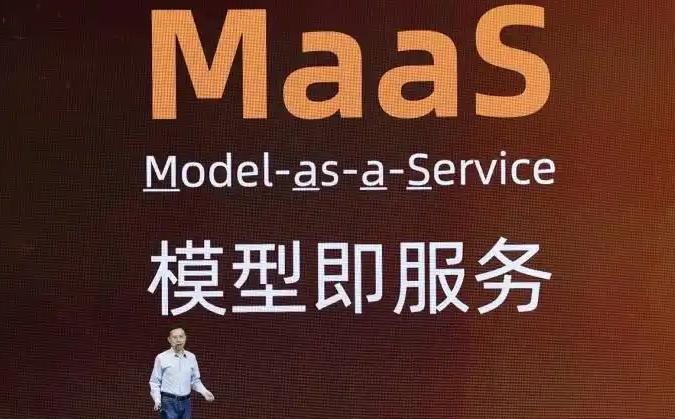
In the face of such a huge commercialization goal that must be achieved on a quarterly basis, the centralized allocation of resources cannot tolerate any self - governing technical romanticism. Any node that hinders the operation of the MaaS commercialization assembly line will be mercilessly restructured.
Open - Source Belief vs. MaaS Calculations
When discussing the pain of AI talent at Alibaba, we can't avoid the core technical route dispute.
The past glory of Zhou Jingren's team was largely built on the extremely prosperous open - source ecosystem of Qwen. Objectively speaking, the open - source strategy has won Alibaba a high global technical reputation, gathered a large group of developers, and even received public praise from Elon Musk.
However, the problem is that the open - source belief and the Group's current urgent need for MaaS (Model as a Service) monetization goals are naturally mutually exclusive.
The logic is simple: the stronger the open - source model, the more inclined small and medium - sized enterprises are to deploy it locally for free, which in turn squeezes the MaaS revenue that Alibaba Cloud originally hoped to earn through API calls.
It's like spending a lot of money to make a wonderful bowl but giving it away for free for others to hold water, while you originally planned to make money by selling water.
This contradiction becomes even more prominent when we look at the overall commercialization situation of the entire industry.
Take ByteDance as an example. The daily Token consumption of the Doubao large model in China has reached an astonishing 63 trillion, and this is only the statistics of real commercial inferences in China, excluding the data consumption for model training.
Under the pressure of such a huge daily API call volume, no matter how many Stars Qwen gets on GitHub or how many first - place rankings it wins on various open - source test lists, if it cannot be converted into real revenue and computing power consumption on the Group's profit statement, it is a failing answer for the company's senior management, who are eager to find a second growth curve.
As a result, a serious role mismatch has occurred.
Alibaba's current core business demand is MaaS. A Guangda Securities analysis hits the nail on the head: Alibaba is fully promoting the MaaS strategy, hoping to use the combined capabilities of the application end and the MaaS end to drive the improvement of the underlying model capabilities, form an effective data flywheel, and transform the low - margin general computing power leasing into high - margin MaaS business.
To achieve this goal, Alibaba needs people who emphasize engineering implementation, pursue commercial mass production, optimize computing concurrency, and maximize Token consumption. They need to understand ToB sales, API billing, and how to monetize models in various industries.
People like Zhou Jingren and Lin Junyang, who pursue the physical limit of AGI and are obsessed with algorithm perfection, seem out of place in this stage where Token sales are crucial.
The Siege of Computing Power and Internal Struggles: The P&L Pain of Technical Talents
When the top - level strategic baton makes a 180 - degree turn, the instability from top to bottom quickly turns into a collective departure of core technical backbones.
Since the beginning of this year, the list of talent losses is heavy: In January, Hui Binyuan, the person in charge of Qwen Code, left to join Meta; at the beginning of March, Lin Junyang, the soul figure of Qianwen, left a message on the X platform saying "bye my beloved qwen," announcing his reluctant departure; almost at the same time, Yu Bowen, the person in charge of post - training, and several core contributors also left one after another.
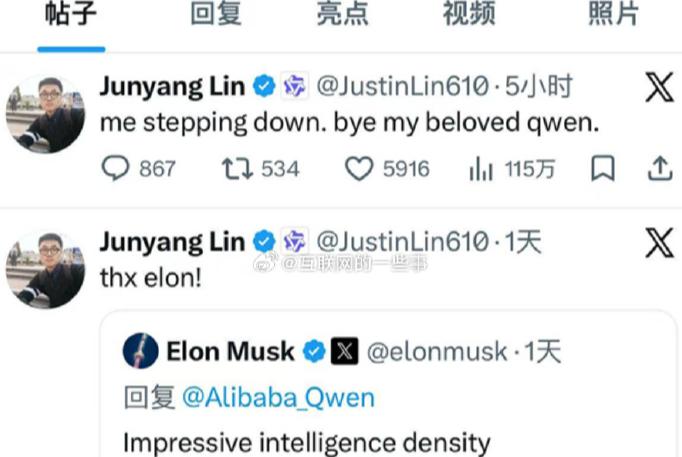
These people are the founding team that pushed Qwen to the top of the global open - source field. Why can't they be retained?
The root lies in the cold logic of the large - company computing power ledger.
In this field that requires a huge amount of computing power, a single pre - training trial error means the accelerated consumption of thousands or even tens of thousands of expensive inference cards.
Under the current financial system, these huge R & D expenses directly put a heavy P&L (Profit and Loss) burden on the AI team.
The model team needs to purchase expensive computing and storage resources from Alibaba Cloud, which is also part of the Group. If the front - end cannot earn back these costs through MaaS services, the AI team's year - end report within the Group will be very embarrassing.
What's more subtle is that the definition of achievements has changed dramatically within the company.
Once, publishing a top - conference paper or winning a download - volume championship on HuggingFace was a life - saving amulet. Now, being able to drive the consumption of underlying computing resources and embed MaaS services into the corporate workflow is the real currency.
For geeks like Lin Junyang, when the team's extremely precious computing power cluster is forced to prioritize trivial commercial needs, the fault - tolerance rate and exploration space for frontier technology research are completely blocked.
Their departure is essentially a rational choice made because they are unwilling to waste their lives in endless internal computing power accounting and short - term KPIs.
The Ultimate: The Wall Street Shackles and the Strangled Long - Termism
If we peel off all these business - level appearances and get to the institutional deadlock, we will find that the ultimate cause of all organizational deformations and talent pains lies in the high - pressure survival situation in the capital market.
There is a data that cannot be ignored in the latest financial report review by Hua'an Securities: In FY26Q4, Alibaba's adjusted EBITA decreased by 84% year - on - year, leaving only 5.1 billion yuan. The main reason is the extremely large investment in technology business, instant retail, and user experience.
Against the background of dual listing in the US and Hong Kong stock markets, Alibaba's core e - commerce business is facing unprecedented challenges. Wall Street analysts are closely monitoring profit margins, free cash flow, and capital expenditures.
This strong external financial pressure will inevitably be transmitted layer by layer inward, forcing AI, which originally requires long - term investment and can tolerate a high failure rate, to prove its commercial self - sufficiency to the board of directors in a very short time.
Meanwhile, the common phenomenon of short - term tenure for senior executives in large companies exacerbates this hidden danger like a game of hot potato.
When the assessment cycle for senior executives is compressed to be calculated on an annual or even quarterly basis, no one dares to bet their career on an AGI technology milestone that will only take effect three years later.
A in - depth report from China Galaxy Securities mentions that Alibaba's management has set a goal: within five years, the total revenue of the cloud and AI business will exceed 100 billion US dollars. Under such extremely strict and high - pressure goals, Wu Yongming's rapid organizational adjustments are essentially a choice to pursue the fastest - effective commercialization that can be quickly reflected in the financial report under the tenure pressure.
Accompanying this high - pressure is Alibaba's rigid organizational inertia. Applying the mature but high - pressure and undifferentiated assessment system used for traditional e - commerce GMV or cloud storage revenue to the large - model team exploring in uncharted territory, this institutional arrogance may kill the fault - tolerance space that technological innovation most needs.
Alibaba's AI dilemma is not a problem that can be solved by replacing Zhou Jingren or recruiting a few high - level executives. It is a systematic closed - loop.
In a system that has no patience and does not allow mistakes, it is difficult to achieve truly disruptive technological breakthroughs. Usually, only short - sighted Token vending machines can be produced.
Data from Guangda Securities also confirms this short - term explosion from the side: The revenue of the Cloud Intelligence Group in FY26Q4 reached 41.63 billion yuan, a year - on - year increase of 38%. The revenue of AI - related products has increased by three digits for 11 consecutive quarters.
This shows that the current management methods have indeed squeezed out commercial value in the short term, but whether the long - term technical foundation will be overdrawn remains a huge question mark.
The Inevitable Fate of Large Companies in AI Transformation
Interestingly, if we expand our view to the global level, we will find that this kind of pain