For 149 yuan, you can book a robot for in-home cleaning—Zidongli’s ambition is impossible to hide
Robots are starting to enter people's homes.
In the past year, most of the exciting stories about humanoid robots have taken place in factories.
Carrying boxes, tightening screws, sorting goods, loading and unloading... Almost all leading robot companies are competing for manufacturing scenarios, hoping to achieve large - scale implementation first.
The reason is not complicated. Compared with households, factories have more standardized processes, more fixed workstations, and clearer work goals. They are the places where robots can create value most easily at this stage.
However, while the industry is collectively flocking to factories, Zibianliang, supported by capital from ByteDance, Meituan, Alibaba, Xiaomi, etc., has set its sights on another direction: households.
Since this year, Zibianliang has frequently demonstrated the capabilities of robots in household scenarios. It has cooperated with 58 Daojia to launch a robot cleaning service, allowing robots to enter real households with cleaners. At the press conference, videos of robots autonomously organizing sundries and picking up randomly discarded paper balls have also been widely spread on social media.
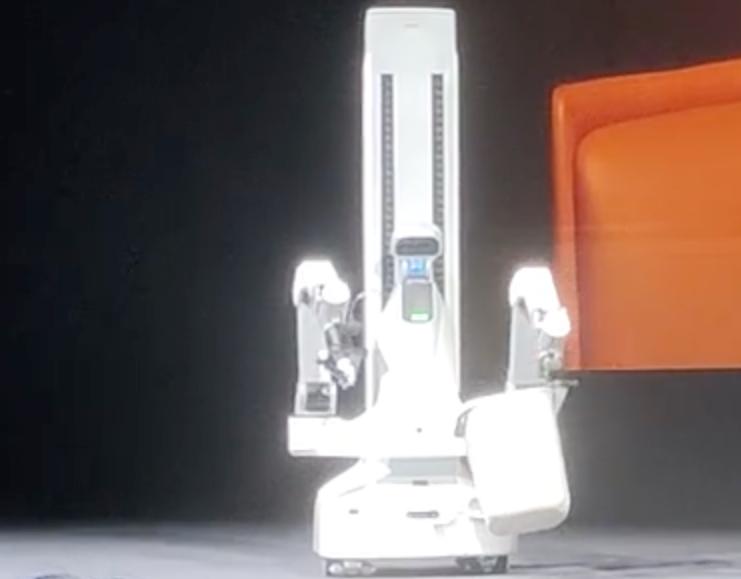
This is somewhat counter - intuitive. Because households are exactly one of the most complex and difficult scenarios for the robot industry to implement. From the actual experience, today's humanoid robots still have a long way to go to become "robot nannies".
Some users who have experienced it found that when the robot was tidying up the desk, it often took several minutes to think about a simple action. When organizing shoes, it couldn't even find the location of the shoe cabinet. In many cases, the work that a cleaner can complete in one minute may take the robot half an hour to fumble through.
So, why is Zibianliang so eager to send robots into households?
Recently, Zibianliang's open - source XRZero - GO project may provide a new perspective for observation.
This solution not only opens up training data covering more than 3,000 tasks but also announces a method to significantly reduce the cost of robot data collection. After the news was announced, it quickly attracted industry attention.
The reason is that it touches on one of the most realistic bottlenecks in the current embodied intelligence industry - data.
For today's humanoid robots, households not only mean a potential future commercial market but also the richest, most complex, and hardest - to - replicate data source in the real world.
If we look at robot cleaning and XRZero - GO together, what Zibianliang is doing may be two sides of the same thing: on the one hand, reducing the cost of obtaining data; on the other hand, finding more sources of real - world data.
And more and more of our ordinary households are becoming training grounds for the next generation of robots.
Why does Zibianliang target household chores?
Recently, a video of a robot going to a household for cleaning has sparked a lot of discussions on social platforms.
In the video, the robot entered the household with a cleaner and was responsible for organizing the desktop, putting away items, and storing shoes. It seems that the "robot nanny" is getting closer to real life.
This is exactly the robot cleaning service jointly launched by Zibianliang and 58 Daojia.
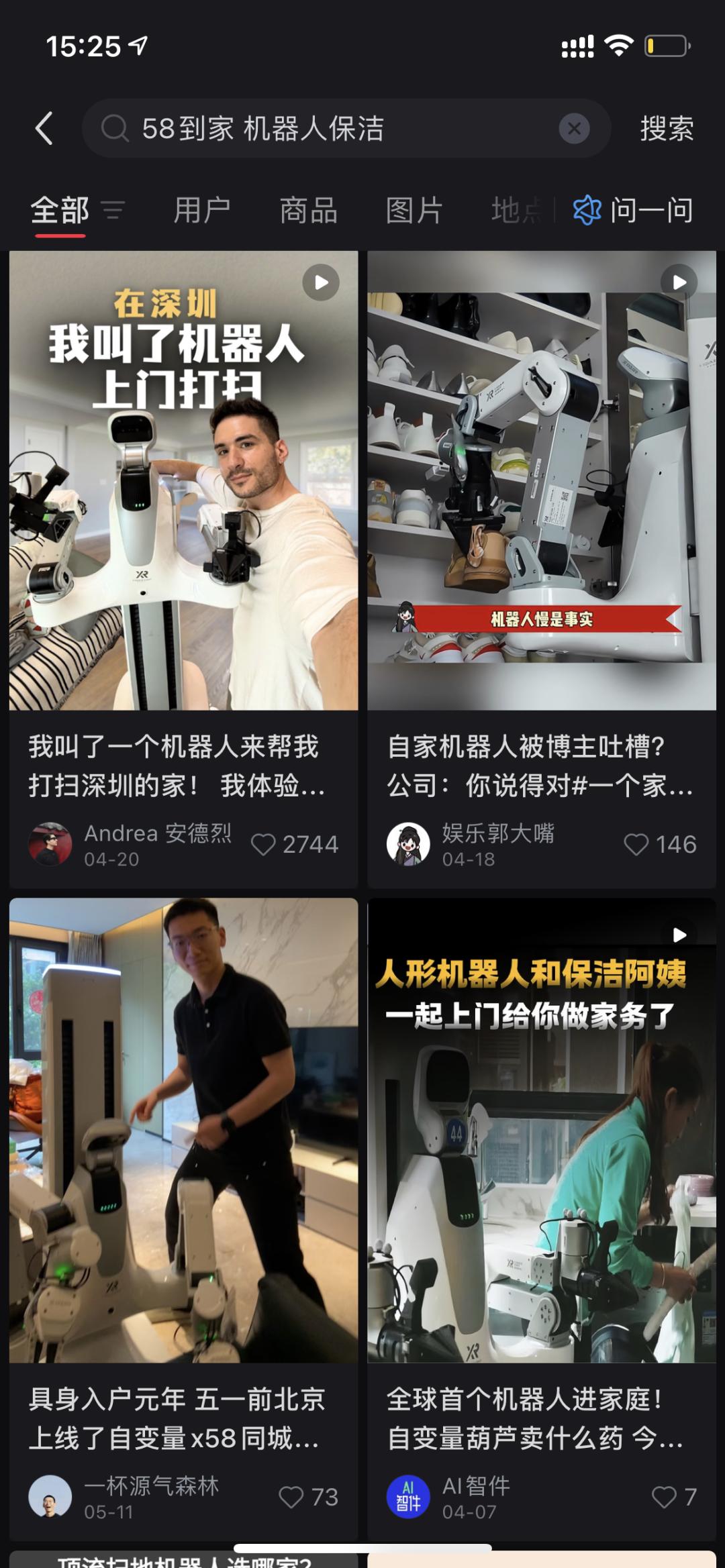
The charging standard is similar to that of ordinary housekeeping services, but it's not just the cleaner who comes to the door, but also the robot and the robot engineer.
The most direct question that many people are concerned about is: To what extent has robot cleaning developed?
The AI technology blogger "Zangai Xianyu" has experienced this service, but the actual performance is quite different from what many people imagined.
The robot got stuck near the entrance for 10 minutes as soon as it entered the door.
After starting to organize the desk, it often took one or two minutes to think about a simple action. When organizing shoes, it could recognize the shoes but couldn't determine the location of the shoe cabinet and could only put the shoes under the cabinet. After the robotic hand picked up the shoes, it directly went to fold the pillowcase, but it didn't hold the pillowcase firmly and it fell to the ground, making the previous cleaning work in vain.
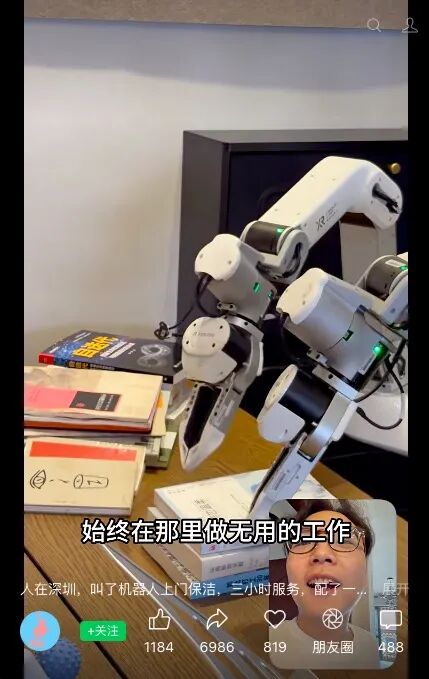
Throughout the process, the robot mainly undertook auxiliary tasks such as organizing and putting away items, while the main cleaning work was still done by the cleaner.
Some netizens joked that this is more like a robot coming to the household for an internship rather than a robot for cleaning.
In a sense, Zibianliang has indeed fulfilled Wang Qian's previous promise of "letting robots enter real households". However, today's humanoid robots still have a long way to go to become the "robot nannies" that the public imagines.
Zibianliang is not unaware of this.
In fact, the household scenario is exactly one of the most difficult application scenarios recognized by the robot industry. In the past two years, the scenarios where humanoid robots have been implemented first have mostly been concentrated in factories, warehouses, and logistics centers. Although these environments are also complex, they at least have relatively fixed processes, workstations, and operation objects. The tasks that robots face every day are similar. As long as they go through enough repeated training, they can continuously improve the success rate.
Households are completely different. No two households are the same, and no household will always remain the same.
The placement of items changes at any time, the lighting conditions are constantly changing, and users' habits vary widely. The robot may need to organize the desk today, fold clothes and tidy up toys tomorrow, and may be interrupted by pets the day after tomorrow.
For embodied intelligence, these are typical long - tail scenarios. And the biggest feature of long - tail scenarios is that it is difficult to cover them with a small number of samples.
If a robot wants to learn how to deal with these situations, it must experience a large number of interactions and trials and errors in the real environment.
That's why, although the performance of robots in households is still far from mature, Zibianliang still chooses to actively enter real households.
Yang Qian, the chief operating officer of Zibianliang, once said that the household scenario is the ultimate test field for general robots. The cooperation with 58 Daojia allows the company to obtain real and valuable scenario data and user feedback, thus accelerating the iteration of the robot's capabilities.
Compared with persuading users to directly spend hundreds of thousands of yuan to buy a robot, a 149 - yuan housekeeping service is obviously more likely to stimulate ordinary people's willingness to try something new.
When we see robots coming to clean tables and collect shoes for free, what Zibianliang may be more concerned about is the data generated by the robots in this process.
For today's embodied intelligence industry, the importance of data is rapidly increasing.
Every wrong action of the robot, every unexpected situation it encounters, and every hesitation when completing a task all correspond to a specific scenario in the real world.
And these scenarios are exactly the problems that robots need to learn to handle in the future.
The big business of data collection
For today's humanoid robot industry, the importance of data is getting closer to that of corpora in the era of large models.
The reason why ChatGPT can understand and generate language is essentially because it has read a vast amount of text.
Similarly, for a robot to learn to do work, it also needs a large amount of data. The difference is that text can be directly obtained from the Internet, but the data that robots need exist in the real world.
If a robot wants to learn to wipe a table, it needs to know the differences between tabletops of different materials; if it wants to learn to fold clothes, it needs to understand the softness and hardness of clothes and the changes in force; if it wants to learn to store sundries, it must face objects of completely different shapes, positions, and placement methods.
These abilities are difficult to obtain by reading a manual and can only come from real - world operations again and again.
This is why, while the outside world is still discussing when robots will enter factories and households, more and more robot companies have focused their attention on another thing: collecting data.
It can even be said that the biggest job of many robots today is not to do work but to learn how to do work.
IDC data shows that in 2025, the proportion of commercial performances, scientific research, and data collection scenarios in the shipments of humanoid robots will reach 78.4%, and the proportion of robots that truly enter terminal scenarios such as factories to create production value is less than 20%.
In other words, in the seemingly booming humanoid robot industry, a considerable number of robots are still in the "schooling stage".
And around the learning needs of these robots, a new business has begun to grow rapidly.
In March this year, JD.com announced the construction of the world's largest embodied intelligence data collection center in Suqian, Jiangsu. It will mobilize hundreds of thousands of people to participate in data collection, including more than 100,000 internal employees and 500,000 external social personnel.
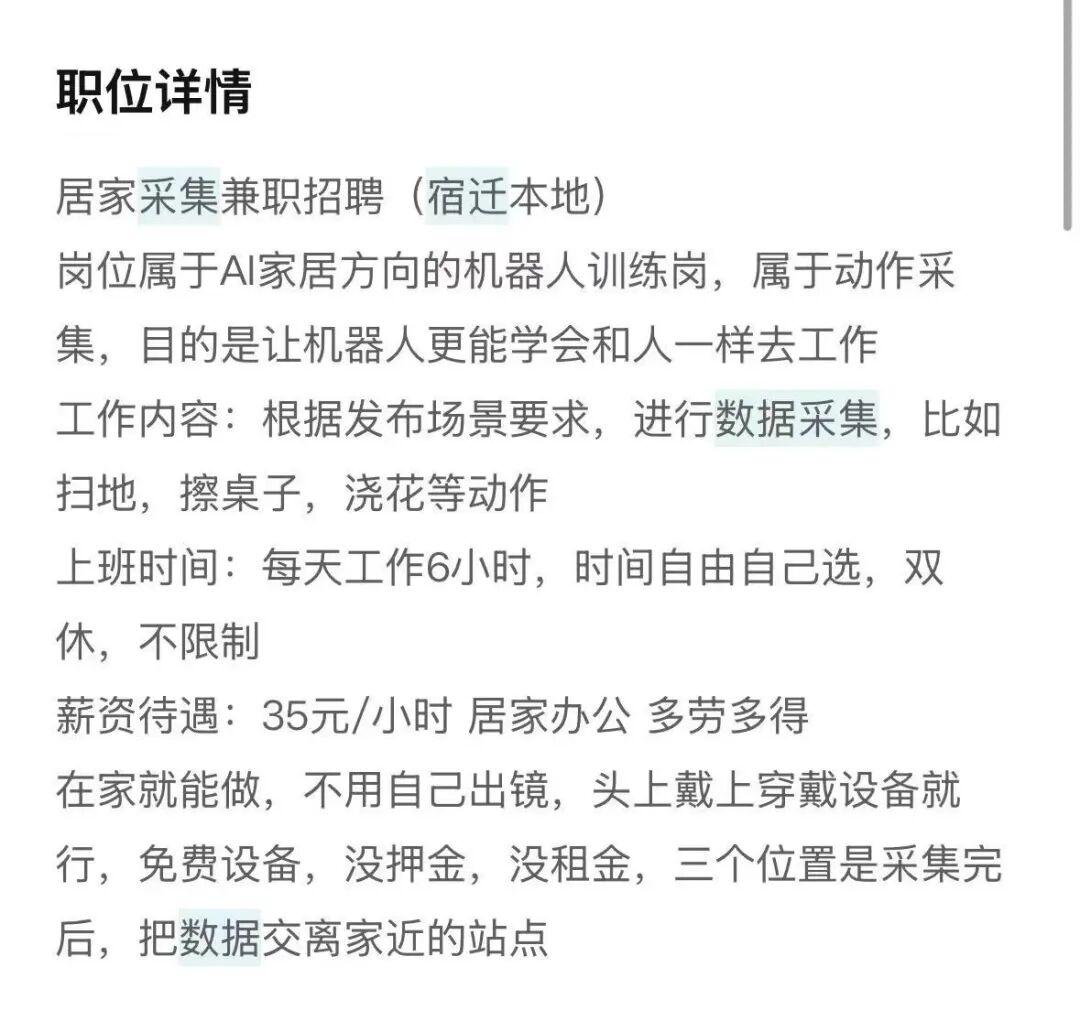
As of April 2026, there have been 64 similar data collection centers across the country.
What's more interesting is that people participating in data collection do not necessarily need to have a professional background in robotics. Some are responsible for remotely controlling robots to complete actions, some wear head - mounted displays and camera equipment to complete specified tasks, and some directly wash dishes, fold clothes, and organize rooms at home and record their actions for robots to learn.
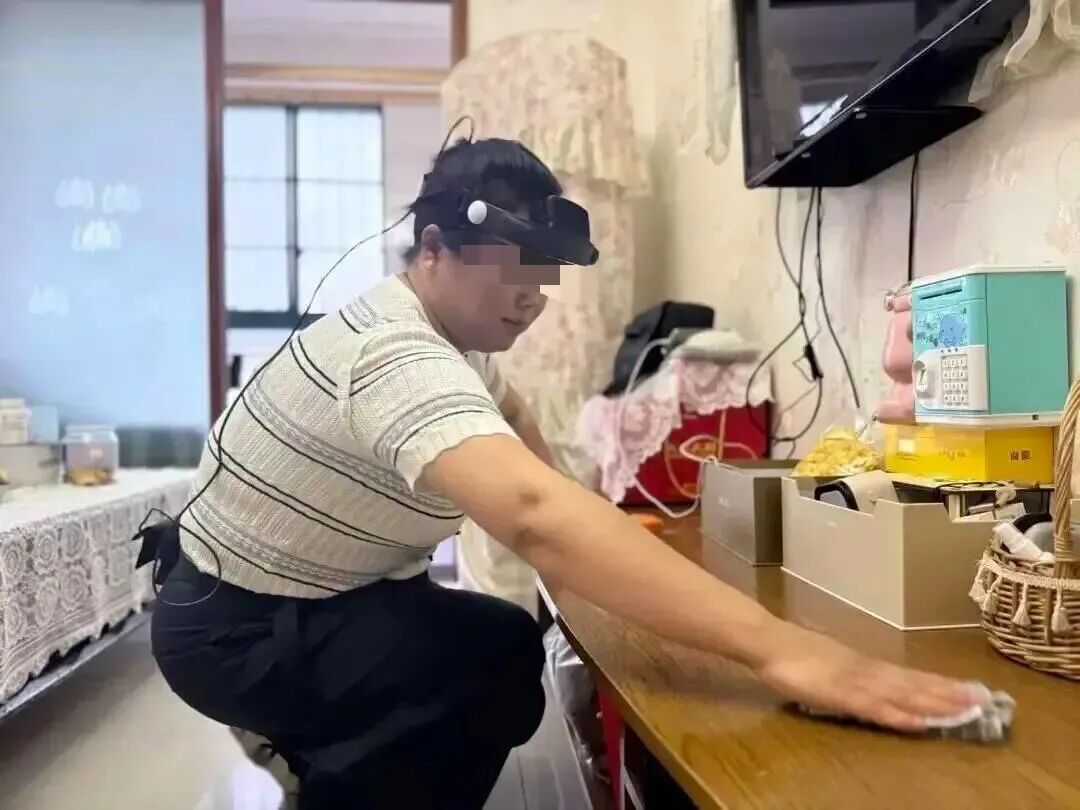
To some extent, humans are becoming the "teachers" of robots. And as embodied intelligence continues to heat up, a number of companies specializing in data collection and annotation have also begun to receive capital investment.
The valuation of Guanglun Intelligence has exceeded $2 billion, and companies such as Manfu Technology and Xinzhi have successively received financing. More and more startups are no longer directly manufacturing robots but are specializing in producing the data needed for robot training.
Behind the sudden prosperity of the data collection industry actually reflects the same reality: the entire industry is short of data.
The industry generally believes that a humanoid robot with truly general capabilities needs tens of millions or even hundreds of millions of hours of high - quality operation data, while the data scale currently accumulated in the entire industry is still only in the order of hundreds of thousands of hours, and there is a huge gap between the two.
What's more troublesome is that robot data is far from being as easy to reuse as Internet text. The data of screwing screws in a factory is difficult to directly transfer to household storage; the data of a shopping mall guide cannot be directly used for hospital nursing. Even in the same factory, the data generated by different workstations may not be universal.
There is not only a shortage of data but also high costs.
In the real - machine remote - operation mode, a skilled operator can often only produce 2 to 3 hours of effective data in an 8 - hour workday. When using head - mounted devices for non - physical collection, the proportion of truly valuable training data is only 3% to 20%.
This also explains why more and more robot companies are starting to actively enter real - world scenarios. Because for embodied intelligence, what is truly scarce has never been the robots themselves, but the real - world data behind the robots that can be repeatedly trained and continuously iterated.
Robot nanny or robot training ground?
If the entry of robots into households is to find data, then Zibianliang's recently open - sourced XRZero - GO is to solve another problem: how to make data cheaper and more efficient.
As embodied intelligence continues to heat up, the industry has reached a high degree of consensus on the importance of data. Whether it is the large - scale construction of data collection centers or the mobilization of hundreds of thousands of people to participate in data collection, it is essentially to solve the problem of robots lacking enough "learning materials".
However, as the industry continues to expand, a new problem has begun to emerge: Data is of course important, but the cost of obtaining data is also astonishing.
In traditional solutions, high - quality robot data often needs to be collected through real - machine remote operation. The equipment is expensive, the labor input is high, and the collection efficiency is limited, making it difficult for the growth rate of data scale to keep up with the needs of model training.
Most companies' thinking is to continue to expand the scale. If there is a shortage of data, build more data collection centers; if the collection efficiency is not enough, invest more manpower and equipment.
What Zibianliang is trying is another way: instead of continuously increasing the cost of data acquisition, it is better to improve the efficiency of data utilization.
According to the experimental results announced by Zibianliang, 1 hour of real - machine data combined with 10 hours of high - quality non - physical data can approach the effect of pure real - machine training, and the overall cost is reduced to one - twentieth of the original. At the same time, the project also adds an automatic quality inspection mechanism to conduct multiple rounds of screening on the rationality of actions, execution results, and physical constraints, and minimize the entry of low - quality data into the training process.
For an industry still in its early stage, the significance of this is not just cost - saving. In the past two years, the industry has generally been thinking about how to obtain more data, while what Zibianliang is trying to solve is how to make the same data create greater value.
If we look at XRZero - GO and the robot cleaning service together, the logic behind Zibianliang's recent series of actions begins to become clear. On the one hand, it is trying to reduce the cost of robot learning; on the other hand, it is trying to expand the robot's opportunities to contact the real world. The former is to improve learning efficiency, and the latter is to increase learning materials.
To some extent, both things are actually centered around the same goal: to make robots grow faster.
This may also be the biggest difference between Zibianliang and many of its peers: rather than showing what robots have learned, it seems to be more concerned about how robots can learn faster.
This logic is not difficult to understand because any specific skill has its limitations. Learning to fold clothes today does not mean being able to organize the kitchen tomorrow; learning to store shoes does not mean being able to take care of the elderly. What really determines the upper limit of a robot's capabilities may