AI "kicks" its way into the World Cup
When the whistle blows for the opening match of the 2026 FIFA World Cup at the Azteca Stadium in Mexico City, this sport with a nearly century - long history will also witness a technological revolution.
This is the first time in the history of the World Cup that the number of participating teams has expanded to 48, with a total of 104 matches across 16 cities in the United States, Canada, and Mexico. For FIFA, managing such a large - scale event is an unprecedented challenge in itself.
In the past few decades, technological innovations in the World Cup have mostly remained partial. From goal - line technology to VAR (Video Assistant Referee), from semi - automatic offside detection to smart footballs, each technological upgrade has addressed a specific issue.
By 2026, AI will start to penetrate almost every aspect of the game, including match operations, referee decision - making, team analysis, and the fan viewing experience.
Therefore, this World Cup has been dubbed the "AI World Cup" by many industry insiders.
However, the most interesting aspect of this World Cup is not how powerful AI is, but the clear boundary that FIFA has set for AI.
AI can help referees see more clearly, assist coaches in faster game analysis, and provide fans with an unprecedented viewing experience. But ultimately, it cannot make decisions about the game on behalf of humans, let alone create the game.
The football knows when it's being kicked
Many fans may not know that the World Cup football nowadays is no ordinary ball.
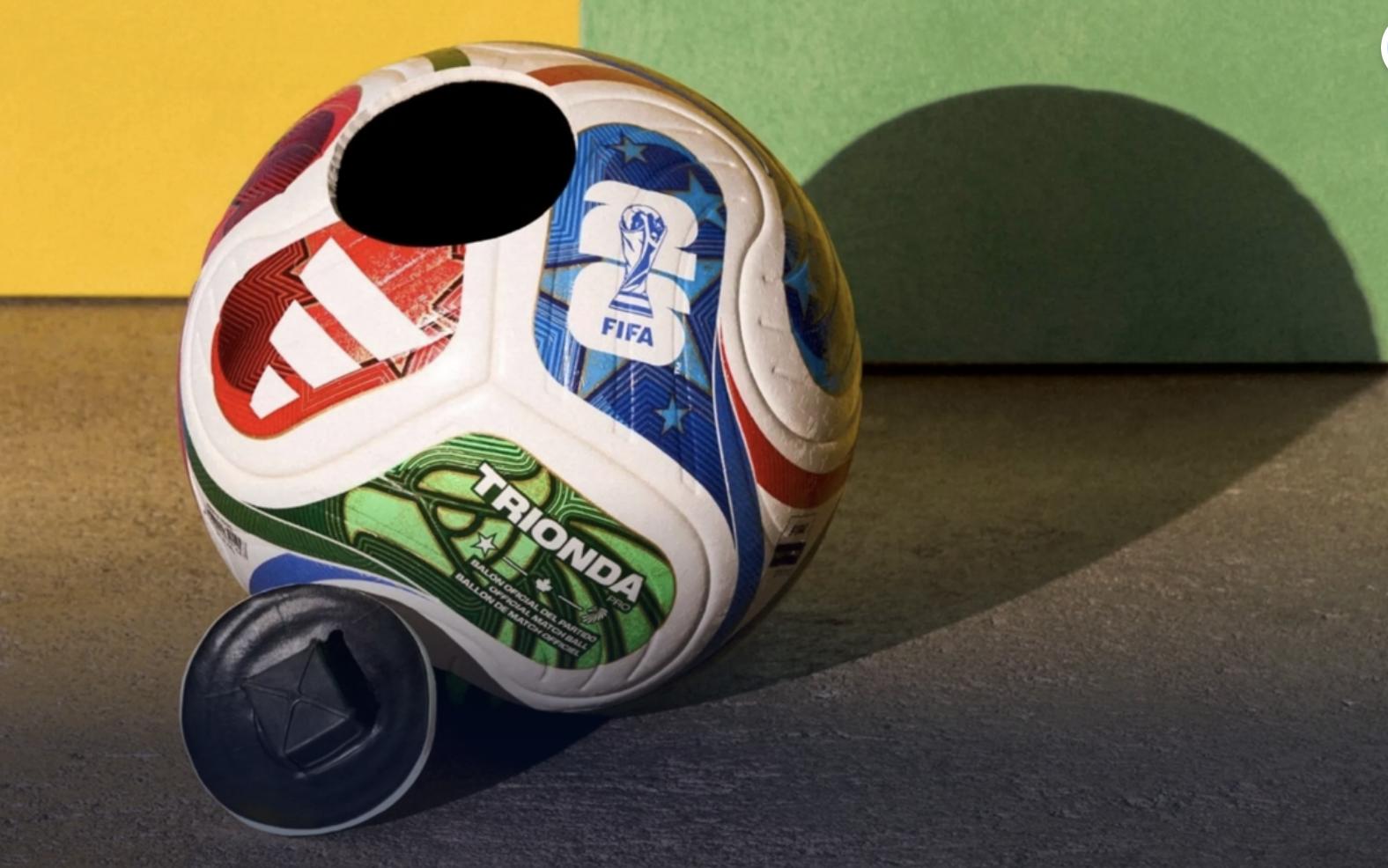
Image source: FIFA official website
Since the 2022 FIFA World Cup in Qatar, an Inertial Measurement Unit (IMU) has been implanted inside the official match ball, which can record the ball's motion state at a frequency of 500 times per second.
Why is this necessary?
One of the most difficult issues to judge in a football game is exactly when the ball leaves the player's foot. Offside decisions require referees to accurately determine: "At the moment of the pass, is the receiving player in an offside position?"
In the past, this moment could only be determined by high - speed camera replays, and errors were inevitable. A smart football can record the exact time of each touch in real - time and synchronize it with the player position data captured by the sideline cameras, providing a unified time coordinate for the referees.
In simple terms, now not only are the referees watching the game, but the football itself is also recording it.
AI creates a digital twin for each player
If the smart football solves the time problem, then digital human technology addresses the spatial problem.
During the World Cup, a corresponding digital human skeletal tracking model will be created for each player. In the past, VAR's offside judgments largely relied on manual line - drawing. When players are running at high speed, their bodies are blocking each other, or multiple players are entangled, disputes often arise.
Digital twin technology can reconstruct the players' body postures in real - time. Where are the shoulders? Where are the knees? How far does the toe extend? All these data can be modeled in real - time.

Image source: FIFA official website
What's even more interesting is that this technology can even help determine whether the goalkeeper's line of sight is obstructed.
According to football rules, even if a player does not directly touch the ball, if they are in an offside position and affect the goalkeeper's view of the incoming ball, it may constitute an offside foul. In the past, this relied more on the referee's experience. Now, 3D modeling allows referees to more intuitively understand the positional relationship between players, including whether it may affect the goalkeeper's line of sight.
The question "Can he actually see the ball?" which was difficult to quantify in the past, now has a technological basis for the first time.
For fans, the offside replays on TV are no longer just a few red and blue lines, but more intuitive 3D dynamic reconstructions.
Referees can finally share their perspective with the world
Compared with the complex decision - making technologies, what ordinary audiences may most easily notice the change in this year's World Cup is perhaps the referee's first - person perspective.
A miniature camera on the referee's communication device records the entire game. For the first time, fans can truly watch the game from the referee's position.
What does it feel like when a player breaks through at high speed? How intense is the melee in the penalty area? What exactly does the referee see when a red - card foul occurs? These scenes are expected to appear more often in the official broadcasts in the future.
However, there is a practical problem. Referees are not photographers. They need to run, stop suddenly, turn around, and change directions constantly. High - speed movement causes the camera to shake violently. If the raw footage is directly broadcast, the audience may feel dizzy before they can clearly see the actions.
Therefore, AI takes on another task.
It needs to analyze the motion trajectory of the video footage in real - time, distinguish between the normal movements caused by the referee's active observation of the game and the ineffective shaking caused by running, and then perform stabilization processing through algorithms.
In other words, AI is not helping the referees watch the game, but helping the audience have a more comfortable viewing experience.
Coaches can also chat with AI
AI not only serves referees but also starts to serve coaches.
In the past, FIFA would provide thick data reports to each team. How far did the players run? What is the corner - kick success rate? Which side does the opponent usually attack from? It might take professional analysts several days to organize this information.
For traditional football powerhouses, this is not a problem. But for many small and medium - sized national teams, it is not realistic to form a complete data analysis team.
Therefore, FIFA has started to introduce generative AI tools. Coaches and analysts no longer need to flip through dozens of pages of reports. Instead, they can directly ask questions: How did our set - piece performance fare in recent games? Is the opponent's left - side defense weak? Which players' physical fitness is declining the fastest? The system will automatically organize the data and generate charts, videos, and written summaries.
However, FIFA has also set a rule. These tools are mainly used for pre - game preparation and post - game review, not for real - time coaching during the game.
The game still belongs to the players, not the algorithms.
Drones: Another game in the sky
AI is also changing the visual experience of large - scale sports events.
When thousands of drones slowly take off over the Azteca Stadium in Mexico City, the first reaction of many audiences may be: "The World Cup opening ceremony is getting more and more creative."
Like football, this drone show is also part of the technological revolution of the 2026 World Cup. Thousands of drones form the World Cup trophy, footballs, national flags, and player silhouettes in the air, performing through real - time positioning, automatic path planning, and swarm - cooperation algorithms.
According to public information, companies involved in the large - scale drone performance plan for the World Cup include drone formation companies such as Nova Sky Stories.

Image source: Nova Sky Stories official website
For ordinary audiences, this may just be a cool light show, but the technology behind it is not simple. A large - scale drone performance is equivalent to having thousands of aircraft flying in the air simultaneously. Each drone needs to know its position, speed, and flight path in real - time and avoid colliding with others.
To achieve this effect, the system needs to rely on high - precision positioning, real - time communication, automatic path planning, and swarm - cooperation algorithms to make the entire formation move like a single entity.
Compared with large - scale sports events in the past that relied on fireworks and fixed lights, drone formations provide a more flexible and environmentally friendly visual solution. AI and automatic control technologies are becoming an important part of the opening ceremonies of large - scale sports events.
Behind the football field stand a group of technology companies
As an official technology partner of FIFA, Lenovo has undertaken a large amount of work in building the AI infrastructure for the event, including event operations, data processing, and support for some AI applications.
Among them, the stabilization processing of the referee's first - person perspective footage and some digital event experiences all involve Lenovo's technology.
Hisense, which has continuously sponsored the World Cup, is more involved in the display segment. High - dynamic, high - refresh - rate display devices will undertake the display tasks for some video referee centers and viewing scenarios.
The core technology provider behind VAR is Hawk - Eye. This company was first known for the tennis Hawkeye system and has now become an important infrastructure provider for football video refereeing.
Through high - speed cameras installed throughout the stadium, it tracks the positions of players and the football in real - time, providing data support for semi - automatic offside detection and VAR.
It can be said that without Hawk - Eye, referees would still only see ordinary replays; with it, the game has a digital coordinate system for the first time.
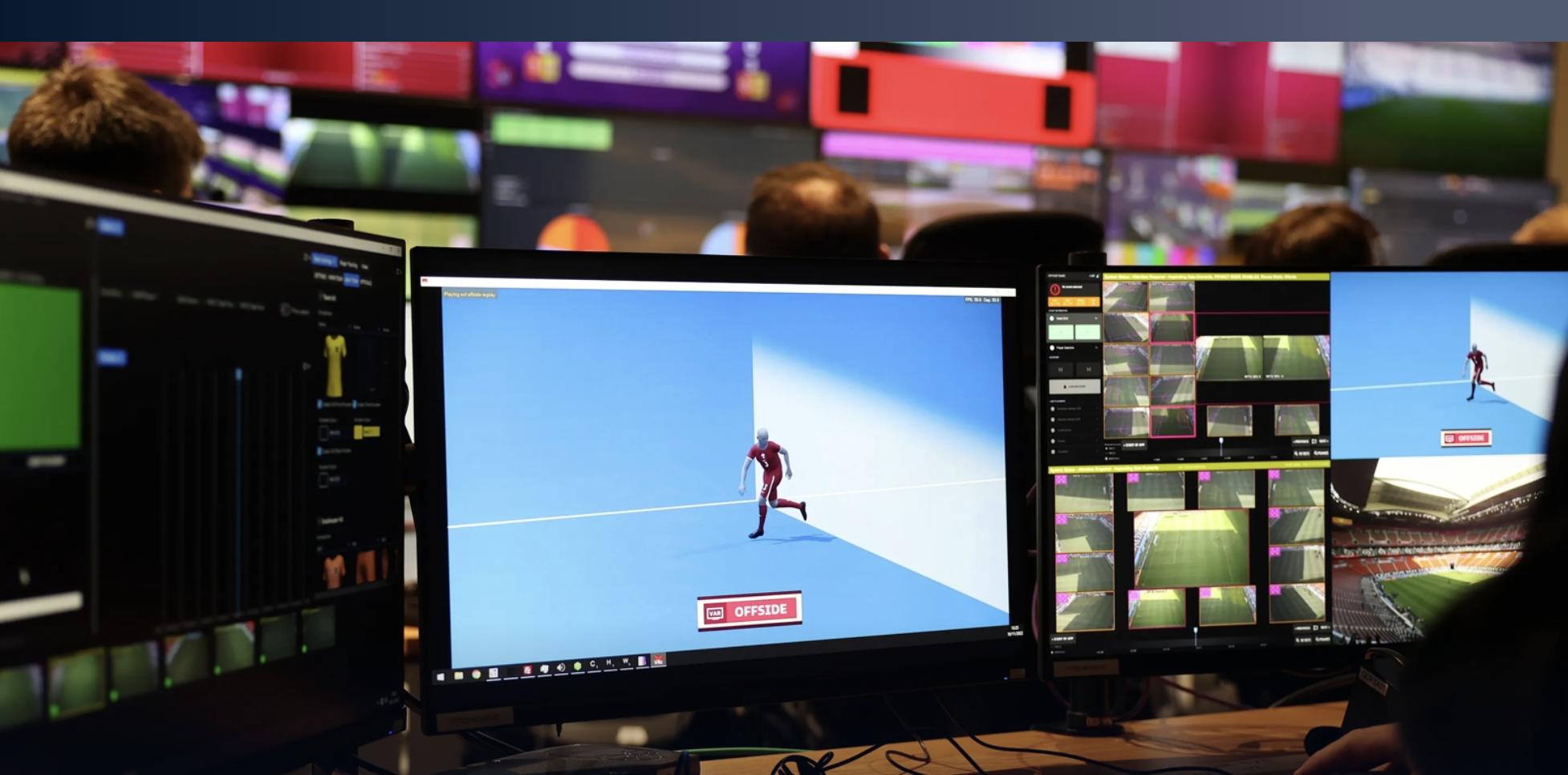
Image source: FIFA official website
The football itself is no longer just a football. The official match ball by Adidas integrates smart sensors, collecting hundreds of motion data points per second and accurately recording when the football is kicked. For the first time, the football has become an Internet of Things device.
Companies that support the development of this smart football technology include those specializing in sensor and motion - positioning technologies, such as Kinexon, which have long been involved in ultra - wideband positioning and real - time motion data collection.
In these invisible areas, cloud computing and network infrastructure are also indispensable.
The underlying capabilities provided by companies such as Microsoft Azure, AWS, and Cisco enable the World Cup to connect the data from 16 cities in the three host countries in real - time.
For Chinese companies, this year also marks a change in identity. In the past, Chinese brands mostly appeared at the World Cup as sponsors. TV commercials, billboards on the sidelines, and jersey sponsorships were the familiar ways of their presence.
In the 2026 World Cup, Chinese technology companies have started to enter the event's operating system itself. Lenovo is involved in the construction of the event's technological infrastructure. Hisense continues to focus on display and the viewing experience. Chinese broadcasting platforms are exploring AI commentary, multi - language translation, and intelligent video editing.
From the backstage to the living room, Chinese companies are starting to appear in different parts of the World Cup's technological chain.
AI can watch the game, but not decide it
As AI becomes more involved in football, a natural question arises - since AI can generate pictures, videos, and movies, why can't it directly generate World Cup broadcast footage? Why can't it automatically judge fouls? Why can't it automatically decide offside?
From the current technological approach adopted by FIFA, the answer is no.
When discussing sports AI technology recently, the journal Nature also proposed a similar view. Technical experts believe that AI can enhance referees but cannot replace them.
The reason is not a lack of technological capabilities, but that a sports game is, first of all, a real - life event. News photos can be retouched, movies can use CG, but a football game cannot.
For referees, every decision must be based on real evidence.
AI can improve picture clarity, stabilize videos, generate 3D reconstructions, and help understand complex decisions. But it cannot add a non - existent action out of thin air, nor can it create a scene that the camera did not capture.
If AI starts to predict a player's next move, automatically fill in the blocked parts, or even generate new game footage, then what the referees see is no longer the real game, but an algorithmic speculation.
This boundary is crucial for sports games.
Therefore, FIFA allows AI to enhance real - life footage but rejects AI - generated game footage; allows AI to assist in analysis but rejects AI making the final decisions; allows AI to help humans understand the game but does not allow AI to decide the game on behalf of humans.
From the drones in the night sky at the opening ceremony, to the smart football on the field, to the AI system in front of the referees, the 2026 World Cup may be the most technologically advanced World Cup ever.
But what the 2026 World Cup really wants to prove may not be how powerful AI is, but how to make technology serve fairness rather than replace it in an era where humans and algorithms are both involved.
For this sport with billions of viewers, the most important high - tech may not be a certain algorithm, but a principle recognized by everyone: AI can get infinitely close to reality, but it can never replace it.
This article is from the WeChat official account "Jiemian News". Author: Zha Qinjun, Editor: Wen Shuqi. Republished by 36Kr with permission.