2026 Oncology Immunotherapy Research: 10 High-Value Therapies Selected from Over 10,000 Pipelines — Who Will Be the New "King of Drugs"?
Immunotherapy, as one of the important directions in anti-tumor treatment, has continuously achieved breakthroughs in recent years.
The approval and launch of representative drugs such as immune checkpoint inhibitors, CAR-T, TCE, and TIL have benefited more and more patients. In particular, PD-1 and PD-L1 have become the standard first-line treatment options for various solid tumors such as non-small cell lung cancer, melanoma, and esophageal cancer, promoting the widespread application of tumor immunotherapy.
Bispecific antibodies, neoantigen vaccines, γδ T cell therapy, macrophage therapy, etc., as important representatives of tumor immunotherapy, have also achieved exciting clinical results, and global MNCs are widely deploying in this field.
However, the existing tumor immunotherapy still faces many challenges such as low overall response rate, drug resistance, and safety risks. These unmet clinical needs are becoming the core driving force for the industry to explore the next generation of tumor immunotherapy.
Many global companies have shifted their R & D focus to the development of new targets and the analysis of the tumor microenvironment, aiming to develop more promising next-generation immunotherapy strategies. Facing the increasingly diverse and rapidly evolving technological paths, how to systematically identify and evaluate the next-generation blockbuster products with high clinical value and commercial potential has become an increasingly popular topic.
This report constructs an evaluation system covering four dimensions of "development maturity, clinical value, commercial value, and capital enthusiasm", selects high-value tracks in tumor immunotherapy, and conducts research on several core tracks currently in the critical development stage, focusing on their mechanism of action, clinical progress, technical bottlenecks, and industrialization paths.
Core Views and Conclusions
From the perspective of target R & D pattern, the global tumor immunotherapy pipeline has exceeded 10,000, and the indications are highly concentrated in solid tumors.
CD19 and PD-1 are the targets with the highest development maturity, with the number of pipelines exceeding 500 each, indicating that the mature targets have entered the stage of red ocean competition.
Among the emerging unlisted targets, the immune co-stimulatory molecule 4-1BB and the novel immune checkpoint inhibitor TIGIT lead in the number of pipelines.
From the perspective of product R & D pattern, there are significant differences in the pipeline volumes of various products, and niche emerging therapies are in the early layout stage.
The number of CAR-T therapy pipelines ranks first among all tumor immunotherapies, with a total of nearly 3,000.
Bispecific antibodies are the second-largest category, and the mainstream R & D ideas focus on two major directions: bispecific immune checkpoint inhibitors and TCE therapy.
The number of pipelines for niche therapies such as oncolytic viruses, TCR-T, CAR-NK, TIL, and CTL is relatively small, and the overall R & D layout scale is limited.
From the perspective of the commercialization process, the expansion of medical insurance payment and overseas licensing have opened up a two-way growth space for the industry.
Among the currently listed tumor immunotherapy products in China, 13 are included in the national medical insurance Class B negotiation catalog, and 9 are selected in the commercial health insurance innovative drug catalog.
In addition, the total amount of China's tumor immunotherapy going global in 2025 exceeded $39.3 billion, mainly in CAR-T and bispecific antibodies.
In this study, Arterial Think Tank comprehensively sorted out the global listed and in - development tumor immunotherapies, and based on the four core evaluation dimensions of "development maturity, clinical value, commercial value, and capital enthusiasm", selected the top ten next-generation high-value tumor immunotherapies.
Among them, the PD-1/VEGF bispecific antibody has the most prominent comprehensive advantages. With high development maturity, definite clinical and commercial value, and continuous high capital enthusiasm, it has become the most certain candidate for the next-generation blockbuster product.
At the same time, the PD-1/CTLA-4 bispecific antibody, PD-L1/TGF-β bispecific antibody, PD-1/IL-2 bispecific antibody, PD-L1/4-1BB bispecific antibody, CD3/BCMA TCE therapy, CD3/DLL3 TCE therapy, Claudin18.2/CD3 TCE therapy, and the next-generation CTLA-4 monoclonal antibody have all advanced to the late clinical stage, with balanced performance in all core value dimensions.
In addition, in-vivo CAR-T therapy has attracted a large number of enterprises to enter the market with its extremely high capital enthusiasm, and the R & D team has expanded rapidly, becoming a promising emerging high-value direction.
Development Maturity: Over Ten Thousand Pipelines, Bispecific Antibodies and Emerging Targets Are the Key to Breakthrough
■ Target Situation: CD19 and PD-1 Have High Maturity, and There Are Many Pipelines Related to 4-1BB and TIGIT
According to statistics, the number of global tumor immunotherapy-related pipelines currently exceeds 10,000, and the indications are mainly solid tumors.
Among them, in the global market, CD19 and PD-1 are the targets with the highest development maturity. The number of pipelines targeting CD19 and PD-1 both exceeds 500, with 13 and 21 drugs approved for marketing respectively. The proportion of pipelines in clinical phase III is also significantly higher than that of other targets.
This indicates that CD19 and PD-1 have entered a relatively mature stage of the product life cycle, and new entrants will face greater commercial challenges.
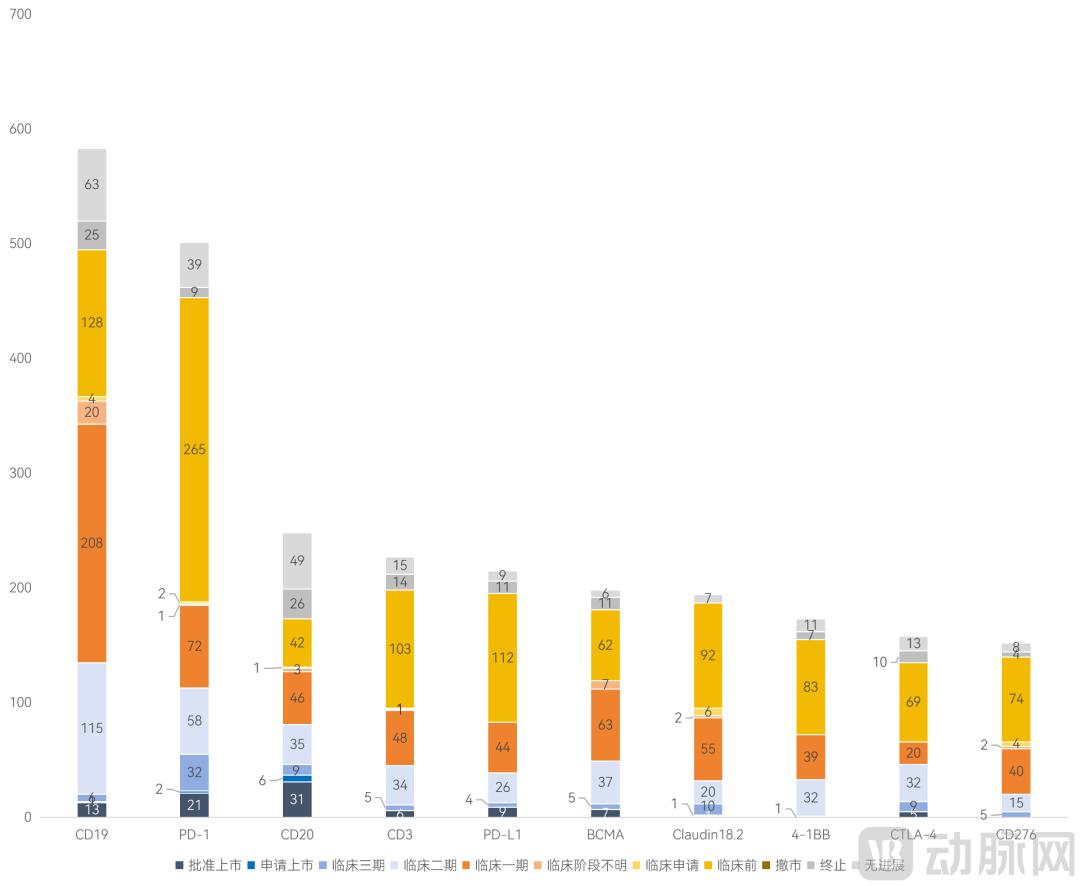
Top 10 Targets in Global Tumor Immunotherapy Development Heat
In the Chinese market, CD19 and PD-1 also have the advantage of development maturity, leading in the number of in - development and listed products. The number of CD19 pipelines reaches 292 (8 listed), and the number of PD-1 pipelines reaches 252 (15 listed).
It is worth noting that there is an obvious phenomenon of concentrated R & D for Claudin18.2 in China, with 150 domestic pipelines accounting for 77% of the global total.
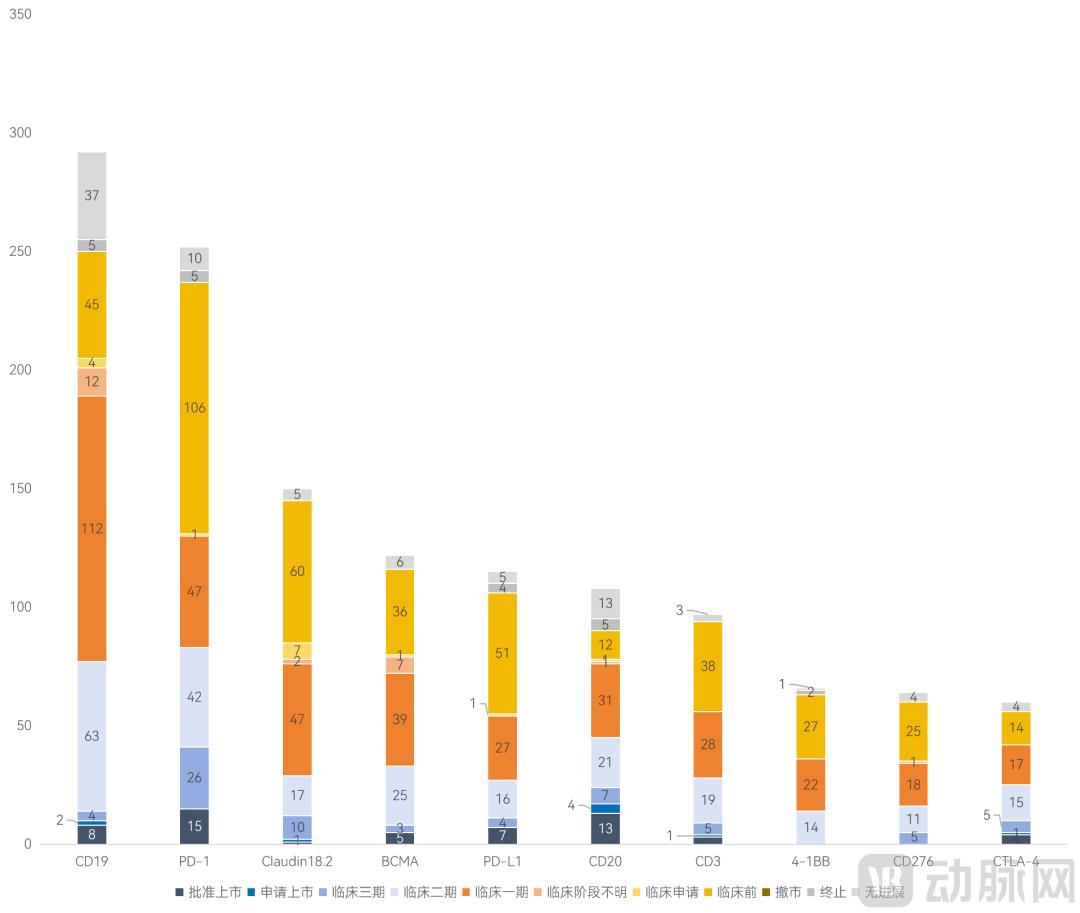
Top 10 Targets in Chinese Tumor Immunotherapy Development Heat
The aforementioned top 10 targets have high maturity, and the competitive pressure is also increasing. Arterial Think Tank, combined with industry research, counted some emerging potential targets with high attention.
Among the global unlisted targets, the immune co-stimulatory molecule 4-1BB and the novel immune checkpoint inhibitor TIGIT have high development heat, with 173 and 114 in - development pipelines respectively, reflecting the widespread expectation of the industry for their clinical potential to overcome the drug resistance of existing immune checkpoint inhibitors and expand the effective population.
The R & D heat of CEACAM5, NY - ESO -1, and NKG2 is also relatively high, and some enterprises and institutions are also deploying in targets such as ROR1, CEACAM5, CCR8, and TIM - 3.
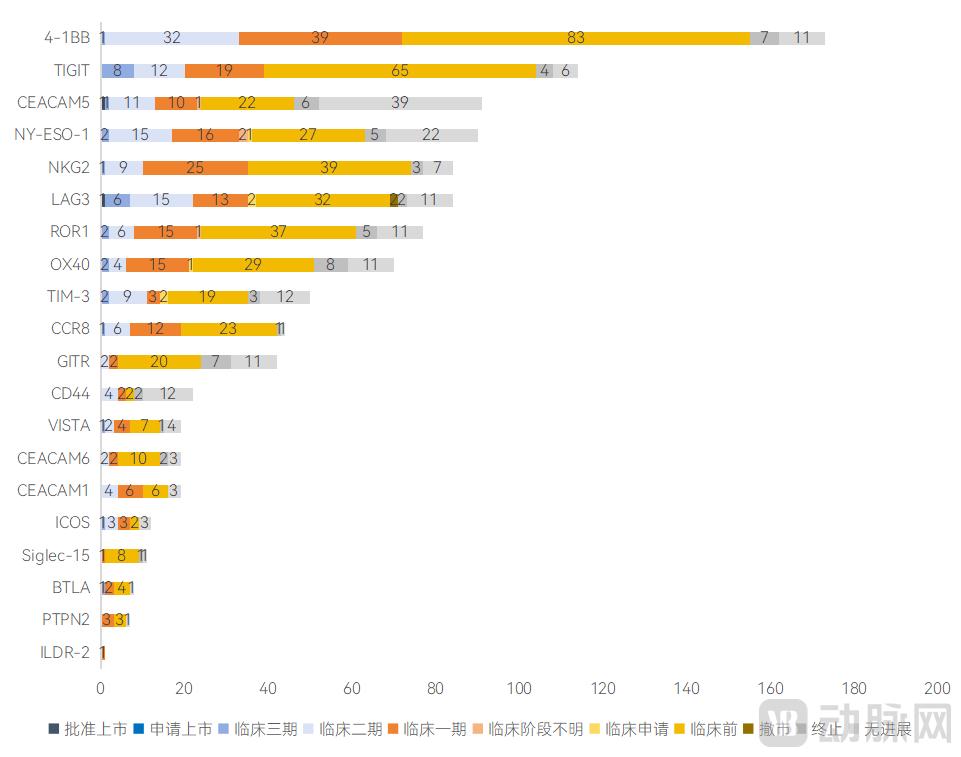
Global In - Development Situation of Potential Tumor Immunotherapy Targets
■ Product Situation: The Global CAR - T Pipeline Is Nearly 3,000, and China Leads in Bispecific Antibody Development Progress
From the perspective of drug types, the number of CAR - T therapy pipelines ranks first, approaching 3,000, far exceeding other types; followed by bispecific antibodies. The number of pipelines for therapies such as oncolytic viruses, TCR - T, CAR - NK, TIL, and CTL is relatively small (cytokine drugs such as interferons and interleukins are not included in this statistics due to limited clinical effects).
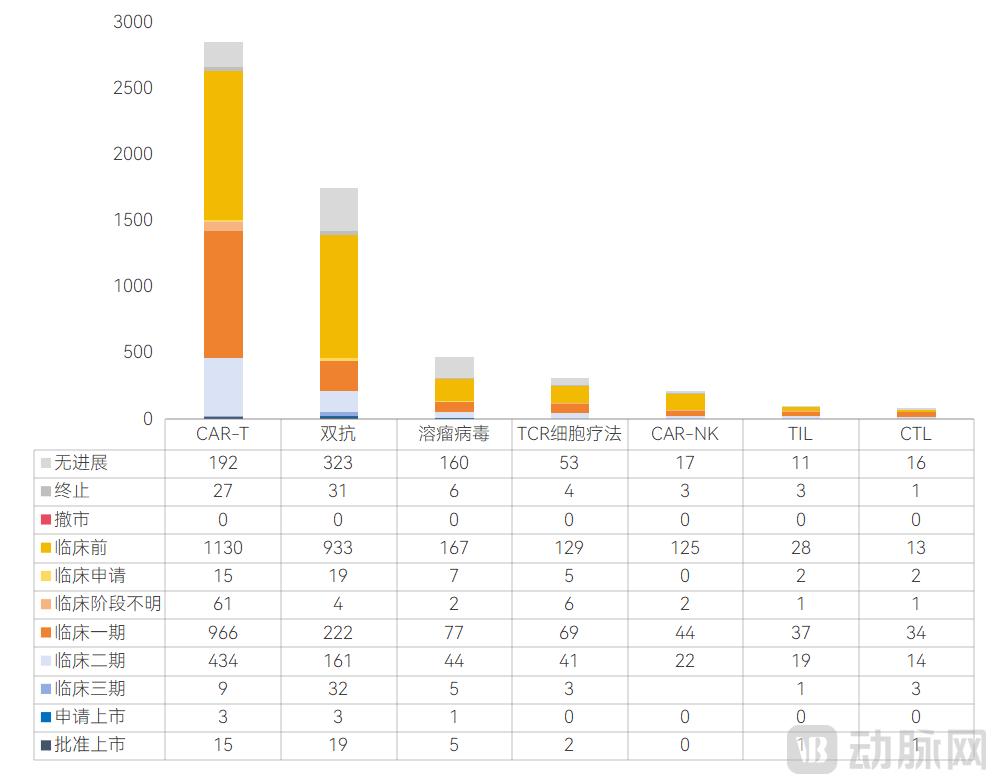
R & D Situation of Different Drug Types in Global Tumor Immunotherapy
According to statistics, there are a total of 2,852 global CAR - T in - development pipelines, of which China has 1,538. The research in classic target fields such as CD19 and BCMA has been relatively in - depth.
At the same time, CAR - T cell therapy is actively expanding into the field of solid tumor treatment, and emerging targets represented by Claudin 18.2 and GPC3 have shown initial potential. New technological directions such as allogeneic CAR - T, multi - target CAR - T, and in - vivo CAR - T have gradually become the focus of R & D.
Globally, there are a total of 475 oncolytic virus - related in - development pipelines, and the targets mainly revolve around cytokines and cytokine receptors. In terms of indications, they are currently concentrated in the field of solid tumors, including melanoma, intrahepatic cholangiocarcinoma, colon cancer, non - small cell lung cancer, triple - negative breast cancer, and urothelial cancer.
Five existing products have entered the clinical phase III research stage. China's recombinant human adenovirus type 5 injection (Ankerui H101) is the world's first approved oncolytic virus drug.
In addition, globally, there are 312 TCR cell therapy pipelines; there are 213 CAR - NK therapy pipelines, and their targets are mainly concentrated in CD19 (38 globally, of which 19 are in China) and BCMA (22 globally, of which 13 are in China).
Bispecific/multispecific antibodies are an important strategy to address the limitations of single - drug tumor immunotherapy and improve clinical efficacy, opening the era of "Immunotherapy 2.0".
The target combinations of tumor immunotherapy bispecific/multispecific antibodies include immune cell - directed types, such as TCE therapy and NK cell connectors; and immune regulatory types, such as bispecific immune checkpoint inhibitors and immune checkpoint + co - stimulatory activation.
Currently, in the field of solid tumors, nearly half of the pipelines are composed of bispecific immune checkpoint inhibitor bispecific antibodies, and about 30% are TCE therapy. The field of hematological tumors is mainly composed of TCE therapy.
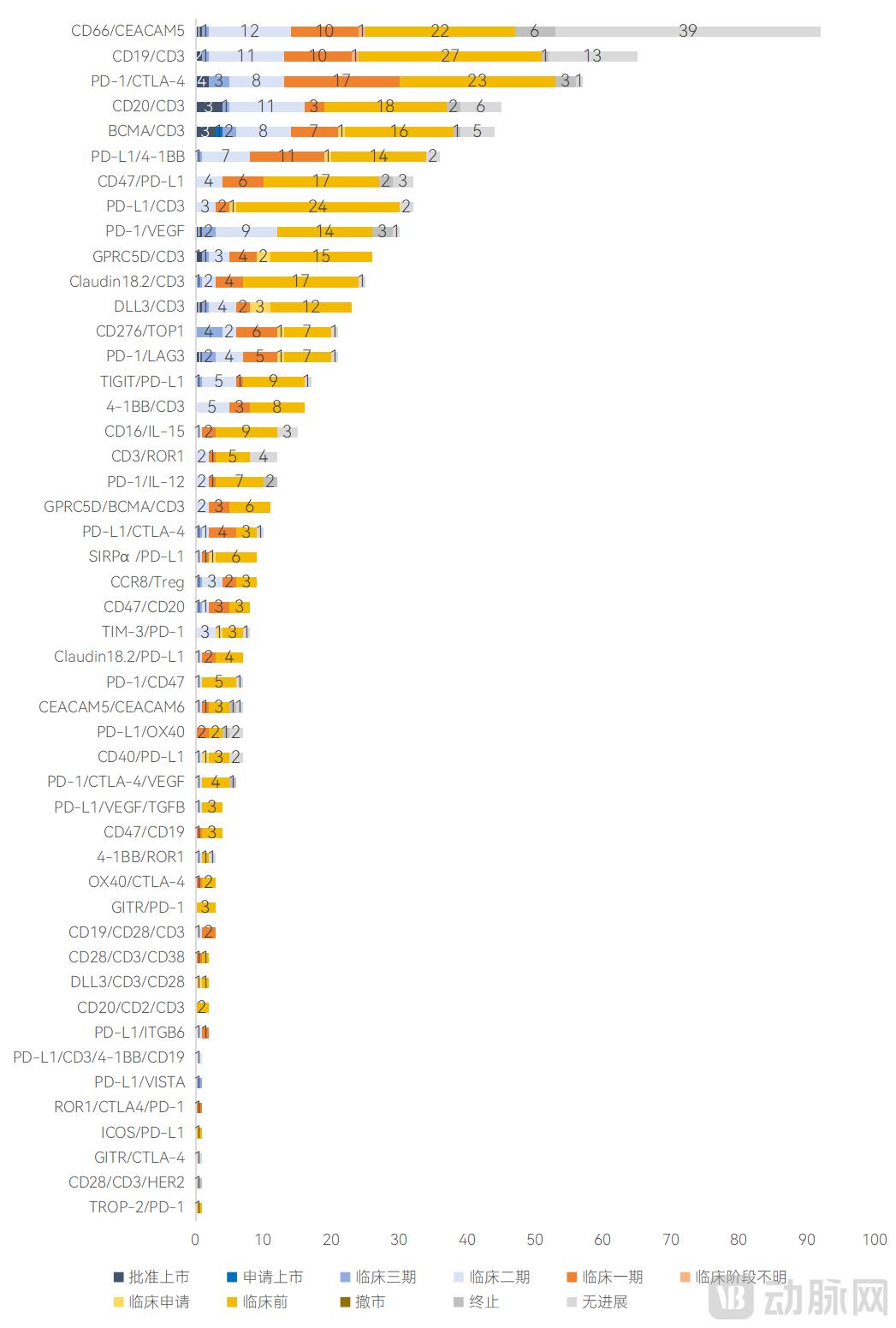
Global Progress of Bispecific/Multispecific Antibody Pipelines
In the global tumor immunotherapy bispecific/multispecific antibody market, drugs for representative target combinations such as DLL3/CD3, GPRC5D/CD3, PD - 1/VEGF, BCMA/CD3, CD20/CD3, and PD - 1/CTLA - 4 have been approved for marketing.
From the perspective of indication distribution, more than 70% of the global pipelines are used for the treatment of solid tumors. Among the unlisted drugs, target combinations such as PD - L1/4 - 1BB, CD47/PD - L1, PD - L1/CD3, and Claudin18.2/CD3 are at the forefront of global R & D heat.
In terms of listed products, currently, the tumor immunotherapy products approved for marketing in China are mainly immune checkpoint inhibitors.
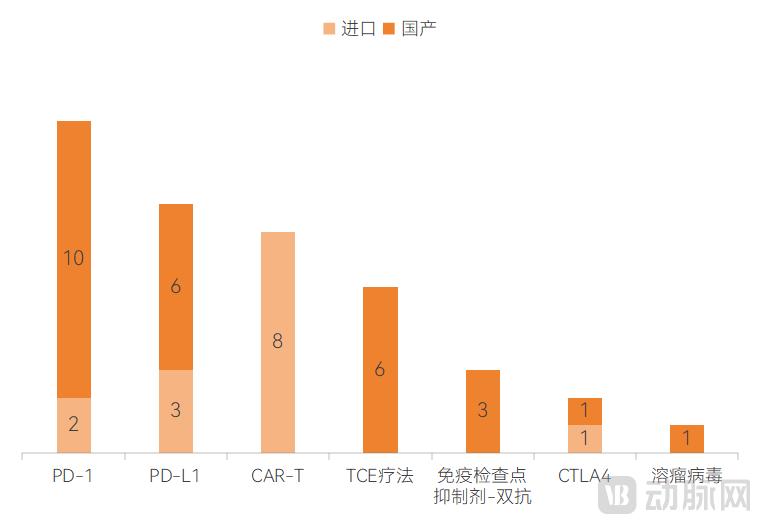
Categories of Approved Tumor Immunotherapy in China
As of January 30, 2026, a total of 27 immune checkpoints have been approved in China, including 21 domestic products (including 10 PD - 1 monoclonal antibodies, 6 PD - L1 monoclonal antibodies, 3 bispecific antibodies, and 1 CTLA - 4 monoclonal antibody) and 6 imported products (including 2 PD - 1 monoclonal antibodies, 3 PD - L1 monoclonal antibodies, and 1 CTLA - 4 monoclonal antibody).
In terms of cell therapy, 8 products have been approved in China, all of which are CAR - T therapies; cell therapies such as CAR - NK, TCR - T, TIL, and iNKT are still in the R & D stage. In addition, 6 TCE therapy products have been approved in China, all of which are imported products.
From the perspective of the mechanism of action, most of the currently listed tumor immunotherapy products in China focus on T - cell - related pathways, with targets mainly including PD - 1, PD - L1, and CD19. Other types of activatable immune cells are in the development stage.
Clinical Value: Bispecific Antibodies and Cell Therapies Lead the Next - Generation Breakthrough
■ Immune Checkpoints: CTLA - 4 Sees a Turnaround, While TIGHT and TIM - 3 Fail to Meet Expectations
The market provides a window period for the iteration of the new generation of immune checkpoint inhibitors. The industry is developing the next - generation immune checkpoint inhibitors to solve the toxicity or drug - resistance problems of existing therapies.
The problems of poor efficacy, high toxicity, and narrow treatment window of CTLA - 4 are being solved. Among the emerging immune checkpoint inhibitors, the LAG - 3 combination strategy has shown excellent performance, demonstrating a strong synergistic effect.
However, not all emerging immune checkpoints can live up to expectations. Roche has terminated the development of TIGIT therapy, and GSK removed the TIM - 3 antibody cobolimab from the phase III clinical trial of non - small cell lung cancer in its Q3 2025 financial report.
■ Bispecific Antibodies: Bispecific Antibodies Based on PD - 1 Have Stunning Data and Are Strong Candidates for the Next - Generation Blockbuster Products
The mechanism of precise multi - target synergy of bispecific antibodies is being translated into therapeutic advantages in the clinic. In the past two years, tumor immunotherapy bispecific antibody drugs have intensively disclosed high - quality clinical data.
The listed PD - 1/VEGF bispecific antibody, Ewoximab, achieved significant positive results in a phase III clinical study comparing single - drug treatment with the "blockbuster drug" Pembrolizumab in the first - line treatment of PD - L1 - positive non - small cell lung cancer.
The median PFS of patients reached 11.14 months, nearly doubling that of the control group (5.82 months); the risk of disease progression or death was reduced by 49%, making Ewoximab the world's first drug to be significantly superior to the "blockbuster drug" in a phase