The drone imagery war between Insta360 and DJI is even more brutal than the "food delivery wars".
In the past week, the headlines in the consumer electronics circle have almost been monopolized by two Shenzhen-based companies.
On the evening of June 10th, Insta360 suddenly launched its flagship gimbal camera, the Luna Ultra, directly targeting DJI's yet-to-be-released Osmo Pocket 4P. As soon as the news spread like wildfire, DJI struck back by filing a patent infringement lawsuit in the Eastern District Court of Texas, USA, involving six patents covering both design and invention. In China, DJI was also busy: in March this year, it sued Insta360 in the Shenzhen Intermediate People's Court over the ownership of drone patents, involving several former core R & D personnel in the dispute. With a new piece of news emerging every three hours on average, it dominated the front pages of the technology investment circle.
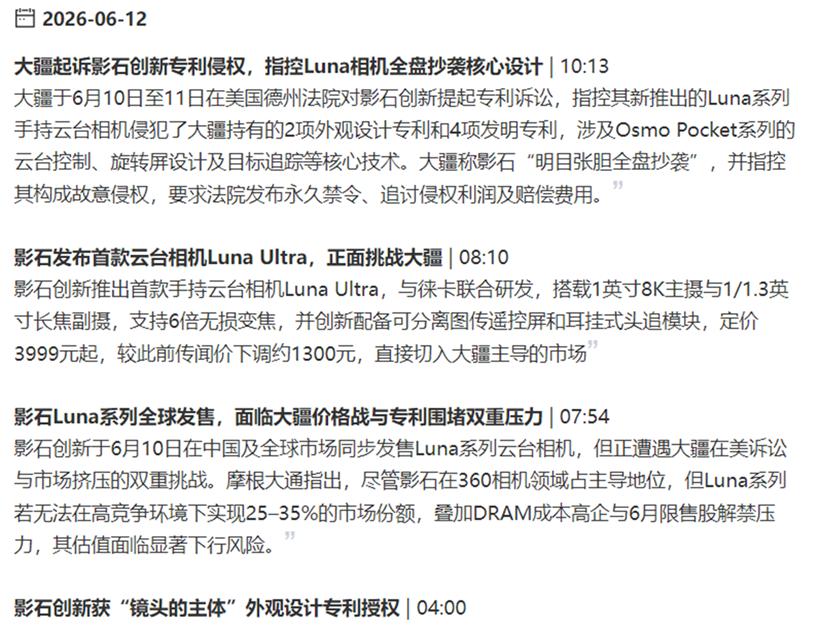
Picture: Reports related to Insta360 and DJI, Source: Wind Consulting
The head - on confrontation between the two companies, with product battles and patent lawsuits against each other, is even more exciting than the food delivery war. However, the excitement of the latter was mostly created by media coverage; the battle in the drone imaging field is a real fight to the death.
Insta360 is not an unknown brand. It is one of the most representative young brands in China's new consumer electronics field. It went public on the STAR Market in 2025, and its market value once soared to 150 billion yuan, enjoying great glory. However, the good times didn't last long. As the direct conflict with DJI escalated comprehensively, Insta360's market value has now dropped to around 63 billion yuan, more than halved.
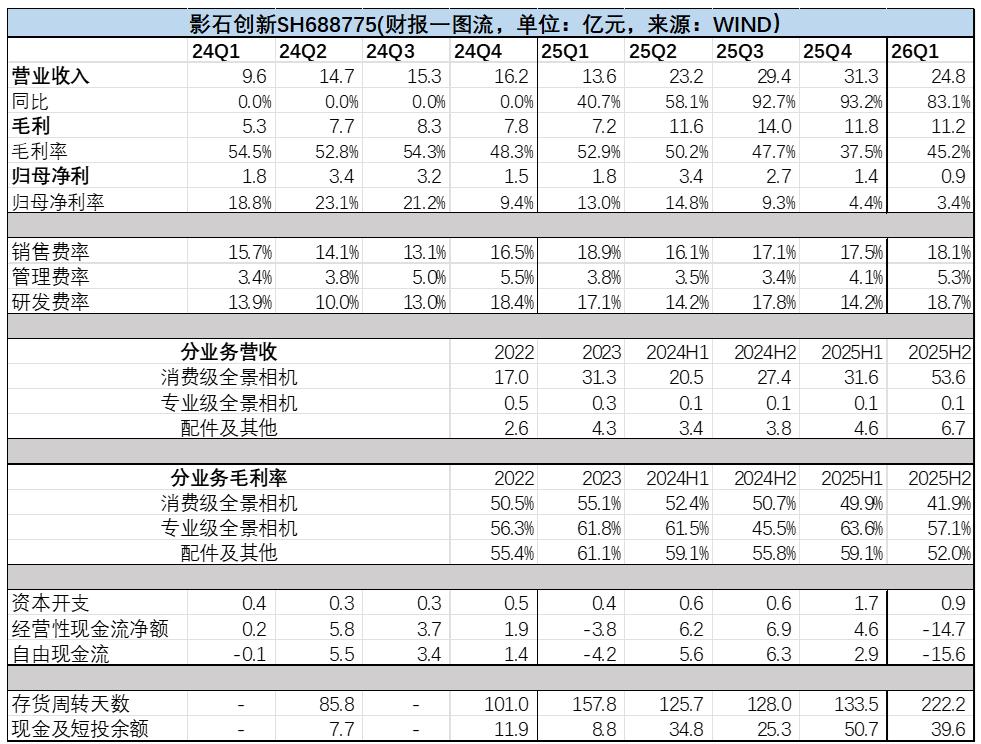
Based on this, let's review this drone imaging war using Insta360's fundamental data. (The one - page financial report is shown in the following picture, in billions of yuan, the same below)
First, let's state the conclusion. Our core view is that the current intensity of the drone imaging war has exceeded that of the food delivery war at its peak last year. Similarly, there is no obvious winner in this battle.
1. Insta360's revenue growth rate has been very impressive. The prosperity of its content ecosystem proves that as long as the company iterates its products following the logic of making high - end technology accessible to the general public and providing high - quality products, the market prospects are very promising.
2. The decline in gross profit is due to two reasons. On the one hand, it is because of cost factors (rising raw material prices). On the other hand, the gross profit margin of consumer - grade products has declined at a faster rate, which proves that high - value digital products such as drone imaging equipment are not immune to price wars.
3. The cost control effect is quite mediocre. The all - around battle between Insta360 and DJI in terms of talent, channels, and supply chain for imaging equipment and drones has affected Insta360's fundamental performance in all aspects.
4. Chinese manufacturing has suffered a lot from low - profit margins. In the field of imaging equipment, which offers an opportunity for overtaking on the curve, it is necessary to tell an attractive story. Whether it can engage in differential competition and form a differentiated product strength is the core factor for the market to give a valuation.
The dividend period of making imaging equipment accessible to the public: high revenue growth proves the industry's potential
Insta360's revenue curve in recent years is a standard steep parabola.
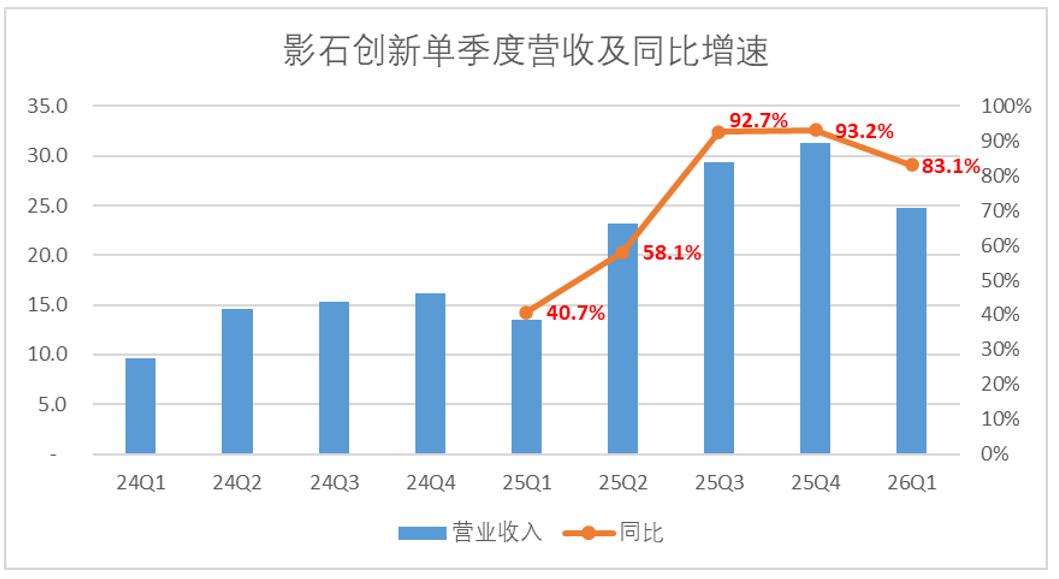
In the first quarter of 2026, Insta360 recorded a revenue of 2.48 billion yuan. As it is the off - season for traditional imaging equipment consumption (the product replacement cycle of competitors), achieving a year - on - year growth rate of 83.1% in a single quarter is actually a very good performance.
Since Q1 2025, the single - quarter growth rates have been 40.7%, 58.1%, 92.7%, and 93.2% respectively, with almost every quarter achieving nearly double - digit growth.
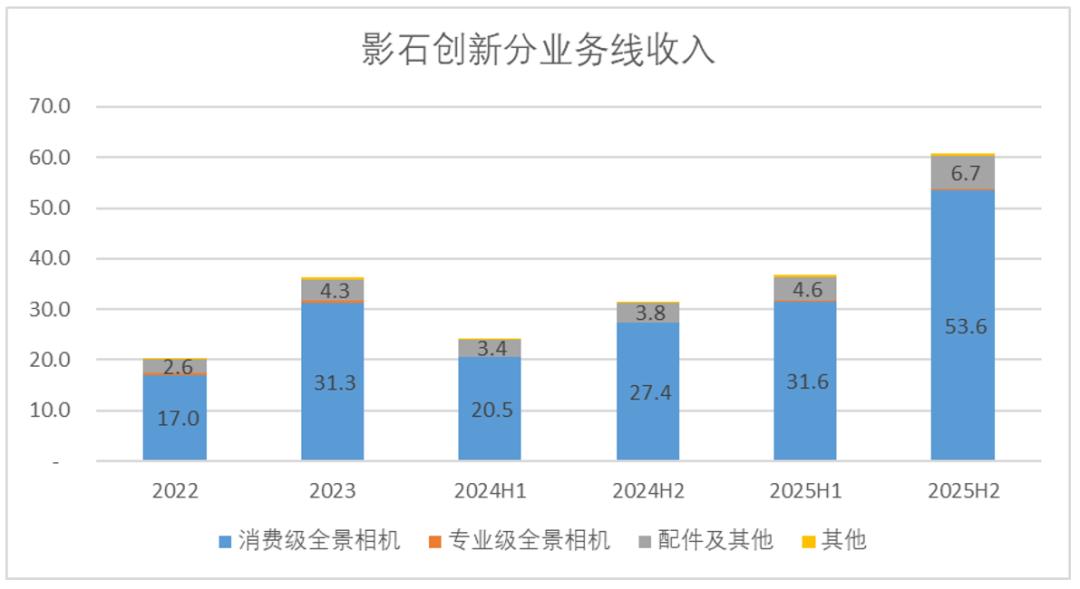
For Insta360, it benefits from DJI's advanced market education. In terms of product categories, the consumer - grade panoramic camera still has the fastest growth rate. From the product line perspective, the core products contributing to the growth are the Insta360 X5, Insta360 X4 Air launched last year, and the drone product, the Antigravity A1.
Of course, this market is expanding rapidly. The global handheld smart camera market shipped 16.65 million units in 2025, a year - on - year increase of 83%; the sales volume exceeded 46.1 billion yuan, a year - on - year increase of 86%.
IDC predicts that the market size is expected to exceed 40 million units by 2030, with a compound annual growth rate of nearly 20% over five years. The shipment volume of action cameras exceeded 8 million units, a year - on - year increase of 61%; the shipment volume of panoramic cameras exceeded 2.5 million units, a year - on - year increase of more than 50%; the shipment volume of gimbal cameras increased by more than 100% year - on - year.
In the content creation industry, especially in the fields of short - videos, Vlogs, and live - streaming, there has been a shift from "professional production" to "ordinary people's production" in the past three years. Therefore, the core logic of product iteration has become very clear: professional output with easy - to - operate features. Making the sensor larger, the anti - shake function more stable, and the image quality more refined are the core of the competition.
Both DJI and Insta360 are well aware of this, and their product iteration logic follows this path. As long as this core logic remains unchanged and the ecological prosperity of the video content track remains the same, the market will continue to expand. So, in terms of revenue, both Insta360 and DJI are facing a track with relatively strong growth certainty, and investors don't need to worry too much about the single - digit changes in market share.
Market competition + rising raw material prices: Insta360's profit margin is only 3.4%
The profit - side data is the core indicator that best reflects the intensity of competition in the imaging equipment track at present.
In terms of gross profit, benefiting from the entry threshold of imaging equipment, the overall gross profit margin baseline of imaging equipment is not low compared to other digital products. However, Insta360's gross profit margin in Q4 2025 was only 37.5%, a year - on - year decrease of 1080 basis points and a quarter - on - quarter decrease of 1020 basis points. In the first quarter of this year, it rebounded slightly due to the reduction of subsidies, but it was still 770 basis points lower than the same period last year.
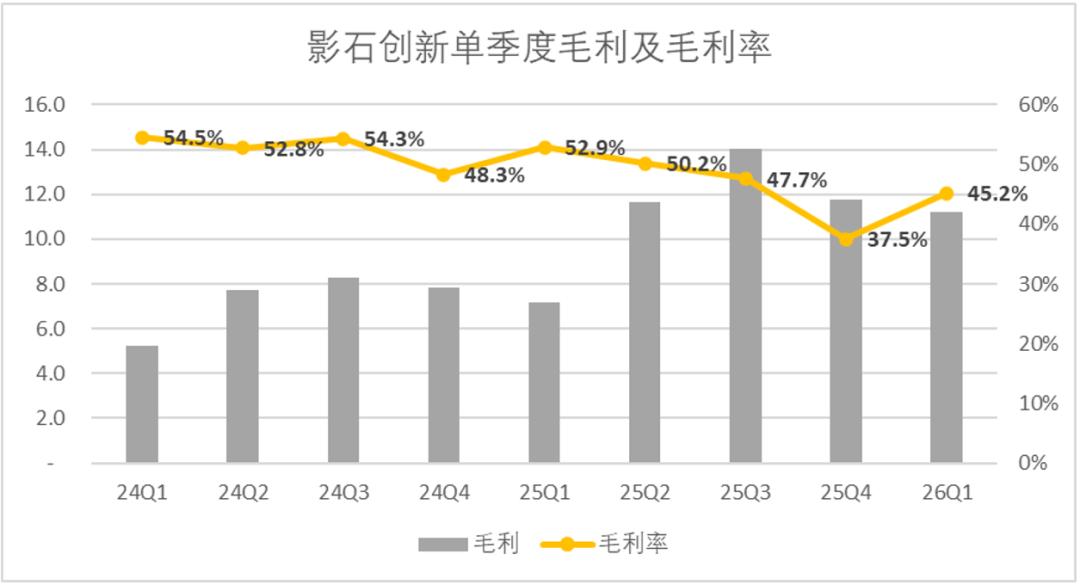
The significant decline in the gross profit margin for two consecutive quarters made Insta360's boss, Liu Jingkang, sit up and take notice. In the "Letter to Shareholders" released by Liu Jingkang during the annual report season, he emphasized that the decline in profit due to rising raw material prices (global supply chain) was inevitable. However, he also firmly stated that he would not be affected by short - term profit fluctuations and would continue to increase investment.
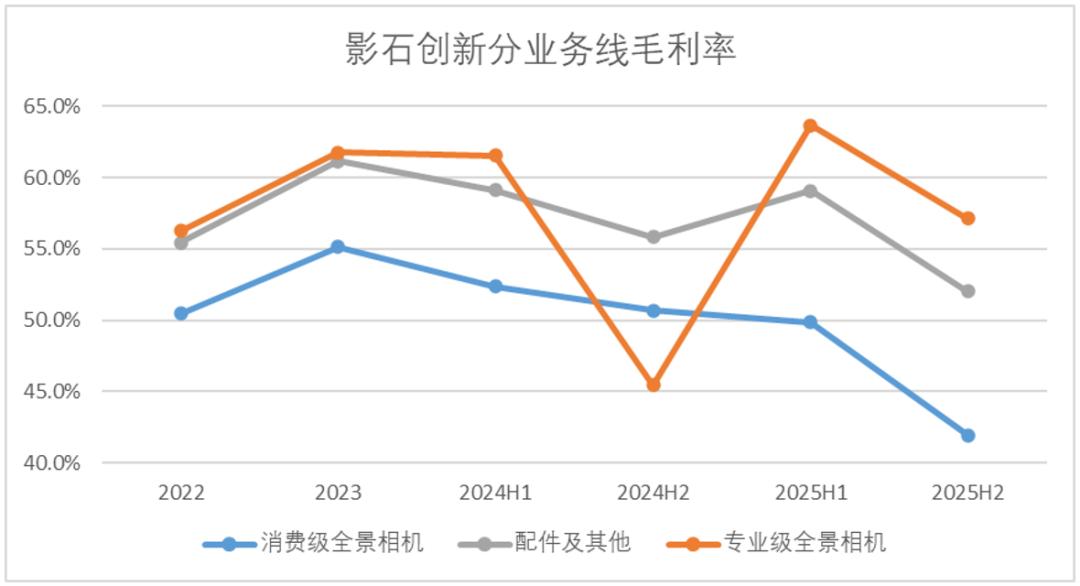
Looking at different products, we can see that both consumer - grade and professional - grade imaging products experienced a significant decline in gross profit margin in the second half of last year, which was indeed affected by the supply chain. However, the decline rate of consumer - grade products is much higher than that of other products, and it has been on a downward trend since 2024, which proves that the impact of price wars is more fatal than supply chain costs.
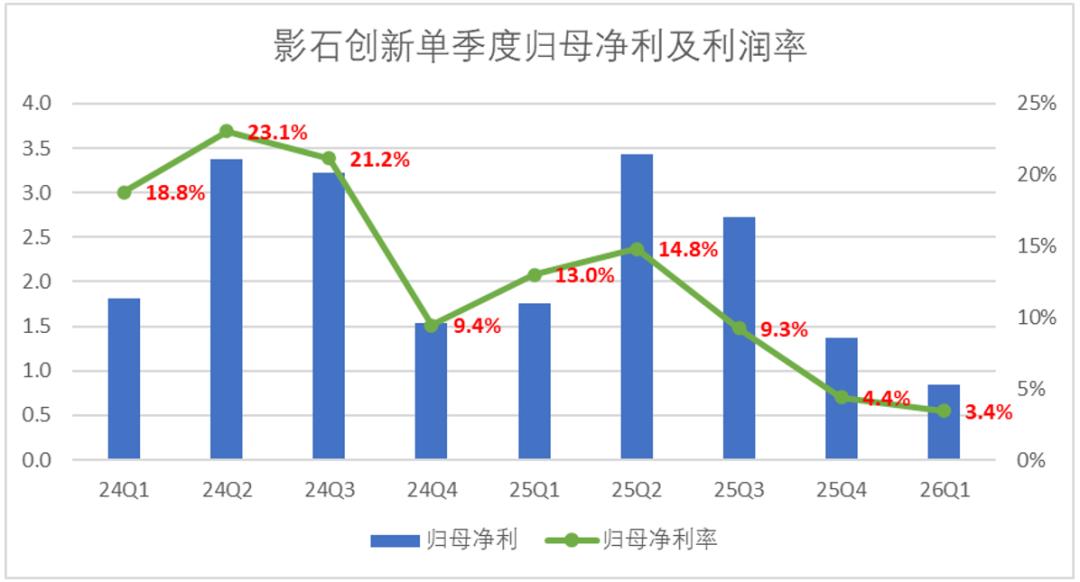
Overall, as of the first quarter of this year, Insta360's single - quarter net profit attributable to the parent company was less than 100 million yuan. The overall net profit margin attributable to the parent company has dropped from a high of 14.8% in the fourth quarter of last year to only 3.4%, which is lower than that of most small household appliance and kitchen appliance companies.
The three - item expense ratio has soared, R & D investment has nearly doubled, and all R & D expenses are expensed
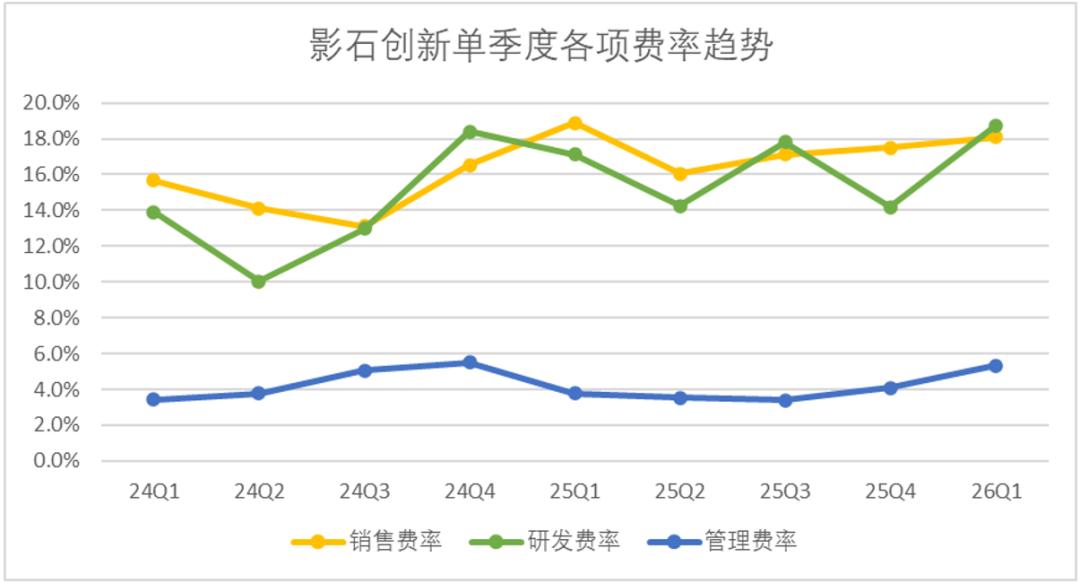
Another major reason for the decline in the net profit margin attributable to the parent company is that since the competition in the drone imaging equipment market intensified last year, Insta360's three - item expense ratio has increased significantly. In the first quarter of this year, Insta360's sales expense ratio was 18.1%, a quarter - on - quarter increase of 60 basis points. Meanwhile, the total sales expenses in 2025 reached 1.68 billion yuan, a net increase of 850 million yuan compared to the same period in 2024, almost doubling.
The management expenses are also at a high level. In the first quarter, Insta360's management expenses reached 132 million yuan, a record high for a single quarter. The overall management expense ratio reached a relatively high level of 5.3%, a quarter - on - quarter increase of 120 basis points and a year - on - year increase of 150 basis points. Even though the revenue scale decreased quarter - on - quarter, the company did not choose to reduce internal cost expenditures.
The most remarkable is the R & D expenses. In the first quarter, the R & D expenses reached 470 million yuan, doubling year - on - year. The R & D expense ratio was 18.7%, a year - on - year increase of 160 basis points and a quarter - on - quarter increase of 470 basis points. Nearly 20% of the revenue was directly invested in R & D, which is higher than that of many Internet companies.
In 2025, the total R & D expenses reached 1.53 billion yuan, a net increase of 750 million yuan, nearly doubling. What's more interesting is that Insta360 expensed all R & D investments, with not a single cent converted into intangible assets on the balance sheet. This is, of course, the most conservative and accounting - standard - compliant way of handling. For a newly listed company, such a strict expensing treatment can make the financial statements stand the test of time and avoid being forced to make impairment provisions in the future due to changes in the technology route. From this perspective, Insta360's financial treatment is beyond reproach.
Of course, the accounting standards allow the capitalization of development expenditures that meet specific conditions: technological feasibility, a clear market, and the ability to generate future economic benefits.
Insta360's choice to expense all R & D costs is either an active act of prudence or a passive act of helplessness. Many R & D projects are still in the high - risk research stage, and the path for results transformation is not clear.
Perhaps at least the auditors dare not confirm that they meet the capitalization conditions. Each of the drone project, panoramic gimbal chip, and AI algorithm iteration is a money - burning black hole, but whether they can form a sustainable competitive advantage is still uncertain. In the current highly competitive environment, Insta360 needs to get some asset returns from its high - intensity R & D investment; otherwise, the ROE will continue to decline, directly affecting investors' confidence.
A full - scale war from talent, channels to the supply chain
From every aspect of Insta360's fundamentals, we can see the intensity of this drone imaging equipment war. If the food delivery war was a three - way competition among platforms, merchants, and riders, for the drone war, in addition to price and product competition, there is also fierce competition in terms of talent, channels, and the supply chain.
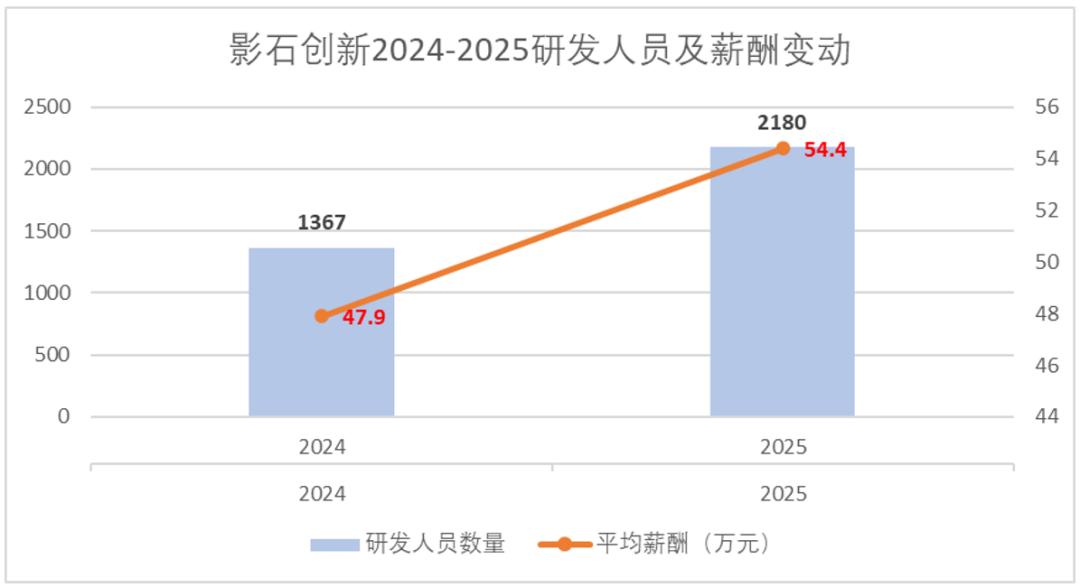
In terms of talent, as mentioned earlier, Insta360's expense expenditure has increased significantly, and all expenses are expensed. From the personnel structure, we can see that part of the cost is used for "talent poaching". In 2025, the number of R & D personnel at Insta360 reached 2,180 person - times, a 60% increase compared to 2024.
Moreover, against the backdrop of cost - cutting and efficiency - improvement, the salaries of Insta360's R & D personnel have increased significantly. In 2025, the average annual salary per person reached 544,000 yuan, a 13.6% increase compared to 2024.
The battle for channel positioning