Exclusive by 36Kr Hard Krypton | Marine embodied intelligence firm SAILOGIC secures a record 1 billion yuan funding round, with Zhu Xiaohu backing the deal
Author | Qiu Xiaofen
Editor | Yuan Silai
Yingke learned that the marine embodied intelligence company "Shihang Intelligence" has completed its Series A financing, with the financing amount exceeding 1 billion yuan. This is also the largest single-round financing in the global marine robot field to date. This round of financing was invested by the industrial investment funds of two chip companies, "Moore Threads" and "Kunlunxin", namely Shanghe Momentum Fund, the Singaporean state-owned investment platform Vertex Growth, and the listed company Dayang Motor, among other investors.
In addition, GSR Ventures also increased its investment in this round. This is already the fifth round of investment in "Shihang Intelligence" by its founder, Zhu Xiaohu. Old shareholders such as Vertex Ventures China, China Media Capital, and Changshi Capital also all oversubscribed.
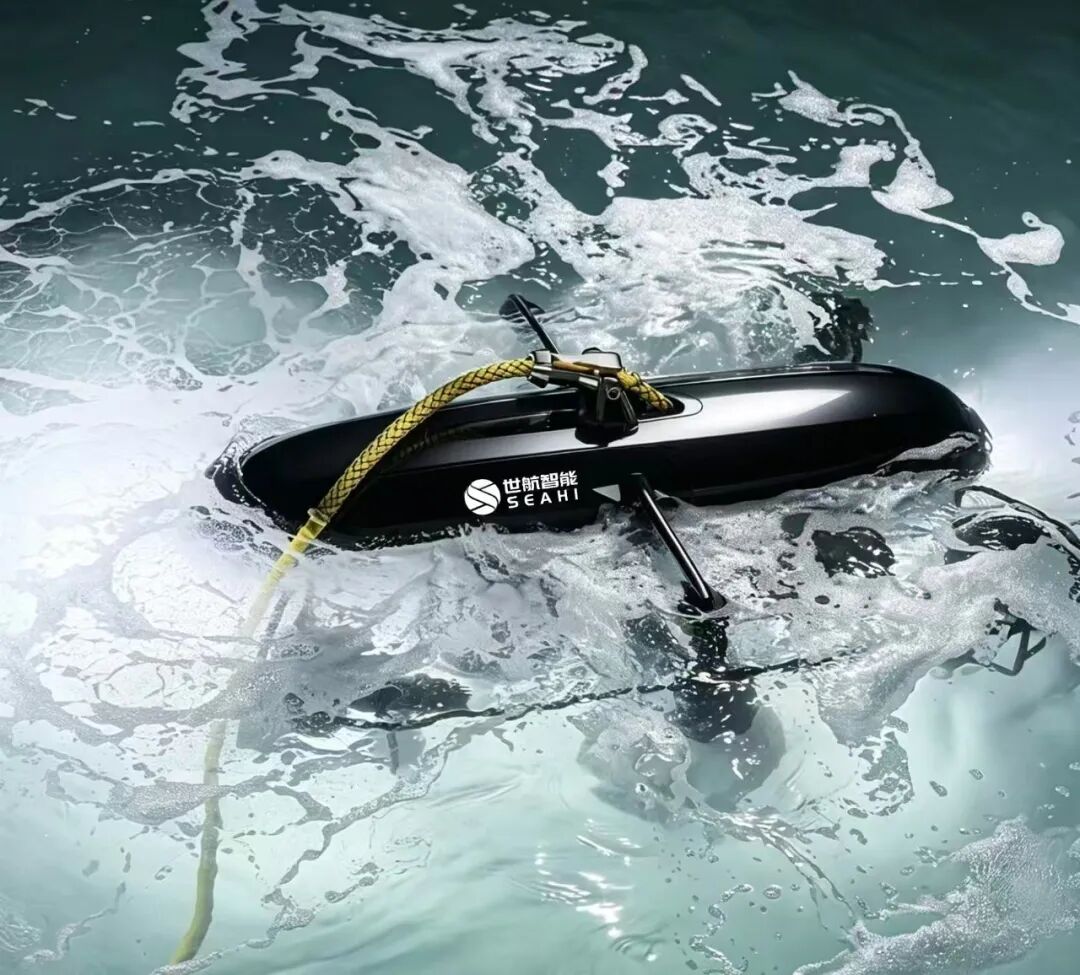
Chen Xiaobo, the founder and CEO of "Shihang Intelligence", is an alumnus of Harbin Engineering University born in 1989. He has long been deeply involved in the field of underwater robots. At the age of 28, he won the First Prize of the National Defense Science and Technology Progress Award, becoming the youngest recipient of this award. He also led the research and development of the first commercial underwater cleaning robot in China.
(Image source/Enterprise)
"Shihang Intelligence" revealed to Yingke that this round of financing will be mainly used for core technology research and development, global market expansion, and industrial chain ecosystem construction, further promoting the large-scale application of marine robots in complex underwater scenarios.
Different from relatively standardized environments such as factories and warehouses, the ocean has long been regarded as one of the most difficult scenarios for robot applications.
In the underwater environment, robots need to face multiple challenges such as low light, high turbidity, complex ocean currents, limited communication, high pressure, and corrosion simultaneously. This means that marine robots not only need to have a stable mechanical structure and motion control ability but also be able to complete perception, judgment, and autonomous operations in complex environments.
In the past, a large amount of underwater operations still highly relied on professional divers and large-scale equipment, which had problems such as high cost, high risk, and limited efficiency.
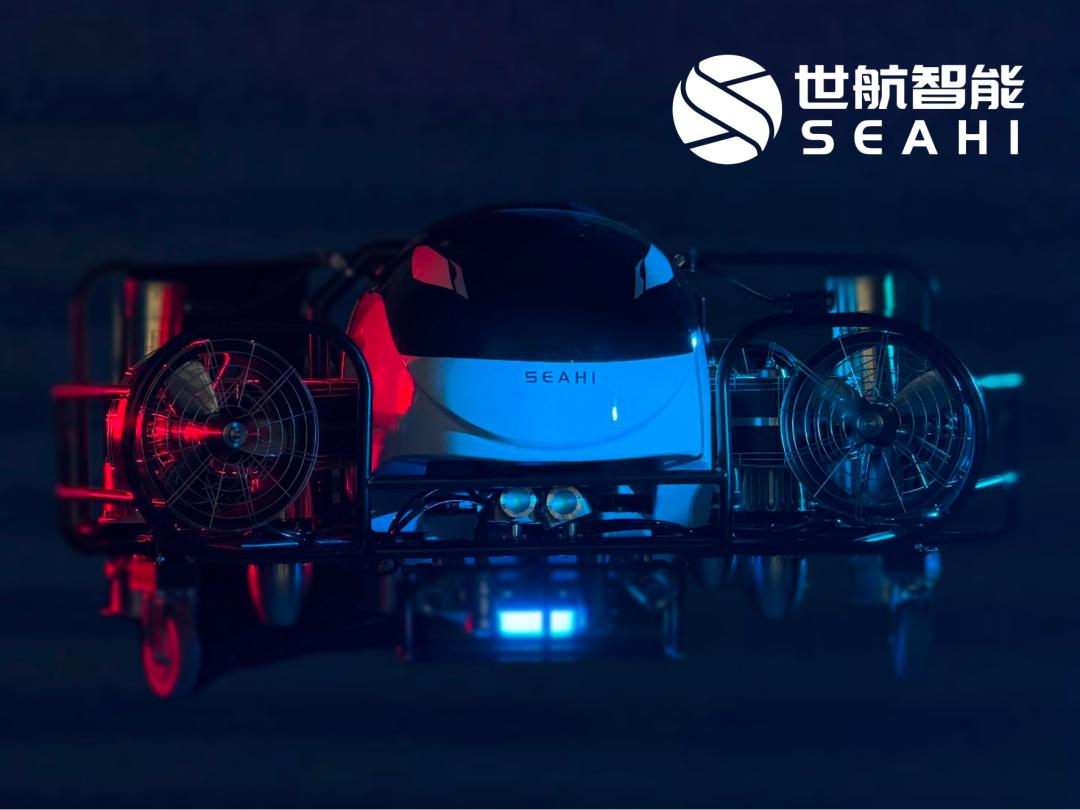
According to the introduction of "Shihang Intelligence", it has long been independently researching and developing around the underlying capabilities of marine robots, and its core technologies cover six core systems, including power, control, sensing, navigation, sealing, and deployment.
(Image source/Enterprise)
It is understood that the robots of "Shihang Intelligence" already have the ability to operate at all depths from 0 to 10,000 meters and in all degrees of freedom. They can perform complex actions such as moving forward, backward, sideways, and rolling in the underwater three-dimensional space and support functions such as autonomous navigation and multi-robot collaborative operations. As of now, the robots of "Shihang Intelligence" have been applied in scenarios such as ship cleaning, underwater security, offshore wind power, marine ranches, and seabed inspections.
The company revealed that in the first half of 2026 alone, the order amount obtained by "Shihang Intelligence" has exceeded 1 billion yuan.
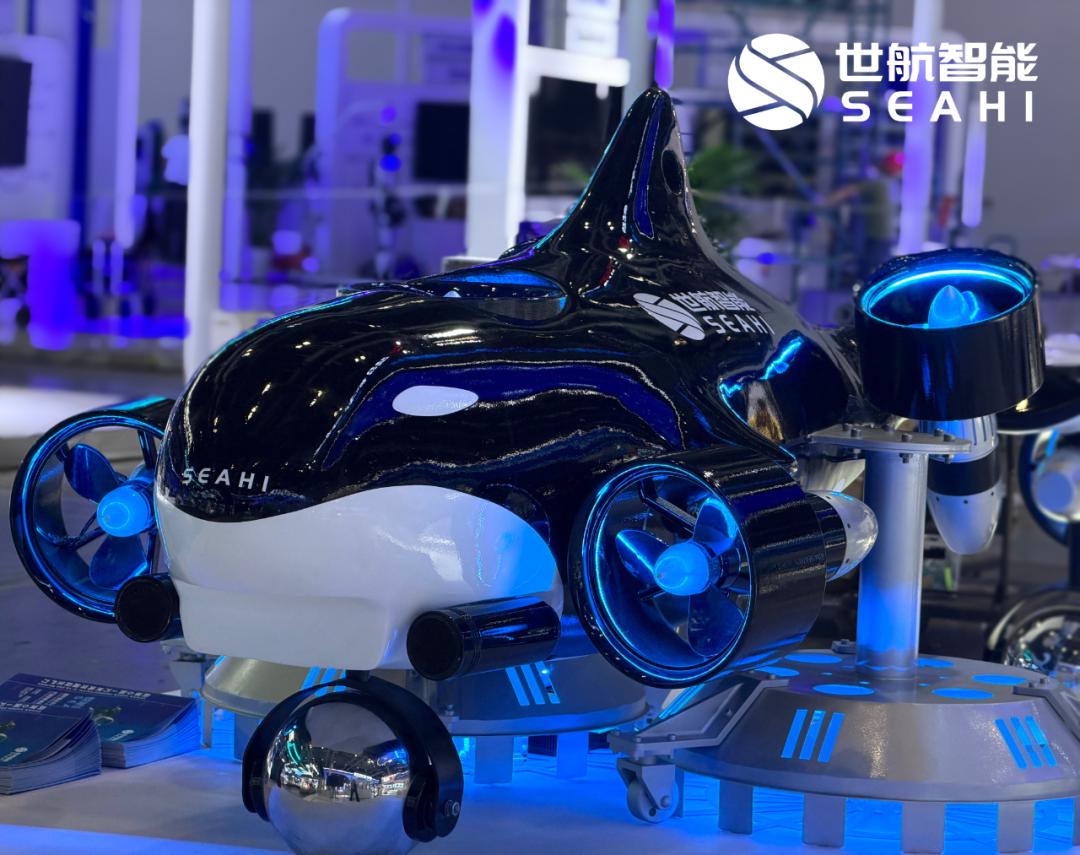
Among them, the "Orca Robot" under "Shihang Intelligence" has been applied in leading shipping companies such as China Merchants Energy Shipping and COSCO Bulk Carrier. It has completed more than a thousand large ship maintenance operations in total. Previously, it also led the formulation of China's first "Operating Regulations for Underwater Cleaning Robots" standard and won the First Prize of the Science and Technology Progress Award of the China Institute of Navigation in 2025.
In addition to the commercial layout, "Shihang Intelligence" also continues to lay out core technologies. In April this year, "Shihang Intelligence" released the marine embodied large model "Cangqiong CEORION" - Different from traditional underwater robots that rely on manual remote control or preset programs, Cangqiong attempts to enable robots to have the ability to perceive, understand, and execute autonomously.
Chen Xiaobo, the founder and CEO of "Shihang Intelligence", told Yingke that "Cangqiong CEORION" uses a unified end-to-end architecture, integrating environmental perception, task understanding, and action generation into the same model, and training with real operation data and simulation data. Currently, "Cangqiong CEORION" has built a marine world model based on millions of hours of commercial operation data and continues to iterate and optimize through real tasks.
This means that marine robots equipped with "Cangqiong CEORION" no longer need to switch multiple models for different tasks and can cover 12 major categories of underwater operation scenarios such as inspections, detections, cleanings, grabbers, cuttings, weldings, explorations, search and rescues, and emergencies.
Among them, in the simulation test, the task success rate of "Cangqiong CEORION" exceeds 90%, and the success rate of precise control positioning and grabbing exceeds 90% - reaching the operation level of professional diving operators. In addition, in the face of never-before-seen sea area environments, water quality conditions, light changes, and different robot platforms, the zero-shot adaptation ability of the "Cangqiong CEORION" model exceeds 70%.
In addition, the biggest difference between the marine scenario and the land scenario lies in the difficulty of reasoning - visual information is often affected by seawater turbidity, light attenuation, and suspended particles. Therefore, the model needs to integrate multiple types of perception information simultaneously and have complex physical reasoning ability to make operation decisions.
In the large model architecture of "Cangqiong CEORION", "Shihang Intelligence" has built in a physical reasoning module, enabling the model to predict potential risks and optimize decisions before action execution, reducing the collision accident rate by 80% - this means that even in a weak communication or even no communication environment, the robot can still autonomously complete task planning and execution.
(Image source/Enterprise)
In the first half of this year, Shihang Intelligence was also selected for the National Underwater Hull Inspection and Cleaning Program of the Maritime and Port Authority of Singapore, becoming the core technology partner of this national-level project.
These implementation progress means that marine robots are moving from single-point project verification to large-scale application. The real operation scenarios not only bring order revenues to the enterprise but also continuously precipitate high-value operation data, promoting the continuous improvement of robot capabilities in the cycle of "operation - data - model".
Chen Xiaobo, the founder and CEO of "Shihang Intelligence", told Yingke that the company will continue to invest in the core technologies of marine robots, marine embodied intelligence models, and global application scenarios, promoting the application and implementation of marine robots in more high-risk, high-difficulty, and high-value underwater operations.
Homepage image source | Provided by the enterprise
Typesetting | Fan Xinya

Welcome to communicate