From star-making to talent sharing, are platforms and artists loosening their bonds?
In recent days, the official announcement of "Conquering Jade" was made. Sharp - eyed viewers easily spotted the key points: Zeng Shunxi in the middle of the poster and the Youku logo below made some viewers wonder: Has the "Prince of iQiyi" switched platforms?
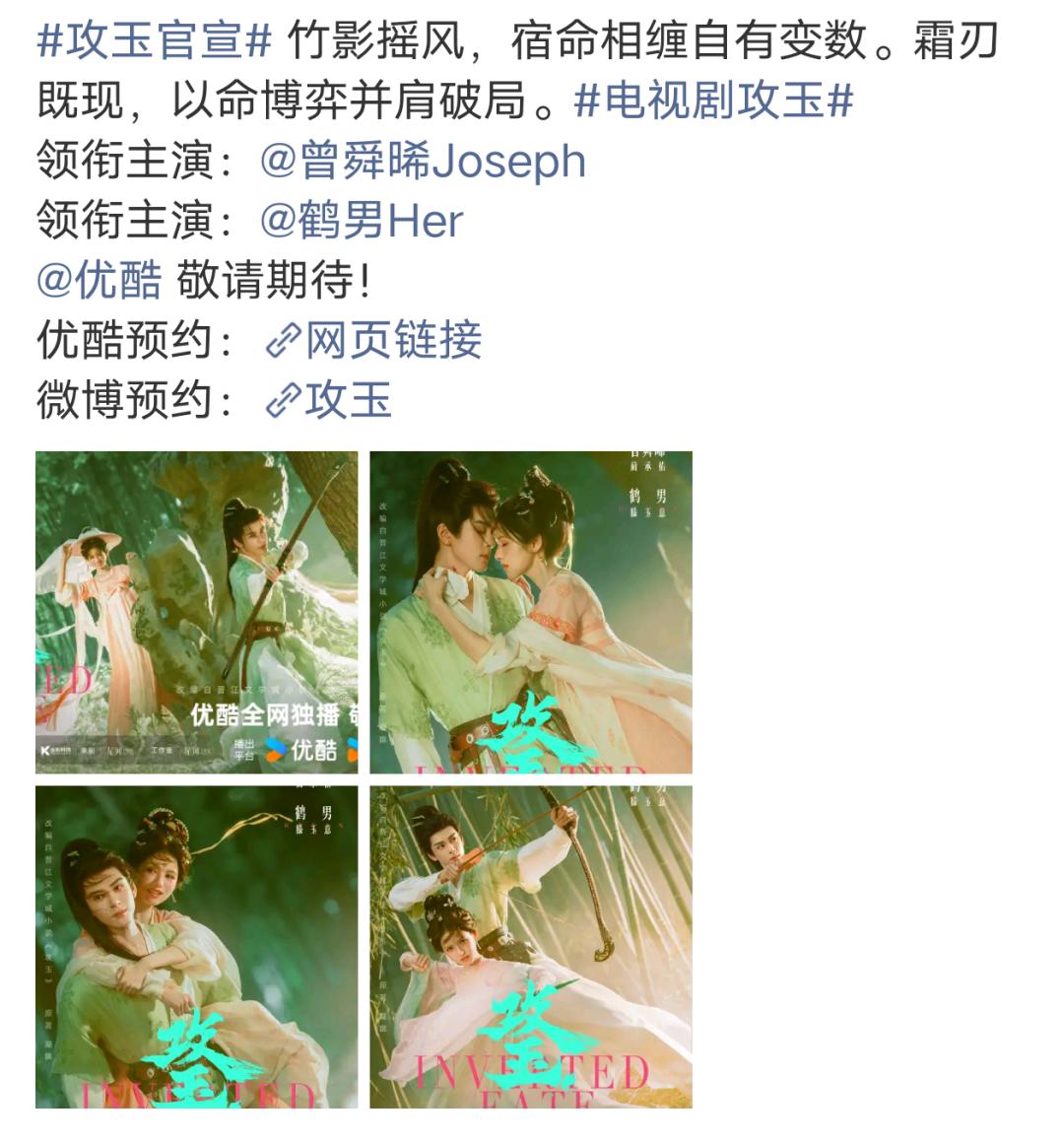
There is a series of factual evidence to prove the strong connection between Zeng Shunxi and iQiyi. Many of the dramas he starred in before, such as "Lotus Tower", "Solitary Boat", "The Farming Chronicles", "Seven Nights of Snow", and "River of Immortals", were all produced and exclusively broadcast by iQiyi. In particular, "Lotus Tower" helped Zeng Shunxi gain some popularity and take his acting career to the next level.
Digging deeper, he is an artist of "Super Upward", a wholly - owned subsidiary of iQiyi. On the other hand, the female lead, He Nan, clearly belongs to the Youku camp. She used to play supporting roles in major Youku dramas, and this is her first time taking on the lead role. In this way, it's like the "Prince of iQiyi" is promoting a potential "Princess of Youku". An artist from iQiyi is going to the opposite platform to support a new artist. The boundary between platforms for artists is becoming blurred.
Times have changed. In the past, the artists affiliated with iQiyi (Tao), Tencent (E), Youku (Ku), and Mango TV were hot topics. Except for a few top - tier stars with strong decision - making power, most young actors and actresses were more or less bound to a certain platform. However, in the past one or two years, with the changing situation, as the number of projects decreases and long - form video platforms start to cooperate on joint broadcasts, the relationship between artists and platforms has become more and more delicate.
From signing contracts to buying shares, and then to sharing?
"Conquering Jade" is not an isolated case.
Take a look at the previously announced "Return of the Good Times". Li Yunrui, who has long been promoted by Tencent Video, stars as the lead in a Youku - exclusive ancient idol drama, paired with Liu Xiening who is signed with Orca Entertainment. There is also "The Record of the Wrong World", in which Ao Ruipeng, a promising young actor favored by iQiyi, takes on the male lead in a Tencent Video drama, and his co - actress is Zhang Miaoyi, a young actress from the Tencent camp.
Four or five years ago, such a cast would have been almost impossible. In the past, platforms were willing to spend a lot of money to lock in their own artists with 5 - to 10 - year long - term contracts, mass - producing exclusive "Princes" and "Princesses" and establishing strict platform - based camps. However, over the years, as the number of dramas on long - form video platforms has decreased and they have started to cooperate on joint broadcasts, the exclusive binding model between platforms and artists has begun to loosen comprehensively. Artists are filming across platforms and collaborating across different systems. The former "Princes" and "Princesses" are breaking free from the constraints and flying freely. Some are happy, while others are worried.
From 2017 to 2024 was the peak period of the "exclusive in - house" model of long - form video platforms. iQiyi relied on its wholly - owned subsidiary, Fruit Entertainment. Tencent Video relied on Penguin Brokerage and had deep investments in multiple brokerage companies. Youku operated Kuyang Entertainment and Xiaolanhu Entertainment. All three platforms would sign a large number of new - generation artists with exclusive full - term contracts and buy shares in them. Netizens jokingly called them "Princes" and "Princesses".
These contracts often come with strict constraints. Artists must give priority to projects of their own platform during the same time slot. They can directly reject invitations from rival platforms for leading roles. If they breach the contract, they need to pay a high penalty. In return, the platforms continuously provide their in - house artists with annual S - level dramas, regular appearances in variety shows, C - positions at galas, and brand - replacement resources.
Among the platforms, iQiyi was the first to take this step and seems to be the most loyal. Besides Chen Zheyuan, the well - established "Prince" of iQiyi, Zeng Shunxi, Cheng Lei, and Zhang Linghe have also been called "Princes of iQiyi". These four artists have their own characteristics, which shows that iQiyi has good judgment in selecting talents. The Fruit Entertainment and Super Upward where the former three are located are both wholly - owned subsidiaries of iQiyi.
In terms of resources, Chen Zheyuan has starred in 8 leading - role dramas, Zeng Shunxi in 7, Zhang Linghe in 6. Although Cheng Lei has been popular for a short time, he has also played the lead in 3 dramas and important supporting roles in 2 dramas on iQiyi. Except for Zhang Linghe, whose dramas are mainly concentrated in idol dramas, the other three also have some realistic - themed dramas, such as Chen Zheyuan's "Night and Dawn" and Cheng Lei's "Footprints".
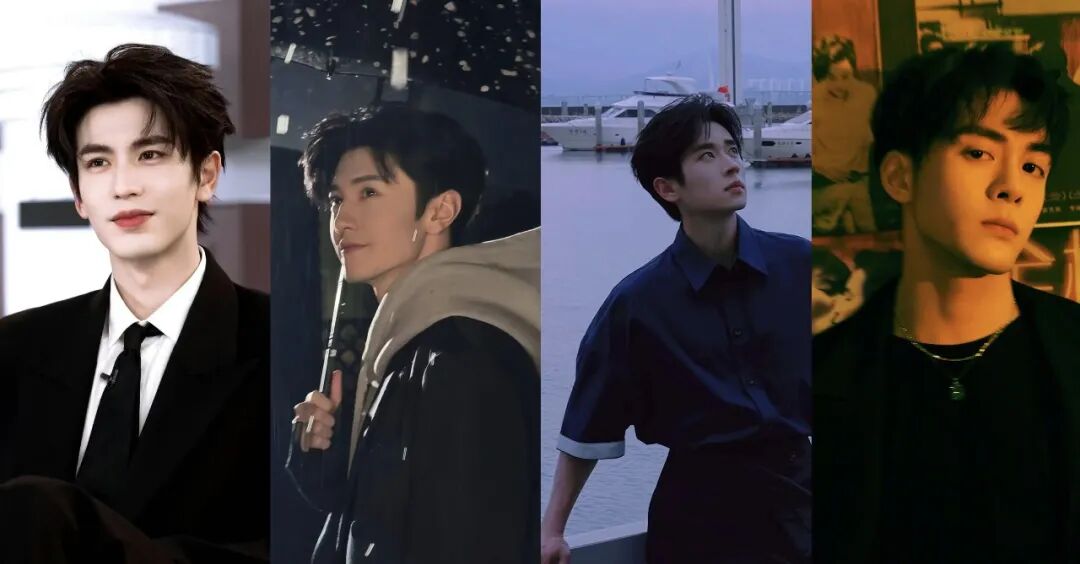
It can be seen that iQiyi used to be the ideal workplace for stars. It not only provided ancient - costume dramas to accumulate popularity but also offered resources for serious dramas to hone acting skills. In terms of the ability to spot talent, iQiyi ranks first. However, such a deep - binding relationship has always faced the "brokerage company dilemma". When an artist continues to rise and has more choices in scripts, the relationship is likely to loosen. Besides Zeng Shunxi mentioned at the beginning, after Zhang Linghe rose to the first - tier with dramas like "Cloud Feather" and "A Dream of Splendor", he also participated in Tencent Video dramas such as "Chasing Jade" and "Return of the Phoenix", successfully advancing to the super - first - tier.
Tencent Video is more like an investor. Except for some trainees who stood out in talent shows, it doesn't like to cultivate artists from scratch (maybe the cultivation was not successful). Instead, it prefers to invest in brokerage companies or sign multiple - drama contracts with artists during their rising period of popularity. It buys in large quantities at the low point and waits for the popularity to increase.
For example, after Xu Kai became popular with "Story of Yanxi Palace", all the top - tier ancient - costume dramas like "Love and Redemption" and "The Wanderer" were exclusively broadcast on Tencent Video. He has occupied the core male - lead position in Tencent's ancient - idol dramas for five consecutive years.
After Li Yunrui became well - known with "My Heroic Husband", Tencent Video quickly promoted him and continuously provided him with customized ancient - and modern - idol drama resources. He has starred in 5 leading - role dramas on Tencent Video. Even though some of them were not very popular, based on the popularity of "The Purple Phoenix", he is still on the list of potential ancient - idol young actors. Another example is Zhou Yiran. After he became a little popular with "Flying Towards You", he starred in 4 male - lead dramas on Tencent Video. Zhang Wanyi also starred in 4 Tencent Video ancient - idol dramas, including "Longing", after becoming well - known for his realistic dramas.
However, this way of "exploiting popularity" can easily make the audience feel aesthetic fatigue after the artists appear on the screen continuously. When the popularity is quickly consumed, their binding relationship with the platform will also loosen.
Compared with iQiyi and Tencent Video, there is less controversy about the "Princes" and "Princesses" of Youku. The reason is simple: Youku has always been independent - minded and doesn't like to bet on stars with much effort. Kuyang Entertainment and Xiaolanhu Entertainment, which belong to the former Alibaba Big Entertainment, mainly have mid - level artists. Li Hongyi has the most male - lead resources. He has starred in 6 male - lead dramas on Youku and has 3 more to be broadcast. He takes the cost - effective route. Yang Yutong has always been an important supporting actress in Youku dramas, such as Bai Hehuai in "The Legend of the Dark River", but the role didn't generate much discussion. She only has one upcoming female - lead drama, "Embracing the Radiance of Three Thousand".
Of course, Youku won't give up on popularity. Its way is to "pick the best". For example, after Gong Jun became popular with "Word of Honor", he was paired with Dilraba in Youku's "Love and Redemption", but he wasn't locked in. He then signed for "Fox Spirit Matchmaker" of another platform. Another example is Xiao Zhan's "The Hidden Sea Chronicles". Youku invited the top - notch director Zheng Xiaolong and successfully got the top - tier star to star in it, reaping a wave of high popularity.
However, after 2023, these binding relationships, whether tight or loose, have all loosened. Take Chen Zheyuan, the most in - house artist of iQiyi, as an example. He achieved a popularity boost with Youku's modern - idol drama "Secretly in Love", and then took on Tencent Video's ancient - idol drama "Dream Flower Court" and Mango TV's "A Promise of the Kingdom". Another example is Li Hongyi, who is deeply bound to Youku. He also starred in Tencent Video's revenue - sharing drama "Don't Disturb My Ascension". Although their brokerage contracts with the platforms are still valid, they have started to star in dramas of other platforms to "earn a living".
This means that platforms are even loosening the constraints on their in - house artists. Artists are changing from the fixed assets of platforms to liquid assets. The next step is almost to share the artist popularity pool.
From "contracting system" to independent survival for brokerage companies?
During the prosperous period of the domestic entertainment industry, the rapid expansion of self - produced dramas on long - form video platforms led to the rise of a number of brokerage companies deeply bound to the platforms. During the upward period of the industry, the core value of these brokerage companies did not lie in their market - oriented operation ability, but in continuously supplying artist resources to the platforms.
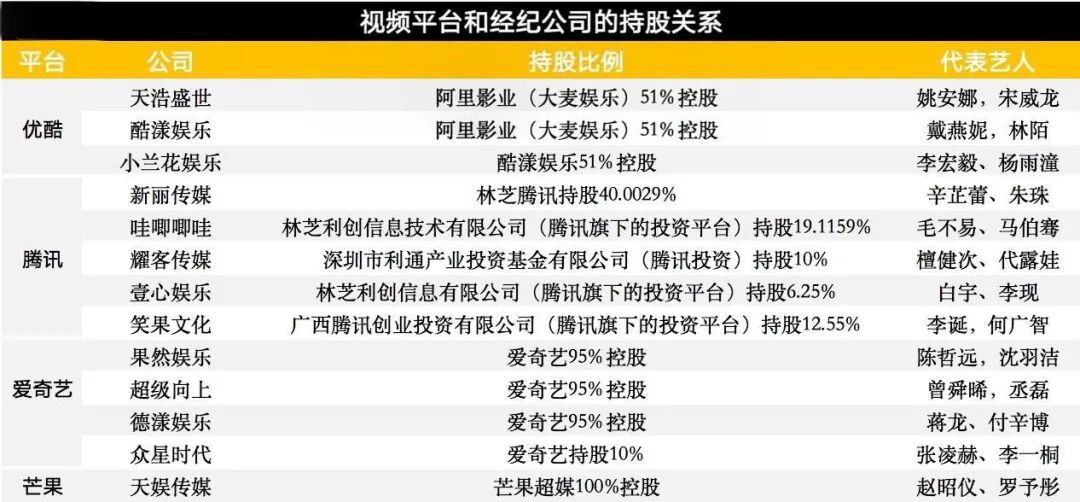
The platforms were responsible for content production and resource allocation, while the brokerage companies were responsible for artist cultivation and daily operation. The two sides formed a relatively stable internal cooperation relationship. In a sense, these companies were more like the "human resources department" or "artist outsourcing suppliers" in the platform's content industrial system. Their survival and development highly depended on the number of platform projects and resource investment.
However, this model was based on a premise: the platforms had enough drama production needs. Around 2020, major platforms increased their investment in self - produced content. Tracks such as ancient - idol, modern - idol, suspense, and realistic - themed dramas were fully developed, and there were sufficient project reserves. During this period, artists could be exposed and grow through internal platform projects, and their career paths were often deeply bound to the platforms.
However, as the industry entered an adjustment period, this logic is changing. On the one hand, during the cold winter of the film and television industry, long - form video platforms have been reducing costs and increasing efficiency, and the number of dramas has decreased significantly. On the other hand, intensified competition has concentrated high - quality resources on the top. Only a few artists can get top - tier projects. For a large number of brokerage companies that rely on platform support, the reduction of projects directly compresses their survival space.
In this context, the weak position of brokerage companies begins to show. In the past, they relied on platforms to obtain stable resources. Now, when platforms themselves are reducing investment, brokerage companies have to find new sources of income. If they still limit themselves to serving a single platform, both the exposure opportunities of artists and the profitability of the companies will be affected.
The most intuitive manifestation of this change is that the cross - platform flow of artists is becoming more and more common. In the past, platforms often hoped that their artists would give priority to projects of their own platforms to ensure the internal circulation of resources. But now, the platforms' obsession with exclusive binding has obviously weakened.
For brokerage companies, as long as they can help artists get more work opportunities and create higher profits, it no longer matters which platform the projects come from. Artists starring in dramas of other platforms are no longer regarded as a loss of resources but as a normal business behavior.
From the perspective of platforms, Chen Zheyuan, Cheng Lei, and Zeng Shunxi, who belong to iQiyi's subsidiaries, have all started to contact projects of other platforms and are no longer exclusively bound to iQiyi. From the perspective of companies, take Zhao Lusi as an example. In 2025, she terminated her contract with Yinhe Kuyu and established a new company, "Yiercansi". Although she belongs to Orca Entertainment, she has the autonomy in casting and can freely take on dramas across platforms. The brokerage company only takes a share of the income.
This trend is obvious. On the one hand, platforms are no longer "fully supporting" brokerage companies. On the other hand, top - tier artists are also "breaking away from platforms". Therefore, more and more platform - affiliated brokerage agencies are starting to expand into diversified businesses such as business, brand cooperation, short dramas, variety shows, and live - streaming to reduce their dependence on the drama resources of a single platform. For example, Yaoke has launched AI stars.
The past model of relying on platforms to "feed" projects is being replaced by a more diversified operation concept. Artists have become market resources flowing between different platforms, and brokerage companies are returning to their original role as professional managers to find the best solutions for artists.
From a more macro perspective, this is actually an inevitable result of the film and television industry's shift from incremental competition to stock competition. When platforms were expanding rapidly, the internal system pursued efficiency, and the binding relationship helped reduce transaction costs. However, after the industry entered a cooling - off period, the efficiency of resource flow gradually exceeded the internal closed - loop circulation. Platforms are no longer able to support all affiliated companies, and brokerage companies can no longer rely on a single platform for survival. The relationship between the two sides is changing from "dependency" to "cooperation".
The value of artists is being split
In recent years, the star - making model of platforms has gradually shown its limitations. The assembly - line - style cultivation and mass - production mechanism can quickly produce "up - and - coming" artists, but it is difficult to cultivate top - tier stars and acting talents with real market appeal. A large number of artists have been placed in the "reserve" system of idol dramas for a long time, and the audience's fatigue with the "same actors in different dramas" is increasing. The "casting like in a dating show" has also been widely criticized.
As platforms reduce drama production and resources shrink, the drawbacks of this model are further magnified. For platforms, artists are no longer just the products of the star - making project but assets that can be quantitatively evaluated and flexibly allocated. The value of existing artists is being recalculated and split. They not only play the role of maintaining fans' consumption but are also used for resource exchange between different projects and platforms to maximize profits.
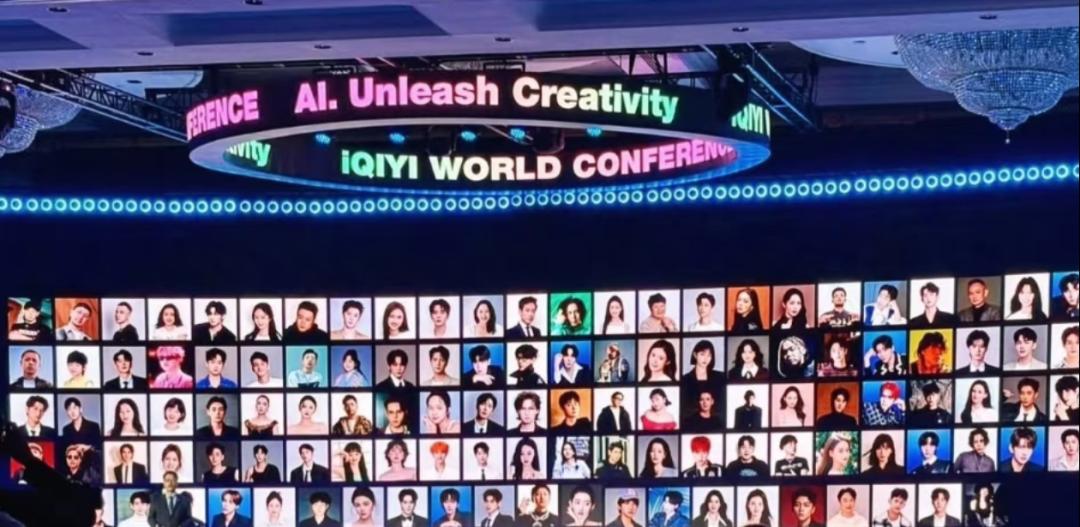
The past star - making system of platforms was essentially a "whole - package" artist production logic. However, as the industry enters a contraction period, this system is being disassembled into three independent value levels.
First, the ability to carry a drama is being split. Actors are no longer bound to a single platform for a long time. The annual full -