Tongyi team loses core talent again? Zhou Jingren, Alibaba's chief scientist, reportedly resigns
It is rumored that Zhou Jingren, a partner and the chief scientist of Alibaba, recently submitted his resignation application.
On June 8, he was just appointed as Alibaba's chief scientist. That means only six days have passed since he took up the new position.
After the news spread, Alibaba did not respond to the media's inquiries. The industry generally speculates that this so - called "promotion" is likely a case of "being promoted in name but demoted in reality".
Zhou Jingren is one of the key figures in Alibaba's AI business. He was admitted to the Juvenile Class of the University of Science and Technology of China in 1994. He obtained a doctorate in computer science from Columbia University in the United States in 2004. Subsequently, he served as a R & D partner at Microsoft and led the development of big - data computing platforms that support core products such as Bing Search, Office, and Windows.
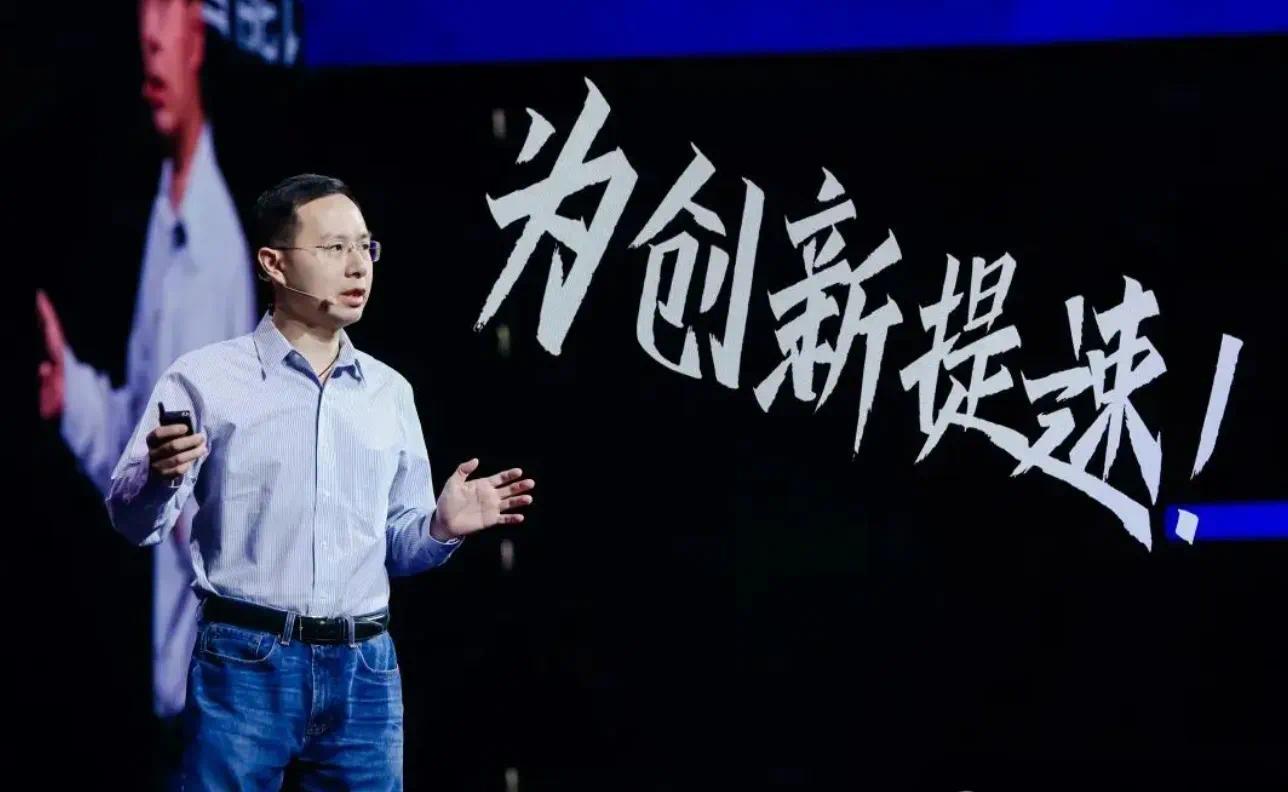
In 2015, he joined Alibaba. In the following ten years, he successively served as the chief scientist of Alibaba Cloud, the CTO of Alibaba Cloud Intelligence, and the deputy dean of DAMO Academy.
His most important task was the Tongyi large - model project.
He built a team from scratch and led them to develop the Qwen series. With his and his team's efforts, the open - source Qwen series of Alibaba has been gaining more and more presence among global open - source models. By October 2024, the number of its derivative models had exceeded 80,000, surpassing Meta's Llama series during the same period. With this achievement, Zhou Jingren was selected as a partner of Alibaba in December 2025, becoming one of the few senior executives with a pure technical background to enter Alibaba's top decision - making level.
If we look at a longer time frame, the rumor of Zhou Jingren's departure did not come out of the blue. Since 2026 alone, his position has changed three times.
In March, Lin Junyang, the technical leader of Qwen, left, and Zhou Jingren temporarily took over the management of Qwen. On April 8, he was appointed as the group's chief AI architect and was in charge of the Tongyi large - model division at the same time. On June 8, his title was changed to chief scientist, and he was assigned to the AI Future Research Institute to conduct frontier exploration without being involved in specific business.
On the surface, each transfer was described as a more important strategic deployment. However, a notable detail is that with each job transfer, Zhou Jingren has moved further away from the real product battlefield. From being in charge of the Tongyi large - model division to moving to the AI Future Research Institute for frontier exploration, many industry insiders believe that this means he no longer holds real power over specific business.
Especially in the adjustment on June 8, Alibaba transferred the core model R & D team of the Tongyi division to the newly established Token Foundry division, which is directly managed by CEO Wu Yongming. It's as if Zhou Jingren's most core "troops" were taken away, and then he was given a "highest academic title".
If Zhou Jingren really leaves, he will be the fourth core figure to leave the Tongyi Qianwen team in 2026.
In March this year, Lin Junyang, the technical leader, left a message on social media saying "me stepping down. bye my beloved qwen" and then confirmed his departure. Immediately afterwards, Yu Bowen, the post - training leader, and Li Kaixin, a core member, also left one after another.
In just a few months, a team that made Qwen a global star open - source model has been torn apart.
Putting these things together, the departure of core backbones, internal differences in the commercialization path, and the repeated job transfers of a key figure within half a year are no longer just simple personnel changes. It exposes the most headache problem for a large company during the AI transformation period: how to choose between research - driven development and commercial realization?
Alibaba can afford to lose people, but it can't afford to lose time.
So far, Alibaba has not responded to the rumor of Zhou Jingren's departure. Zhou Jingren himself has also remained silent.
But regardless of whether he leaves or not in the end, one thing is clear: the internal game within Alibaba about how to develop AI is far more intense than what is seen from the outside.
Source: Xinghe Business Observation