Honda has seen its sales plummet by 1 million units over five years, falling behind in the Chinese market, with long-serving company veterans pressuring the top leadership.
Honda's president is being pressured to step down, and the former president can't sit still.
According to a report by Reuters on June 12, there has been a high - level upheaval within Honda recently. Several retired senior executives are trying to "impeach" President Toshihiro Mibe, believing that he has neglected the Chinese market, made the wrong bet on the electric vehicle strategy, and caused Honda to fall into a rare annual loss in nearly 70 years.
In April this year, former Honda President Nobuhiko Kawamoto even went to the Tokyo headquarters in person to demand that Toshihiro Mibe resign.
However, Toshihiro Mibe didn't leave in the end, and the Honda board of directors didn't side with the "veterans".
But why has Honda, which was once extremely popular in the Chinese market, pushed even the former president to the limit?
01. Poor performance in the Chinese market leads to the impeachment of Honda's president
This so - called "impeachment of Honda's president" is not an impeachment in the legal sense, nor is it an official removal by the general meeting of shareholders or the board of directors.
Judging from the Reuters report, in essence, it is still the "old - guard" of Honda trying to oust the current president, Toshihiro Mibe, but they failed.
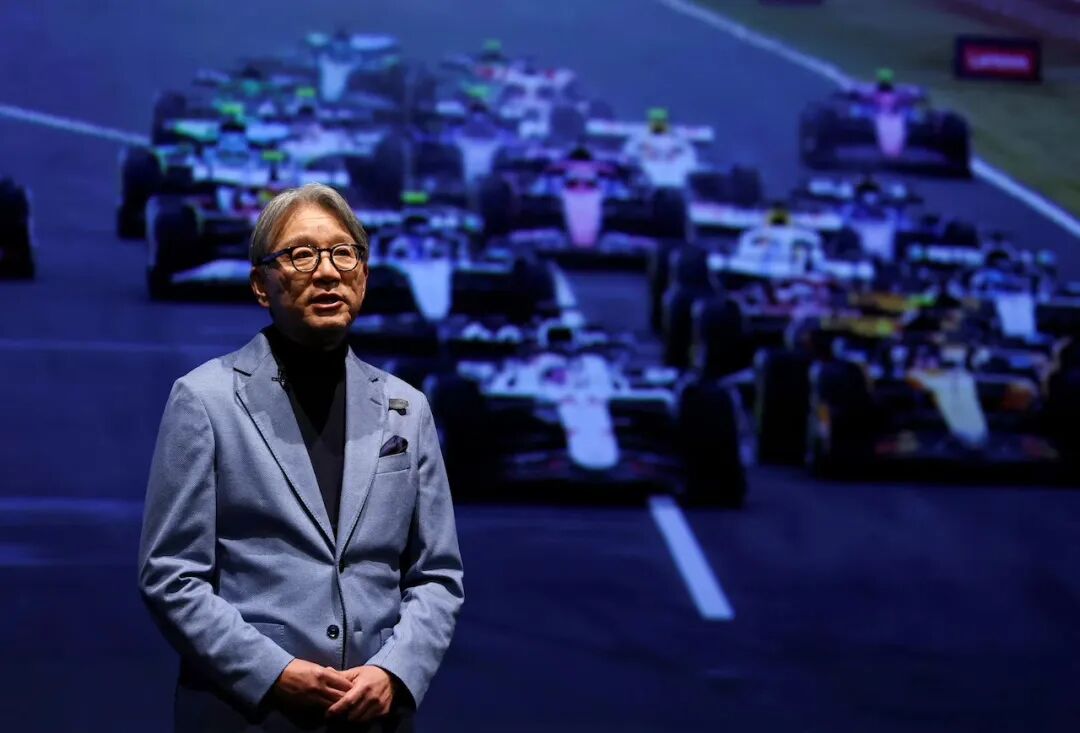
▲ Toshihiro Mibe, the current president of Honda
According to the information disclosed by Reuters, starting from the end of 2025, several retired Honda executives began to meet privately to discuss the current difficulties Honda is facing.
Their dissatisfaction mainly focuses on three points: First, they believe that Toshihiro Mibe has neglected the Chinese market; Second, they think that Honda made a wrong judgment on the electric vehicle strategy; Third, they believe that the company's senior management has deviated from Honda's past emphasis on the "gemba kaizen" principle.
The so - called "gemba kaizen" principle simply means that management should not just sit in the headquarters looking at reports, but should go to the front - line of sales, factories, and the market to truly understand what is happening with users and competitors.
For a company like Honda with an engineer - oriented culture, this was originally part of the company's tradition.
But in the eyes of the retired executives, Toshihiro Mibe didn't do this, which is why the Chinese market has become the core fuse for the "veterans' coup".
What is even more unacceptable to Honda's senior management is that the business results have been reflected in the financial reports.
Honda suffered an operating loss of 414.3 billion yen (about 17.81 billion yuan) in the fiscal year 2026, and the total losses related to electric vehicles reached 1.5778 trillion yen (about 67.84 billion yuan).
According to an AP report, this is Honda's first annual loss, with a loss of 423.9 billion yen (about 18.228 billion yuan).
At the same time, Honda is also adjusting its previously high - profile electric vehicle targets.
Reuters reported that Honda has cancelled its target for the proportion of electric vehicle sales by 2030, also abandoned the goal of fully switching to electric or fuel - cell vehicles by 2040, and indefinitely suspended the Canadian electric vehicle value - chain project.
Honda's official performance materials also show that the cancellation of some electric vehicle projects originally planned for production in North America has directly brought huge losses.
▲ Honda's Tokyo headquarters
In April this year, the conflict became public. Reuters reported that former Honda President Nobuhiko Kawamoto went to the Tokyo headquarters and asked Toshihiro Mibe to resign in person.
Nobuhiko Kawamoto is a very important figure in Honda's history. He led Honda out of the business trough in the 1990s. For such a former president to step forward in person shows that the dissatisfaction within Honda is not just ordinary complaints.
However, this coup attempt failed.
Reuters reported that the Honda board's nomination committee supported Toshihiro Mibe to stay in office. Honda responded that it was not aware of the discussions among the retired executives.
After that, Honda also announced an adjustment to its corporate governance structure, planning to have a majority of external directors on the board of directors, and to have the nomination committee and compensation committee completely composed of external directors.
However, although Toshihiro Mibe retained his position, he also paid a price.
Honda previously announced that Toshihiro Mibe and Executive Vice - President Ikuya Kaihara will voluntarily take a 30% pay cut within three months, and some other senior executives will also have their salaries cut.
02. Continued decline in the Chinese market, falling below 650,000 units in 2025
From the perspective of sales volume, Honda's sales in China have declined too rapidly.
According to official data from Honda China, in 2025, the cumulative terminal sales volume of Honda's automobiles in China was 645,300 units. In contrast, the terminal sales volume of Honda in China in 2024 was 852,200 units.
That is to say, Honda's sales volume in China in 2025 decreased by about 24.3% year - on - year.
This decline is even more obvious when compared with the past few years. In 2020, Honda's terminal sales volume in China was 1.627 million units, setting a record high for annual sales.
In five years, Honda's sales volume in the Chinese market has dropped from 1.627 million units to 645,000 units, a decrease of nearly one million units.
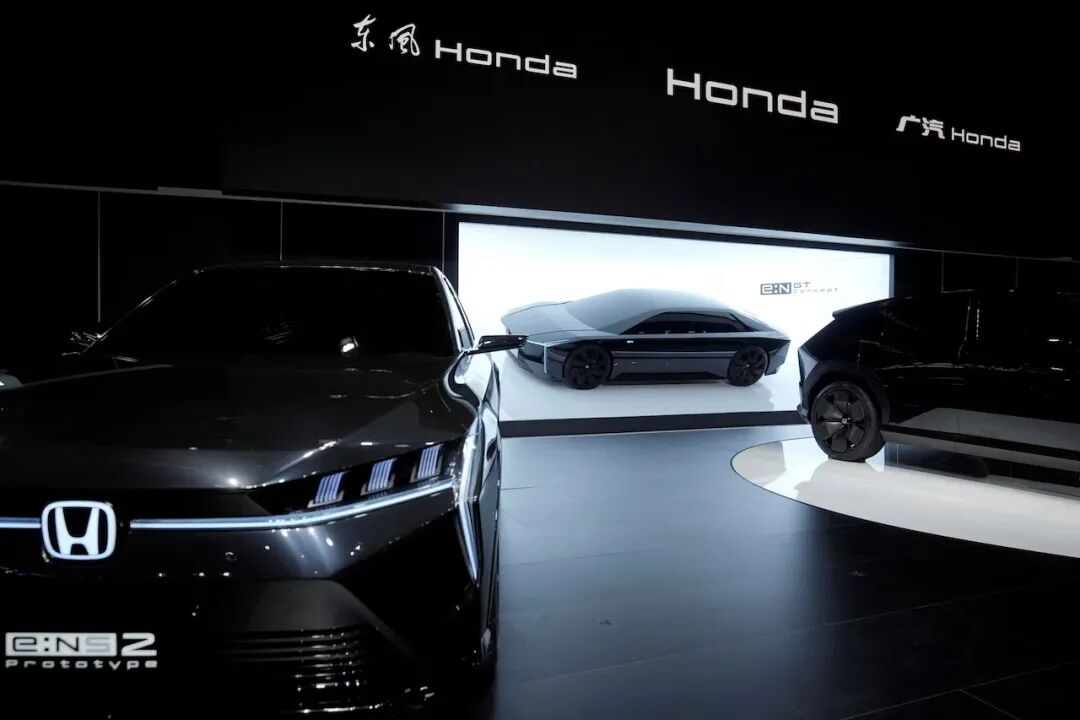
▲ Honda e:N series
Since 2026, the situation has not improved.
Data released by Honda China shows that in May 2026, the terminal sales volume of Honda's automobiles in China was 28,279 units, and the cumulative terminal sales volume from January to May was 173,344 units.
Calculated by this standard, Honda China's sales volume in May 2026 decreased by about 48.7% year - on - year, and the cumulative sales volume from January to May decreased by about 32.5% year - on - year.
In addition, Honda has also started to reduce its production capacity.
Reuters reported in April that Honda plans to shut down at least one of its joint - venture fuel - vehicle factories in China and may further suspend another factory.
If both factories are closed, Honda's annual production capacity of fuel - vehicles in China will drop from about 960,000 units to 480,000 units, and the total production capacity will also drop from about 1.2 million units to 720,000 units.
This means that Honda is not only under pressure in terms of sales volume but has also entered the stage of production capacity and business structure adjustment.
03. Conclusion: The growing pains of Honda's electrification transformation
It is not difficult to see that the attempt to oust Toshihiro Mibe is not just a simple personnel upheaval, but a management trust crisis after Honda's slowdown in the Chinese market.
The former president's demand for the current president to resign actually points to a bigger problem: Honda's past successful methods are no longer effective in the Chinese market.
Next, the challenges Honda has to face are not easy.
It needs to stabilize the basic market of fuel - vehicles and hybrid vehicles while making up for the short - comings in new energy and intelligentization.
It has to deal with the financial pressure brought by the global contraction of the electrification strategy and prove itself again in the fastest - paced market like China.
Although Toshihiro Mibe has temporarily retained his position, if Honda's sales volume in China continues to decline, the doubts surrounding him will probably not stop.
This article is from the WeChat official account "Che Dongxi", author: Janson. It is published by 36Kr with authorization.