Inside Story of DingTalk's Crisis: 996, Senior Management Dissatisfaction, Anxiety of Falling Behind, AI Strangulation
Within 7 days, DingTalk changed its leader.
On June 4, 2026, Teng Yaxin, a former product manager of DingTalk, posted a 75,000 - word resignation essay titled "Inside DingTalk" on Alibaba's internal network. On June 11, CEO Wuzhao (Chen Hang) stepped down, and Chen Yusen, a post - 90s, took over.
In the long essay, Wuzhao was named 73 times. It was written that during the closed - development period of ONE, the author worked about 15 hours a day on average and only had 1.5 days off in a month. She fainted twice, and was sent to the hospital by an ambulance once.
Behind this storm, it's far from being triggered by just a resignation essay.
Pencil News exclusively learned that Alibaba's internal staff has strong dissatisfaction with DingTalk's product performance in the past year, believing that DingTalk has "done poorly" and "fallen behind". In the competition with Feishu, the leading position that DingTalk thought it had is being caught up with or even overtaken.
An informed source close to DingTalk's senior management revealed to Pencil News:
"The resignation essay is just the fuse. The real problem is that the internal conflicts among DingTalk's senior management have accumulated to a critical point. Last year, there were voices saying that Wuzhao's approach was essentially the 996 work system, strong control, and strong execution. Wuzhao was able to return with the support of Wu Yongming (Alibaba's CEO), but his departure should be due to the intervention of Mr. Ma (Jack Ma)."
What's more dangerous is that under the Token economy, DingTalk's once most valuable assets are depreciating rapidly.
In the past, DingTalk's most valuable features were communication, approval, collaboration, and knowledge base. When users needed to work, they had to open DingTalk to send messages, process workflows, and search for information.
However, under the Token economy, AI Agents can directly call these capabilities to complete tasks for users. People no longer need to operate the software step - by - step, but only need to review the results.
So, although DingTalk has changed its leader, it has not yet emerged from the crisis. It must answer a more fundamental question: When Agents can do the work for people, why do users still need to open DingTalk?
A 75,000 - word essay reveals DingTalk's old wounds
On June 4, a resignation essay pushed DingTalk into the spotlight. The author is Teng Yaxin, an AI product manager of DingTalk's Wukong Division, with the pen name "Yousu".
She posted an article titled "Inside DingTalk" on Alibaba's internal network, reviewing the entire process of the ONE project from its initiation, development, release to contraction from the perspective of a front - line participant.
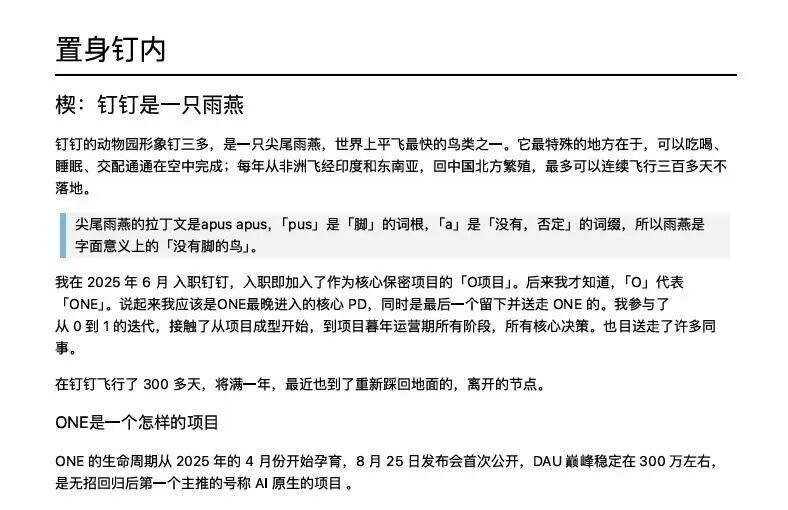
Screenshot of the original resignation essay "Inside DingTalk"
The essay details internal problems such as high - pressure management, impulsive decision - making, and internal strife within the team. Wuzhao's name appears 73 times in the essay.
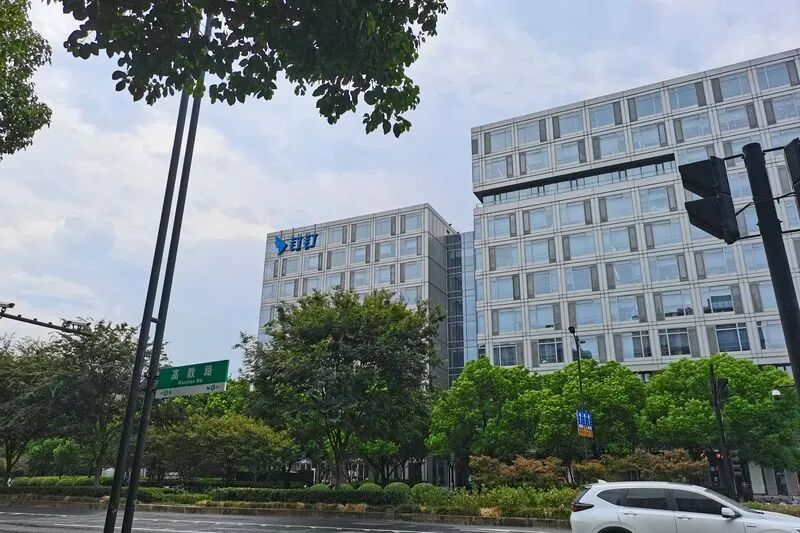
DingTalk's headquarters building. Source: Sohu News
Yousu revealed in the essay that during the closed - development period of ONE, she worked about 15 hours a day on average. In the most extreme month, she only had 1.5 days off. She fainted twice during the project. The second time, her colleagues called an ambulance, and the diagnosis was respiratory alkalosis and low blood pressure.
Another product manager who joined ONE at the same time as her resigned due to cardiovascular problems right after the product launch.
He remembered that he left work at 11 p.m. one night. The next day, Wuzhao said in front of everyone, "You're a product manager, and you leave at 11 p.m.? Do I need to buy you a camp bed and put it in the project room?"
For several days after that, Wuzhao and the HR department inspected the project room after 12 a.m. to see who was there and who wasn't.
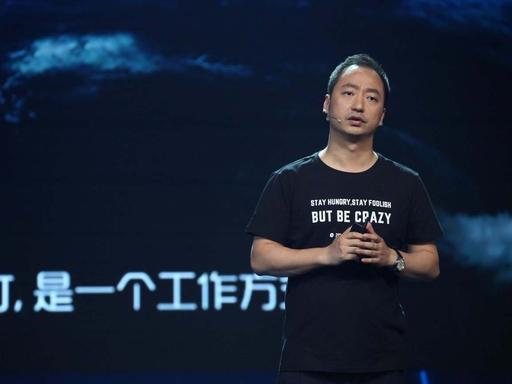
Wuzhao (Chen Hang), the former CEO of DingTalk
However, the shock caused by this long essay within DingTalk is not just because it details the high - pressure work environment.
More importantly, it brings a deeper problem to the surface: DingTalk's product performance and organizational conflicts in the past year have reached a point that cannot be ignored.
An informed source close to DingTalk's senior management told Pencil News that Alibaba's internal staff has strong dissatisfaction with DingTalk's product performance in the past year, believing that DingTalk has "done poorly" and "fallen behind". Especially in the competition with Feishu, the leading position that DingTalk thought it had is being caught up with or even overtaken.
In the view of this informed source, the resignation essay is just the fuse. The real problem is that the internal conflicts among DingTalk's senior management have accumulated to a certain extent.
"Last year, there were people within DingTalk saying that this approach was essentially the 996 work system, strong control, and strong execution. Wuzhao was able to return with the support of Wu Yongming, but his departure should be due to the intervention of Mr. Ma (Jack Ma)."
He revealed that neither DingTalk nor Alibaba wants the situation to escalate. The simplest way to deal with it is to attribute the problem to Wuzhao personally.
Therefore, Wuzhao's resignation is just the most superficial result. What really deserves scrutiny may be DingTalk's product roadmap, organizational management in the past year, and its competitive position in the AI era.
Wuzhao: Bringing the unwon battle back to DingTalk
996, high - pressure management... Why did Wuzhao, the former CEO of DingTalk, go overboard? The informed source Zhang Zhao (pseudonym) said that it may be related to his "desire for self - proof".
Before returning to DingTalk, Wuzhao had an "unsuccessful" entrepreneurial experience.
He founded Liangqingyiyang (HHO). According to Qichacha data, HHO was established in June 2021 with a registered capital of 15 million yuan, and its financing stage only reached the angel round.
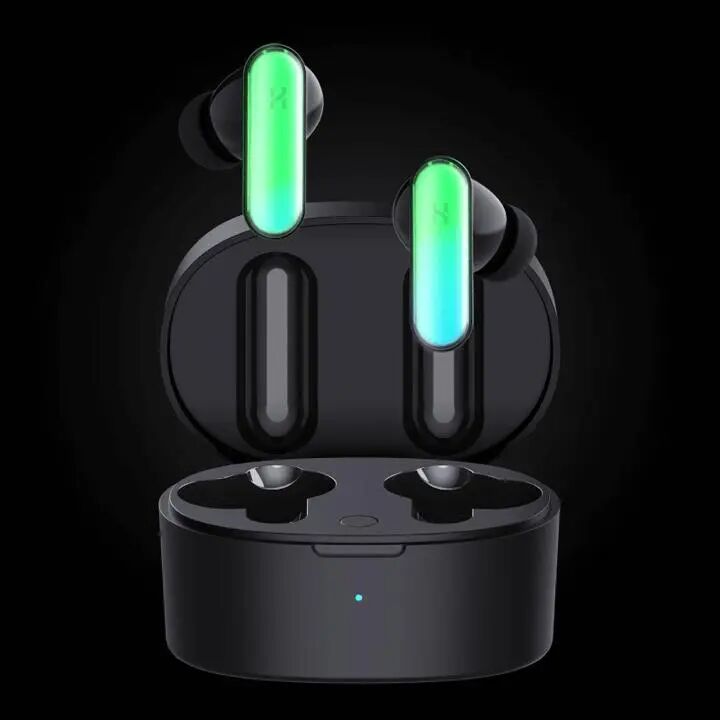
The core product of HHO, the digital light headset GPods
The investors include Yuanjing Capital, whose founder is Wu Yongming, an Alibaba veteran and the current CEO of Alibaba. According to BOSS Zhipin information, HHO has a cross - border e - commerce platform 7sGood and a tech - trendy brand HHOGene. Its main products include the digital light headset GPods and pet smart devices.
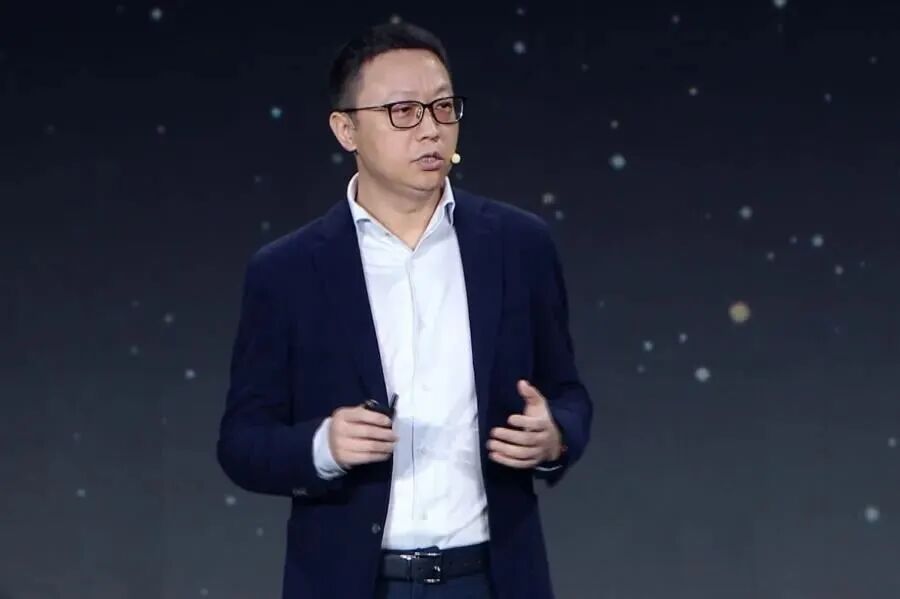
Wu Yongming, the current CEO of Alibaba
Multiple informed sources confirmed to Pencil News that HHO's development was not smooth.
Wuzhao shuttled between Beijing and Hangzhou for several years. 7sGood didn't succeed, the sales of GPods were below expectations. After burning through the 15 - million - yuan registered capital, it was finally Alibaba that provided financial support, bought out the investors' shares, and allowed Wuzhao to return.
After returning to DingTalk, Wuzhao needed to prove himself again.
So, one possibility is that this desire for self - proof was quickly transformed into a set of more intense management actions: higher goals, stricter attendance, stronger elimination, and more frequent iterations.
"Once a person gets into this state, they will bring out their subconscious obsessions even more."
Zhang Zhao told Pencil News. This sentence may explain everything after Wuzhao's return.
After returning to DingTalk, he hardly gave the team any adaptation period. He set an aggressive goal of "achieving break - even within 12 months" and quickly implemented a set of strong control centered on discipline: all employees should arrive at work at 9 a.m., the lunch break was shortened to 45 minutes, and evening meetings were held at 9 p.m.; managers were required to patrol the building during the lunch break, and if an employee was found using WeChat, they had to write a public self - criticism in the group; the technical team was investigated for code volume, and "programmers with zero code will face elimination"; all managers were required to learn Python and take an exam, and product managers were required to visit enterprises for co - creation every week.
This approach did create a high - density push in the short term.
According to 36Kr, within four months after Wuzhao's return, the team analyzed 1,850 user requirements, fixed 574 long - standing problems, and transformed more than 20 product lines. Such an iteration density is extremely rare in DingTalk's history in the past three years.
The hero of DingTalk was defeated by his old approach
The problem is that the DingTalk organization has changed. Eleven years ago, Wuzhao could develop DingTalk with a team of six people in Huban Garden in the way of a startup.
But in 2025, DingTalk has become a mature organization with nearly 2,000 employees, 700 million users, and 26 million enterprises. When the screening logic of the startup period is directly applied to a 2,000 - person company, there is only one result: the team starts to resist and leave.
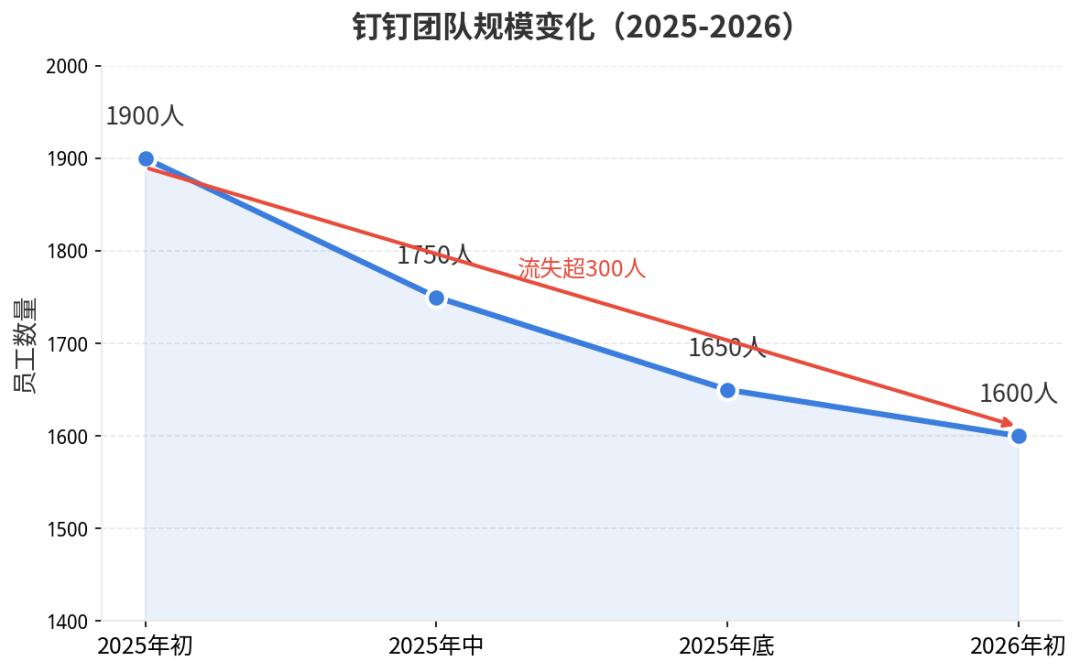
Changes in DingTalk's team size. Data source: Titanium Media, 36Kr
Is Wuzhao really only good at high - pressure management? No. Zhang Zhao believes that undoubtedly, he is an outstanding manager. It's just that his thinking is no longer suitable for today's DingTalk.
Zhang Zhao told Pencil News that Wuzhao's management thinking was effective at a certain stage.
Around 2014, Alibaba's social product "Laiwang" failed, and WeChat had firmly occupied the acquaintance social market. Instead of competing directly with WeChat, Wuzhao led a team of less than ten people to shift to enterprise office services.
What do bosses care about most? Whether messages are read, whether things are done, and whether processes are approved.
So, DingTalk developed features such as "Ding", read/unread status, and approval processes.
This product logic later helped DingTalk break into the office scene.
"DingTalk was able to carve out a large share from WeChat, which is Wuzhao's unshakable contribution."
This is a fact. By 2025, DingTalk's registered users exceeded 700 million, serving 26 million enterprise organizations, with a monthly active user base of about 200 million and a market share of 32.7%, ranking first in the industry.
So, Wuzhao has won battles. On the contrary, he once won a very difficult battle.
Zhang Zhao further analyzed that Wuzhao's high - pressure culture is not inherently ineffective, but the dividend period has passed:
"Once the direction is determined, more emphasis is on execution."
This sentence points out the effective premise of Wuzhao's approach: a clear direction, a small team, a single goal, and the product being in the stage from 0 to 1. At this time, strong goals, strong execution, and strong discipline can indeed maximize the team's combat effectiveness.
But the problem is that the times have changed. DingTalk is no longer facing the same battle as in 2014.
Zhang Zhao pointed out the key turning point:
"In the past, working overtime could indeed result in writing 1,000 or 2,000 more lines of code. But in today's AI era, the extra one or two thousand lines written by working overtime don't create any value at all."
This sentence points out the key misalignment after Wuzhao's return: he still believes that high - pressure and execution can produce results, but what is truly scarce in the AI era is not just time and physical strength, but judgment, creativity, and product direction.
AI is rewriting the definition of efficiency.
When AI programming tools like Cursor and Codex can generate code in a few minutes, and when Agents can automatically complete data sorting, report generation, and process approval, the single - point operation efficiency of people has been increased by 20 times or even 100 times. The logic of driving innovation through the manpower - stacking and overtime hours has changed.
The Token era: DingTalk's biggest crisis
A more fundamental problem than the management style is that DingTalk's product value is being severely squeezed by AI.
The informed source Steven (pseudonym) pointed out to Pencil News that DingTalk is facing a structural value squeeze.
In the past, DingTalk's most valuable features were communication, approval, document collaboration, and enterprise knowledge base. When users needed to work, they had to open DingTalk: communicate in groups, collaborate in documents, advance processes in approval workflows, and search for information in the knowledge base.
The premise of this logic is that people are the center of work.
But after the emergence of AI Agents, the focus of the workflow has changed.
"Before the emergence of native AI Agents, people managed knowledge centered around themselves and carried out work collaboration through documents and group chats. In the future, Agents will do the work, and people will do the review. The most useful things on DingTalk will be those approval workflows and group chats."
