Car companies are summoned for talks, consistently losing money on every vehicle sold, the "Evergrande of the automotive industry" scenario may become a reality, and most of them cannot survive until 2030.
The Ministry of Industry and Information Technology and the State Administration for Market Regulation have jointly taken action, conducting a centralized interview with automobile enterprises regarding their irrational low - price competition.
Conducting this interview with automobile enterprises at this time reveals a signal that the irrational price - dumping war among automobile enterprises cannot continue. It has reached a critical point. If it goes on, the "Evergrande in the auto circle" may become a reality, and most automobile enterprises may not survive until 2030.
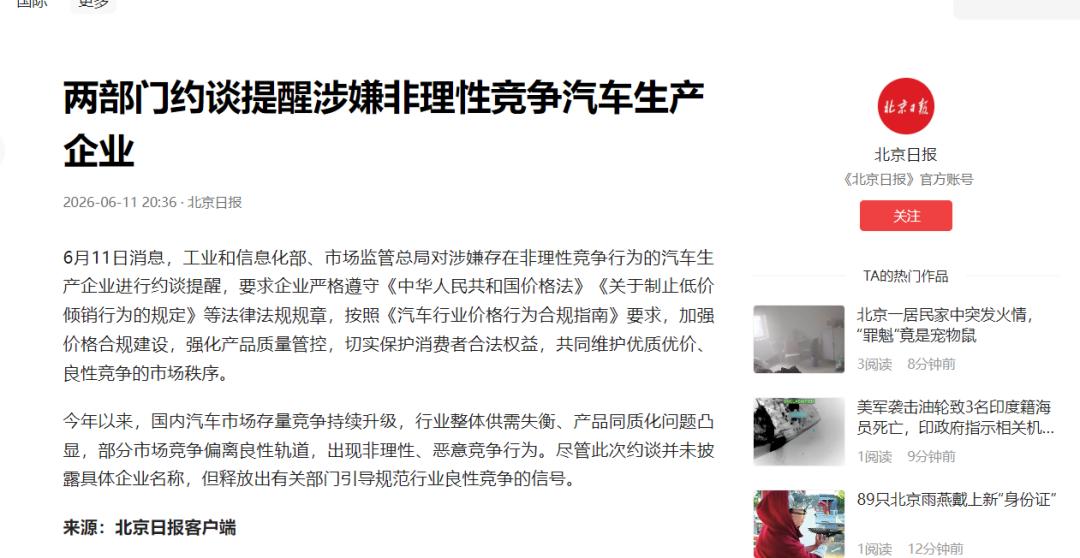
The core of this interview is not to stop promotions. Normal discounts, inventory clearance, and sales - boosting promotions should still be available. However, the low - price dumping far below the cost should no longer exist.
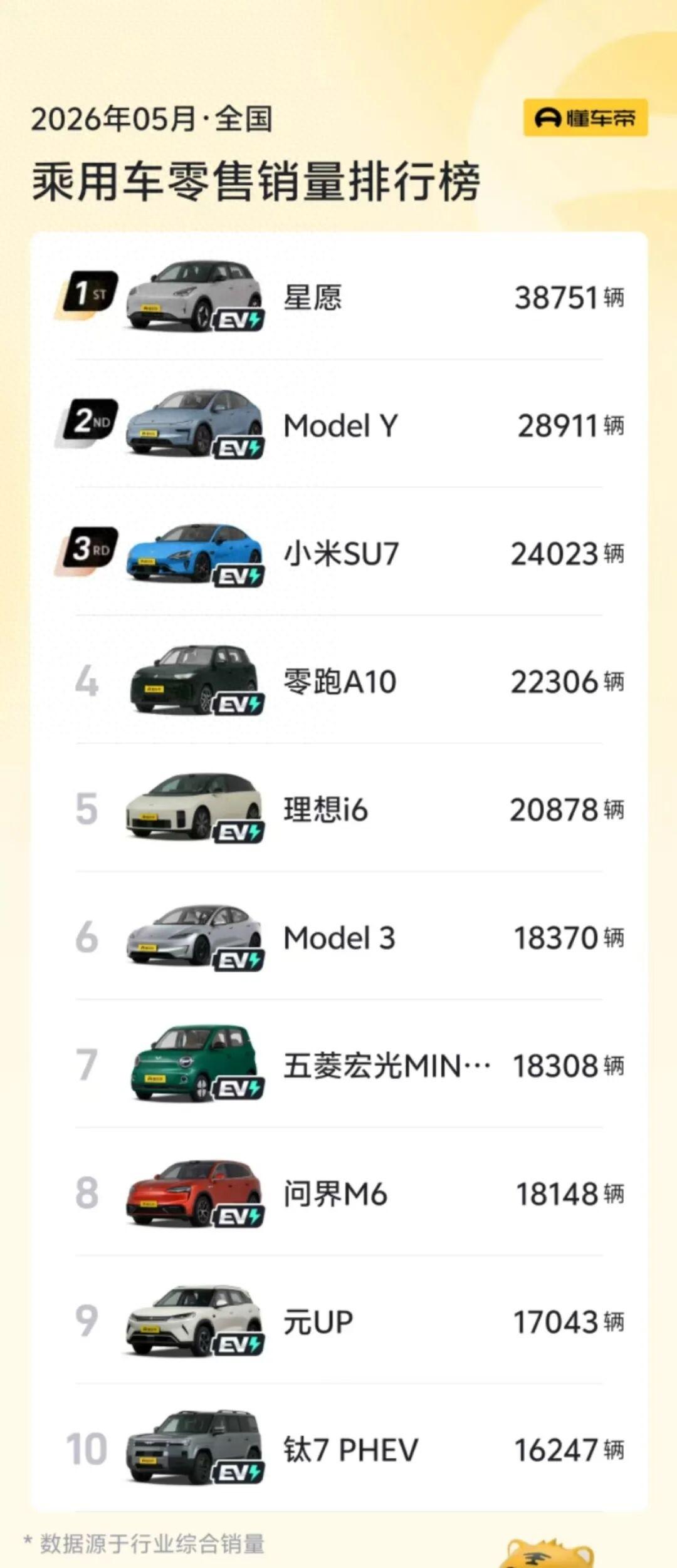
The development of new energy vehicles in China is leading the world. The domestic penetration rate has approached 63%, and the market share of fuel - powered vehicles has dropped to 37.1%. In May, the top ten best - selling passenger car models were all new energy vehicles, and for the first time, fuel - powered vehicles did not make it into the top ten of the sales list.
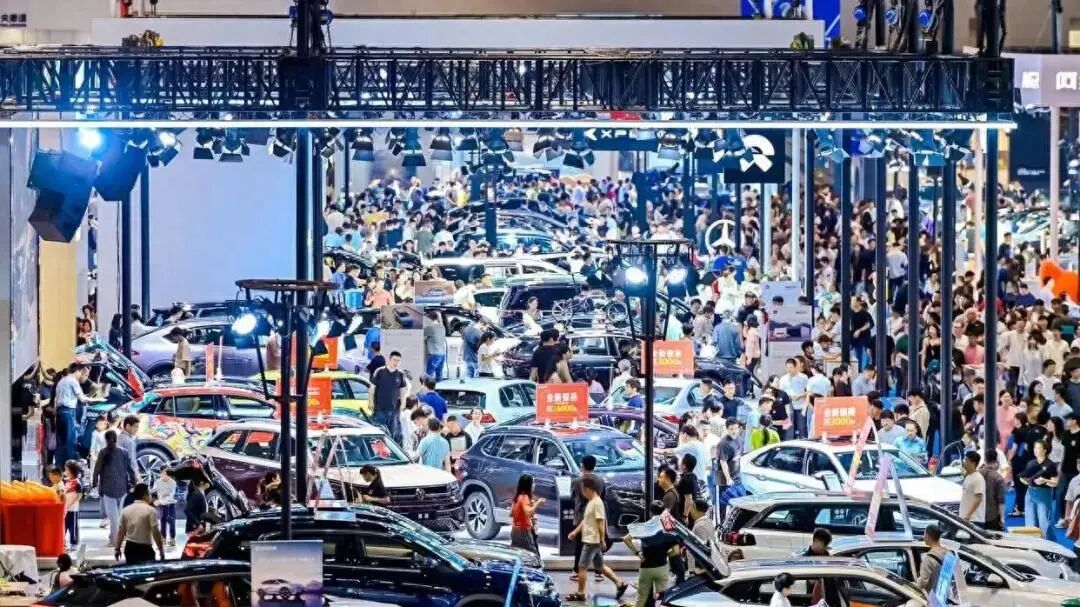
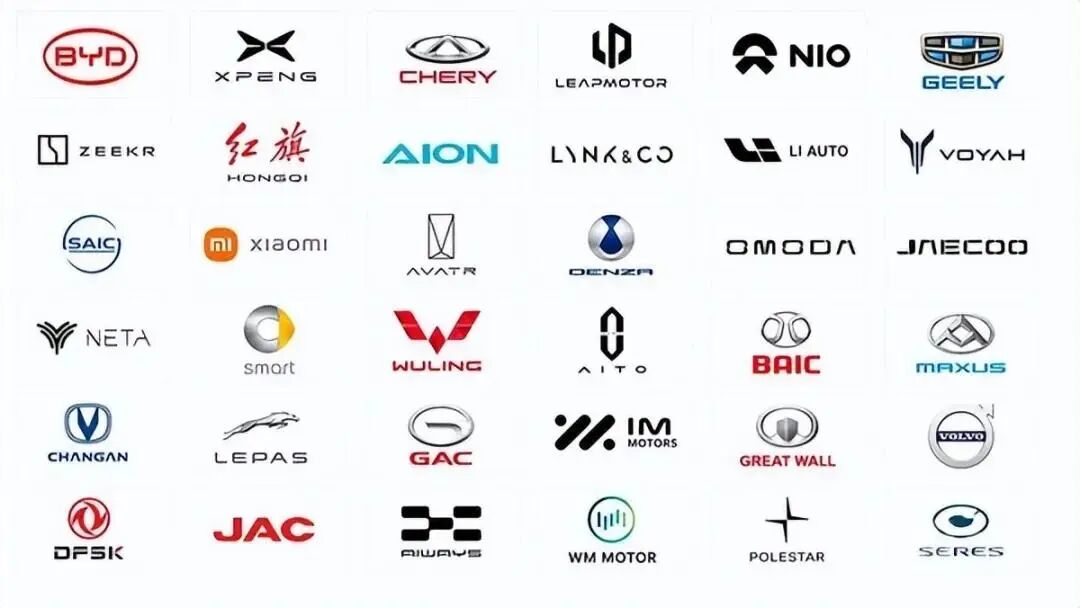
Meanwhile, another problem has emerged prominently, that is, there are too many automobile brands. No country in the world has as many automobile brands as China.
Currently, there is an over - capacity in automobile manufacturing. The market growth rate is no longer what it used to be, and it cannot absorb the massive supply of new cars. Eventually, it has evolved into a cruel price war.
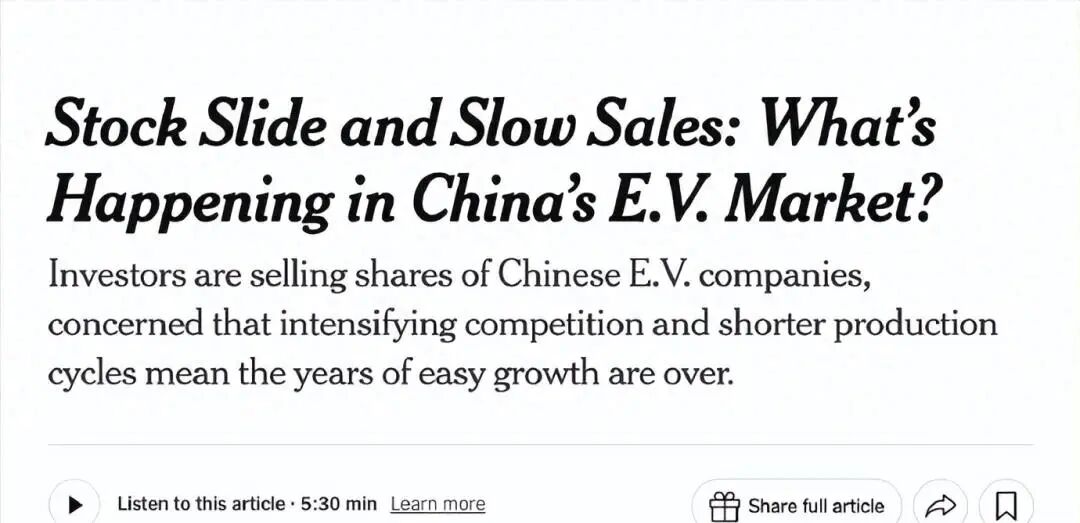
Foreign media predict that most of the 129 new energy vehicle brands in China will not survive until 2030. In other words, nearly 90% of the brands will be eliminated or fall into continuous losses in the next four years.
In the view of some automobile enterprises, the only way to survive is to increase sales volume. And the only way to increase sales volume is to engage in a price war.
He Xiaopeng once predicted that there may only be five automobile enterprises left in China in the future. He once said in an internal meeting that an annual sales volume of 3 million vehicles is just the entry ticket. Enterprises producing mid - and low - end models even need to reach 5 million vehicles to survive.
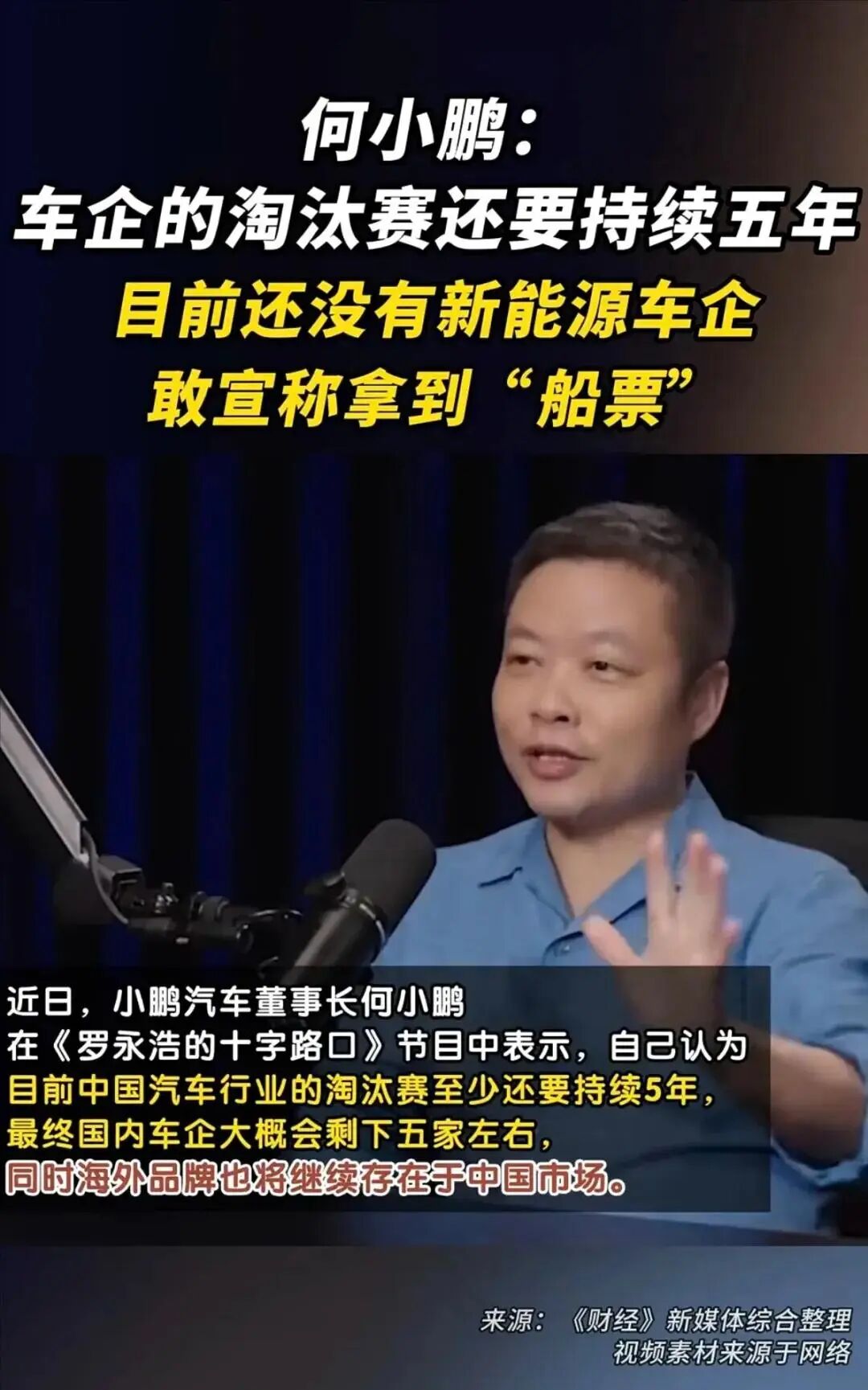
In fact, cars are not the same as mobile phones. According to the capacity of the Chinese auto market, it is definitely not the case that there will only be five brands in the future. Moreover, the survival of automobile enterprises does not necessarily depend on high - volume sales. Focusing on the mid - and high - end market and relying on high brand premium and profits can also ensure survival.
However, many automobile enterprises believe that in the current reshuffle stage, profit is not the most important thing, and increasing sales volume is the only way out.
Why do many automobile enterprises think that profit is not important?
Nowadays, selling cars at a loss has become a common phenomenon in the industry. Most enterprises lose money on each car sold.
Xiaomi loses about 38,300 yuan per car, XPeng loses about 28,400 yuan per car, Leapmotor loses about 3,500 yuan per car. Li Auto was the most profitable among new - energy vehicle startups last year, but in Q1 2026, it turned from profit to loss, with a loss of about 24,200 yuan per car. NIO's loss per car was 47,800 yuan in 2025 and narrowed to 4,000 yuan in 2026. BAIC BluePark loses 47,800 yuan per car...
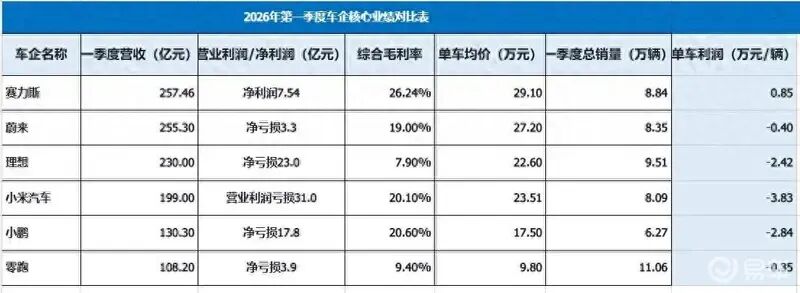
There are only a few enterprises with a profit per car in the industry. Seres has a profit of 8,500 yuan per car, BYD has a profit of 7,087 yuan per car, and Chery has a profit of 7,451 yuan per car.
HiPhi, Aiways, Skyworth, and Yundu basically lose more than 100,000 yuan per car sold and are on the verge of bankruptcy. This collective phenomenon of losing money on each car sold in the industry has increased the sense of security of automobile enterprises regarding selling cars at a loss. Since everyone is losing money, they think it's okay for them to do so too.
Many automobile enterprises believe that by selling cars at a loss now and driving their competitors out of the market, they can make money back in the future when they and a few others monopolize the market.
It's okay for leading first - tier manufacturers to think this way. But if all manufacturers think so, there will definitely be big problems.
Because this is a competition of who can cut costs more and who has a more abundant cash flow. It is no longer about product strength, quality, and quality control.
Moreover, some automobile enterprises think that they can obtain money through capital market financing. As long as they maintain their sales volume, the capital market will not abandon them. However, this idea is actually dangerous.
Both Jiyue and Nezha went bankrupt because they burned the capital's money without caring and had no clear stop - loss line. Ultimately, the lack of investment in R & D and cost led to poor product strength, resulting in a sales crisis and then a capital chain crisis. When the capital stopped supporting them, the enterprises went bankrupt directly.
If only one automobile enterprise goes bankrupt, it will only affect the upstream and downstream of the supply chain in a certain area and the after - sales rights and interests of consumers. But if several or even a dozen automobile enterprises go bankrupt, the scope of influence will expand to the national supply chain, causing a major blow to the entire industry.
Previously, data showed that the average net profit margin of the industry has fallen below 3%, which means that the net profit of an automobile enterprise with an annual sales volume of 500,000 vehicles may not exceed 3 billion yuan.
3 billion yuan is not enough to support the full - stack self - research of a high - level intelligent driving system. In the future, for an enterprise to survive healthily, it either needs to double its profit or achieve an annual sales volume of over 1 million vehicles to barely share the R & D expenses in the tens of billions.
The entry threshold for each of the four core technologies of intelligent driving, chips, operating systems, and batteries is several billion to tens of billions.
The result is that manufacturers reduce their investment in technology iteration and R & D upgrading, lower the requirements for the quality of components, and the profit of the new energy vehicle supply chain decreases.
Moreover, some automobile enterprises choose to transfer the cost pressure by squeezing the supply chain. Automobile manufacturers default on suppliers' payments and force price cuts, further shifting the cost - cutting and debt pressure to the supply chain.
Ensuring a higher bottom - line for quality control is the key for automobile enterprises to survive
Considering the overall competitiveness of a car, when profit is under pressure, enterprises will consider cutting costs in the invisible parts of a car, which affects the quality control bottom - line of the entire automobile industry.
Wei Jianjun of Great Wall once said, "It is absolutely impossible to guarantee quality when the price is cut by 100,000 yuan."
Wei Jianjun attributes all this to "the distortion of the business logic under the coercion of capital." "After the capital cashes out, what is left are shell companies that make a loss to gain popularity.

The reason for avoiding the unrestricted price war among automobile enterprises is not only because the industry needs profit for R & D investment but also because it is necessary to provide consumers with higher - quality guarantees.
Currently, there are higher requirements and a higher bottom - line for the quality control of cars.
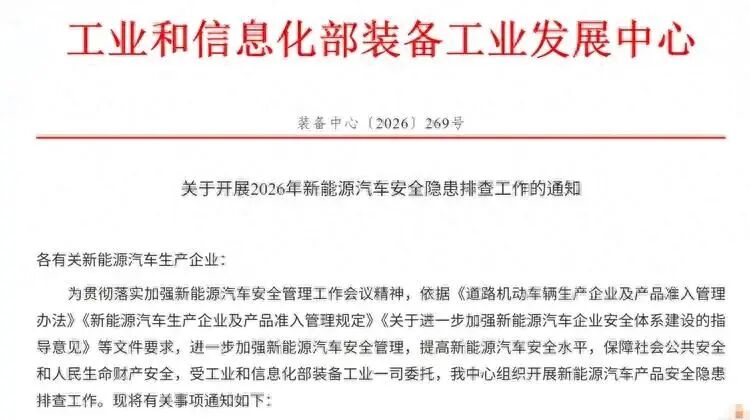
Some time ago, a "Notice" was issued, and the Ministry of Industry and Information Technology officially implemented a system for the whole - industry inspection of new energy vehicle fires and mandatory reporting.
This is the most extensive in scope, the most specific in requirements, and the most severe in punishment among the safety inspections organized by the Ministry of Industry and Information Technology for many consecutive years since 2019.
Among them, the power battery system and the quality of new energy vehicles are regarded as the key directions for safety inspection, especially the problem of spontaneous combustion. If there are three fires in the same model, a full - scale inspection and rectification of the entire model will be mandatory, and the enterprise will have to recall and inspect at its own expense, regardless of whether it is a new car on sale or an old car with a large number on the road.
In case of serious circumstances, the "Announcement" of the model will be suspended or revoked. This car is not allowed to be produced and sold anymore and will be directly removed from the catalog.
The old standard for power batteries was that there should be no fire within 5 minutes after thermal runaway (to give people time to escape). The new standard is that there should be no fire or explosion after thermal runaway (indefinitely), and it is necessary to ensure that the smoke does not cause harm to passengers. In addition, a bottom - impact test and a short - circuit safety test after 300 fast - charging cycles have been added.
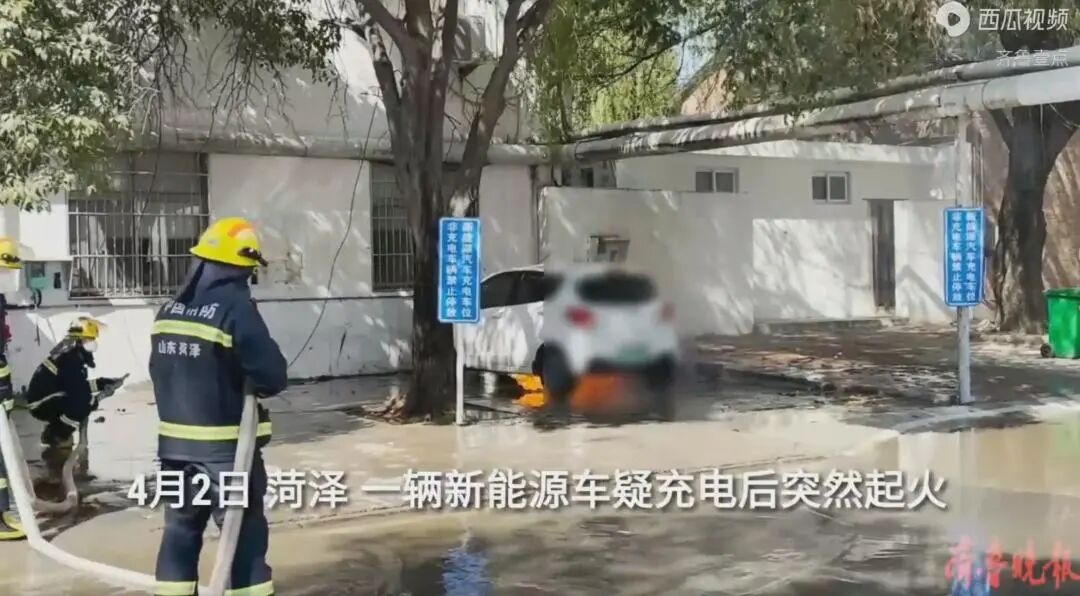
That is to say, as long as there is a fire, whether it is caused by a stone hitting the chassis or thermal runaway, it is not allowed. Once there is a fire, there is no excuse, and it is considered sub - standard.
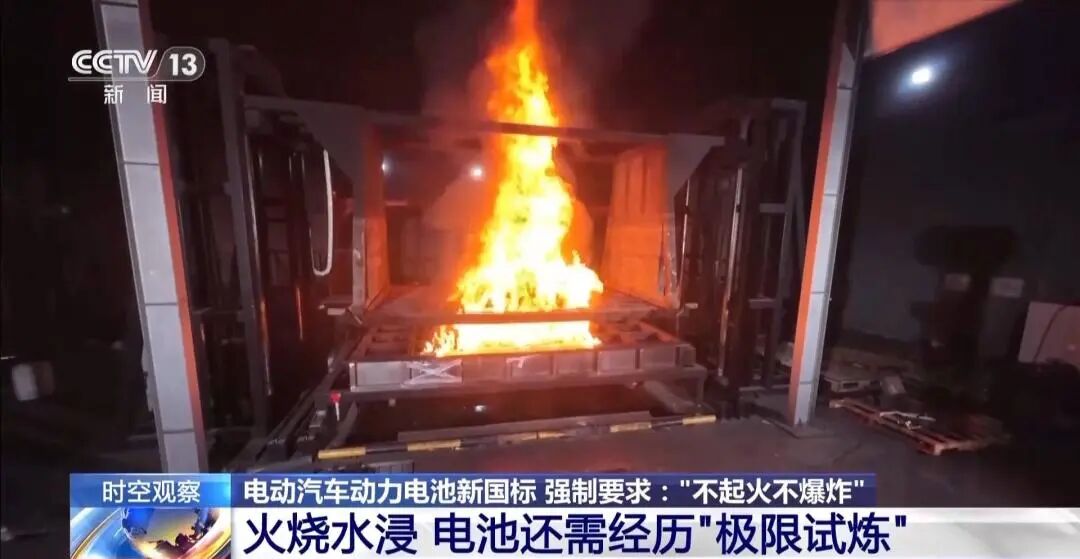
According to the data from the Ministry of Industry and Information Technology, 78% of the 36 interviewed enterprises have the technical reserve for "no fire and no explosion." This also means that 22% of the enterprises do not meet the standard.
Then in the future, those automobile enterprises that cannot meet the technical standards will be automatically eliminated.
Avoiding the next "Evergrande in the auto circle"
New energy vehicles have become a business card of Made in China. The regulatory authorities' action this time aims to end the abnormal ecology of "trading losses for sales volume" and let competition return to the essence of technology, quality, and service.
We cannot let some automobile enterprises that fail to meet the product and safety standards drag the entire industry down. We cannot always let consumers have safety concerns and hidden dangers when buying cars.
There are 126 new energy vehicle enterprises in China. If the price war continues, it will only deepen the debt problem of automobile manufacturers.
If an automobile enterprise loses money on each car sold and relies on financing to survive, it will surely face a crisis sooner or later. Who will pay the bill after the crisis? The consumers who bought the cars. They won't be able to repair their cars, buy spare parts, or get after - sales service. That's really a big problem.
Some industry insiders point out that many automobile enterprises currently have high debts, and suppliers don't come to collect debts because they believe that a rapidly developing industry won't really default on payments. But once there is negative news, suppliers may come to collect debts collectively, causing a run - on, which will be faster than the collapse of Evergrande.
So the collapse of an enterprise like Jiyue can happen in an instant. It may seem to happen without warning, but in fact, there have been many hidden dangers in