The rally is comparable to that of the memory sector: MLCCs, GPUs and HBMs are all in the same league.
In the few years before AI became extremely popular, MLCC, known as the "rice of the electronics industry", was already a regular in the shortage and price - hike situation. The last time there was a supply - demand imbalance was during the iPhone X replacement wave in 2017. Just a few months ago, MLCC was still regarded by capital as a "sunset industry", but now it has started to soar.
According to supply - chain sources, AI servers are driving a significant increase in the usage of high - capacitance, high - voltage, and large - size MLCCs. The industry is facing a structural shortage, with a shortage of high - end products and a lack of production capacity for low - end products. The price increase of high - end models is more significant, and the production expansion cycle of about 18 - 24 months restricts the release of supply. The window for domestic substitution has opened, but the high - end AI market is still dominated by Japanese and Korean companies, and the tight balance is difficult to change in the short term.
In May 2026, Taiyo Yuden, a Japanese passive component giant, issued an industry warning that the demand for MLCCs for high - end AI servers has reached a "terrifying level". Its production capacity is approaching the physical limit, and the global high - end MLCC supply chain is on the verge of a critical point of disruption.
Institutions have also given their latest forecasts. Goldman Sachs calls MLCC the "next memory chip". After Morgan Stanley disassembled the Bill of Materials (BOM) of NVIDIA's VR200 server, it found that the value of MLCCs has soared to $4,320, an 182% increase from the previous generation. In the cost structure of AI servers, MLCCs have become the third - largest key component, second only to GPUs and HBMs.
Driven by the news, the market has skyrocketed like a rocket. Who could have imagined that Tianli Holdings, which was ignored by the market in 2024 due to a lack of liquidity and frequent zero - daily trading volumes, would stage an amazing capital myth in 2025. Its stock price has skyrocketed 20 times this year, and its market value has soared from less than HK$200 million to HK$5.3 billion, making it one of the most dazzling bull stocks in the Hong Kong stock market.
Dining at the Same Table as GPUs and HBMs
It can be said that MLCC, which was not highly regarded a few months ago, can now "sit at the table" with GPUs and HBMs.
Nelson Armbrust, an analyst at Goldman Sachs, pointed out in a recent research report that in the current cost composition of the Bill of Materials for AI servers, MLCCs have risen to the third - largest cost item, second only to GPUs and memory chips. Currently, the overall market size of MLCCs is about $15 billion, of which the market size in the AI server field is $1.3 billion, and it is exploding with a compound annual growth rate of 80%. In contrast, the growth of other key industries such as the automotive and mobile phone industries has slowed down.
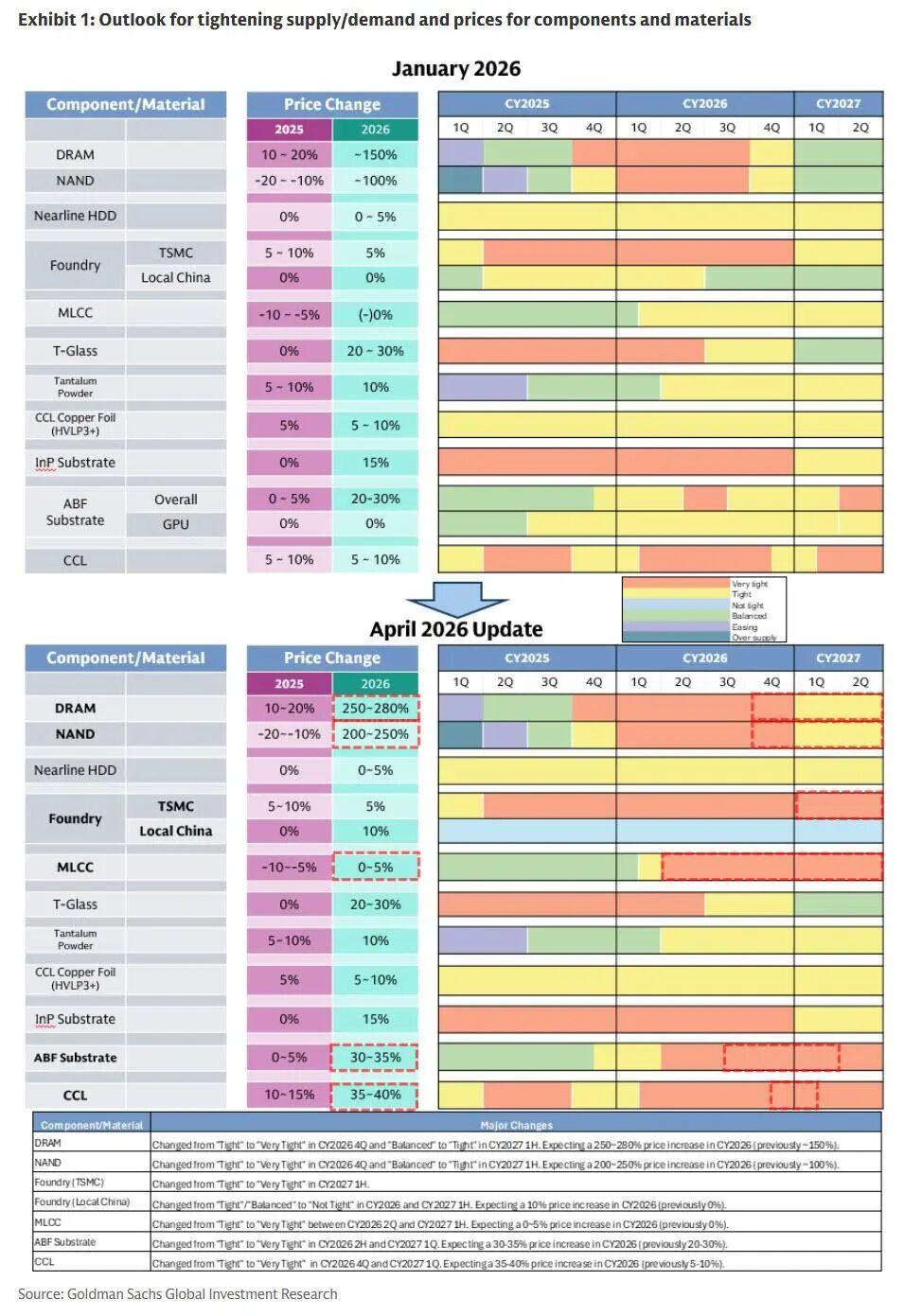
Goldman Sachs' latest research report believes that the AI - driven MLCC super - cycle has just begun. MLCCs have become the third - largest cost item in AI servers after GPUs and memory. It is expected that the market size will grow by about 4.3 times from 2025 to 2030. Driven by the significant increase in demand for high - end MLCCs from AI servers and new - energy vehicles, combined with the long construction cycle of high - end production lines and the difficulty of quickly releasing short - term production capacity, there is a significant supply - demand gap for high - end models, and MLCCs are entering a prosperous cycle.
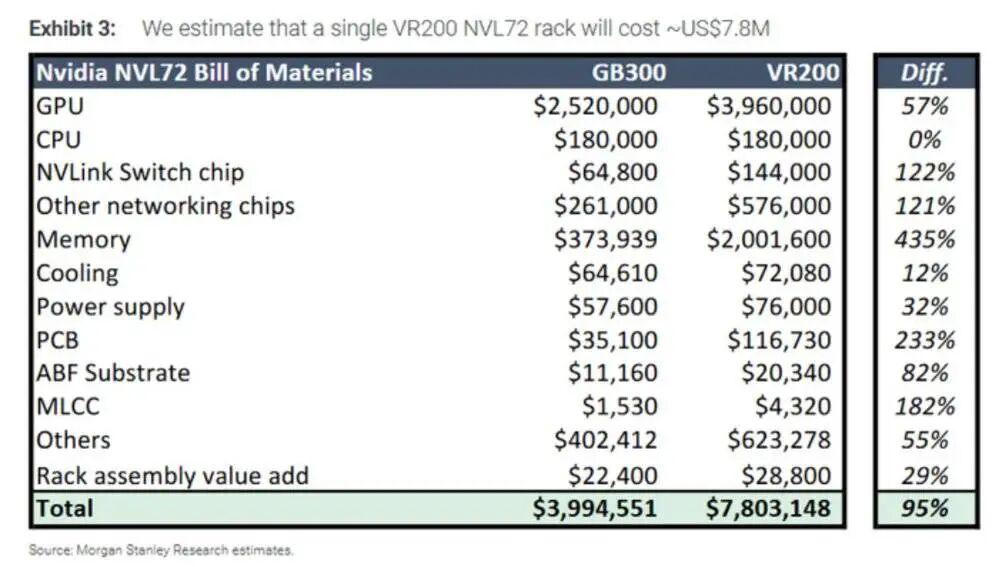
How large is the usage of MLCCs? Murata Manufacturing Co., Ltd. disclosed that an ordinary server only needs 2,200 - 4,000 MLCCs per unit; an NVIDIA GB300 AI server uses about 30,000 MLCCs per unit. In March 2026, NVIDIA officially released the VR200 NVL72 new - generation computing power cabinet, and its MLCC usage has reached 440,000 - 600,000.
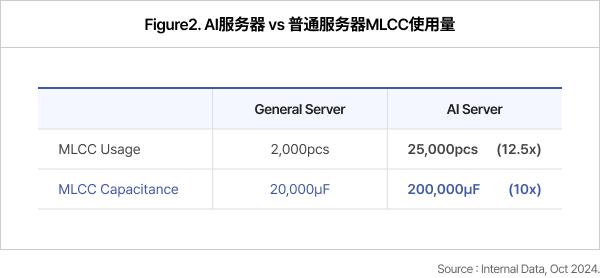
The power consumption of an AI server is 5 times that of an ordinary server, and it uses 12.5 times more MLCCs than an ordinary server. MLCCs used in AI servers need high capacity, high voltage, and miniaturization to handle high power, and this demand is continuously increasing.
This round of price increases for passive components did not suddenly occur but gradually fermented and continued to spread since the second half of 2025. Initially, domestic manufacturers took the lead. In Q4 2025, Taiching Technology raised the price of magnetic beads and started production cuts. Subsequently, several domestic resistor manufacturers successively raised prices by 8% - 20%. In Q1 2026, the price - hike wave further spread to industry leaders. Fenghua High - Tech, Yageo, and KOA followed suit. Among them, Yageo raised the price of chip resistors by 15% - 20%. In Q2, Japanese and Korean giants also fully joined the price - hike ranks. Murata, Samsung Electro - Mechanics, Taiyo Yuden, etc. successively raised the prices of MLCCs. Among them, Kemet, a subsidiary of Yageo, raised prices again in June, with a cumulative increase of 65% compared to last year. The entire price - hike process shows the characteristics of spreading gradually from small and medium - sized factories to industry leaders and from domestic manufacturers to international giants.
Some distributors said that the price of high - capacitance MLCCs (≥1μF) dedicated to AI servers in the domestic market has increased by 25% - 32% since the beginning of the year, and the prices of some scarce specifications are adjusted daily. The prices of 0402/0603 conventional MLCCs and chip resistors have increased by 5% - 10%. Domestic giants such as Fenghua High - Tech and Sanhuan Group officially announced another price increase of 8% - 15% for conventional models in June. The prices of automotive - grade AEC - Q200 resistors and capacitors have increased by 15% - 22%, and the supply is continuously in short supply.
How enthusiastic is the market? Since the beginning of this year, the stock prices of domestic MLCC companies Fenghua High - Tech and Sanhuan Group have increased by 272% and 196% respectively.
TrendForce predicts that the global demand for MLCCs will be close to 500 billion pieces in 2025, and is expected to increase by 2% and 8% in 2026 and 2027 respectively. CITIC Securities predicts that the global shipment of MLCCs for servers will increase from more than 80 billion pieces in 2025 to more than 400 billion pieces in 2030, with an average annual compound growth rate of about 40%. Among them, the demand for MLCCs in AI servers is expected to increase from more than 60 billion pieces to more than 370 billion pieces, more than a 5 - fold increase in five years.
Where are the Technical Bottlenecks of MLCCs?
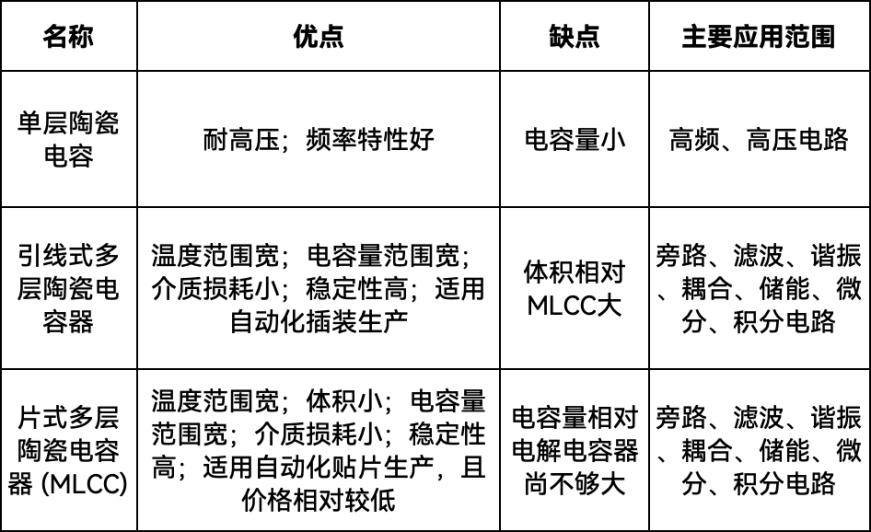
Capacitors mainly include ceramic capacitors, aluminum electrolytic capacitors, tantalum electrolytic capacitors, film capacitors, etc. Among them, ceramic capacitors account for 43% of the entire market share. Ceramic capacitors can be divided into single - layer ceramic capacitors, leaded multilayer ceramic capacitors, and multilayer ceramic chip capacitors (MLCCs) according to their structure.
Due to a series of excellent characteristics of MLCCs, such as a wide capacitance range, good frequency characteristics, high - temperature and high - voltage resistance, small size, long service life, and low cost, MLCCs occupy most of the ceramic capacitor market and are also one of the most widely used passive components at present. Therefore, they are also known as the "rice of the electronics industry". They are mainly used in oscillation, coupling, filtering, and bypass circuits in various electronic equipment, and their application fields cover industries such as automatic instruments, digital home appliances, automotive electronics, communications, and computers.
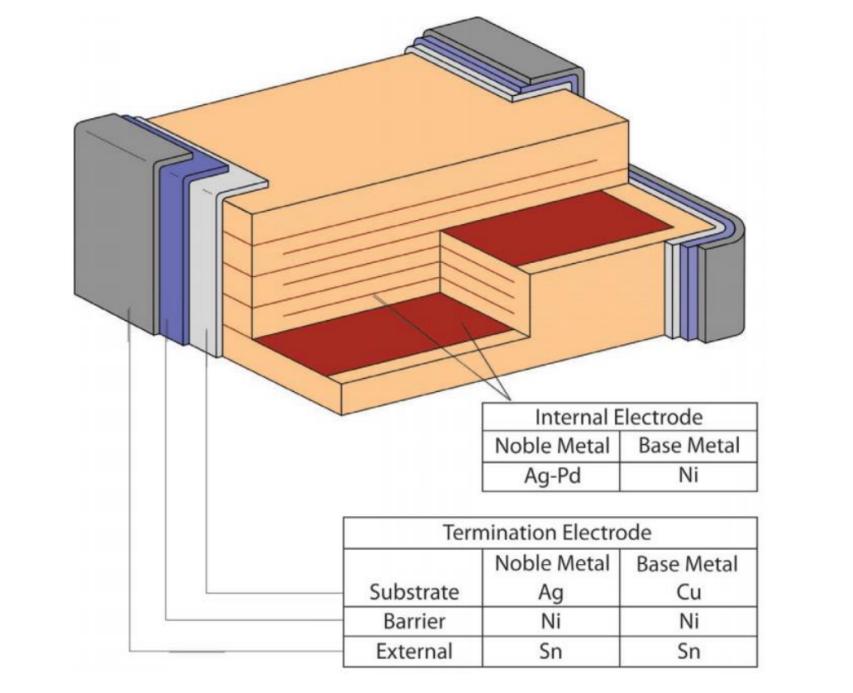
MLCCs essentially have a structure formed by alternately stacking "multiple conductive electrodes + multiple ceramic dielectrics", consisting of three parts: internal electrodes, ceramic dielectric layers, and end electrodes. MLCCs utilize the principle of a plate capacitor. Ceramic powder is pressed into a single substrate, and an electrode layer is coated on the bottom of the substrate to form a plate capacitor. The dielectric material and internal electrodes are stacked in a staggered manner, then sintered at high temperature to form a chip, and finally, metal layers are sealed at both ends of the chip to obtain a monolithic - like structure.
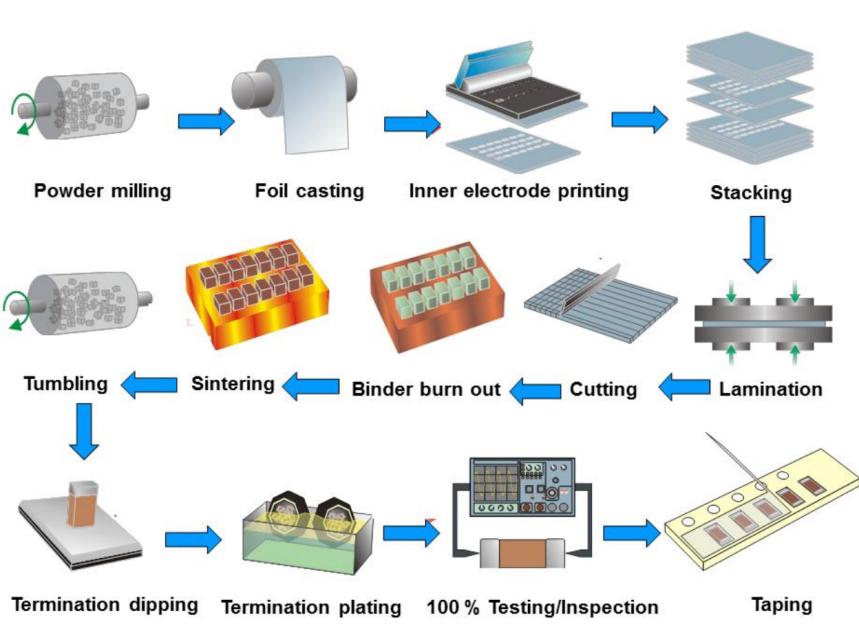
The manufacturing process is roughly as follows: preparing ceramic slurry, casting it into a thin film, printing internal electrodes, laminating and stacking, cutting and forming, binder burnout, sintering, and electrode processing. The industry barriers of MLCCs lie in the quality and proportioning of ceramic powder, thin - layer and multi - layer technology, and the co - firing technology of ceramic powder and metal electrodes.
In the past few decades, MLCCs have undergone several important material and manufacturing process changes. The most representative change is the shift of internal electrodes from precious metal electrodes (PME) mainly made of silver/palladium to base metal electrodes (BME) mainly made of nickel. Currently, the MLCC industry is facing a challenge similar to the "Moore's Law" era in the semiconductor industry: achieving higher performance and lower cost in a smaller size. It can be said that the technical difficulty of MLCCs is not low, especially for high - end MLCCs.
How Does the Data Center Drive the Development of MLCCs?
Scarily, this wave of MLCC market trends may continue. CITIC Securities said that in terms of development trends, the vertical power - supply scheme in the server field, the 800V server architecture, and the upgrade of optical module rates have all put forward higher requirements for MLCCs, such as miniaturization, high - power density, high - temperature resistance, and high - voltage resistance, which further drives the upgrade of MLCC specifications and the overall increase in value.
Currently, data centers are accelerating the evolution from a 12V to a 48V power - supply architecture. At the same time, to achieve more efficient power conversion, the application of LLC resonant circuits is increasing, and the 800V high - voltage power - supply scheme is also being introduced. GPUs and CPUs usually operate at a voltage below 1V, but the current can change by dozens or even hundreds of amperes instantaneously with the computing load. Therefore, a large number of high - capacitance MLCCs are needed to buffer the current and stabilize the power supply. In addition, high - speed interfaces such as NIC and PCIe operate in the tens of GHz frequency band. High - capacitance MLCCs can absorb low - frequency noise and cooperate with small - size capacitors to suppress power - supply noise in a wide frequency band. For AI servers, in addition to the performance of the processor itself, high - capacitance MLCCs and their optimized design are also important foundations for ensuring system stability and releasing computing power.
In the server power - supply system, the common power chain is UPS (Uninterruptible Power Supply) → PSU (Vac → 48V, etc.) → IBC (48V → 12V, etc.) → VRM (converting to CPU/GPU voltage). At each stage, strict requirements are placed on high efficiency, low interference (low emission), low ripple, heat resistance, and long - term reliability. In a high - density and high - power environment, reducing losses and managing heat at the PSU stage and improving power - transmission efficiency at the IBC stage are the keys to the design.

As the power consumption of AI servers continues to rise, the PSUs (Power Supply Units for servers) in data centers are rapidly moving from the traditional kilowatt - level to a power level of 6 - 12kW or even higher. This has led to a rapid increase in the demand for high - voltage - resistant, low - ESR (Equivalent Series Resistance), and highly reliable MLCCs.
In the DC/DC section, the LLC resonant converter has become the mainstream solution for data - center PSUs due to its low switching losses and high conversion efficiency. The PSU resonant circuit is equipped with 10 - 80 MLCCs in a series - parallel structure. To improve the power efficiency of the LLC resonant circuit, it is very important to use MLCCs, whose capacitance value changes little with temperature. As the output power continues to increase, the system usually adopts an interleaved parallel or series - parallel power - module architecture to disperse the current and heat load and achieve higher power expansion. Correspondingly, Class 1 C0G MLCCs (high - precision, low - loss) are required in the resonant circuit to ensure stability and reliability in a high - frequency working environment.
