Priced at 200,000 yuan, will young people buy a car for Doubao?
When more and more car companies are integrating large models into in - car infotainment systems, a new brand has done the opposite - first develop AI, and then build cars.
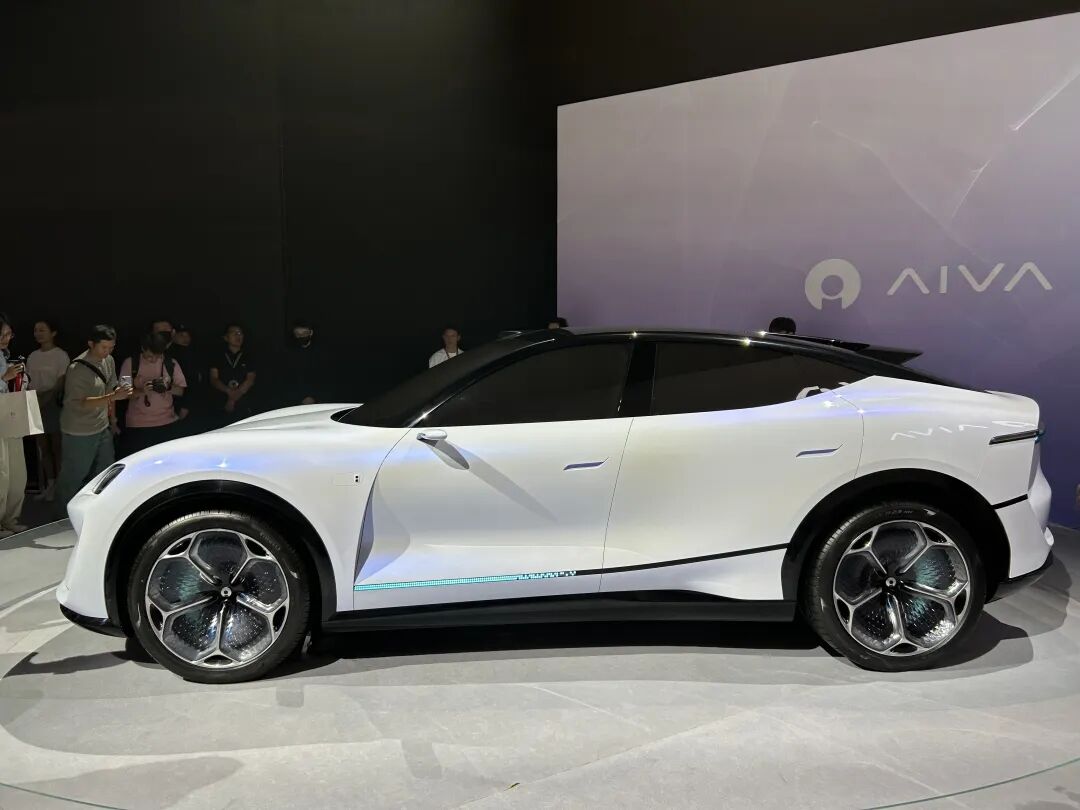
The AIVA concept car is a crossover model. Photo taken by Ciguigongshe.
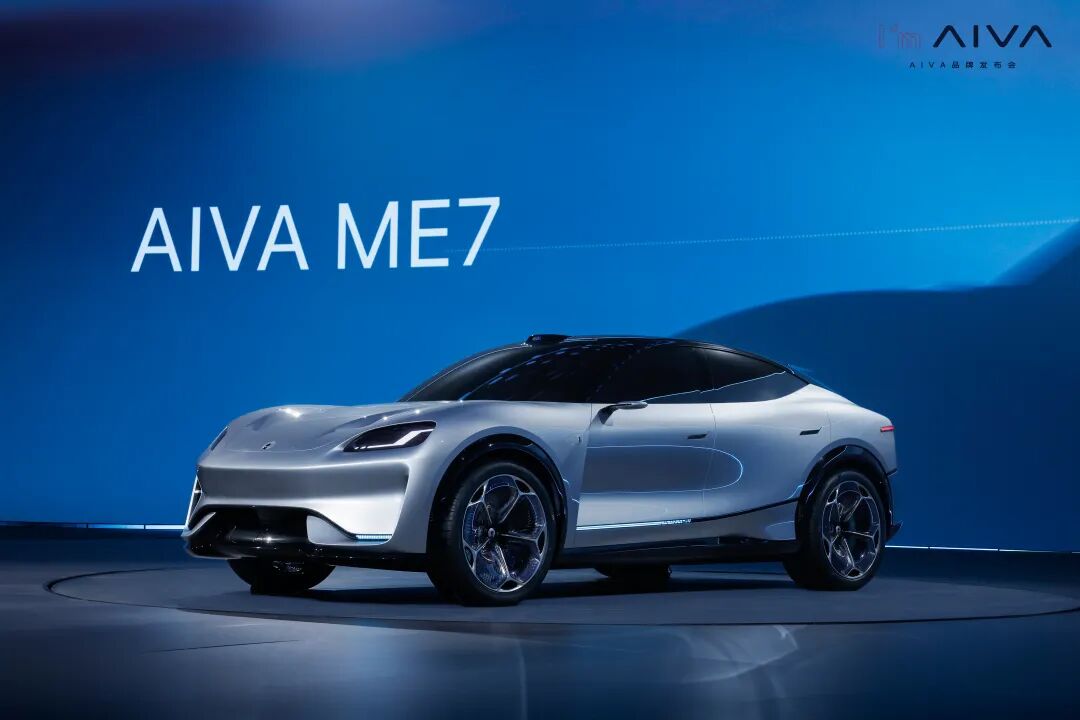
On June 9th, Saidou Technology launched a new car brand, AIVA, in a brand release event held in Beijing. This brand is the result of in - depth cooperation with ByteDance's Volcengine. A concept car with a design highly similar to the mass - produced vehicle was showcased, and it was announced that the mass - produced model, AIVA ME7, will be launched within this year.
This might be the first car in China, and perhaps even globally, that is built around AI. From the very beginning, the product is defined with AI in mind, rather than adding AI after the product is completed.
What people are most concerned about is not the battery range, price range, or even the intelligent driving capabilities, but something else: If a car is designed around AI from start to finish, what will it look like?
What makes an AI - native car "native"?
There are already many brands shouting "define cars with AI", but in existing models, what's really implemented is just using AI as a voice assistant to enable interactive functions in the intelligent cockpit.
The new AIVA brand, with the slogan "AI first, then the car", places AI in a more prominent position than the car itself.
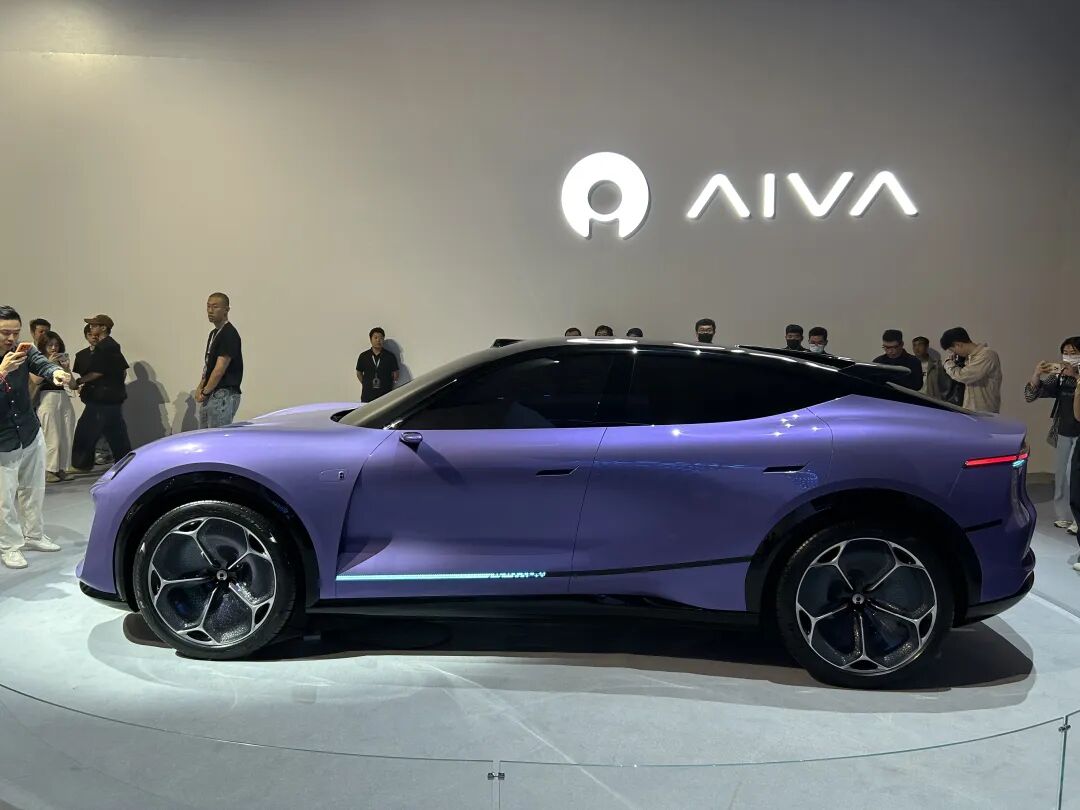
The AIVA concept car is a crossover model. Photo taken by Ciguigongshe.
When this concept is reflected in the appearance of the new car, the most impressive thing about the first AIVA concept car I saw was its smooth lines. Especially when viewed from the side, there are hardly any sharp corners or straight lines on the entire car. It's all smooth curves, like a breathing water droplet.
Just looking at the appearance, the AIVA concept car uses extreme curves to eliminate the visual impact of sharp edges. Without deliberate design, it better fits my imagination of an "AI - native car".
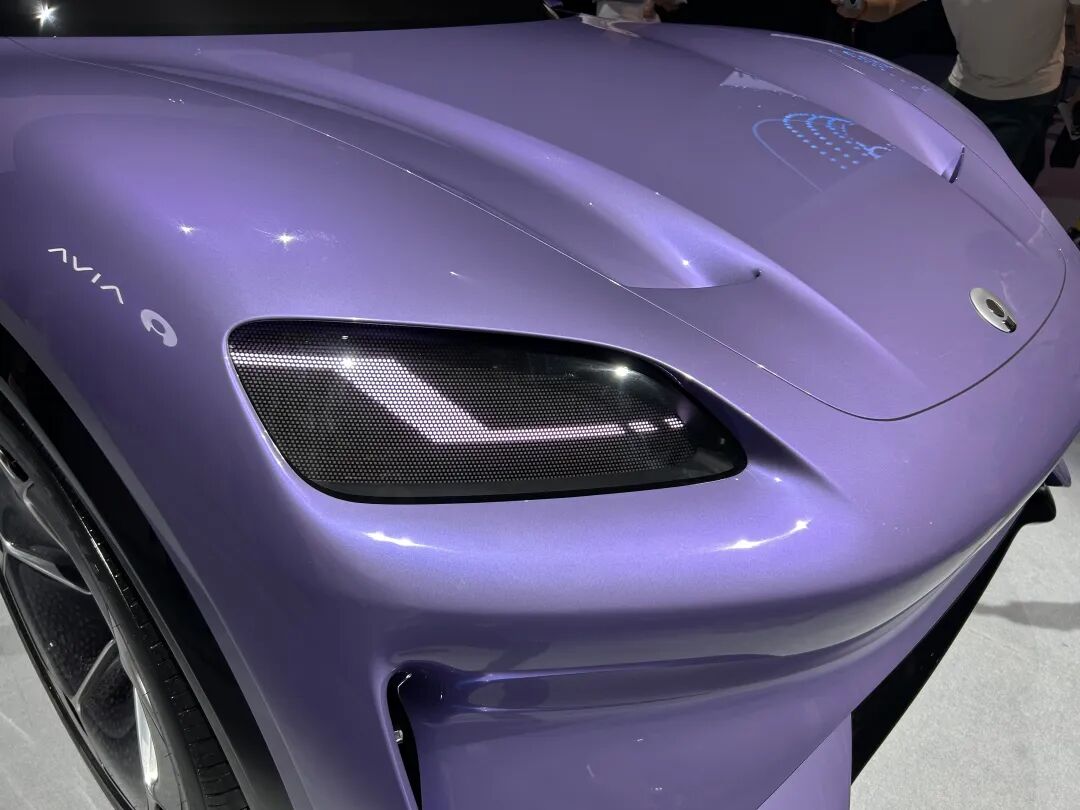
The headlights of the AIVA concept car. Photo taken by Ciguigongshe.
Since it's considered a living being, it needs a part for external interaction. The AIVA concept car turns the front headlights into "eyes" for interacting with users. It uses a matrix of light beads. When users interact with the vehicle, these "eyes" will look at the users and respond to them, becoming a channel for the vehicle's intelligent agent to communicate emotions with humans.
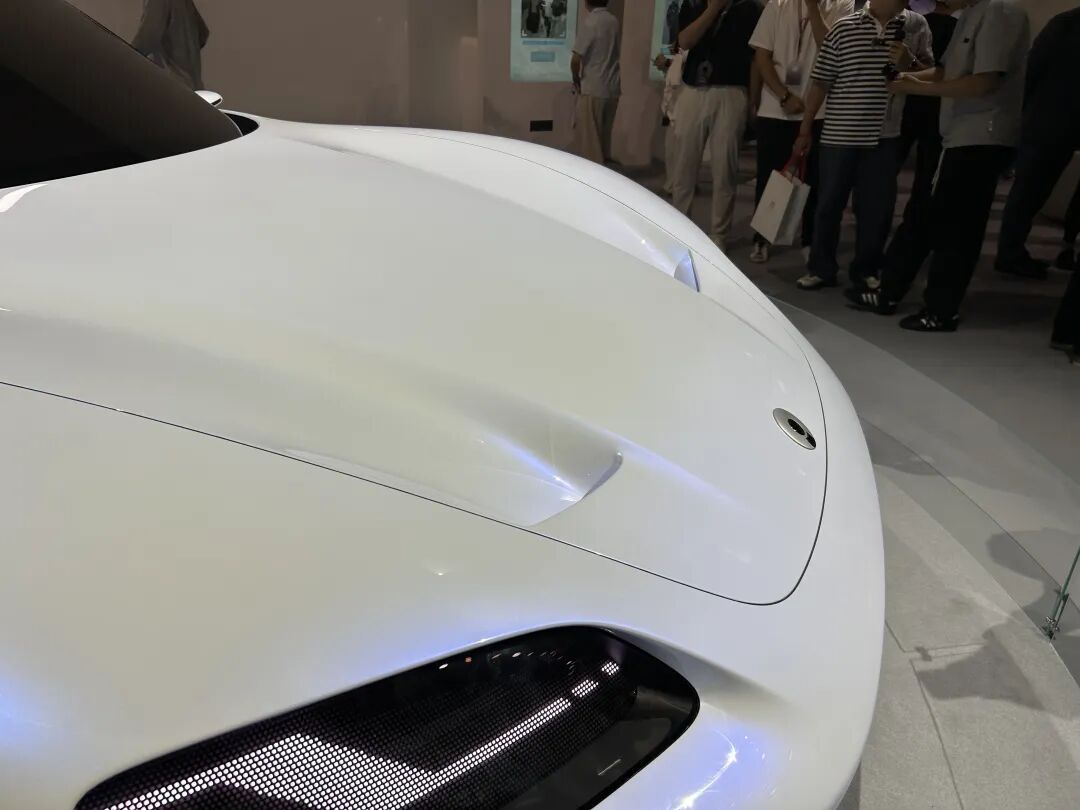
It's uncertain whether this perforated hood can be reproduced. Photo taken by Ciguigongshe.
This concept car is not a pie in the sky but a prelude to the upcoming AIVA ME7. The styling design will be almost 100% reproduced in the mass - produced vehicle.
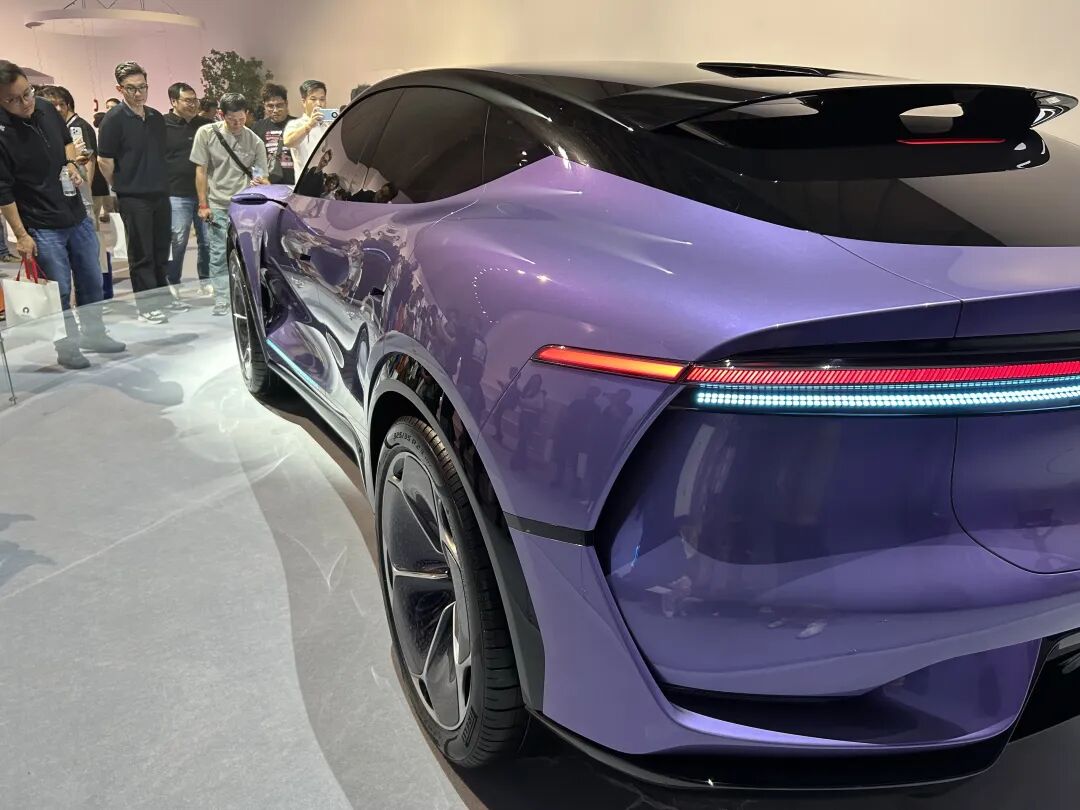
The rear curve of the concept car. Photo taken by Ciguigongshe.
At the press conference, the AIVA team repeatedly mentioned the concept of a "living being". From the streamlined body to the interactive light groups that "gaze" at users, they are trying to reduce the coldness of traditional cars as mechanical products and shape the vehicle into an intelligent agent that can perceive, understand, and respond to users.
This design concept also becomes the starting point for AIVA to define an "AI - native car": "An AI car is not just about putting AI in the car, but making the car a new species of physical AI."
As new energy vehicles have more and more in - car screens and more complex functions, users have access to a wider range of services, but the interaction cost has not really decreased.
Many so - called intelligent cockpits essentially just move mobile phone apps and vehicle control menus into the car. To complete a task, users still need to wake up the voice assistant, give accurate instructions, or search through multiple - level menus.
An ideal AI - native car should not require users to learn how to operate. Users just express their needs, even if they are vague instructions, and the AI can combine the environment, state, and user habits to actively determine what the user really wants, and complete the task decomposition, execution, and feedback.
For example, if a user says "I'm cold", the AI can collect the user's body temperature, the temperature difference between the inside and outside of the car, and adjust the air - conditioning air volume, wind speed, etc. to a comfortable range.
On the second level, an AI - native car should evolve from simply stacking functions to emerging capabilities, being able to do things as flexibly as a human. At the press conference, the AIVA team gave an example. If a user wants to listen to a song but it's not in the song copyright library, the AI can sing a song for the user according to the melody.
On the third level, the AI can perceive and respond to the user's emotions, communicate with the user like a real person, and free the user from the boring driving experience.
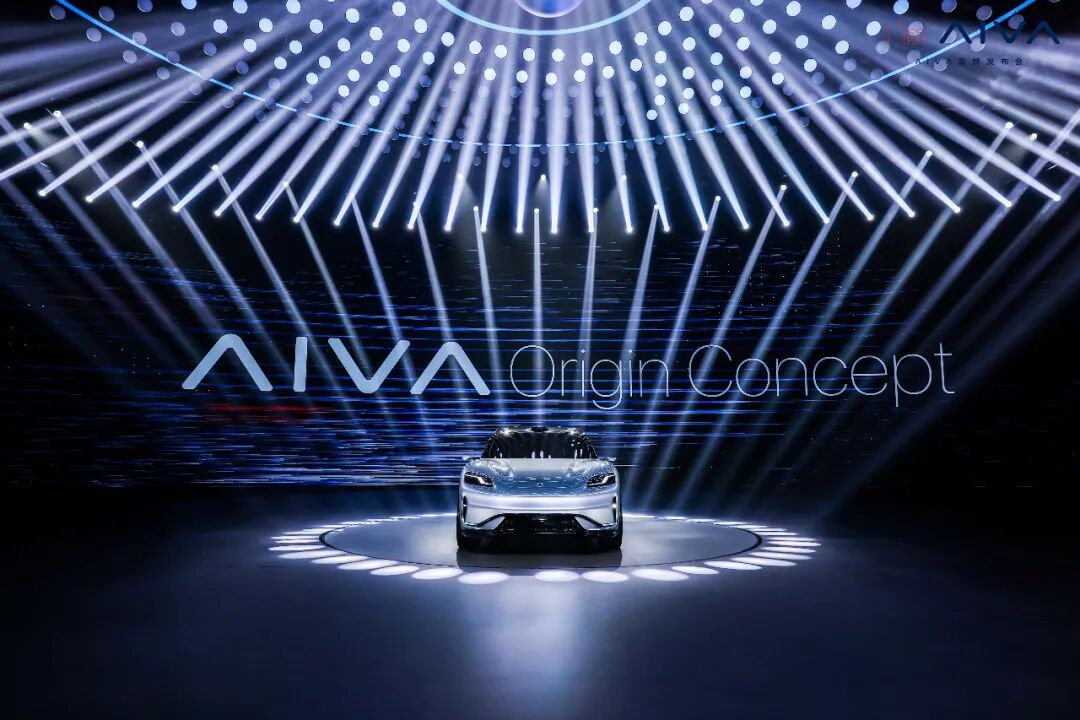
This is the description of an AI - native car at the AIVA brand press conference. What AIVA really wants to do is not just make a smarter new energy vehicle, but a new interactive terminal. When a car starts to have the ability to continuously learn and provide active services, the relationship between it and the user will change from that of a "tool" to a "partner".
Can AIVA, priced at 200,000 yuan, become the first AI car for young people?
From the "Doubao Earphones" to the "Doubao Phone", every time Doubao combines with hardware, it creates a digital hit. The willingness of consumers to pay for AI - native digital products priced from a few hundred to a few thousand yuan has been verified.
However, for a major consumer product like a car that often costs around 200,000 yuan, users need to consider factors such as maintenance, resale value, and even personal safety before making a purchase. Facing competitors like Xiaomi, Tesla, and XPeng that have already established good reputations, why should users choose AIVA to try out a car with strong AI capabilities but unknown in other aspects?
Is AI, and the entire software and system ecosystem, an added bonus in the car - buying decision, or a decisive factor that can change the choice?
Xiaomi users buy cars not because of Xiaoai, but for the product design; Li Auto users buy cars not for Li Auto's voice assistant, but for comfort and family experience. Even when buying a Tesla, it's not all about FSD and AI interaction, but also about paying for its brand and product strength.
Before AIVA, AI was just "icing on the cake", not the decisive factor for users to buy a car. So the biggest challenge for AIVA is not to integrate AI into the car or just create a smarter voice assistant, but to prove that AI has more value for car users than traditional intelligent cockpits.
For example, it should not only be more intelligent in voice interaction and vehicle control but also be deeply integrated with safety, energy replenishment, route planning, etc. Enhance the value of AI from the entertainment and interaction level to the level of safety and efficiency, so that users feel that paying for AI is worthwhile.
After talking about the challenges, AIVA also has two advantages. Although it's a new brand, its founders are all "top players" and can support the new brand with a mature supply chain:
The parent company of the AIVA brand, Saidou Technology, was transformed from "Landian", another brand under Seres. Currently, the largest shareholder is the local state - owned assets in Chongqing, the second - largest shareholder is Seres, and the third - largest shareholder is CATL.
The equity structure also reveals several core elements of "Saidou Automobile" in advance: The former Seres factory is responsible for production, and CATL batteries are used. Although ByteDance does not hold shares, the Doubao large model and the intelligent cockpit will be the core selling points of the new car.
When users buy AIVA, in essence, they are paying 200,000 yuan to get "Seres (AITO) - level manufacturing process + CATL batteries + ByteDance's top - notch AI". Its mechanical quality, power battery, and intelligent foundation are all "top - of - the - line" after repeated market verifications, which helps to reduce users' concerns about the new brand.
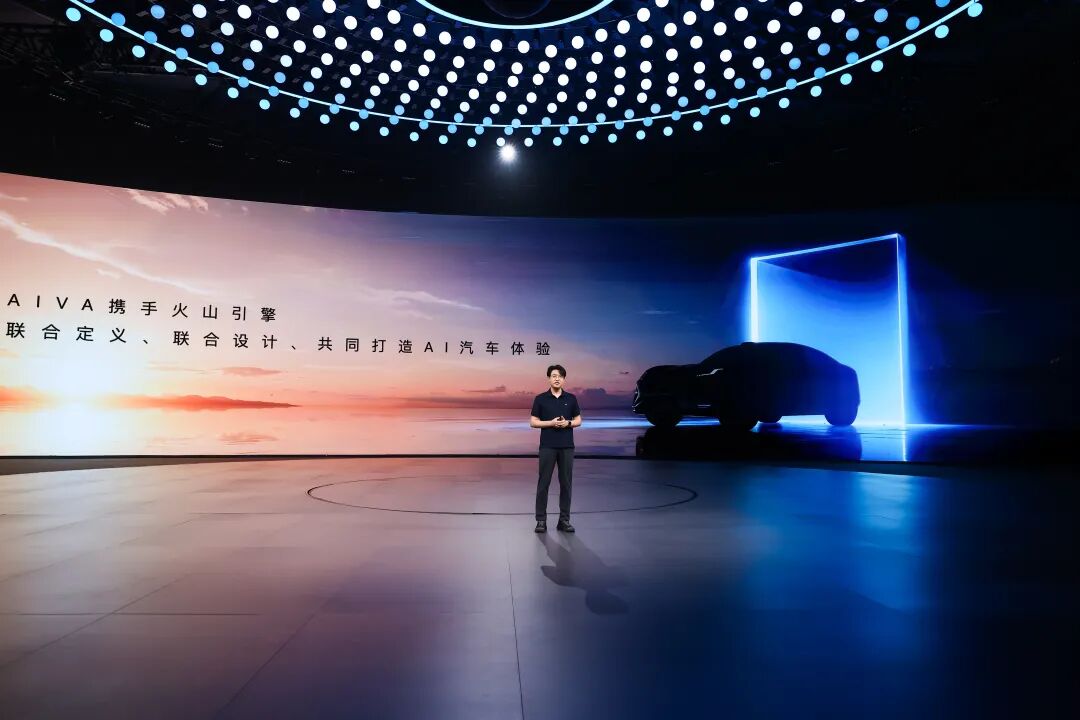
Yang Liwei, Vice President of Volcengine
Speaking of the partnership with Volcengine, Hardware, manufacturing process, and capital are just the foundation. "Entrusting the soul to Doubao" is the real differentiation of AIVA.
Volcengine's involvement in the automotive industry is broader than many people think. Among luxury brands, there are the all - electric Mercedes - Benz CLA, GLC, Audi's E5 and E7X, among joint - venture brands, Volkswagen's ID.ERA9X and Buick's Electra E7, among domestic brands, BYD and Chery. Even the Tesla Model YL delivered in the Chinese market uses Doubao as the large voice - interaction model.
Saidou Automobile and its AIVA brand will be Volcengine's deepest cooperation with an automotive brand since entering the automotive industry. It is no longer a latecomer adapting to a certain model. It is the origin of the product definition of the model itself, jointly defining and designing with the automotive brand.
Digital products such as mobile phones face numerous barriers between apps. The unbroken walls between platforms limit the AI capabilities of the "Doubao Phone" to some extent. However, in the self - closed - loop scenario of a vehicle, Doubao can control the windows, air - conditioning, map navigation, etc. at the physical level and is no longer restricted by information boundaries.
Letting Volcengine define the product from the very beginning of the car can better enable the full implementation of AI capabilities. It can even connect the in - car agent with Doubao to form an intelligent agent that continuously grows and understands user needs.
As a new brand, AIVA may not compete with BBA in traditional luxury and may not compete with BYD in extreme cost - effectiveness. However, the smoothness of intelligent interaction and the coherence of the ecosystem may become its unique competitive advantage, just like iOS for the iPhone.
Epilogue
From integrating AI into cars to defining cars with AI is not just a simple concept upgrade. After two rounds of competition in electrification and intelligence in the automotive industry, native intelligence is the next inevitable step.
Electrification provides the hardware foundation for cars to be controlled by software; intelligence enables cars to accumulate sensor, cockpit, map, vehicle control, and cloud service capabilities. The large model fills in the most crucial link: understanding people, understanding scenarios, and understanding tasks. Now, the wheels of the times have reached the stage where these three things are all mature.
We can't predict whether AIVA will succeed, but it has become a starting point for "AI - native cars".
This article is from the WeChat official account "Ciguigongshe" (ID: ciweigongshe). Author: Yuanzhang, Editor: Chen Meixi. Republished by 36Kr with permission.