After 14 months at the helm, Pat Gelsinger led Intel out of the ICU.
"I might be the first CEO in Intel's history who can speak Chinese." "Several important customers and partners think it's quite rare to have a CEO who can have a couple of drinks of hard liquor with them."
During a recent speech, Tan Lay Koon started with the above words in Mandarin with a slight Southeast Asian accent.
For Tan Lay Koon personally, this is something he can easily handle.
On many previous public occasions, he has expressed his emphasis on the Chinese market and Chinese customers in Mandarin.
Using a few words to build a closer relationship is highly cost - effective.
But for Intel, it's an unprecedented sight. This Chinese - American CEO is trying to make this chip giant feel the changes in various ways.
Starting in the ICU
Tan Lay Koon might be Intel's last card.
In December 2024, the former CEO, Pat Gelsinger, suddenly "retired". At that time, Intel had consecutive quarterly losses, its stock price dropped by 60% in a year, and there were numerous internal factions.
Externally, for a decade, it had been making only incremental improvements, which made angry users call it the "toothpaste factory". As a result, users turned to support Intel's rival, AMD, and chanted "AMD Yes!"
It missed the wave of the mobile Internet, and its market was snatched by Qualcomm and ARM. In the AI era, it still didn't learn its lesson. While NVIDIA and AMD were making huge profits, Intel seemed like an outsider.
Its foundry business lagged behind TSMC. In 2018, TSMC mass - produced the 7nm process, while Intel didn't catch up until 2023.
Some media have started to compare Intel with IBM. This once - mighty giant now only relies on its PC and server businesses to maintain its dignity.
This situation is somewhat similar to what AMD faced around 2014. The latter waited for a savior, Lisa Su.
Intel pinned its hopes on another Chinese - American, Tan Lay Koon. This veteran in the semiconductor industry has an outstanding record in the semiconductor field.
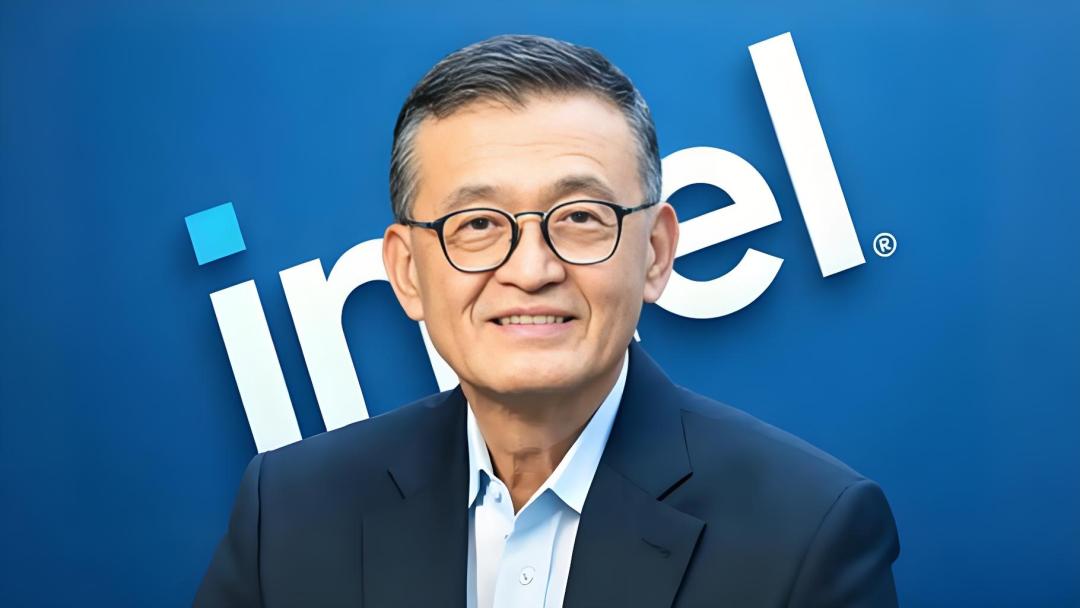
He has invested in dozens of semiconductor companies from Silicon Valley to Asia and has also personally saved semiconductor enterprises.
SMIC is a representative company he invested in. In 2004, SMIC was listed in Hong Kong. The prospectus at that time showed that Tan Lay Koon had served as a director of the company since 2002.
In 2009, during the global financial crisis, the stock price of Cadence, a giant in electronic design automation, plummeted by 60%, and it was on the verge of bankruptcy. Tan Lay Koon was appointed as the CEO of Cadence in this critical situation. During his 12 - year tenure, Cadence's revenue doubled, and its stock price soared by an astonishing 3200%.
Tan Lay Koon not only understands semiconductors but also enterprise management. More importantly, he understands Intel.
In 2022, Intel invited Tan Lay Koon to join the board of directors to assist in transforming Intel. In October of the following year, the Intel board expanded his management scope and authorized him to supervise the manufacturing business. At this time, he had differences with Pat Gelsinger in terms of employee scale, foundry strategy, and work culture.
Not in the position, not taking on the responsibility. In August 2024, Tan Lay Koon left the board of directors.
It wasn't until March 2025 that Tan Lay Koon took over as the CEO, and a redemption of the trillion - dollar giant began.
Radical Remedy
Tan Lay Koon had encountered a similar situation at Cadence and successfully saved the company.
At that time, his approach was a three - step plan: cut redundant departments and concentrate resources on "pre - designed IP modules"; lead the team to collect more than 1000 product improvement suggestions; improve product capabilities and shorten the iteration cycle by 40%.
We can vaguely see the same approach at Intel.
At the beginning of his tenure, Tan Lay Koon shouted the slogan of "building a brand - new Intel". However, for employees who had heard the word "change" so many times that their ears were numb, just shouting slogans was useless.
Tan Lay Koon launched a similar combination of measures.
First, lay off employees to reshape the culture. Intel is not short of talents or technology. In the past, Intel followed the "Tick - Tock" model - updating the manufacturing process one year and the micro - architecture the next year, with the two paths of process technology and core architecture alternately improving.
This approach was not wrong in itself, but the premise was that Intel's team of genius engineers had strong enough explosive power to continuously suppress its competitors. The problem lies in organizational management and corporate culture.
Tan Lay Koon led the largest - scale layoff in Intel's history. The total number of employees was reduced from about 96,400 to 75,000, a decrease of 22%.
Although it's also a layoff, Tan Lay Koon's strategy is different. He cut the management levels. He mentioned in the annual earnings conference that "we completed a large - scale layoff in the second quarter, and during this process, we reduced the management levels by about 50%."
Tan Lay Koon's logic is that Intel is a company with an engineer - centric culture. Layer - upon - layer approvals will only make the decision - making chain extremely long and affect efficiency. This move is to reshape Intel's "engineer culture".
Second, concentrate resources. Suspend overseas factories in Germany and Poland, slow down the progress of the factory in Ohio, and integrate its assembly and testing business in Costa Rica into larger factories in Vietnam and Malaysia. Terminate the independent research and development of glass substrates and purchase products from external suppliers. The purpose is to quickly recover funds.
Restructure some businesses. Sell 51% of the shares of its programmable chip division, Altera, to the private equity firm Silver Lake Capital at a transaction price of about $3.3 billion. Shrink the automotive business department. Gradually close its small automotive business department and lay off most employees in this field. Sell some Mobileye stocks to recover funds and reduce the shareholding ratio.
Concentrate resources on core businesses such as data centers, artificial intelligence, and personal computer chips. The most typical move is to build a new Fab 52 wafer factory in Arizona, USA, to fully support the Intel 18A process and make up for the short - board in chip manufacturing as soon as possible.
Third, strengthen external cooperation. The biggest news is the introduction of NVIDIA's investment. In September last year, NVIDIA invested $5 billion in Intel at a price of $23.28 per share, and the two sides will jointly develop AI infrastructure and computing center products.
With this combination of "stopping losses + going all - in on core businesses", the most intuitive result is that Intel's losses have significantly narrowed. In the third quarter of last year, Intel's net profit was $4.063 billion, the first profit in five quarters.
A Narrow Escape
The introduction of NVIDIA's investment largely reflects Tan Lay Koon's concept: not pursuing technological unification as in the past, but focusing on its own moat and leveraging external forces.
This is more obvious when he faced the trouble from the Trump administration.
In 2022, the U.S. Chip Act was officially announced, planning to invest $280 billion in ten years. About $52.7 billion will be used for semiconductor manufacturing, research and development, and workforce development. Intel is one of the biggest beneficiaries. In just two years, the direct subsidy amount reached $8.5 billion.
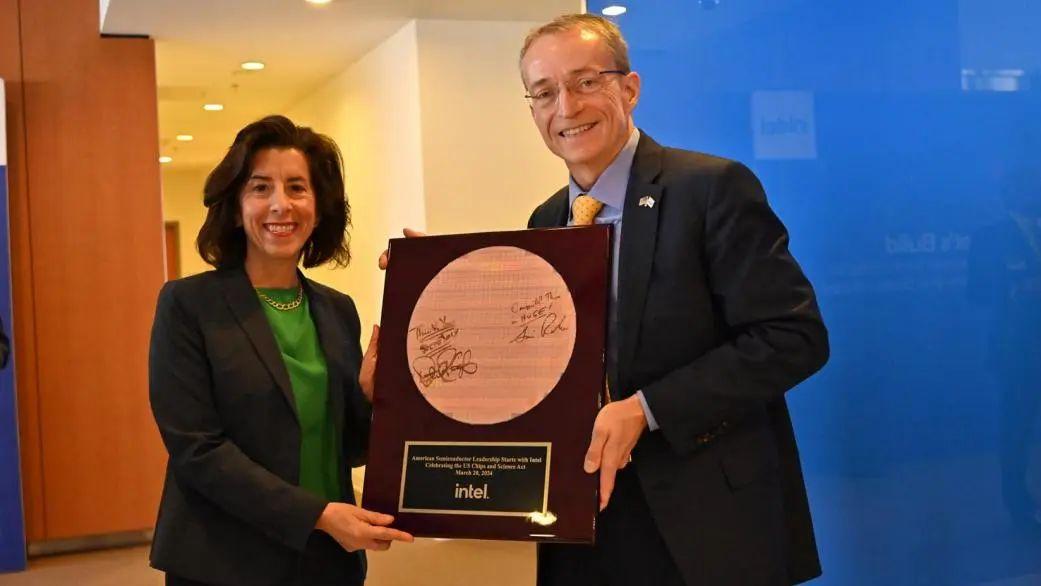
However, after Trump took office, he quickly targeted Intel. On August 7 last year, he posted on social media, "Intel CEO Tan Lay Koon has a serious conflict of interest and must resign immediately!"
Tan Lay Koon then launched a textbook - like self - rescue.
First, he issued an open letter expressing his love for the United States, emphasizing the importance of Intel to the U.S. technological leadership, national security, and economic strength, and personally contacted the White House to clarify the misunderstanding.
On August 11, Trump met with Tan Lay Koon. Obviously, this crisis public relations was very successful. Trump's attitude did a 180 - degree turn and said that his success story was "amazing".
The final result is that Intel ceded 9.9% of its equity to the U.S. government.
The U.S. government will purchase 433.3 million newly issued common shares of Intel at a price of $20.47 per share, with a total amount of $8.9 billion. Among them, $5.7 billion comes from the approved but unpaid grants under the Chip Act, and $3.2 billion comes from a project appropriation.
Trump transformed the funds promised by the previous government in the form of free grants or project subsidies into equity investment. Without spending an extra cent, the U.S. government became Intel's second - largest shareholder.
Tan Lay Koon didn't suffer too much in this business negotiation. Although it was a bit humiliating, Intel didn't have much room for bargaining. Introducing the U.S. government as a shareholder gives Intel government endorsement, and to a large extent, it doesn't have to worry about government - level uncertainties. At the same time, by getting on the U.S. government's bandwagon, Intel will have priority in many government projects and industrial support programs.
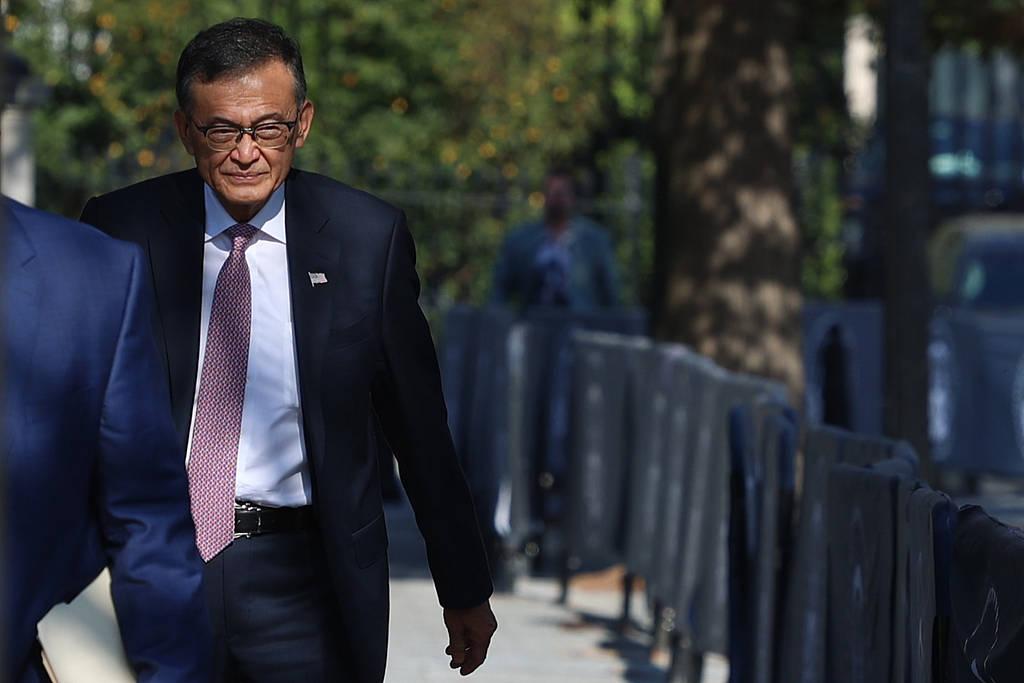
This narrow - escape episode is a landmark event for Tan Lay Koon to clear external obstacles. After the first fire inside is burned out and external obstacles are cleared, Tan Lay Koon can finally turn his attention to the strategy.
From 18A to 14A
The 18A process is Tan Lay Koon's battle for the foundation.
This is Intel's first 2 - nanometer - class process node. The industry generally believes that the 18A process can be comparable to the 2 - nanometer process that TSMC and Samsung are about to mass - produce.
In 2021, after Pat Gelsinger took the helm of Intel, he put forward an aggressive goal of "five nodes in four years". At that time, Gelsinger hoped to surpass TSMC in advanced manufacturing by the end of 2025. However, he didn't achieve this goal until his retirement.
Tan Lay Koon made substantial progress on this project in his first year at the helm.
In March, the 18A process entered the risk production stage, and the verification of the first batch of complete chip - designed wafers was completed. In October, Intel 18A started mass production.
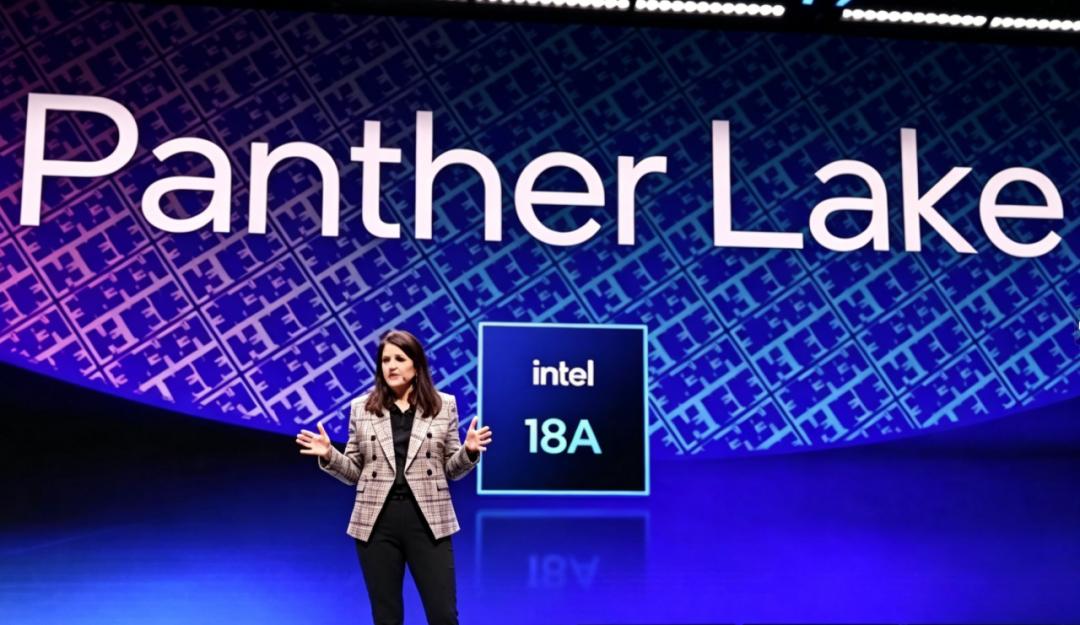
In January this year, the Intel 18A process was commercially launched, and the Panther Lake consumer - grade processor began to be installed in laptops.
By June, the 18A process had entered the large - scale mass - production stage. The next important thing is to reach the industry - standard yield rate.
If the 18A process goes smoothly, it will become an important source of income for Intel in the next few years and effectively improve its profitability.
The value of the 18A process is not limited to this. More importantly, Intel has proved that it has not fallen behind in the chip - manufacturing industry and still has reliable strength. As the only semiconductor company conducting research, development, and manufacturing in the United States, Intel's value to the U.S. economy and national security is much higher than that of the already - compliant Taiwanese (TSMC) and South Korean (Samsung) enterprises.
Thanks to this relationship, reports show that Intel has won the foundry contract for Apple's low - end M - series chips and will use the Intel 18A process to manufacture chips for Apple's 2027 products. Foundry for Apple is the most influential foundry endorsement in the world.
External foundry has become Intel's choice for future business expansion.
The 18A process is mostly for internal use, while the 14A process is the main force for external foundry. The 14A process is equivalent to the 1.4nm node and is comparable to TSMC's A14.
For the 14A process, Tan Lay Koon's idea is: on the premise of "confirmed customer commitments", without customers, there will be no capital expenditure. This pragmatic strategy enables the 14A process to have commercialization capabilities from the very beginning.
According to current information, Intel has joined Elon Musk's Terafab plan and will jointly cooperate with Tesla, SpaceX, and xAI (Musk's ecosystem) to build a brand - new chip - manufacturing industrial system.
If these two battles go smoothly, Intel will completely emerge from the shadow in the manufacturing end. Currently, the 18A process has passed the most dangerous stage, and the test for the 14A process is yet to come.
The Timing of AI
On the product side, Tan Lay Koon gave up the GPU market and continued to focus on CPU.
This approach also avoids unnecessary consumption and prevents the situation of trying to do both CPU and GPU but not doing either well. Intel's strength lies in CPU and chip manufacturing, which has a complementary relationship with NVIDIA. At the same time, according to Tan Lay Koon's judgment, the CPU will also play an important role in the AI era.
Tan Lay Koon waited for his opportunity. The evolution of AI technology is moving towards generative AI, agentic AI, and physical AI. Currently, humanity has entered the era of agentic AI from generative AI.
In the past, the computing power consumption of generative AI was highly concentrated on GPUs. However, in the agentic AI stage, the operation mode of AI is no longer a dialogue - style Q&A but an autonomous workflow for performing complex tasks. The value of the CPU begins to emerge. Compared with the computing power of GPUs, the CPU can play a greater role in planning, tool invocation, database access, code execution, and multi - agent collaboration.
Tan Lay Koon judged that the common 1:8 ratio of CPU to GPU in cutting - edge model training has evolved into a demand for a 1:1 or even higher CPU density in the agentic AI scenario.
He also revealed that in the past four weeks, several corporate CEOs have directly called him to request an increase in CPU supply, and there are signs of supply shortages for some products.
Centering around the CPU,