DingTalk sees leadership reshuffle: Does Chen Yusen have the "right moves"?
After a storm within and outside DingTalk, Alibaba has chosen to replace the leader of DingTalk.
The latest news shows that Chen Hang (nicknamed Wuzhao), the CEO of DingTalk, has left DingTalk, and Chen Yusen has taken over. The latter's previous public identity was the vice president of Alibaba Cloud Intelligence Group and the person in charge of MuleRun.
This significant change occurred at a delicate time.
In the past two weeks, DingTalk has just experienced a round of public opinion storm. A long article titled "Inside DingTalk" circulated on Alibaba's internal network, reviewing the entire process of the DingTalk ONE project from its inception, peak, contraction, to split.
Subsequently, Ma Ruila, the vice president of DingTalk and the person in charge of AI products, posted an article titled "Outside DingTalk" on his personal social media, confirming that he completed the resignation procedures on May 15, ending his three - year career at Alibaba and leaving DingTalk.
Two consecutive rounds of public opinion storms have brought all the product disputes, organizational pressures, and management methods during DingTalk's AI transformation in the past year to the forefront. A few days later, Wuzhao left DingTalk.
On June 10, the Partner Committee of Alibaba posted an article titled "Having Emotions, Integrity, and Growth Is the Essence of Alibaba Culture" on the company's internal network, responding to the discussions triggered by the long article "Inside DingTalk" written by a former DingTalk employee.
The post was straightforward in its wording, criticizing the relevant management methods of the DingTalk team as "not in line with what Alibaba culture should be" and emphasizing that "mutual respect, treating people as individuals, and having emotions and integrity" are the core of Alibaba culture.
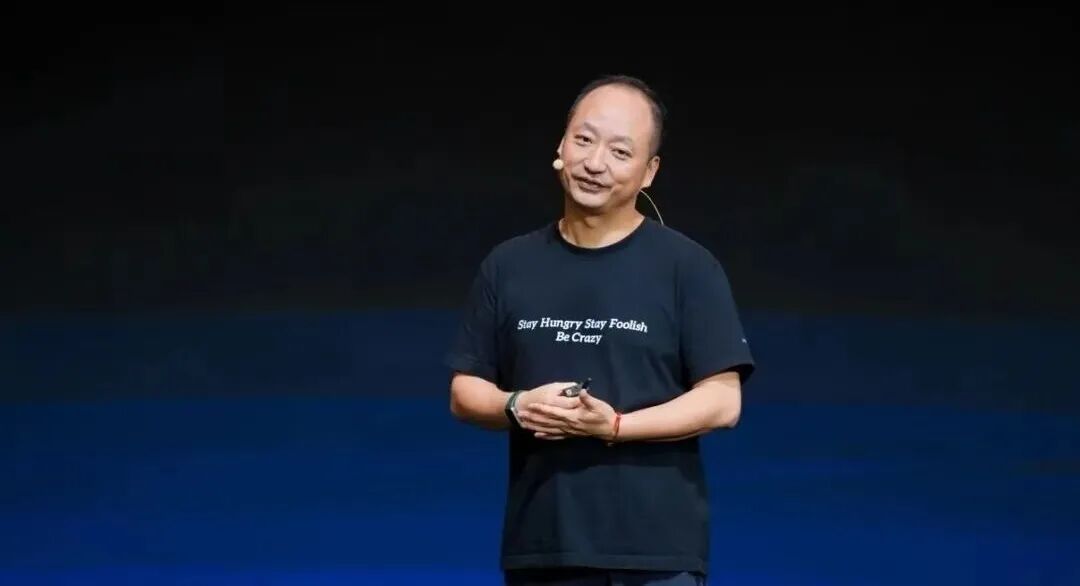
With the departure of Wuzhao, the "preacher", what is left for Chen Yusen, a "young general" born in 1992, is a DingTalk that has just reached an AI turning point.
1
The fuse of this round of seismic personnel changes was a long article.
Recently, a 75,000 - word article titled "Inside DingTalk" circulated on Alibaba's internal network. The author is "Yousu", an AI product manager in the Wukong Division and also the core product manager of the ONE project. The article uses the rise and fall of the ONE project as an entry point, mentioning issues such as organizational management, product decision - making, and internal team friction within DingTalk.
DingTalk ONE was unveiled at the DingTalk 8.0 press conference, which was also Wuzhao's first public appearance after his return. At that time, he was caught in another public opinion storm about "late - night building sweeps".
At that press conference, Wuzhao defined DingTalk ONE as the core product of DingTalk's AI. Its goal is to transform DingTalk from a traditional collaboration tool to an AI - enabled work portal: instead of just allowing users to switch between group chats, documents, schedules, and approvals, AI will organize work information into cards and present them to users in the form of an information stream.
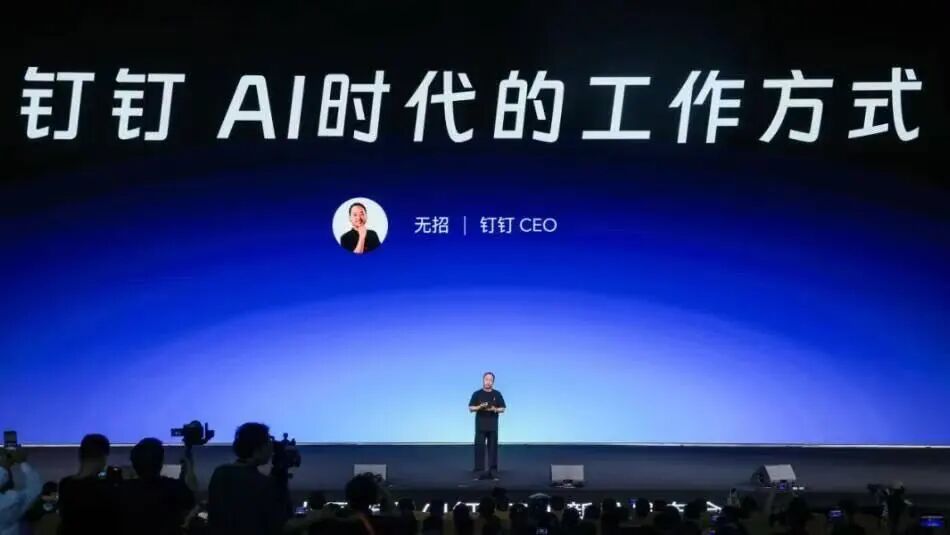
Wuzhao had high expectations for ONE at that time. After the press conference, when he was interviewed by the media, he said that compared with hardware products like DingTalk A1 that are more easily perceived by the public, DingTalk One is "more innovative" in aspects such as work message processing, information acquisition, and converting external information into internal enterprise knowledge.
He also admitted that the development of ONE only took four months, and he was not sure whether the algorithm, AI's understanding of data, timeliness, and various details were fully integrated. "It needs a process to mature," he said.
In Wuzhao's product logic, DingTalk is not just an enterprise IM or a collaboration software, but will become the AI - enabled work homepage that enterprise employees face every day.
However, ONE did not reach the height that Wuzhao expected.
Public reports show that the peak DAU of ONE was around 3 million, but ten months after its release, it was moved to the negative first screen, and its entry was replaced by the new product "Wukong".
Back to the long article, in Yousu's narrative, ONE reflects the changes within DingTalk after Wuzhao's return: a faster product rhythm, stronger organizational pressure, and an attempt to redefine the work portal with AI. However, the current situation reflected is chaotic product decision - making, repeated strategic positioning, ineffective internal team friction, and high - pressure iteration.
In other words, DingTalk's first attempt at an "AI - enabled work portal" can hardly be called a success. One of the reasons is that ONE carried too many goals.
In Yousu's view, the concept of ONE can be summarized into four levels: reducing the burden on users, upgrading DingTalk, uniting the organization, and promoting token sales for the group. When a product undertakes the goals of reducing the burden on employees, serving as the face of AI, boosting organizational morale, and achieving commercialization at the same time, it is easy to become a project with unclear directions and priorities.
On June 8, Ma Ruila, the former vice president of DingTalk and the person in charge of AI products, posted an article titled "Outside DingTalk" on his personal official account, confirming that he completed the resignation procedures on May 15, ending his three - year career at Alibaba and leaving DingTalk.
In the article, Ma Ruila said that he was "unable to calm down for a long time" after reading "Inside DingTalk" and believed that even if Yousu didn't write it, someone else would.
He was the person in charge of DingTalk's AI products and was at the forefront of DingTalk's AI transformation. Ma Ruila's departure further intensified the public opinion pressure on DingTalk and also attracted public attention to CEO Chen Hang.
As early as the Hupanyuan era, Chen Hang was an intern in Alibaba's early - stage team, and his mentor was Wu Yongming, the current CEO of Alibaba.
He once founded DingTalk single - handedly and left after DingTalk entered the stage of "integration of cloud and DingTalk". In September 2020, Alibaba upgraded DingTalk to the "DingTalk Division" and fully integrated it with Alibaba Cloud; Wuzhao then left the front - line of DingTalk and was transferred to the group. In 2021, he officially left Alibaba and founded Liangqingyiyang with some core DingTalk backbones.
Four years later, Wuzhao returned to DingTalk, which was an important arrangement in Alibaba's AI strategy.
At that time, DingTalk had over 700 million users, more than 5,600 ecological partners, and covered 20 national economic industries.
During the tenure of the former CEO Ye Jun (nicknamed Buqiong), DingTalk focused more on commercialization, low - code development, large - scale customers, and the ecosystem.
The 21st Century Business Herald once reported that promoting large - scale customer business was one of the core tasks after Ye Jun took over. In March 2022, DingTalk announced the start of commercialization and set a goal of achieving break - even by 2025; during the first half of Alibaba's fiscal year 2025, DingTalk's annual operating income ARR exceeded $200 million.
After Wuzhao's return, the keyword of DingTalk quickly shifted to AI. The founder of DingTalk also tried to inject an entrepreneurial spirit into the team again.
After his return, Chen Hang resumed the management style of a startup company, requiring the team to clock in at 9 o'clock, shortening the lunch break, using DingTalk for external communication first, conducting a reverse check on the code volume of the technical team, requiring all employees to learn Python and take exams, and asking product managers to visit enterprises for co - creation every week.
This strong - willed return of the founder left a deep impression on the outside world about DingTalk.
In March this year, DingTalk released the enterprise - level AI - native work platform "Wukong". Wukong is an independent application and will also be directly integrated into DingTalk. DingTalk carried out a CLI transformation on the underlying code, allowing the Wukong Agent to natively operate thousands of DingTalk capabilities instead of simulating human clicks on the interface.
As a result, Wukong became an independent division and is part of Alibaba's latest ATH strategic framework.
At the press conference, Wuzhao emphasized the significance of this change: "Today, we break DingTalk apart and rebuild it with AI to create 'Wukong'. In the past, people used DingTalk to work; in the future, AI will use DingTalk to work."
Wukong undertakes Alibaba's greater expectations in the B - end AI scenario: to allow AI to access enterprise accounts, permissions, application systems, and work processes.
However, with the successive departures of Wuzhao and Ma Ruila, this newly - started enterprise AI framework centered around Wukong has now been handed over to Chen Yusen, the 92 - year - old young general.
2
Looking at the resume of Chen Yusen, a "young general" born in 1992, we can see three labels: a security entrepreneur, an executive in the Alibaba Cloud system, and the person in charge of the Agent platform.
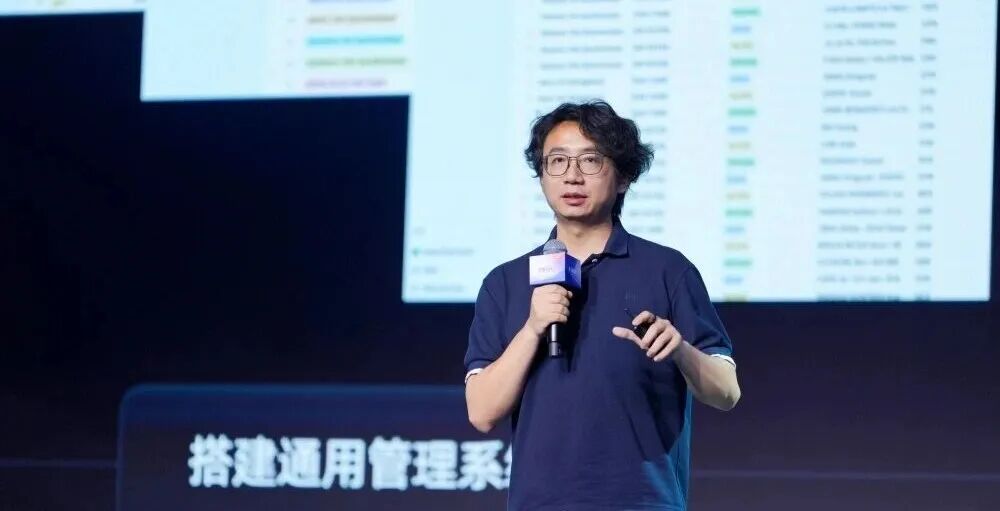
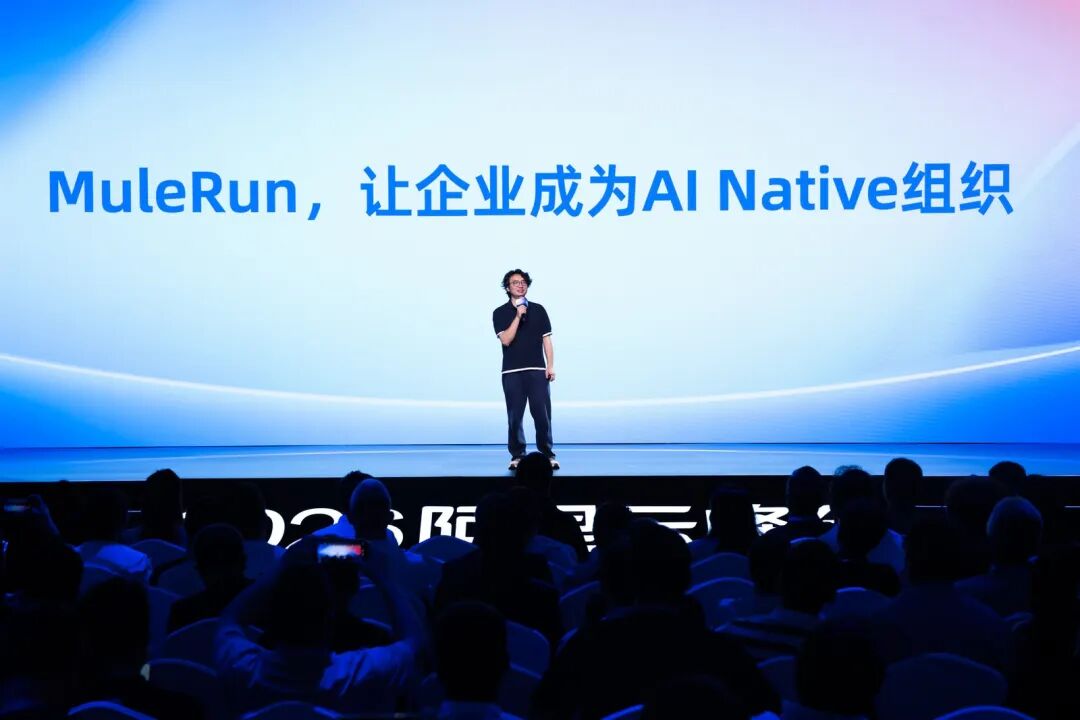
At the 2026 Alibaba Cloud Summit held in May, Chen Yusen's identity was the vice president of Alibaba Cloud Intelligence Group and the person in charge of MuleRun. The theme of his speech was "MuleRun: Making Enterprises AI - Native Organizations".
It is worth noting that during the same period when the Alibaba Cloud Summit was held, Ma Ruila, the former vice president of DingTalk, chose to leave.
MuleRun, also known as "Mule Runs Fast" in Chinese, is an Agent product under Alibaba and is part of the Alibaba Cloud ecosystem, providing AI - Native transformation solutions for enterprises and individuals.
Public information shows that as of May, MuleRun has served enterprises and users in 43 countries such as China, Japan, Brazil, and Mexico. The proportion of users with a monthly payment of over $200 is 34%. Paying users are active on 2.6 working days per week, and each user completes 13 end - to - end delivery tasks per week on average.
In the reports related to the summit, Chen Yusen divided the use of AI by enterprises into two stages: the Copilot stage, where AI is still the co - pilot to help employees speed up; the AI - Native stage, where work is re - organized around AI, and people change from executors to standard - setters and result - checkers.
Looking further back, his starting point was Changting Technology.
According to the Late Night Podcast, Chen Yusen is a young and well - known serial entrepreneur. He founded the network security company Changting Technology after graduating from Zhejiang University at the age of 22. Five years later, he sold it to Alibaba Cloud and is now starting anew with his understanding of AI Agents.
Public information shows that Changting Technology is a well - known network security company in China. In 2019, Alibaba Cloud planned to acquire Changting Technology in full, and Chen Yusen was one of the co - founders of Changting Technology. After the acquisition, the Changting brand and team continued to operate independently.
His experience is actually not far from DingTalk.
Chen Yusen's security background and his experience in building MuleRun can be directly integrated into DingTalk's business map.
The core assumption of MuleRun is that when Vibe Coding significantly lowers the threshold for application development and Claude Code brings new methods for Agent creation, a large number of people without a technical background can also encapsulate their work knowledge and processes into AI Agents, realizing the automation of personal work.
In a previous interview, Chen Yusen said that MuleRun aims not to create a single Agent but to lower the threshold for creation and delivery so that more long - tail demands can be met. When asked what it means to "do well", his answer was very modest: "Simple, stable, and easy to use." He also mentioned that "a good enough prompt has great commercial value."
Chen Yusen mentioned that the future marketplace will no longer be in the familiar shelf form but will trigger transactions through conversations.
If this idea is applied to DingTalk, it may be another platform - building path: DingTalk provides the foundation of organization, permissions, data, applications, and workflows, and enterprise employees, developers, and service providers produce Agents on it. These Agents then enter the daily enterprise processes through DingTalk.
This is not in conflict with the narrative during Wuzhao's tenure, but the focus may be different.
Putting aside the high - level decisions under the heavy public opinion pressure, Chen Yusen's arrival may be a signal that DingTalk/Wukong is fully shifting towards an "Agent platform".
Of course, the problems that Chen Yusen has to face are much more complex than those of MuleRun, and DingTalk also has a complex legacy from the past ten years.
It needs to maintain its existing basic business of organizational collaboration and enterprise services while changing users' old perception of it; it needs to serve large - scale customers and ecological partners while allowing AI Agents to enter more detailed and in - depth enterprise processes.
In Alibaba's current business system, there are products related to Quark, Taobao, and Tongyi on the C - end, while on the B - end, an entry point that can penetrate deeply into enterprise internal processes is needed. DingTalk connects organizational structures, communication relationships, document knowledge, approval processes, and business applications, making it one of the most suitable applications in the Alibaba system to undertake enterprise AI.
Putting aside all the public opinion storms at the management level and looking only at the product level, what DingTalk may need most is not Wuzhao's "re - entrepreneurial" short - term reform but a leader who understands the technical foundation better and can build a new - generation Agent platform.
Just a few days ago, Ma Ruila wrote a blessing at the end of "Outside DingTalk", hoping that Wuzhao could lead DingTalk to regain its glory.
However, just a few days later, Wuzhao also "stepped outside DingTalk".
The legend of the Hupanyuan era has come to an end again. After the departure of this once - passionate founder, the problem left for DingTalk has changed from being an AI entry point to a deeper organizational proposition: Should and can enterprises "let go" of AI?
When interviewed by the media before, Chen Yusen talked about AI - Native and said, "Now, if you don't let go, you can't achieve AI - Native because you don't trust AI, but human participation in the process is precisely the core reason for the significant slowdown."
After Wuzhao's departure, this sentence has become a new problem for DingTalk: Are enterprises brave enough to "let go" of AI? With Wukong being pushed to the forefront and Chen Yusen taking over, this will be a long - term verification of product transformation and trust in AI.