A small town in Guangdong has achieved an extraordinary turnaround, hosting the entire industrial chain of drones right here.
The story begins in a place that hardly exists on the maps...
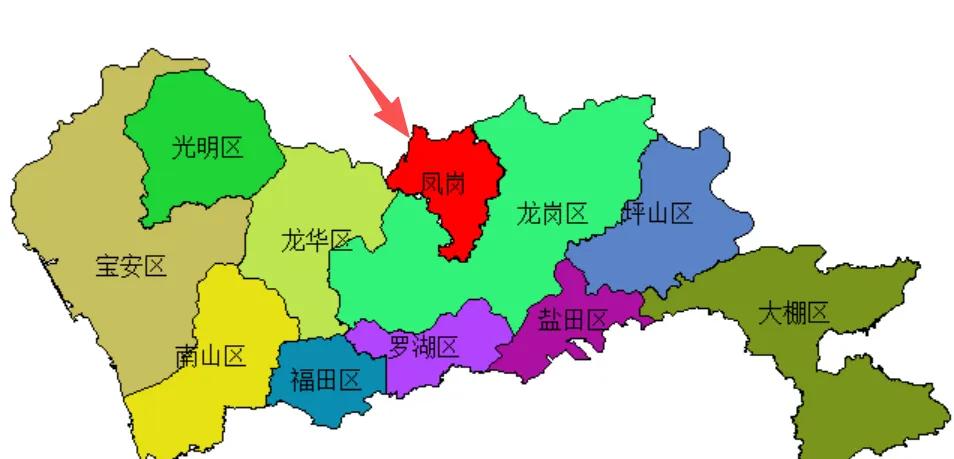
In the southeastern corner of the Pearl River Delta in Guangdong, nestled between Shenzhen and Dongguan, lies a town with extremely low visibility. It has no airport, no aircraft manufacturing plant, and for a long time, its name didn't even appear on the national low - altitude economy map.
However, this unassuming little town has recently pulled off something big!
The Town's Comeback
In May 2026, the global low - altitude economy sector set its sights on Shenzhen. Amidst a group of city exhibition teams, a strange figure suddenly emerged: Fenggang Town in Dongguan.
It brought 10 low - altitude economy enterprises, and in the center of the exhibition area stood a colossal object: the current largest multi - rotor drone in China in terms of payload. A single drone can carry 700 kilograms, and a formation of 10 drones can transport 7 tons of goods at a time. Insiders privately call it the "King of Multi - rotors".
The whole place was in an uproar.
How could a town without an airport or an aircraft manufacturing plant present such high - quality products?
The Missing Parts Were Here All Along
In the past, to build a drone, you had to have the design drawings, motors, flight control boards, propellers, and batteries "fly in" from all over the country or even the world to come together.
But in Fenggang, all of this is concentrated within just a few dozen square kilometers.
Micro - motors, flight control PCBs, carbon fiber propellers, solid - liquid hybrid batteries, and core hardware accessories. Whatever you're looking for, you can buy it just around the corner. With 282 high - tech enterprises and nearly 600 industrial enterprises above a designated size, it's like a sumptuous feast, just waiting for the main course of drones.
But this isn't the most exciting part.
The Wind Finally Reached the Ground
On June 8, 2026, a report in the Economic Observer was like a splash of hot oil in the industry.
More than 10 companies, including DJI, Fengyi Technology, and Autel Robotics, simultaneously confirmed that the business model of the low - altitude economy has been successfully established. Orders are pouring out like a flood.
The deputy general manager of a drone company in Fenggang almost burst into laughter: "This year's performance is expected to increase by about 40%."
It's not just empty talk. At the end of May, DJI won a large order worth 1.83 billion yuan in the State Grid's procurement, covering drones, unmanned drone nests, and control platforms all in one go. In Taizhou, 207 DJI airports have formed a low - altitude operation network covering 5,800 square kilometers.
The logistics track is even more bustling. Fengyi Technology delivers more than 20,000 orders a day in the Greater Bay Area, with over 600 flight routes and a cumulative flight of 1.1 million sorties, which is equivalent to each plane flying around the earth several times.
The low - altitude economy is transforming from a lofty concept into real money.
But have you ever thought about a question:
Who's the Mastermind Behind the Scenes?
Behind every take - off in the low - altitude economy stands a name: DJI.
This Shenzhen - based company, which holds 70% of the global consumer - grade drone market share, is the ceiling of the industry.
But do you know? What supports this ceiling isn't the algorithm geniuses in the cloud, but a group of processing factories on the ground: they are right here in Fenggang, Dongguan.
DJI's power motors, carbon fiber propellers, and flight control PCBs all come from the factories in Fenggang that originally made mobile phone parts and toy motors.
Nearly 70% of the country's drone spare parts are produced in Dongguan. But in this tiny place of Fenggang, there are a group of low - key supply - chain enterprises that are almost invisible but hold the lifeblood of the entire industry.
What's even more interesting is that their predecessors had nothing to do with drones.
The Transformation of Toy Motor Factories
Some used to make mobile phone chargers, and some used to manufacture toy motors.
When the growth of smartphones slowed down and the profits of traditional manufacturing became as thin as paper, these Dongguan enterprises, with their decades - long precision manufacturing capabilities and flexible supply chains, accurately seized the opportunity in the drone track overnight.
The hands that soldered mobile phone motherboards can also solder flight control circuit boards. The production lines that made electric toy motors for a lifetime can, with a little modification, produce micro - drone motors.
This wasn't planned by the government; it's a bottom - up, wild yet smart market evolution. Fenggang doesn't need to attract investment because leading companies in Shenzhen like DJI and Fengyi are only half an hour's drive away.
Surrounded by Shenzhen on three sides, its factories have naturally become the supporting back garden for Shenzhen's drone brands.
The Fishing Rod Comes to the Rescue
Among all the parts, carbon fiber plays an extremely special role. It's the skeleton of the drone, and the propellers, fuselage, and arms all rely on it.
The story of the carbon fiber supply chain is the most exciting foreshadowing in the whole article.
On June 2, 2026, Sinopec Shanghai Petrochemical announced that it had overcome the key technology for wet - process T1000 - grade high - performance carbon fiber and achieved mass production. This "black gold" can pull a 10 - ton truck with a single filament.
Before this, high - end carbon fiber was entirely imported, and the suppliers could raise the price or cut off the supply at will.
But that's not the point. The point is where this batch of carbon fiber will go? The low - altitude economy!
And in Fenggang and its surrounding areas, there are a large number of carbon fiber propeller processing factories. Their predecessors were neither aviation enterprises nor had a military background; they were small factories making fishing rods.
That's right. In the Pearl River Delta, a large number of carbon fiber processing enterprises initially started with fishing rod orders. Fishing rods have extremely high requirements for the strength and toughness of carbon fiber. Over the decades, these factories have developed a set of mature processing technologies and skilled workers.
When the drone era arrived, these fishing enthusiasts suddenly realized that the drone propellers and fishing rods use the same material and the same process.
From fishing rods to drone propellers, this is a production line migration you would never have imagined.
How did a town without a university, a large - scale scientific research institute, or a national - level aviation base develop a complete closed - loop drone industry chain?
The answer doesn't lie in Fenggang itself but in the land beneath it.
Over the past thirty years, the Pearl River Delta has accumulated the world's densest consumer electronics and mold - making capabilities. The super - cycle of smartphones has given rise to a "capillary - level" supply chain from chip mounting, plastic injection molding to precision hardware and surface treatment in the area of Shenzhen - Dongguan - Huizhou.
Almost all the thousands of parts needed for an iPhone can be found here.
When the drone industry emerged, these capabilities were reused in the new battlefield at the lowest cost. The workshops that made mobile phone casings switched to producing drone fuselages; those that made toy motors upgraded to make drone power motors; and the factories that made fishing rods became the core suppliers for drone propellers.
There's no need to build a new industrial park or introduce foreign investment. Fenggang's industrial ecosystem has grown naturally.
When a drone arcs across the sky, what supports it isn't just code but also the tenacity of a fishing rod.
It sounds like a joke, but it's actually the most real side of a manufacturing powerhouse: behind all the giants stand a group of down - to - earth people who silently keep the wheels turning.
And they are right here in this small town in Guangdong.
This article is from the WeChat official account "Washu" (ID: washu66). Author: Washu. Republished by 36Kr with permission.