Tencent gives up exclusive copyrights, and copyright companies need to seek transformation
Regarding the end of exclusive copyrights in the online music market, I've been writing about it for at least eight years, and I even thought it was like the "boy who cried wolf." But this time, it's finally a complete change. To complete the acquisition of Himalaya, Tencent Music officially announced that it will comprehensively abandon exclusive copyrights for online audio, and all existing exclusive contracts in various forms will be terminated within the specified time limit.
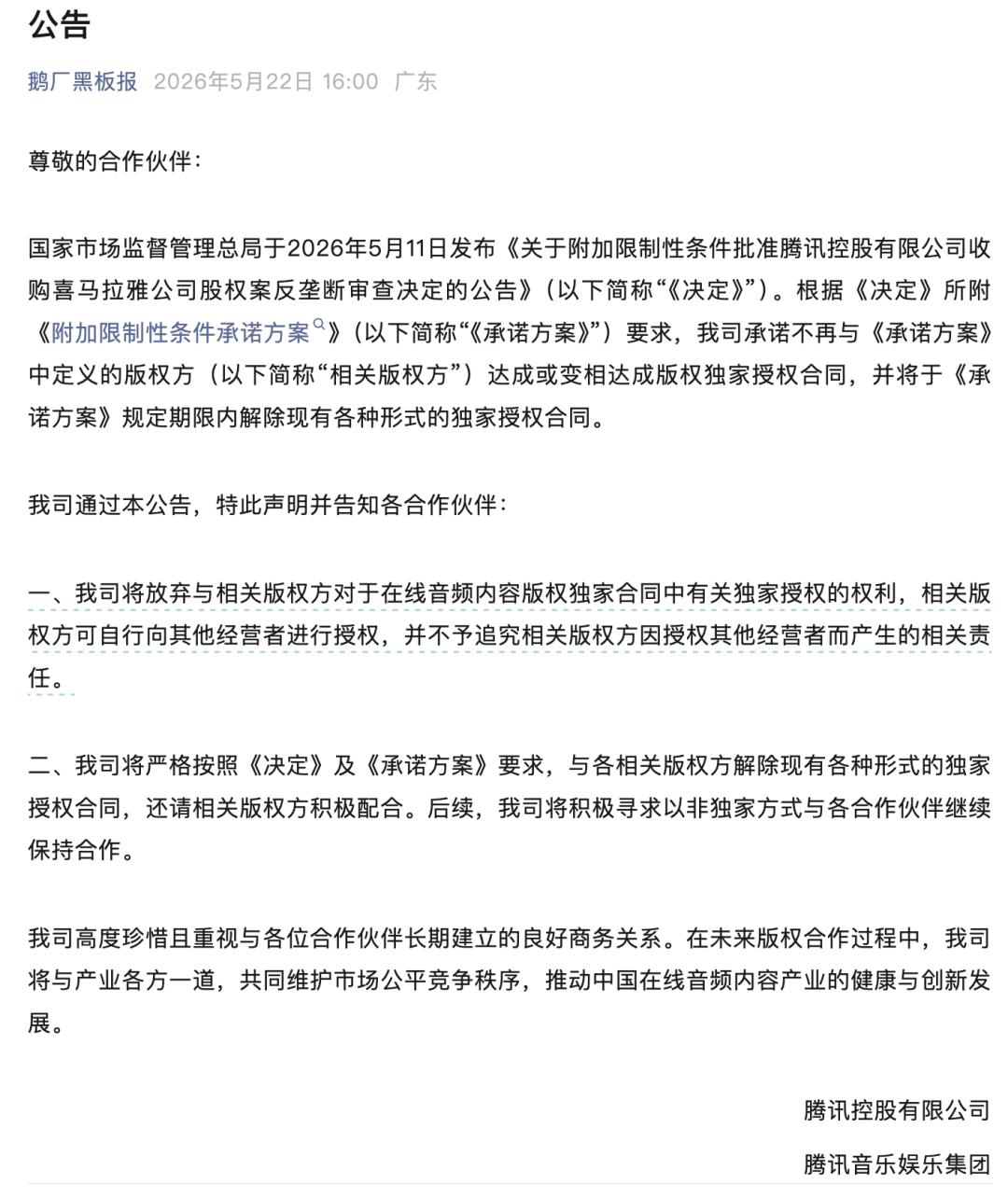
As soon as the news came out, it shocked everyone. People said that the audio market was about to change, and the practice of spending money to grab exclusive copyrights as a business moat is completely over. Especially since audio and music are closely related, more people interpret it as: Can we finally achieve the freedom to listen to music on one app?
In fact, as early as July 2021, the era of exclusive music copyrights officially ended in name. At that time, the State Administration for Market Regulation issued a penalty order, clearly requiring relevant companies to terminate exclusive copyrights. Even earlier, in 2018, the National Copyright Administration promoted cross - licensing of over 99% of music works between Tencent Music and NetEase Cloud Music.
But as we all know, in terms of implementation, it got stuck at that crucial 1%. You just can't find the few artists you most want to listen to.
In the past, some copyright holders were waiting to see the enforcement of anti - monopoly measures, or refused cooperation negotiations because of existing contracts. Especially overseas copyright holders, some of which have equity relationships with relevant domestic music companies. This time, the regulatory authorities clearly targeted and solved this implementation pain point, explicitly requiring "terminating existing exclusive licensing agreements within the specified time limit."
Currently, with the continuous tightening of regulations and strict requirements, the era of exclusive audio copyrights has completely ended. On the other hand, AI and short - videos have brought huge impacts and new competition points to the music market. After a decade of involution, the countdown to the end of exclusive music copyrights has begun.
A decade of anti - "exclusivity," with tightening policies
Whether for individuals or companies, it's very difficult to break away from path dependence, unless there is a stronger will or greater interest driving them. Tencent Music is now facing both.
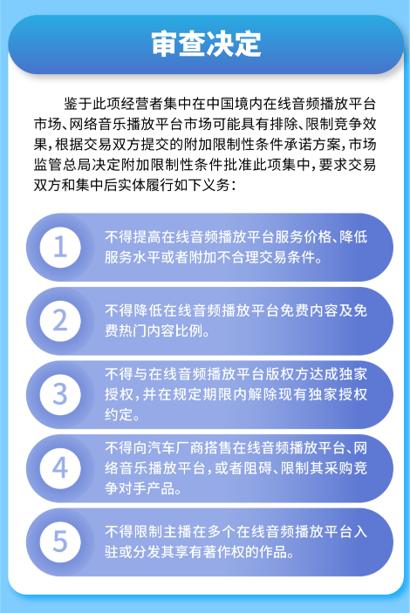
In June 2025, Tencent Music officially announced the acquisition of Himalaya, aiming to increase its user base and maintain its leading position in the audio market. After 11 months of review, in May 2026, the State Administration for Market Regulation finally approved the acquisition, but put forward five strict requirements.
These requirements include: not reaching exclusive licensing agreements with copyright holders of online audio platforms and terminating existing exclusive licensing agreements within the specified time limit; not restricting anchors from registering on multiple online audio platforms or distributing their copyrighted works.
On May 22, Tencent officially announced that it would comprehensively abandon exclusive copyrights for online audio, and all existing exclusive contracts will be terminated within the time limit. It asked relevant copyright holders to actively cooperate.
Tencent Music's acquisition and abandonment this time have also become a landmark event in the current market's anti - monopoly efforts. In fact, two landmark anti - monopoly events in the relevant market have both occurred after Tencent Music's major acquisitions.
The last time was in April 2021. First, an informed source said that the State Administration for Market Regulation informed Tencent Music that it might have to sell Kugou and Kuwo Music. This anti - monopoly case finally ended with the regulatory authorities imposing a fine of 500,000 yuan on Tencent Music for its failure to correctly report the acquisitions of Kugou and Kuwo. In July 2021, the State Administration for Market Regulation required Tencent Music to abandon exclusive copyrights from record companies.
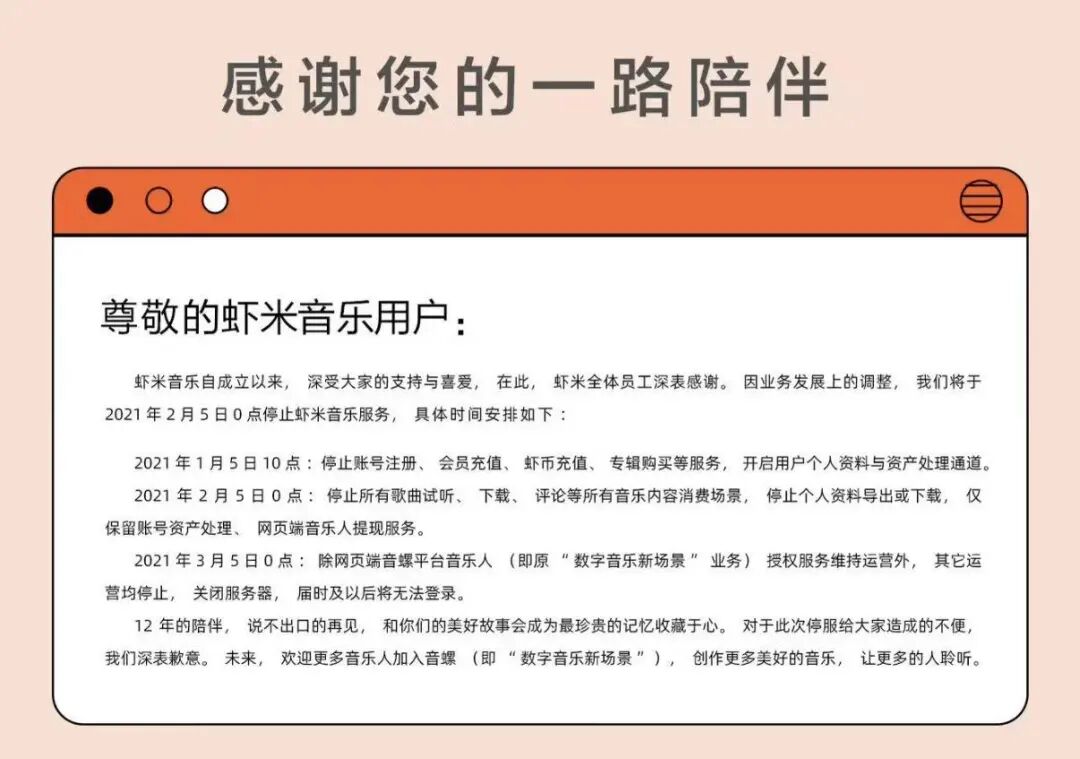
That is to say, since July 2021, ending exclusive music copyrights has been a clear policy. This had a huge impact on the market at that time. I even wrote an article titled "Did Xiami Music Die in Vain?" But just as I wrote in that article - "Several times, we thought the copyright battle was over."
In fact, it still wasn't over until then.
Tencent Music Entertainment Group was established in 2016, and market disputes and government supervision over exclusive music copyrights can be traced back to 2017. In September 2017, the Copyright Management Department of the National Copyright Administration first interviewed Tencent Music, Alibaba Music, NetEase Cloud Music, and Baidu Taihe Music, asking them not to drive up prices and avoid purchasing exclusive copyrights. It also interviewed record companies such as Universal Music, Warner Music, and Sony Music, asking them not to drive up licensing prices and avoid granting exclusive copyrights.
Was this a two - pronged approach? In 2018, the National Copyright Administration promoted cross - licensing of over 99% of music works between Tencent Music and NetEase Cloud Music. At that time, people were excited, thinking that the music copyright war was over. But soon they found: Hey, why are the songs I want to listen to still "gray"?

That's right. The National Copyright Administration requires the transfer rate to reach over 99% of the music library. But most of the time, people are just listening to that 1%.
By July 2021, the regulatory body became the State Administration for Market Regulation, and the anti - monopoly requirements became more explicit. But there were still specific difficulties in implementation. As mentioned before, record companies were holding on to their contracts and waiting to see, and overseas copyright holders were reluctant to give up the huge profits they had been making for so many years.
But now, these "operational leeways" and "de facto exclusivity" at the implementation level have been plugged. The State Administration for Market Regulation not only requires "not reaching exclusive licensing agreements" but also "terminating existing exclusive licensing agreements within the specified time limit," which has blocked the way to maintain exclusive copyrights through established facts.
Among the requirements of the regulatory authorities, another one is also worth noting: not bundling audio - music platforms with automobile manufacturers. Not only are "exclusive copyright cooperation" not allowed, but "exclusive terminal cooperation" is also strictly prohibited. This means that music platforms can no longer require partners to "choose one of two" in any way.
Exclusive music copyrights are the source of "involution"
Looking back on the past decade of online music development, it has also been a decade in which the regulatory authorities have been urging non - exclusive and fair licensing. The current policy focus is not only on anti - monopoly but also on anti - involution. Exclusive copyrights are exactly the source of involution in the music industry.
Sometimes it's really incredible that after so many years, the online music market is still struggling with the issue of exclusive copyrights. Isn't it a bit too simplistic and stagnant?
Just as video websites bid up the "sky - high salaries" of stars in the fight for copyrighted dramas back then, the exclusive copyright war in the online music market has fattened foreign music copyright companies, after all, the most valuable ones are those superstars.
In order to obtain so - called exclusive copyrights, music platforms have been trapped in an endless cycle of burning money. Xiami, which couldn't keep up, voluntarily became a "tear of the times." Even Tencent Music, the winner, has seen its profit margins squeezed by the high investment in exclusive copyrights. The financial report shows that in 2024, Tencent Music's total annual revenue was 28.401 billion yuan, of which 12 billion yuan was spent on music copyright procurement, and copyright expenditures accounted for 79% of the total revenue from online music subscriptions.
What's even more frustrating is, what value has the long - term involution of online music platforms in "exclusive copyrights" created?
When food delivery platforms compete for the market, they at least offer subsidies to consumers. But online music platforms can only transfer huge copyright fees to users. When video websites compete for the market, they at least invest money in making many online dramas and variety shows, and there are indeed some good works. However, most exclusive music copyrights are for existing content. Not only can they not subsidize users or promote the industry, but the platforms themselves are also exhausted from the competition, and dozens of them have gone out of business.
Ultimately, it just allows copyright holders to make money lying on their past achievements. Copyrights expire every few years, and then the terms are renegotiated, going round and round. This is the most unproductive, most typical involution, most consumer - resented, and most long - lasting battle in the Internet industry.
Originally, the regulatory authorities' intervention in 2021 should have settled the matter. But just as I said, copyrights expire and are renegotiated, going on and on. As late as 2025, South Korea's SM Entertainment unilaterally notified NetEase Cloud Music that it would not renew the contract, and NetEase Cloud Music then sued SM Entertainment for abusing its market dominance.
However, more copyright holders have clearly sensed the market trend and the regulatory authorities' determination. Also in the KPOP field, in 2025, NetEase Cloud first reached a copyright cooperation with South Korea's well - known OST copyright company Most Contents, and comprehensively launched the original soundtrack albums of more than 70 high - scoring Korean dramas, including the OSTs sung by Kim Tae - hyung, Taeyeon, and SEVENTEEN. Then NetEase Cloud reached a copyright cooperation with South Korea's independent music label SHOFARENT., and included the works of Korean musicians such as Red-cheeked Puberty, Boramiyu, and VanillaAcoustic.
After so many years of exclusive copyright battles, using regulatory means to get the industry out of the money - burning involution cycle may be the best arrangement. After all, an industry that locks in users by hoarding exclusive copyrights with money sounds so outdated.
What's next?
In the short term, the State Administration for Market Regulation's requirement to terminate existing exclusive copyrights will probably lead to a lot of legal and management efforts from copyright holders and platforms. This major change in the audio market has had a significant psychological impact on the music market. The fact that signed exclusive copyrights may still be required to be terminated has a strong policy signal, which will undoubtedly affect the decision - making of music copyright holders in the future.
In the long run, it is an irresistible trend for music copyright holders to move towards full - platform copyright cooperation and refined IP operations. Although there is no longer the involution premium of exclusive copyrights, full - platform distribution can bring diverse revenues and wide - spread of works, which may bring more opportunities for copyright holders. After all, in other content industries these days, they are no longer just making one - time copyright fees. More important than finding the buyer who pays the most for the copyright is finding the right audience for the work.
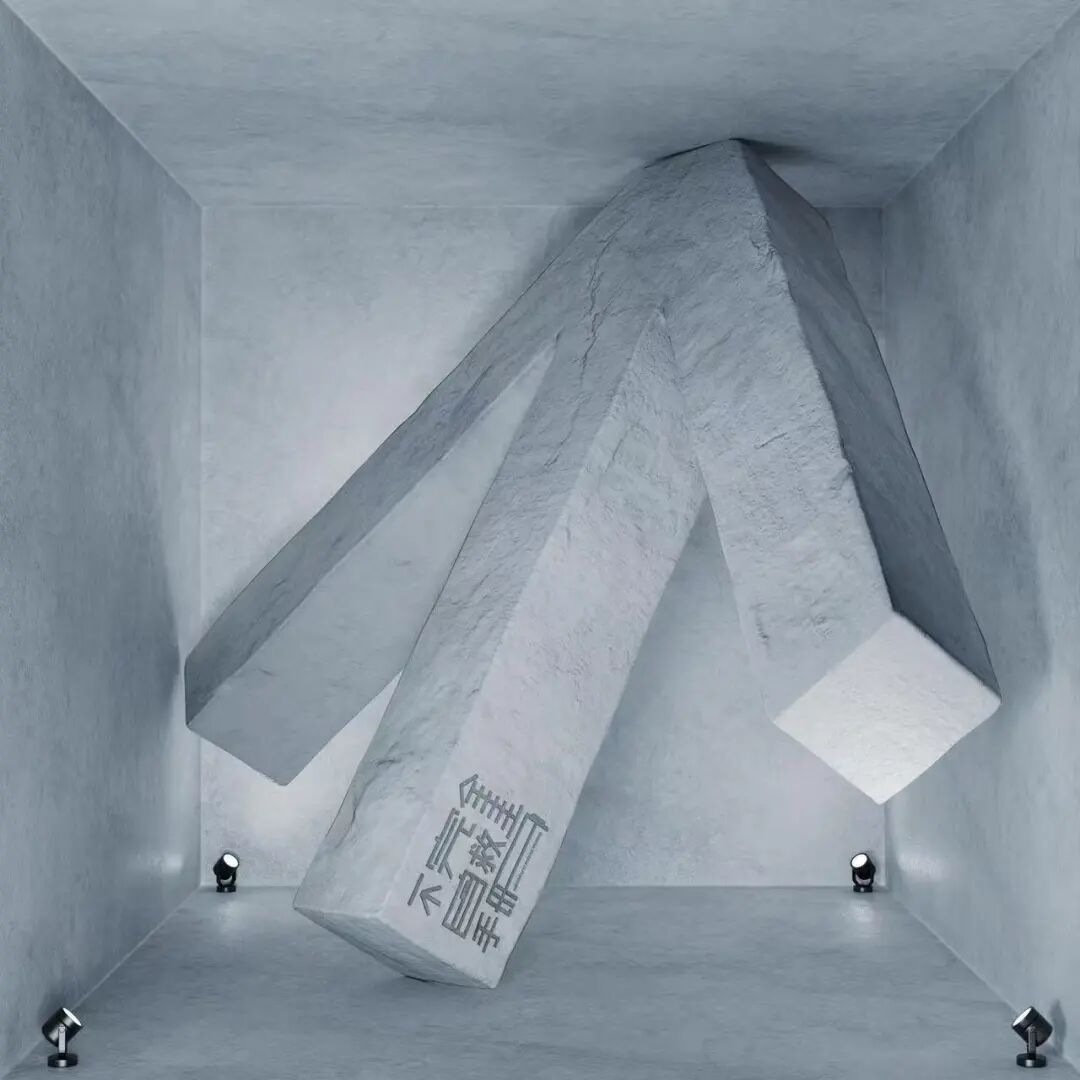
For example, "Incomplete Self - Rescue Manual" produced by Wajijiwa was initiated by the music label "Basic Rhythm" led by well - known producer Huang Jingyi. It brought together 29 groups of musicians including Sandy Lam, Huang Qishan, Chen Qizhen, and Chen Shanni. They jointly completed 11 music works about "self - rescue," and developed offline exhibitions, music festival premieres, podcasts, and fan co - creation, forming a multi - level art and cultural project.
This kind of music IP project is actually similar to the logic of popular film and TV OSTs in recent years. Only by reaching the widest possible audience can the IP value be maximized. If you can make a steady profit by selling exclusive copyrights, it's hard not to get lazy. If copyright holders don't push themselves, they really don't know how much potential music has.
For music platforms, the trend from copyright involution to product innovation and market win - win will be more obvious. In fact, when the state ordered the termination of exclusive copyrights in 2021, the effect was immediate. In 2022, Qishui Music entered the market and became the biggest disruptor in the online music market, expanding the user base and influence of the entire music market, which was also beneficial to existing platforms.
Not only did it bring out Qishui Music, but the anti - monopoly campaign in 2021 was probably also the trigger for Tencent Music's biggest organizational structure adjustment in five years. At that time, Tencent Music issued an internal notice announcing the establishment of a content business line. The content includes not only music copyrights but also music videos, online and offline performances, music variety shows, etc., aiming to "break out of the limitations of the music player business."
Avoiding the sharp edge of copyright competition, NetEase Cloud Music has developed its own unique community atmosphere and original ecosystem over the years. Now that it is further freed from the shackles of copyrights, each platform can spend more energy on product operation and innovation, which is obviously what the state hopes to see.
Since the state first clearly proposed to prevent involution - based vicious competition in 2024, to the government work report in 2025 calling for "comprehensive rectification" of involution - based competition, and then to the "in - depth rectification" since this year, anti - involution is the core proposition of current market supervision. As long as you understand this, you can understand that in the next decade of the music market, the vicious cycle of exclusive copyrights will not happen again. This typical involution - based and unproductive competition model is doomed to be buried in market regulation and industry development. Content, technology, and service will become the new competition points.
This article is from the WeChat official account "Entertainment Hard Candy" (ID: yuleyingtang), written by Li Chunhui, and published by 36Kr with authorization.