DingTalk, "wuzhao"
The jianghu is not just about fighting; it's about human relationships and social etiquette.
However, in the jianghu of large Internet companies, sometimes even human relationships and social etiquette have to give way to KPIs.
On June 11th, Alibaba issued an order: DingTalk changed its leader.
Chen Yusen, a 1992-born tech geek, took over. The former CEO, Chen Hang, known as "Wuzhao" in the jianghu, stepped down.
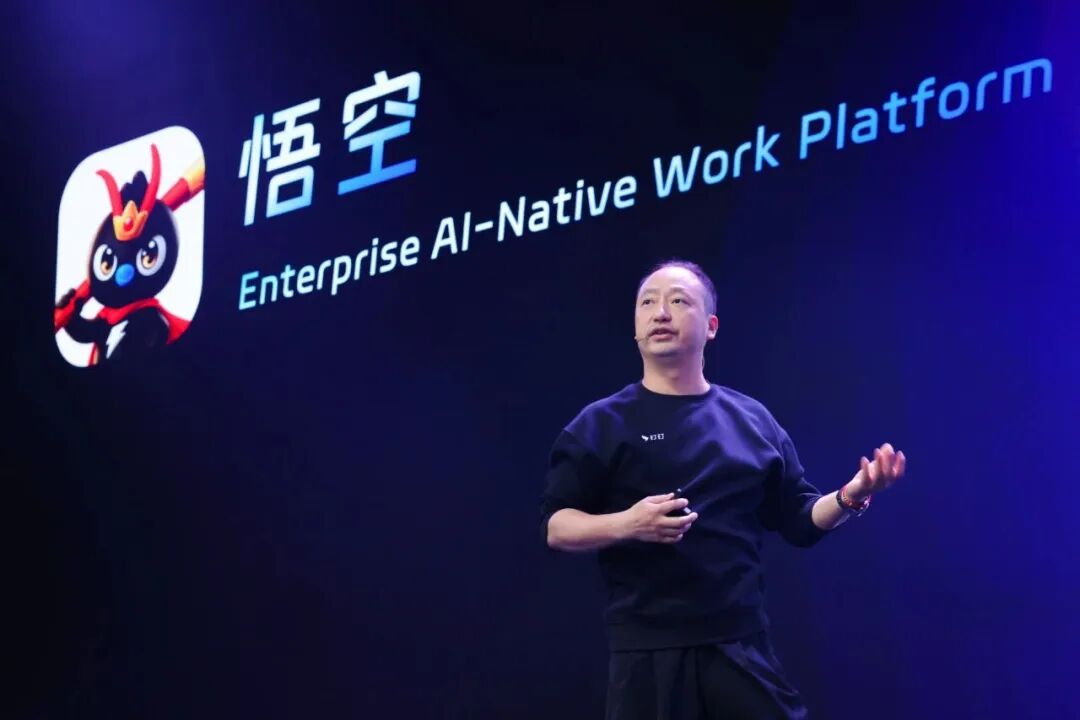
(Chen Hang, the former CEO of DingTalk. Image source: DingTalk's official WeChat account)
This news was not sudden.
The day before, the Alibaba Partnership Committee posted an article on the internal network with a warm title, "Only with emotions, righteousness, and growth can it be the Alibaba culture."
But the content was not warm at all. It directly criticized the management style of the DingTalk team, saying that "it is not what the Alibaba culture should be like."
After making harsh remarks, they took action the next day.
Anyone with a discerning eye could see that this was a premeditated "targeted explosion."
The target of the explosion was not a particular person, but the previous approach of DingTalk and the organizational culture it represented.
01
Let's talk about the new leader first.
Chen Yusen was born in 1992.
At this age in the Internet circle, many are still struggling with mortgage payments and school district housing, but he has already become the youngest division CEO of Alibaba.
He became famous at a young age, is a tech geek, and a serial entrepreneur.
When he was in college, he won championships in top domestic and international computer competitions. At the age of 22, he founded Changting Technology to engage in network security, which was later acquired by Alibaba Cloud.
In 2025, he started an internal venture within Alibaba Cloud and led a team to develop an AI Agent product called MuleRun.
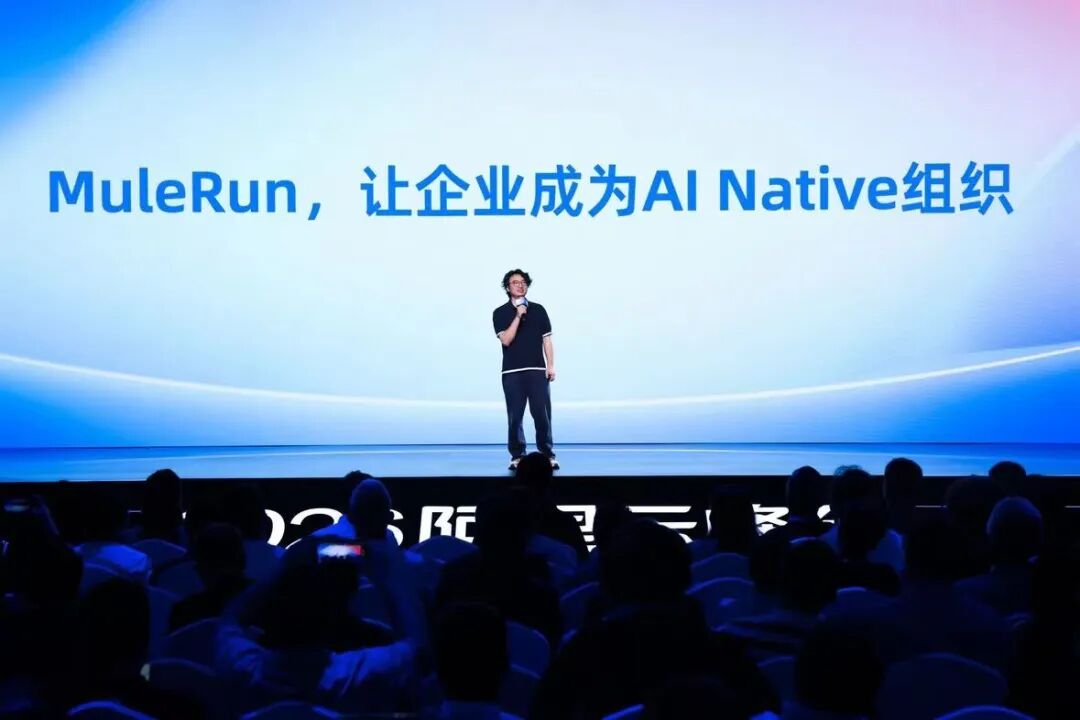
(Chen Yusen, the new CEO of DingTalk)
The resume looks quite impressive, but those familiar with the routines of large companies know that for an internal venture to succeed, besides ability, one also needs someone to support them.
Looking further back, Alibaba has recently established a number of new organizations with quite fancy names:
Alibaba Token Hub (ATH), Token Foundry. These are small teams dedicated to incubating AI innovation. New things like Happy Horse, Happy Oyster, MuleRun, Qoder... keep emerging.
The underlying logic is clear:
Use old methods for old employees and new methods for new employees. Alibaba is betting on the young people who have not been affected by the problems of large companies in the AI era.
DingTalk is the first testing ground.
02
Now let's talk about the one who was replaced.
Chen Hang, with the nickname "Wuzhao." This nickname is well-chosen, meaning that having no fixed strategy can be better than having one.
In the past few years, DingTalk did break a path under his leadership. During the pandemic, students across the country used it to punch in, and office workers used it to sign in. DingTalk once became a "magic tool" in the phones of people across the country.
How popular was DingTalk at that time? Its download volume once exceeded that of WeChat and remained at the top of the App Store for a long time.
Although the comment section was flooded with one-star ratings, the data was real.
Despite the achievements, problems also arose.
The fuse this time was a long article written by a former employee called "Inside DingTalk."
We haven't seen the full text, but judging from the response of the Alibaba Partnership Committee, it was probably quite heart - wrenching.
"Severe criticism" and "not what the Alibaba culture should be like." When such words come from the partners, it's basically like a public punishment within the company.
What kind of management style could make the Partnership Committee so angry?
It wasn't explicitly stated, but we can probably guess: high - pressure, involution, and treating people as consumables.
Internet companies are good at this. They say "employees are brothers" on one hand and make the brothers work the 996 schedule on the other.
But the problem is that the environment has changed. In the past, involution could lead to a market value of billions. Now, all it leads to is a resignation essay and being criticized on the internal network by the Partnership Committee.
Isn't it embarrassing?
03
Actually, Alibaba's operation of changing the leader is not surprising at all when viewed in a larger context.
In the past two years, Alibaba has been constantly restructuring its organization. From "1 + 6+N" to various splits and mergers, the core goal is one:
Make the elephant learn to dance.
But the difficult part of an elephant learning to dance is that its old legs don't work well.
Those veteran employees who helped the company build its business have strong execution ability and remarkable achievements, but their ways of thinking and behavior habits are already fixed.
Asking them to engage in innovation in the AI era is like asking veterans to shoot drones with rifles. It's not that they can't do it, but they can't win.
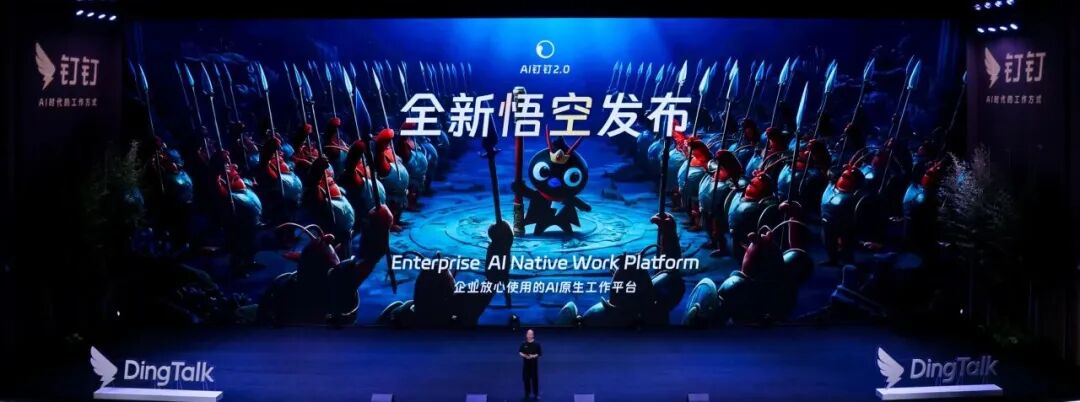
(Image source: DingTalk's official WeChat account)
So they have to replace the people.
People like Chen Yusen, who are post - 90s or even post - 95s, grew up playing with computers, and their understanding of technology is ingrained.
Moreover, they have no historical baggage. They don't have to worry about "how we used to do this," but instead focus on "how this should be done."
There is a crucial sentence in the article of the Alibaba Partnership Committee: "Innovation in the AI era relies on passion and creativity. Only by fully respecting the value of individuals can we truly create customer value."
Stop treating employees as screws. Screws can't produce innovation.
04
Changing the leader seems exciting, but the actual effect remains to be seen.
Chen Yusen has a technical background. The biggest risk of a tech geek being a CEO is that "when you have a hammer in your hand, everything looks like a nail."
For product development, management, and business operations, technical thinking alone is not enough.
DingTalk is facing not just a few technical problems, but a huge entity with hundreds of millions of users, including government and enterprise customers, small and medium - sized enterprises, and educational users. Their needs are diverse, and the interests are intertwined.
It's hard to say whether a 1992 - born young man can handle this.
Another question is whether Alibaba really wants to make a thorough change this time or just uses a young tech expert as a sign to show the outside world. This is also a problem.
Sometimes, when a large company changes its leader, it's like changing a phone case. It looks new on the outside, but the old battery is still inside.
But anyway, one thing is worthy of affirmation: At least Alibaba dares to take action.
Currently, Chinese Internet companies generally have a problem. The old employees hold high positions, and young people have no chance to rise. The innovation vitality is getting weaker and weaker. By promoting a 1992 - born to the position of division CEO, Alibaba has at least broken this deadlock, regardless of the result.
Epilogue
The name "DingTalk" originally takes the spirit of "nailing a nail," meaning that one should do things steadily step by step.
Now DingTalk has a new leader. "Wuzhao" has left, and a post - 90s tech geek has come.
Niudao doesn't know whether this new leader can lead DingTalk to create a new world in the AI era.
But what Niudao knows is:
If large companies don't give way to young people and don't change the management style of treating people as consumables, not only "DingTalk" but the entire Chinese Internet will become "loose."
Loose as in "slack."
This article is from the WeChat official account "Niudao Finance." Author: Li Wanhu. Republished by 36Kr with permission.