Twelve Years of Shared Bicycles: An Industry Sample Prematurely Ripened by Capital
In June 2026, Titanium Media published an investigative report, citing insiders and former employees, stating that there was once a competition plan called the "Falcon Project" within Hello. It involved compiling a list of core personnel from competing products and motivating employees with high bonuses to strike at opponents through means such as defection inducement and even physical threats. According to the report, some details of the plan were so refined that "it even planned clearly where the people to be targeted lived, their daily routines, and how to deal with them."

If a shared - bike company really reaches this stage, what force has pushed it here?
The answer lies not in Hello itself, but in an industry prematurely ripened by capital. Looking back at the past decade, ofo, Mobike, and Hello - three names, three endings, but pointing to the same law.
01
An Incoherent Business Story
There is a basic assumption in Internet investment: the marginal cost decreases. The more users there are, the lower the unit cost, and finally a network effect and scale barrier are formed. This logic has been repeatedly verified in social media, e - commerce, and games, and has almost become an investment bible. However, when it is applied to the shared - bike business, everything goes awry.
The shared - bike business is not one with a decreasing marginal cost. On the contrary, it has an increasing marginal cost. For each additional bike put into use, there is an additional cost of manufacturing, operation and maintenance, and depreciation. Data before Mobike was acquired showed that in less than a month, the revenue was 147 million yuan, the bike depreciation was 396 million yuan, the operating cost was 158 million yuan, the gross loss was 407 million yuan, and the gross loss rate was 277%. For every 1 yuan of revenue, nearly 3 yuan of cost was incurred. Hello's prospectus in 2021 revealed that the gross profit margin of its shared two - wheel business in 2020 was only 6.7%, which was already the best level in the industry.
Why do capital still flock to it? Because they are betting on the "endgame" - using money - burning to gain scale and using scale to gain monopoly pricing power. This script has worked in the ride - hailing and food - delivery industries, but the fatal difference in the shared - bike industry is that it is not a two - sided market. The supply side of ride - hailing (drivers) is elastic, and the supply side of food - delivery (riders and merchants) is also elastic, but the supply side of shared bikes is fixed physical assets, and each bike is depreciating. The larger the scale, the faster the depreciation; the more bikes are put into use, the heavier the losses.
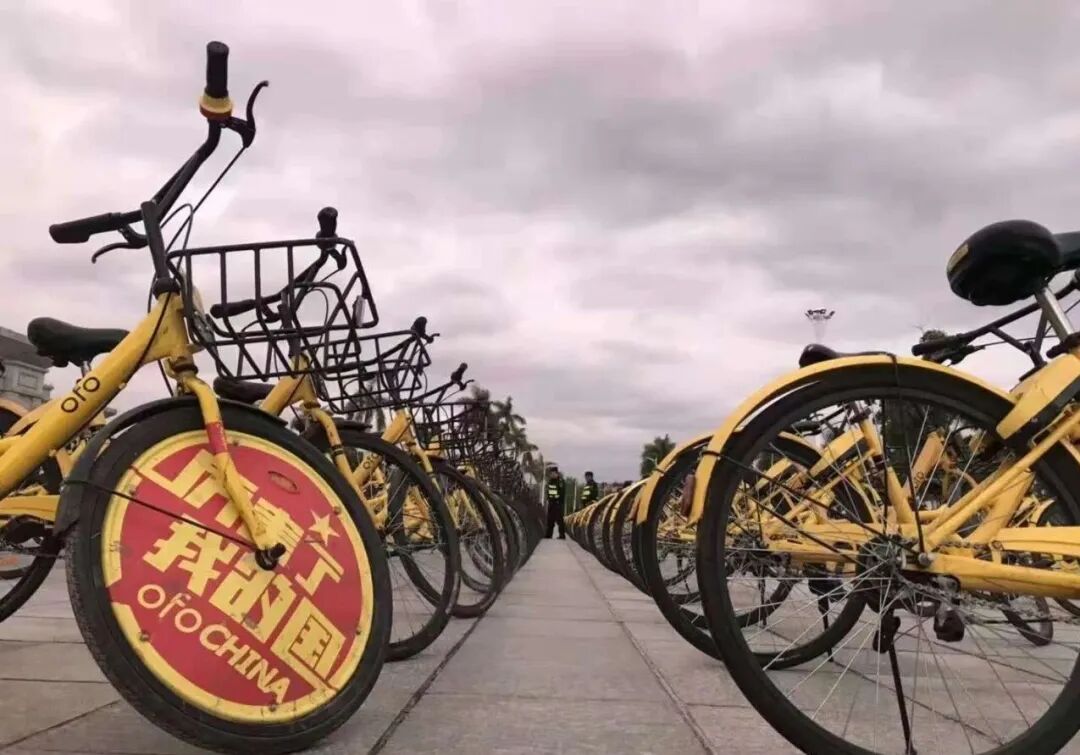
Users of ofo who didn't get their 99 - yuan deposits back are typical victims of this logic. ofo raised more than 8.89 billion yuan in four rounds of financing within ten months, with 17 investors. Two million bikes were deployed globally, but it didn't even establish a basic operation and maintenance system. Eventually, it owed 1 billion yuan to suppliers and misappropriated more than 6 billion yuan of users' deposits. Its founder, Dai Wei, became a "deadbeat". Mobike chose another path. In April 2018, Meituan acquired it for 2.7 billion US dollars. CEO Wang Xiaofeng voted against it, saying "one can't twist an arm against a thigh". Entrepreneurs were out, and capital cashed out. ofo died, Mobike was sold, and Hello, which survived, had a cumulative loss of more than 4.8 billion yuan from 2018 to 2020. What capital has brought to this industry is not prosperity, but accelerated inflation and faster collapse.
The shared - bike industry has verified a law in ten years: the capital - ripening model is only suitable for businesses with a decreasing marginal cost. Heavy - asset industries are naturally contrary to it, and forcing its application will only create bigger bubbles and more tragic collapses.
02
"A Mess" After Subsidies
In 2017, the monthly active users of ofo and Mobike both exceeded 60 million. However, almost no one really paid for riding - "free monthly cards", "recharge with cashback", "ride for one yuan". Subsidies made riding cheaper than a bottle of mineral water. The question is: what did the subsidies leave behind?
The answer is: almost nothing. The difference in the riding experience of shared bikes is extremely small, the user switching cost is extremely low, and there is no technical barrier between platforms. Data in 2024 showed that 64.52% of consumers chose Meituan, 57.32% chose Hello, and 47.22% chose Qingju. The users of the three brands highly overlapped. Many people had three apps on their phones and scanned whichever bike was available. The so - called "market share" is just a digital illusion.
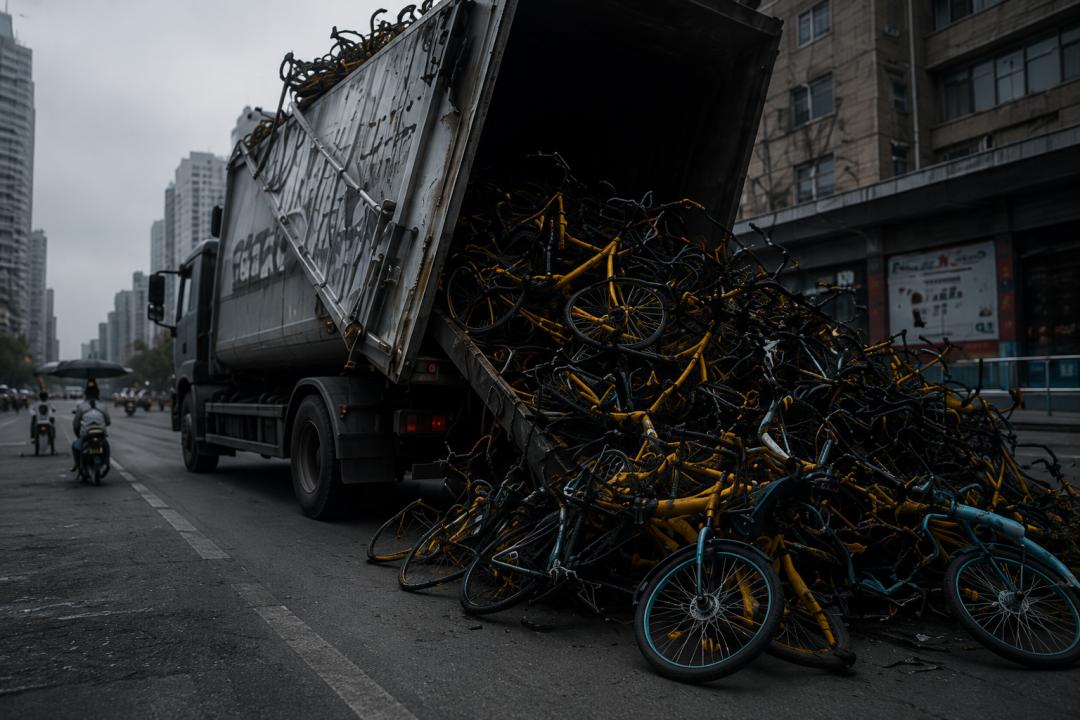
A deeper problem is that subsidies have covered up the fundamental flaws of the business model. When riding was almost free, no one asked "how does this business make money". When the capital tide receded, the answer was disappointing: it is almost impossible for shared bikes to make a profit. Even after the price increased from 0.5 yuan per half - hour to 2 yuan per 30 minutes, and the 30 - day card price was adjusted from 25 yuan to 35 yuan, profitability is still out of reach. Subsidies also led to irrational expansion. By the end of 2017, more than 20 million bikes were deployed nationwide, and more than 70 brands were competing. "Bike graveyards" became an eye - catching sight in various places.
What did ofo and Mobike get in exchange for hundreds of billions of subsidies? They got a market without a moat, without profitability, and without user loyalty. This law is worthy of deep thought for all business models that rely on subsidies for growth: if subsidies cannot be transformed into user stickiness and competitive barriers, it is just wishful thinking of capital.
03
Reduced to a Game of Giants
In January 2019, Mobike was renamed Meituan Bike. By then, all entrepreneurs in the Chinese shared - bike market had withdrawn. It only took three years from being one of the "new four great inventions" to becoming a tool for the ecosystem of giants. This is not an accident, but a law: when the track changes from a "start - up boom" to "infrastructure", the dominance will inevitably shift from entrepreneurs to giants.

There are three logics behind this handover. Capital logic: the investors in the shared - bike industry are not independent VCs, but Tencent, Alibaba, and Didi. The essence of giant investment is to layout the ecosystem, not to support start - ups. Traffic logic: More than 80% of Hello's orders come from Alipay mini - programs, and almost all users of Meituan Bike come from the Meituan App. Without the support of super apps, independent operation is impossible. Strategic logic: For giants, shared bikes don't need to make a profit. They are a payment scenario, an entrance to local life, and a supplement to travel data. The users they connect and the data they generate are far more valuable than the 35.1 - billion - yuan market scale itself.
Thus, a three - way standoff was formed: Hello is backed by Alibaba, Meituan Bike by Meituan, and Qingju by Didi. This is no longer a competition between start - up companies, but a proxy war of Internet giants. Each brand is a chess piece on the chessboard, and its survival depends on the strategic needs of the giants behind it.
04
A Ridiculous Transformation in Twelve Years
Let's go back to Hello. If the revelation from Titanium Media is true, then the "Falcon Project" is not an isolated event, but the end of a progressive chain. By sorting out the competition behaviors in the shared - bike industry in recent years, a clear trajectory can be seen, from rule - arbitrage to physical destruction and then to violent threats.

The first level is rule - arbitrage. According to reports, Hello once used the "license - plate - faking" method to avoid filing reviews - pasting a registered QR code on multiple bikes, so that no matter which bike the reviewers scanned, it showed as registered. The "issuing license plates before production" and "faking certificates" exposed at the 3.15 Gala in 2026 are essentially the same logic: using process fraud to avoid supervision. This is the first degradation of competition means.
The second level is physical destruction. According to reports, Hello once used the code - name "Crossing the Yangtze River Campaign" to transfer competing bikes in batches to the suburbs or even into the river. At the same time, there was a bike - impounding industry chain - impounding competing bikes under the guise of "traffic police impounding" and extorting ransom from the impounded companies. This step has far exceeded the scope of normal business competition and entered the stage of deliberate destruction of competitors' physical assets.
The third level is violent threat. According to reports, the "Falcon Project" included a list of more than a dozen core personnel from competing products, and high bonuses were offered to "eliminate" opponents. Some details even refined to the plan of physical attacks on the target personnel. From rule - arbitrage to physical destruction and then to violent threat, each step is an "upgrade" of the previous one - when business means and destructive means are not enough to achieve growth goals, violence becomes the last option.
This progressive law is not unique to a certain company. In an environment of highly involuted business competition, when legal means cannot bring growth, deviant means will emerge. According to an internal employee of Hello cited by Titanium Media, the company requires each business department to achieve a 15% - 20% revenue growth every year, "but the business is already in a saturated state". Multiple business lines are required to turn a profit within 3 - 6 months, "otherwise, there will be lay - offs, contraction, or direct closure". The tension between the peak of growth and the high - pressure KPI is the key to understanding all deviant behaviors.
What is even more worthy of vigilance is the spread of organizational pathology. According to reports, there are multiple sets of data within Hello: those reported to regulatory authorities, those reported to the media, those reported to shareholders, and those shown to the boss, all of which are different. When a company's internal competition plan needs to be judged by criminal law, it is no longer a problem of "excessive competition", but an organizational disorder.
But this is not just Hello's problem. The competition supervision in the shared - bike industry has long been in a vacuum - over - deployment, illegal operation, and vicious competition have long existed, but no one has effectively curbed them. Multi - headed management often leads to no management. When an industry has grown wildly in a rule - free vacuum for ten years, extreme events are almost inevitable.
From 200 yellow bikes of ofo in 2014 to the "Falcon Project" in 2026, the shared - bike industry has completed a ridiculous transformation in twelve years. It was once one of the "new four great inventions", but now it has become a specimen of capital - ripened industry.
This industry has left at least three laws worthy of memory. First, there are boundaries to capital - ripening. It is only suitable for businesses with a decreasing marginal cost. Forcing its application in heavy - asset industries will only create bigger bubbles. Second, subsidies cannot buy a moat. If subsidies cannot be transformed into user stickiness and competitive barriers, it is just wishful thinking of capital. Third, when growth becomes the only worshipped indicator, the legality of means will be continuously eroded until it completely collapses.
In 2025, the market scale of shared e - bikes exceeded 56 billion yuan, and intelligence and green travel have become new narratives. However, the fundamental problems remain unchanged: the industry still relies on giants for blood - transfusion, still has no independent profit - making model, and is still involuted in the three - way standoff.
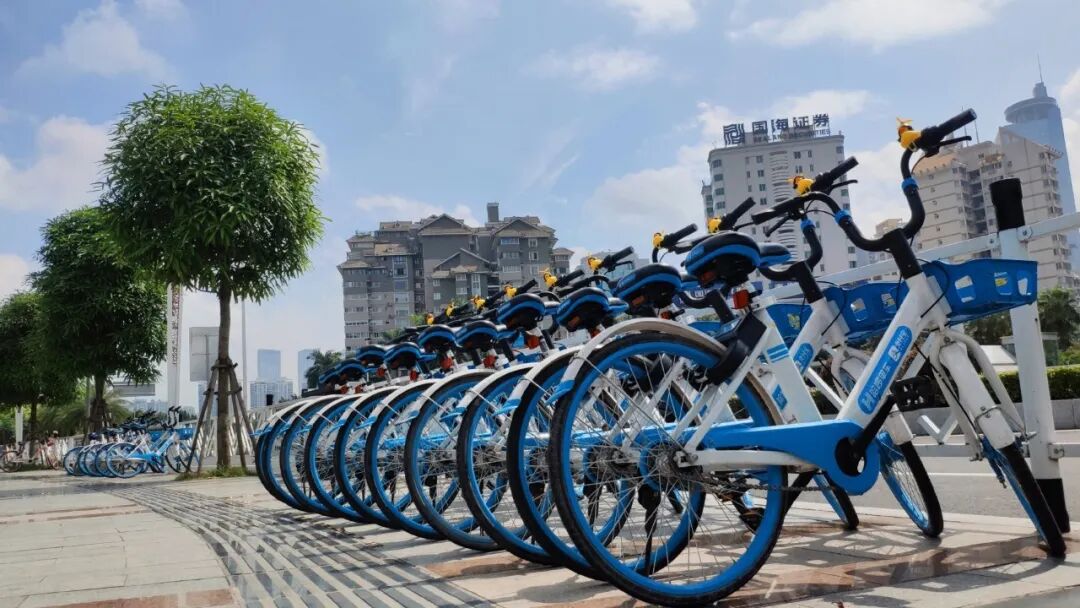
What will the future of Hello be like? The revelation of the "Falcon Project" has already brought a huge reputation crisis to it. However, regardless of how the fate of this company turns, the entire industry needs to answer a fundamental question: When subsidies stop, giants shrink, and supervision becomes stricter, can shared bikes survive independently, healthily, and with dignity?
This is not just a problem for the shared - bike industry. From "free riding" to the "hunting list", this industry has completed a complete cycle of capital distorting business in ten years.
This article is from the WeChat official account "Qidianpai", author: Wang Xueran. It is published by 36Kr with authorization.