The problem with DingTalk is not an AI issue, but a management issue.
Fast Reading
- In June 2026, three texts related to DingTalk appeared one after another: "Inside DingTalk", a 75,000 - word analysis by You Su, a grass - roots product manager; "Outside DingTalk" by a former vice - president of DingTalk; and "Only with Affection, Loyalty and Growth Can It Be the Alibaba Culture" by the Alibaba Partnership Committee. Apart from admiring the sharp writing skills of Alibaba employees, these texts also constitute a rare and complete sample in organizational behavior studies.
- The original intention of the DingTalk ONE project was to bring about an "AI - driven intelligent office revolution". However, from its initiation, rapid development to contraction and split, it was first and foremost a management failure, and AI was just an amplifier.
- In the AI era, management doesn't become less important; instead, it becomes more important. What remains in an organization are specific individuals and the motivation they still have to strive. Protecting this motivation instead of using it as fuel is the entire mission of management in the AI era.
On June 10, 2026, a post signed by the "Alibaba Partnership Committee" appeared on the Alibaba internal network, titled "Only with Affection, Loyalty and Growth Can It Be the Alibaba Culture". The article criticized the management style of the DingTalk team in unusually harsh terms: "Under no circumstances, no matter how urgent the task is", such management should not occur. "This is not what the Alibaba culture should be like."
Looking back in time, this post is the end of one chain and may also be the starting point of another path of "seeking change in management".
The incident started when You Su (stage name), a product manager of the DingTalk ONE project, posted a 75,000 - word article "Inside DingTalk" on the Alibaba internal network, reviewing the entire process of this important AI product of the company from its initiation, reaching 3 million daily active users, to its contraction and split. She compared her 300 - day experience at DingTalk to the flight of a needle - tailed swift. This bird can fly continuously for more than 300 days without landing. Its Latin scientific name is apus apus, which means "a bird without feet".
On June 8, Ma Ruila, a former vice - president of DingTalk and the person in charge of AI products, published "Outside DingTalk" on his personal WeChat official account, announcing that he had completed the resignation procedures on May 15, ending his three - year career at Alibaba. In the article, he repeatedly used one word to describe his feelings after reading "Inside DingTalk": "Heartache, heartache, heartache."
Two days later, the response from the Partnership Committee came out.
The appeal of a grass - roots product manager, the resonance of a vice - president after leaving, and the public response from the highest governance body. In the case library of organizational behavior studies, it is rare to find a sample with such a complete chain and sufficient texts. By seriously studying it, perhaps we can see clearly many things that are usually hidden beneath the surface of the organization.
01
Case Review
The metaphor of the swift didn't come out of thin air. Ding Sansuo, the mascot of DingTalk, is exactly a needle - tailed swift, one of the fastest birds in level flight in the world, which can eat, drink and sleep in the air. You Su joined DingTalk in June 2025 and had "flown" for exactly more than 300 days when she left.
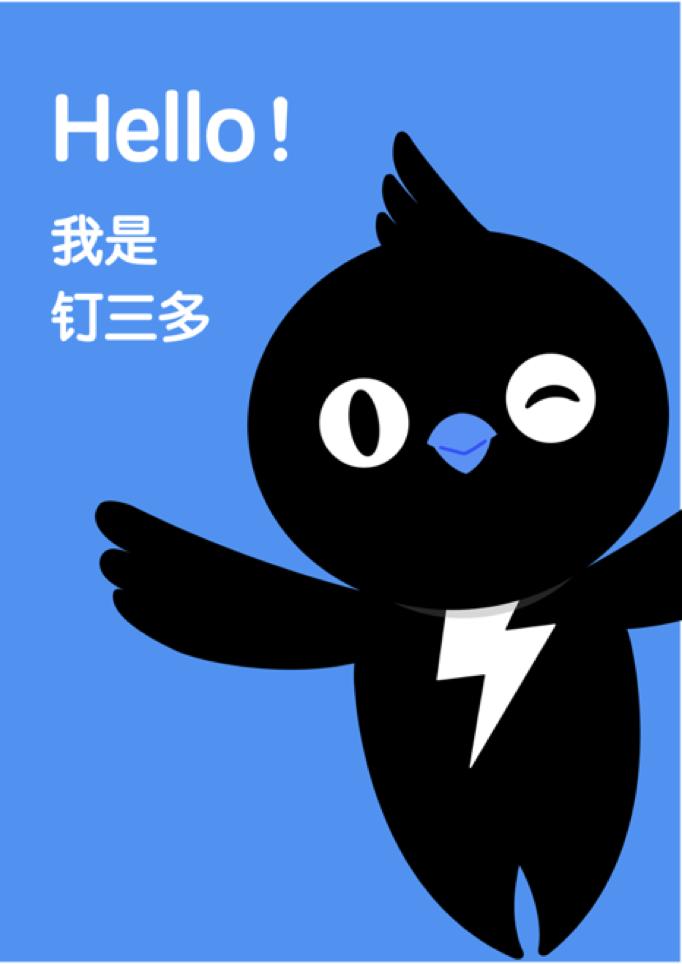
Note: In addition to the image of the needle - tailed swift, Ding Sansuo also borrowed the name of "Xu Sanduo" to some extent.
When she joined, her friends called her the "most beautiful counter - marcher". Because two months before her joining, the founder, Wuzhao, had just returned to DingTalk and carried out a series of drastic measures: starting work at 9 a.m., having fixed morning and evening meetings, shortening the lunch break, having a single - day weekend, requiring all employees to take a Python exam, and asking employees to say "Sorry, I only use DingTalk" to others. There was a net outflow of employees in the organization, and there were also many posts on social media dissuading people from joining.
She was not sensitive to all this. She gave up an offer with obviously better conditions and jumped to DingTalk with the same salary and position. What attracted her were the data foundation of DingTalk, the product concept of "active service", and a simple desire: to learn a skill in an apprentice - like way in a high - pressure environment.
The interview before joining seemed to foreshadow the following 300 days. The big assignment in the DingTalk interview was called "Putting the Family Tree on DingTalk", which required pulling more than six family members into DingTalk to build a real and active family organization. She didn't have enough family members, so she did a lot of compensatory work: digitizing the real family tree in the library, researching the business chain of family tree merchants, and setting up a travel communication organization with friends. In the final interview, sitting across from her was Wuzhao himself. He didn't care about these compensatory works and started to ask: Are there still people in your father's family? Are there still people in your mother's family? Are your grandparents still alive? Can't you really gather six family members who can use DingTalk?
After confirming that she really couldn't gather enough, Wuzhao was silent for more than ten seconds and then talked about the days when he first started working on DingTalk in 2014: there was no product, no consensus, and he could only meet customers again and again, put on a smiling face, make promises first and then fulfill them. Fake it until you make it. Finally, his judgment was that this candidate "had too strong an academic background".
But he still issued the offer. In her article, she said that Wuzhao reminded her of the kitchen of a Michelin three - star restaurant: a head chef compressed all his aesthetics, ambition, control desire and achievement desire into a system, and then required everyone who entered it to first accept the gravity of this system. She accepted it. She joined the confidential project "Project 0", and later learned that 0 represented ONE.
ONE was the first AI - native product promoted by Wuzhao after his return. It was positioned as an "Agent - driven work information flow", and its slogan was "Let tasks find people instead of people finding tasks". It was initiated in April 2025 and was unveiled at the press conference on August 25. Taking advantage of the traffic and novelty of the press conference, the DAU reached a peak of 3 million.
Then, in the second week, the retention rate dropped sharply. The next - day retention rate dropped from 45% to 18%. In the third week, negative public opinions broke out comprehensively. In the fourth week, more than one million users actively closed the entrance, and more than 60% of users permanently closed the card push after opening it less than three times. The keywords of negative reviews on the app store and social media were highly consistent: surveillance, involution, oppression, and a nightmare for office workers.
For example, the read - receipt rule. The most debated issue in the design review was: when a user clicks on a ONE card, should the read - receipt be sent back to the sender? One school of thought believed that ONE was a tool to relieve employees' burden, and leaving a trace once clicked meant making the employees' last psychological buffer zone transparent to managers. The other school insisted that read - receipt tracing was a rigid requirement for paying customers, and removing it would make DingTalk lose its most core commercialization tool. The final compromise was that the paid enterprise version would display read - receipt statistics, the free personal version would hide the explicit logo, but all the background data would be retained, and enterprise administrators could export it.
Another example is the priority algorithm. In the first draft of the card - topping weight, "the rank of the associated person" accounted for 20%. After multiple rounds of tug - of - war within the team, it was finally only reduced to 18%. Since then, the homepages of grass - roots employees have been filled with notifications from superiors and department instructions, and peer - to - peer collaborations have been folded into the secondary menu. The exact words of the internal test users were recorded in the review document: "My work is not important. The nonsense of the leader has a higher priority than my important work." "This AI doesn't help me with my work; it helps the leader rule the workplace."
Another example is the rhythm. The date of the press conference on August 25 was fixed, unchangeable and non - negotiable, so all the schedules were arranged backwards for the press conference. There was no freeze on requirements. The plan determined in the morning could be overturned in the afternoon. The MVP completely disappeared, and the project was immediately benchmarked against the ultimate form. During the gray - scale stage, nearly a thousand pieces of feedback from employees' resistance were summarized at the grass - roots level, but were compressed to less than a hundred words during the process of reporting layer by layer and failed to enter the top - level review.
She wrote a calm and almost cruel sentence in the review: The organization uses extreme physical over - exhaustion to cover up the strategic direction confusion.
What's most interesting is that she didn't think the direction of ONE was wrong. Because one month after the press conference, OpenAI launched ChatGPT Pulse, which also features active service, conducting asynchronous research in the middle of the night when users are asleep and presenting a card - style morning report in the morning. The latest development of this is that on June 7, a few days ago, the Financial Times reported that OpenAI was brewing the most significant upgrade since its release, and the active - service logic behind Pulse was becoming the core direction of the new version of ChatGPT, which confirmed that the scenario intuition of ONE's "morning sand - table plus active discovery" nearly a year ago was at the global forefront. That is to say, the direction was not wrong; what was wrong was the way this direction was implemented.
At the end of the article, she wrote that the "butterflies in the stomach" flew out of her body, which made many people empathize vividly.
02 What Does "Employees Second" Really Mean?
Ma Ruila is the founder of the collaborative document tool wolai. He joined Alibaba three years ago when wolai was acquired by DingTalk and worked his way up to the vice - president of DingTalk and the person in charge of AI products. In the comment section of "Outside DingTalk", he later added a sentence: "wolai is no longer owned by me personally. To know its future, you have to ask DingTalk."
He said he spent three hours reading "Inside DingTalk" and couldn't calm down for a long time. He posted a WeChat Moments message: Heartache, heartache, heartache.
"Outside DingTalk" was originally written with nearly 20,000 words, but only a few thousand words were published. He explained at the beginning of the article how the 18,000 words were deleted: every time he posted on the Alibaba internal network in the past, his post always ranked first in popularity, and the HR department would always call him immediately and say, "Why don't you delete it?" This time there was no HR, but he still seemed to hear that voice in his ear. Finally, only the titles of the three chapters "AI Third", "Order Fourth" and "Wukong Fifth" remained, and only one line of text was left in each chapter: (AI suggests deleting this chapter as a whole). He self - mocked that all the parts about "being inside DingTalk" were deleted, and the title of his article should actually be called "Outside".
He knew nothing about the internal details of ONE because it was a highly confidential project. But he wrote: "I know the kind of atmosphere she described. I know that high pressure, the lack of results after hard work, and the cycle of frequent reporting, rapid iteration and no improvement." He himself worked from 9 a.m. to 2 a.m. every day for seven days a week for a period of time, sleeping only 5 hours. You Su said at the end of the article that when the Titanic sank, the sailors could find another job; what he thought was that only the sailors who survived could find another job. Here, "survived" means literally survived.
The sharpest part of the article was his conversation with a former colleague.
The former colleague said that it made some sense but was not comprehensive. He also said that he didn't appreciate people who posted hot posts, and asked what benefits it would bring to the company to influence employees. Ma Ruila asked rhetorically: If it has a positive impact on the company, is it a good thing or a bad thing? The other party didn't answer and instead said that every company has its own problems and there is no perfect company. Ma Ruila said that this statement was like saying nothing. The earth also has its own problems.
At the end of the conversation, he said something very serious: One cannot discuss ice with a summer insect.
This conversation is worth recording in full because it puts on the table the standard reaction of an organization when facing criticism: first evaluate the way of expression, then speculate about the motivation, and finally measure the impact on the company, but never confirm the source of the pain. Ma Ruila then questioned the words written in the Alibaba values. "Customers first, employees second, shareholders third." Jack Ma specifically explained in the investor letter when going public in the United States: Customers are the most important, but without satisfied employees, there will be no satisfied customers.
Ma Ruila's question was: When an organization enters an extremely high - pressure state, what does "employees second" really mean? Does it mean that employees rank second, or does it mean that employees always have to make concessions in the second place?
He gave a metaphor: A popular resignation post is like a medical examination report that detects problems. It should make the organization pay attention to the problems, rather than asking why the report was issued.
03 Implementation of Values
On June 10, the response from the Partnership Committee came out.
The core judgment of the post has three levels. The first level is the qualitative judgment: after serious discussion, they reached a consensus that under no circumstances, no matter how urgent the task is, such a management style should not occur. The second level is the cultural background: "Mutual respect, treating people as individuals, and having affection and loyalty" are the cultural background of Alibaba, and no matter how the times change and how technology develops, this background must not change. The third level points to the AI era: Alibaba's innovation has never relied on high pressure and mechanical execution, but on the enthusiasm and creativity of each employee; team leaders at all levels are the first responsible persons for the team atmosphere.
Looking at the whole incident, there are three points worth noting about this post.
First, it is signed by the Partnership Committee, which is the highest cultural institution in Alibaba's governance structure. This means that the nature of the incident has been raised to the highest level: this is not an execution deviation of a certain team, but a problem that touches the cultural bottom line.
Second, it didn't judge the person who posted the article. In the debate about "whether the hot post should be posted", the organization chose to respond to the content rather than pursue the form. Ma Ruila quoted the sentence "Let people speak, and the sky won't fall" in "Outside DingTalk", and at least this time it was verified.
Third, it left some blanks. The post didn't name anyone, didn't announce any specific measures, and didn't answer the structural questions raised in "Inside DingTalk": What to do with the sender's genes? Should the rank weight be changed? Should the project - initiation model of arranging schedules backwards for the press conference continue? It is easy to make a cultural statement, but difficult to reform the mechanism.
04 Algorithm - based Management
The failure of ONE is often attributed to the product's failure or, more simply, to AI. But by comparing the three texts, we can find that this is first and foremost a management failure, and AI has magnified this failure to a level that everyone can see.
There is a sentence in You Su's review that is worth reading repeatedly: Algorithms have no feelings, but they have a stance.
In the era of human - to - human management, management styles have natural physical boundaries. A supervisor can only supervise a limited number of people. There is a cost of face in urging, and supervision has an attenuation effect. The roughness of management actually leaves a buffer zone for employees: delaying responses, selectively ignoring, putting things on hold when busy, and closing the loop afterwards. These are not slacking off, but the gray space for ordinary people to maintain their mental health and work rhythm.