The 77 billion "dark horse" chip enterprise from Hefei is sprinting for a Hong Kong stock IPO
Another semiconductor leading enterprise is sprinting towards an IPO on the Hong Kong Stock Exchange.
Recently, Nexchip Semiconductor Co., Ltd. disclosed the post-hearing materials for its H-share issuance.
This also means that following SMIC and Huahong Semiconductor, another leading domestic wafer foundry is about to complete its “A+H” dual-listing layout.
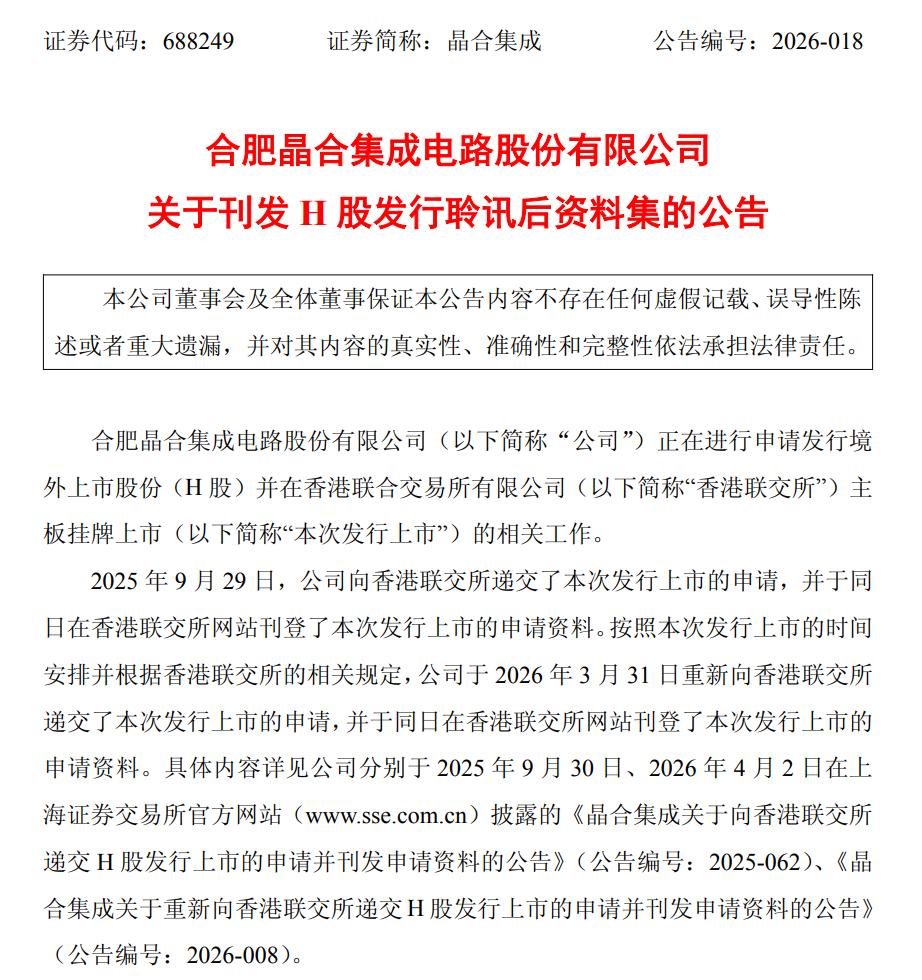
For Nexchip Semiconductor, this is another important milestone in the company's development. However, judging from the performance in the secondary market, the capital market has shown a lukewarm response.
Data shows that as of the latest closing, the stock price of Nexchip Semiconductor was reported at 38.41 yuan per share, with a total market value of 77.1 billion yuan. Since June, the company's stock price has cumulatively declined by more than 15%.
With the Hong Kong IPO almost within reach, why isn't the capital market buying into the positive news about Nexchip Semiconductor?
According to the 2025 revenue ranking data from Frost & Sullivan, Nexchip Semiconductor ranks ninth globally and third in the Chinese mainland among wafer foundries. It is also the world's largest display driver chip foundry, with a global market share of 23.3%. This core business forms the company's solid performance base.
Although it has an impressive revenue scale, Nexchip Semiconductor's profitability is not outstanding. In the first quarter, the company achieved a revenue of 2.912 billion yuan, a year-on-year increase of 13.42%. However, its net profit attributable to the parent company was only 50.66 million yuan, a year-on-year decline of 62.61%, and the overall net profit margin was less than 1%.
Whether in the A-share or Hong Kong stock markets, wafer foundry technology companies generally have difficulty obtaining high valuations from the capital market.
For Nexchip Semiconductor, listing on the Hong Kong stock market can certainly open up a global development pattern. However, getting rid of the low-end foundry attribute and improving core profitability are the more crucial issues at present. This not only directly determines its market performance after listing on the Hong Kong stock market but also is the core for the company to gain a foothold in the fierce industry competition and achieve long-term development.
01
Nexchip Semiconductor, the “Dark Horse” in the Chip Industry
The rise of Nexchip Semiconductor stems from a precise industrial layout in Hefei, the “Strongest Venture Capital City.”
In 2008, Hefei strategically introduced BOE, a leading panel manufacturer. Subsequently, a number of panel leading enterprises such as Visionox, Corning, and Rainbow were successively established, gradually building a large-scale new display industry cluster in the Chinese mainland. While the industrial cluster took shape, the local industrial shortcomings also became prominent. Although Hefei has a complete panel production capacity, it is deeply troubled by the situation of “having screens but no chips.” The LCD display driver chips, the core raw materials for panels, are almost completely dependent on imports, which has become a key shortcoming restricting the self-control of the local panel industry chain.
To make up for the chip shortage and complete the closed-loop of the “chip-panel integration” industry chain, Hefei decided on the development path of independent chip manufacturing.
In 2015, Hefei Construction Investment Holding (Group) Co., Ltd. and Powerchip Semiconductor Corporation of Taiwan jointly established Nexchip Semiconductor, officially entering the wafer manufacturing field and achieving a zero breakthrough in the local market. Hefei provided capital support and local market resources, while Powerchip Semiconductor Corporation contributed mature technology and production experience. With the complementary advantages of both sides, the Nexchip Semiconductor project was officially launched.
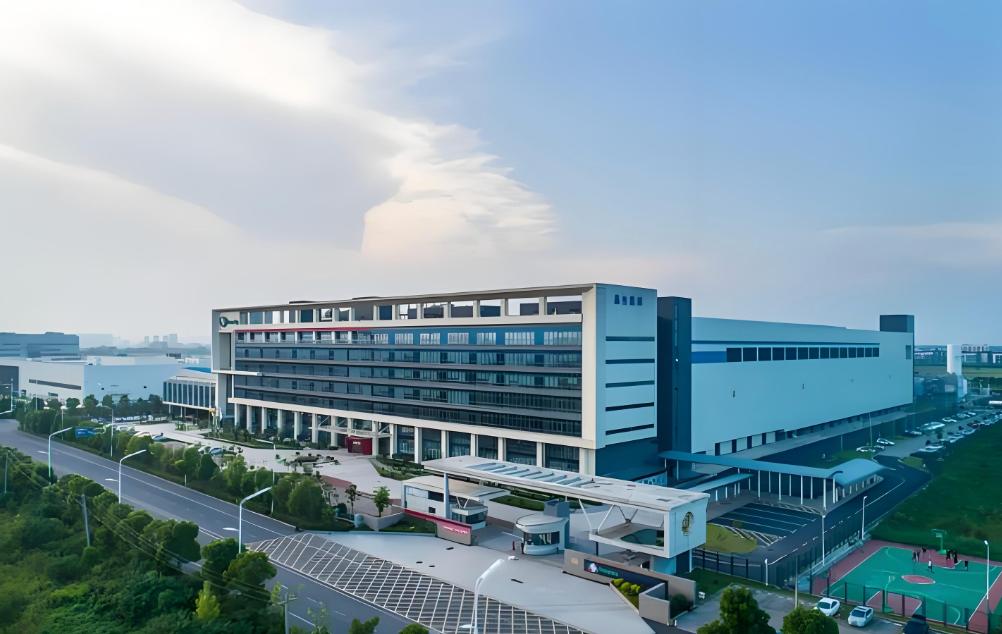
Relying on the full support of local policies and industrial resources in Hefei, Nexchip Semiconductor achieved leapfrog development. In October 2015, the first-phase project of the 12-inch wafer manufacturing base with a total investment of 12.81 billion yuan officially started. In November 2016, the main structure of Anhui's first 12-inch integrated circuit wafer factory was successfully capped. In June 2017, the project was successfully completed and trial production was launched, marking a historic zero breakthrough in Anhui's core integrated circuit manufacturing field. It only took Nexchip Semiconductor 18 months from the planning to the factory's production.
In December 2017, the yield rate of 110nm driver IC single wafers produced by Nexchip Semiconductor met the standard, and it successfully passed the product reliability verification of customers, officially entering the large-scale mass production stage.
After mass production, the company continued to increase its production capacity expansion, and the production capacity scale achieved a step-by-step growth: In December 2018, the monthly production capacity exceeded 10,000 wafers; in December 2019, the monthly production capacity and the number of wafers put into production exceeded 20,000; in July 2020, the production capacity exceeded 25,000 wafers; in March 2021, the production capacity climbed to 40,000 wafers; in March 2022, the monthly production capacity successfully exceeded 100,000 wafers.
While the production capacity was rapidly released, the company's revenue achieved explosive growth. From 2020 to 2022, Nexchip Semiconductor's operating revenue increased from 1.512 billion yuan to 10.051 billion yuan, with an average annual compound growth rate of up to 157.79%. The net profit attributable to the parent company also achieved a significant turnaround, changing from a loss of 1.258 billion yuan in 2020 to a profit of 3.045 billion yuan in 2022. The achievement of making a profit four years after production also made Nexchip Semiconductor the fastest-growing domestic wafer foundry in terms of profitability in the Chinese mainland.
Looking back on the rapid rise of Nexchip Semiconductor, on the one hand, it benefits from the empowerment of Hefei's complete display industry cluster. On the other hand, the core lies in the company's accurate positioning of the differentiated development track. When global wafer manufacturers are flocking to the competition for 3nm and 2nm advanced processes, Nexchip Semiconductor did not blindly follow the trend. Instead, it focused on mature processes of 28nm and above and deeply cultivated niche fields such as display driver chips and CMOS image sensors.
This strategic layout not only fully met the huge order demands of local panel enterprises such as BOE but also avoided direct competition with SMIC and Huahong Semiconductor in the high-end process track. It also accurately identified its own survival and development advantages. Public information shows that 30% to 40% of Nexchip Semiconductor's products are ultimately indirectly supplied to the BOE system, forming in-depth industrial synergy with local leading enterprises.
The differentiated strategy focusing on display driver chip foundry enabled Nexchip Semiconductor to overtake its competitors. In 2024, with a market share of 26.6%, the company ranked first in the global DDIC wafer foundry market and has led the global industry for many consecutive years. According to statistics from TrendForce, in the first quarter of 2025, Nexchip Semiconductor's revenue scale ranked ninth among global wafer foundries and third among Chinese mainland enterprises. With its accurate track positioning, the company seized the dividend of the transfer of domestic panel production capacity and took its mature process foundry business to the extreme in the industry.
However, behind the formation of the scale advantage, Nexchip Semiconductor is already facing new development challenges: how to get rid of the low-end foundry label and continuously improve its own profitability.
02
Getting Rid of the “Foundry” Label
From a rising star in the industry to the third-largest wafer foundry in the Chinese mainland and the ninth-largest globally, the development speed of Nexchip Semiconductor is obvious to all.
However, development speed does not equal core strength. Through the financial report data, it can be clearly seen that under the impressive scale data, the low gross profit dilemma has always troubled Nexchip Semiconductor.
From the latest quarterly report data, the company's characteristic of increasing revenue but not profit is very obvious. In the first quarter of 2025, Nexchip Semiconductor achieved a revenue of 2.912 billion yuan, a year-on-year increase of 13.41%. The net profit attributable to the parent company was 50.66 million yuan, a year-on-year decline of 62.61%.
Regarding the reason for the significant decline in net profit, Nexchip Semiconductor gave three core explanations: First, the market competition in the industry has intensified, and the product selling price has decreased year-on-year. Second, the depreciation of fixed assets of the production line has increased, which has temporarily suppressed the overall gross profit margin. Third, the fair value change loss of trading financial assets has increased due to the stock price fluctuations of the invested enterprises.
The above factors have indeed had a direct impact on the company's performance. However, fundamentally, the core problem lies in the company's underlying business model - the pure wafer foundry model.
Nexchip Semiconductor's core business is to provide wafer foundry production services for various chip design enterprises. The core characteristics of this model are very clear: The company does not participate in chip design, has no self-owned product brand, and does not directly connect with the terminal consumer market. It only completes the large-scale production of chips according to the design schemes provided by customers. In simple terms, a wafer foundry is essentially a high-end processing factory with high equipment costs and complex production technologies.
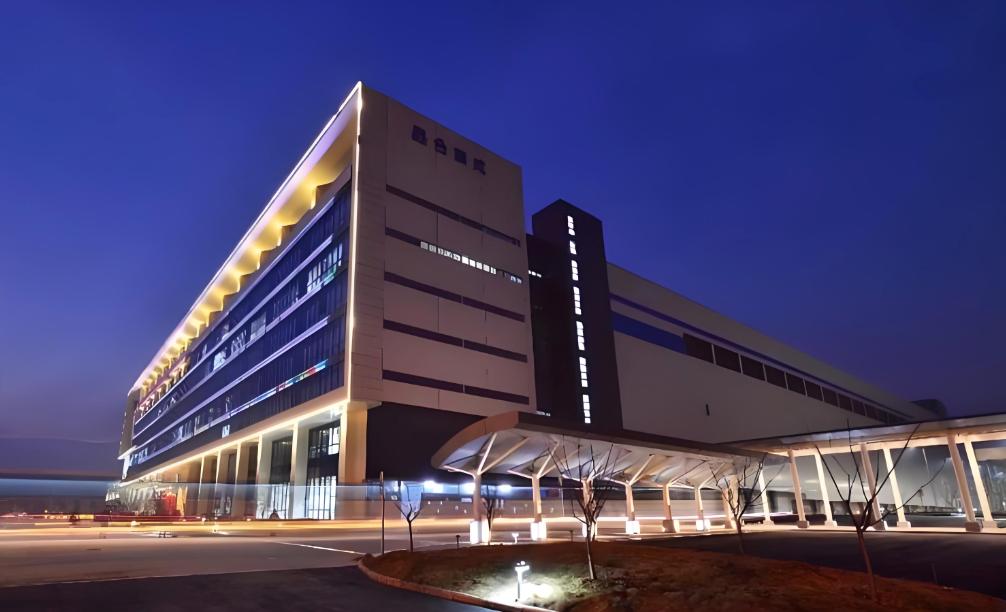
The current global wafer foundry industry pattern is highly concentrated, presenting a situation of “one superpower dominating”: TSMC occupies 71.2% of the global market share and monopolizes 92% of the global advanced process production capacity. The industry's profit structure is even more polarized. Only 12% of the global advanced process production capacity contributes 57% of the industry's revenue, while the mature process production capacity accounting for 88% of the global scale only creates 43% of the industry's revenue.
This does not mean that the mature process foundry is an inferior track. Industry data can prove that the gross profit margin of United Microelectronics Corporation, a large wafer foundry, has been continuously maintained at 30% or above in the past five years, and the gross profit margin of World Semiconductor Co., Ltd. was also close to 30% in 2025. The core reason why the two enterprises can maintain high gross profit is that they have built deep technical barriers in the niche mature process track and accumulated stable and highly sticky long-term customer resources.
Compared with the leading mature process foundries, as a latecomer in the industry, Nexchip Semiconductor still has relatively weak accumulations in terms of technical barriers and customer barriers. This is also the core reason for its continuously low gross profit margin.
The root cause of the weak gross profit margin lies in the company's business structure, which is highly dependent on DDIC display driver chip foundry. From 2023 to 2025, the revenue of the DDIC foundry business accounted for 84.8%, 67.5%, and 58.1% of the company's total revenue respectively. Although the proportion has been declining year by year, the proportion of this business still reached 58.06% in 2025, and it is still the most core revenue pillar of Nexchip Semiconductor.
With a global market share of 23.3%, Nexchip Semiconductor has firmly established itself as the world's largest display driver chip foundry, with a prominent industry position. However, it also deeply binds the company's performance to the global display panel industry cycle.
The panel industry itself has a strong cyclical nature. When the industry is in a downturn, there is overcapacity, and price wars break out, panel manufacturers will first compress the procurement cost of upstream driver chips. Chip design enterprises will then transfer the cost pressure upstream, and finally, Nexchip Semiconductor at the wafer foundry end will bear the brunt. Once the display panel industry enters a recession cycle and the company has no other diversified businesses to hedge against risks, its performance will show obvious fluctuations.
Even during the period when the price of DDIC products is stable, the profit space of Nexchip Semiconductor is still limited. The natural shortcoming of the pure foundry model is the lack of pricing power for terminal products. The brand, design, and terminal sales rights all belong to the customer enterprises. The foundry only earns fixed processing fees, and the premium income of terminal chips has nothing to do with the foundry enterprise.
In the context of the fierce competition in the mature process foundry track, the foundry pricing is completely determined by market supply and demand. Customers can transfer orders to peer manufacturers with lower quotes at any time. At the same time, Nexchip Semiconductor is deeply bound to leading customers such as BOE, which is a typical model of concentrated dependence on large customers. The bargaining power of customers is much higher than that of the foundry enterprise, further squeezing the company's profit space and making it impossible to establish its own moat.
03 Conclusion
Looking back on the development process of Nexchip Semiconductor, the company started from scratch in the industry and grew into the global leader in DDIC foundry and the third-largest wafer foundry in the Chinese mainland in less than ten years. Its growth speed is very impressive among domestic semiconductor enterprises.
However, the rapidly expanding scale has not been converted into strong profitability. The significant 62.61% decline in net profit in the first quarter, with a net profit margin of less than 1%, and the significant retracement of the stock price after the positive news of the Hong Kong IPO hearing was announced fully reflect the capital market's deep concerns about its low-end foundry attribute and insufficient profit stability.
Successfully passing the Hong Kong IPO hearing is an important step for Nexchip Semiconductor to move towards internationalization. However, compared with the expansion of the capital market layout, getting rid of the traditional foundry shortcomings, optimizing the business structure, and strengthening the profit base are the core paths for the company to achieve high-quality development and will directly determine its long-term market value after listing on the Hong Kong stock market.
This article is from the WeChat official account “Kanjian Finance”. Author: Kanjian Finance. Republished by 36Kr with permission.