When 500 ml is no longer the "standard answer", what should distributors do?
The 500ml specification has almost been the "standard answer" in the beverage industry for many years. From mineral water to iced black tea, from carbonated drinks to energy drinks, 500ml bottled beverages have carried the common memories of generations.
However, nowadays, this "standard answer" seems to be rewritten.
Recently, after visiting multiple offline chain supermarkets, convenience stores, shopping malls, and community stores, Nashi found that an obvious signal is emerging in major terminal channels: traditional bottled beverages around 500ml are facing the "threat of falling out of favor". Those mini bottled drinks of 200 - 300ml and large - bottled products of 1L or even larger specifications are seizing more and more shelf space at a visible speed.
1
Shelf "Shuffle"
Mini Bottles and Large Bottles Move to Prime Display Positions
Attentive consumers may have noticed that in the beverage freezers and prime layers of shelves in some supermarkets, mini bottles around 300ml have moved from the marginal areas to the area within consumers' direct line of sight, and even occupied a considerable display area.
Products such as the 250ml mini - pack of Dongpeng Special Drink, the 300ml mini bottles of Coca - Cola and Sprite, the 280ml sparkling water of Yuanqi Forest, and the 330ml small - bottled Master Kong Iced Black Tea are neatly and densely displayed. Some popular single products are even promoted in stack displays, becoming the core to attract customers to the store.
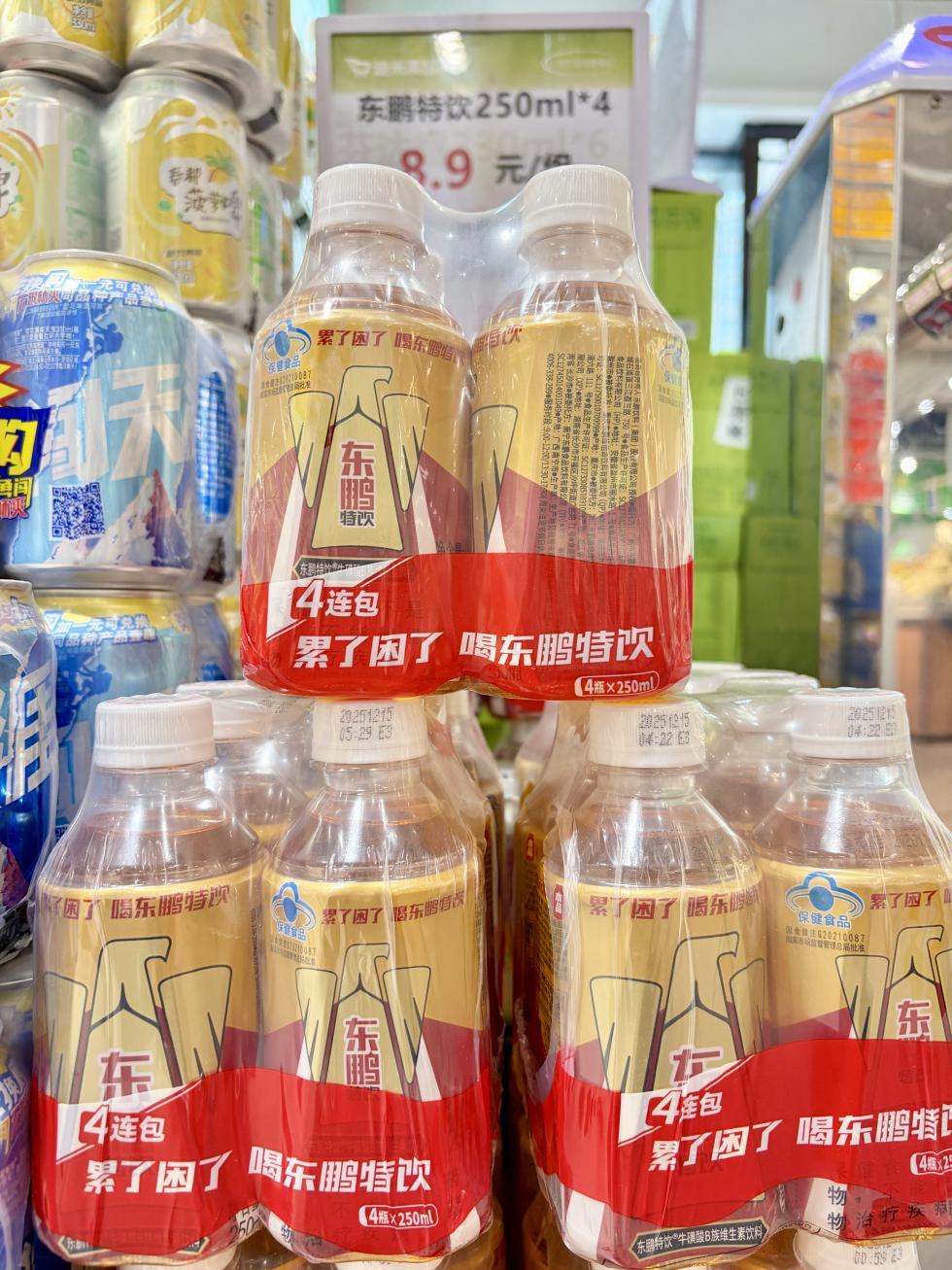
Adjacent to the mini - bottle area, large bottles of 900ml - 1.25L also occupy core positions. For example, the 1.51L Dongfang Shuye of Nongfu Spring, the 1.25L sparkling water of Yuanqi Forest, and the 2L Master Kong beverages... They form a two - pole response with mini bottles with labels such as "family sharing pack" and "high cost - performance".
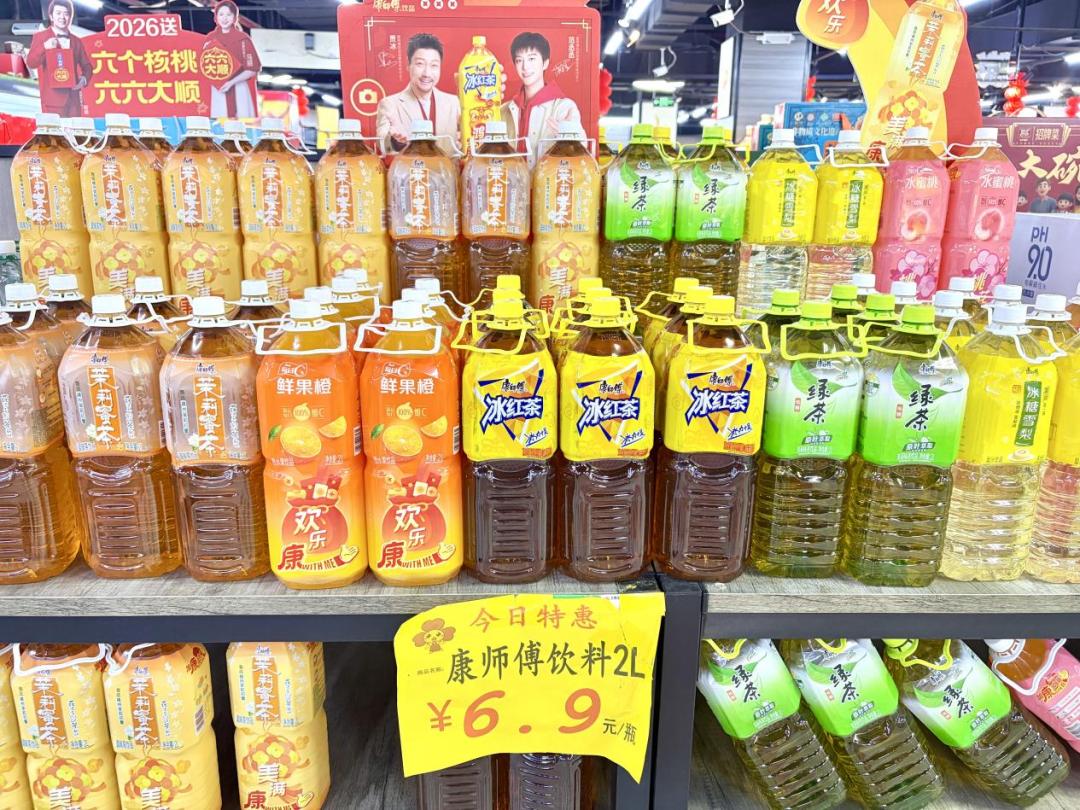
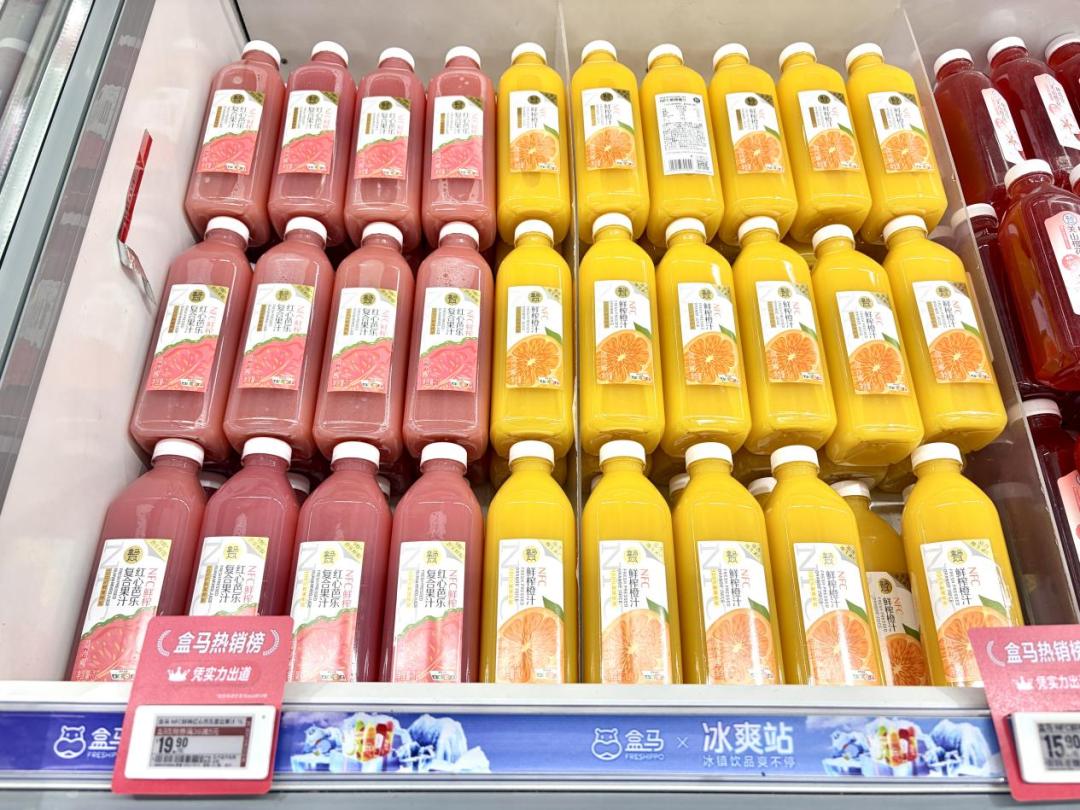
This situation is more obvious on the shelves of benchmark retail channels such as Hema, Sam's Club, and Fat Donglai.
Take Hema as an example. From fruit juices to tea drinks, from coconut water to craft beer, mini - packs and large bottles cover almost all popular categories.
Data shows that among the 9 sub - categories of Hema's water and beverage category, the top 5 products on the repurchase list of 7 sub - categories are all large bottles or mini bottles. Taking tea drinks as an example, the top five on the repurchase list - Pomegranate Cloud Green Tea (1L), Jasmine Iced Coconut Tea (950ml), Pomegranate Cloud Green Tea (300ml), Dongfang Shuye Jasmine Tea (335ml), Dongfang Shuye Jasmine Tea (900ml) - none of them is the regular 500ml pack.
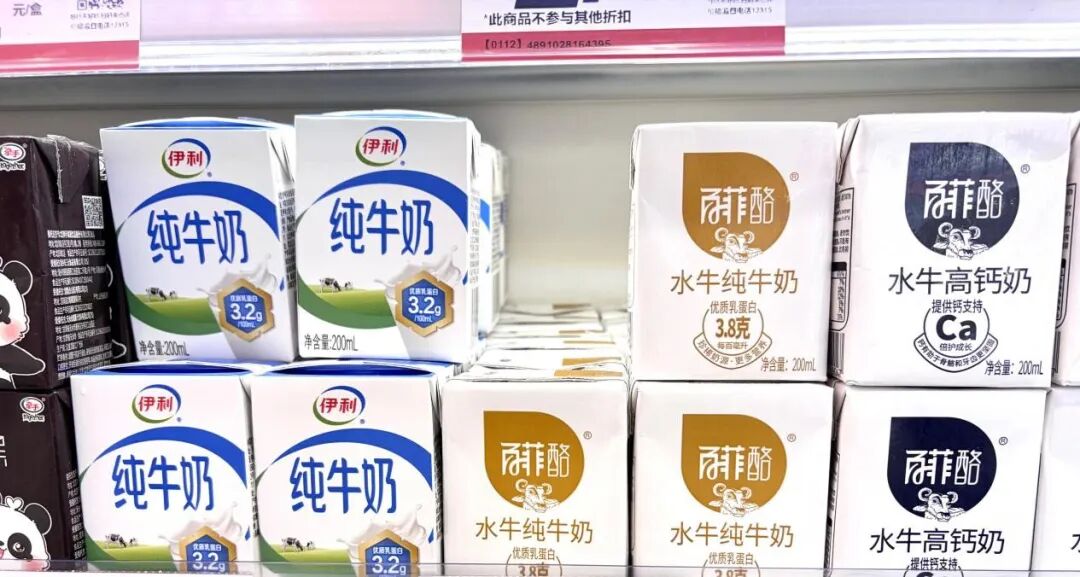
The same is true for bulk snack stores. From daily water drinks to dairy drinks, mini bottles are common in snack stores such as Zhaoyiming Snacks, Lingyouming Snacks, and Haoxianglai. For example, the 200ml customized pack of Yili Pure Milk, the 200ml Bafeilao Buffalo Milk series, and other various types of drinks. Small - sized packaged beverages seem to have become the "traffic code" for channel sales.
The industry trend is obvious. Nowadays, consumers' purchasing behavior is shifting from "drinking one bottle for half a day" to a polarization of "small bottles for quenching thirst and large bottles for sharing".
Behind this is the profound reconstruction of consumption scenarios, consumption psychology, and channel logic.
2
Mini Bottles
The Victory of the One - Person Economy and "Money - Making Ability"
Once upon a time, mini - bottle drinks were exclusive to children. The "baby - sized" capacity that could be finished in two or three sips made many consumers look down on them. However, the popularity of mini bottles nowadays is not without reason. It precisely hits the pulse of the current consumer market.
The most obvious factor is the rise of the "one - person economy".
Data shows that the number of single - person households in China has exceeded 125 million, and the number of single adults in China has exceeded 300 million. For young people living alone, the regular 500ml pack often faces the problems of "unable to finish, difficult to carry, and a lot of waste". The capacity of mini bottles is just right - on the way to work, during office breaks, or after fitness, just grab a bottle, neither too much nor too little.
This consumption model of "buy and drink immediately, and discard after drinking" is reshaping the decision - making logic of beverage purchases.
Consumers no longer pursue "quantity", but "just the right amount". Secondly, there is a psychological game of "wanting to eat but afraid of the burden" under the trend of healthy consumption.
For categories such as carbonated drinks, fruit juices, and sugary tea drinks, consumers generally have the contradictory psychology of "wanting to drink but afraid of getting fat". Mini bottles provide psychological comfort of "just taking a small sip" by strictly controlling the single - intake amount. This "lightweight" design also significantly lowers the threshold for consumers' purchasing decisions.
There is also the consumption upgrade of "tasting multiple flavors".
In the bulk snack scenario, consumers' reasons for choosing snacks are more casual. The lightweight price and specification lower the threshold for trying, and also allow consumers to have more flavor choices within the same budget. The "Blue Book of the Chinese Bulk Snack Industry" points out that small - sized packaging is one of the keys for bulk snack channels to attract customers. After trying a variety of snacks, consumers often form long - term repurchases of some products, and finally develop a benign consumption cycle of "tasting new products + repurchasing classic ones".
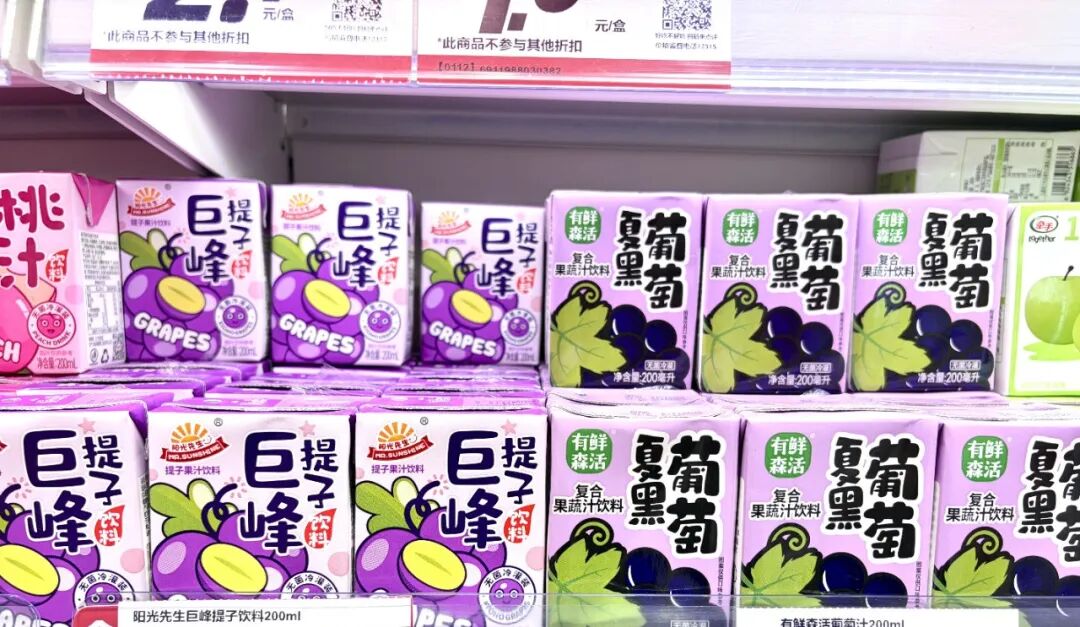
In addition, from the channel perspective, although mini bottles are small, their "money - making ability" cannot be underestimated. The small volume means that more SKUs can be placed in the same freezer area, which greatly improves the product display efficiency. Moreover, mini bottles with low unit prices are more likely to be "picked up casually", and the conversion rate of impulse consumption is relatively high.
During this visit, a clerk at a Zhaoyiming Snacks store told Nashi: "Although the average customer spending of mini bottles is not high, the sales volume is large. The key is that they don't take up much space in the warehouse or on the shelves, and the turnover is fast."
3
Large Bottles
The Return of Family Scenarios and "Cost - Performance"
In sharp contrast to the "small and refined" of mini bottles is the "large and economical" of large bottles.
The seemingly contradictory "opposite in size" actually points to different scenario needs of consumers.
In Fat Donglai, 1L - bottled drinks almost occupy half of the products on sale. When family customers buy drinks, they first look at the capacity and then at the unit price. The price per milliliter of 1L - bottled drinks is more cost - effective than that of 500ml, and consumers can do the math.
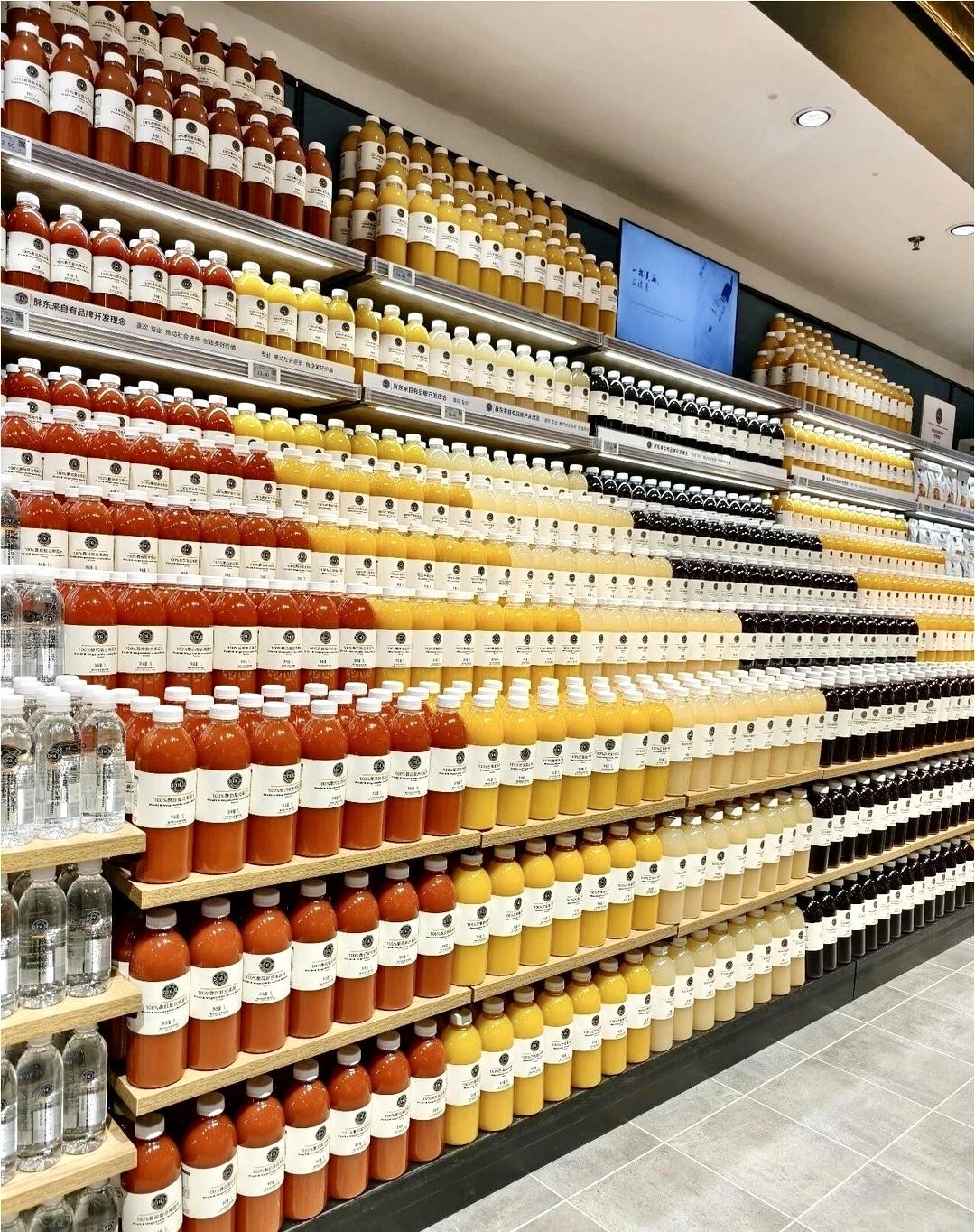
Moreover, with the accelerating pace of life, especially for family customers, they are getting more and more used to the purchasing model of "buying enough for three days at a time". Large - bottled drinks have a low unit price, large packaging, and are suitable for storage in the refrigerator, so they naturally become the first choice for family stockpiling.
As a terminal clerk said: "In the past, consumers bought drinks by 'going downstairs to buy one bottle'. Now, they add seven or eight items to the shopping cart at one time on their mobile phones. Large - bottled drinks are not only cost - effective but also can meet the free - shipping threshold when combined with other items, so the purchase rate is naturally high."
In addition, from the channel perspective, the unit price of large bottles is usually in the range of 5 - 10 yuan, much higher than the 2 - 4 yuan of mini bottles. The single - consumption amount is higher, the average customer spending is relatively higher, and the channel profit margin is larger. Naturally, terminal stores have a stronger willingness to recommend them.
4
When 500ml Is No Longer the "Standard Answer"
What Should Distributors Do?
The simultaneous rise of mini bottles and large bottles is essentially a transformation of the beverage consumption logic from "people looking for products" to "products finding people".
In the past, consumers were looking for products on the shelves to meet basic needs such as quenching thirst and refreshing. The regular 500ml pack achieved a balance among the needs of quenching - thirst efficiency, portability, and cost, so it naturally became the "standard answer".
But today, consumers' needs are no longer single, but are subdivided into: "light quenching of thirst" when alone, "light burden" during office afternoon tea, "desire to taste new flavors", "sense of sharing" during family dinners, "accompanying drinks" during hot - pot parties...
Mini bottles and large bottles are precisely the brand's precise response to the segmented scenarios.
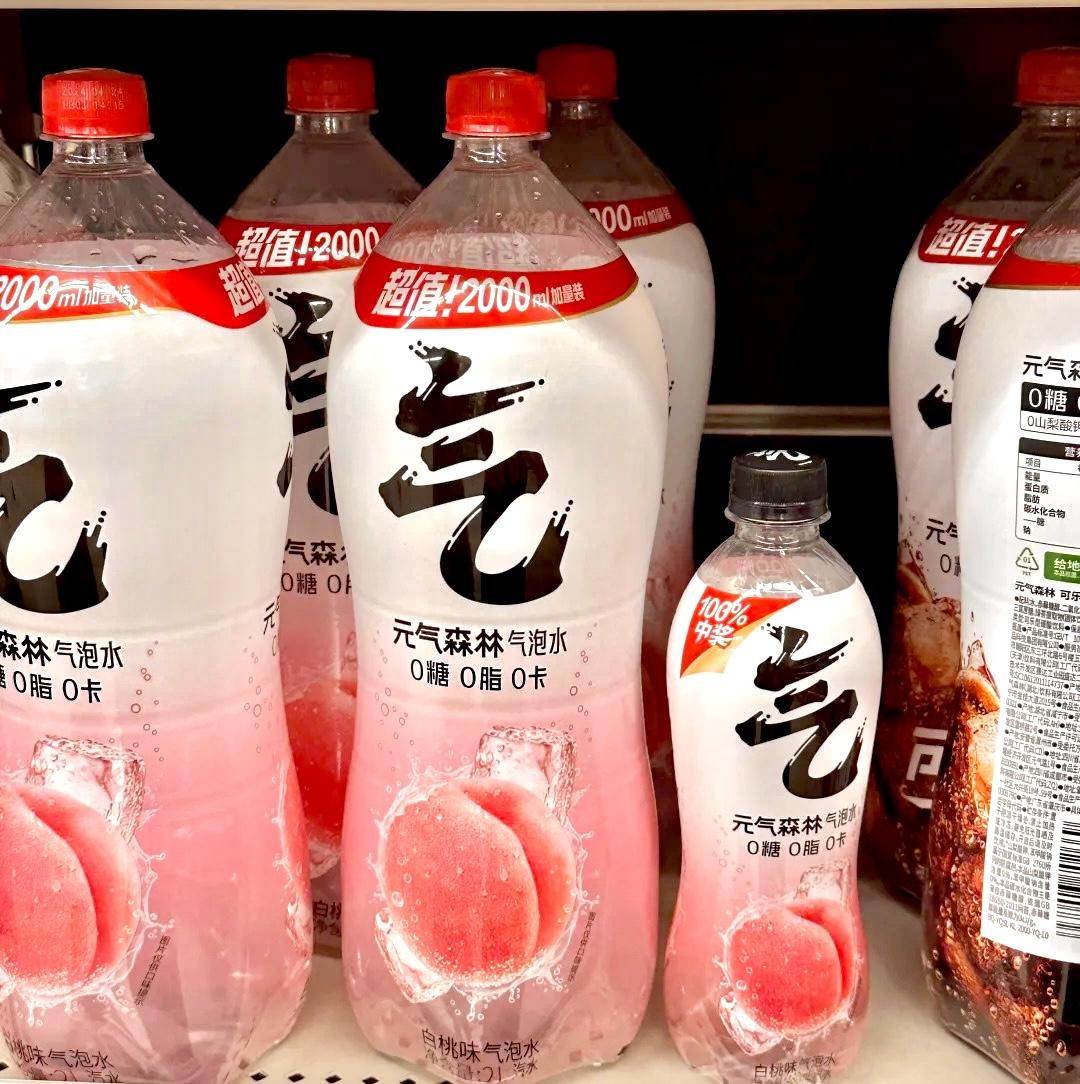
In the past, brands produced what they wanted, and channels sold what was produced. Now, brands produce what channels need. For distributors, this change means that the traditional model of "big single product + full - channel distribution" is no longer effective. Instead, it is "scenario - based product selection + precise distribution".
For example, for the same brand, mini bottles are mainly promoted in convenience stores and snack stores, 1L - bottled products are mainly promoted in supermarkets, and large - bottled products with specific flavors are mainly promoted in the catering channel. Channel distribution is no longer a "one - size - fits - all" approach, but different solutions are provided for different needs. This puts forward higher requirements for distributors' inventory management and channel insight capabilities.
Of course, even though mini bottles and large bottles are seizing shelf space, we cannot claim that the regular 500ml pack has "fallen out of favor".
From the visit, in some scenarios, such as outdoor sports, physical labor scenarios at construction sites, and in some product categories, 500ml is still the best choice. 500ml will not be completely eliminated, but its "dominant position" is being divided by mini bottles and large bottles.
When the beverage industry starts to upgrade from "mass - market and standardization" to "scenario - based and personalized", the story of beverage shelves this summer has just begun.
Finally, do you think the market share of regular 500ml bottled drinks will become smaller and smaller? Welcome to leave comments in the comment section to discuss.
This article is from the WeChat official account "Nashi", author: Nashi Front - line. Republished by 36Kr with authorization.