AI is turning every consumer brand into a media company
Recently, I've noticed that many people are discussing what jobs AI will replace. Some tell me that AI will replace designers, some say it will replace copywriters, others claim it will replace customer service representatives, and there are also those who think it will replace programmers.
However, if we look from the perspective of the entire consumer industry, we might have overlooked a more significant change. What AI truly changes may not be a specific job, but rather the consumer brands themselves.
If I were to summarize one of the most important changes in the consumer industry in the next decade in one sentence, my judgment is that AI will transform every consumer brand into a media company.
To be honest, this statement may sound a bit exaggerated. It's especially like the kind of anxiety created by those who want to take advantage of you. For over a hundred years, brands and media have been two completely different types of organizations and two different content production models.
In this industrial chain, brands are responsible for producing the products they want, while the media is responsible for producing content. Brands sell products, provide and design them to meet user needs, while the media is in charge of dissemination. Brands spend money on traffic, and the media holds the power of dissemination.
This is a well - established and stable division of labor in the industrial era. Procter & Gamble is responsible for producing shampoo, Coca - Cola for producing beverages, Nike for producing sports shoes, and TV stations, newspapers, magazines, portals, and short - video platforms are responsible for reaching consumers.
In this system, the organizational structure of consumer brands is actually quite simple, still following the hierarchical system. The product department is responsible for developing good products, and the marketing department is responsible for advertising. The media is responsible for spreading content, and consumers are responsible for purchasing goods. There is always a layer of media between brands and consumers.
However, since the emergence of AI, this structure that has lasted for over a hundred years has started to loosen for the first time. Because the cost of content production is approaching zero.
In the past, a brand might need a budget of hundreds of thousands of dollars to shoot an advertising video. A director, photographer, lighting technician, post - production staff, actors, and a venue were all indispensable. It might take several months to prepare for a new product launch. Today, an operations team can generate thousands of short - videos, hundreds of posters, and different versions of advertising copy in a day with the help of AI tools.
They can generate live - streaming scripts, influencer content, and even virtual anchors. The work that used to require an advertising company, a design company, and an MCN agency to complete together can now be done by a team of a dozen people. What does this mean?
It means that for the first time, brands have the ability to produce content on a large scale. In the past, the media was powerful not because it understood consumers better, but because it had the ability to produce content. Whoever can continuously produce content has the power to influence consumers.
Today, AI is returning this ability to brands. From this perspective, AI is not just an efficiency revolution for me; it's more like a revolution in the power of dissemination. Here are five sub - arguments for my core view.
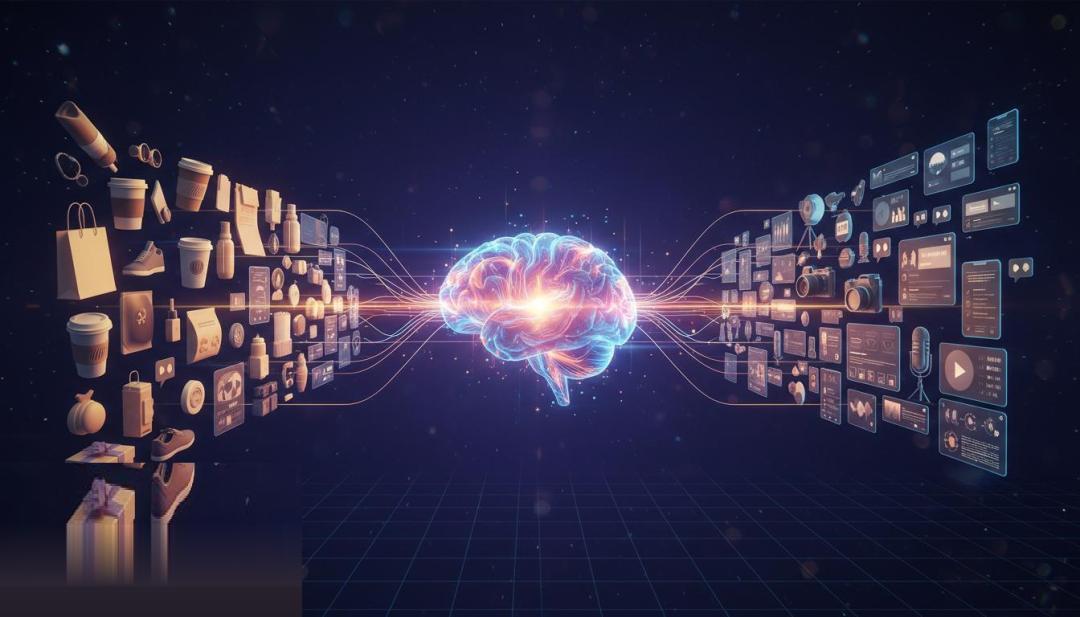
Judgment 1: AI Transforms Every Consumer Brand into a Media Company
In the past twenty years, the Chinese consumer industry has undergone two important changes. The first was the channel revolution of consumer goods, and the second was the e - commerce revolution.
AI may be driving the third revolution: the media revolution. What was the biggest problem for many brands in the past? It wasn't that they couldn't sell products, but that they couldn't communicate effectively. They not only failed to communicate well but also failed to speak in a way that resonated with consumers. For example, they would shoot an advertisement once a year, launch a campaign once a quarter, and focus on promotion when a new product was launched, remaining silent for the rest of the time.
Consumers actually saw brands very few times a year because brands were static and silent.
However, since the emergence of AI, brands have suddenly gained an unprecedented ability: continuous expression. If in the past, they could only produce 10 pieces of content a day, now they can produce 1000.
In the past, they could only conduct a large - scale promotion once a year, but now they can promote every day. In the past, brands relied on the media. In the future, brands themselves will be the media.
Thus, a new era has begun: the media - ization of consumer brands. And this is just the beginning.
Judgment 2: AI Enables Brands to Regain the Power of Dissemination, Not Just Become Media
If you look deeper, you'll find that what's really happening is more important than "brand media - ization". In the past, many people thought that the Internet brought brands closer to consumers.
In fact, the opposite is true. The Internet has made brands more and more dependent on platforms. Douyin decides what content will go viral, Xiaohongshu decides what is worth recommending, and Taobao decides what products will be converted.
Brands seem to have their own accounts, but in fact, they don't have the power of dissemination. Brands are becoming more and more like content providers on platforms. Platforms control the traffic, and brands pay the rent.
So in the past decade, the biggest task for many consumer brands has not been to manage consumers but to study platform algorithms. Brands are becoming more and more familiar with platforms but less and less understanding of users.
One of the most significant meanings of AI is that it enables brands to regain the ability to produce content. In the past, brands had to rely on the media. Today, brands are starting to have their own content factories. In the past, brands had to buy dissemination. Today, brands are starting to create dissemination.
So what AI really changes is not the efficiency of dissemination but the ownership of the power of dissemination. This is the deepest change in the consumer industry in the past twenty years.
Judgment 3: AI Is Transforming Brand Competition from Channel Competition to Content Competition
In the past decade, what was the most important asset in the consumer industry? Channels. Whoever could enter supermarkets, occupy shelves, and enter live - streaming rooms could achieve growth.
So the core ability in that era was channel ability, but the future is different. When AI makes the supply of content grow infinitely, the truly scarce resource has become consumers' attention.
There is more and more content but less and less attention. So the competition logic has changed. In the future, the strongest brands may not have the largest channels, but they must have the strongest content - producing ability.
In the future, the largest department in a brand may not be the marketing department but the content department. The core asset of future consumer companies may no longer be shelf resources but content assets. The biggest competitors of future brands may not be peer brands but all the content in consumers' mobile phones. Brand competition is entering the era of media competition.
Judgment 4: AI Gives Brands Unlimited Expressive Ability for the First Time
More interesting changes are taking place. In the past, a brand was essentially a static symbol. Consumers saw the logo, the advertisement, and the packaging. The brand existed in a certain fixed scenario.
But after the advent of AI, brands are starting to have infinite personalities.
Consumers ask: Is this product suitable for me? The AI brand consultant answers. Consumers ask: What should I wear today? The AI brand stylist answers. Consumers ask: How should I lose weight? The AI brand coach answers. Consumers ask: What should I do if my pet doesn't want to eat recently? The AI brand pet - care assistant answers.
For the first time, a brand has changed from a logo to a continuously existing character. Brands are starting to have memories, conversations, emotions, and companionship.
Brands are starting to be like living people, not just names hanging on the shelves.
Judgment 5: AI Will Eventually Lead Brands from the Advertising Era to the Companionship Era
This is the deepest layer of the entire change. In the industrial era, brands sold products. In the media era, brands sold stories. In the Internet era, brands sold traffic. In the AI era, brands sell companionship.
In the future, consumers will interact with brands not through advertisements, short - videos, or live - streaming rooms, but through daily communication. Sports brands will have AI coaches, health - care brands will have AI health advisors, tea brands will have AI tea - drinking companions, pet brands will have AI pet - care assistants, and mother - and - baby brands will have AI parenting partners.
The relationship between consumers and brands is starting to change from one - time transactions to long - term companionship. And all long - term relationships will generate compound interest. So in the future, the greatest consumer brands may not be the ones best at advertising but the ones best at accompanying users.
Conclusion
Conclusion: In the future, the largest consumer brands will essentially be media companies. All Chinese consumer brand companies will be restructured by AI.
Many people think that AI changes marketing, but in fact, it changes brands. Many people think that AI reduces costs, but in fact, it restructures organizations. Many people think that AI improves efficiency, but in fact, it redistributes the power of dissemination.
In the next decade, one of the biggest changes in the consumer industry may not be the emergence of new products.
Instead, it will be the emergence of a completely new brand form. It is both a brand and a media. It is both a provider of goods and a provider of content. It is both a transactional relationship and a companionship relationship.
Those companies that understand this change earliest will be the first to complete the evolution from consumer companies to content companies.
Because in the future, the most valuable consumer brands may not have the largest factories, but they must have the strongest continuous expressive ability.
AI is transforming every consumer brand into a media company. And this is just the beginning.
This article is from the WeChat official account “New Consumer Insights” (ID: cychuangye), written by Longmaojun and published by 36Kr with authorization.