A "one-person company" makes a net profit of over one million yuan a year. How are the first batch of operations practitioners who did OPC doing now?
Recently, a new and popular concept has emerged on the Internet - "OPC" (One Person Company), which is translated into "One - Person Startup Company" in Chinese.
It mainly refers to a lightweight entrepreneurial form that relies on an individual's core capabilities, leverages AI tools and standardized processes, and independently completes the entire process of "product creation - customer acquisition and operation - service delivery - commercial monetization". The core is that one person takes the lead, and a business closed - loop can be achieved without a large team.
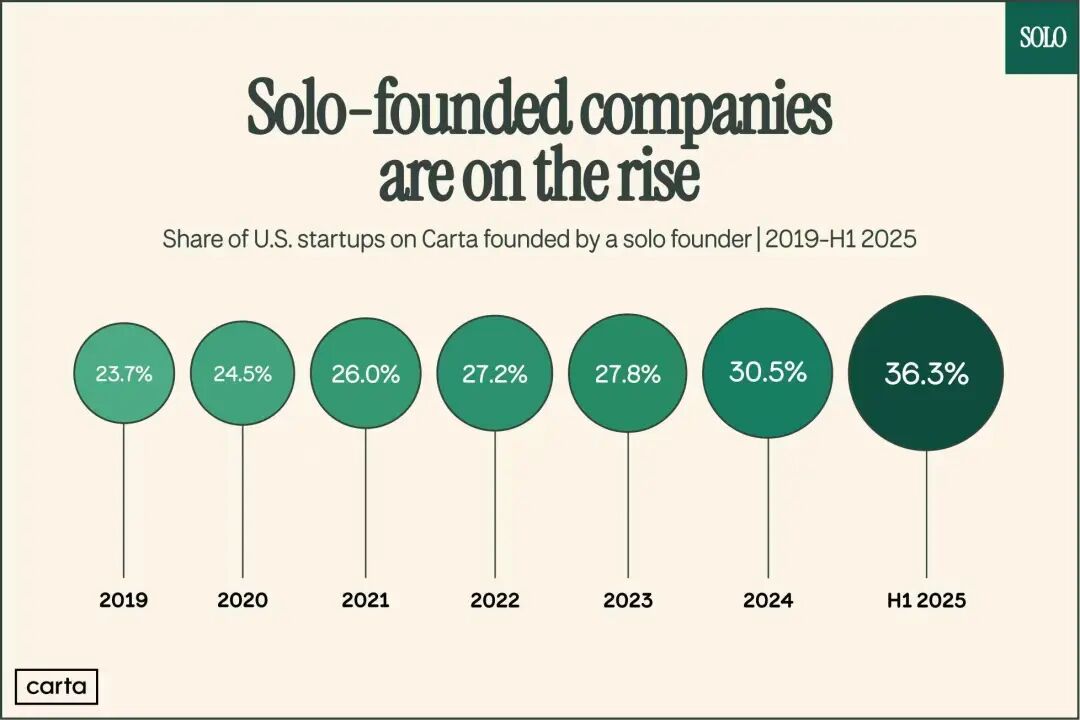
Data from the authoritative institution Carta shows that among the newly established startups in 2025, 36.3% were founded by one person. Even the hottest company globally this year, OpenClaw, initially started as a "one - person company" and gradually scaled up.
In the process of exploring this concept, the Operation Research Society found that many operation practitioners had already started "one - person company" entrepreneurship before the concept of "OPC" emerged, and many of them achieved remarkable results.
For example, Luobo, an entrepreneur deeply involved in Internet commercial operation, achieved an annual revenue of 1.2 million yuan and a profit of over one million yuan alone in one year; Amu, who came from a leading education and training enterprise, transformed his full - link operation capabilities into commercial value and ran his one - person company successfully; and Sihai, with more than a decade of operation experience, went through three trials and errors to break through the professional ceiling and finally found a definite entrepreneurial direction...
As more and more such cases emerge, a question arises: Is it really feasible for operation practitioners to start a business alone as "one - person companies" seem to be becoming more and more common?
01. After Reaching the Career Ceiling, Operation Practitioners Break Through with "One - Person Entrepreneurship"
In the past, the idea of one person resigning to start a startup company alone might have seemed crazy. However, with the increasingly powerful AI technology, many operation practitioners are starting to go solo, taking charge of product development, customer acquisition, business delivery, and other overall tasks alone. A large number of "one - person companies" are quietly emerging.
Data from "China OPC Development Trend Report" shows that as of June 2025, the number of single - person limited liability companies nationwide has exceeded 16 million. In the first half of 2025, the number of newly registered OPCs nationwide reached 2.86 million, a year - on - year surge of 47%, accounting for nearly a quarter of all newly registered enterprises.
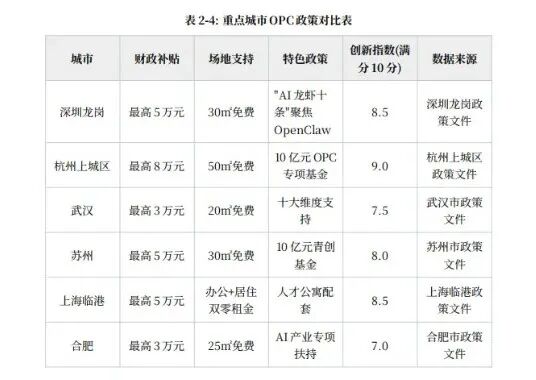
Many cities have also introduced policies to support one - person companies.
Behind these data is the increasing recognition of the "one - person entrepreneurship" model by more and more professionals in the workplace. Many entrepreneurs have already made real money through this model.
Luobo, a member of the Operation Entrepreneurship Alliance, has always been interested in entrepreneurship. He started exploring side businesses in 2022, and now he has turned his practical operation experience and knowledge into a sustainable business through courses and knowledge payment.
Luobo told the Operation Society that his team consists of only himself, and his business involves courses, paid consultations, and coaching, all of which are handled by him alone. In his opinion, the advantage of "one - person entrepreneurship" is that he has full control over the business, and both costs and profits are controllable. Taking his business as an example, his annual revenue exceeds 1.2 million yuan. After deducting taxes and a small amount of operating costs, there are almost no additional expenses. Based on this, the Operation Society speculates that his annual profit exceeds 1 million yuan.
In the workplace, it is very difficult for most people to earn one million yuan a year just by "working for others". Sihai (a pseudonym) is a senior operation practitioner with more than a decade of experience. Although he doesn't have a formal education in operation, he has developed a compound ability of "operation + product technology" through his perseverance.
In the workplace, he helped a well - known retail brand's WeChat official account grow from 0 to 1 million followers in 3 months. Later, in an e - commerce company, he led the private domain project to achieve a leap in monthly revenue from several million to over 30 million yuan, demonstrating outstanding "practical" abilities.
Even so, Sihai, like most "employees", encountered an insurmountable career bottleneck. "As an operation practitioner, it is extremely difficult to achieve an annual salary of one million yuan by working for others."
Specifically, small - scale companies cannot afford high salaries, while "big companies" that can offer high salaries have extremely strict requirements for education and background. The complex interpersonal cooperation within these companies also makes Sihai, who focuses on business, exhausted.
"There is very limited room for further development. Instead of wasting time in the workplace, it's better to start a business to realize my own abilities."
Sihai told the Operation Society that the popularization of AI tools has strengthened his determination to start a business. Nearly 60% of basic tasks such as contract drafting, copywriting, and proposal making can now be completed by AI. Entrepreneurs only need to focus on core strategies and the business itself, which has significantly lowered the operating threshold of "one - person companies". Thus, the concept of OPC and "one - person companies" have gradually become popular in the operation circle.
02. How Can Operation Practitioners Run a "One - Person Company" from Solo Exploration to Earning One Million a Year?
When having conversations with operation entrepreneurs like Luobo, Amu, and Sihai, we found that entrepreneurship is not an easy task. They all firmly choose to focus on their core fields and run a commercial closed - loop in a lightweight mode.
Specifically, how did they establish their "one - person companies"? And how did they successfully transform from employees to entrepreneurs?
1) Drill Through One Pain Point, and You Can Earn One Million a Year by Solving Just One Problem
Luobo is a senior operation practitioner with more than 10 years of experience in the workplace. He has worked in top - level companies in multiple industries and is particularly good at leading projects to achieve commercial goals.
For example, he was responsible for the operation and commercialization of an app product under a listed company. He led the team to achieve a daily active user count of 2 million and a daily revenue of hundreds of thousands of yuan in two years, ranking among the top in the industry.
After that, Luobo successively served as an operator in several companies of different sizes, especially accumulating rich practical experience in the field of product commercialization. By chance, he found that many operation practitioners are good at growth and fission, but they have many misunderstandings when it comes to "commercialization" - related issues. For example, some people think that product commercialization is equivalent to "adding advertisements", and some are eager to find a "monetization formula" but lack a systematic methodology.
These "knowledge blind spots" are exactly what Luobo is good at. Driven by his interest, he started sharing dry - goods notes on Xiaohongshu about "operation commercialization", such as "Commercialization concepts that all Internet workers should know", "What are the differences between C - end and B - end commercial product managers?", and "What do commercial products and commercial operations do?"
At that time, Luobo never thought about monetization. He was just sharing knowledge, but this laid the foundation for his subsequent entrepreneurship.
In 2024, Luobo accidentally found that someone had packaged his free - shared materials into a product and sold it on Xianyu for 59 yuan, and it sold more than a hundred copies. This discovery made him realize that his sharing results had great commercial value. Instead of letting others resell them, he decided to monetize them himself.
So he spent several months sorting out his past shared content and new materials and re - polishing them into a 170,000 - word commercialization course. In this way, Luobo's "one - person company" gradually took shape. This course, as his core product, is priced at 329 yuan, with the features of permanent validity of materials and author's Q&A. Data shows that this course has sold nearly 1,700 copies on Xiaohongshu alone, with a GMV of over 550,000 yuan.
If Xiaohongshu is the customer - acquisition entrance for Luobo's "one - person entrepreneurship", then WeChat private domain is his "performance growth engine". For every user who buys his course, he will guide them to add him on WeChat. Now, his two WeChat accounts have accumulated more than 8,000 users, most of whom are precise customers with a payment relationship.
After the relevant course became a hit, Luobo's one - person entrepreneurship business naturally extended to the commercial consulting and coaching sectors, which also became an important part of his annual revenue of 1.2 million yuan, accounting for half of the total revenue each with knowledge payment. Luobo told the Operation Society that the commercialization course has continuously brought in many new users. Most of these users are operation practitioners or operators who are eager to learn commercialization - related knowledge and hope to solve the actual problems they encounter in their projects.
Therefore, Luobo has developed two new types of businesses for this type of users: one is business consulting services, which are priced according to time and business complexity, ranging from 800 yuan to more than 10,000 yuan, with no fixed standard and depending entirely on the actual needs of users;
The other is result - oriented coaching services. For some projects he is optimistic about, he will also provide additional coaching services and share the profits in proportion based on the actual business revenue. Although this type of service is more energy - consuming, the customer unit price is higher and the value is more prominent.
Luobo always emphasizes that whether it is the course or commercial consulting, he adheres to one principle: Don't do business that exchanges time for money. Only do things that can form a scale effect and compound interest. As a standardized product, the course can be sold multiple times after one - time polishing, achieving continuous profit. The consulting service is a value extension of the standardized product with a high customer unit price, which not only gives full play to his practical advantages but also avoids being trapped in endless time consumption.
2) "One - Person Entrepreneurship" is Not Fighting Alone but Focusing Precisely
As "light - asset entrepreneurship" becomes a trend, "one - person companies" that monetize through practical operation experience are no longer a niche choice.
Amu is one of the earliest members of the Operation Entrepreneurship Alliance. He also has rich experience as an operator and has worked in leading education and training and knowledge - payment companies such as New Oriental, Gaodun, and FanShu. For example, during his work, he led a project to grow from 1 to 100, promoting the project's annual revenue to increase from 10 million yuan to 30 - 40 million yuan, with a growth rate of 300%.
In November 2024, after leaving a leading company in the knowledge - payment industry, he decided to start an independent business and establish a one - person company. In Amu's understanding, a "one - person company" is by no means "fighting alone" in the literal sense. It doesn't mean that there is only one person in the company. Instead, the core business of the company revolves around the founder, and some non - key businesses or tasks can rely on assistants or find reliable partners to join the team for joint operation and cooperation.
"It is more like a transitional stage, using the lowest cost to complete the verification from 0 to 1 and avoiding unnecessary human resource consumption in the initial stage."
For Amu, his core competitiveness lies in his full - link operation capabilities, especially in the education and training and knowledge - payment sectors. From front - end traffic acquisition (matrix building, platform advertising, content fission) to mid - end sales conversion design (community operation, live - streaming conversion, SOP optimization) and then to back - end delivery optimization (human - efficiency improvement, cost control), he can provide one - stop solutions and help customers implement them.
Based on this core ability, Amu has currently run three types of businesses: the first is a standardized course priced at 5,980 yuan (a practical training camp jointly launched by the Operation Society and Amu), focusing on full - link operation - related content, and it has served more than a hundred students so far;
The second is consulting services, mainly providing one - on - one consultations for users' specific problems, with a price of several thousand yuan;
The third is coaching services, which help the client achieve a fission from 1 to 10 within 3 months, covering aspects such as traffic, conversion, and repurchase, with the goal of improving the overall project revenue. Among them, the coaching business accounts for most of his revenue.
More importantly, these three types of businesses are progressive and can achieve natural upselling. For example, after operation practitioners learn operation knowledge through the course, if they still want to solve specific problems, they can upgrade to purchase consulting services. Among the users who have completed the consultation, many have the need for on - site coaching, and Amu can select high - quality customers from them for cooperation. So basically, after the front - end course attracts traffic, the subsequent deeper - link products can reuse user resources to achieve efficient monetization.
The key to "one - person entrepreneurship" is to be "small and beautiful". Instead of doing everything, focus on doing what you are best at to the extreme. To break through the ceiling of personal energy, he is standardizing and modularizing the business process, delegating the replicable execution links to carefully selected and trained partners, while he himself focuses on core strategies, plan design, and high - value delivery to maximize overall efficiency.
Currently, Amu has accumulated a group of reliable partners who recognize his methodology and abilities through courses and coaching services. After unified standardized training, these partners have joined Amu's team and can independently undertake some execution and delivery tasks to serve more customers. According to Amu, his one - person company is moving towards the 1 - 10 organizational scaling - up stage, and this "core control + partner collaboration" model has been proven effective.
03. Conclusion
Although there are more and more "one - person companies", entrepreneurship is still a high - risk activity. Data shows that the probability of entrepreneurial success is only about 5%, and most people may be eliminated by the market.
However, Luobo, Amu, and Sihai, three operation practitioners, have found a completely different "one - person entrepreneurship" path based on their years of industry accumulation and practical operation experience, running a small and beautiful long - term business. Their actions prove that in the era of rapid development of AI technology, a "one - person company" is no longer a desperate adventure but a way for ordinary operation practitioners to break through the career ceiling and realize their personal value.
In addition, based on the above cases, the Operation Society has found a common rule: For a "one - person company" to truly succeed and be stable, entrepreneurs need to have several key abilities simultaneously: solid industry professional knowledge and resource accumulation, clear product design ability, patience for long - term in - depth development, and the ability to accurately target the core customer group of the business.
Throughout the entrepreneurial process, AI plays the role of an efficiency amplifier. Whether it is content - based customer acquisition, private - domain operation, proposal writing, or service delivery, AI can significantly improve efficiency and reduce labor costs, enabling a "one - person company" to achieve "one person's work equivalent to ten people's". However, AI is not the core threshold for a "one - person company". On the contrary, its usage threshold will become lower and lower, and its usability will become stronger and stronger. Eventually, almost everyone will be able to use AI.