36Kr Research Institute | White Paper on Study Abroad and Employment in the AI Era: Global Employment Trends and Reshaping of Talent Value for Chinese International Students
In the current era when the global industrial logic is being reshaped by the AI wave, the educational premium and information asymmetry that traditional overseas study paths rely on are systematically losing their effectiveness. The basic tasks of many high - paying majors are at risk of being batch - replaced by AI. Parents of the 70s/80s are facing a sharp decline in the return on education investment, while the post - 2005 generation is caught in the identity anxiety of "how to establish their irreplaceable value" in the era of human - machine collaboration. Facing this historical watershed where old consensus is collapsing and new directions are unclear, 36Kr Research Institute and New Oriental Education jointly released the "White Paper on Overseas Study and Employment in the AI Era: Global Employment Trends and Talent Value Re - shaping of Chinese Overseas Students". Based on the service data of millions of families accumulated by New Oriental over thirty years and the forward - looking judgment of the global emerging industrial clusters in 2030 by 36Kr Research Institute, the white paper advocates a long - term approach over the entire life cycle and provides an objective and neutral guide for overseas study families on future employment and survival.
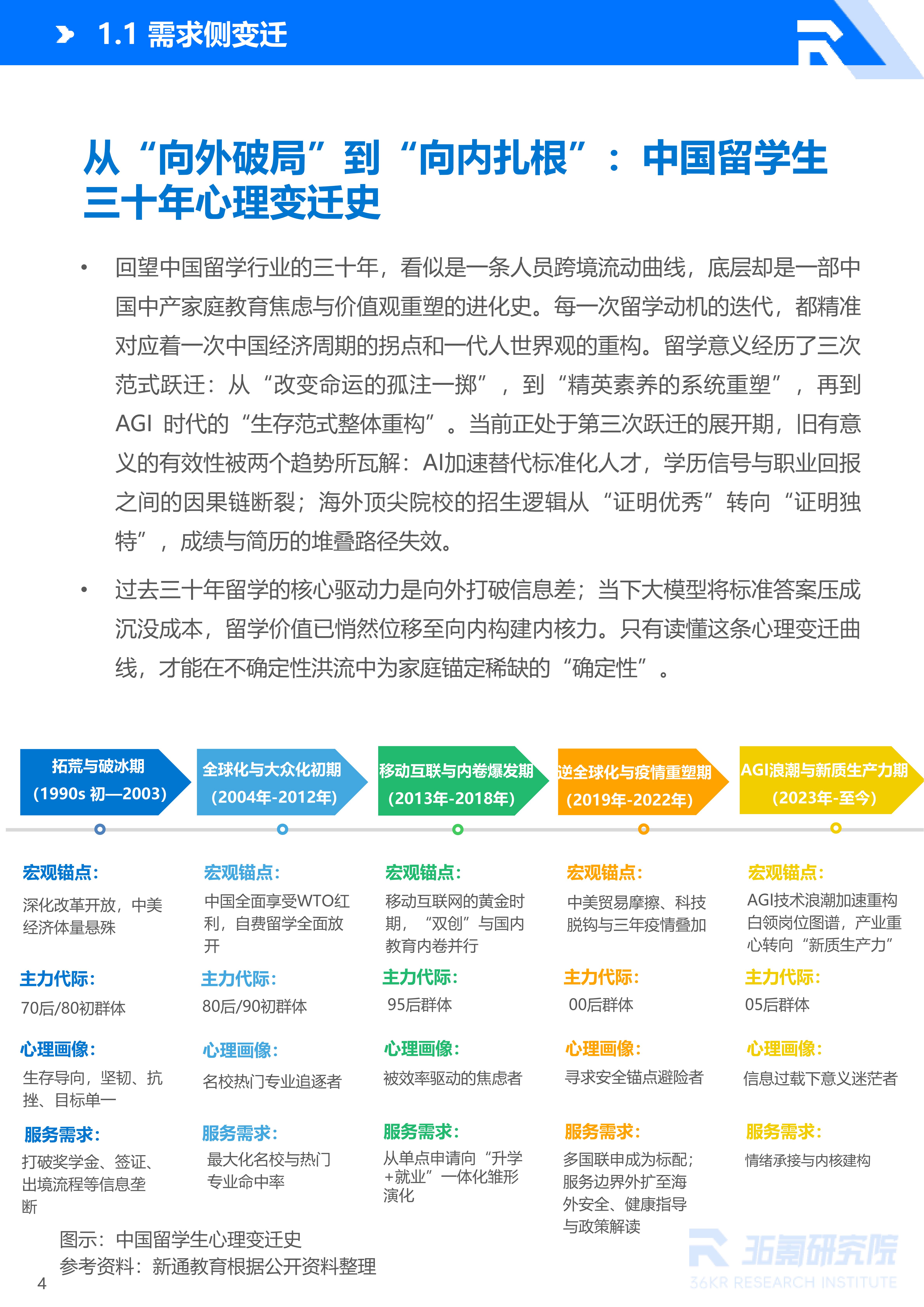
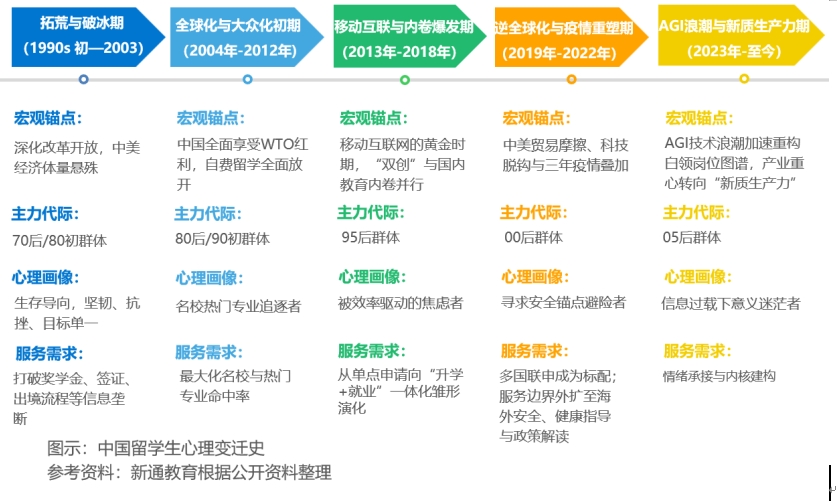
From "Breaking Through Outward" to "Rooting Inward": The Thirty - Year Psychological Evolution of Chinese Overseas Students
The thirty - year development of the Chinese overseas study industry is essentially a history of educational anxiety and value - system re - shaping among middle - class families. The meaning of overseas study has gone through five stages of change - from being driven by survival and breaking the information monopoly in the pioneering stage, to becoming a promotion channel for chasing the aura of famous universities, then to the instrumental rationality and involution of pre - setting employment expectations, followed by the reshaping period during the pandemic when risk aversion and psychological issues became prominent, and finally to the new stage in the current AI wave where a sense of meaning is in short supply and emotional support has become a necessity.
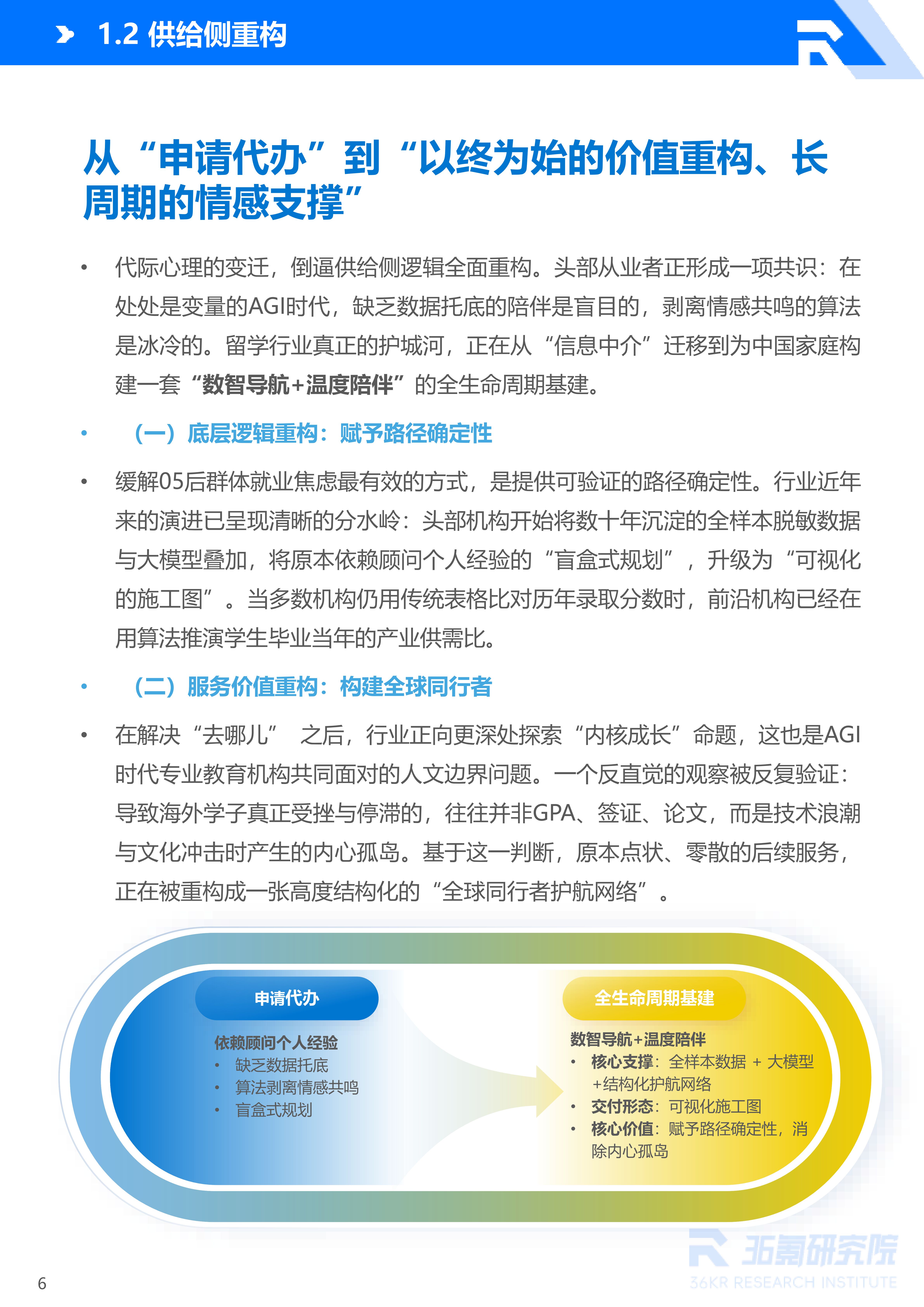
In the past, the core driving force for overseas study was to break the information asymmetry outward. Now, as AI accelerates the replacement of standardized positions and the causal link between educational credentials and career rewards is broken, the value of overseas study is quietly shifting towards building internal core capabilities. Only by understanding this psychological evolution curve can families anchor the scarce certainty in the torrent of uncertainty.
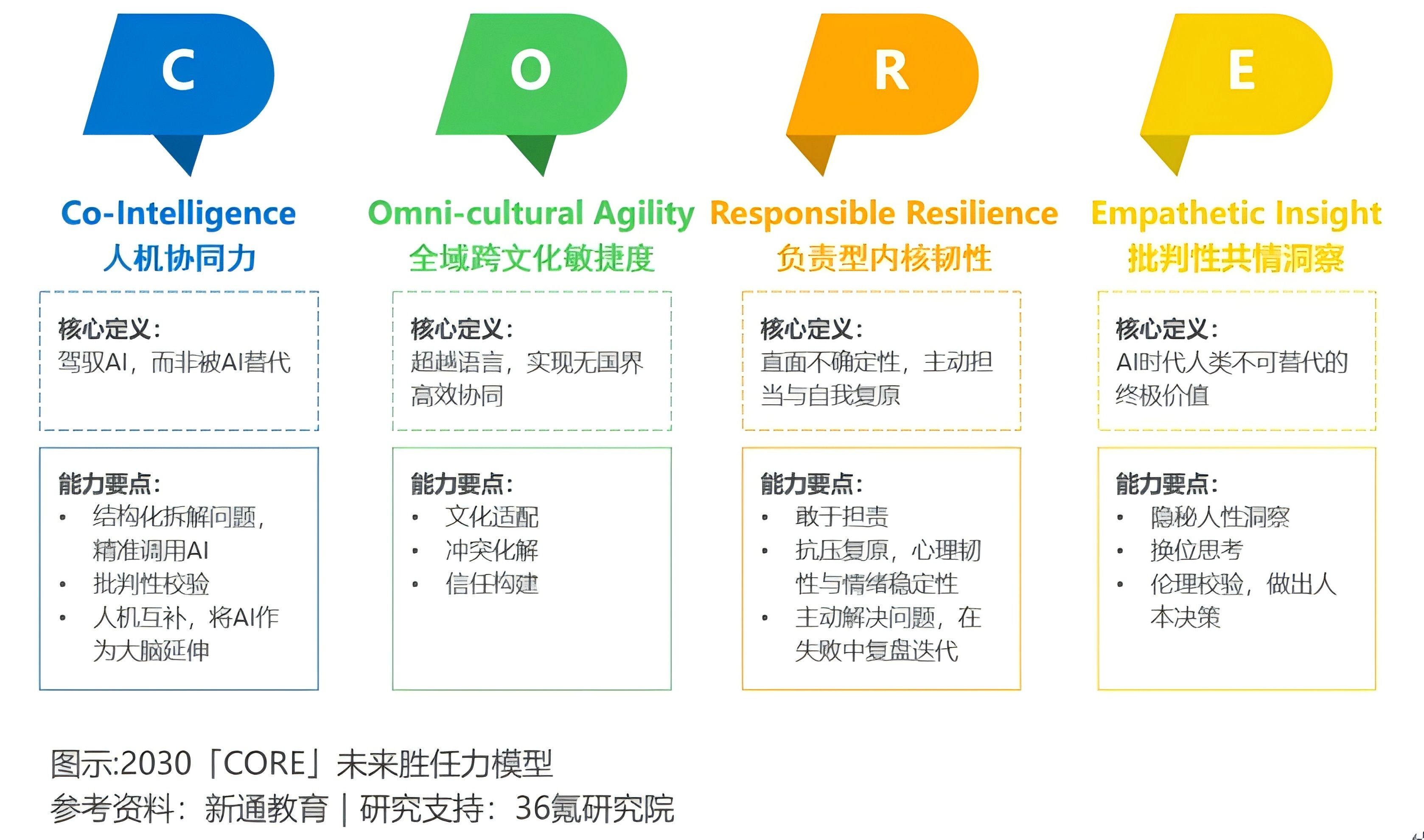
The 2030 「CORE」 Future Competency Model: The "Exclusive Core" for Navigating Cycles in the AGI Era
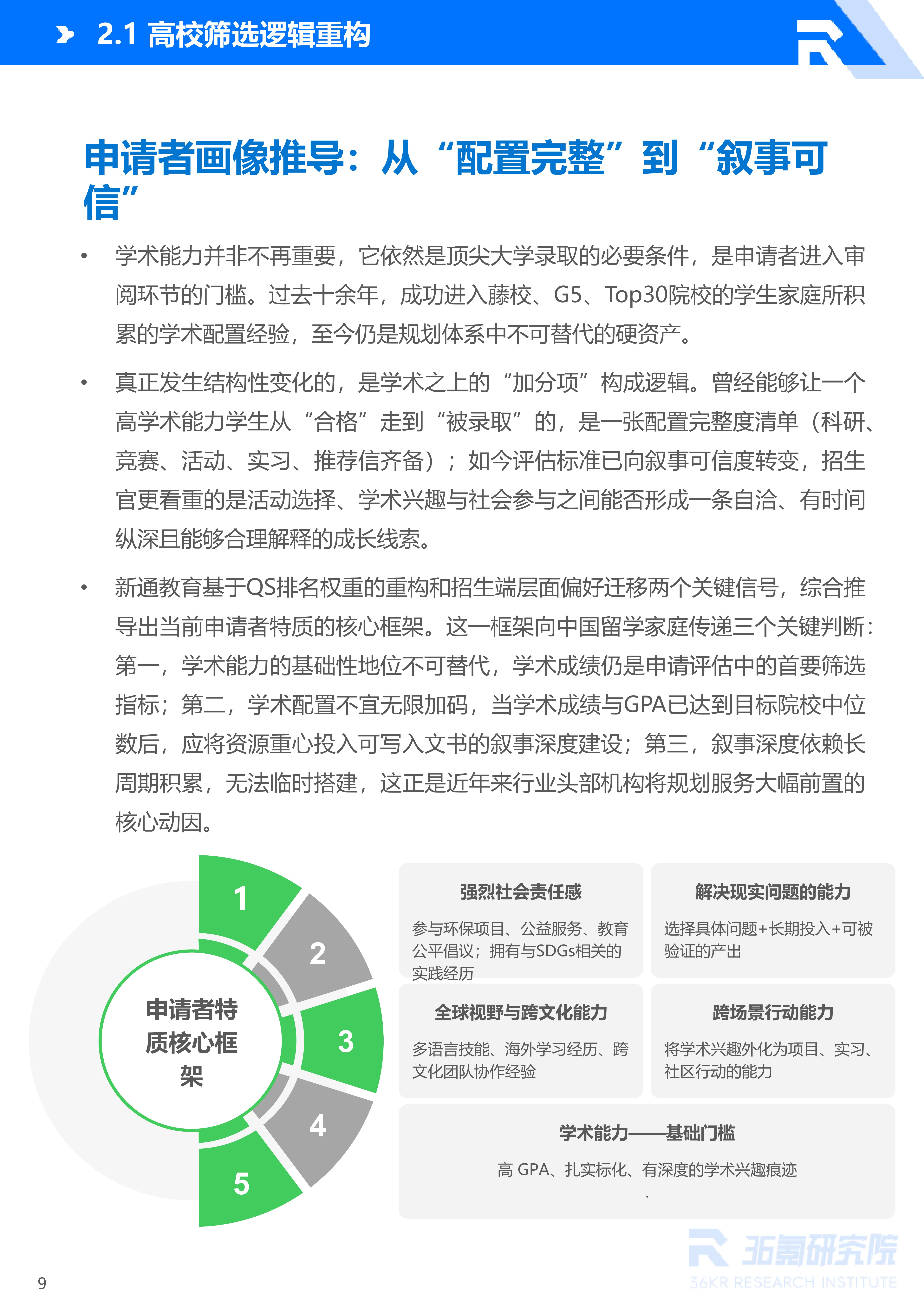
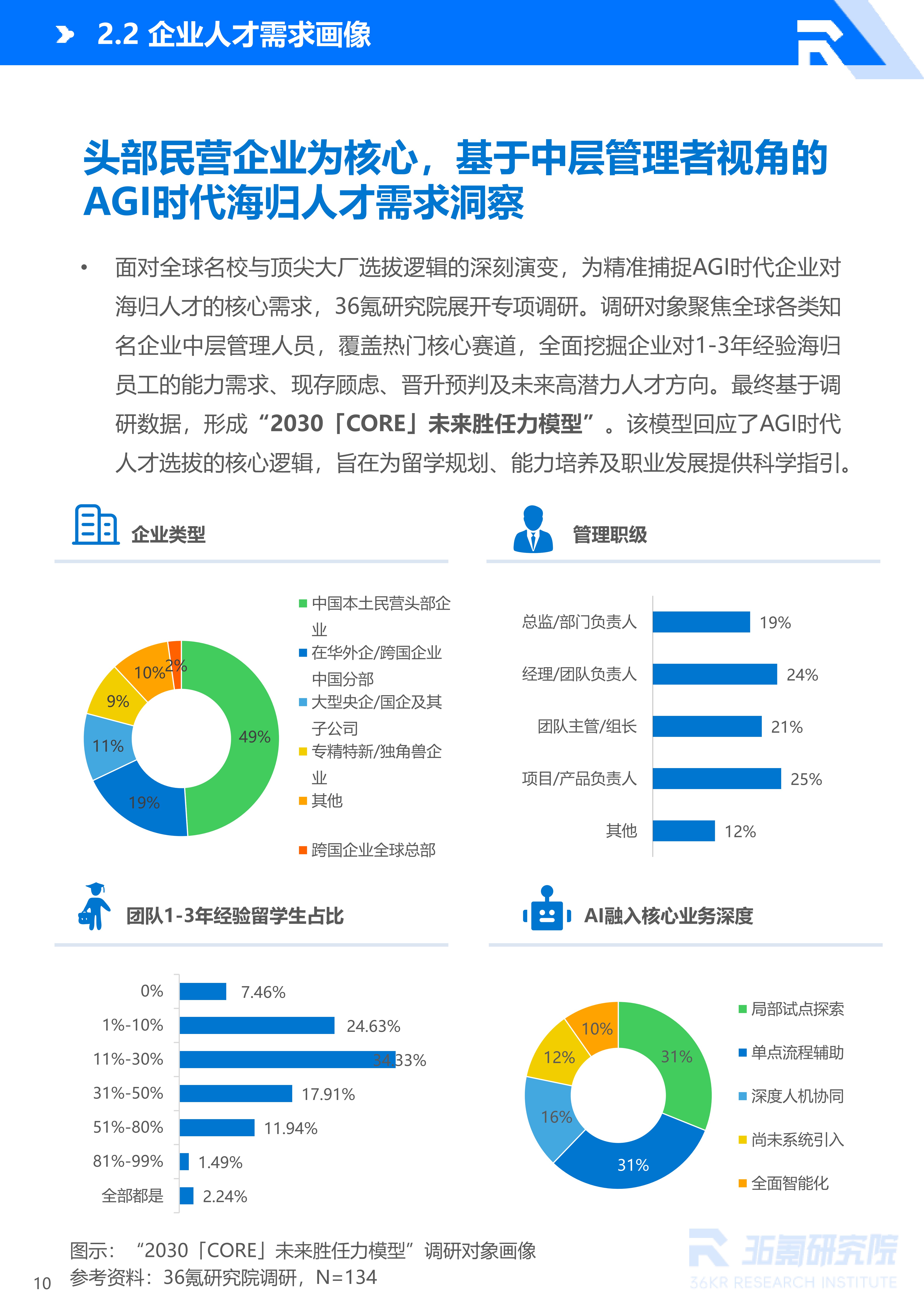
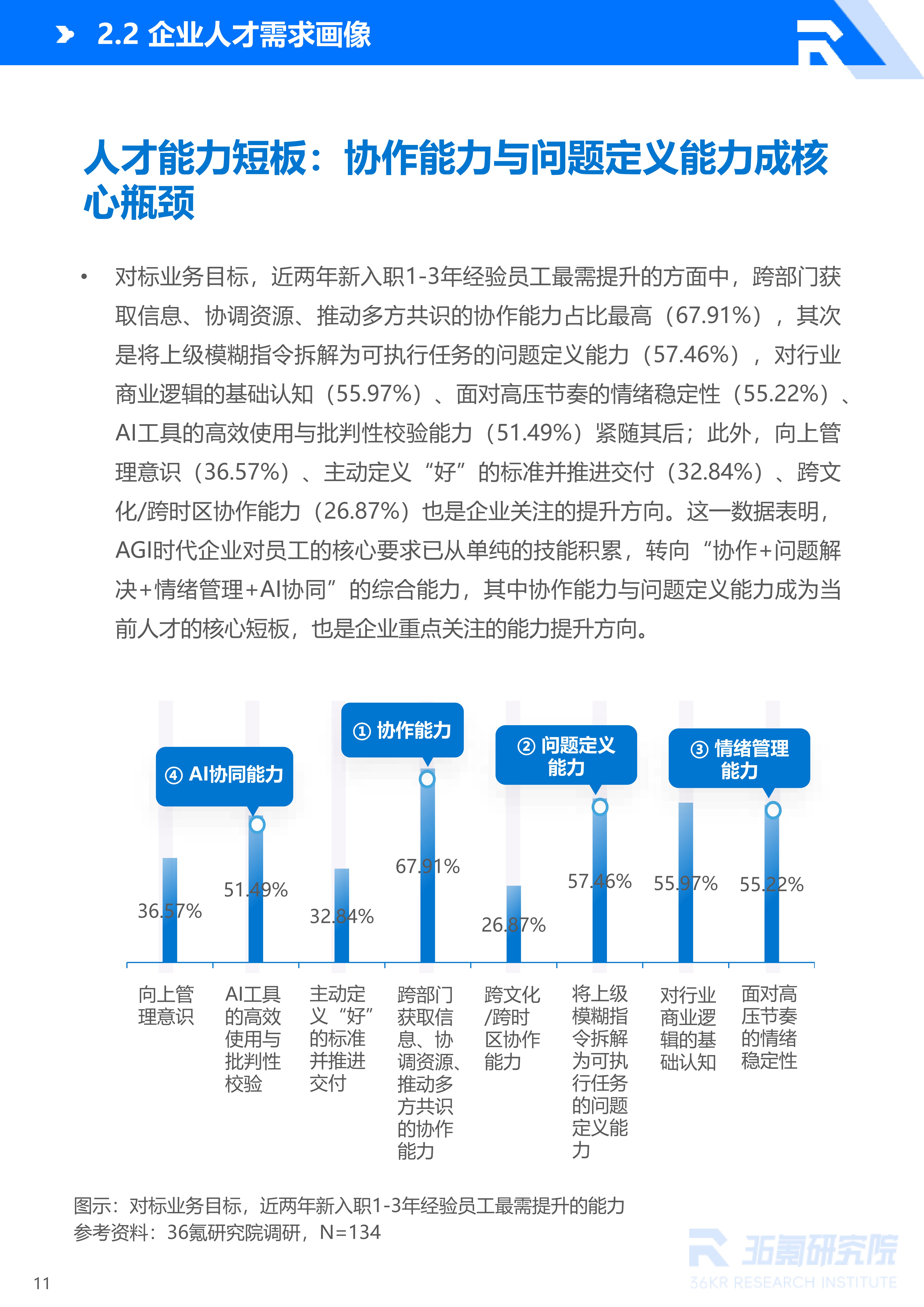
A special survey by 36Kr Research Institute on middle - level managers of global well - known enterprises shows that in the AGI era, enterprises' demand for overseas returnees has shifted from "only focusing on famous universities and skills" to "emphasizing internal core capabilities and potential". The core needs of enterprises focus on four deep - seated qualities that are difficult for AI to replace: the ability of human - machine collaboration to efficiently harness AI, the collaborative ability to resolve cross - cultural conflicts, the resilience to withstand pressure and take responsibility, and the humanistic empathy ability to understand needs. Based on this, the 「CORE」 model of the core competitiveness of overseas students aiming at 2030 is refined. What determines whether overseas students can survive the cycles and not be eliminated is no longer the skill packaging or the label of famous universities, but their irreplaceable "exclusive core (CORE)".
Bidding Farewell to Empiricism: Using Simulators to Draw New Coordinates for Professional Value
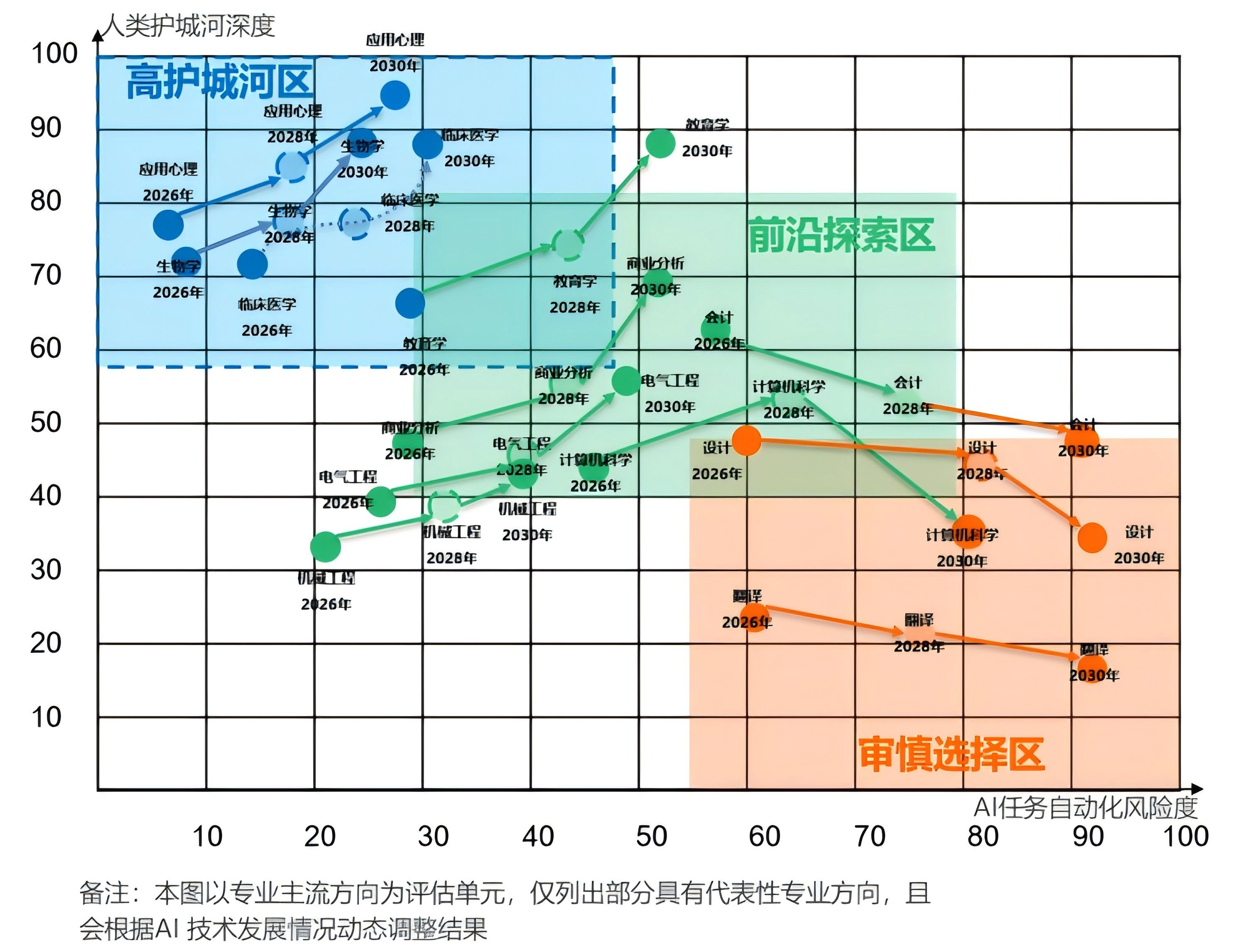
The traditional linear logic of "popular majors mean good employment" is being disintegrated by AI - a large number of standardized tasks are being automated, and the effectiveness of judging professional value based solely on historical data is rapidly declining. The World Economic Forum predicts that by 2030, 92 million jobs globally will be replaced, and at the same time, 170 million new jobs will be created, and the employment market is facing a drastic reset.
Relying on in - depth industrial insights, an authoritative evaluation system, data on job growth and talent gaps, and combined with China's industrial direction during the 15th Five - Year Plan period, 36Kr Research Institute has constructed a professional analysis model with the "risk degree of AI task automation" as the horizontal axis and the "depth of human moat" as the vertical axis. All majors are divided into three areas - the high - moat area, the frontier exploration area, and the prudent selection area. The core of this division method lies in that what AI replaces is not the major itself, but specific tasks within the major; each major is actually a mixture of different task areas, and the proportion of each area and the migration speed of tasks to the high - automation area determine the degree of its structural risk exposure.
Anchoring Policy Certainty and Planning for High - Tech, High - Efficiency, and High - Quality Industrial Directions
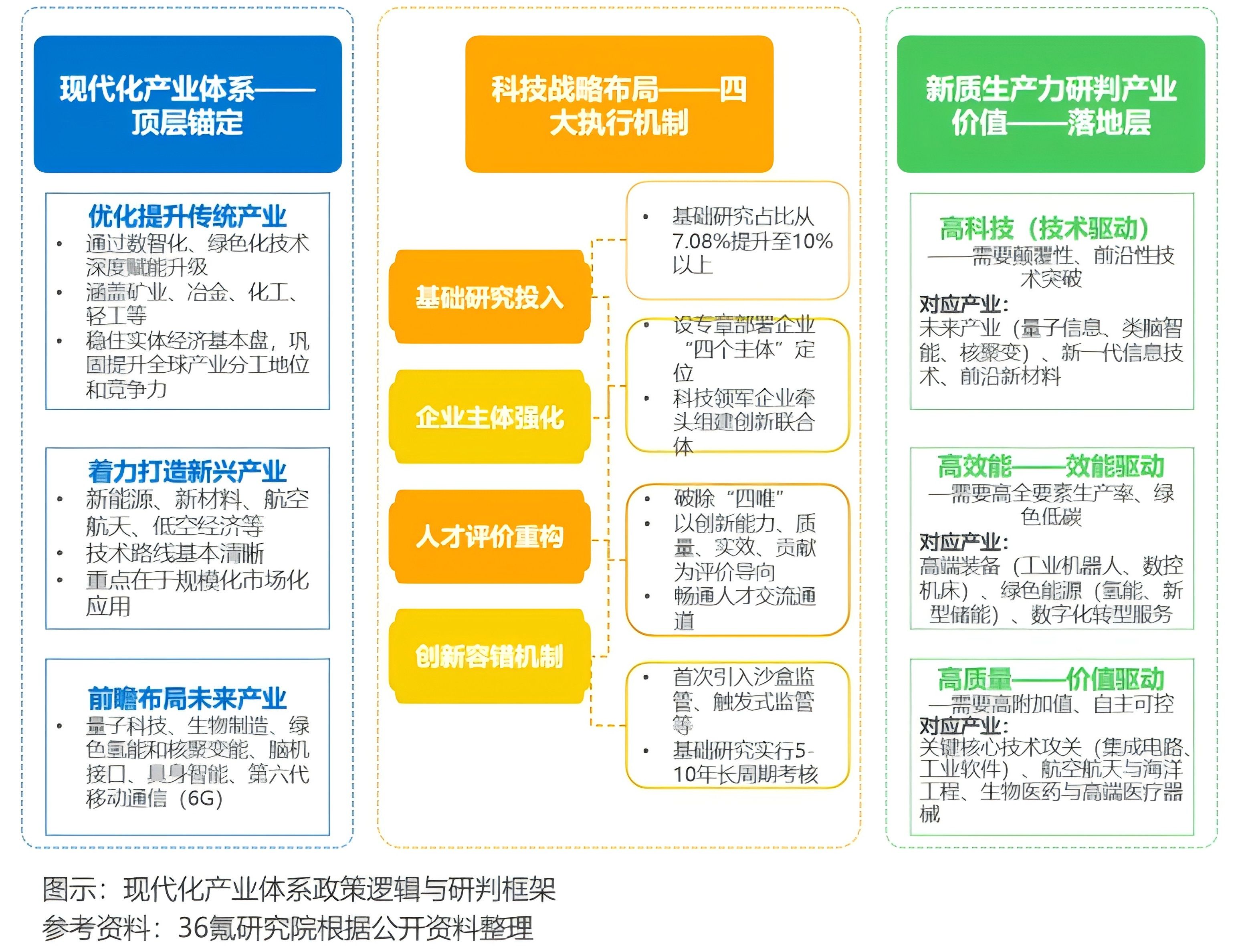
The outline of the 15th Five - Year Plan for the first time lists "building a modern industrial system" and "accelerating high - level scientific and technological self - reliance" as the two leading strategies, marking a shift in policy focus from scale expansion to basic research and original innovation - driven development, and the priority of resource allocation has also shifted from large - scale fields with limited technological content to frontier technologies.
Therefore, based on a in - depth analysis of the outline of the 15th Five - Year Plan and combined with the criteria of "high - tech, high - efficiency, and high - quality" of new - quality productivity, 36Kr Research Institute has conducted an in - depth interpretation of the seven golden tracks during the 15th Five - Year Plan period - "AI +, Low - altitude Economy and Aerospace Information, Synthetic Biology and Life Sciences, Green and Low - carbon and ESG, Quantum Technology and Frontier Materials, Intelligent Manufacturing and Industrial Internet, Digital Going - Global and Global Strategy" along the logical line of "policy orientation - industrial cluster - employment direction", aiming to provide an analytical framework with forward - looking and strategic reference value for judging employment trends and structural talent needs in the new round of industrial upgrading.
The key research questions in this report are as follows:
- How has the psychological needs of Chinese overseas students changed over the past thirty years? How has the overseas study service industry been restructured accordingly?
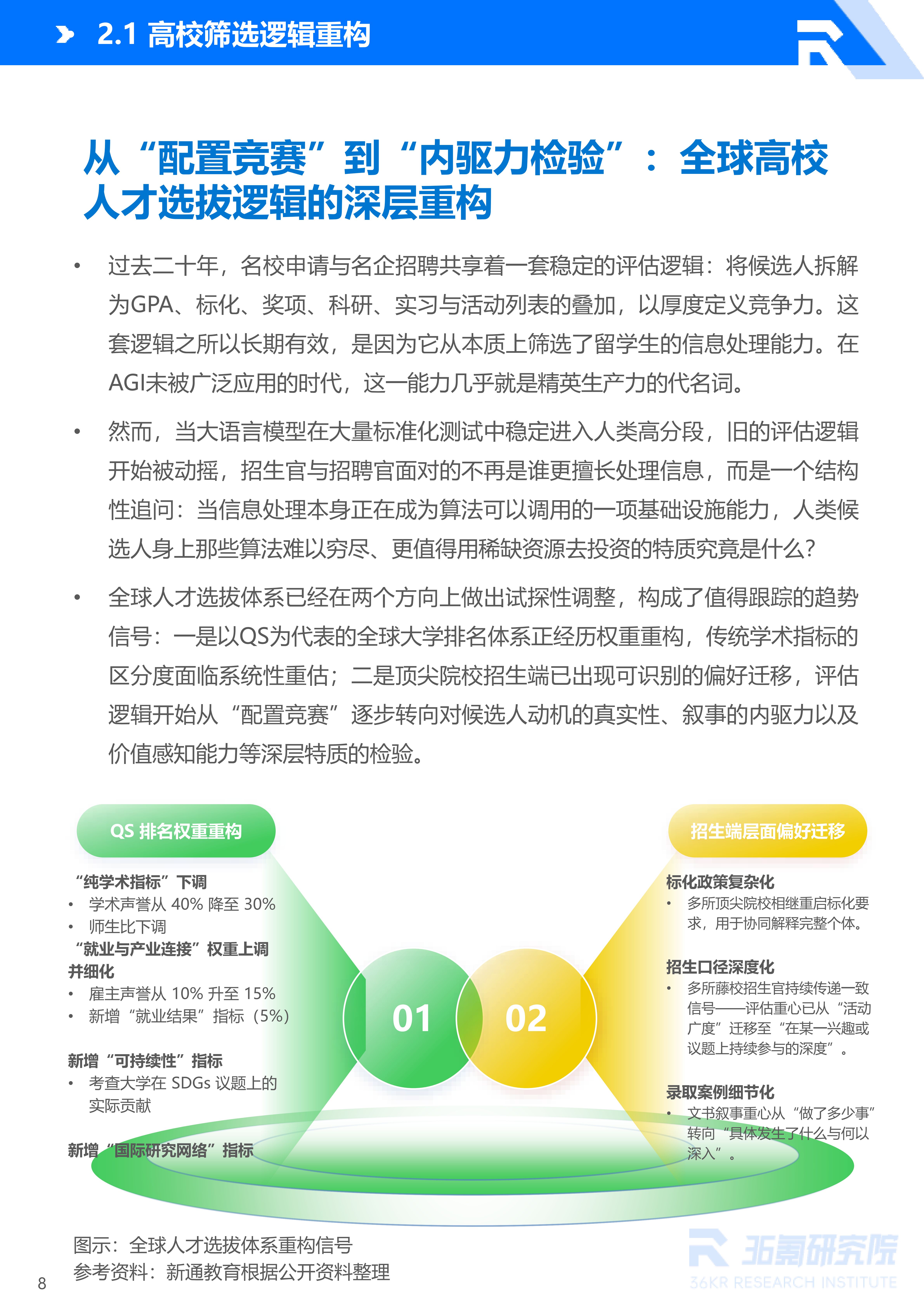
- In the AGI era, what in - depth restructurings are global universities' talent selection logic and enterprises' recruitment needs undergoing?
- Looking ahead to 2030, what is the irreplaceable core competitiveness of overseas returnees? How is the "2030 「CORE」 Future Competency Model" defined?
- How can we scientifically evaluate the "risk exposure" and "value - added potential" of different majors in the AI era? How has the coordinate system of professional value shifted?
- Under the guidance of the 15th Five - Year Plan, which golden tracks are worth focusing on? What employment directions and major choices do they correspond to respectively?
- In the context of the deep penetration of AGI technology, how can traditional majors achieve value upgrading through "digital leap"?
For more wonderful content, please refer to the "White Paper on Overseas Study and Employment in the AI Era: Global Employment Trends and Talent Value Re - shaping of Chinese Overseas Students". Click Download Link, extraction code: 9f2z