Reflections of an Investor with 13 Years of Experience: Listen Carefully When Young People "Talk Big"
The night before the interview, Zhou Quan, the managing partner of Inno Angel Fund, and his team had a meeting that lasted until midnight. He doesn't consider himself the most hard - working one. "Mr. Li (Li Zhu, the founding partner of Inno Angel Fund) was about to retire. But with the advent of the AI era and the opportunities it brings, he's even more motivated than me."
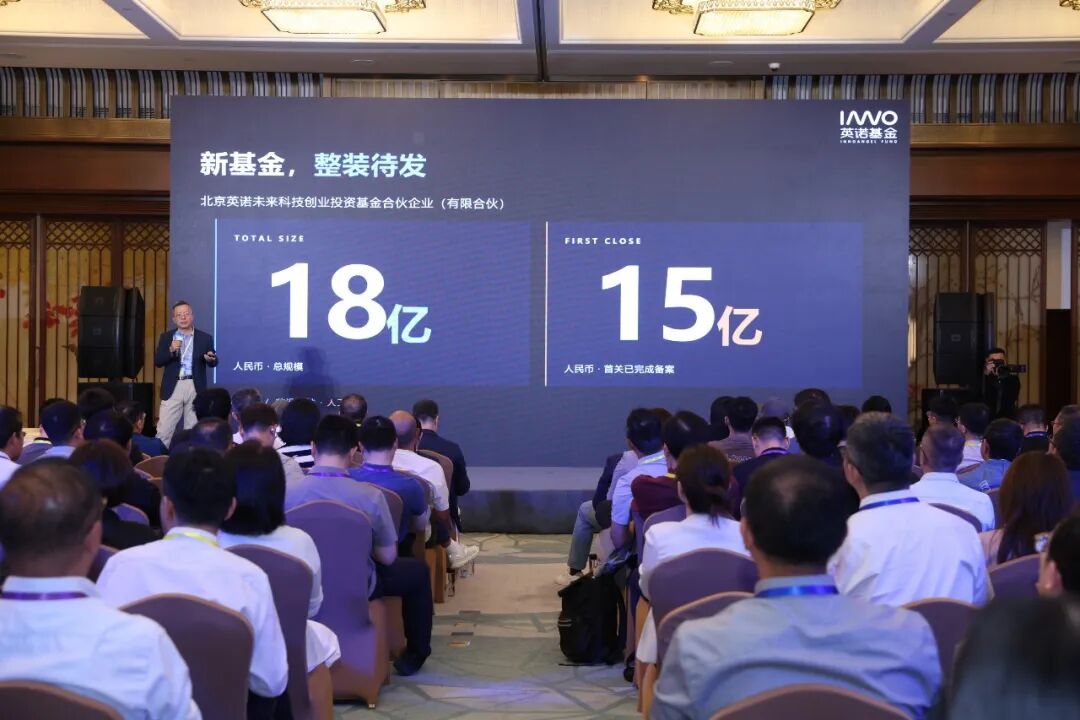
On June 5th, Inno Angel Fund officially announced that the first - round closing of its Science and Technology Innovation Fund III was completed, with a scale of 1.5 billion yuan. The LPs in this round include national - level guiding funds, local guiding funds, market - oriented mother funds, and listed companies. It's worth noting that the Science and Technology Innovation Fund III is also one of the four funds that were among the first to sign agreements with the national venture capital guiding fund.
Inno Angel Fund was established in 2013 and focuses on early - stage technology investments. As of now, it has invested in more than 500 projects, including well - known companies such as DeepRobotics, Songyan Power, Acceleration Evolution, and Qinghe Jingyuan. The management scale has reached billions of yuan. Zhou Quan joined Inno Angel Fund in 2013 and has gradually grown from an investment manager to a managing partner.
By the end of 2025, this 12 - year - old early - stage investment institution was officially split into two brands: Inno Angel Fund and Inno Science and Technology Innovation Fund. The former mainly invests in early - stage angel projects, emphasizing speed; the latter focuses on "heavy investment and heavy management," with the potential to invest over 100 million yuan in a single project.
"I like to invest in young people." During the interview, Zhou Quan repeatedly emphasized this. In his view, the happiest moment of his day is to offer real help to young people when they most need funds and support. Inno Angel Fund is willing to be the institution that writes the first check for entrepreneurs, getting to know founders when they are just starting out. "In the past, many of the projects we missed were initiated by young people. At that time, our understanding was limited, and we thought they were arrogant and unrealistic. Now, instead, when young people 'brag,' you should listen carefully because our understanding may not keep up with theirs. They may have seen future innovation points that we haven't." Zhou Quan said.
Zhou Quan explained that his preference for young people is because "smart young people have strong motivation and adaptability to change." In his view, some entrepreneurs have only one chance; if they choose the wrong direction, they're out. But excellent entrepreneurs have nine lives. "A good founder will keep changing and trying. The first - principle of investment is that the founder has strong learning and creative abilities."
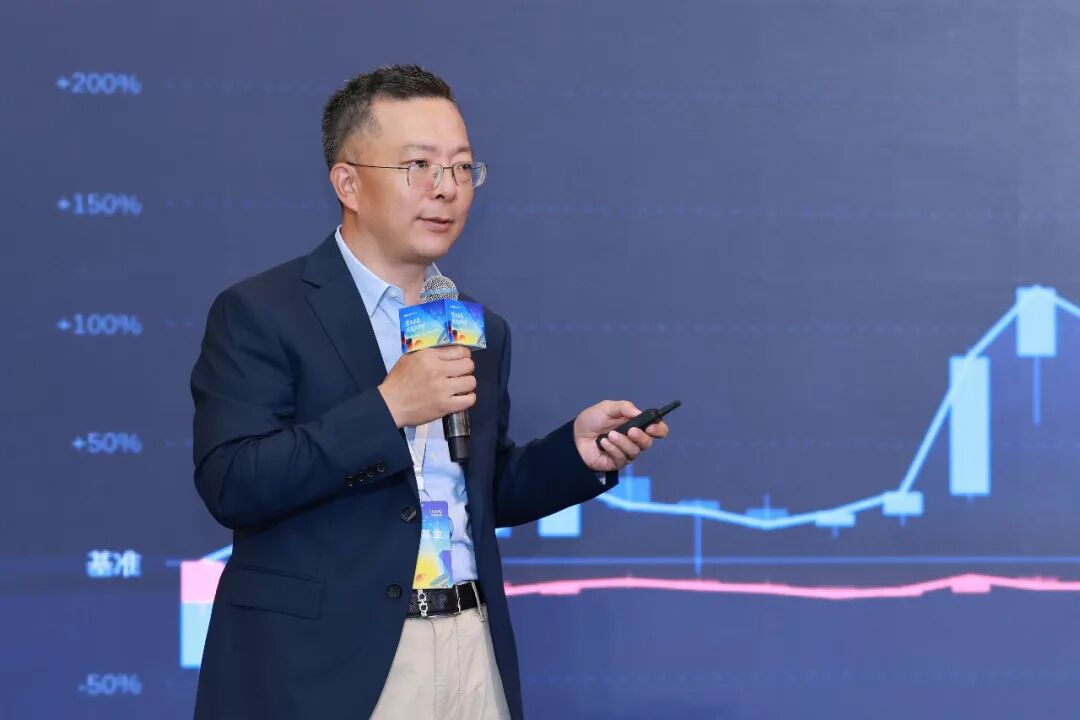
Zhou Quan, Managing Partner of Inno Angel Fund. Source: Respondent
Especially now, when the Sino - US technological competition has reached a white - hot stage and technological innovation has been written into the 15th Five - Year Plan, Zhou Quan believes that the "domestic substitution" has entered the second half, and it's a global competition. "We need to run side by side with the United States and see who can run faster and win. We're not just aiming to see the taillights of the opponent's car on the racing track; we want to run side by side and even overtake." Zhou Quan said.
The times have changed: Technology is on the rise, while traditional industries are on the decline
The fundraising for Inno Science and Technology Innovation Fund III started in October 2025, and it's now ready for the first - round closing. The speed is very fast. The country now encourages early - stage, small - scale, and technology - oriented investments, and the capital flow for early - stage projects and funds is very smooth.
The scale of Inno Science and Technology Innovation Fund I was 360 million yuan, Fund II was 1.05 billion yuan. Based on the market enthusiasm, Fund III could have raised 2 - 3 billion yuan. However, we still exercised restraint and set the scale at 1.8 billion yuan.
When raising the first - phase fund in 2020, many LPs were individuals, and we raised 360 million yuan. For the second - phase fund, more institutional LPs joined, including insurance funds. By the third - phase, most LPs had become institutions. The number decreased, and they became more professional, while individual LPs significantly reduced.
This fundraising was short - term and fast. Since everyone is professional, as soon as the second - phase investment was completed, the third - phase fundraising started, with seamless connection. Moreover, large insurance funds, institutions, and listed companies all hope to cooperate deeply with early - stage science and technology funds like Inno.
Macroscopically, the number of US companies with a market value of over one trillion dollars continues to increase, exceeding 10. Recently, the stock prices of NVIDIA and Marvell have risen by 30 - 40%. If SpaceX, Anthropic, and OpenAI go public in the future, their market values will be in the trillions or even hundreds of trillions of dollars. These three companies could raise nearly 50 billion dollars once they go public, while the total fundraising of the entire Internet industry in the United States in the past decade was only over 40 billion dollars. The combined market value of these companies will exceed the total market value of all NASDAQ - listed companies in the United States during the 2000 Internet bubble.
The situation in China is similar. There are many companies with a market value of over 100 billion yuan, such as optical module companies, whose market values are in the hundreds of billions. In the past, Chinese people thought a market value of 100 billion yuan was unimaginable, but now the pricing logic of the entire capital market has changed fundamentally.
In the primary market, it's now completely reasonable for startups to have a valuation of 100 - 200 million dollars at the beginning. We all believe that this is an unprecedented great era and also an era of wealth redistribution.
I've been in the semiconductor industry for 17 years. Driven by this wave of AI, the prices of storage and upstream materials will continue to rise in the next two years. Why has the market value of ChangXin exceeded one trillion? Due to the huge market prospects of AI and the massive capital expenditure of giants on AI infrastructure, there is a severe short - term shortage of equipment and materials, and orders are booked for the next few years. It takes one year to buy equipment, one year to build a factory, and another year to ramp up production. So the shortage will last for a long time. It's entirely possible for ChangXin to reach a market value of 2 trillion or even higher. In contrast, the market values of traditional companies will decline due to the siphoning effect of funds from technology stocks.
The technology era has entered a K - shaped divergence: Technology is on the rise, while traditional industries are on the decline. This phenomenon won't change in the next one or two years. Therefore, Inno only invests in technology and only in the early stage because there are also great opportunities in the early stage, and the wealth effect of AI also encourages more people to start businesses.
From another perspective, AI and capital are highly concentrated. Currently, among the top 20 companies with the highest model call frequencies and Token quantities, all are Chinese and American companies. In the field of embodied intelligence, China may have more advantages. AI is a revolutionary productivity revolution, and in the future, only China and the United States can advance side by side and lead global technological development.
The performance of Zhipu on the Hong Kong stock market means that the capital is re - pricing Chinese technology assets. In this great era, Inno requires everyone internally to improve their investment taste and aim for companies with a market value of 100 billion yuan. This is by no means a dream.
An important shift: Full - scale investment in technology
When I joined Inno, the fund had only been established for about half a year. It continued the approach of individual angel investments, with a scattered investment portfolio. Many projects were invested in with a trial - and - error mindset.
Over the past few years, many institutions have been eliminated through the test of time, but Inno has survived. From the end of 2018 to the beginning of 2019, we conducted a comprehensive review: Which projects failed? Which are still growing? Which have brought us the most profits? In summary, it's still the technology projects. This is also related to our background: Most of Inno's partners have a science and engineering background, and I myself have been in the semiconductor industry for 17 years. Our fund, background, and area of expertise may still lie in the technology field. Instead of expending energy on projects we're not good at, it's better to focus on technology.
So, starting from 2019, we made an important shift and started full - scale investment in technology. As the country began to emphasize domestic substitution, this shift was a natural result, in line with national policies and the opportunities of the times. Since then, Inno has only invested in the technology field. Once this label was established, all the projects we see are technology - related. Focus leads to specialization, and we've also raised our standards. For the projects we fancy, we'll invest more and continue to increase our investment. A few years ago, a well - known VC partner told me that he could clearly see Inno's changes and growth.
Source: Respondent
As the fund's scale has gradually expanded, our investment approach has also changed. First, there are many companies in the secondary market with a market value of one trillion dollars or 100 billion yuan, and the pricing system has changed. For high - quality projects in the primary market, such as those in the AI and embodied intelligence fields, they require a valuation of 100 million dollars right from the start. If the fund scale is too small, you can't even enter the game. Now that we have more resources, we can invest 50 million yuan in a single project, which allows us to invest in good projects. Second, our strategy is no longer "invest and wait for luck." Now we take the initiative and continue to increase our investment in high - quality projects that exceed expectations. In the second - phase science and technology innovation fund, we've invested over 100 million yuan in some projects. As long as a project continues to exceed expectations, I'll invest the most money. Once a project goes public, it can bring the maximum return to the entire fund.
Specifically, we now have a two - pronged approach: One is to invest even earlier, incubating projects from scratch, similar to hatching chicks. This part has a higher equity stake, aiming for high odds. The other is to target large - scale projects, those with high certainty, at a turning point in development, and on the fast track. We can invest up to 100 million yuan in such projects. In this way, we have both high - odds, high - return projects and high - certainty projects to ensure performance.
Reflection: Get on the bus first, then judge, and then increase investment
Last year, we seriously reflected internally on why we missed some important projects.
For example, in the field of large - scale models, when we first contacted relevant projects, ChatGPT hadn't emerged yet, and the concept of large - scale models wasn't even mentioned at the beginning. The projects developed rapidly, and their valuations suddenly jumped to 1 - 2 billion yuan. We thought they were too expensive. Later, when they went public with a market value of hundreds of billions... we had no chance at all.
So our current approach is: When we encounter excellent young people who may change the future, we invest the first sum of money. Only by investing can we have the opportunity to communicate deeply with the team and truly understand the person's vision, leadership, and intelligence. During the pre - investment due diligence, they may hold back some information. Once the money is invested and we're together every day, we'll know whether they're up to the task. If they meet or exceed expectations later, we'll continue to increase our investment. On the other hand, if leading VC institutions also favor them and continue to follow up, we can cross - verify, and we'll increase our investment without hesitation.
We've invested in many good projects and achieved good results in the field of embodied intelligence. However, we did miss some projects that are currently doing well because many of them had a valuation of 100 million dollars right from the start, and we had concerns.
Looking back now, our vision was not broad enough. At that time, we didn't realize that the pricing system in the secondary market had changed. A valuation of 1 - 10 billion yuan is not expensive at all today because the secondary market may offer an even higher valuation. Back then, the secondary market was still in a slump, and we didn't adjust our thinking. The core of the current valuation system is: If this thing succeeds, how large is the market space? If this person can rank first in China and among the top three in the world, then you should give them a higher valuation.
Ultimately, this is related to the fund's scale. When you have few resources, you don't have the opportunity to enter the game and see the cards. Now it's different. With a scale of 1.8 billion yuan for the third - phase fund, the tolerance for mistakes has naturally increased. With more resources in hand, you dare to stay in the game for more rounds and increase your bets.
This is why we now emphasize "investing the most money in the best projects" instead of "scattering small amounts of investment" like in the past. In the past, when doing individual angel investments, relying on recommendations from the Tsinghua alumni network, the success rate was indeed high. But after institutionalization, projects come from all over the country and vary in quality. Scattering small amounts of investment is a waste of money and resources. Now that the scale is larger and there is room for mistakes, we're willing to get on the bus first, then judge, and then increase investment.
Of course, we have standards for evaluating projects, such as scarcity, growth potential, market space, and team sustainability. However, it's difficult to predict whether a great company will have a market value of 100 billion or one trillion from the very beginning. It grows gradually. Many projects are completely different in their early stages from their final results, and their directions may also change. When you invest, it's one thing, but after a few years, they may completely change their business models. This is the reality of early - stage investment: No matter how high the standards are, it's difficult to hit the target with one shot.
I believe that Inno is in a very good era, and our current fund scale is also appropriate. This gives us an advantage in competing for projects, and we've continuously increased our investment in many projects over multiple rounds.
Improve the investment ecosystem and alleviate FOMO
Since the 15th Five - Year Plan has defined the future investment directions in areas such as quantum, AI, embodied intelligence, and brain - computer interfaces, everyone is targeting these few tracks for investment, resulting in overcrowding. A project with a valuation of 100 million yuan this year can reach 10 billion yuan next year, creating a "consensus disaster."
For example, in the field of quantum computing, there are only about a few thousand Chinese people truly engaged in it, and only about 100 or even dozens of them are starting businesses. Everyone is competing for projects in this small pool of dozens of people. As a result, projects are going through multiple rounds of financing simultaneously, returning to the situation where "Series B and C financings are already arranged, only lacking an angel round."
Tens of trillions of yuan in the primary market are flowing into early - stage projects, and all major institutions are competing. There aren't enough GPs, and the FOMO (fear of missing out) sentiment is widespread in the industry, including among us.
It's like the college entrance examination suddenly becoming an open - book exam. The questions remain the same, and everyone has the answers. Some people can score 100 points, while others only score 70. The difference lies entirely in one's ability. It's like fishing in a place with fish. The small fish are floating on the surface, while the real big fish are deep underwater. We're now looking for those deeper - lying projects.
This is also our way to eliminate and alleviate F