A major national move for the housing provident fund is coming!
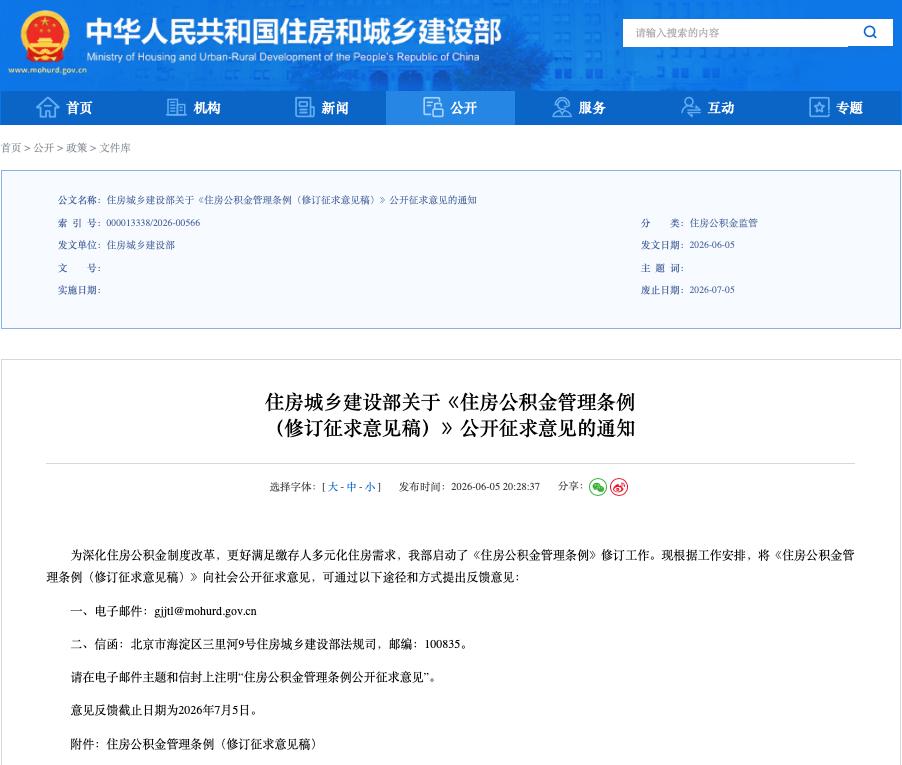
Recently, the Ministry of Housing and Urban - Rural Development launched the revision work of the "Regulations on the Administration of Housing Provident Funds" and recently solicited public opinions on the "Draft for Soliciting Opinions on the Revision of the Regulations on the Administration of Housing Provident Funds" (hereinafter referred to as the "Draft Opinion"). The deadline for feedback is July 5, 2026.
The "Draft Opinion" mainly revises four aspects:
1. Clearly include the decoration of self - occupied housing and the payment of property management fees as situations where housing provident funds can be withdrawn;
2. Clearly state that flexible employees can voluntarily participate in the housing provident fund system;
3. Promote the mutual recognition and mutual lending of housing provident funds to make it more convenient and efficient for depositors to use them in different regions;
4. Strengthen the supervision of housing provident fund management institutions.
Before this, both the Central Economic Work Conference at the end of 2025 and the Government Work Report at the beginning of this year mentioned "deepening the reform of the housing provident fund system".
Since the State Council promulgated and implemented the "Regulations on the Administration of Housing Provident Funds" in 1999, the focus of the use of housing provident fund funds has gone through a process from supporting housing construction to supporting individual home purchases by residents, and then to meeting other housing consumption needs.
As the real - estate development stage begins to change, housing consumption expenditures have expanded from "buying a house" and "renting a house" to "repairing a house" and "maintaining a house".
Currently, the revision and improvement of the "Regulations on the Administration of Housing Provident Funds" across the country are mainly to enable the housing provident fund system to better meet the diversified housing consumption needs of depositors at different stages.
01
On June 5, 2026, the Ministry of Housing and Urban - Rural Development issued a notice soliciting public opinions on the "Draft for Soliciting Opinions on the Revision of the Regulations on the Administration of Housing Provident Funds".
In order to deepen the reform of the housing provident fund system and better meet the diversified housing needs of depositors, the "Draft for Soliciting Opinions on the Revision of the Regulations on the Administration of Housing Provident Funds" (hereinafter referred to as the "Draft Opinion") is open to the public for soliciting opinions. The deadline for feedback is July 5, 2026.
Judging from the content of the "Draft Opinion", expanding the coverage of housing provident fund contributions and the scope of withdrawal and use is the focus of this revision.
First, in terms of the coverage of contributions, Article 49 of the "Draft Opinion" clearly states that other units and their in - service employees other than those specified in the original regulations can refer to the provisions of these regulations. Self - employed individuals, part - time employees, and other flexible employees can voluntarily participate in the housing provident fund system. The specific measures shall be formulated by the people's governments of cities divided into districts.
In fact, as early as 2025, many cities had included flexible employees in the scope of housing provident fund contributions (see "Many Places Adjusted the Housing Provident Fund Policy, and Flexible Employees Can Also Participate").
This "Draft Opinion" is promoted to the national level on the basis of local pilots, and the purpose is still to expand the groups benefiting from the housing provident fund system.
Secondly, in terms of the scope of withdrawal and use, Article 24 of the "Draft Opinion" expands the situations for withdrawing housing provident funds to 9 items. Compared with the previous 6 items, there are three more, namely "decorating self - occupied housing within a certain limit", "paying property management fees for self - occupied housing", and "other housing consumption situations approved by the State Council". At the same time, the original "when the rent exceeds the specified proportion of the family's wage income" has been changed to "paying rent".
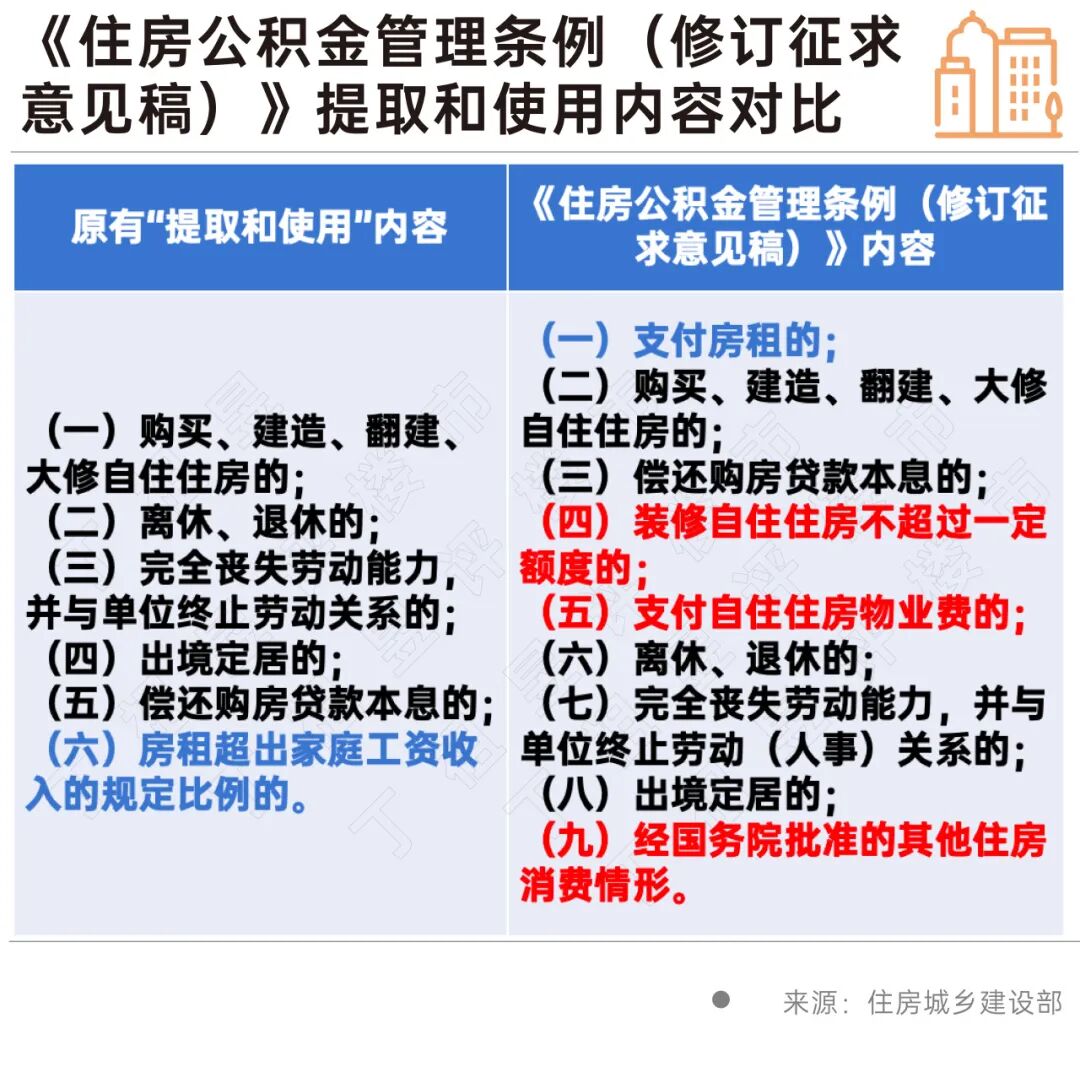
It can be seen that the scope of withdrawal and use has expanded from "buying a house" and "renting a house" to "repairing a house" and "maintaining a house".
From the previous pilots, many cities such as Shanghai, Shenzhen, Jiaxing, Shaoxing, Huzhou, Guiyang, and Xianning have allowed the use of provident funds to pay property management fees. At the same time, some cities such as Chuzhou and Huangshan in Anhui have allowed the decoration of self - occupied housing.
Finally, regarding the cross - regional cooperation mechanism of housing provident funds, Article 31 of the "Draft Opinion" clearly states that the housing and urban - rural construction departments of the State Council and the people's governments of provinces and autonomous regions, as well as the housing provident fund management centers, should strengthen the digital capabilities of housing provident funds, strengthen cross - regional, cross - departmental, and cross - level business cooperation, promote the mutual recognition and mutual lending of housing provident funds, and improve the efficiency of management and services.
Currently, the mutual recognition and mutual lending of provident funds are mainly carried out in urban agglomerations or metropolitan areas, such as the Beijing - Tianjin - Hebei region, the Yangtze River Delta, and the Guangdong - Hong Kong - Macao Greater Bay Area. It has not been implemented uniformly across the country. If the territorial restrictions are completely broken in the future, it will also make it more convenient and efficient for depositors to use provident funds in different regions.
It can be seen that most of the adjustments in this "Draft Opinion" are not new. Most of the content has been piloted in some cities before. This promotion from a national perspective is mainly to adapt to the diversified housing consumption needs of depositors at different stages, bringing greater flexibility and expandability.
02
The "Annual Report on the National Housing Provident Fund in 2024" shows that as of the end of 2024, the cumulative total of housing provident fund contributions was 3,279.4135 billion yuan, and the balance of contributions was 1,092.5279 billion yuan, a year - on - year increase of 8.61%.
That is, there is more than 10 trillion yuan of idle funds in stock.
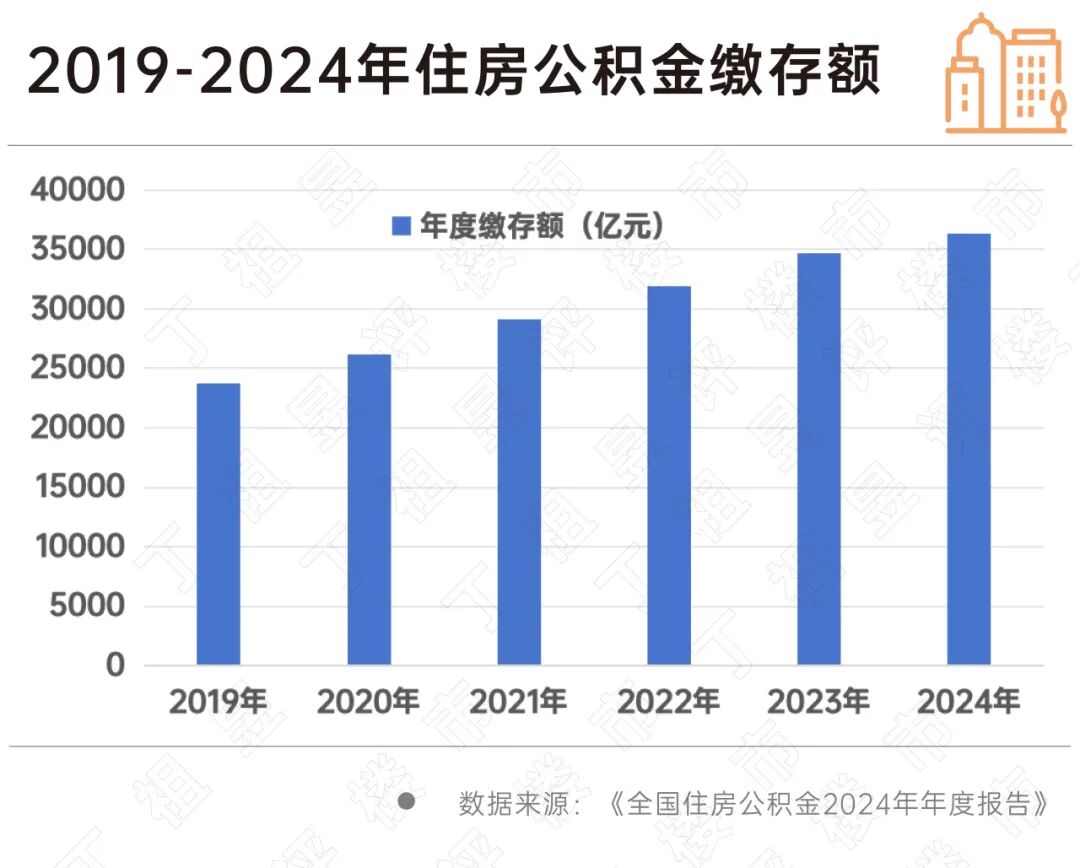
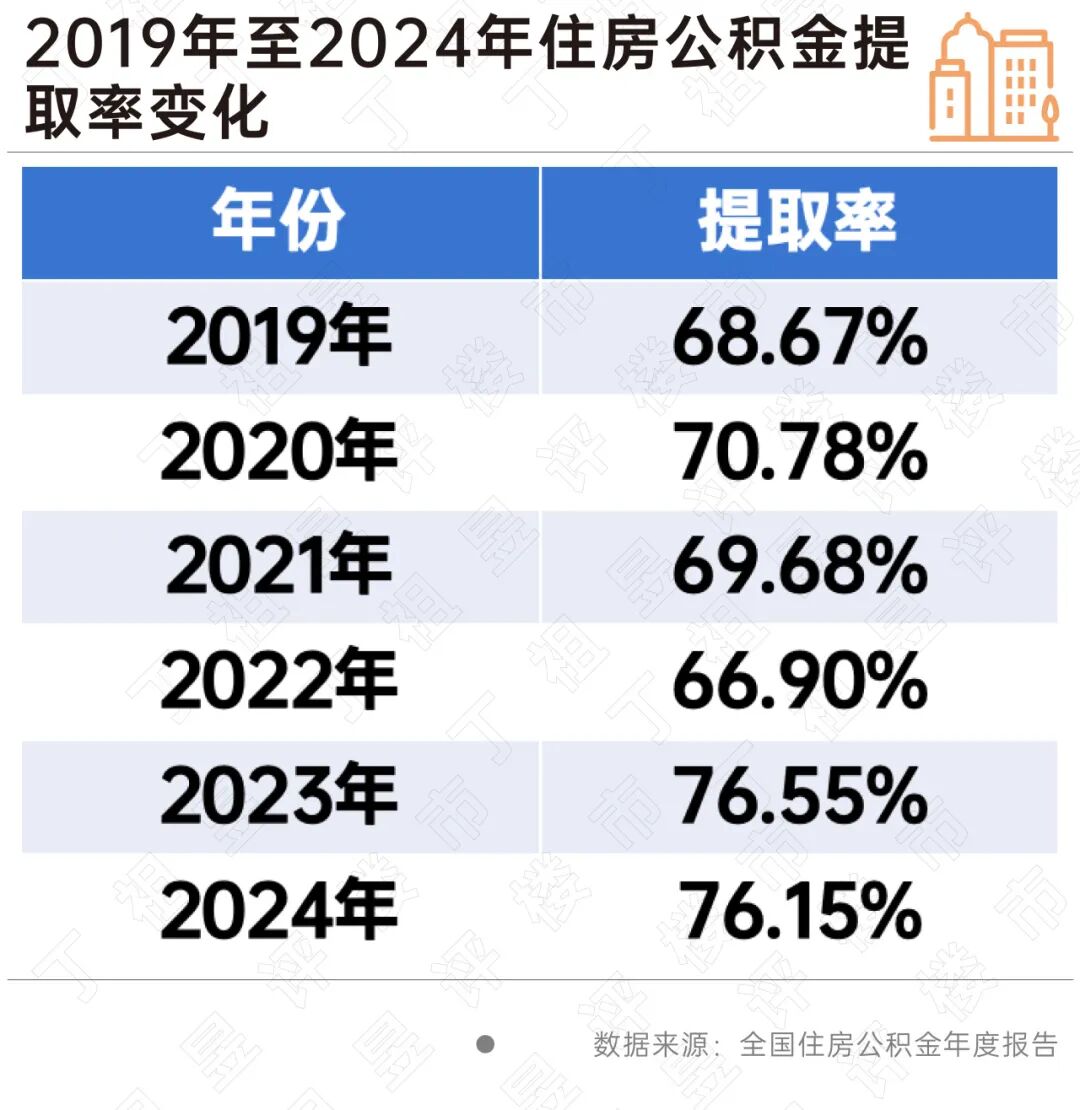
In terms of withdrawals, the withdrawal amount was 276.5484 billion yuan, a 4.11% increase from the previous year; the withdrawal rate was 76.15%.
As of the end of 2024, the cumulative total of housing provident fund withdrawals was 2,186.8856 billion yuan, accounting for 66.69% of the cumulative total of contributions.
Another set of data is more worthy of attention: in 2024, the proportion of the number of people withdrawing housing provident funds to the number of actual contributors was only 46.10%. This means that more than half of the depositors did not withdraw their provident funds.
Therefore, how to better activate the provident funds is the current adjustment direction. After local pilots expanded the coverage of housing provident fund contributions and the scope of withdrawal and use, the "Annual Report on the National Housing Provident Fund in 2024" shows that the scope of use of housing provident funds has increased to a certain extent.
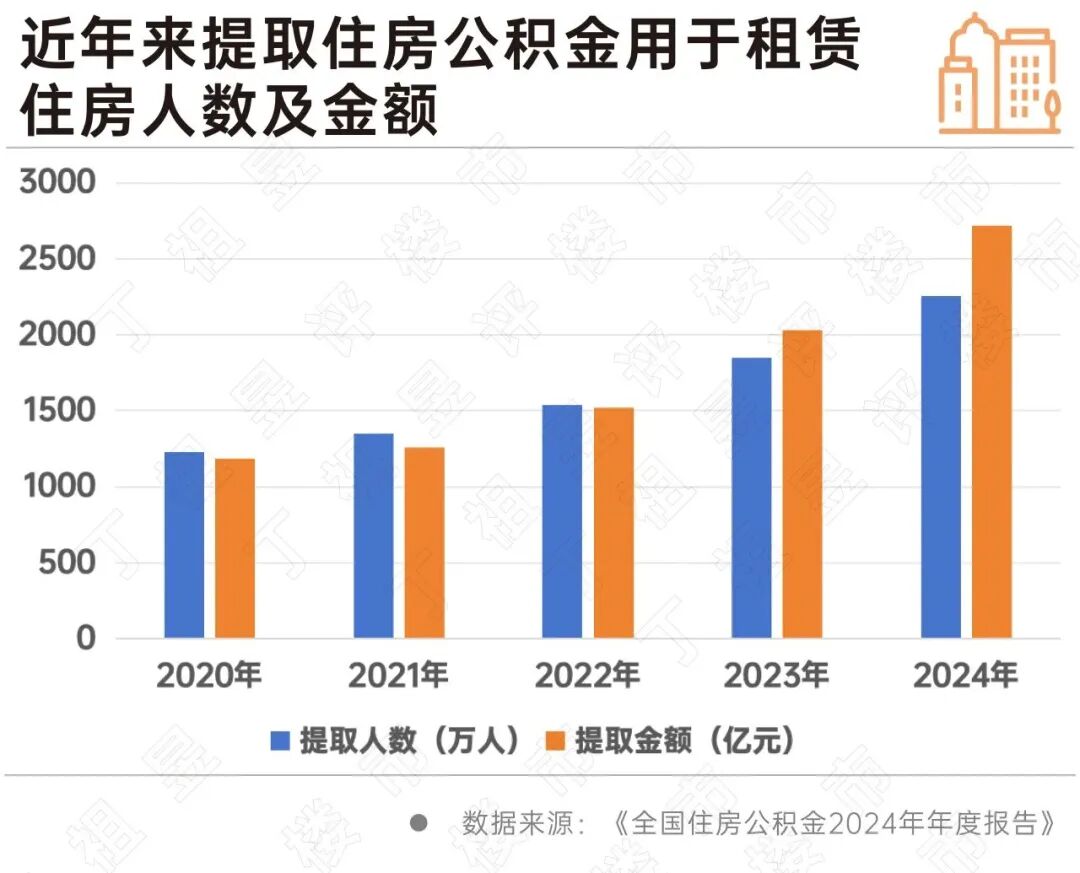
For example, with the support of using provident funds for renting, in 2024, 22.5744 million people across the country withdrew 27.2057 billion yuan of housing provident funds for renting, a year - on - year increase of 22.28% and 33.93% respectively.
Through calculation, it can be obtained that on average, each person withdraws about 1,004.3 yuan per month for renting. In 2024, the average total price per set of individual housing sources in 55 cities across the country was about 2,448 yuan per month. That is, from a national perspective, the average monthly withdrawal amount of provident funds per person can cover about 41% of the rent.
In terms of cross - regional cooperation and the contribution and use of flexible employees, in 2024, a total of 1.8941 million people transferred and continued their personal housing provident funds online across regions, with an amount of 35.043 billion yuan. As of the end of 2024, more than 1 million flexible employees in pilot cities had contributed to the housing provident fund, among which 240,000 people had used the housing provident fund for renting or buying a house.
Overall, the revision of this "Draft Opinion" fits the current employment forms and people's livelihood needs, with prominent highlights.
Absorbing flexible employees to participate in the insurance effectively expands the coverage of the provident fund guarantee and makes up for the housing guarantee short - board of the new employment group. Enriching the withdrawal categories accurately responds to the diversified housing consumption demands of residents and makes the use of provident funds more flexible. The arrangement of cross - regional cooperation, mutual recognition, and mutual lending breaks the regional barriers and adapts to the reality of population flow. The combination of digitalization and service process optimization not only improves the convenience of handling affairs but also further enhances the universality of the provident fund system, helping to improve the multi - level housing guarantee system.
It can be seen that the function of the current housing provident fund is gradually expanding from being centered on "buying a house" to being a comprehensive tool for "covering the entire housing cycle".
This article is from the WeChat public account "Ding Zuyu's Commentary on the Real Estate Market", author: Editorial Department. It is published by 36Kr with authorization.