Tens of thousands of people participate in the internal beta test, the scientific research magic tool becomes a hit in laboratories, you can finish the first draft of a paper in 4 hours, and it fully takes over the scientific research work automatically
Still manually switching between different tools to search for literature, run code, and view results? SciClaw, a research tool that started its internal testing two months ago, has passed the "assessment" of tens of thousands of researchers and is officially upgraded to Mira. It introduces three core capabilities: Expert Squad, Research Canvas, and LLM WIKI. For the first time, it productizes the concept of "Vibe Researching", allowing researchers to configure AI like assembling a laboratory team and giving back time to real scientific thinking.
Researchers may be the busiest group of people in the world.
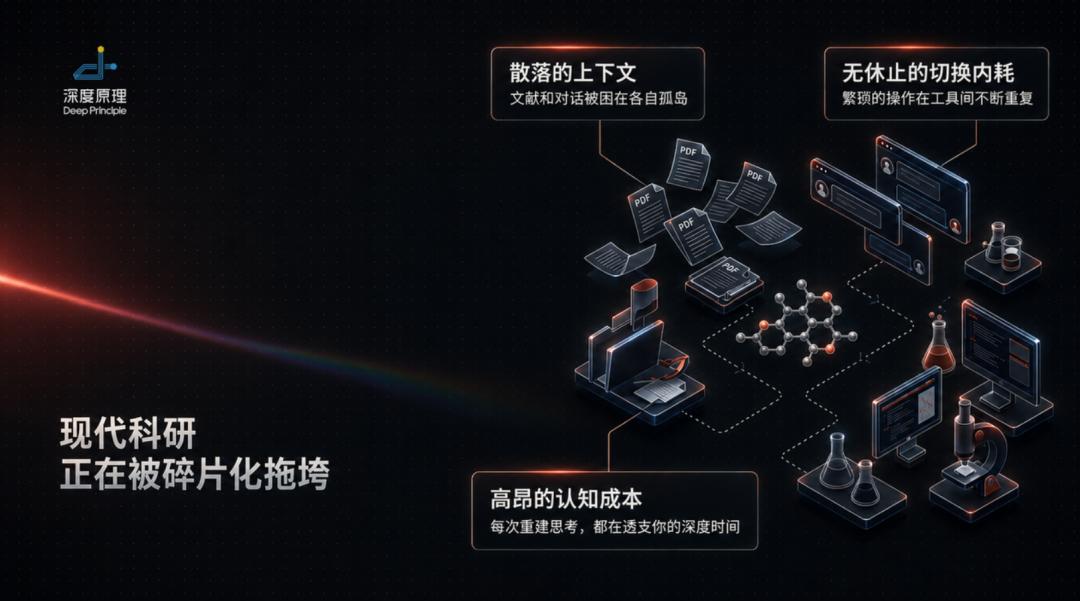
It's not because they have a lot of things to do, but because they need to jump back and forth between too many tools. Open Zotero to search for literature, switch to VS Code to run code, then switch to professional tools to create and modify graphs, and in between, have discussions with ChatGPT about experimental design.
Each switch means a break in attention, and it takes more than ten minutes to re - enter the state of deep work after each break.
In psychology, this is called the "cognitive switching cost". Those who have done research understand the significance of this statement.
Today, SciClaw, developed by the "Deep Principle" team and verified by tens of thousands of researchers during the internal testing, is offering a unique solution to this difficult problem. In the two months of the internal testing, the R & D team humbly absorbed the feedback and criticism from many researchers, enabling this product to transform from a tool into a platform. After the upgrade, it is called Mira.
This is the name given by astronomers to a red giant star in the constellation Cetus, meaning "wonderful". It is also the root of the word "miracle".
The core of this upgrade is to follow the most core link in scientific research: hypothesis -> experiment -> observation -> iteration, and provide a product solution that "does not pre - define a fixed research process" but "provides the ability to support the free definition of the entire process".
Expert Squad
Everyone Can Build Their Own AI Laboratory
In the past six months, at least a dozen open - source projects claiming to be able to "automatically conduct scientific research" have appeared on GitHub. Their workflows are highly similar: searching for literature, extracting information, generating hypotheses, running code, drawing graphs, and writing reports.
But those who have used them know that the common problem with these workflows is that they run according to a fixed script. And scientific research has never been a fixed script.
Mira's Expert Squad Mode (Agent Squad) chooses a completely different path. It does not preset a workflow but gives you a blank team configuration panel.
If you need a team member for literature retrieval, configure one; if you need a team member for code execution, add one; if you need a team member for data visualization, add another. The division of labor, collaboration order, and information transfer method of each team member are all defined by you.
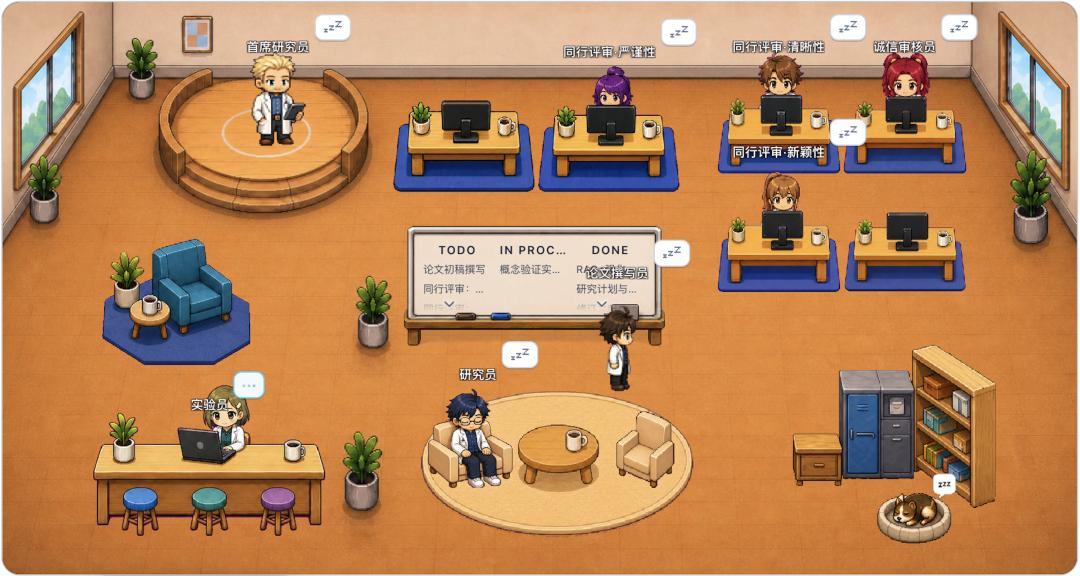
In the Expert Squad Mode, you can view the working status and content of each team member through a pixel - style office scene.
During the internal testing phase, some researchers have achieved amazing efficiency with this system. A newly - enrolled doctoral student configured his Auto Research framework in just 1 minute. After inputting the research direction, the Agent team produced a complete first draft of an AI paper that afternoon, covering the entire link from literature review to experimental design to result analysis.
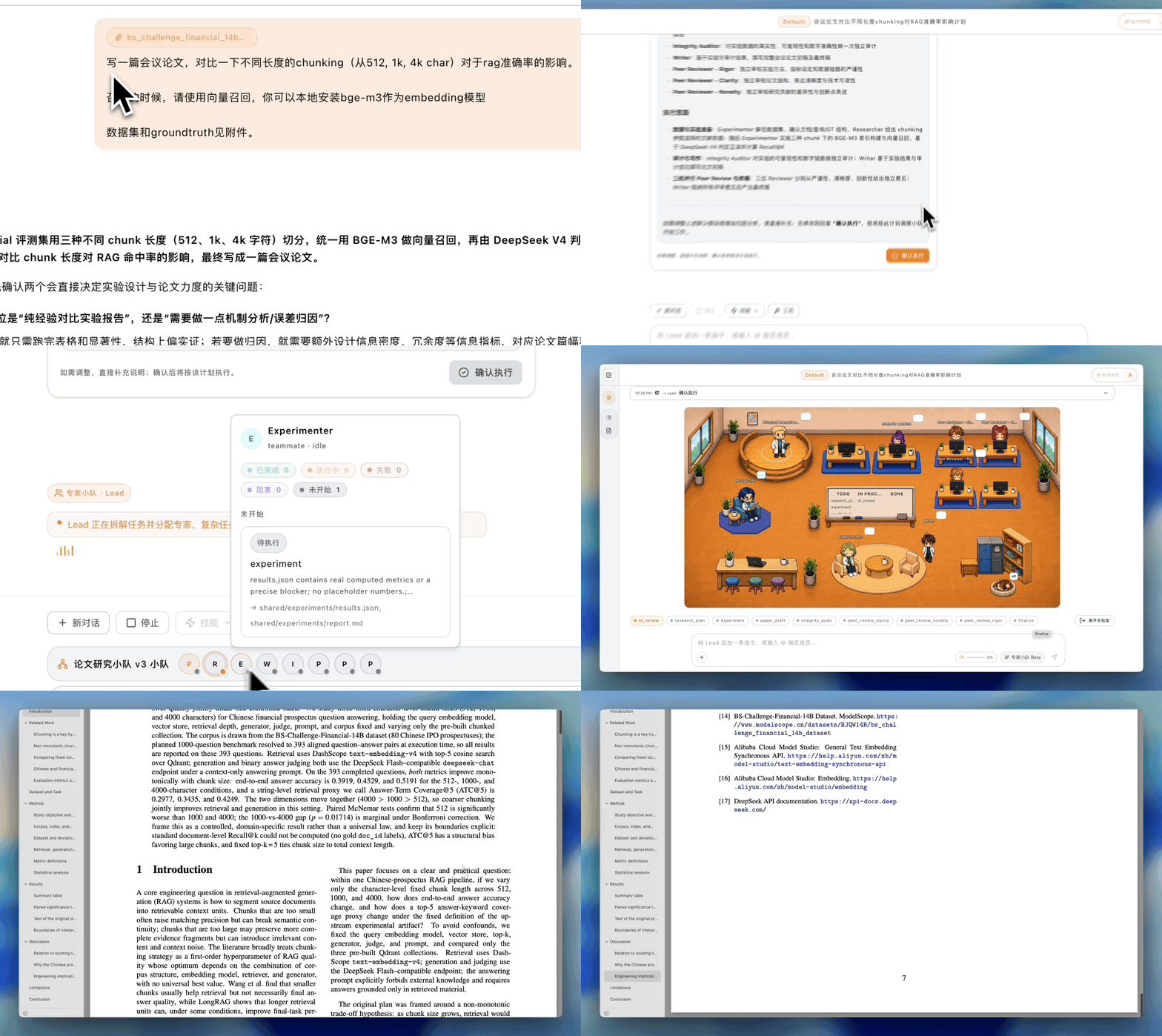
Taking an AI parameter optimization as an example, Mira can quickly iterate and generate a report by pulling up many expert squad members with one click.
Of course, the first draft still needs manual modification. But as this doctoral student said: "Its greatest value is not how much time it saves, but that it allows me to advance three research projects simultaneously."
Additionally, he added: "After this team finishes the research, I can use another team to prepare presentation materials."
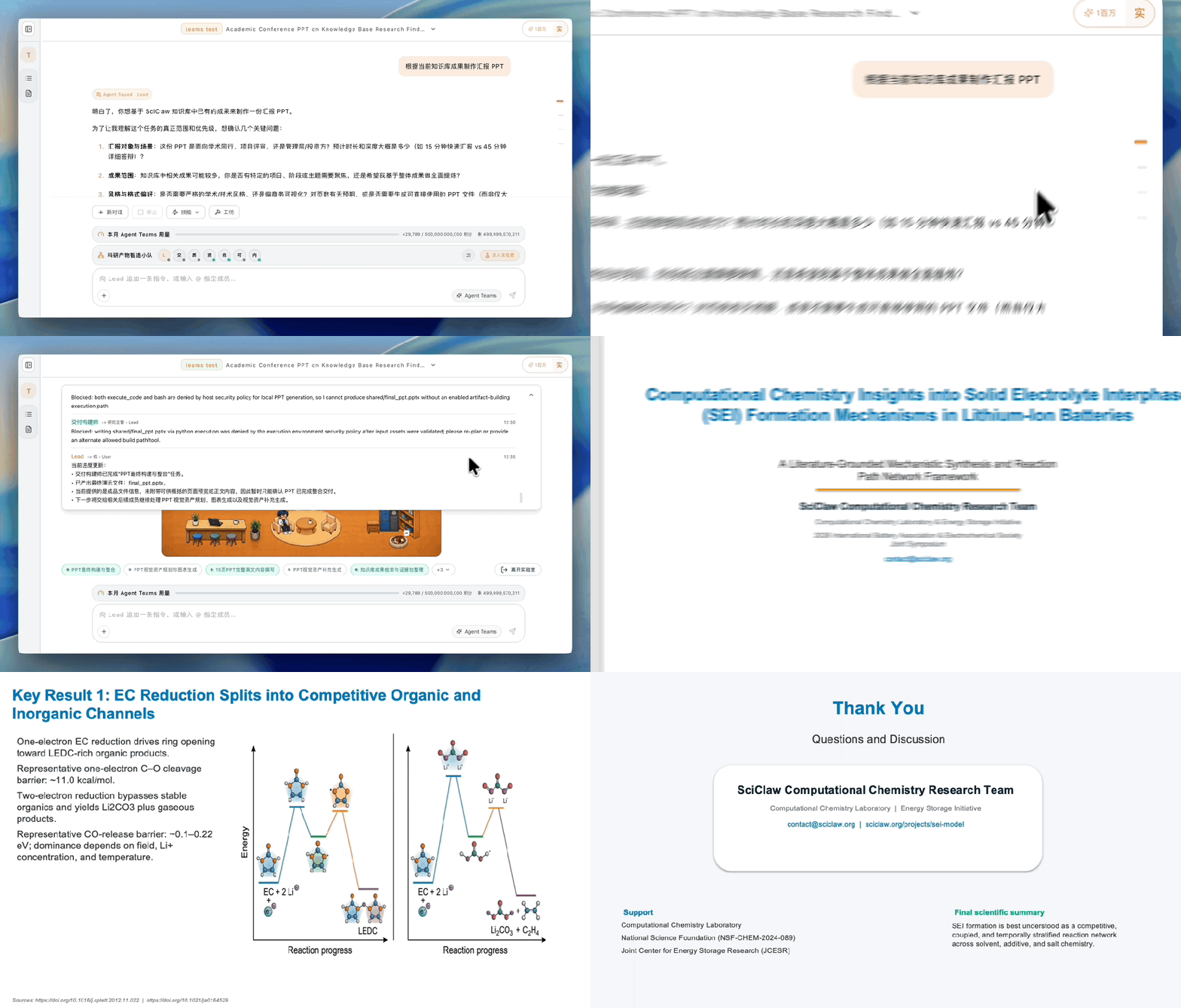
The team members cooperate with each other and can provide well - reasoned report materials in a serious research scenario.
Research Canvas
An Infinite Research Desktop
If the Expert Squad solves the problem of "how to do", then the Research Canvas solves the problem of "how to view".
Those who have done material simulations know that a set of calculation results often includes files in various formats: CIF structure files, XRD patterns, energy band diagrams, density of states curves, and an additional set of control group data. In the past, to cross - compare them, you needed to switch back and forth between multiple software, and you would easily forget which set you were looking at.
Mira's Research Canvas puts all files in different formats on the same infinite plane. The sidebar shows the list of all files, and the middle is a freely draggable canvas. PDF literature, code outputs, experimental charts, and handwritten notes - all are in one view, ready to be arranged, compared, and annotated at any time.
A user who does material calculations described it like this: "It's like making a movie story of my scientific research. From the first day of the project, every attempt, every failure, and every parameter adjustment are all recorded on the timeline of the canvas. Whenever I need to review, I open the canvas, and everything is there."
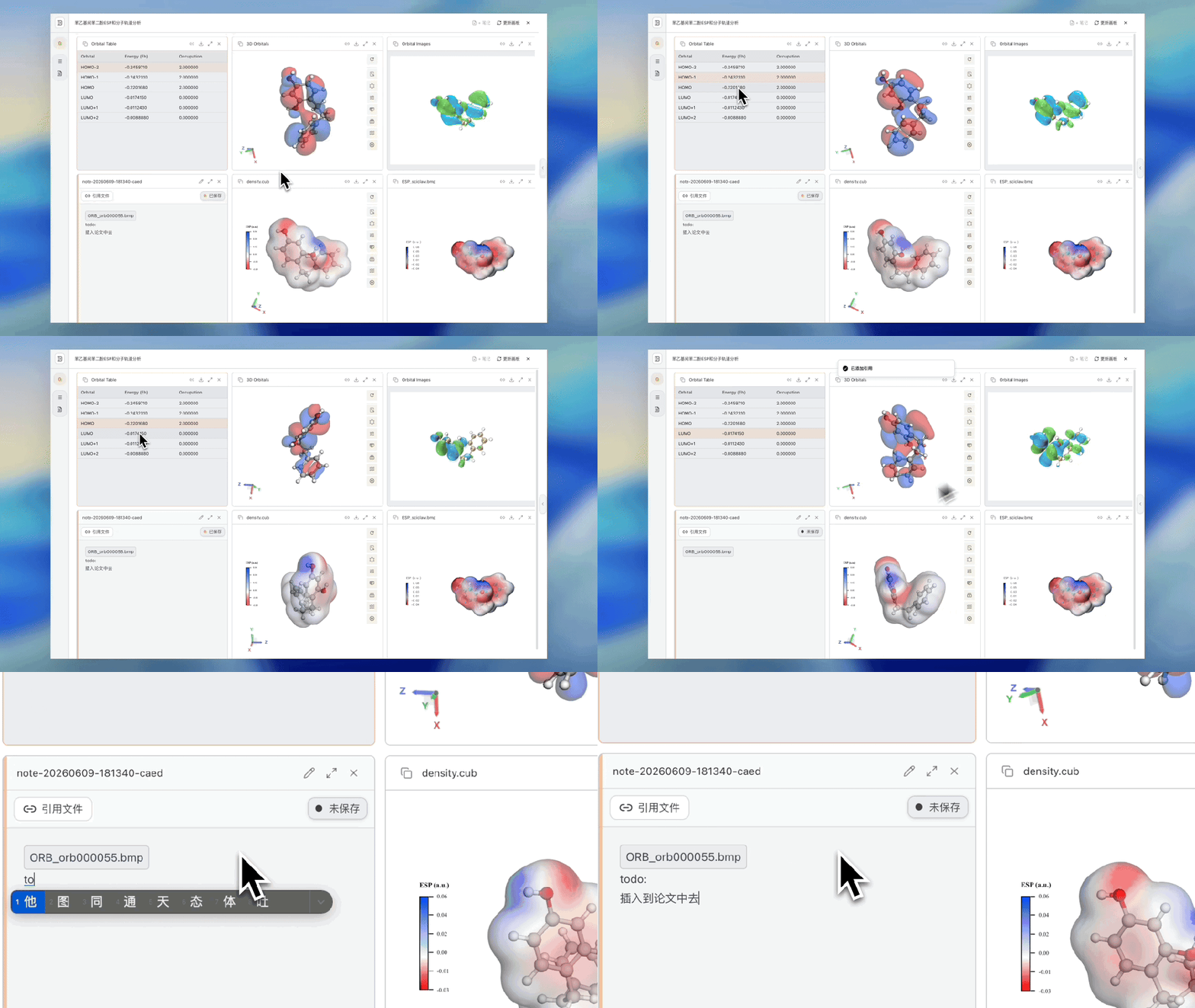
On Mira, you can calculate and view the results of professional computational simulations, record research findings through notes at any time, and export the results for use in papers.
There is also a more common but reassuring scenario: a computer crash. In the traditional working mode, it may take you half an hour or even longer to recover. But in Mira's canvas, all content is saved in the cloud in real - time. When you open the web page, everything is exactly the same as before the crash.
In the field of bioinformatics, a user who processes multi - omics data found a more interesting use. He put the analysis results of RNA - seq, proteomics, and metabolomics into the canvas and compared them side by side for correlation analysis. "The only problem is that the screen is not big enough," he said.
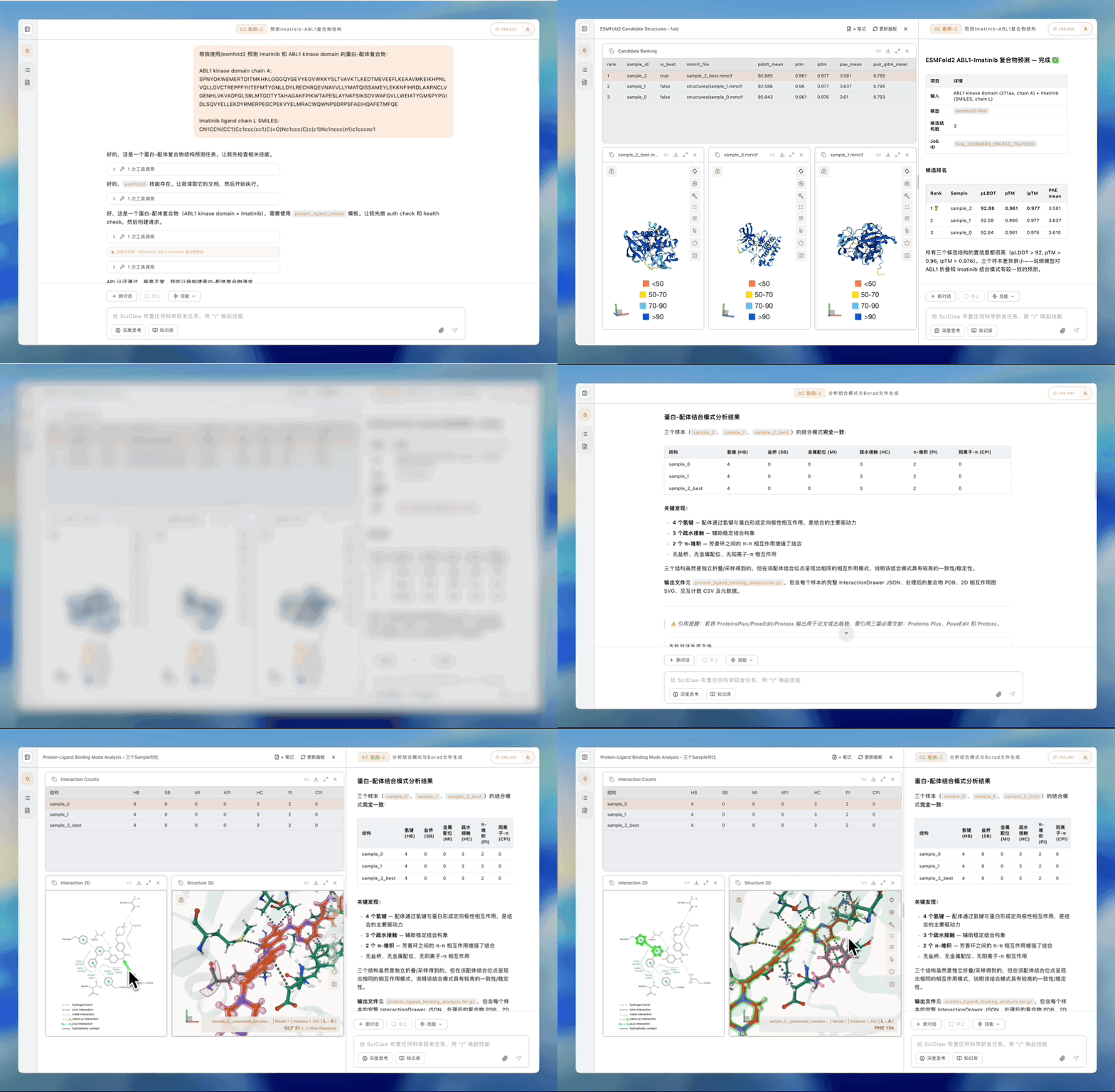
Different data files in the canvas can establish a linkage relationship through Mira, thus presenting multi - perspective analysis results.
WIKI
Your AI Assistant Does Knowledge Management for You at Night
This is the most special one among Mira's three core functions.
During the day, you had hundreds of rounds of battles with the Agent, gave countless instructions, corrected countless mistakes, and uploaded a large amount of literature. These are all the cognitive costs you invested today. But the question is - will it remember tomorrow? What about next Monday? When the project enters a critical stage in a month?
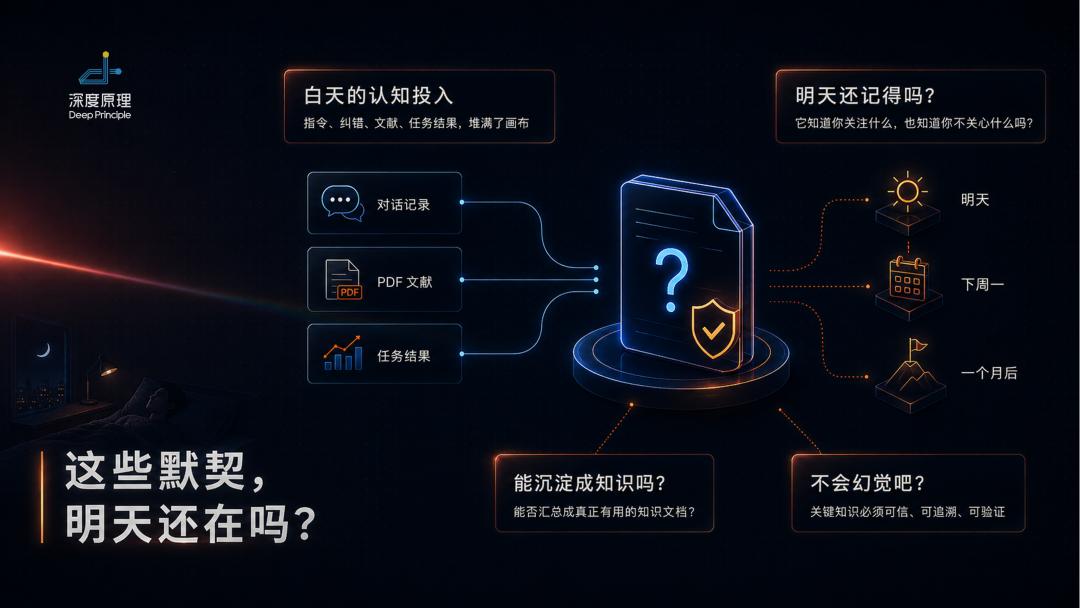
Mira's WIKI offers a unique solution. Every night when you rest, it will automatically run and process all your conversation records, task execution results, and uploaded materials from that day.
But it doesn't blindly stuff all the content into the Wiki. It will make judgments - which are the core concepts you mentioned repeatedly, which are the conclusions worth precipitating, and which are the unsolved problems that need continuous attention.
Then, it writes these things into your project - specific knowledge base in a structured way.
A user who does computational neuroscience has a deep feeling about this. His brain computational model project spanned more than half a year, with multiple changes in thinking during the process, and hundreds of task results were accumulated. "Without the WIKI, these things would be just a bunch of scattered data fragments," he said.
"But after having the WIKI, the project knowledge has been automatically organized into a structured document system. What are the possible directions for the research project, when and why the thinking was changed, and what the results of each change were - it's all clear."

In the WIKI, each chapter is logically rigorous, and the content has cross - reference relationships, allowing you to quickly jump through links.
A more advanced use comes from a user who studies world history. He asked Mira to automatically generate an HTML - formatted Brainstorm dashboard regularly based on the content of the WIKI, sorting out the topic materials he was organizing into possible research topics. "It's more useful than all the notes I took in four years of college," he commented.
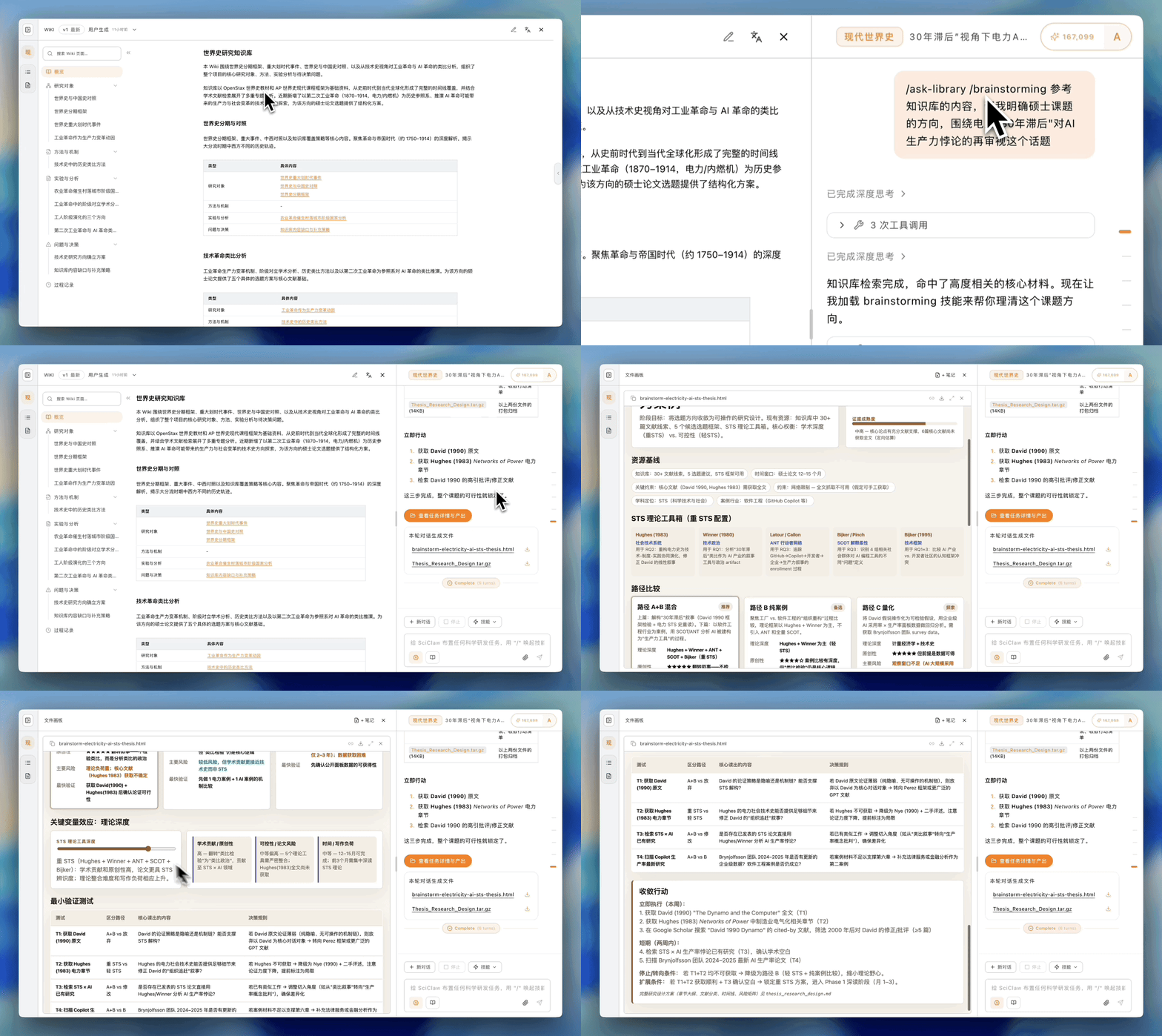
Based on the knowledge sorting and navigation capabilities of the WIKI, it can quickly help researchers find feasible research topics and experimental plans.
Vibe Researching
Redefine the Scientific Research Collaboration between Humans and AI
After introducing the three functions, there is a bigger concept behind them that is worth elaborating on.
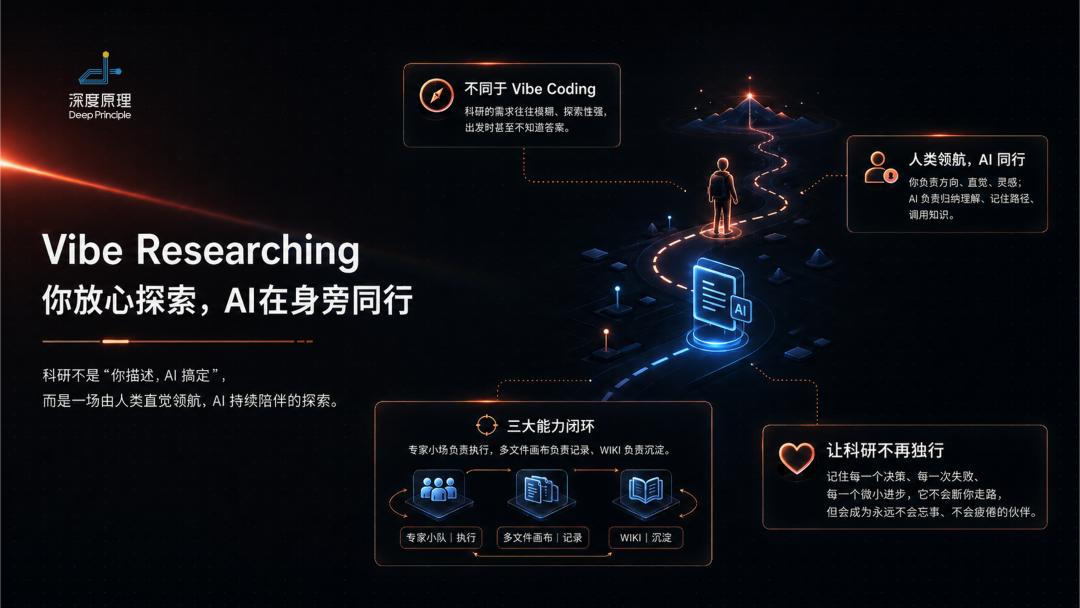
The inspiration for "Vibe Researching" comes from the popular "Vibe Coding" in the programming circle in the past two years - you don't need to write code line by line; you just need to describe what you want, and the AI will handle it.
But there is a fundamental difference between scientific research and writing code: the requirements for code are relatively clear, while the requirements for scientific research are vague, exploratory, and you may not even know the answer when you start.
So Vibe Researching is not a simple copy of "you describe, AI handles". Its real form is: you explore with confidence, and the AI provides support.
You are responsible for the direction, intuition, the inspiration that suddenly pops up at 2:30 am, and safeguarding the most precious scientific taste of humanity. The AI is responsible for removing obstacles, rapid execution and iteration, remembering the paths you've taken, and reminding you of the knowledge you may have forgotten when needed.
Mira's three functions - the Expert Squad is responsible for execution, the Research Canvas is responsible for recording, and the WIKI is responsible for precipitation - precisely form a complete closed - loop of this concept.
And this closed - loop points to a long - neglected problem in scientific research: the sense of loneliness.
Spending three months verifying a hypothesis only to find it's wrong, running countless experiments just to confirm a very small parameter, and staring at a blank result page late at night with only one thought in mind "Is this the right way?" - those who don't do scientific research can hardly empathize with this experience.
What Mira can do is actually very simple: it remembers every decision you make, every failure, and every small progress. It won't walk for you, but it makes you feel like you have a partner who will never forget things and never get tired when you're on this journey.
Mira Officially Opens for Registration
After two months of internal testing and iteration, Mira is now officially open for registration to all users.
The three core functions of the Expert Squad, Research Canvas, and WIKI are all available. You can visit sciclaw.cn to register and use it.
Meanwhile, the Deep Principle team, which has the ability to develop AI models, continues to provide rich basic scientific research data sets, tools, and models in Mira based on its self - developed models and self - built infrastructure, supporting scientific discovery and innovation from the bottom up.
