Producing 50 million pairs of sports shoes annually, Longxing Tianxia rushes to list on the A-share market with orders from Li-Ning and Adidas
You may not have heard of the name Longxing Tianxia, but the sports shoes you're wearing might be produced by this company.
At the end of May, Guangdong Longxing Tianxia Technology Co., Ltd. (hereinafter referred to as "Longxing Tianxia") applied for listing on the main board of the Shanghai Stock Exchange. By producing OEM products for Li-Ning, adidas, Under Armour, and brands under the Anta Group, this company has truly achieved "going global."
In 2025, Longxing Tianxia's 26 factories around the world produced a total of 50 million pairs of sports shoes, ranking among the top in the global sports shoe manufacturing industry, especially in the Chinese market.
With the global upgrade of sports consumption and the global reconstruction of the sports shoe supply chain, the sports shoe market is experiencing a round of squeezed growth and structural prosperity.
Can Longxing Tianxia's strategy of relying on major customers bring continuous growth and improved profitability? Besides, how else can it enhance its business value?
Listing Plan
There were no sports shoes in the world until brothers Adi Dassler and Rudi Dassler developed track shoes. Athletes wearing these new shoes won four gold medals at the 1936 Berlin Olympics, which made the shoes well - known. Later, the two brothers went their separate ways and founded Adidas and Puma respectively.
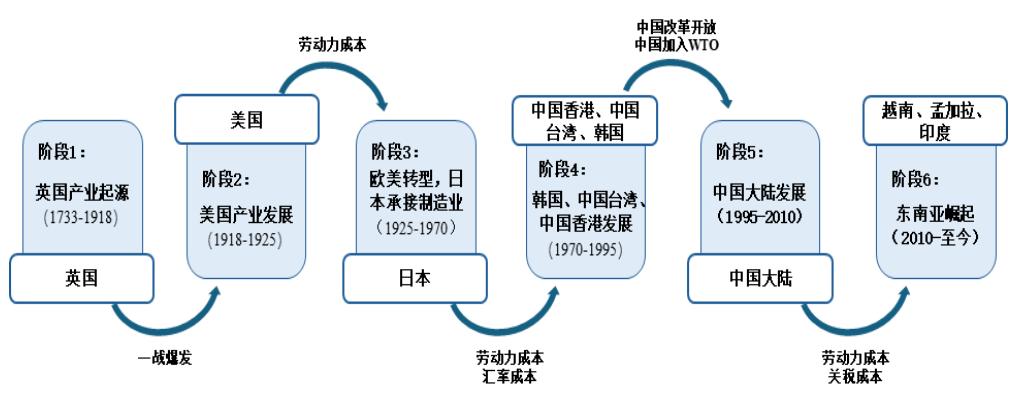
Years later, sports shoes gradually became one of the most popular shoe types in the world, symbolizing a sports - and fashion - oriented lifestyle. As one of the cores of international trade, they have witnessed five industrial transfers.
After World War I, the center of sports shoe manufacturing shifted from the UK to the US; after the economic transformation in Europe and the US in the last century, it shifted to Japan; in the 1970s, it began to move to Taiwan, China.
Around the new century, with China's accession to the WTO, the sports shoe manufacturing industry gradually moved to the Chinese mainland. Not only did shoe - making giants like Huali Group emerge, but the story of Longxing Tianxia also started here.
In 1998, brothers Long Shuchu and Long Jinchu from Taoyuan, Hunan, and Chen Tongju from Qianjiang, Hubei, jointly founded several shoe mold factories in Dongguan, Guangdong. In 2011, they expanded downstream and established sports shoe factories in Guangdong, Hunan, and Hubei successively. In 2015, Longxing Tianxia was established.
As China rose as the world's factory through its export - oriented economy, Longxing Tianxia also became one of the largest shoe - making giants in China, second only to Huali Group, by focusing on the sports shoe OEM business.
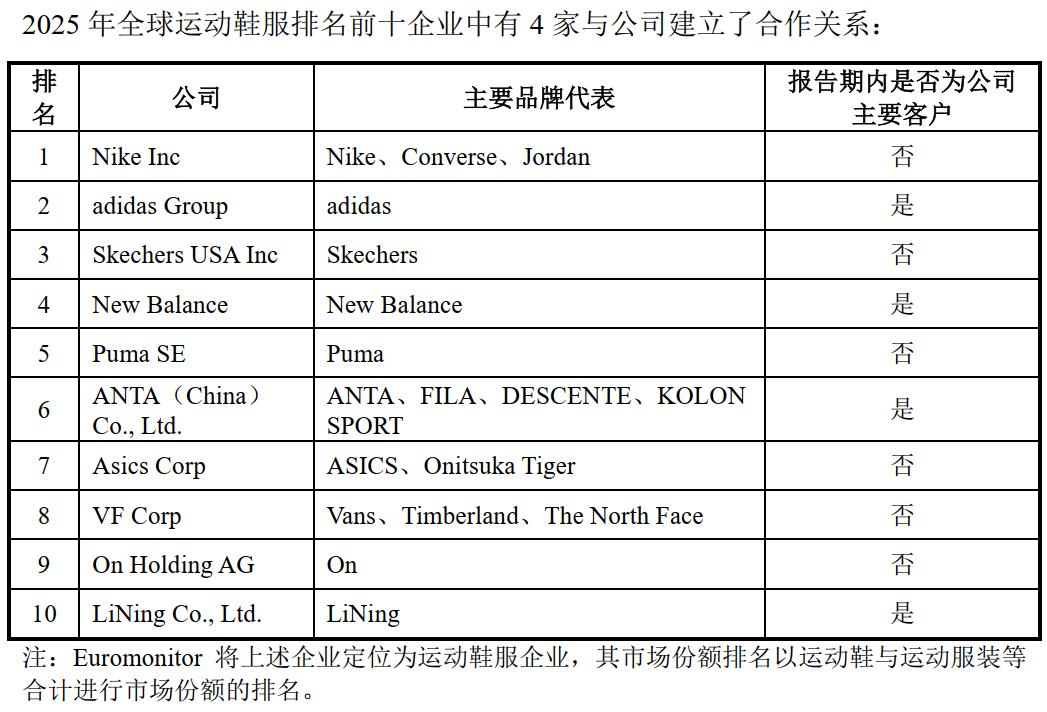
As of the end of 2025, Longxing Tianxia has 26 factories around the world. Last year, it produced about 50 million pairs of sports shoes and became a long - term partner of well - known sports brands such as Li - Ning, adidas, Under Armour, and Anta. Four out of the world's top ten sports brands have established cooperative relationships with the company.
According to Frost & Sullivan data, Longxing Tianxia ranks seventh among global sports shoe manufacturers; in the Chinese mainland market, it ranks second in terms of sales scale and first in terms of sales volume.
With China's industrial transformation and upgrading, the global sports shoe market has started the fifth round of industrial transfer, gradually moving from the Chinese mainland to Southeast Asia.
Longxing Tianxia seized the opportunity. In 2016, it established an overseas production base in Vietnam, and in 2023, it gradually prepared to set up a base in Indonesia.
At the end of May 2026, Longxing Tianxia disclosed its IPO prospectus and plans to list on the main board of the Shanghai Stock Exchange. The highlight of its IPO fundraising project is the construction of production bases in Indonesia and Vietnam.
Profit Pressure
The sports shoe market is firmly controlled by brand owners. Although the market shares of Nike and Adidas have declined, they still remain at the top of the industry.
As a major manufacturing country, China has not only given birth to large OEM manufacturers such as Huali Group and Longxing Tianxia but also nurtured leading sports brands such as Anta, Li - Ning, and Xtep.
Especially in recent years, Anta and Xtep have been eroding the market shares of foreign brands in various sports segments through overseas acquisitions, gradually gaining the confidence to compete with the giants.
However, manufacturers at the bottom of the industrial chain still cannot get rid of the positioning of OEM factories. They do the most labor - intensive work but have meager profits despite their large scale.
From 2023 to 2025, Longxing Tianxia's operating revenues were 4.211 billion yuan, 5.588 billion yuan, and 5.834 billion yuan respectively, and its net profits attributable to the parent company were 199 million yuan, 272 million yuan, and 244 million yuan respectively. Last year, its operating revenue growth rate dropped to 4.41%, and its performance declined by 10.28%.
During the reporting period, the company's gross profit margins were 18.53%, 17.01%, and 17.09% respectively; the net profit margins were 4.72%, 4.88%, and 4.19% respectively.
Dependence on major customers has led to a continuous increase in Longxing Tianxia's accounts receivable and an annual increase in inventory.
From 2023 to 2025, the company's accounts receivable were 752 million yuan, 1.19 billion yuan, and 1.253 billion yuan respectively, accounting for 36.77%, 43.49%, and 42.20% of current assets respectively.
During the same period, the book value of inventory was 623 million yuan, 903 million yuan, and 1.021 billion yuan respectively, accounting for 30.43%, 32.99%, and 34.36% of current assets respectively.
Tying Up with Major Customers
In other industries, it is not uncommon for OEM factories to successfully incubate their own brands. For example, in the pet industry, GuaiBao has incubated brands such as Meatyway and Freitag, leading the trend of localization and branding in the pet industry.
In the clothing, cosmetics, and health product markets, there are also many cases where OEM and brand businesses co - exist and perform well.
However, in the current sports shoe market, it is difficult to see successful cases of OEM factories incubating brands. The main reason is that the brand camp in the global sports market has solidified, and the branding in the domestic market is basically completed. There are not too few brands but too many. The industrial structure and brand pattern have basically blocked this path for OEM factories to improve their business.
For Longxing Tianxia, at this stage, besides shifting the industrial chain to reduce costs and enhance business competitiveness, it can also increase R & D efforts on the basis of manufacturing to obtain more major customers.
In addition to sports shoe manufacturing, Longxing Tianxia also provides B - to - B services such as mold and sole production. However, the company's R & D investment has decreased in recent years. During the reporting period, it was 172 million yuan, 172 million yuan, and 180 million yuan respectively, accounting for 4.10%, 3.07%, and 3.09% of operating revenue respectively.
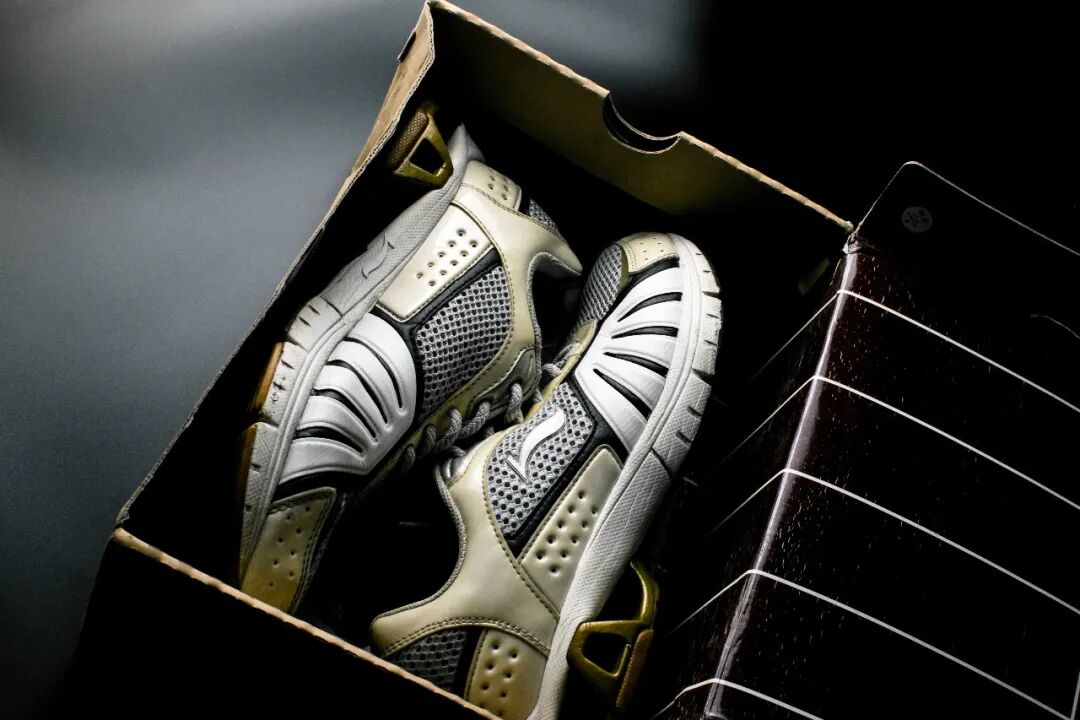
In recent years, Li - Ning has always been Longxing Tianxia's largest customer, with its revenue accounting for more than 20% for a long time. The two parties also have a joint - venture company with a 45% and 55% stake respectively.
However, due to Li - Ning's own development, the cooperation amount between it and Longxing Tianxia has not increased in recent years, which has affected the company's business development to a certain extent.
On the contrary, Anta's cooperation with Longxing Tianxia has expanded. Through mergers and acquisitions, Anta has acquired brands such as Fila, Descente, Kolon, and Spandi. The expansion of its own business has also brought more orders to the OEM factory.
Unexpectedly, the route competition between Anta and Li - Ning in the Chinese market is finally reflected in an OEM factory.
This article is from the WeChat official account "Banma Xiaofei" (ID: banmaxiaofei), author: Shen Tuo, published by 36Kr with authorization.