With its market value evaporating by 99%, GoPro, the once-king of action cameras, has been completely outcompeted by Chinese companies and is now on the verge of being sold: Who is the most likely buyer?
The once-giant in the action camera industry, GoPro, is at a turning point in its fate.
According to foreign media reports, GoPro recently stated that its board of directors has authorized the initiation of an evaluation of strategic options, which may include selling the company or merging with other companies.
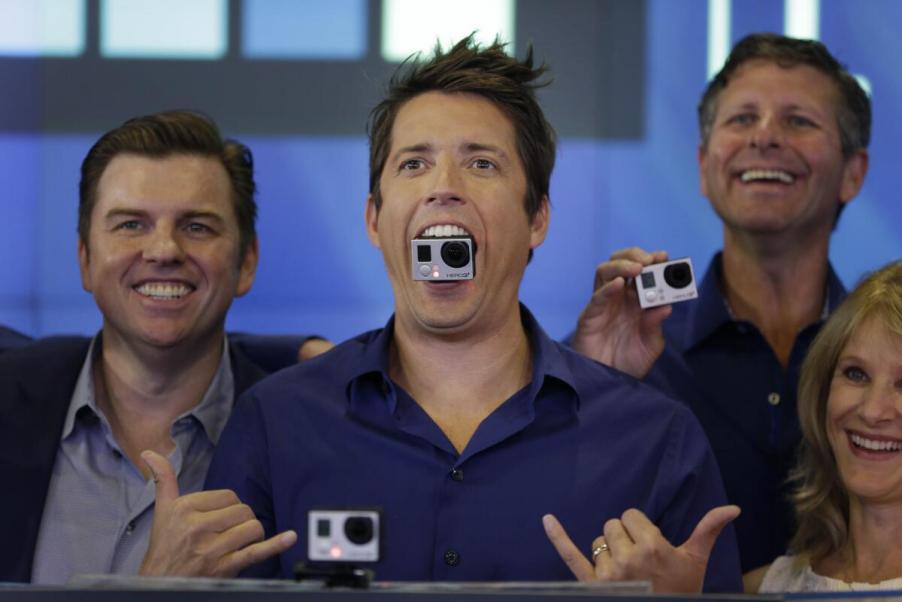
Recalling 12 years ago, at the NASDAQ listing ceremony, Nick Woodman, the founder and CEO of GoPro, who was under forty, was full of confidence. He celebrated the listing of his action camera company on the largest technology stock market in the United States with a GoPro product in his mouth. That year, GoPro occupied more than 75% of the global action camera market, almost monopolizing the entire category. GoPro was synonymous with action cameras, and its market value reached a peak of over $13 billion.
Twelve years later, after a long period of silence, GoPro has reluctantly admitted its failure and is now seeking a buyer. Due to intensified market competition, a continuous decline in market share, and years of consecutive losses, GoPro's stock price has long hovered around $1, and its market value has evaporated by 99% from its historical high, leaving it with less than $180 million. The once-king of action cameras has become a company struggling on the verge of bankruptcy.
So, who will take over GoPro, and who can save it?
Created a Lifestyle
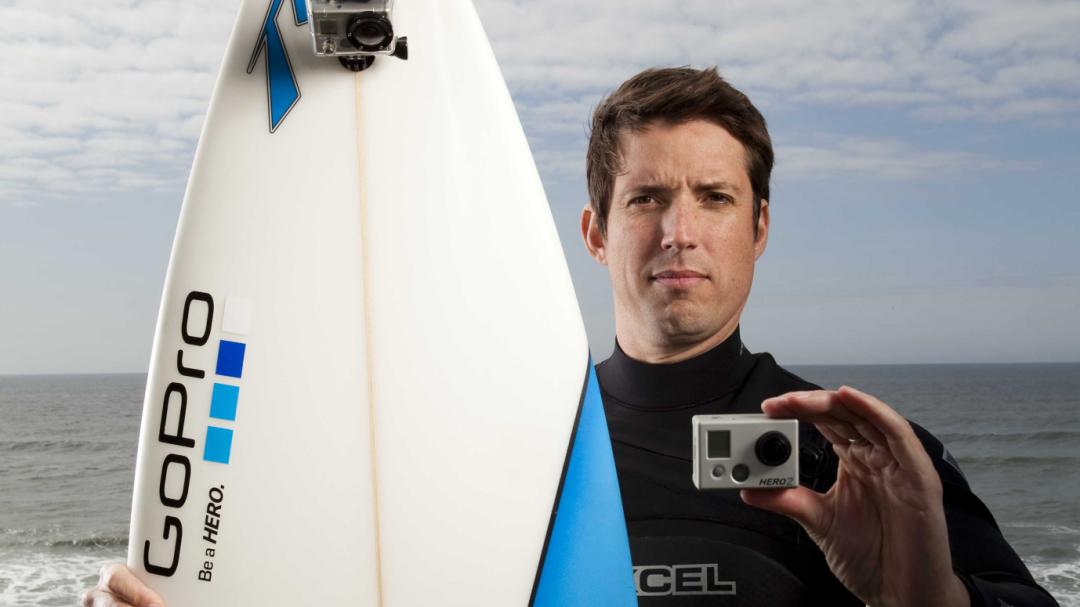
GoPro's legend began in 2002. At the age of 27, Woodman, a surfing enthusiast, was frustrated by the lack of a suitable way to capture the action shots he was obsessed with during a surfing trip. This led him to have the idea of creating a new product. With $240,000 given by his parents, he started his entrepreneurial journey.
In 2004, the first GoPro camera was born. Woodman even tied the camera with a waterproof case to his wrist with a rubber band. It was still using the 35mm film of the previous era and was sold for $30. It was a rough start but opened up a whole new experience.
2010 was a milestone year in GoPro's history. GoPro launched the HD HERO, which supported 1080p full - high - definition, a 170 - degree ultra - wide - angle lens, and 60 - meter waterproofing. Coupled with a large number of fixing accessories, it completely liberated the hands of extreme sports enthusiasts. GoPro was no longer just a camera; it became a symbol of a lifestyle. Surfers, skiers, and skydivers posted the footage shot by GoPro on YouTube, resulting in a viral spread - one of the earliest and most successful content marketing cases.
GoPro not only pioneered the action camera category but also officially established the industry standards for action cameras: 1080P high - definition, ultra - wide - angle fisheye lens, an extremely sturdy waterproof case, and an extremely rich accessory system that can be fixed on any part of the body.
Before GoPro, camera manufacturers like Sony and Canon followed the R & D logic of higher pixels, longer focal lengths, and more delicate image quality. GoPro, however, directly jumped out of this traditional track and created the opposite logic. GoPro led the aesthetic trend of ultra - wide - angle. It was no longer about "you holding the camera to shoot the scenery" but "you wearing the camera and letting the audience follow your eyes to surf, ski, or skydive." This sense of immersion cannot be provided by traditional cameras.
Moreover, GoPro's greatest invention is not just the small square camera but its huge accessory fixture system (chest straps, headbands, bicycle handlebar clamps, surfboard mounts). It freed the athletes' hands from holding the camera, making the camera an extension of the body.
GoPro was one of the first brands to use "extreme videos shot by users" directly as official advertisements. Countless popular videos of Red Bull extreme sports, wingsuit flying, and skateboarding and surfing on YouTube back then all started with the iconic "beep" startup sound of GoPro. It was not selling electronic products but a "lifestyle" and "heroism."
GoPro's revenue data confirms this golden era: it exceeded $500 million in 2012, reached $985 million in 2013, and peaked at $1.62 billion in 2015. Within two years of its listing, its market value reached a peak of over $13 billion. This small company headquartered in San Mateo, California, became one of the most dazzling consumer electronics stars in Silicon Valley and a symbol of outdoor sports.

Hard to Sustain Operations
Woodman even became one of the highest - paid CEOs in the United States at one point. In 2014, he received a restricted stock unit (RSU) award, which was valued at up to $284.5 million at that time. Thanks to this sky - high equity incentive, Woodman topped the Bloomberg list of the highest - paid executives in the United States.
However, the glory came and went quickly. GoPro's decline was merciless. After its revenue peaked in 2015, it continued to decline in the following years. The Karma, its drone product originally planned to challenge DJI, was recalled at the beginning due to serious quality issues, and then GoPro completely gave up its ambition in the drone business.
In 2018, after the failure of expanding into the drone business, GoPro announced a 20% layoff, and Woodman's annual salary was reduced to $1. That year, at the CES media meeting, Woodman sincerely said, "I know we messed up, and I'm willing to accept all the criticism." But this "self - criticism" did not reverse GoPro's fate, and the company still fell into a desperate downward spiral.
The financial report data shows a clear downward curve: the revenue rebounded to $1.16 billion in 2021, but this was just a rebound due to the short - term recovery of outdoor activities after the pandemic. It declined again to $1.09 billion in 2022, barely held the $1 billion mark in 2023, and dropped to $801 million in 2024, a 20% year - on - year decrease. In 2025, the annual revenue further shrank to $651 million, a 19% year - on - year decrease, less than 40% of the peak.
In 2026, the situation took a turn for the worse. The revenue in the first quarter was only $99.06 million, a 26% year - on - year plunge; the terminal sales volume was 313,000 units, a 29% year - on - year decline (the shipment volume was 267,000 units, a 31% year - on - year decrease); the net loss was $80.82 million, a 73% year - on - year increase. In other words, the loss in just the first quarter of this year was almost as much as the whole of last year.
The number of employees also reflects the decline. At its peak, GoPro had more than 1,500 employees. By the end of 2019, it had decreased to 926. In April 2026, it announced another 23% layoff. Based on the 631 employees at the end of the first quarter, about 145 employees will leave. A company that once rivaled first - tier technology brands is shrinking at a visible speed to survive.
Facing such a severe financial situation, Woodman and GoPro's management, who were once full of confidence, had to admit failure. They rarely disclosed in the financial report that "there is substantial doubt about the ability to continue as a going concern" - a term used when a listed company may face bankruptcy.
What is suffocating GoPro is its debt crisis. GoPro previously raised $50 million through Farallon Capital and Wells Fargo. In February this year, GoPro also reached a $50 million convertible bond agreement with YA Ⅱ PN. The problem is that the above loan agreements regard the "going - concern warning" as an event of default, and there is a cross - default mechanism among multiple agreements. This means that once a loan is determined to be in default, the other financing channels may collapse simultaneously.
PricewaterhouseCoopers, which has been responsible for GoPro's audit since 2011, pointed out that GoPro has continuously suffered operating losses and negative operating cash flows. At the same time, according to the company's financing agreements, if it fails to meet some financial covenant terms, part of its debt may be required to be repaid in advance within the next 12 months.
Chinese Companies Taking the Lead
Why did GoPro, once the synonym for action cameras, collapse so quickly and desperately?
There are both external and internal reasons. Several failures in expanding new products and the lack of R & D for product upgrades are important factors, but the most direct external reason is the devastating competition from two Chinese companies - DJI and Insta360. Under the fierce pressure from Chinese competitors, GoPro has almost lost ground in terms of market share and has no defense in terms of product features.
DJI started with drones. After entering the action camera market, it used its deep accumulation of image stabilization technology and supply - chain advantages to enter GoPro's territory with a very fast product iteration speed. Take the DJI Osmo Action 5 Pro launched in 2024 as an example. It is equipped with a 1 - inch sensor, supports 8K recording, and 20 - meter waterproofing. It comprehensively competes with GoPro's flagship products but has a more aggressive price.
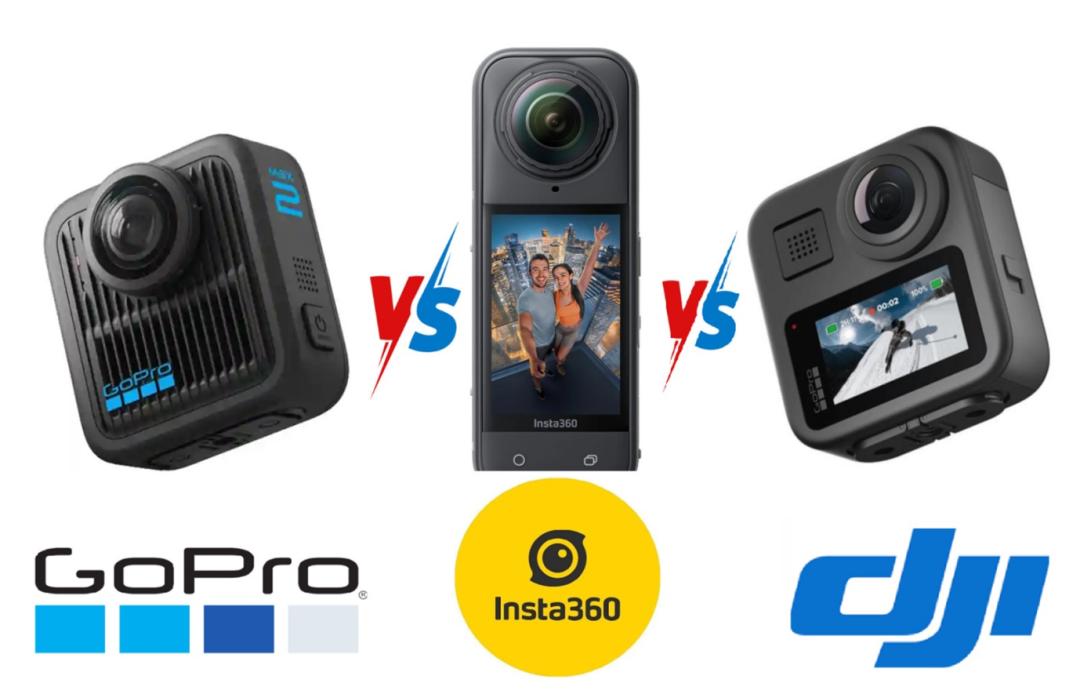
Insta360, with its first - mover advantage in the panoramic camera and "thumb camera" segments, has accurately occupied the niche markets that GoPro has never seriously explored. In contrast to GoPro's decline, Insta360 is in a golden growth period. In June 2025, Insta360 was listed on the Science and Technology Innovation Board of the Shanghai Stock Exchange, with an opening price of RMB 182. Its market value even reached $17 billion at one point and is now stable at over $9 billion, more than forty times that of GoPro.
This Shenzhen - based action camera company, founded in 2015, has now become one of the three giants in the hardware technology track. In addition to its own product R & D strength, Insta360 has reached a strategic cooperation with Leica Camera, deepening the cooperation in optical engineering and further increasing the brand premium. It has successfully expanded the action camera market to consumer groups that GoPro has never reached.
The market share data clearly shows the outcome of this competition. According to the 2025 data from the Japanese retail analysis firm BCN, in the action camera market, DJI ranked first with a 40.1% sales share, and Insta360 followed closely with 37.9% - the two Chinese companies together controlled about 78% of the market. GoPro dropped from the industry leader to the third place, with its share falling to 18.9%. In the panoramic camera field, Insta360's market share is close to 60%, while GoPro's is only about 10%. Although the data from different institutions may vary, the reversal of the competitive landscape is indisputable.
In addition to Chinese competitors, GoPro's user base, extreme sports enthusiasts and professional content creators, has been continuously eroded by the rapid evolution of smartphone camera capabilities. Now, the ultra - wide - angle lenses and anti - shake systems of iPhones and Android flagships can meet the daily Vlog recording needs of most consumers, and even surpass GoPro. The "essential" attribute of action cameras has been greatly weakened, and the user profile has shrunk from the general public to the professional extreme sports circle. Although this circle is loyal, its size is limited, and the upgrade cycle is long.
Falling Behind Chinese Companies in R & D
This is not a simple price war. What GoPro has lost is the entire technological innovation chain. Although the brand is important, it is the product strength that really impresses consumers. In the past five years, GoPro's sensors, chips, and image quality have hardly advanced, and it has failed to launch a truly revolutionary product. In contrast, DJI and Insta360 almost launch new products with significantly improved performance every year, leveraging the cost advantages of the Chinese supply chain to stack up technical parameters.
Take the panoramic camera as an example. Although GoPro launched a panoramic camera as early as 2017 and took the lead in the market with its brand advantage, after the release of the GoPro Max in 2019, it didn't launch the second - generation Max until 2026, missing the release schedule for three years.
In the consumer electronics industry, each year is a huge gap. Against the background where Insta360 almost launches new products every year, GoPro has watched Chinese manufacturers like Insta360 completely dominate this new product market step by step and can only try to resist Chinese competitors through non - trade barriers.
In 2024, they filed a 337 investigation application with the US International Trade Commission (ITC), accusing Insta360 of infringing on several of its anti - shake and core technology patents and aggressively demanding a full - scale ban on the import and sales of Insta360 products in the United States. However, in the final ruling in February this year, the US court ruled that all five core invention patents that GoPro sued for were invalid. GoPro's plan to use technology patents for a full - scale "sales ban" across countries completely failed.
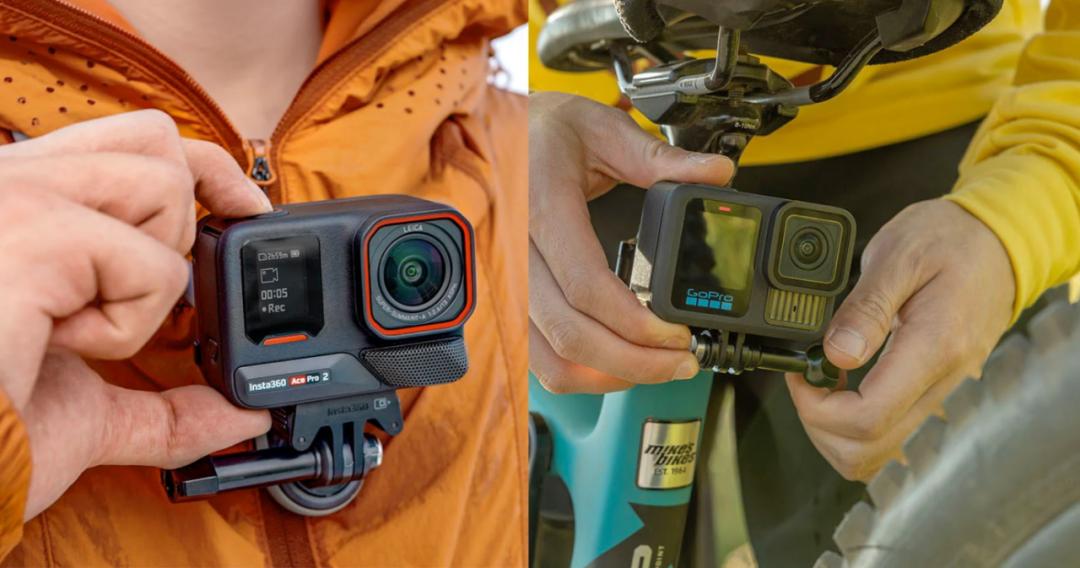
Although the court finally only found that an old and discontinued model of Insta360 infringed on a camera appearance design patent and issued a symbolic limited exclusion order, Insta360's current new appearance design for products sold in the US has already been officially confirmed by the ITC as non - infringing. This means that Insta360's core existing products are not substantially affected by the ban and continue to be imported and sold "unrestrictedly" in the US market. GoPro's patent battle has essentially ended in failure.
The Final Mission Can't Save GoPro
While announcing the sale, GoPro has not given up on self - rescue. In April this year, they launched the latest MISSION 1 series - this is GoPro's most radical product transformation to date and a high - risk gamble. From the fact that GoPro abandoned the traditional Hero naming and adopted Mission, we can see the significance of this new product for this struggling action camera company.
The core selling point of the MISSION 1 series is a new 1 - inch 50 - megapixel sensor, equipped with the self - developed GP3 processor. After Chinese competitors have fully popularized 1 - inch sensors for many years, GoPro has finally abandoned the 1