Coatue founder talks about K-shaped divergence and SpaceX's IPO: The larger the company, the higher the probability of its market value increasing tenfold
Recently, at the Liquidity Summit, Thomas Laffont, the co-founder of Coatue (hereinafter referred to as Thomas), shared his insights on topics such as AI, the unicorn economy, the private market, and the future of tech giants. He also had a conversation with the hosts of the All-in podcast.
In his sharing, Thomas's core judgment is that after the bubble of the zero-interest-rate era in 2021 and the subsequent years of financing contraction, the global unicorn ecosystem is moving towards health again. The key variable driving this rebalancing is AI.
He pointed out that since September 2024, the unicorn economy has risen by about 70% on average. However, different from the previous cycle, capital has not flowed evenly to a large number of new companies but has been highly concentrated in a few AI winners. The number of unicorns has decreased, but the financing scale of individual companies has increased significantly. Companies like OpenAI and Anthropic are expanding their revenues and valuations at a rate rarely seen in the history of technology.
Thomas regards eight unlisted giants, including SpaceX, Stripe, Anthropic, OpenAI, Databricks, Revolut, ByteDance, and Anduril, as the new "index" of the future and proposed the concept of the "Magnificent Eight" in the primary market. He believes that they represent the concentrated explosion of multiple super tracks such as the Internet, AI, fintech, and aerospace technology.

The Magnificent Eight (Source: All-in podcast)
For the primary market, this means that the power-law effect is further strengthened: the compounding speed of winners is getting faster and faster, and the opportunity cost of not holding winners is also getting higher and higher.
A counterintuitive statistic is that the larger a company is, the higher the probability that its valuation will increase tenfold.
The data in Thomas's speech shows that if you are a unicorn, that is, a company with a valuation of over $1 billion, the probability that you will become a "decacorn" - a company with a valuation of over $10 billion - one day is about 8%. If you are already a decacorn, that is, a company with a valuation of over $10 billion, the probability that you will become a company with a valuation of over $100 billion is not much higher, about 8% to 13%.
"But interestingly, if you are a company with a valuation of over $100 billion - considering both listed and private companies - you have a 31% chance of having achieved tenfold growth."
Thomas emphasized that these high-valued companies are not the "shell stories" of the Internet bubble in 2000 or the concept hype in 2021. They are enterprises with real revenues, ultra-high growth rates, and potential profitability.
However, the final test will come from the secondary market. As companies like SpaceX, OpenAI, and Anthropic go public one after another, the market will become the real touchstone to test their business models, valuations, and long-term competitiveness.
For the broader economy, Thomas believes that the impact of AI has gone beyond the software industry and is reshaping almost all fields such as semiconductors, cloud computing, advertising, telecommunications, energy, automotive, and consumer goods. Starlink may impact the global telecommunications profit pool. The demand for AI storage is driving up the value of the storage industry. Claude Code and Codex are changing the way of enterprise software and code production. At the same time, after a large amount of capital flows back to Silicon Valley, it may bring a new round of entrepreneurship, investment, and price wars.
The main line of the whole conversation can be summarized as follows: AI is making the unicorn economy more concentrated, more real, and more brutal. In this new cycle dominated by the power law, a few winners may create unprecedented wealth. The biggest problem for capital allocators is how to choose between high valuations and high certainty.
At the end of the sharing, Thomas gave four points of view: First, the new unicorn economy is healthier, and we should largely thank AI for this. Second, winners are compounding at an unprecedented speed, which means that the opportunity cost of not holding winners is also higher than ever. Third, disruption is affecting every part of the global economy. Fourth, we have not entered the era of superintelligence yet.
The following is the translated main content of the sharing and discussion (with some deletions) by "Mingliang Company":
Speech Text: The Unicorn Economy and Valuations in the AI Era
I hope to do something different today. Guys, you've been chatting for hours. You can take a few minutes to rest and sit down. We'll show you some slides and take you through the latest situation of the "unicorn economy".
The market is back. We can see that since September 2024, the unicorn economy has risen by 70% on average. I think this is intuitive for many of you here.
But what's more surprising is that the secondary market has also risen by a similar margin. So, if we look at the proportion of the unicorn economy relative to the Nasdaq, this proportion has increased significantly since 2015 but has actually reached a plateau in the past few years. I think this reflects the strong performance of listed companies like Palo Alto.
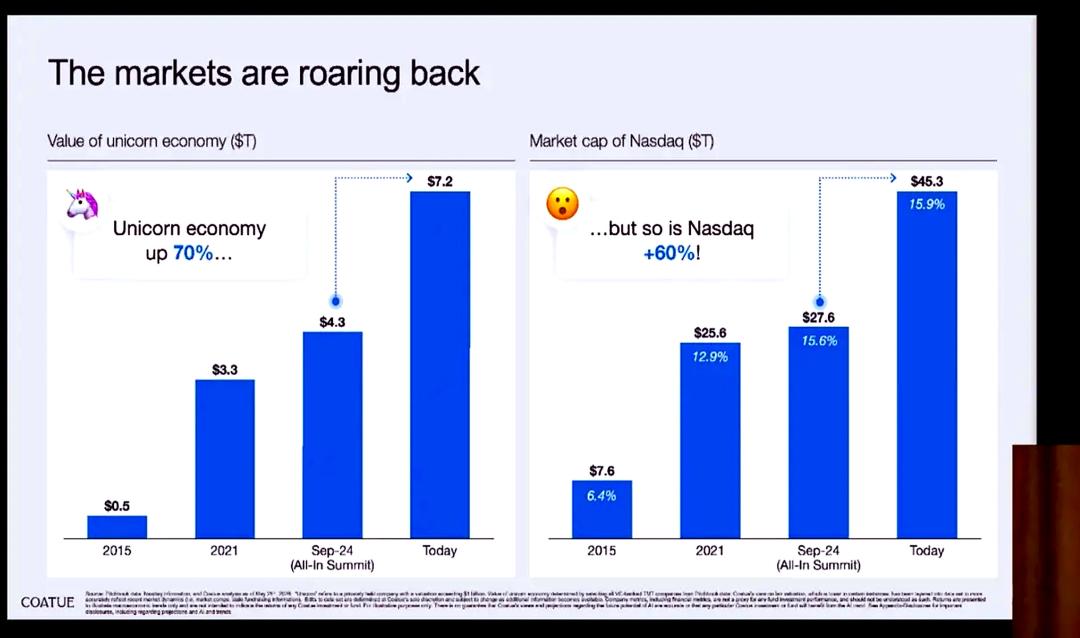
Figure 1 | The unicorn economy and the Nasdaq are recovering in sync
AI is dominating financing. There's an interesting point in this chart: the share of AI in financing is still rising continuously. That is to say, for many consecutive years, the "wallet share" of AI in financing has been increasing.
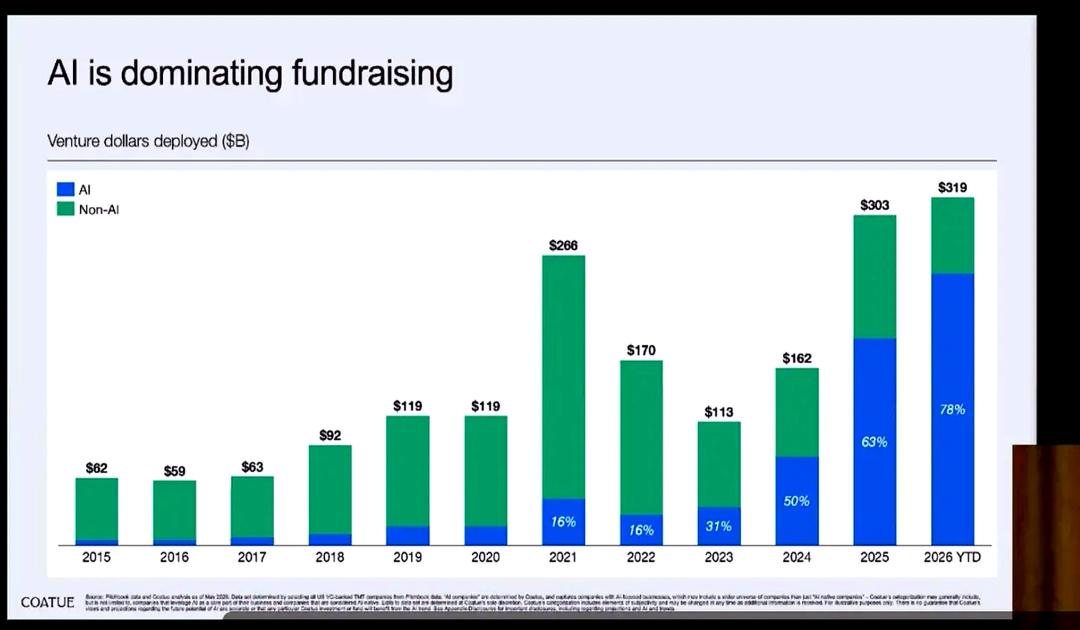
Figure 2 | AI is dominating the financing market
But the composition of funds has changed.
If we look at the "unicorn factory", it reached its peak in the zero-interest-rate era in 2021, that is, the ZIRP era. Now it has fallen back to a normalized level lower than before the pandemic.
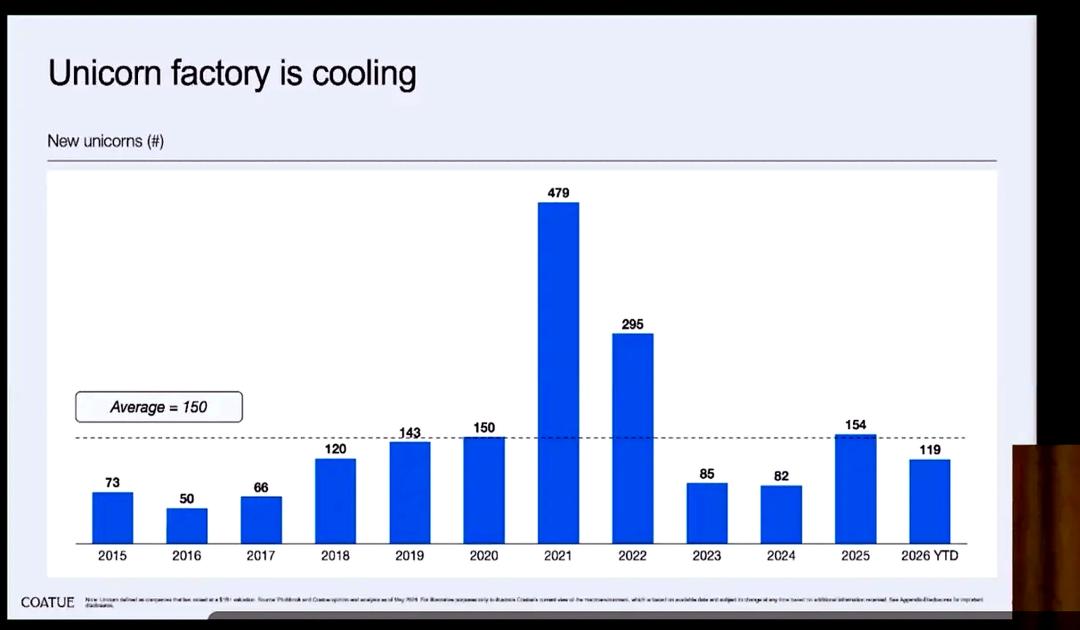
Figure 3 | The number of new unicorns is cooling down
Mathematically, if we put these two things together, we'll find that since 2021, the financing amount received by a single unicorn has increased by five times. That is to say, there are fewer unicorns now, but each one raises more funds.
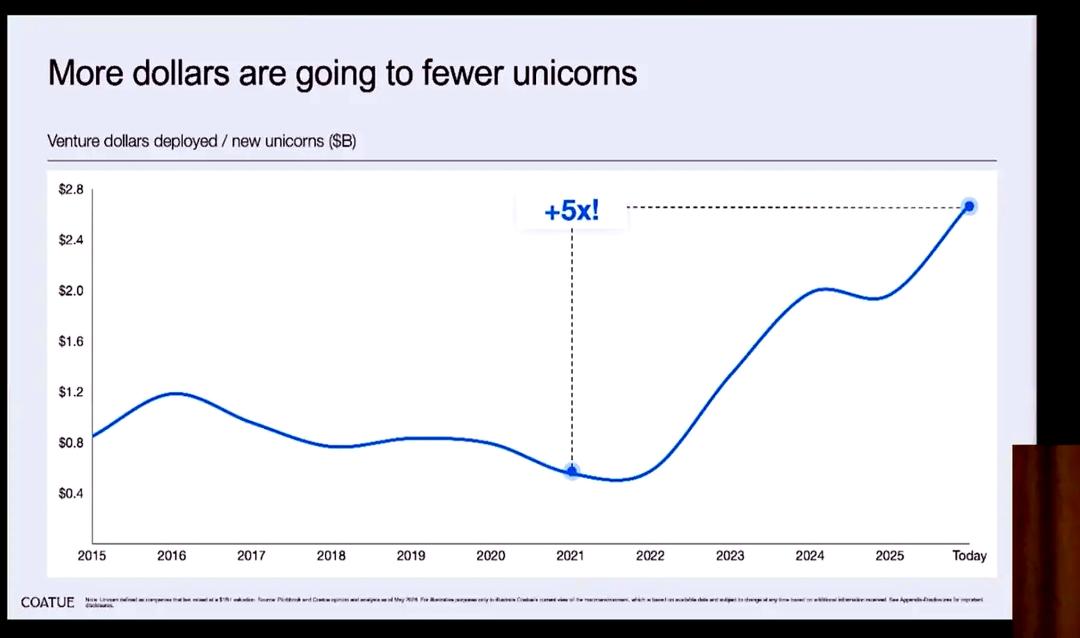
Figure 4 | More funds are flowing to fewer unicorns
I want to spend a minute talking about the next chart because it really concerns the health of our entire ecosystem.
The way to interpret this chart is as follows: If we look at the green line, which represents the group of unicorns in the "pre-ZIRP era", there are about 73 companies. You'll see that in the 20th quarter after they became unicorns, 80% of them either completed a new round of financing or achieved an exit. I think this is a fairly healthy state.
Now, if we look at the group of companies in 2021, which is the red line, two things stand out: First, after 20 quarters of becoming unicorns, less than 20% of the companies achieved an exit or new financing. Second, the difference in quantity is huge: there were 479 companies in the 2021 group, while there were only 73 in the previous group.
Now, we have a new group, which can be called the "2024 AI company group". The key question is: Which group will they be more like in the future?
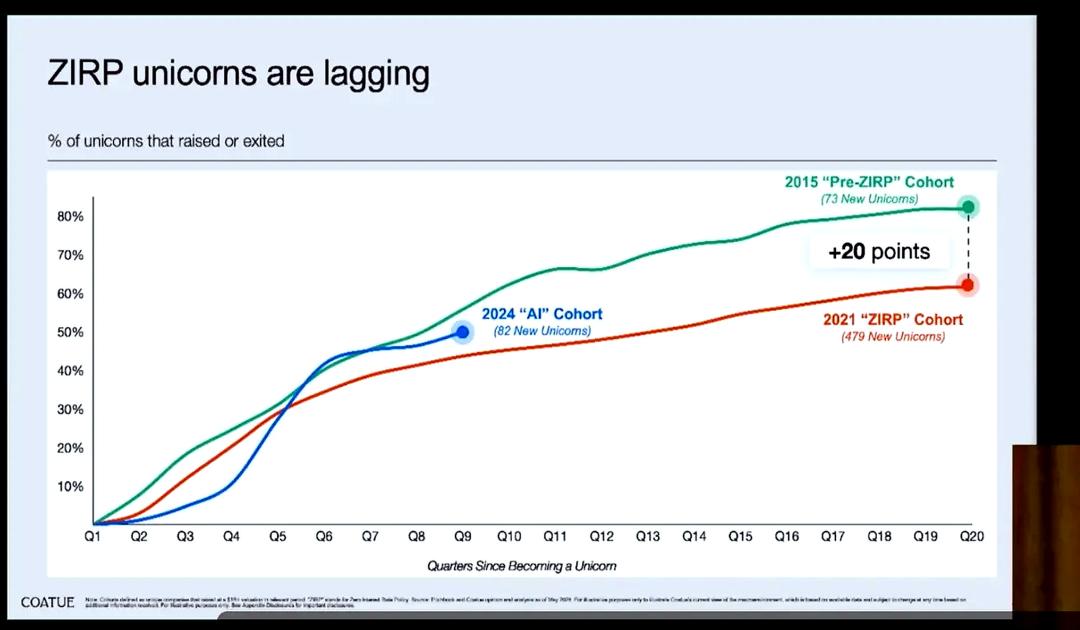
Figure 5 | Comparison of the financing or exit ratios of unicorns: Pre-ZIRP, ZIRP, and the 2024 AI cohort
As we mentioned earlier, AI is making the unicorn financing base more concentrated. But we also see that the top ten companies are absorbing a significant proportion of the financing. So, it's not just AI companies that are getting the money, but a few AI companies. This actually makes sense because we know that Anthropic and OpenAI are conducting ultra-large-scale financing.
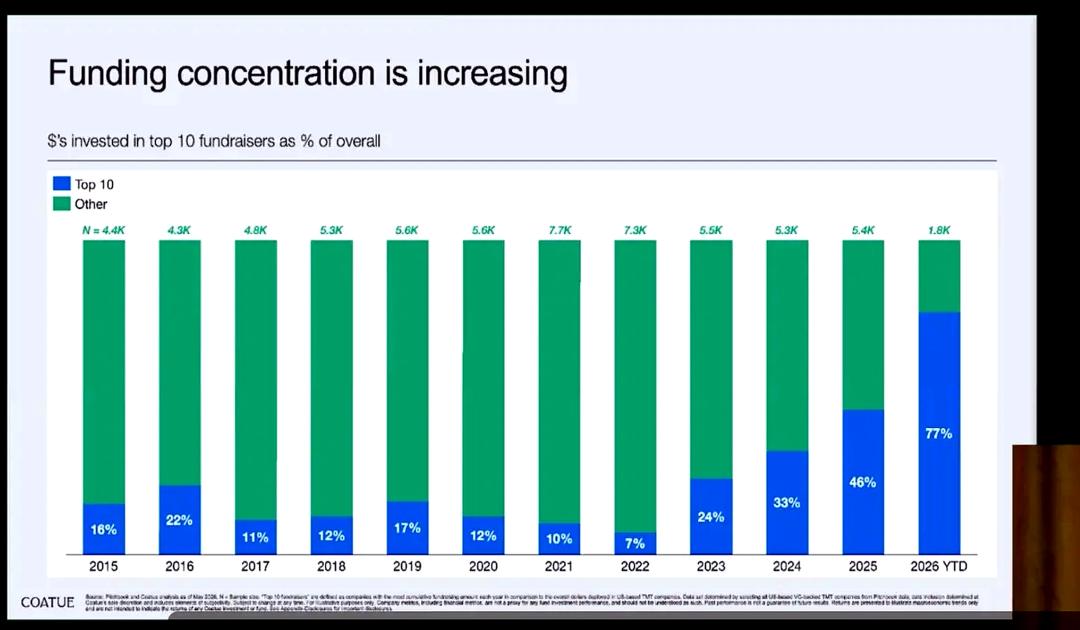
Figure 6 | The concentration of top financing is increasing
So I like to think like this: We may have a new index now. If we think about what the future index will be, we can temporarily call it the "Magnificent Eight".
Of course, as these companies go public, this number will decrease.
My first reaction is: What an amazing group of companies. Look at their diversity: SpaceX, Stripe, Anthropic, Databricks, Revolut, ByteDance, etc. There's the Internet, AI, fintech, and aerospace technology.
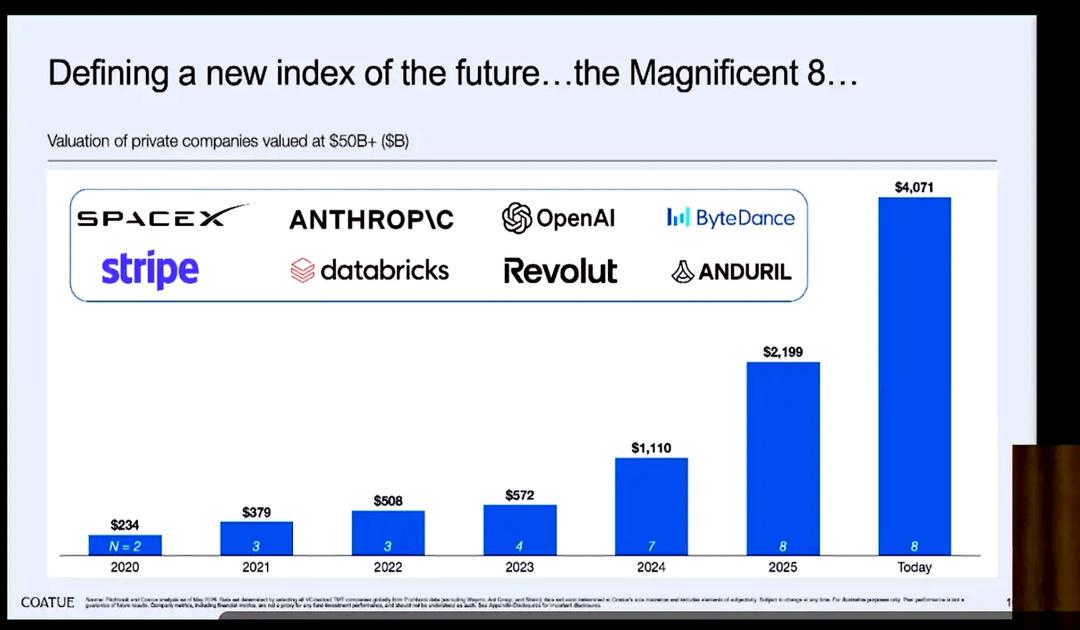
Figure 7 | Magnificent 8: The future index of private tech giants
If possible, I would really like to hold this index for more than the next ten years.
Obviously, the performance of this index is extremely amazing. It represents a value of nearly $4 trillion and has significantly outperformed the traditional "Magnificent Seven" - the seven giants in the US stock market. Almost every name in it has outperformed that index.
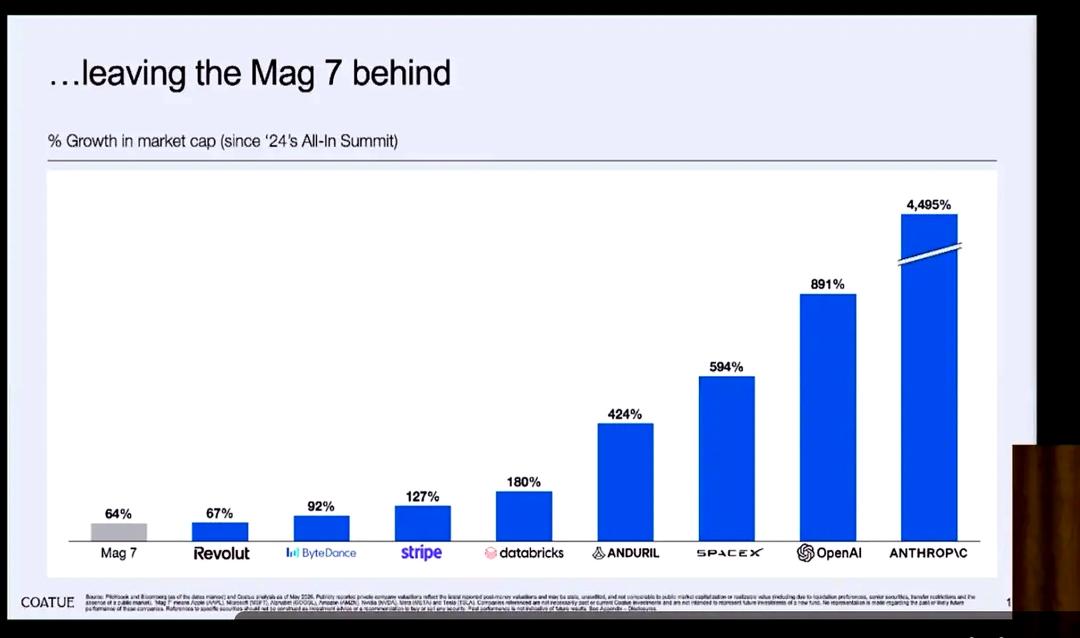
Figure 8 | Magnificent 8 vs. Mag 7: Market value growth since the 2024 All-In Summit
Another positive signal is that if we look at the exit market, the exit market is "thawing".
In the past few years, we've discussed with our friends many times: The unicorn economy is very good at consuming cash, but how much cash can it return? We need to balance the cash consumed and the cash returned. This is how an ecosystem maintains balance.
If we look at 2026, it's actually on a good trend. It hasn't reached the level of 2021 yet, but it's not bad, and there's still half a year left in this year.
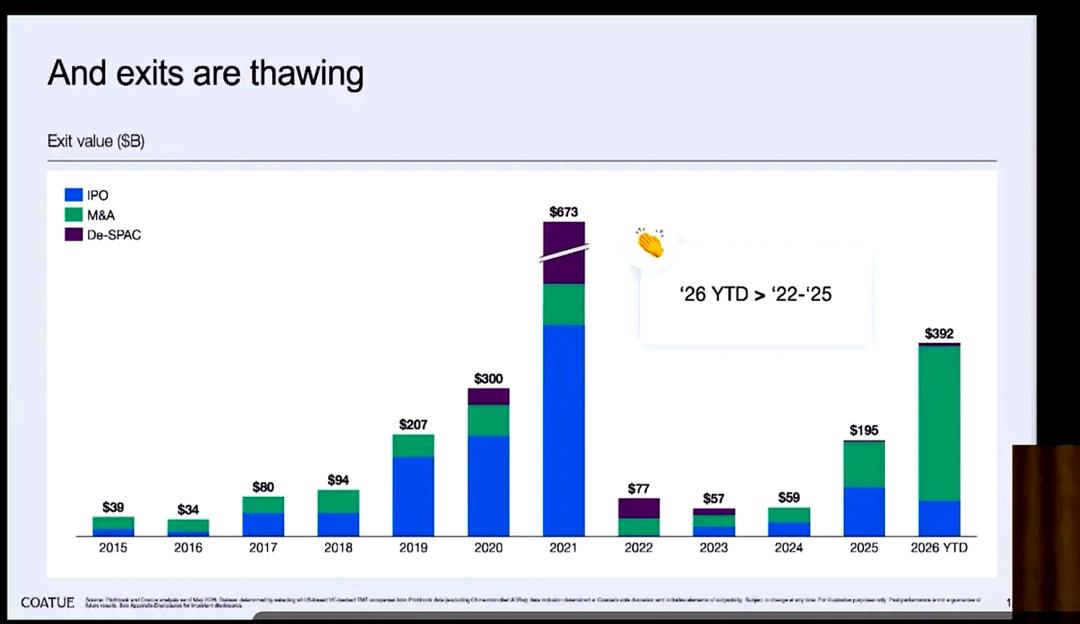
Figure 9 | The exit market is thawing
But this doesn't include three companies that we know are about to go public.
SpaceX will obviously go public soon; and just today (June 1st), there's news that Anthropic has secretly submitted its S-1 prospectus.
If we add these three companies together, you'll find that their total scale will basically exceed the sum of many exit scales in the past ten years.
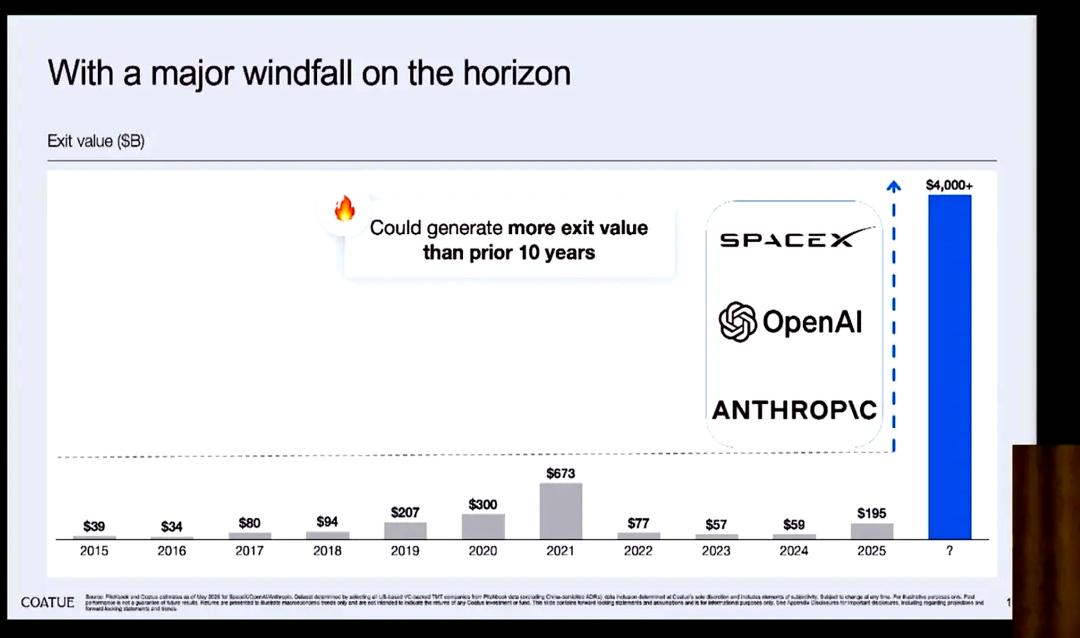
Figure 10 | Potential large-scale exit events
What does this mean? When I gave a speech at the first All-In Summit in 2024 (September 10th of that year), I said that our ecosystem was in an imbalanced state. We consumed far more cash than we returned. This was a fundamental imbalance. And now you can see that even without counting the liquidity events I just mentioned, our ecosystem has become significantly more balanced, and this improvement will continue.
