The 4th national-level metropolitan area in western China, striving to become a "double 10,000 city"
Recently, a long - gestating plan has finally entered the implementation stage.
The National Development and Reform Commission has approved the "Kunming Metropolitan Area Development Plan". The Kunming Metropolitan Area has become the 21st national - level metropolitan area in the country and the 4th approved national - level metropolitan area in the western region after Chengdu, Chongqing, and Xi'an.
The full text of the plan has not been released yet. However, according to previously public information, the Kunming Metropolitan Area covers 12 districts and counties in Kunming and extends to Hongta District of Yuxi, Chengjiang City, Mile City of Honghe, and Lufeng City of Chuxiong. The total area is about 37,000 square kilometers, with a permanent population of about 14.2 million, and its economic aggregate accounts for more than 60% of Yunnan Province.
For a long time in the past, although Kunming is the provincial capital, it has always lacked a strong primacy and radiation ability. In 2025, Kunming's GDP reached 863.745 billion yuan, accounting for 26% of the province's economy. Compared with Chengdu (36.6%), Wuhan (35%), etc., Kunming is not prominent in the national competition pattern of strong provincial capitals.
Moreover, Kunming put forward the "Double - Ten Thousand" goal (that is, the GDP exceeds one trillion yuan and the population exceeds ten million) during the "14th Five - Year Plan" period, but it still has a few steps to go to achieve it. This may also be an important background for the approval of the Kunming Metropolitan Area, that is, to further concentrate resources, industries, population, and transportation in Kunming to create a super growth pole that can drive the development of the whole province.
01
From the "Central Yunnan Urban Agglomeration" to the "Kunming Metropolitan Area"
If we look at it in the long run, the approval of the Kunming Metropolitan Area is not sudden.
The "Yunnan Provincial Territorial Space Plan (2021 - 2035)" proposed to build the Kunming Metropolitan Area. In the "2022 China Metropolitan Area Development Power White Paper", the Kunming Metropolitan Area ranked 18th among 44 metropolitan areas in terms of development power.
The "Report on the Implementation of the 2025 National Economic and Social Development Plan of Kunming and the Draft of the 2026 National Economic and Social Development Plan" released in March this year mentioned that the "Kunming Metropolitan Area Development Plan" has been approved by the National Development and Reform Commission.
From a map perspective, in addition to the 12 local districts and counties in Kunming, the Kunming Metropolitan Area selects 4 county - level cities from 3 adjacent prefecture - level cities. Although its total area exceeds the "standard" of 20,000 square kilometers for metropolitan area construction, its population density is relatively low, and its total population ranks relatively low among all national - level metropolitan areas.
However, if placed in the development context of Yunnan, the significance of the Kunming Metropolitan Area far exceeds its spatial scope itself.

Image source: Tuchong Creative
For a long time, the biggest problem in Yunnan has not been the lack of resources, but the overly scattered development. The 16 prefecture - level cities in the province have huge geographical differences, with mountains and plateaus accounting for more than 90%. It is difficult for the population and industries to naturally agglomerate like in the eastern plain areas. Even the provincial capital Kunming is not prominent in terms of economic volume among provincial - level capital cities in the country.
In 2025, Kunming's GDP reached 863.745 billion yuan, a year - on - year increase of 4.2%, and the growth rate reached a new high in recent years, contributing 27% to the province's economic growth. However, in the national urban competition, this volume is only about half of that of Chengdu, and there is still an obvious gap with strong provincial - capital cities such as Chongqing, Wuhan, and Hangzhou.
The "Kunming Territorial Space Master Plan (2021 - 2035)" mentioned that Kunming's influence, radiation, and driving force on the region are limited. The integration development level of the Kunming Metropolitan Area is not high, and the coordinated development level with other cities in the Central Yunnan Urban Agglomeration needs to be improved. Its international characteristics are not obvious, and its attractiveness to South Asia and Southeast Asia needs to be enhanced.
The significance of a national - level metropolitan area lies precisely in connecting scattered cities more closely into a network.
Nowadays, the metropolitan area has become an important means for new - type urbanization. Its core logic is not the adjustment of administrative divisions, but the free flow of elements, that is, to let talents, capital, industries, and public services break through administrative boundaries to achieve a one - hour commuting circle, a one - hour industrial circle, and a one - hour living circle.
This means that Kunming's core position will be further strengthened.
Before this, the "Central Yunnan Urban Agglomeration" was more frequently mentioned in Yunnan's regional development. According to the "Central Yunnan Urban Agglomeration Development Plan" approved by the National Development and Reform Commission in 2020, its core spatial layout is summarized as "one main and four deputy". Kunming is the main center, and Qujing, Yuxi, Chuxiong, and Mengzi are the four deputy centers.
There are differences between urban agglomerations and metropolitan areas. Generally speaking, urban agglomerations have a wider scope and emphasize regional coordination more, while metropolitan areas emphasize the radiation and driving ability of the central city.
The "Implementation Opinions on Promoting High - quality Urban Development" issued by Yunnan this year further proposed the development idea of "strengthening the core, clustering, and driving the periphery", clearly stating that it is necessary to strengthen the Central Yunnan Urban Agglomeration with the Kunming Metropolitan Area as the leader.
That is to say, the Kunming Metropolitan Area is regarded as the core. In a sense, this is also a shift in Yunnan's development strategy, from the past pursuit of regional balance to first strengthening the leader.
02
Where does the growth come from?
Then, with the help of the Kunming Metropolitan Area aiming for a "Double - Ten Thousand City", where can Kunming's growth come from?
From the perspective of industrial structure, Kunming still has obvious shortcomings. According to the economic data of Kunming in 2025, the growth more depends on the support of the service industry, and the industrial development is weak, with the secondary industry accounting for less than 30%.
Meanwhile, research by the Yunnan Academy of Social Sciences shows that the overall R & D investment intensity of the Central Yunnan Urban Agglomeration is still relatively low. According to the "2024 Yunnan Statistical Yearbook", the R & D (Research and Experimental Development) expenditure of Yunnan Province accounts for 0.7% of GDP, that of the Central Yunnan Urban Agglomeration (including all counties and cities in Honghe Prefecture) is 0.5%, and that of Kunming is 0.69%. While the R & D expenditure of mature urban agglomerations such as the Yangtze River Delta and the Pearl River Delta accounts for more than 3%, and that of core cities exceeds 6%.
The R & D intensity affects the cultivation of a city's new - quality productive forces and also affects the subsequent pattern of urban industrial competition, and Kunming obviously still has a large room for improvement.
Therefore, the most important task after the approval of the Kunming Metropolitan Area is not to continue to expand the city scale, but to restructure the regional industrial division of labor.
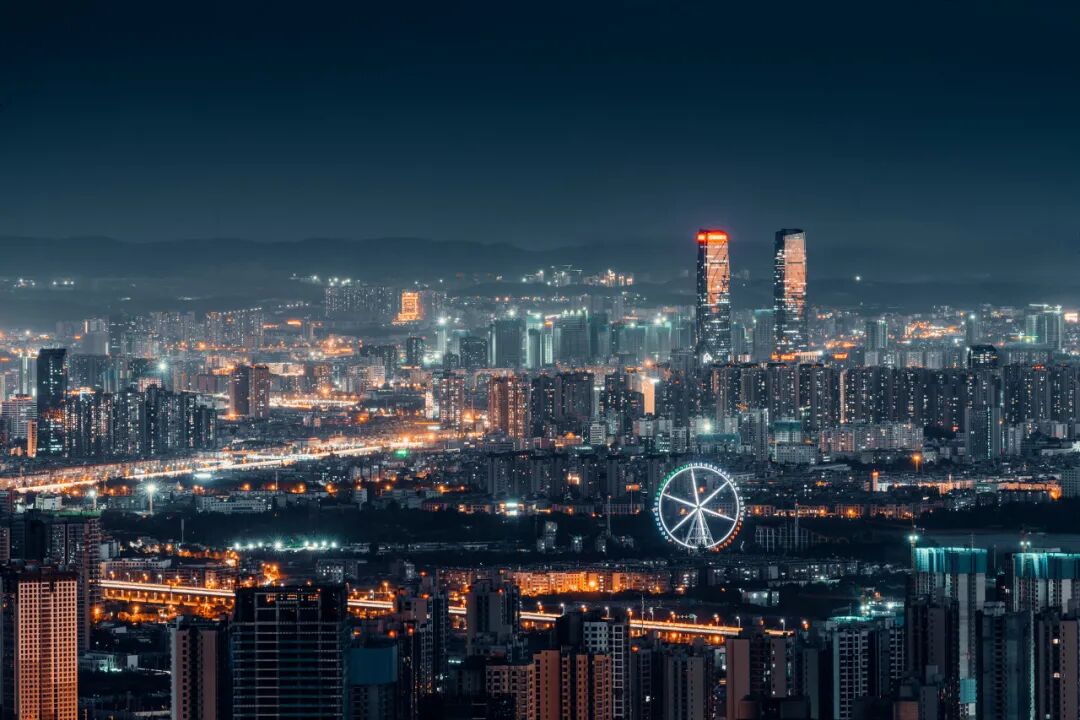
Image source: Tuchong Creative
Although the specific plan of the Kunming Metropolitan Area has not been released, the development plan of Kunming's industries can be roughly understood from the "Kunming Territorial Space Master Plan".
Kunming will form a development pattern of "one core, two wings, and four axes". Among them, the central urban area undertakes core functions such as headquarters economy, business services, scientific and technological innovation, and international exchanges; the airport area focuses on building an open gateway to South Asia and Southeast Asia; the Anning area undertakes the tasks of advanced manufacturing and industrial upgrading; the Jinning area focuses on developing the great health and cultural tourism industries.
Meanwhile, Kunming will also strengthen coordinated development with surrounding cities, jointly build an advanced manufacturing corridor with Qujing, a scientific and technological innovation corridor with Yuxi, a cultural tourism and health - care corridor with Honghe, and a green economy corridor with Chuxiong.
Behind this layout is actually a typical development idea for a metropolitan area: concentrating high - end service industries, innovation resources, and headquarters economy in Kunming, and distributing manufacturing and industrial chain links to surrounding nodes to form a regional economic community with division of labor and cooperation.
On the other hand, it is to straighten out the old problems within the Central Yunnan Urban Agglomeration. Tan Zheng, an associate researcher at the Institute of Rural Development of the Yunnan Academy of Social Sciences, analyzed that there are prominent problems in the Central Yunnan Urban Agglomeration, such as prominent industrial homogenization, low relevance of industrial chains, and a large number of low - and medium - end industrial chain enterprises. The potential competitive relationship among industries within the urban agglomeration is becoming increasingly prominent.
The goal of building a metropolitan area is precisely to turn the competitive relationship into a cooperative relationship.
In addition, while the competition logic of most metropolitan areas in the country is still focused on the domestic market, Kunming naturally has a unique positioning: opening up to the south.
Relying on the China - Laos Railway, the China - ASEAN trade network, and the dividends of the RCEP (Regional Comprehensive Economic Partnership Agreement), Kunming will not only be connected to Yuxi, Chuxiong, and Honghe in the future, but also the entire Southeast Asian market. This is also the biggest advantage of Kunming compared with many inland metropolitan areas.
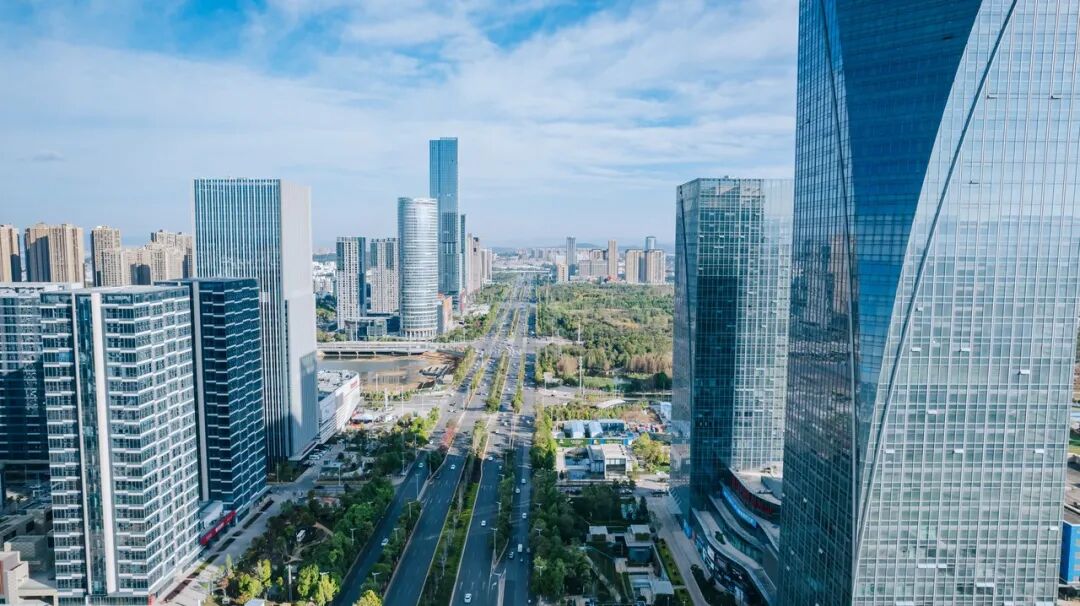
Image source: Tuchong Creative
In terms of population, Kunming also has potential.
From the 6th National Population Census to the 7th National Population Census, Kunming contributed more than 2 million to the newly - added permanent population in Yunnan. It is the city with the strongest population - attracting ability in the province and the only core city in Yunnan that has achieved a large - scale net inflow of population.
However, in the following years, Kunming's population growth rate slowed down. The population increased by only 7,000 in 2024, but recovered in 2025, with an increase of 57,000 in a year, and the current total is 8.744 million.
In the future, as the inter - city railway in Central Yunnan and the Chongqing - Kunming High - Speed Railway are gradually accelerated, if Kunming can achieve a growth rate of 100,000 or even more than 200,000 per year through the metropolitan area, the goal of "ten million population" is still worth looking forward to.
Kunming may still be one step away from becoming a "Double - Ten Thousand City". However, more important than the GDP and population figures themselves is that Yunnan has finally decided to concentrate the best resources and the strongest industries on this gateway city facing South Asia and Southeast Asia.
When a city begins to become the engine of a region, it may only be a matter of time before it takes the next step.
This article is from the WeChat official account "Reading the City Studio", author: Wang Chenting, editor: Liang Li. It is published by 36Kr with authorization.