America on Wheels can no longer afford to buy new cars.
We always refer to the United States as the "nation on wheels." Here, regardless of age or gender, people drive cars. The vehicle ownership rate is as high as 850 vehicles per 1000 people, ranking first in the world.
However, when it comes to 2026, Americans suddenly find that they seem unable to afford cars anymore.

01
Cars: From Tools to Luxury Items
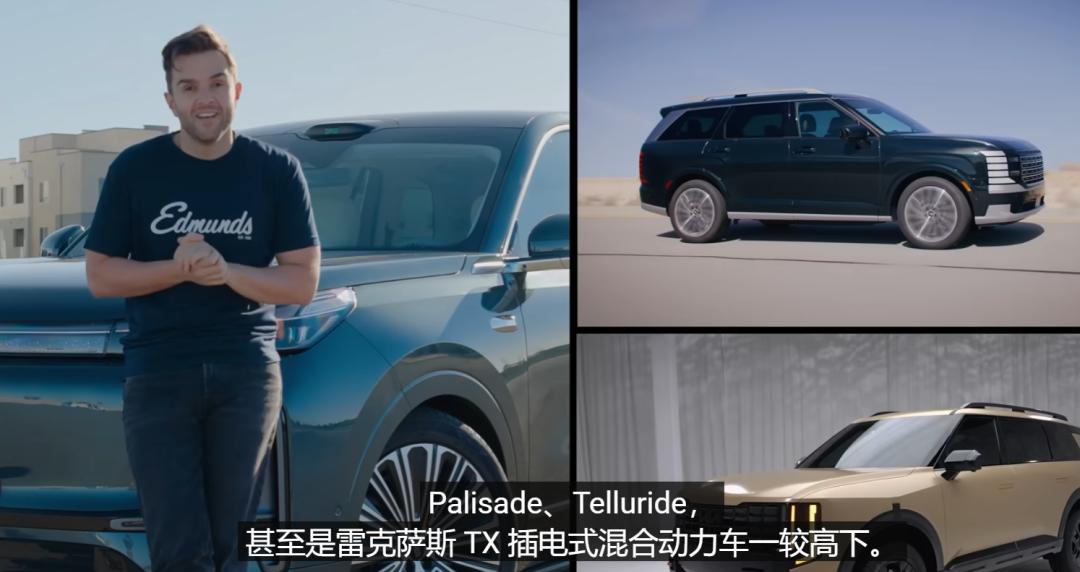
In recent months, many videos of "Americans testing Chinese cars" have inexplicably appeared on foreign video platforms. Cars from BYD, Chery, Geely to new - force brands like Xiaomi and NIO have all been featured.

Although the bloggers and the content of the videos are different, the conclusions at the end of the videos are surprisingly similar ———— Why can't we Americans buy cars with such high cost - performance? Why why why?
They drive the top - spec BYD SHARK priced at $47,000 and complain about the Toyota pick - up trucks in the US market at the same price range. They say that the American pick - ups consume more fuel, have worse power, and are completely outperformed in terms of comfort features. They drive the Geely Galaxy M9 priced at $35,000 and are amazed, thinking that with such product strength, it should be priced at $60,000 or $70,000 in the US market. They feel that even if the price is doubled, it can compete with Lexus.
What makes Americans even more envious is that there are a large number of ultra - low - cost commuter cars in the product lineup of Chinese cars. The BYD Seagull has a starting price of about $10,000 in China. When shipped to Mexico, its starting price is $20,000. The Geely Xingyuan at the same level starts at $18,000 in Mexico.
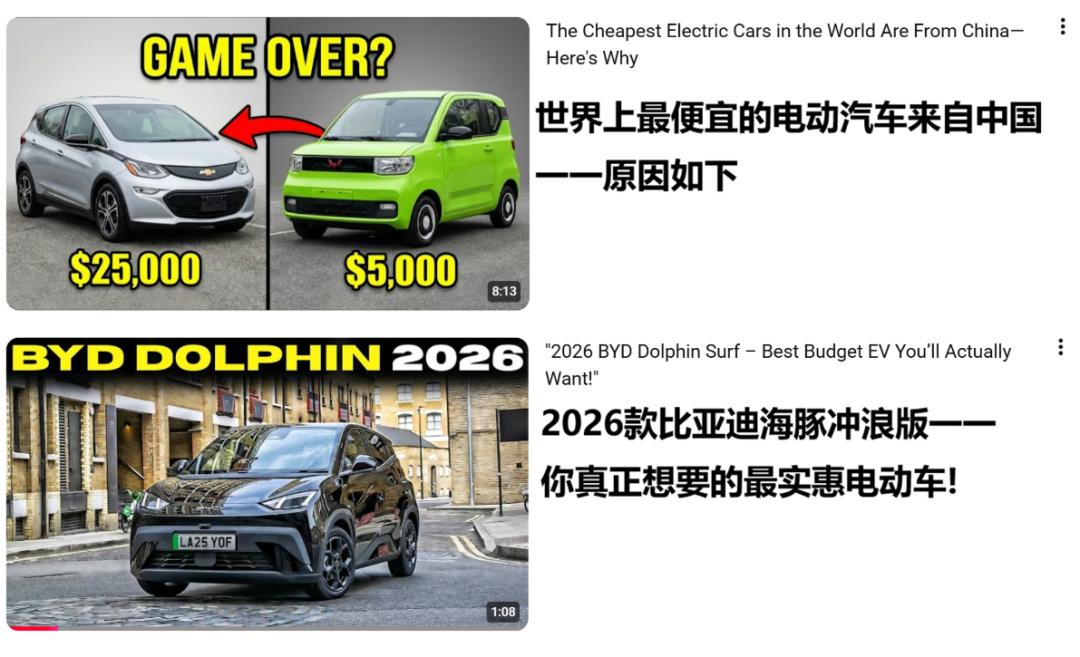
It's no exaggeration to say that in today's US market, a family car priced at $20,000 is like a rare treasure and a life - saving car for the common people.
Let's look at some terrifying data. In 2019, the average price of a new car in the US was $38,500. In 2023, the average price of a new car soared to $47,000. By 2025, the average transaction price of a new car reached an astonishing $51,000!
Behind this, a large number of economy cars increase their prices by adding features and increasing their sizes, forcing an upgrade in class. And those cheapest low - cost commuter cars have all been discontinued. As a result, only expensive cars are left in the car market, and the average transaction price naturally rises.
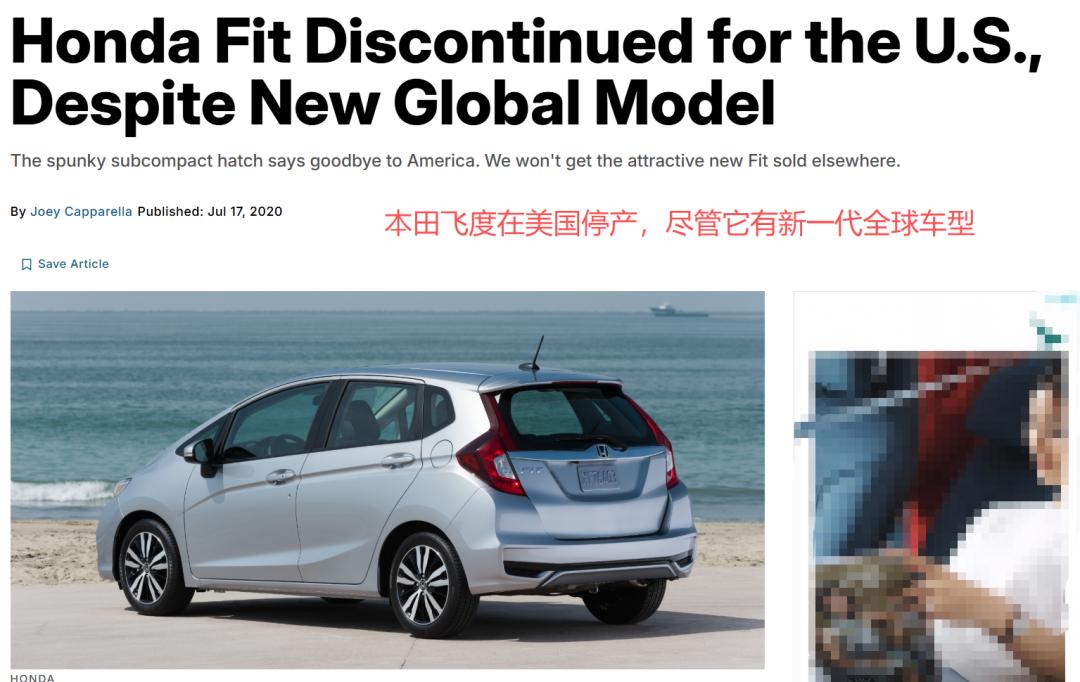
Just seven years ago, the number of low - cost cars priced below $25,000 accounted for 21% of the total models on the US market. Now, it has dropped to less than 5%, and there are hardly any options left. In 2019, Ford axed its cheapest small car, the Fiesta. In 2020, the Honda Fit and the Toyota Yaris almost simultaneously announced their withdrawal from the US market. Then came the Chevrolet Spark and the Mitsubishi Mirage.
In 2025, Nissan also announced that it would stop offering the small car Versa to US consumers. The last car in the US market priced below $20,000 disappeared.
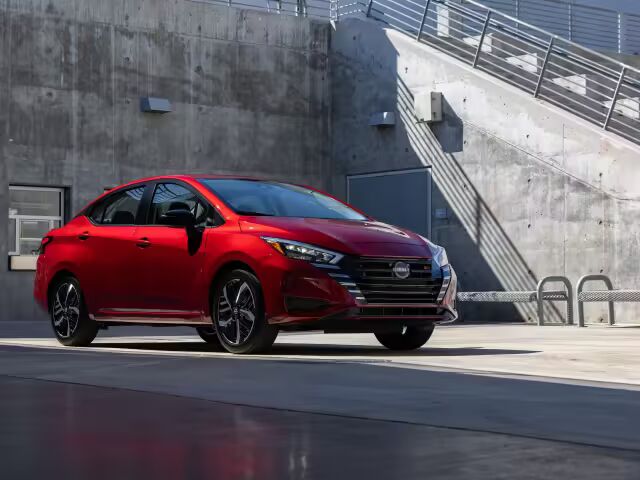
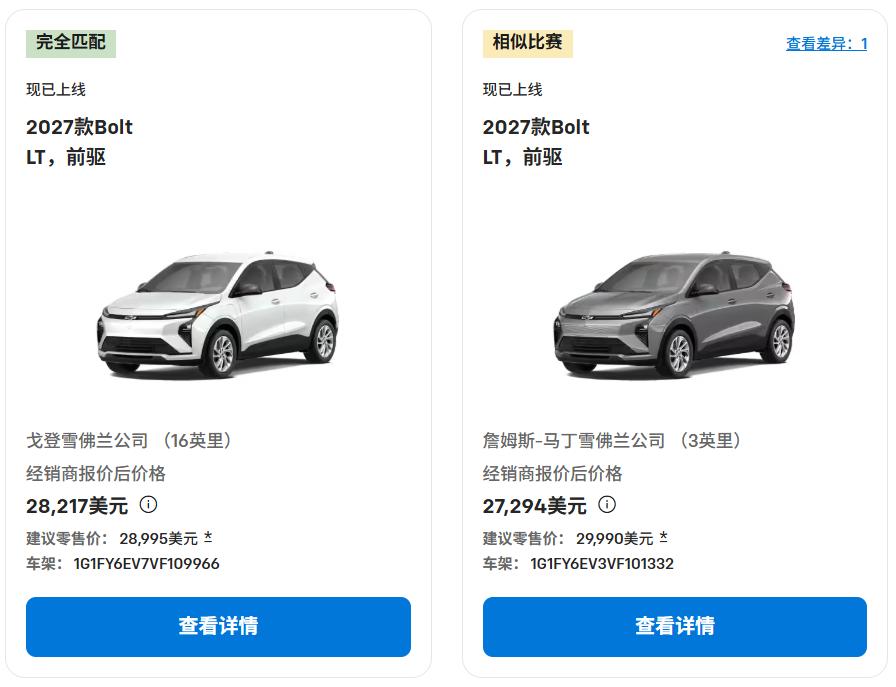
Now, if you just want the cheapest commuter vehicle, you can only choose upgraded products like the Civic or the Corolla. The base - model starts at $26,000, and some dealers even charge extra. Considering shipping, taxes, handling fees, and insurance, the final price is close to $30,000. If you have a slightly higher requirement for space and buy a compact SUV like the CR - V or the RAV4, the final price will be around $50,000. As for electric cars, the cheapest product in the US market currently is the Chevrolet Bolt, with a base - model price of $28,000, which is $10,000 more expensive than the Geely Xingyuan sold in North America, and it has lower - level configurations.
Now you know why Tesla is making a low - cost, stripped - down version of the Model Y. A $39,000 "bare - bones" car has its value in this market. You may laugh at Elon Musk for being stingy, but he laughs at you for not understanding the US market.
Since the transaction price of new cars has been rising much faster than people's income growth, a large number of less - affluent consumers have been squeezed out of the car market. In 2020, buyers with an annual income of less than $100,000 accounted for about 50% of the new - car market. But by 2026, this proportion has dropped significantly to 37%. The business consulting firm Plante Moran pointed out that now one - third of American families cannot afford to buy a new car. More and more families prefer to "make do with their old cars for a few more years." Currently, the average age of cars on US roads has soared to 13 years, a record high.

Ironically, the polarization between the rich and the poor in the US has actually helped car companies cover up this problem. At its peak in 2016, the annual car sales in the US market reached as high as 17 million. Currently, it hovers between 15 and 16 million, which is a significant drop but not a complete collapse. This barely maintained sales volume is entirely supported by the wealthy group. Last year, BMW sold a total of 388,000 new cars in the US market, a year - on - year increase of 4.7%, setting a new record. The sales of Cadillac and Genesis increased by 8.3% and 9.8% respectively... This is what we call two extremes. This is what capitalism is like.
However, no matter how extravagant the rich are, they can't change their cars every year. Car companies themselves know that this kind of development is unsustainable. Jim Farley, the CEO of Ford, publicly stated that this structural problem will eventually lead to a long - term decline in demand. The negative effects may be reflected in sales in the next few years. Although that's the case, it takes at least 3 years and up to 5 years for car companies to redesign and start producing a low - cost small car, which is definitely too late.

We can rely on the wisdom of future generations to solve the problems in a few years. The current problem is that Americans have opened their eyes to the world and know that there are high - cost - performance Chinese cars. They are questioning why the US government uses various tariffs and bans to keep Chinese cars out, making it impossible for them to afford new cars.

This collective complaining has become more and more intense recently because Chinese cars are sweeping Mexico. Their market share has reached 30%, and in the electric - car field, they are absolutely dominant. Just BYD alone accounts for 70%.
US federal regulations allow Mexican residents to drive their private cars into the US for use in the form of "temporary entry of non - residents." Many international students and cross - border workers commute this way. Some dual - citizens even take advantage of the loophole to buy Chinese cars in Mexico and use them in the US.

These cross - border cars give ordinary people more opportunities to experience Chinese products firsthand and also provide materials for US YouTubers to conduct reviews and comparisons. After trying them, they find that Chinese cars are not as bad as the rumors say, that they are not cheap because of shoddy workmanship and poor quality. In fact, they offer great value for money. If you were an American, you would also feel that you are being exploited by local car companies. Would you be happy?

Here's a scary story. Canada has also cancelled the 100% punitive additional tax on Chinese electric cars. After reaching a new trade agreement, Canada has implemented a quota system for importing Chinese electric cars, with an annual quota of 49,000 vehicles. Canadians can also drive their private cars into the US to show off. It's a pincer attack from the north and the south.
It doesn't matter. US media have come up with a good idea. "All Chinese - made cars are mobile spies. Dumping a $40,000 car for $20,000 is just to spread cameras all over the world. The Chinese are so bad. It is recommended to promote legislation to ban any Chinese cars from entering the country!"
This is a real thing, not an Onion News story.

02
The Strangled Low - Cost Cars
After having some fun, we still haven't answered a question: Why have low - cost cars in the US market disappeared?
This involves a long - standing act, CAFE, which is the Corporate Average Fuel Economy rules. It was established during the oil crisis in the 1970s to put a fuel - consumption constraint on car companies and encourage them to produce energy - efficient cars.
