The recording hardware sector is booming, with four major categories of products vying for the new AI entry point, and Agent capabilities have become a standard feature.
In many people's imaginations, the voice recorder might be the hardware most likely to be replaced by mobile phones.
From journalist interviews to business meetings, from classroom note - taking to online communication, mobile phones paired with transcription apps like iFlytek Listening can cover the vast majority of recording scenarios. Even in the media industry, many journalists have started to "take shortcuts" and directly use their mobile phones as voice recorders. For many people, the voice recorder has long become a gradually forgotten category.
Although some brands introduced smart voice recorders equipped with AI models that can directly complete transcription within the device in the past few years. In terms of experience, these smart voice recorders have only caught up with the "mobile phone + app" combination. In terms of ease of use, the combination of a mobile phone and a smart recording software was still the best recording experience at that time.
However, in 2026, when everyone thought the voice recorder was about to disappear, AI Agent technology has revitalized the recording hardware market.
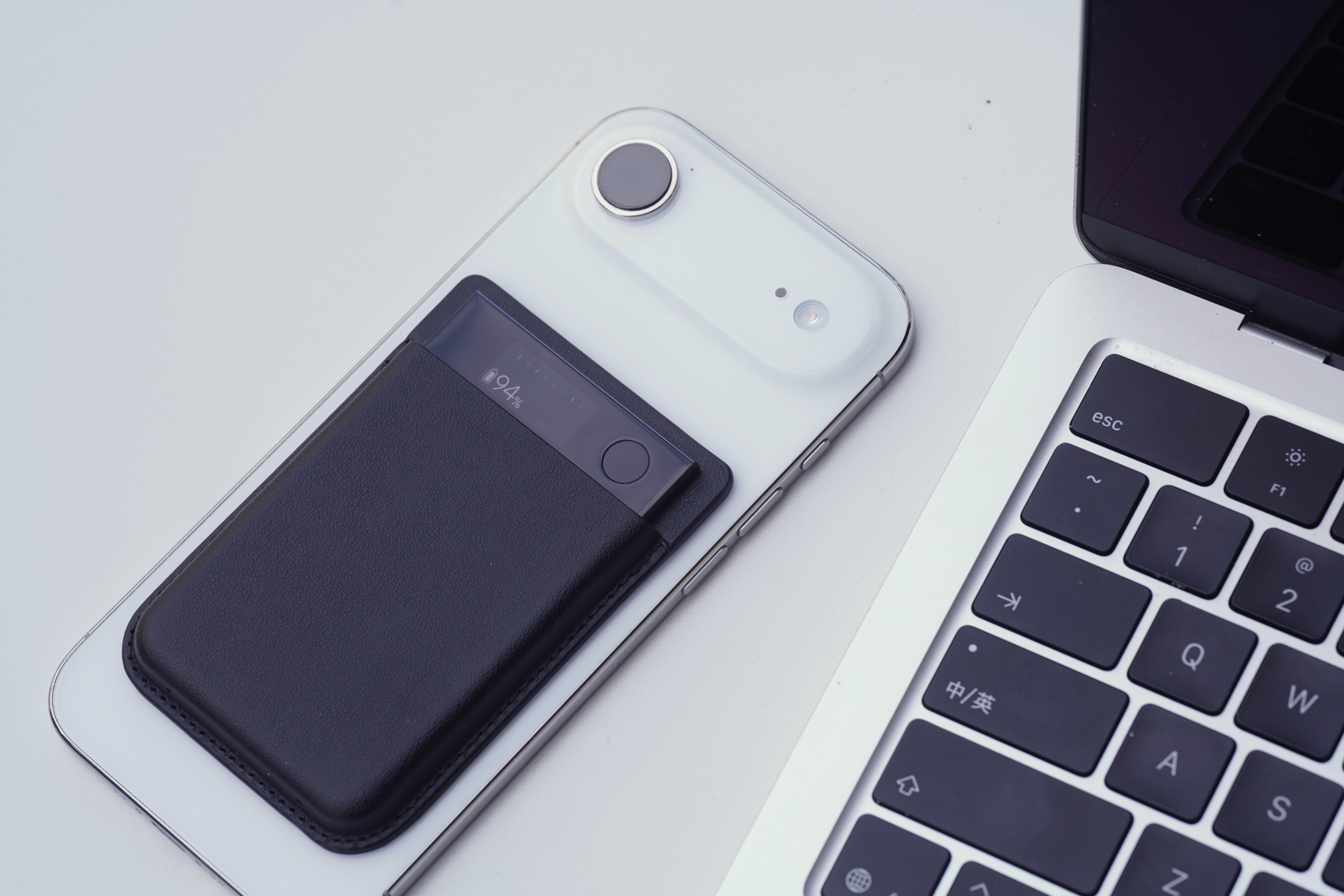
Image source: Lei Technology
In the past two years, from Plaud Note Pro, DingTalk A1 recording card, to Anker Recording Bean, Insta360 Mic Air, and various AI earphones and smart microphones with real - time transcription capabilities, more and more manufacturers have started to re - enter the seemingly mature "AI recording hardware" market. But in the smart hardware industry, there are many categories that are ready to "be resurrected with the help of AI". Why can AI recording devices stand out?
Four types of recording hardware compete for the super entrance of voice AI
Lei Technology's inventory shows that the mainstream AI smart recording hardware on the market can be roughly divided into four categories according to their forms: cards, wearables, earphones, and voice recorders. Among them, card - type and wearable recording devices are the most common.
1. Recording card: Stick it on your phone and use it anytime, portable and lightweight.
Everyone should be very familiar with card - type AI recording devices. Brands like Plaud, DingTalk, MOVA TPEAK and even the "ancient" mobile Internet app, Evernote, have launched such AI recording devices; Lei Technology has also had in - depth experience with related products in the past.
In terms of hardware, AI recording cards continue the interaction mode of traditional voice recorders, which is "input only, no output". The highly simplified body hardware and the microphone matrix with better "hearing" enable these AI recording cards to break away from the "big, heavy and ugly" hardware form of traditional voice recorders. The thin and light card design solves the problem of poor portability of traditional voice recorders.
Taking the DingTalk A1, which Lei Technology is familiar with, as an example, the matrix structure of five omnidirectional microphones and one bone - conduction microphone allows the recording card to accurately pick up sounds from a distance without the need to be equipped with two huge microphone heads like traditional voice recorders, significantly reducing the product volume. Incidentally, the addition of the bone - conduction microphone also enables the A1 to provide call recording function for iPhones, solving the biggest pain point of iPhones in work scenarios.
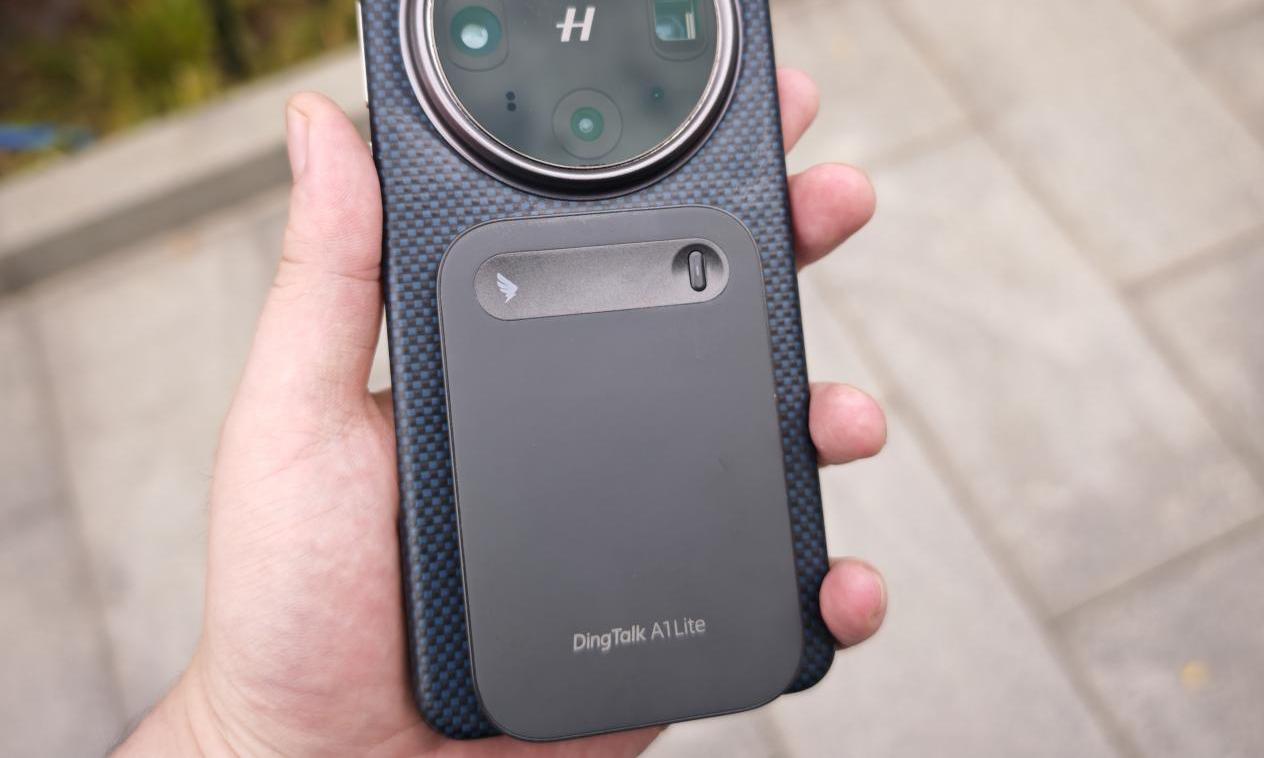
Image source: Lei Technology
In terms of AI Agent capabilities, the DingTalk A1 is also designed for office scenarios such as interviews and meetings. It can directly display real - time translation in the mobile app and output meeting minutes organized by the AI Agent after the meeting.
2. Wearable recording devices: Record anytime, anywhere without intrusion.
If the AI recording card products like the DingTalk A1, which are designed for interviews and meetings, are too "professional", then wearable recording devices, such as the Insta360 Mic Air, meet the voice recording needs outside professional scenarios.
Not long ago, Lei Technology reported on the co - branded Mic Air Vibe - Coding microphone launched by Insta360 and TRAE. In terms of hardware form, this type of wearable microphone completely abandons the model of traditional voice recorders and is based on the prototype of a wireless microphone, featuring small size, low - profile design and long - term use.
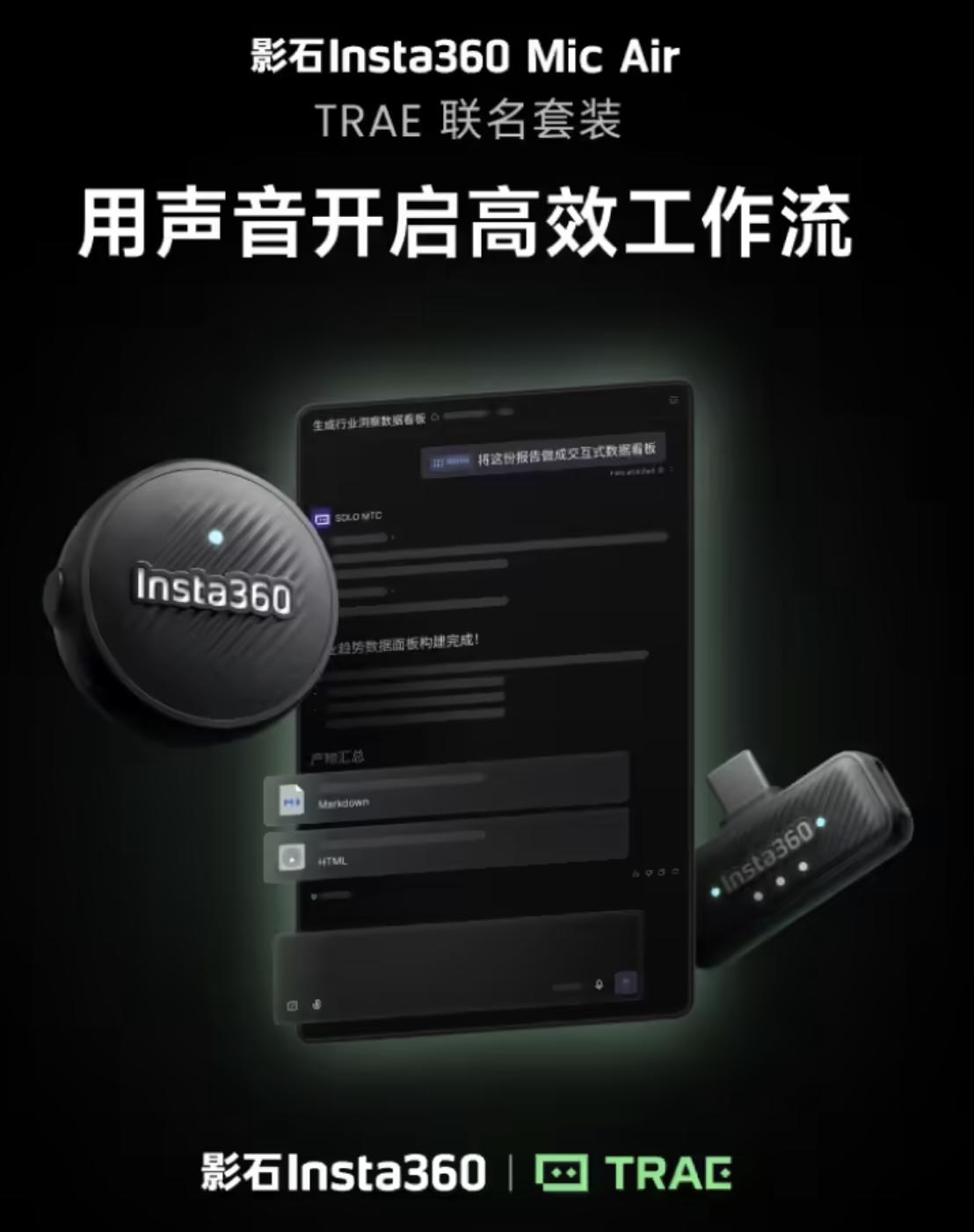
Image source: Insta360
For example, when the Mic Air was launched, it specifically mentioned its selling points of "extremely light weight and high sensitivity": even in a relatively noisy environment such as an office, it can accurately capture the user's soft - spoken voice, allowing developers to "command AI to work anytime, anywhere".
3. AI recording earphones: Solve rigid needs such as translation with the lowest learning cost.
The core value of earphone - type AI recording products represented by iFlytek AI earphones still revolves around "earphone scenarios" such as conversations and translations. Compared with the first two types of devices, the advantage of earphones is their extremely low learning cost.
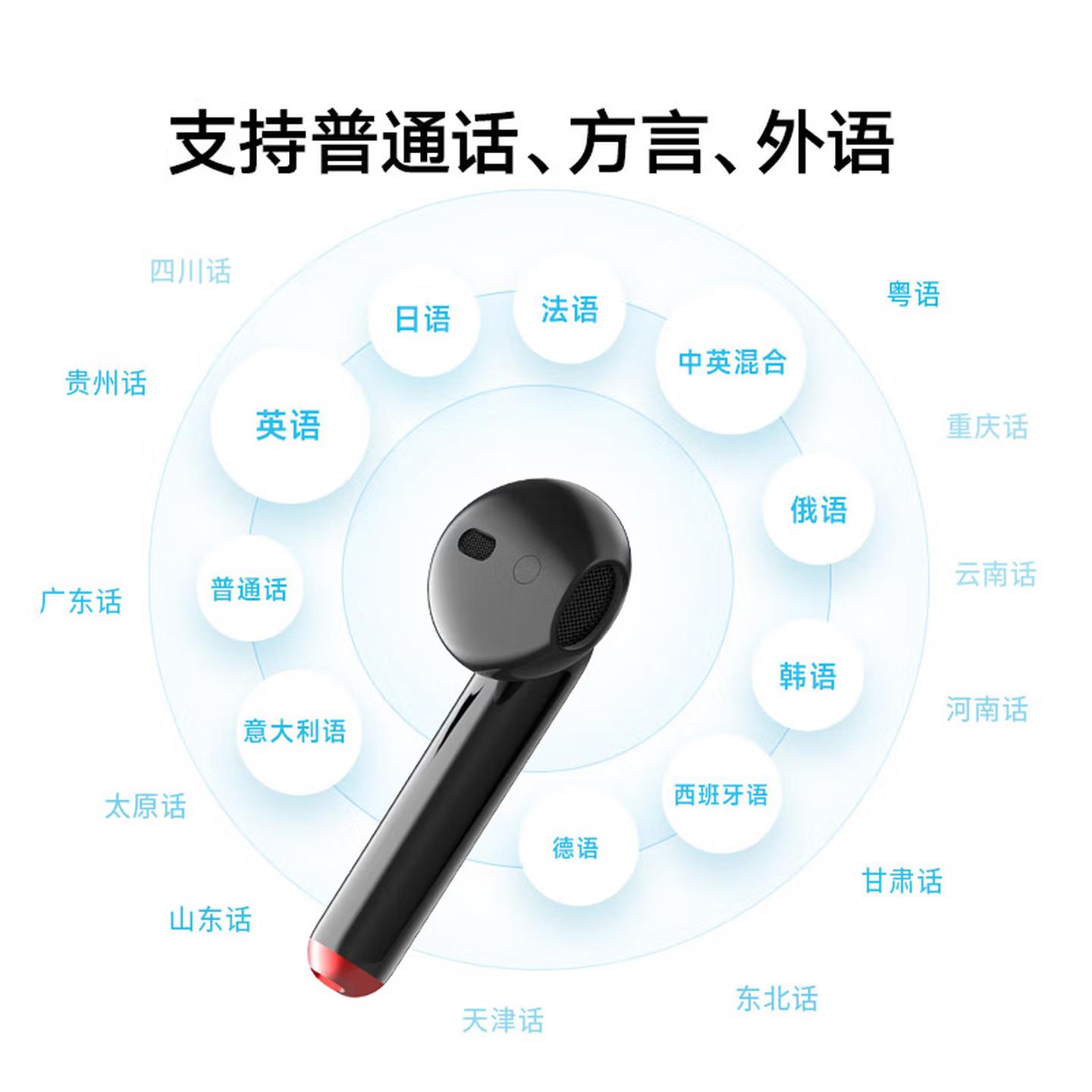
Image source: iFlytek
4. Traditional voice recorders go AI: Continue old habits with high reliability.
Finally, there is the "traditional school" of AI recording devices - traditional voice recorders equipped with AI Agent capabilities. Compared with the first three new - form products, this type of AI device essentially adds an Android module to traditional voice recorders, enabling them to have certain AI Agent capabilities. However, this separated hardware architecture brings high reliability and is more friendly to professional users such as journalists and lawyers.
How does AI Agent reshape recording devices?
However, whether it is a magnetic card or a clip - on microphone, these hardware differences are just appearances. In Lei Technology's view, the significance of AI Agent to the recording industry is not to improve transcription efficiency or add more new functions, but to redefine the meaning of the existence of recording devices.
In the era of traditional voice recorders, the value of recording devices was to record sounds. Whether it was for journalist interviews, meeting records or classroom notes, the voice recorder was just a "storage tool". After recording, users needed to listen back, organize and extract key points by themselves. Lei Technology calls this "recording - listening back - organizing" work mode the Recording 1.0 era.
For journalists, a one - hour exclusive interview often means spending one to two more hours listening back to the recording, organizing viewpoints and extracting golden sentences. At the beginning of this year, when Lei Technology participated in the CES 2026 report, it met media colleagues who were still using this "ancient recording method", and their work efficiency was extremely low. For enterprise users, such pure meeting recordings can only be used for backup and archiving.
Later, with the emergence of transcription tools such as iFlytek Listening, the recording industry entered the second stage. In this stage, the recording devices themselves did not change much, but AI began to undertake part of the text - organizing work. The workflow evolved into "recording - transcription - organizing" - Lei Technology defines this as the Recording 2.0 era.
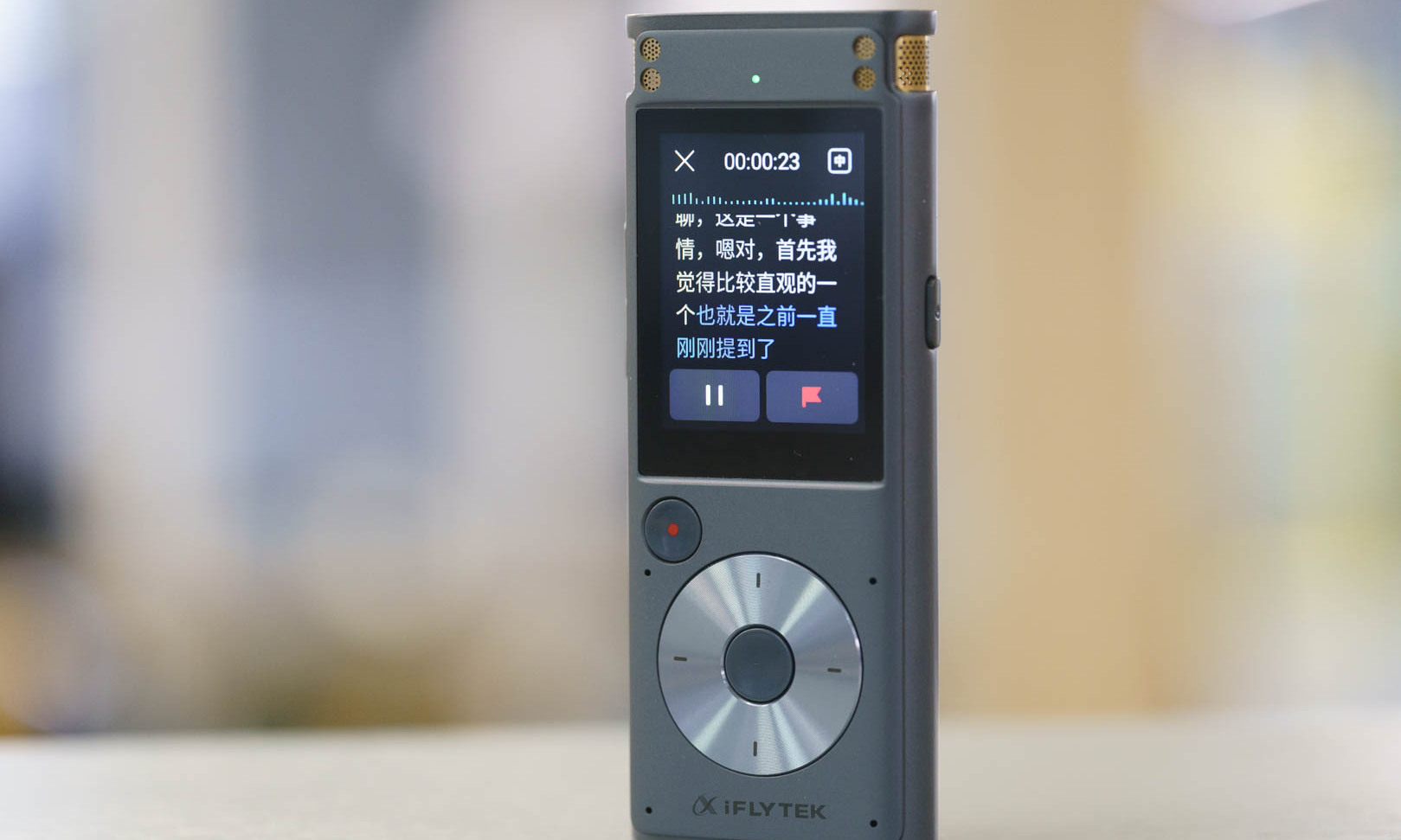
Image source: Lei Technology
Compared with the era of traditional voice recorders, users no longer need to listen back to the recording word by word, but directly face the written manuscript, and the efficiency improvement is huge. However, the problem is that transcription does not equal organization. A verbatim interview transcript of tens of thousands of words is still essentially an unprocessed collection of information. We still need to sort out the structure and screen the key points by ourselves; product managers still need to break down tasks from the discussion content.
In other words, the emergence of transcription tools only solves the problem of "turning sound into text", not the problem of "turning information into action".
The emergence of AI Agent has changed all this. Now, the workflow of AI recording devices has become: "recording - transcription - summarization (thinking) - execution"
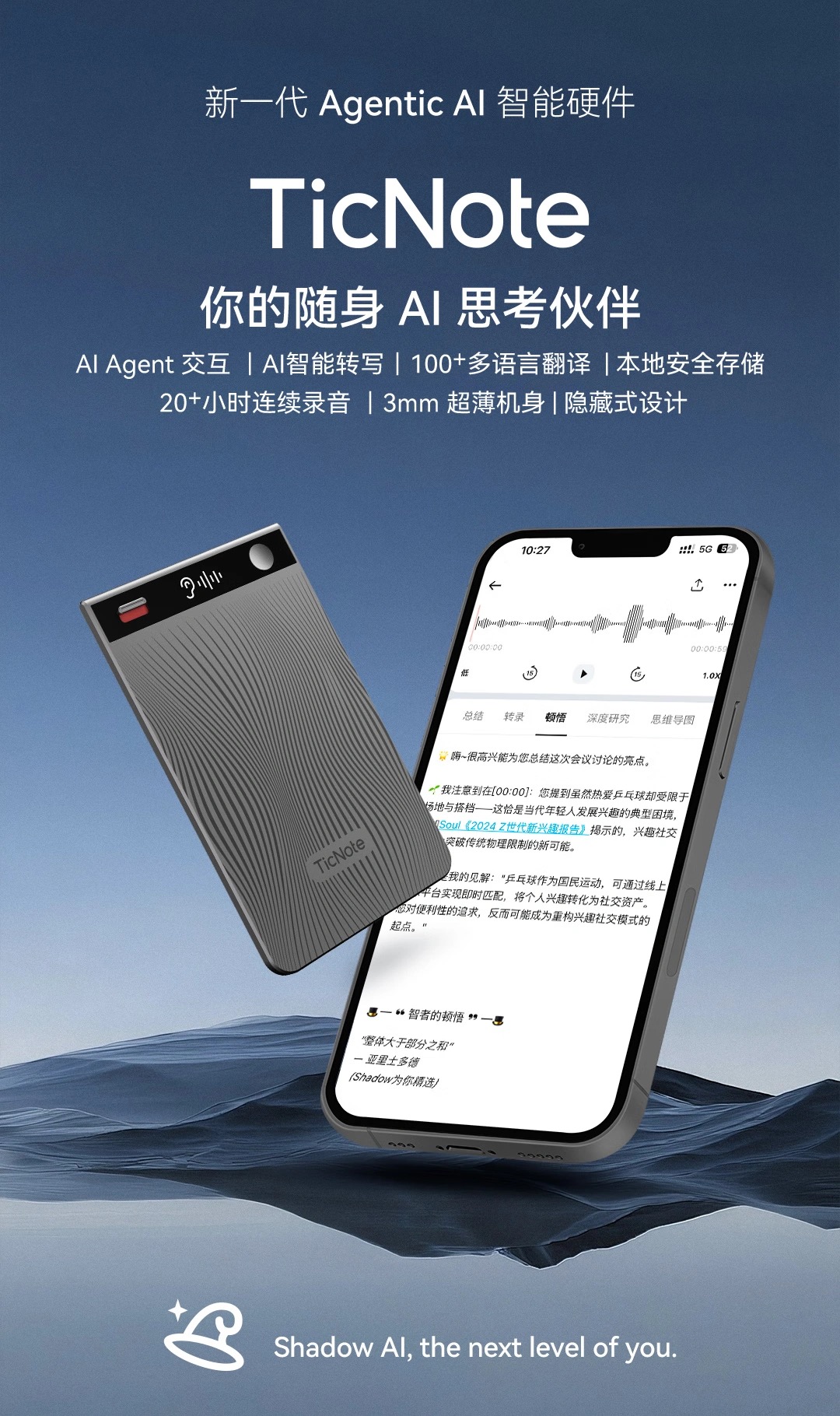
Image source: TicNote
Taking Lei Technology's actual work scenario as an example, in the Recording 1.0 era, we got a recording file after the interview; in the Recording 2.0 era, the recording file was turned into a verbatim transcript; but in the Recording 3.0 era, mainstream AI recording devices can directly provide interview summaries, core viewpoints, golden sentences of interviewees and even the article structure of the interview manuscript.
In addition to meetings and interviews, AI has also given rise to new scenarios that did not exist before - the "voice Vibe Coding" mentioned above is the best example.
In the past, software development almost completely relied on keyboard input, while Vibe - Coding features a fuzzy development method - developers put forward requirements to AI and let AI find ways to implement functions. Since the instructions given by developers are themselves fuzzy, why do we still need a precise input method like the keyboard? Against the background of this AI - based development, Vibecoding based on voice input was born, and Insta360 became the first brand to catch the trend.
It can be said that the emergence of AI Agent has made recording devices no longer simple "input tools", but has given them the ability to "produce value".
Agent capabilities are becoming similar, and basic experience is more important
However, on the one hand, the explosion of AI Agent has made recording devices "prove themselves again"; on the other hand, the rapid iteration of AI Agent has quickly narrowed the capability gap between different products. For current AI recording devices, capabilities such as meeting minutes, to - do list extraction, interview summaries and content induction have long become standard in the industry.
In Lei Technology's view, the reason for this situation is not complicated: most AI recording device manufacturers do not develop underlying large - scale models, but use the same batch of mature model services. As the industry enters the mature stage, the capabilities of external models will inevitably become similar. So in this case, how can AI recording hardware differentiate itself?
Lei Technology believes that as the capabilities of AI Agent become similar, the competition in the recording hardware category will inevitably return to hardware configuration and basic experience.
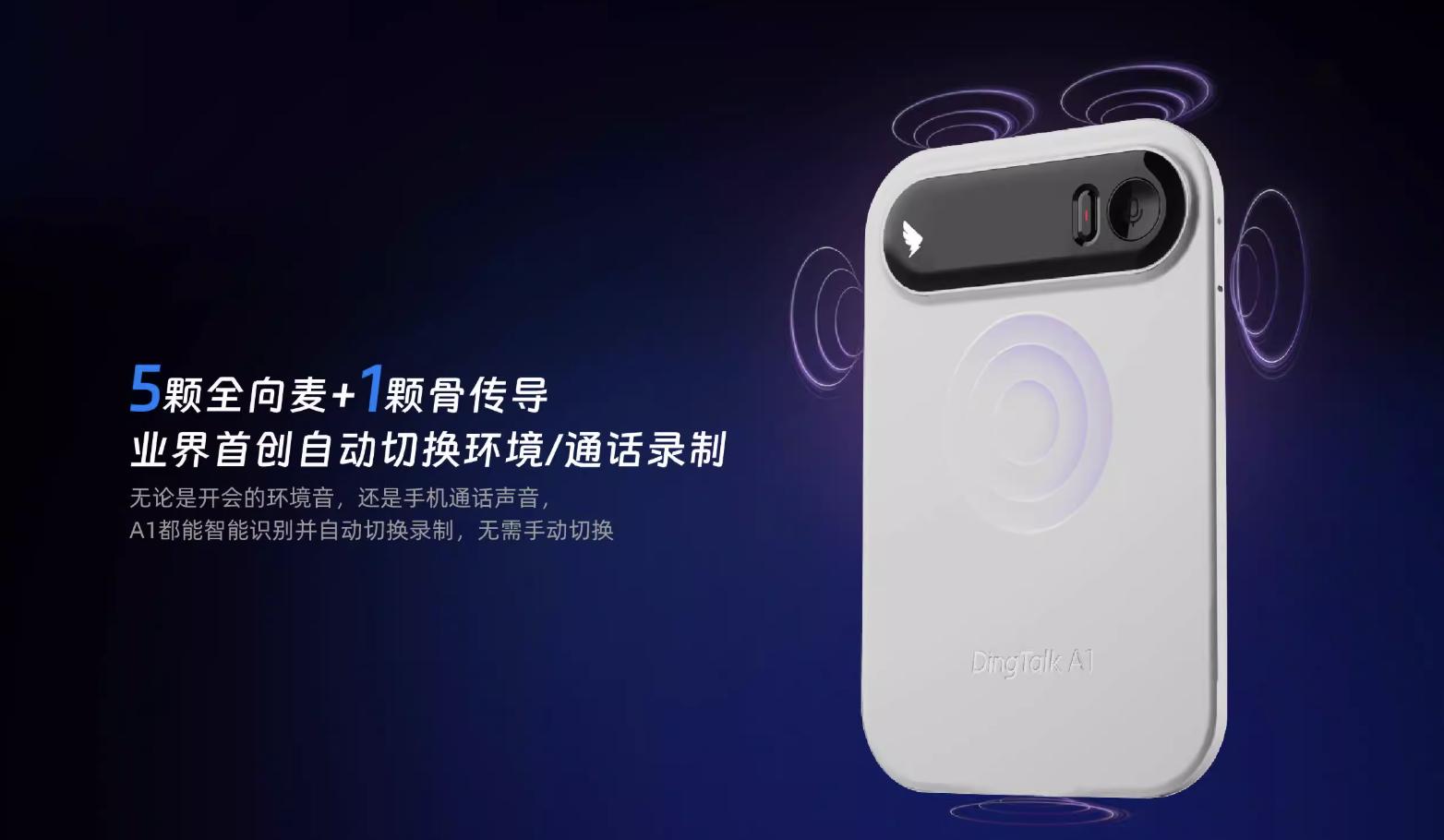
Image source: DingTalk
In fact, after experiencing many AI recording products, Lei Technology found a very interesting phenomenon: when generating meeting minutes, the content differences between different devices are often not as large as people imagine; however, the quality of the recording source itself will directly determine the usability of the final result.
For example, last year, Lei Technology participated in a group interview held on the outdoor track and field of a university. The wind was very strong at the scene, and the mobile phone recording was completely inaudible. Finally, the AI transcription could hardly recognize the human voice; not long ago, when participating in an indoor group interview of a certain brand, the AI recording device of a certain brand completely missed the human voice and only recorded 37 minutes of environmental noise for me.
From this perspective, AI Agent is a bit like the active noise - canceling technology back then: the emergence of active noise - canceling technology changed the development direction of the earphone industry and even created a special category of ANC earphones. However, the noise - canceling algorithms of various brands are actually quite similar. What really affects the experience of noise - canceling earphones is the "hardware development capabilities" such as the earphone microphone matrix and ergonomics.
Purchase guide: Some can be bought, some are recommended to "wait a little longer"
So as consumers, if we want to experience AI recording devices, how should we choose the right product for ourselves? In Lei Technology's view, in 2026, when "AI experience is similar, but hardware differences are large", it is actually not difficult to choose a suitable AI recording device.
First of all, we need to clarify our own needs: Do we want a portable recording card for meeting recordings? Or a multi - functional wireless microphone? Or just want to "try something new" and experience the capabilities of AI Agent in the recording category.
For users in the media industry with high - intensity recording needs, Lei Technology highly recommends the DingTalk A1: its portable size, long battery life, and deep integration with DingTalk AI. For domestic users, the DingTalk A1 is probably the safest choice.
If you think the recording card is still not convenient enough, the Anker Recording Bean, which also uses a magnetic - attachment scheme and is deeply connected with Feishu, is also worth considering.
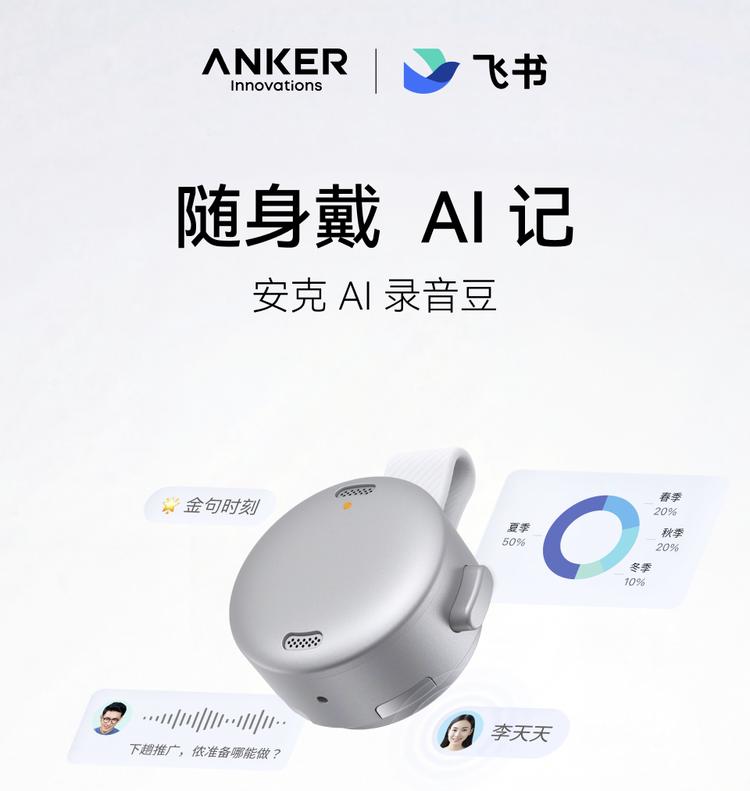
Image source: Anker
But if you don't have a rigid need for "recording" and just want a "wearable microphone" to command the Agent in your computer to work, there is no doubt that the TRAE × Mic Air of Insta360 will be the most suitable product for you.
As for recording earphones and dedicated AI voice recorders, based on Lei Technology's experience,