Huaqing Puzhi AI Incubator Joins Hands with Qingcheng Jizhi to Release "2025 Industry Analysis Report on Large Model API Services"
On January 29th, the "Ping The Future: Intelligent Leap, New Routing Horizons - Qingcheng AI Ping Product Launch Conference" hosted by Beijing Qingcheng Jizhi Technology Co., Ltd. (hereinafter referred to as "Qingcheng Jizhi"), a key enterprise nurtured by Huaqing Puzhi AI Incubator (T-ONE Innovation Lab), was held in Beijing.
At the conference, Qingcheng Jizhi and Huaqing Puzhi AI Incubator jointly released the "2025 Large Model API Service Industry Analysis Report" (hereinafter referred to as the "Report"). More than a hundred representatives from government departments, research institutions, cloud service platforms, and application enterprises attended the event and conducted in - depth exchanges on the evaluation system, engineering application, and ecological collaboration of large - model API services.
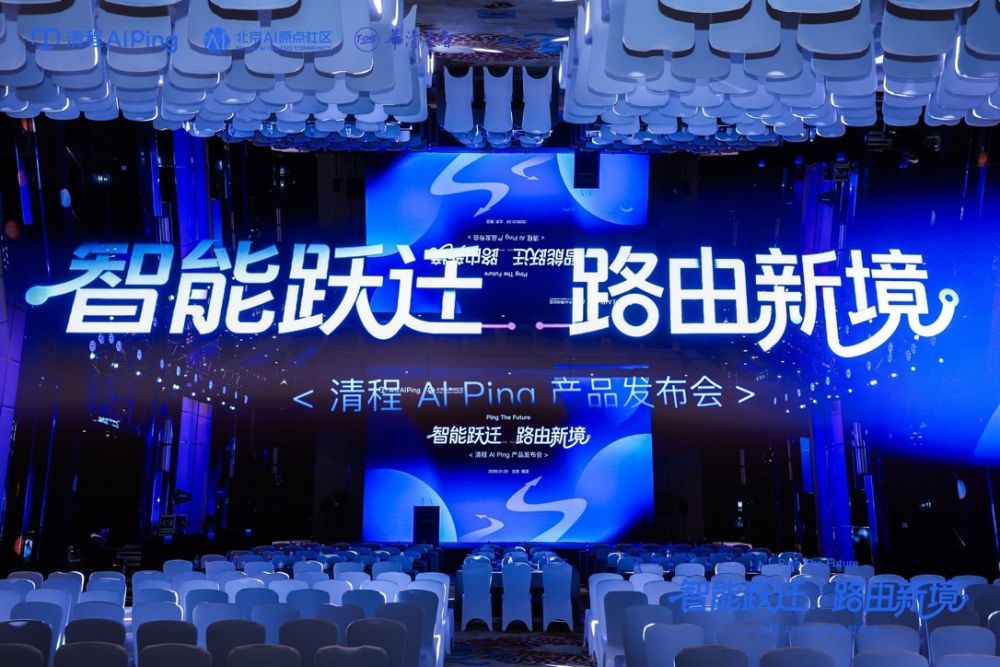
Report Release Becomes the Focus: Systematically Presents the Structural Problems of API Services
As the core agenda of the launch conference, Mao Siyu, the market leader of Huaqing Puzhi AI Incubator, released and interpreted the "Report". Based on three dimensions of model capabilities, service provider supply, and application scenarios, the report conducted a structured analysis of the current large - model API service forms, aiming to help the industry solve the problems of API service implementation and provide a "navigation map" for future development.
Mao Siyu emphasized that all the data in the report came from the real - time calls and 7×24 - hour performance monitoring of the AI Ping platform in the fourth quarter of 2025. The "Report" pointed out that the large - model industry has entered a transformation period of "quality competition", and problems such as difficult model selection and difficult adaptation restrict large - scale implementation.
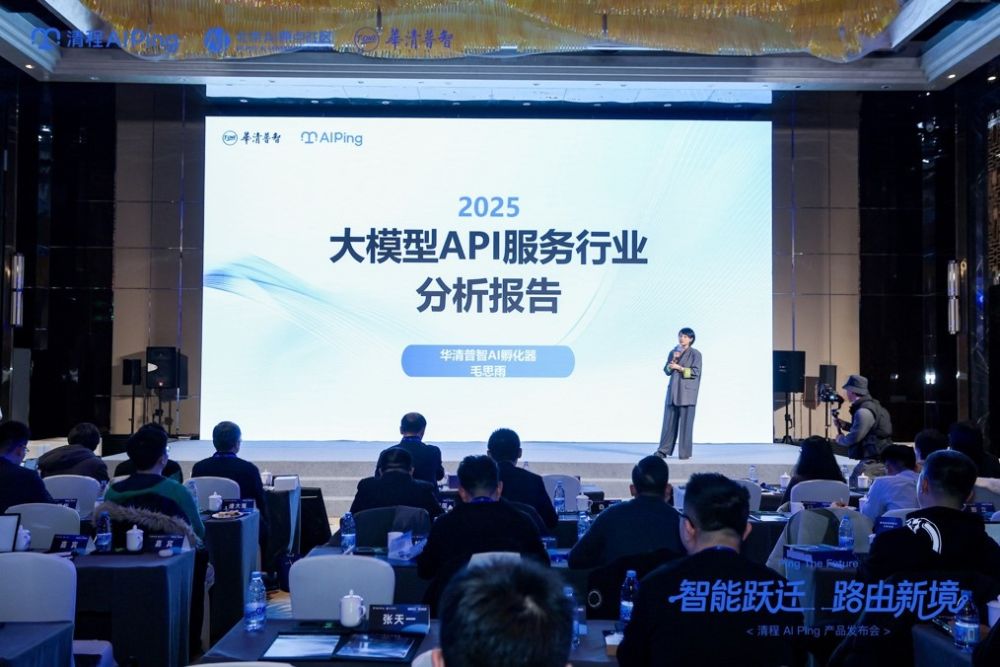
Subsequently, she shared the industry observations of large - model API services: The leading models present a pattern of "dominated by a few and complementary within the same family". The industry pricing is close to the official standard, but the performance differences are significant. There is also a misalignment where the supply side prioritizes the spread of "the most easily deployable general capabilities", while the demand side focuses on "the most task - effective dedicated capabilities". The "Report" quantifies the value of intelligent routing, showing that the AI Ping platform can achieve a 37.8% cost reduction and a 90% throughput increase, which verifies the advanced nature of Qingcheng Jizhi's technology and the forward - looking layout of Huaqing Puzhi AI Incubator.
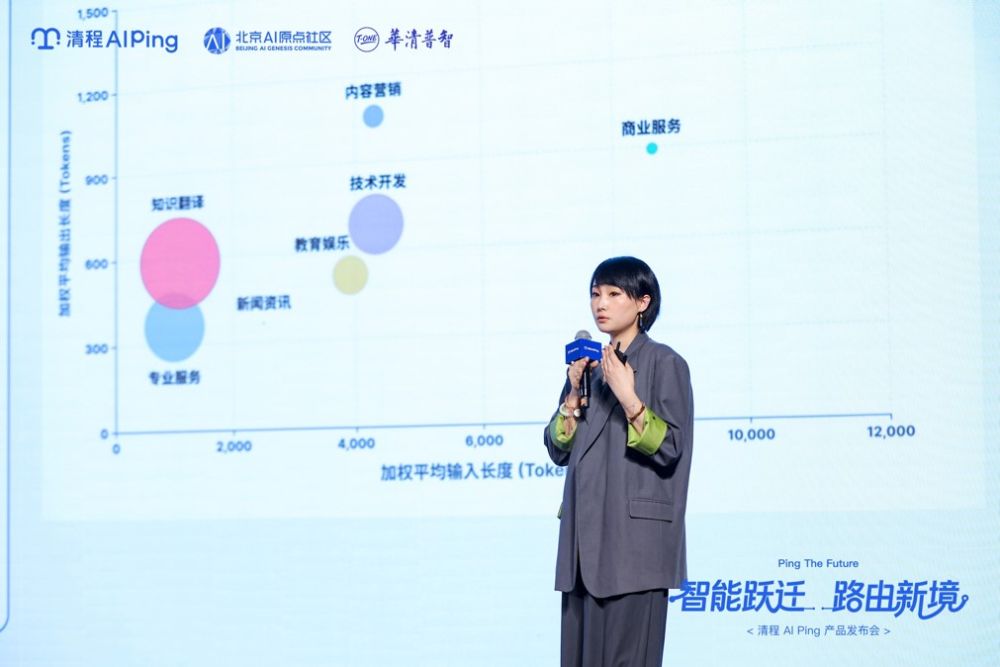
Finally, Mao Siyu shared the summary of future trends in the report. She pointed out that open - source models will become a standardized action for Chinese manufacturers. In 2026, the industry will enter the deep - water area of interface protocol adaptation, and service providers need to focus on improving model coverage, performance optimization, and protocol adaptation capabilities. The AI Ping platform will continue to provide performance monitoring to provide references for industry optimization and model selection.
Multiple Views Echo: AI Value Implementation Enters a Critical Period
With the rapid iteration of large - model and intelligent agent technologies, the AI industry has shifted from "technology R & D" to "value implementation". How to make model capabilities circulate efficiently in real - world scenarios has become the core proposition of the industry. Around this topic, many guests at the launch conference expressed their views from different perspectives.
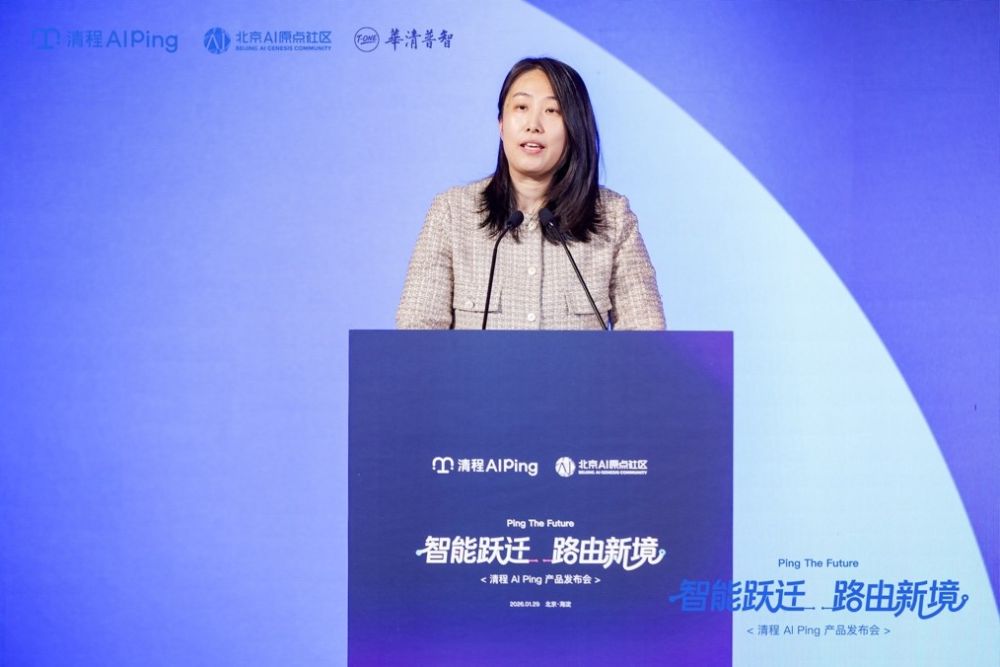
As an important part of the scientific and technological innovation system in Haidian District, Beijing, the Zhongguancun Science City Management Committee has always paid high attention to the industrialization process of artificial intelligence technology. Li Nan, the head of the First Division of Industrial Promotion of the Zhongguancun Science City Management Committee, said at the launch conference that as the core area of the Beijing International Science and Technology Innovation Center and the origin of the first artificial intelligence city, Haidian District has always aimed at achieving high - level scientific and technological self - reliance and self - strength. Currently, it is accelerating the construction of a "1+X+1" modern industrial system that meets the functional positioning of the capital and highlights the characteristics of Haidian. The first "1" is to build a high - ground for the artificial intelligence industry.
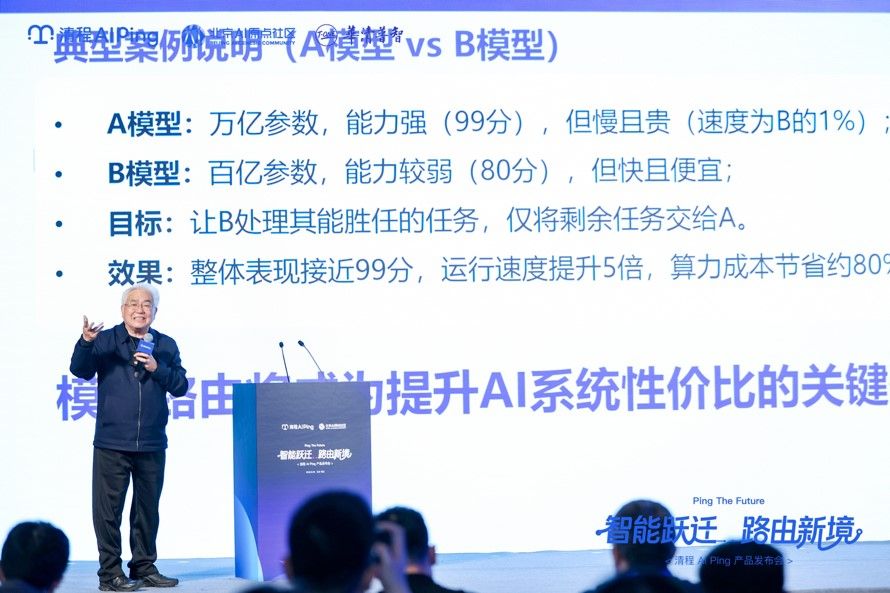
Zheng Weimin, an academician of the Chinese Academy of Engineering and a professor at the Department of Computer Science at Tsinghua University, pointed out from the perspective of infrastructure that intelligent routing is becoming the core of the new artificial intelligence infrastructure and is the key bridge connecting "intelligent production" and "intelligent application", determining the final efficiency, cost, and user experience of the AI system.
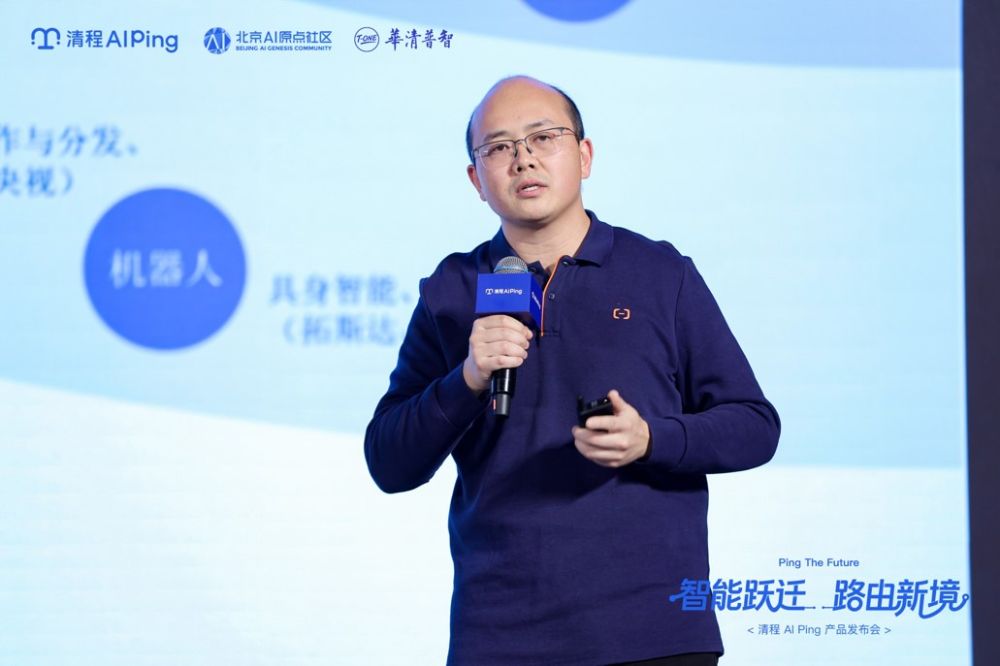
Cheng Jing, the consulting director of Alibaba Cloud's government and enterprise industry, shared the key concerns of resource unified management and scheduling and engineering system construction during the large - scale implementation of large - model services from the perspective of industrial practice, combined with Alibaba Cloud's full - stack capability construction such as "one cloud with multiple chips and multiple calculations" and "one - stack tool platform" and industry implementation practices.
From Report to Practice: Incubator Drives Industrial Implementation
The "Report" presents the operating status of large - model API services in real - world businesses through the Qingcheng Jizhi AI Ping platform, and also reflects to some extent the role of professional incubators in technology implementation and industrial connection.
Mao Siyu said after the conference that the release of this report is a phased achievement. As of now, Huaqing Puzhi AI Incubator has successfully connected more than 1,200 start - up enterprises and developer teams in the large - model track and has invested in and incubated more than 50 enterprises.
She said that in the future, the incubator will continue to rely on the scientific research resources of Tsinghua University and the industrial support of Xinglian Capital. Focusing on cutting - edge fields such as AI and large models, it will continue to discover and accompany the growth of innovative teams with engineering capabilities and industry insights, provide full - chain support such as resources and scenarios for more enterprises, and help enterprises achieve technology implementation and large - scale development.
As Li Nan said, the healthy development of the artificial intelligence industry cannot be separated from an open and collaborative ecological mechanism. In this process, professional incubators are becoming important nodes connecting technological innovation and industrial needs. (End)
This article is sourced from Xinhua News Agency and is published by 36Kr with authorization.